
Royal

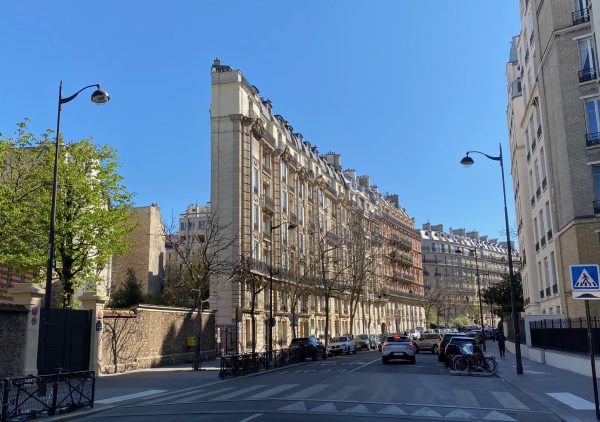
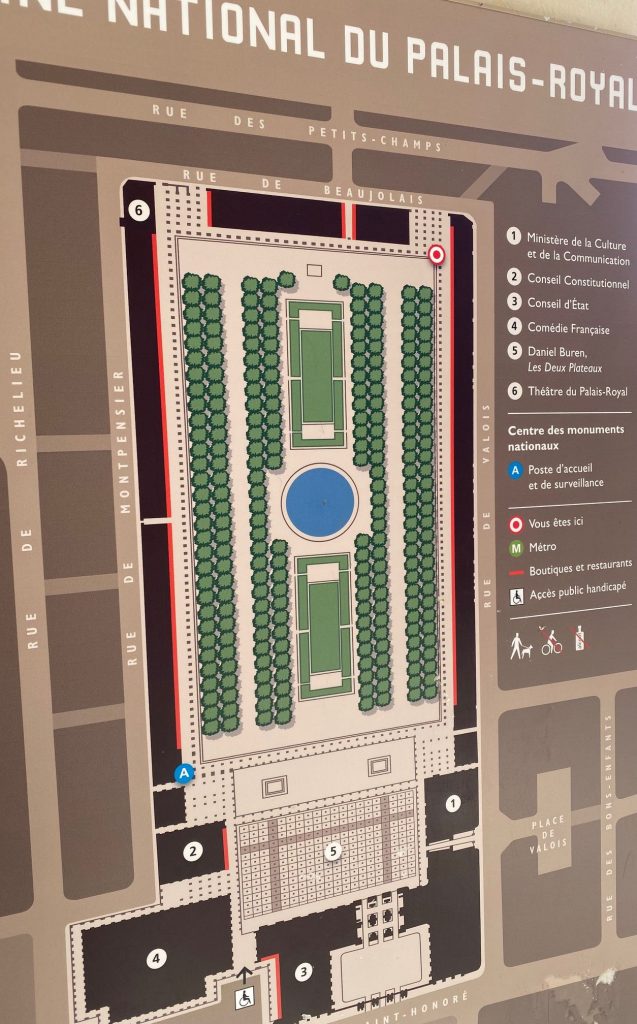
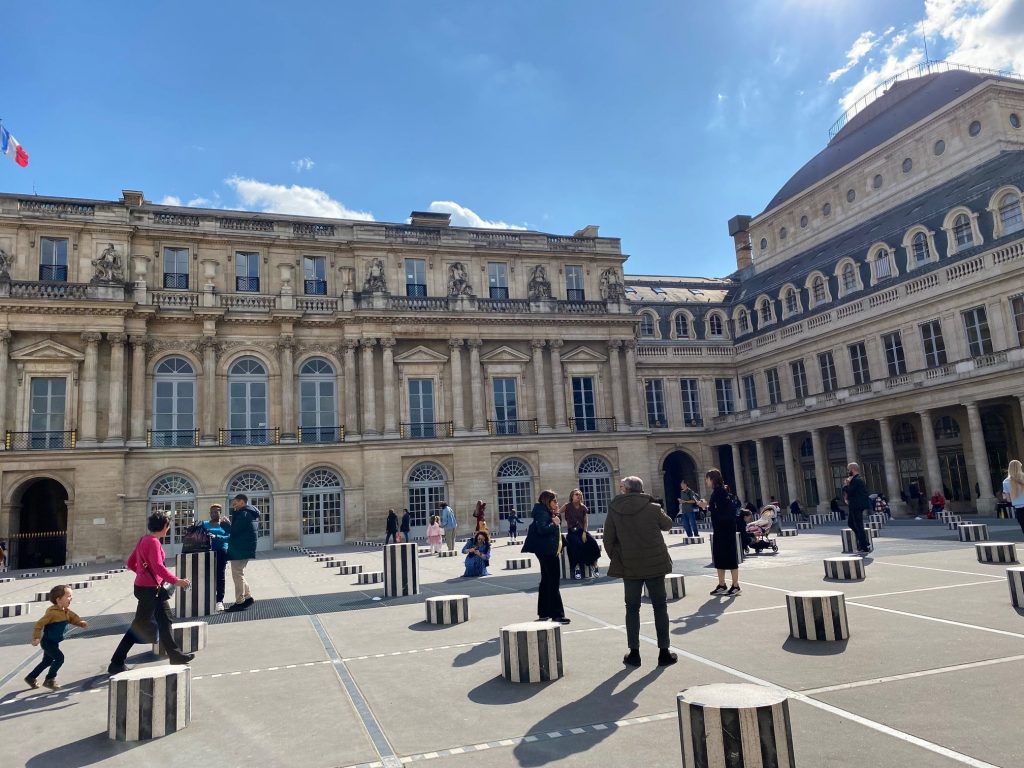
Im Palais-Royal, könnte man sagen, geht es noch immer recht „royal“ zu. Unweit vom Louvre lässt sich mitten in Paris fast noch etwas königliches Flair atmen. Unter den Arkaden oder im Garten weht Sommer wie Winter ein kühles Lüftchen und „Over-tourism“ ist noch nicht wirklich ein Problem. Auf engstem Raum findet sich viel Geschichte und Zeitgeschichte ein. Wie der Plan zeigt, haben sich dort einige prominente Institutionen angesiedelt. Neben dem Théâtre du Palais-Royal, ist die Comédie Francaise und das Ministère de la Culture et de la Communication dort angesiedelt. Conseil d’État und Conseil Constitutionnel ebenso. Viel Prominenz, dennoch ist eine überschaubare Polizeipräsenz vor Ort. Das war nur kurzzeitig anders, als der Conseil Constitutionnel über die Reform des Rentensystems zu urteilen hatte. Ein Schelm, wer denkt, dass sich die Theater der Nachbarschaft kurzerhand in den ehrwürdigen Räumen des Conseils verlegt hatten, oder umgekehrt?
Moliére, Hugo stehen noch oft auf dem Programm der Comédie francaise, aktuell jedoch wird Danton’s Tod von Georg Büchner gespielt. Passend zu aktuellen politischen Reaktionen auf den Straßen von Paris und darüber hinaus wird Revolution geprobt. Demokratie ist die politische Form, die Legalität, aber auch Legitimität von Politik am besten ermöglicht. Beides braucht Institutionen und Verfahren, die den Willen des Volkes entsprechend berücksichtigen. Lesen von Jean Jacques Rousseau und sein Konzept des „volonté générale“ bleibt dazu weiterhin erfrischend. Dann am besten wieder zurück in die Bibliothek BnF Richelieu gleich um die Ecke.
Bauhaus Haus

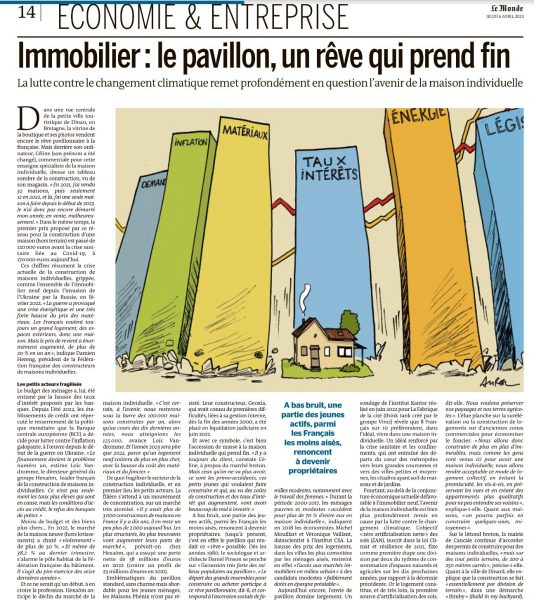
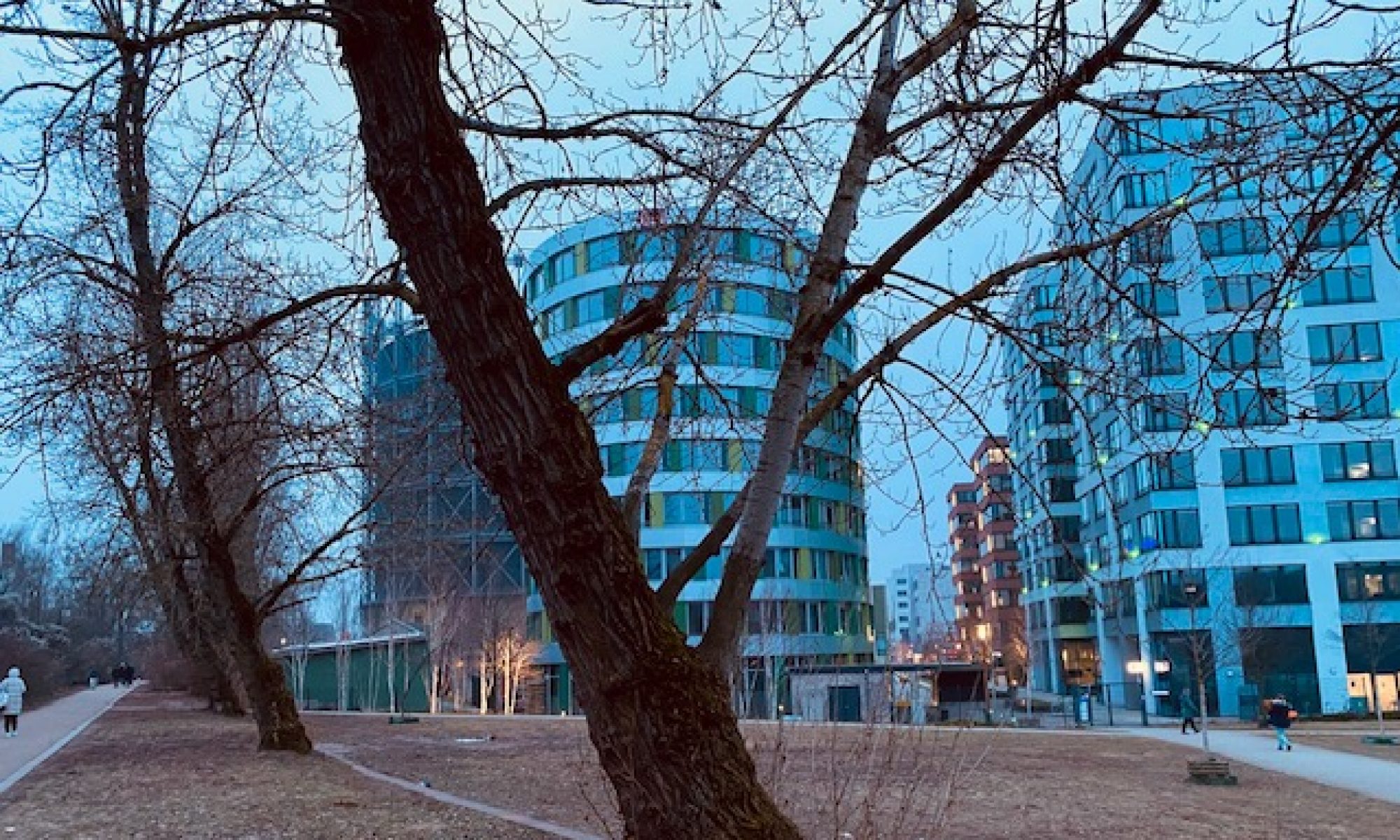
Zu den Ursprüngen des “Bauhaus” in Weimar gehört das Haus, welches die Feder von Georg Muche entworfen hat. Auch wenn das Bauhaus überwiegend mit Walter Gropius assoziiert wird, ist die Parallele von Georg Muche zu dem französischen Maler und Architekten Le Corbusier frappierend. Beide waren geprägt durch die eigene Malerei und Zeichenkunst. Die Entwürfe für Häuser oder Villen folgten Zeichnungen, die wiederum einer “cognitive map” mit Prinzipen der Konzeption und der Konstruktion folgten. Treu den Ansätzen des Bauhauses verwirklichte Muche bereits in 1923 sein Musterhaus. Modulare Bauweise, preisgünstige Erstellung, aktuelle Technologie, perspektivische Blickwinkel und Lichtspiel. Eine gewisse Parallelität zu der Villa La Roche und Jeanneret von Le Corbusier besteht nicht nur in der zeitlichen Dimension, sondern auch in dem Einfluß von kubistischem Spiel mit Perspektiven in Haus  und auf das Haus. Die von der Malerei herkommenden Architekten entwerfen ihre Räume mit “The painter’s eye“. Vielleicht kommt nicht zuletzt daher der Traum vom Eigenheim, der so prägend bleibt in ganz Europa und der westlichen Welt. Geprägt von den 1910er und frühen 1920er Jahren war kostengünstiges Bauen eine wichtige Rahmenbedingung. Relativ kleine Grundrisse, modular erweiterungsfähig, preiswerte Baustoffe sorgten trotz Schwierigkeiten für rasche Realisierungsmöglichkeiten. Eine gewisse deutsch-französische Parallelität drängt sich auf. LeMonde vom 6.4.2023 beschreibt ausführlich das Dilemma des 21. Jahrhunderts. Der Traum vom eigenen Haus wird für die nächsten Generationen schwieriger zu realisieren sein. Rohstoffpreise, Grundstückspreise, Arbeitslöhne, Kreditzinsen schnellen in die Höhe. Der Traum vom Eigenheim bleibt ein Traum älterer Generationen oder der glücklichen Erben solcher Häuser, fast unerreichbar für Durchschnittsverdienende. “Gemeinsam statt Einsam” ist die noch gültige Schlussfolgerung, die bereits Henning Scherf formuliert hat. Die neue Herausforderung für den Bau war, ist und bleibt die soziale Frage, der wachsenden Ungleichheit entgegen zu wirken.

Corbusier

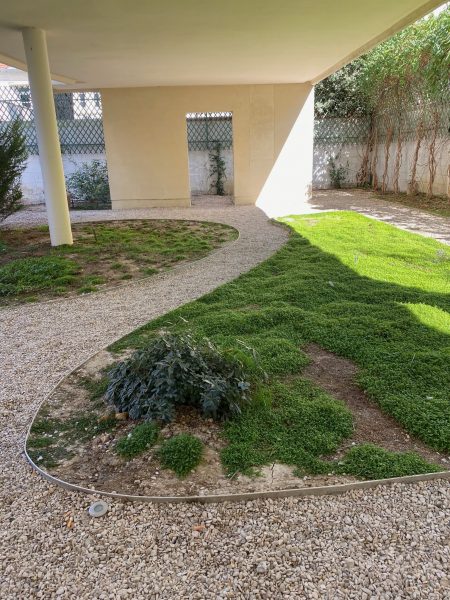
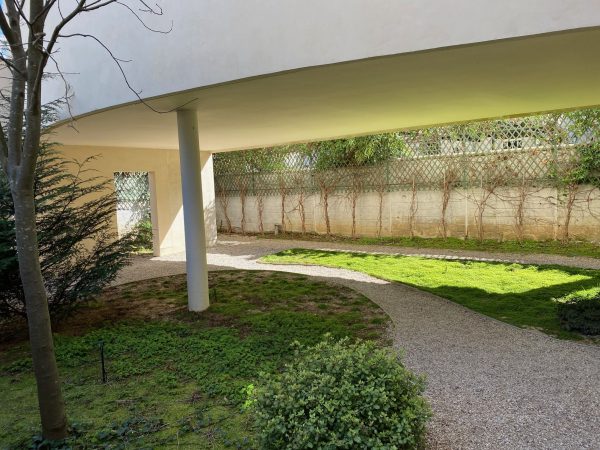
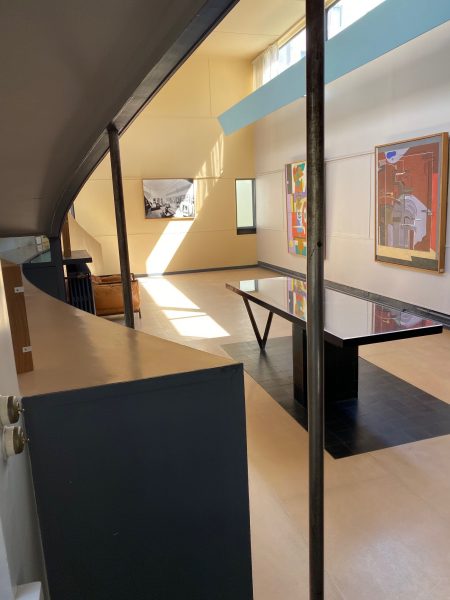
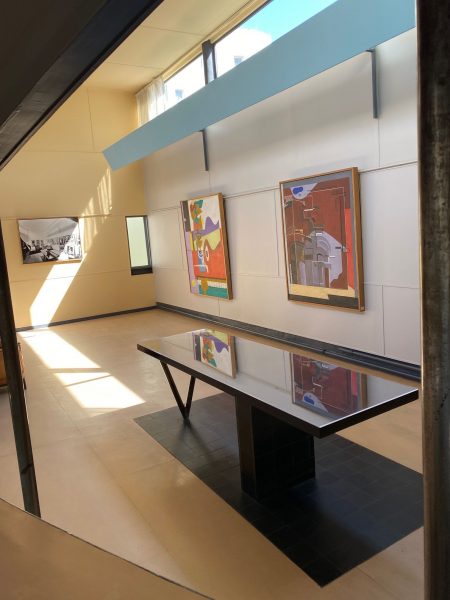
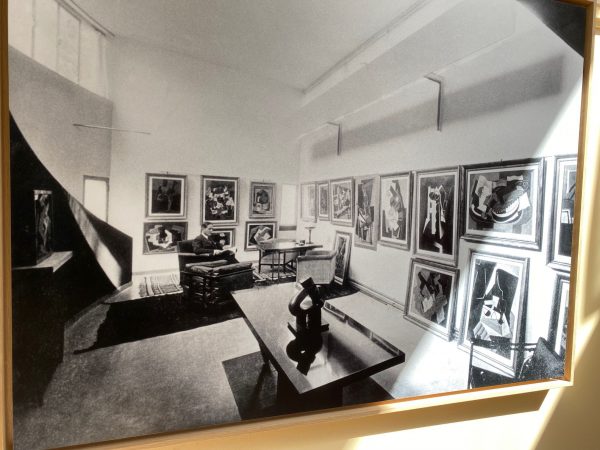
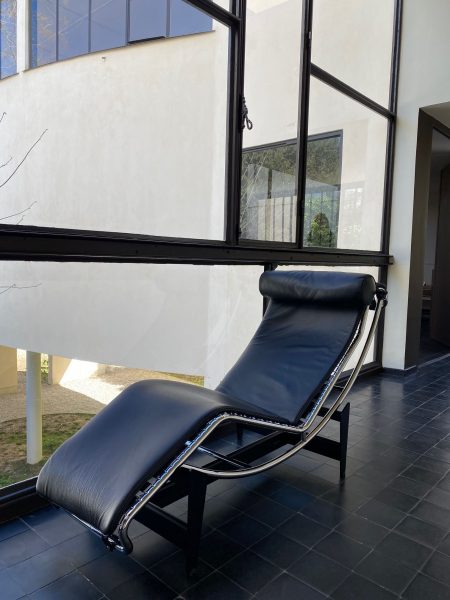
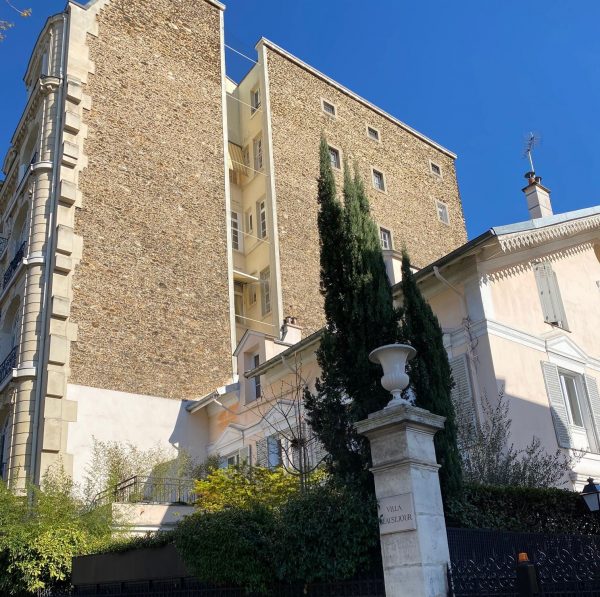
Le Corbusier (1887-1965) chose his artist’s name instead of his lengthy original name of Charles-Édouard Jeanneret at the age of 33 (in 1920) after having moved from Switzerland to Paris in 1917. He established a theory of modern architecture often summarised in his 5 major principles of modern architecture: 1. Pilotis as grid of pillars, 2. freeing ground floor design, 3. more open facades, 4. windows stretch horizontally, 5. garden, terrace on the roof. All these principles allow a more healthy living environment due to more light, less humidity in buildings and ease of circulation. The house Le Corbusier designed features surprising effects of light and lightness of living. “Les maisons La Roche et Jeanneret” date from 1923 and was completed in 1925. These purists Villas breathe thanks to the impression of abundant empty spaces despite relatively small surfaces. One Villa is designed for a small family, the second for a single person (Raoul La Roche) with a collection of paintings to be exposed in a small gallery. The focus on essentials of living, health, light, water, air and art combine to a relaxing and inspiring atmosphere.  Despite many of his convictions to build affordable housing for many people, which received mixed success, his “maisons bourgeoises” in Paris and elsewhere remain masterpieces beyond the 1920s and the 20th century. Le Corbusier was concerned about tuberculosis. Today the corona-crisis has reached comparable health concerns. Architecture might react to the latter crisis in re-considering the lessons from the former. Relaxing in a Le Corbusier Chaise longue and meditating in front of a Picasso, Braque or Léger painting is indeed more than a little bit elitist. But copies of such images or your very own slide show or museum VR-clip in this surrounding make this experience more affordable and compatible with living arrangements for millions of people of the middle class as well.

Architecture

Architecture is all around us. However, we rarely consider the build environment as “conditioning” feature of our life. Architecture is contributing extensively to our perception of “social space” (Bourdieu). Inner cities, suburbs or spacious residential areas have diverse impacts on our perception of, for example, security, modernity, health or sanitary sensations. The corona-crisis has made it clear to most people that a healthy environment is a very essential part of our perception of comfort. Here the psycho-social perception of living and/or working space enters into the co-creation of housing people. Technology is a big driver of change in housing, urban spaces and rural imagination. In order to avoid corona infections a new culture of working from home for the masses become a health-driven imperative. Payment without contact, home delivery of meals, food, books, medicine have changed the living style of many people. Too little movement for our bodies has caused another silent pandemic of obesity. Enough reasons to rethink architecture from a sociological perspective on it. This probably starts with speaking of architecture as architectures. By this we mean to think of architecture from its social origins, functions, impacts and perceptions. Great historical examples of architects have implicitly or explicitly formulated a social theory of architecture or space as the basis of their “concrete” realisations. The sociology of professions of architects and the many construction-related professions needs empirical foundation beyond the cliché of socialisation as artist versus technician. Still recent forms of participatory democracy as part of urban and rural planning as well as realisations. Participatory individual or community housing are likely to stay with us. People want to get involved in co-creating their living and working space as their social environment. Architecture as social process and specific layer of the network society will be the new mantra. It has always been there, implicitly. Up to us to strengthen the social discourse on architecture.

Bundesarchiv

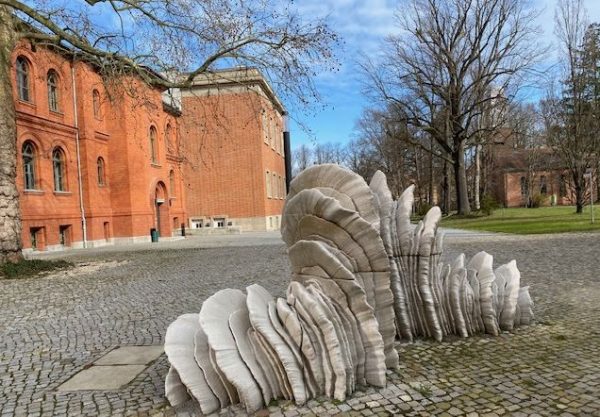
Bundesarchive gibt es kilometerweise. Auffinden und Zurechtfinden in Archiven ist eine Vorliebe von historisch Interessierten. Eine Soziologie des Berufs „Historian“ muss wohl noch geschrieben werden. Die Pforte, das Gelände und die Eingangshalle des Bundesarchivs in Berlin-Lichterfelde sind für einige einladend, für andere naja, belastend oder gar belastet. Architektonisch an eine Kaserne der 1930er Jahre erinnernd, ist ein gewisses historisches Umfeld eventuell eine Einstimmung auf eine bevorstehende Recherche. Das freundliche Personal hilft unterstützend über die Registrierung und die Orientierung zu den Beständen hinweg. Sofort ist, wie beim wissenschaftlichen Nachwuchs, die Eingrenzung der Forschungsfrage von Nöten. Die Findbücher, die sortierte Ausdrucke der elektronischen Datenbank „Invenio“ darstellen, lassen einen die Vielfalt der Archive erahnen. Eine einfache soziologische Fragestellung „Homogamie in der NS-Zeit“, also die Praxis von Heirat von Personen mit vergleichbarem sozialem Status, vor während und unmittelbar im Anschluss an die NS-Zeit, verlangt mehrere Datenzugänge. Konstruktion des Zugangs von Männer- oder Frauenseite. Zentraler Zugang geht zunächst über die Bestandsdatei NS 1 „Reichsschatzmeister der NSDAP“. Aus den nationalsozialistischen Frauengruppen entstand am 1.10.1931 die NS-Frauenschaft. Seit dem 29.3.1935 genoss die NS-Frauenschaft den Status einer Gliederung der Partei unter der Leitung von Gertrud Scholtz-Klink. Der Bestand umfasst 3,5 Millionen Aufnahmeanträge und ist in Berlin-Lichterfelde einsehbar. Neben den Mitgliedschaften sind auch besondere Vermerke zu den Gebäuden und Grundstücken der NS-Frauenschaft (BArch/NS 1 5.2.6.4) bspw. im Gau Berlin dokumentiert (BArch/NS 1 2504 und 724). Eine Lebensverlaufsstudie ist da schwierig zu konstruieren. Ein Geburtskohortenansatz dennoch eine interessante Möglichkeit, eventuell auf die Muster von Netzwerken hinzuweisen. Parteimitgliedschaften, Vereine, Verbünde und ihre Rituale wurden scheinbar der Propaganda untergeordnet. Eine These, die es zu beweisen gilt. Die interreligiöse Andrews Chapel auf dem Gelände (im Hintergrund) lässt dann vielleicht wieder zur Ruhe kommen.

Goals SDGs

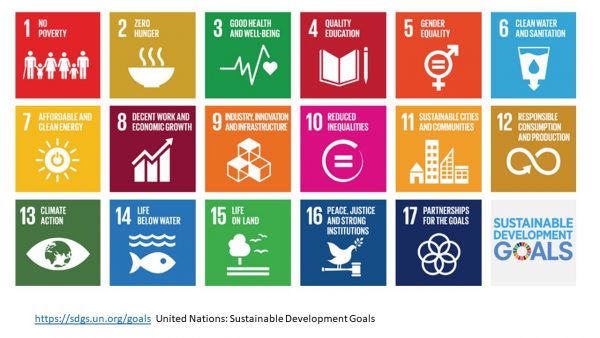
The Strategic Development Goals (SDGs) date back to 2015 for their enactment. The goal setting is a routine procedure for the UN and its subsidiary international organisations. This makes a lot of sense, because if you do not name the problems, you are unlikely to address them in a systematic fashion. Quantifying the goals is then a much more difficult task and that then already part of the ensuing discussion about idealist, illusive or realist goals. Most diplomatic exchanges focus on this goal setting and scheduled monitoring as well as more comprehensive evaluations of goal achievement. The SDGs comprise another strategic twist. Rather than concentrating on national governments, non-governmental organisations and businesses were encourages to actively participate in the implementation of the goals. After more than 7 years the achievements of intended improvements should become visible. Well, goal setting and monitoring over the last seven years is likely to reveal failure on several of the 17 indicators. Covid-19, disruption of supply chains, wars causing recessions and high inflation are major factors to explain failure. However, knowing the reasons of failure is a substantial part of improving in the next coming years. Returning to cooperation rather than confrontation could do the trick. Even after wars cooperation to organise relief is the only way forward to come closer to achieving the SDGs.
Bold initiatives like the Marshall-Plan for Europe in the 20th century made it possible to rise from the ashes. Countries that have been in ruins at that time, now have important roles as financial contributors to support other regions. The goals remain the same, the challenges as well.

On Noise

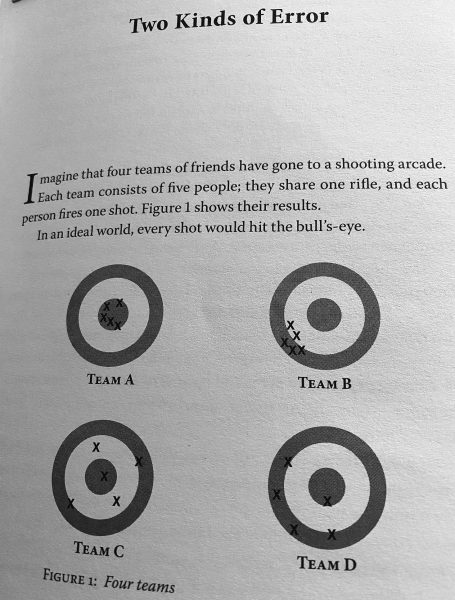
The 3 authors Daniel Kahneman, Olivier Sibony, Cass R. Sunstein have published in 2021 the impressive attempt to sell statistics to non-statisticians. The grip on the topic: “Noise. A Flaw in Human Judgment” is a bit misleading. Even the German translation (“Was unsere Entscheidungen verzerrt”), in my opinion, is grossly misleading. The work deals with judgment, or arriving at a sensible judgment. Decision-making is only the next step with a lot of other intervening processes. The German philosophical term since the enlightenment period has been “Urteilskraft“. We are all more or less familiar with the notion “bias” in judgment. Me, originating from the Moselle, will always be biased in favor of a Riesling compared to other vines. In addition to this naive bias I may apply a more professional judgment on wine. Testing several wines even from the same small area from the Moselle valley and then repeating the tasting I might make a noisy judgment.  “When wine experts at a major US wine competition tasted the same wines twice, they scored only 18% of the wines identically (usually, the very worst ones).” (p. 80). In addition to the previously defined form of “level noise, pattern noise and system noise” (p.77), we have occasion noise, when judgments vary from an overall statistical perspective.
Having received a second dose of a vaccination yesterday and having spent an unpleasant night my judgment for this review might be biased, because of impatience. So in order to reduce bias and variants of noise I shall repeat the review at a later stage. Let’s see what this returns. But for today, the Epilogue “A less noisy world” (p.377) appears rather odd to me. It is probably an illusion to believe that we can create a less noisy world, even with the best of wishes. The authors abstract from any strategic use of noise to influence judgments. The political form of choosing judges for Constitutional Courts in the U.S. needs to be dealt with. Noise in judgments is an important element, but strategic use of bias might be more influential to impact outcomes. Noise, when faced with a judge who has a reputation to be very tough in sentences might be overturned in an appeal court decision. There are plenty of procedural ways to overcome noise in judgments. I agree with the authors that you better know about the noise in judgments than ignore it. Awareness of random errors and noise involved in grading exams and recruitment decisions have determined many excellent “failures” to leave historic contributions to our world. In music, maths or literature some splendid talents probably have been impeeded at earlier stages of their life to make average or normal careers. Some of them left us with fantastic pieces thanks to the noise in judgment of others.
There seems to be an age bias in the tolerance of noise in the acoustic sense. Noise in the statistical sense has left a strong mark on me when I learned about white noise as error or stochastic process.
Image Kahneman, Sibony, Sunstein 2021. p3.

Patient

The pandorra’s box is wide open. With ChatGPT applications the discussion has started to use it for more medical applications. As for much research having assistants to support you in routine tasks in your research is a standard procedure. Now the medical profession is also discussing the use of ChatGPT for the boring and time-consuming task to draft reports. The first study, published in the Lancet Digital Health, evaluates in a preliminary form the patient-sensitive form of communication between clinics and patients. Beyond chatbots, which organise information from calling persons, the obvious application is the use of ChatGPT to draft patient clinic letters. The example in the study is the skin cancer reporting. Lengthy reporting back to patients of lots of “hot and cold spots” might be done by AI with sufficient reliability. All depends on the correctness of the data base, the screening and samples taken. The communication between clinic and patient can then focus on other issues. ChatGPT just like neuroflash has its strength in being able to control for the “level” of the language. In addition to the choice of the output language it is possible to use, as it is required in the U.S., an average understanding level of patients. In other words, easy language rather than medical expert language is an option or even a requirement. Anecdotal evidence and the PISA for adults studies show how difficult it can be to talk the same language even if you talk the same language. There is ample scope for improvement and ChatGPT or neuroflash for German applications of AI are prime candidates to fill this gap in clinic patient communication. Considering that our mobile phones (can) do already most of the scanning of skin cancer dots and AI is used in pre-scanning the images and recommends to consult medical expertise, the next step to improve health delivery seems feasible. Whereas the statistical analysis explains 62% of “median humanness”, the score of 37% of explained variance of median correctness is a surprise as the basis of the model to explain deviation from correctness should be as low as possible. Medical data, like many other data, is not simply binary. The way forward is most likely relying on a “human-in-the-loop” approach for some time. A limited human input might reassure many patients as well.
Source: Stephen R Ali, Thomas D Dobbs, Hayley A Hutchings, Iain S Whitaker (2003). Using ChatGPT to write patient clinic letters. Lancet Digit Health 2023 https://doi.org/10.1016/S2589-7500(23)00048-1

Fukushima 12

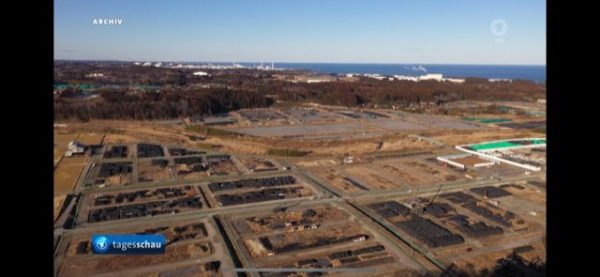
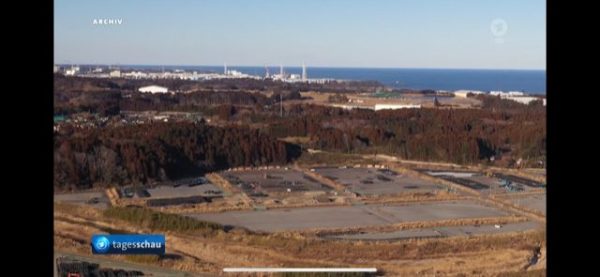
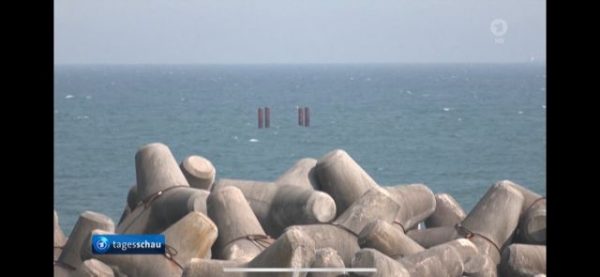
12 Jahre nach der Kernschmelze im Atomkraftwerk der technologiebegeisterten Japaner stellt sich immer noch die Frage nach der Entsorgung der verstrahlten Reste und Kühlwassers. Laut eines Berichts und den veröffentlichten Bildern zu dem Kernkraftwerk Fukushima staunen wir über das weite verseuchte Umfeld und die riesigen Lagerstätten für den verstrahlten Abfall. Geothermie, Wasserkraft, Windkraft und Solarenergie könnten auf der Fläche sicherlich riesige Mengen von nachhaltigem Strom produzieren. Das hatte bis vor 13 Jahren niemand denken oder aussprechen dürfen. Heute nach 18.000 Toten und vielen Folgeschäden durch Krebs und geschädigtes Erbgut wird der Unsinn weitergehen. Da sind sehr starke Interessen am Werk, denen es nicht um Menschenleben geht. Atomkraft, koste es was es wolle. Die Einleitung eines Teils des verseuchten Wassers ins Meer ist wohl bereits erfolgt. Noch mehr wird folgen müssen. Über die Fische als Teil der Nahrungskette werden Menschen dann mehr Radioaktivität aufnehmen. Das war schon so mit den Pilzen nach Tschernobyl. Fukushima bleibt ein abschreckendes Beispiel weltweit, da helfen jetzt zum 12. Jahrestag ein paar Solarzellen als Trostpflaster wenig. (Bilder aus ARD Tagesschau 11.3.2023. Auch bei uns ist es leider schmal Glück gewesen, dass nichts Schlimmeres passiert ist (Link Radiobeitrag DLF 2023-4-17)

White

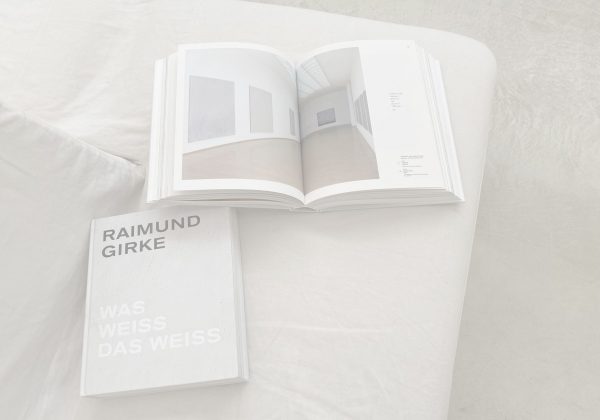
White is white, we may say, just like in the song of the mid 1980s “Live is life”. Raimund Girke focused his paintings around the notion of white. White is pure energy he writes on his webpage summarising somehow his activity between 1986 and 1999 before he turned 70 years old. The energy of white can be experienced at the gallery and arts centre of Alex Vervoordt near Antwerp. Set in abundant white and otherwise empty space the paintings of white reflect Girke’s idea that white is rest and movement. The developmental process of white in the work of Raimund Girke reflects for me a conceptual proximity to the artists’ group of “zero”. Light and shadows are parts of the same coin. White is the sum of all colours, not only in the physical definition of it. Hence, white can serve as reflection of space and transposition of movement.
The experience in the gallery of Vervoordt allows to come to grips with our own perception of white. It needs a huge white space around the paintings to get into the mood of, maybe, purity. It is by putting colours together that white comes into existence in the spectators view. In seeing white, we see many additions of other colours. That creates the impression of energy. Up to you to test it, maybe, virtually live.