Construction Deconstruction

The application of dialectic thinking invites us to explore the idea of construction at the same time as destruction. The sequential form reminds us that on most construction, deconstruction will follow eventually. This is obvious in case of the life cycle of human bodies or the animal world. On a more aggregate level, empires have been constructed and sometimes centuries later, they have been deconstructed again. Deconstruction may also take form transformation. In such cases major features remain the same, but the new entity is sufficiently transformed to give it a new name. Often it might also be a kind of synthesis of previous generations or cycles of construction and deconstruction. We enter potentially into the field of genetic evolution or genetic engineering. In any case, dialectic thinking is present in many fields of studies. Well worth to explore the potentials as well as limitations of the basic scientific concept. 

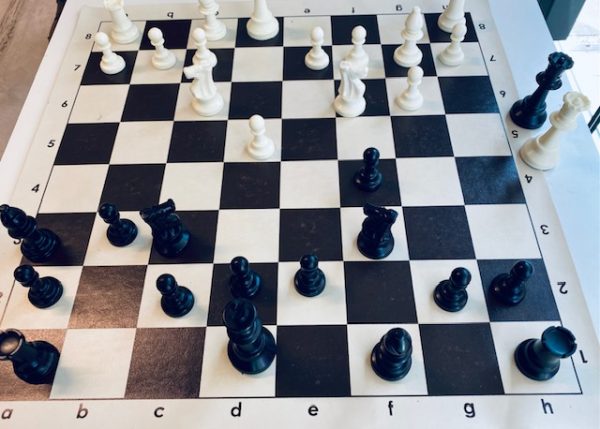
Chess without Queen

It is perfectly possible to play chess without a player having a queen on the chessboard. This certainly gives an advantage to the opponent, but in case of a lack of an adequate strategy or being overly confident to win, the advantage can be compensated by the party who does not have a queen in the arsenal of weapons. The paper by Lissner & Warden (2026, p.109) on the new way of war following the Russian invasion of Ukraine in 2022-2-24 states that “nuclear weapons have not given Moscow the coercive leverage many assumed they would.” Nuclear weapons hit the civilian population without differentiation the hardest, just as much as taking nuclear power plants as strategic war targets would do. What we have seen so far in Russia’s strategy is to use civil infrastructures of water and heating as targets within Ukraine as part of a kind of psychological warfare against the Ukrainian civil population. The more committed Ukrainian soldiers, even with the lack of a nuclear weapon, seem to hold the line against the Russian aggressor that so far has restrained from the nuclear option, if the Tschernobyl disaster has not been a precursor of a weaponisation of nuclear infrastructure.

Future Conflicts

Since 2014-2-27 Russia has occupied the Crimean peninsula. This invasion had started with an undercover mission of unmarked soldiers to take full control of Crimea about 3 weeks later. Russia did not officially declare a war, although the intentions were identical to a land grabbing war. The western world did not react much to this violation of international law. Apparently, this contributed to the next cynical “special operation” by the Russian army to fully invade Ukraine on 2022-2-24 in a failed “Blitzkrieg”, a rapid invasion, which attempted and failed to annex the whole of Ukraine. According to Lissner & Warden (2026) the Russian invasion of Ukraine bears 4 lessons for future conflicts: (1) the risk of using nuclear weapons is real, (2) in addition to nuclear options, prolonged and very destructive conventional wars remain an option, (3) escalation thresholds emerge and evolve over the duration of the conflict, (4) allies and partners in war keep adjusting their risk tolerance as well as escalation options. The authors argue from a US perspective and add a practical comment: “The USA cannot go this alone, but should coordinate closely with allies and partners in time before another conflict arises. Multilateralism seems a valid option and even more so as we move into a multipolar power play on the global scale propelled by AI.
(Image: Musée Orsay, Paris – Archer, Bogenspannende)

Climate, time and space

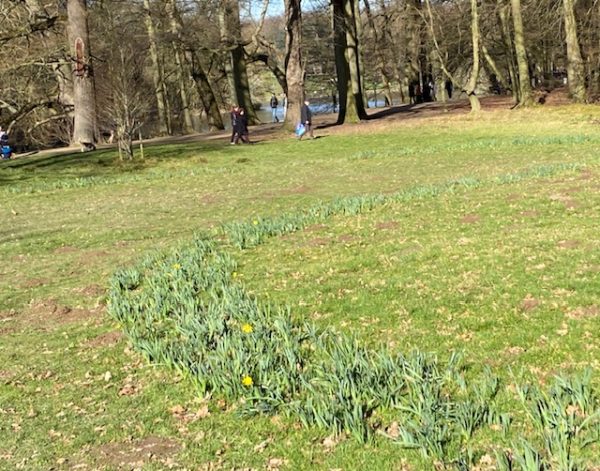
For statistical analyses is good practice to not only study averages, but whole distributions over time and space. Climate change is an obvious candidate to apply such a methodology. The analysis of US data on temperature changes across quantiles of the distribution in 48 regions over 70 years finds distinct patterns of temperature changes. The authors María Dolores Gadea Rivas and Jesús Gonzalo published their findings in PLOS Climate, which showed different patterns of climate warming. Taking into account that it is not only average temperatures that may shift, but only the lower winter temperatures or the warmer summer peaks, they find overall 84% of the regions experienced a statistically significant warming effect. Whereas a higher summer peak is commonly perceived as a climate warming problem, a warmer winter usually is less associated with climate change. This leads to an overall misinterpretation or lower perception that climate warming is and has been happening over the last decades. With yellow daffodils on 2026-2-8, usually a winter day in Brussels (see image), the warm winter days are also evidence that global warming is well under way all year round and across the planet.  

Time and power

Who commands our time? Who commands your time? Both macro- and micro-level analyses of power relationships related to time need to be investigated. Time policies are most obvious when it comes to regulations of working time, permissions of business hours or so-called bank holidays. On the micro or individual level, it is often the question of who spends more time on work, care and repair. Hourly wage rates have been claimed by economists to guide or decide societal time spent on one or the other activity. An extension of this rationale with an overriding objective of happiness might considerably change the impact of power relationships on time. Longer time perspectives on health shall also shift the view of how power impacts the time spent on various activities. Time sovereignty is a precious value in its own right.
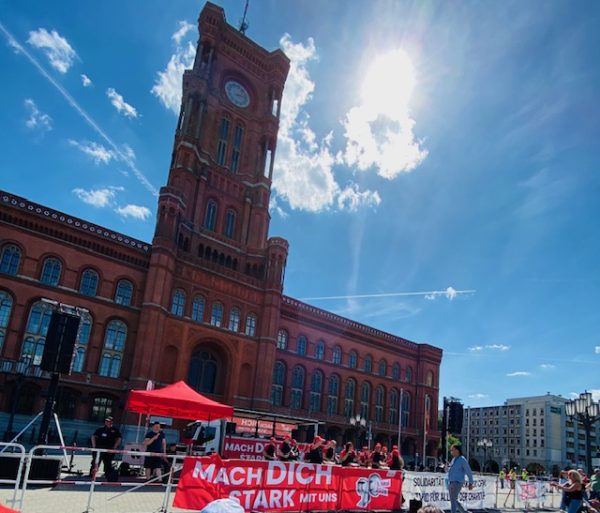
The power play between employers and employees keeps shifting the balance, albeit the overall trend over the last 100 years has been towards a reduction of working time and increased time sovereignty of employees as a form of democratization of working life. This constitutes one form to share the benefits of productivity gains over decades as well. (Image clock on Berlin City Council building on labor day 2025).


Multilateral world

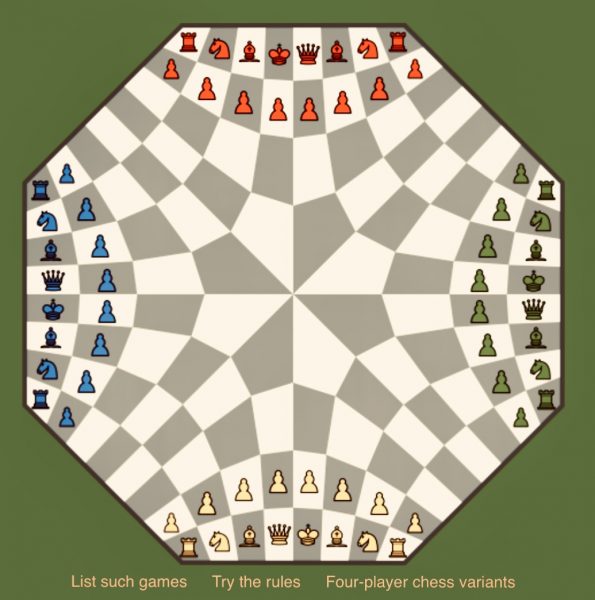
In the relatively brave new world of 21st century, it is not only a question of how the super powers like the USA, China and Russia shall push their strategic goals, but also what role so-called „Middle Powers“ will play. Europe and the European Union will have to make up their minds, whether they want to belong to one or the group, individually or jointly. New as well as shifting alliances seem to be a realistic scenario. Coalitions of middle powers will be effective counterparts to the threat of domination by a single or joint brutal force of superpowers. The power of interference of middle powers in the confrontation of superpowers is considerably higher if they were to collaborate more effectively than with each of the superpowers previously in a simple 2 opponents game of chess, much more familiar to us so far. (Image: Game of chess with 4, 5 or 6 players on the same board, here adapted from chessboard for 4 players, source: greenchess.net webpage)

Democracy in democracy

The more we are confronted with illiberal turns of democracies, the more we need to watch out for democracy washing in democracies. What do we mean by this? The NGOs like Transparency International, for example, keep records of states and their tendency to use in-transparent means or corruption to pursue their political objectives. In addition to such criteria there a number of non-negotiable items in democracy, which justify to carry rightfully the label of being a democratic state. Separation of powers, independence of the judiciary, freedom of the press figure among the best known criteria. Some states or theorists of democracy would add a federal organization to this list. The control over the military forces and the freedom to object to subscriptions is particularly relevant at times of armed conflict. Equal rights for women and men and laid convictions as well as freedom of consciousness or religious beliefs have been and still are a challenge in some countries. Each of the broader topics have to be broken down into more specific issues and indicators to measure the evolution. Advances in some areas might be confronted with regress in other areas. Each of us may have their own list of priorities what makes a democracy a democracy. On many criteria the USA has lost a leading role. The evolution of democracy in the US-American democracy has become a substantial threat to other democracies. Such analyses of comparative democracy research should guide us in the way which alliances we want to choose in the new multipolar world.

Timely timeless

It is very timely to discuss timelessness. Some inventions or artwork appear to have a timeless value. The creation of books has this feature as we have known also a lot about the conservation and restoration of books across centuries. Timelessness is about an open-ended vision of time. In mathematics it is a usual part of the differential equations‘ calculus to handle infinity as an operationalisation or a form of a projection of time into timelessness. Humans have made considerable efforts to create material and, most of all, immaterial goods which try to exist independently from time. Geek or Roman philosophy are with us for more than 2000 years and we still benefit from returning to this original concepts. Egyptian culture and the wall paintings in caves still speak to us, thousands of years afterwards. Each clock suggests that time is advancing, but some treasures achieve the level of a timeless beauty, art or conceptual masterpiece. The more we talk about time, the more we shall cherish timelessness. (Image: Neue Nationalgalerie, Berlin 2026-1, The clock screening)


Futures for Amazonia

Diversity is the treasure of humanity. This was and remains a permanent challenge as thinking in multiple perspectives is taxing our minds. Simplicity can be a value in science or mathematical proofs, but cybernetics teach is also about the usefulness of a “requisite variety”. The exhibition Amazonia at the Quai Branly in Paris takes us on a journey through richness of the Amazonas, its people, biodiversity and landscapes. First of all the curators Varison and Baniwa manage to accompany us in opening up our minds to non-western concepts, which have for centuries been considered as less developed, but only from a western point of view or imagined sort of cultural superiority. Even nowadays the West seems to be convinced that for the liberation of, for example Venezuela, only a western power can achieve this. The 300 different indigenous peoples of Amazonia have lived through hundreds of years of threats to preserve their cultures. They have managed and they have inherited and still develop multiple ideas about “futures” of the Amazonas region. In just 100 days this exhibition has reached more than 100.000 visitors. Most of them will be convinced of a future and, yes, futures for Amazonia. 

Between micro and de-facto state

In political science we distinguish between small, micro-states and territories or regions that are defined as de-facto states. Björn Boman (2025) has put the wealthy states of Monaco, Lichtenstein and San Marino into the micro-states category. On the contrary, Abkhazia, South Ossetia, Donetsk and Luhansk fall under the label of de-facto states with more controlled access as well as under Russian influence using brutal force to control the zone of Russian influence. Due to its size Ukraine as a whole has been able to resist the Russian forces to be degraded to a de-facto state only. The military and technical ingenuity of a well educated workforce allowed the Ukraine leadership to not only counter the Russian invasion, but also to mobilize enormous support from western democracies in form of weapons, financial and humanitarian assistance including millions of refugees over the last 4 years. Size of territory has entered the equation or balance whether to belong to a the micro- or de-facto state category. In the new multipolar international political arena “the sovereign state” has become a more hybrid concept as well. Micro-states have handled the difference between full internal sovereignty and only partial external sovereignty already for years, the new multipolar international arena is being transformed rapidly in this direction. Choose your camp or align with a sufficient number of countries to form an internal and external sovereign area.