Digital Environment

We get accustomed to our digital environment through the routine use of applications without even thinking about it. Over years of just using only one browser or office package, we forgot to make conscious choices in companies and our private computers. However, digital sovereignty asks us to take back our control of these computer systems before they take control of us. The AI-boom will make a lot of things easier for us, without knowing much about the technology behind them. Just talking to your smartphone you will be able to achieve many tasks or searches without many of the other steps that were necessary before. The knowledge to command a typewriter or keyboard will be more and more obsolete unless you really need to change something profound on your computer, like the operating system or an expensive office program. Keep exercising yourself with alternative and new software and you’ll stay the master of your digital environment. 
Installation Guide Linux

Use the info available in various help forums, maybe videos.
Optional: Check size of your hard disc for backup.
Why not renew your backup on an external drive or USB-stick now?
Test your system loading interruption key combination.
Upon RESTART on most systems you use press Power-up key, follwed by either ESC or DEL or F1, F2, F10, F11 key, while power-up runs to load your BIOS.
Have an empty! USB sticks (4 GB+) ready.
Download the for example the latest Linux Mint 22.2 on it (and flash it using etcher on USB from hard drive, if downloaded to hard disk).
Power-up computer with loading system from USB-key not hard drive. (Select option!)
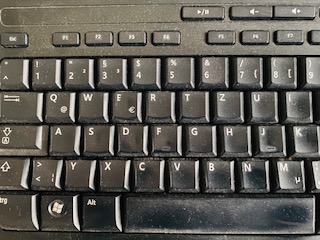
Remember it has English keyboard as default when you connect your WLAN.
Basics are ready!
Keep starting from USB or after some further tests of components install Linux to the hard disk and say goodbye to a slow and costly Windows and Office packages.
Donate to whoever supported you. Perhaps your local repair shop.
Spread the word and help others.

Sustainability in computing

As the huge size of data centres become visible for everybody we begin to question the sustainability of computing infrastructures as well. The need for energy and water resources (for cooling) grow in line with the growth of data centers, the whole issue of input of resources and global trade has to be re-assessed. Based on European trade data, we know that computer software is heavily imported from the US, whereas we import the hardware to run the software in even higher shares from China. In view of the AI boom, this risks to worsen the European trade balance in the coming years. European digital sovereignty suffers as well, if we do not act upon it (compare Figure 8 in Eurostat report).
An easy fix is the shift to more computing-efficient software, which does not need or rely on more processor and memory imports from China for the hardware and imports of services like operating systems or office software from the US.
Just changing to Linux and OpenOffice lets you keep your hardware for several more years. Sustainability in computing isn’t hard to do. It is just a matter of determination. We can do it, if we really want to do it. The more rare earths become rare and more expensive, the larger the amount of people and businesses, who shall think twice about this.
European Digital sovereignty can work as a driver of sustainability in computing as well.

rainbow in front of clouds Brussels Central 2025

VLOPs flopped

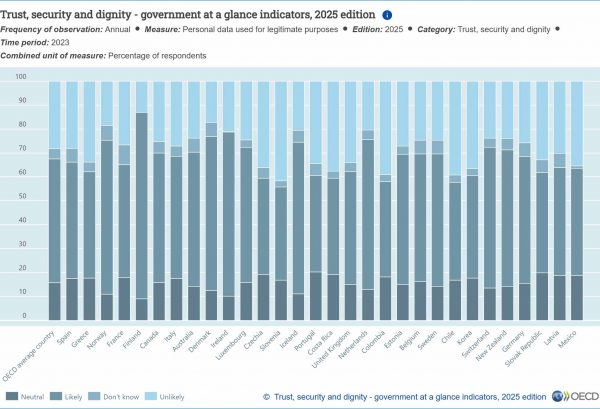
Well, not quite. This is wishful thinking. Let’s start slowly. Very Large Online Platforms (VLOPs), the platforms we all use on our smartphones, are subject to the European Digital Services Act (DSA). As of the year of its adoption in 2022 by the European Parliament, the European Union has a mandate to act, for example, against fraudulent websites that attempt to steel money from customers with fake content on VLOPs and, of course, on smaller platforms as well. To put it bluntly, the European Union has to defend its population from mainly American VLOPs massively exploited by Russian criminals to impinge on our European digital sovereignty. These external threats have to be taken very seriously as they touch upon the satisfaction and dissatisfaction with the European democratic political system and trust-based societies. The level of trust in Europe, particularly with respect to “Personal data used for legitimate purposes” is high in the Nordic countries and Ireland, but much lower in the UK, most Eastern, Central and Southern European countries. (Data retrieval from OECD on 2025-12-1, compare figure below, figure build Link).
VLOPs might be important drivers of eroding trust not only in data security, but also how democratic institutions are able to protect its citizens, youth and children. About time to act accordingly.

mAga mEga mIga mOga mUga

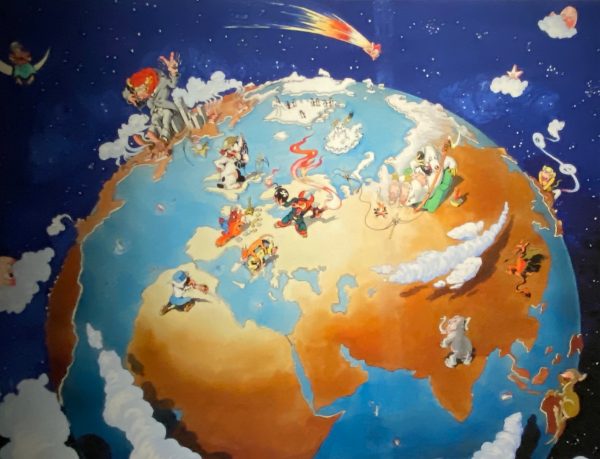
Just take all the vowels of the Latin alphabet and the absurdity of the MAGA saga becomes evident. If other states would start to claim like the US under President Trump to make X great again, the world would soon fall into disaster. Let us go through the hypothetical cases like MEGA, make Europe, England or Ethiopia great again. Go back to colonial imperialism? Certainly not. How about make Israel, Indonesia or India great again? Well, that would alarm neighbors, just as much as make Osmania, Oman great again. With the potential of Russia getting its way to keep illegal possession of parts of Ukraine, make Ukraine great again spells continued trouble on the European continent. Once MAGA mania has been unleashed, it is difficult to get the spirit back into the bottle and close it firmly again. Return of brute force rather than diplomatic exchanges become the rule. A return to rule based international politics in a multilateral context needs to be reclaimed by the vast majority of states that have an interest in lasting peace without expansionist views.  (Image from: “The beast is dead”)

Bulimia Capitalism

Each time a wave and speculative bubble in the economy is building up or even bursting there are thousands of people who become drawn into chaos. Let us quickly review: Oil bubbles in the 70s, financial crisis and  subprime lending in housing markets, 1st internet bubble and the year 2000 bugs, AI excesses in 2025. These boom and bust cycles resemble the medical and psychological patterns of a bulimia nervosa. The overly optimistic outlook for AI companies’ future profits and shifts in the size of office space needed for companies announce bulimic behavior when at the same time vomiting by the same companies occurs with regard to investments in nuclear energy plants even in the sites like Fukushima in Japan or Three Mile Island in the USA. Bulimia Capitalism seems to be eating its own children. The upcoming year 2026 will be full of revelations in this respect. (Image: collection of about a hundred barbies exposed on a flea market in Brussels on 5 levels).

Socio-technological obsolescence

The standard literature or AI-sytems will give you a definition of on technological obsolescence, which specifies that obsolescence does not mean that a device is broken, but that it is outdated. In computers this might be due to hardware no longer supporting newer, more resource demanding software, or newer software insisting on the use of other hardware. The seemingly rapid innovation cycles in smartphones, cars or robots might justify such technological obsolescence, but the real advances like shifts from 3G to 4G to the newer 5G mobile frequency standards have taken place rather slowly due to provider coverage of sufficiently large, particularly rural areas.
Therefore, the technological obsolescence has to be enlarged as a concept to socio-technological obsolescence as the societal, legal and economic boundaries of technological innovations have to be taken into account as well. Provisions for health concerns or CO2 saving circularity, i.e. reuse of resources have to be taken into account as part of a precautionary principle.
Computer screens have asked us to move from square designs to wide screens (watch videos) to smartphones’ standards of long formats. My 20 years old square screen has been doing a reasonable job throughout these periods, though not for serious games.
The socio-technological obsolescence relies on a “socio-technical prestige score” of products, like for luxury brands in other industries, where fashions drive obsolescence more than technology.
(Image: Robotic arm made by Kuka writes on paper sheet at Frankfurt book fair 2017)


Shift to Linux

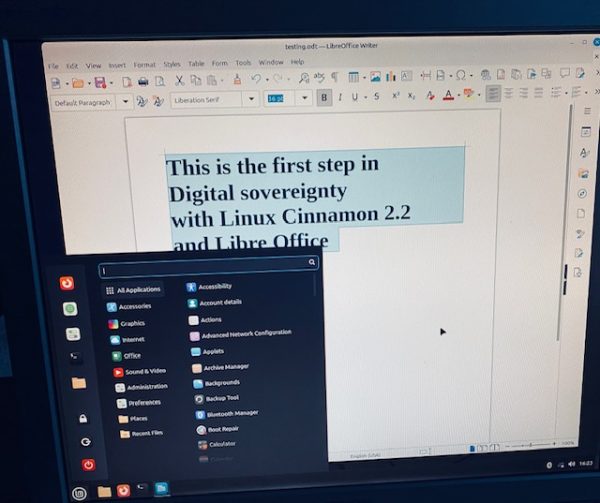
We have become rather lazy and sometimes even ignorant when it comes to what kind of operating system we use on our computers. The phasing out of security support for Windows 10 based computers creates worldwide a huge pile of computers that cannot update to 11 due to limited hardware 4Gb of active memory only. However, for many simple tasks these computers work perfectly fine. Browsing through the internet or just drafting texts or spreadsheets doesn’t ask for larger sizes of memory. Most AI applications run on the web and not locally on your computer. No need to throw away these devices and spend, spend, spend on the latest technology. It takes a bit of time and effort to read through the guides for such a shift. Maybe you need to come back several times between documentation and a bit of trial and error, but the learning of digital skills is always a rewarding experience as well. My fanless computer will serve me for many more years as a quiet companion in drafting blog entries and research. Additionally, it is a step towards digital sovereignty so many people talk about these days. (Image: Computer Screen with Linux cinnamon 2.2 and Libre Office in background).

Deep Fake Threat

Our Western democracies are aware that “deep fake videos”, radio, online-newspapers and most of all social media platforms are all around us already. However, more scientific voices alert us that this threat to our easy or comfortable way of life to consume information eventually threatens the survival of our democracies. Previously, interference in elections used to focus on rigged election procedures, but in the 21st century powerful other alternatives can do the dirty job to bias elections against the original intentions of the electorate. The widespread use of AI will exacerbate the already practiced ways to produce deep fakes. In a preparatory self-test of an AI-assisted chatbot I was surprised myself of the quality of the output. A person not very familiar with my original voice in a second language would assume that it is me who is being interviewed in person. Based on a fake news text, any form will be automatically translated into voice only and/or video based on basic visuals.
Statisticians used to joke some decades ago: “Don’t believe in any statistics, unless you faked it yourself.” This is meant to encourage people to be aware of dangers of the use of statistics to influence opinions or official decision-making, like in policy making of central banks, which might be based on biased accounting for shrinkflation, cheatflation or greedflation to name just a few,
Hence, the need to strengthen awareness, analytical skills and critical thinking should be high on the agenda to defend our democracies. There are not only external military threats, but additional ones masked as internal threats.
(Image:: mice as humans in living room 2 couch potatos 1 on rocking chair, tea time)

MD-11 crash

Some analysts have followed the acquisition of McDonnell Douglas by Boing as a merger of 2 big aircraft constructors in 1997. The merger meant that the construction of 200 MD-11 trijet aircrafts was discontinued a few years later in 2001. They have still been flying around as cargo airplanes and 50+ were still in use in 2025 by UPS and FedEx combined. The recommendation by Boeing is to stop using the planes and run more extensive technical checks before reuse. The aviation authority will have to comment on the safety as well, since the death of 14 persons on board remains a high toll for potential negligence of timely revisions or too few regular controls. Failure times of components necessitate check-ups, even if they are deemed expensive. Boeing has a difficult reputation in this field due to its lack of timely reaction in the two 737-Max cases. The precautionary principle probably could have saved lives also in this case. However, before jumping to conclusions we need to follow the analyses of this crash of the MD-11 more closely.
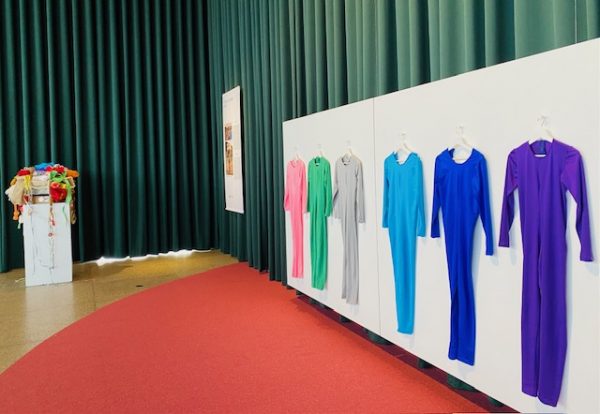
(Image: Corpo Coletivo by Lygia Clark 1970 performed in Berlin Neue Nationalgalerie 2025).