Co-evolution process

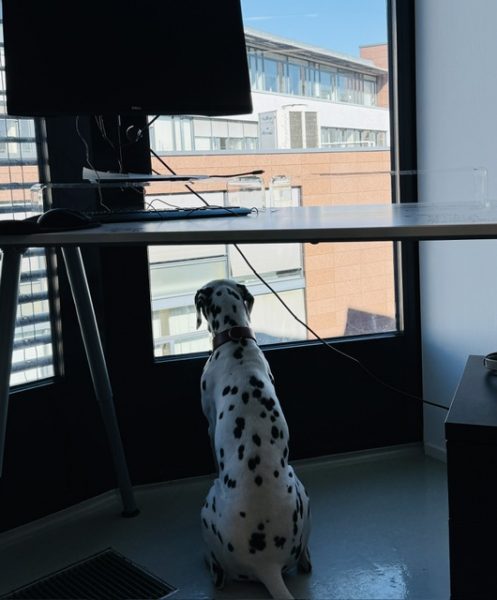
Humans look back on a long co-evolution process with viruses, bacteria, insects and animals. The focus on a solitary evolution of humans alone is already a challenge, although we know that the evolutionary process is much more complex. Within the co-evolution process of humans and animals, the co-evolution with the species of dogs has lead to interesting learning opportunities for both. Braeuer et al (2024) show that a dog’s cognitive capabilities to perceive human emotions beyond simple positive or negative emotions. As dogs seem to monitor their owners constantly, many of them are able to alert persons about health and/or emotional state. This is a learning process for dogs, but also for their human owners as their authentic emotional expressions are immediately recognized by their dog. A co-evolutionary approach offers a lot of benefits to all involved. 
Social learning

The process and mechanisms that drive social learning are still not well understood. Beyond social psychology and sociological theory and evidence, neuroscience has made progress worth taking note of. The paper by Maciej Winiarski et al. (2025) offers a key insight into the neuro-biology of learning about social structures and the behavioral consequences. In their study of mice in the EcoHAB supervised group housing, information sharing through scent was the driver of learning about the social structure and the ensuing social behavior. The various experimental settings show that 1-2 mice became the most relevant informants about social structure and rewards. The “exploratory activities” are an interesting underlying parameter as well. The mus musculus model does not tell us much about humans yet, but we get a gist of important factors to consider for social learning in groups or organizations. Information seeking, informants, reward structures and “housing” have to be considered based on such research from neuroscience.

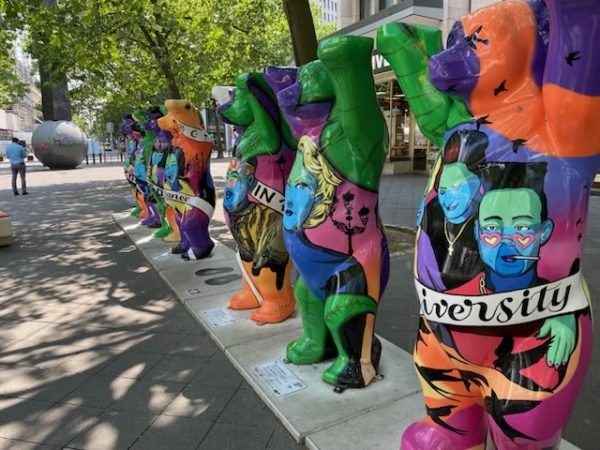
Berlin bears as statues decorated to demonstrate freedom and diversity in 2023

École buissonnière

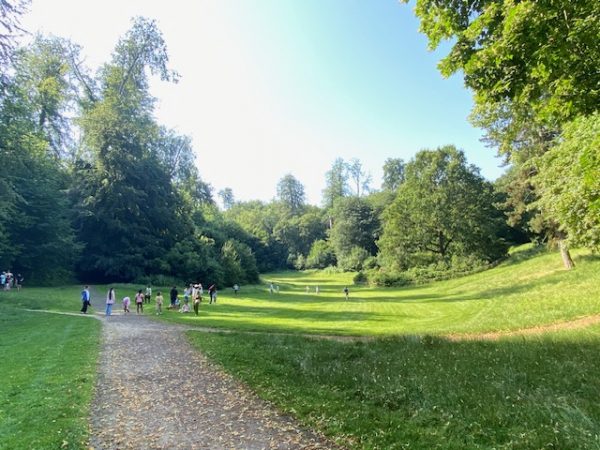
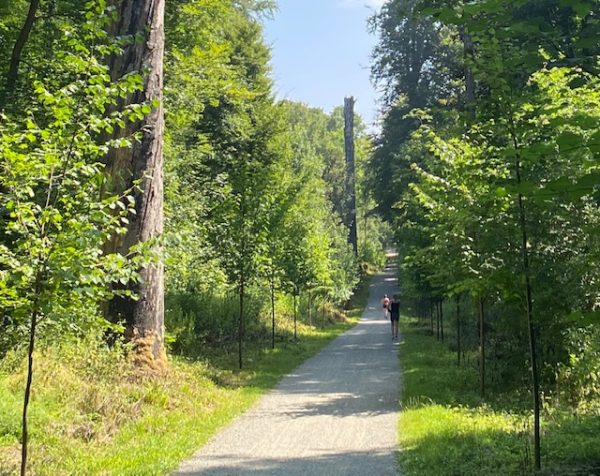
In 2026 the “École buissonnière“, the outdoor schooling has become a viable alternative to the schools that are overly hot during summer. But far beyond being an alternative out of necessity, schools as well as kindergardens adopt a form of schooling close to and in nature. It can be so much more than a simple interlude or excursion. Learning from nature is a precursor of bionics as well as compassion. After all nature offers ample examples of diversity and coping mechanisms. It is an option not only for learning purposes restricted to the young, but it is underexploited in continuous learning and lifewide experiences as well. There have been abuses also in history, most notably by Nazis in Germany for purposes of indoctrination. The learning opportunities to encourage a critical perspective of our modern, technology- and screen-dominated learning and life, are huge. They just need experienced guidance on the way of discovery, comparisons and collective experiences. Children open up and have fun, the more the pressure of classrooms is alleviated.  Learning about the importance of biodiversity from different angles is a very human value and includes our responsibility for other species.

Autonomy in swarm

Swarm behavior is a fascinating research area. Almost all scientific disciplines feature some interest and publication in this area. The biological origins have been associated a lot with the marvelous behavior and patterns formed by fish moving about in swarms. Some species of birds show similar patterns of collective and somehow coordinated swarm movement. It appears to be tricky to safeguard some form of autonomy in the overriding mass behavior and mass movement.
Recent advances in this field by Li, Li & Zhao (2023) model such behavior within a predator-prey framework to explain the evolution of overall swarm behavior. Whereas “prey” strategies consist in “flocking” and “swirling” to irritate predator(s), the predators make use of “dispersion”, “confusion” as well as “marginal predation tactics”. Additionally, several assumptions go into the modeling of swarm behavioral evolution: agent observation, agent dynamics, and the environment. The mixed cooperative-competitive multi-agent setting applies reinforcement learning, additionally. The framework of evolution has 5 driving forces: (1) homogeneity of a swarm (parameter sharing); (2) actor with decentralized critic network; (3) replay buffer to enhance learning; (4) rewards for predator and loss for prey; (5) learning algorithm.
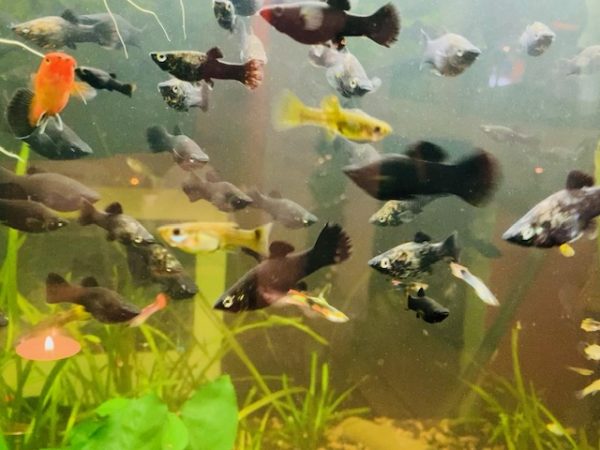
The modeling approach reveals the impact of an agent-critic network (potential of autonomous behavior) for protection of a swarm in a predator-prey scenario. (Image: fish in fish bowl 2024)

VOC for VCs

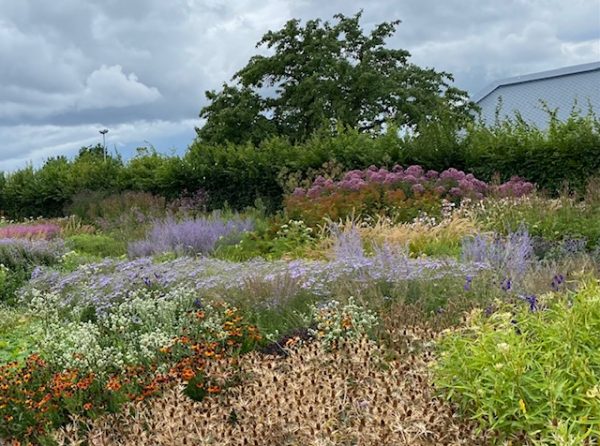
The research into VOCs (short for “volatile organic compounds”) is a busy research field in biology and environmental sciences. It might be of interest to VCs (short for “venture capitalists”) as well in the near future. VOCs are those organic compounds that orginate in animal manure as well as those emanating from plants have an impact on people working there or who are living nearby. Allergic reactions cause millions of days lost in working every spring or summer season. Long-term effects are yet another critical issue in this respect. Whereas the measurement techniques of VOCs have evolved a lot, the interaction effects of different VOCs are slowly producing interesting results that might eventually become of interest to VCs.
Abonde et al. (2026) show that there is a kind of communication between different plants via VOCs, which has an impact on growth and defence mechanisms of some plants. Amateur botanists have always wondered about the anecdotal evidence that some plants or flowers grow well next to each other, whereas other ones seem to deter each other. For crops, this mechanism has been documented and more experimental research of this kind will corroborate the potential of, for example, “natural fertilizers” in future. Remember to think of VOCs the next time you experience scents from animals, plants or flowers as a wonderful research topic with VC potential.

Mammalian Aging

Mammals share a lot of similarities with respect to aging. The researchers Alexander Tyshkovskiy and Vadim N. Gladyshev et al. (2026) spearheaded multiple research to identify similarities across humans, macaques, rodents and mice. The outcome of this overarching study of mammalian aging and mortality is a set of biomarkers that can serve to predict time to death.
Why is this interesting? With the rise of the longevity interest in the 21st century, the need increases to use robust biomarkers that can assess any presumably miraculous innovation to smooth human aging or prolong the time to death. Steps towards “universal transcriptomic signatures” including CDKN1A and LGALS3 (compare across species), which proved to be important in mortality predictions based on the large UK Biodata.
It is the accumulation of damage, which drives  processes of aging . However, “inflammation, replicative senescence, metabolic inhibition and γ-irradiation” can be attenuated or occasionally even reversed. The aging of cellular components has been demonstrated using “modular-specific clocks”.
With these biological advances in the field of biomarkers, the BPS nexus (biology-psychology-society links) could receive more attention as well in order to enlarge the society-wide research into the causes of human aging.
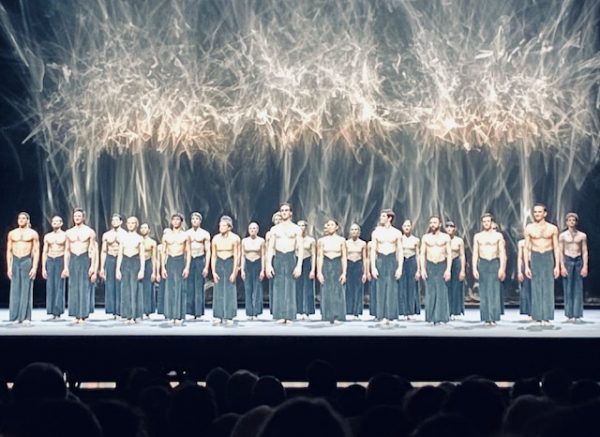
(Image: Staatsballett Berlin, Choreographie Crystal Pite, Gods and Dogs, Angels’ Atlas performed 2026-5, final applause)

Nature as a concept

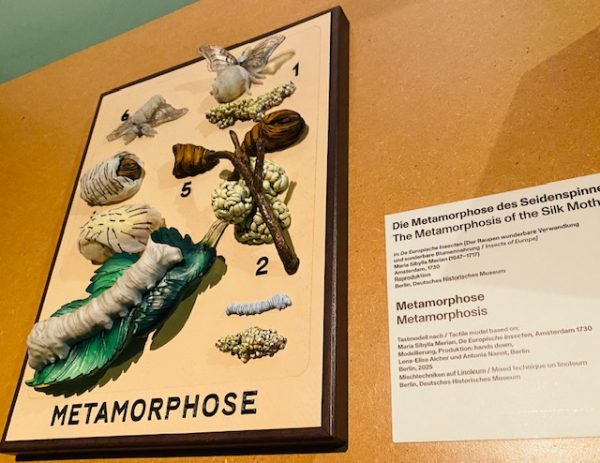
We all hold implicit or explicit concepts of nature in our minds. There are few countries that have “battled” over the course of history with changing and often “politicised” concepts of nature. The exhibition in the DHM “Deutsches Historisches Museum” on “Nature and German History, Faith – Biology – Power” is convincing with this cross-disciplinary approach to the subject. The chronological structure of the exhibition starts with Hildegard von Bingen’s vision of nature embedded into the huge diversity of plants with almost spiritual power. Admiration of plants and the animal world, however, became an economic resource just like gold and slavery during colonization, being followed by industrialization as the epitome of man’s power over nature. Counter movements have been on the rise in the 2nd half of the 20th century. Another power struggle over how and who defines the dominant concept of nature in the 21st century. As nuclear energy, bombs and waste redefined the long-term consequences of “treating” nature, the battles about the prevailing concept of nature intensify. The exhibition in Berlin 2026 is a fine example of a historical perspective on the relationship between society, nature and technology, where the concept of nature becomes a malleable concept between the other two players or systems. (Image: Metamorphosis of the silk moth, DHM 2026-5)

Exercise and neurons

The neurons in the brain have an active part even in training effects of physical exercise. Morgan Kindel et al. (2026) have accomplished a rigorous test that demonstrates the involvement of brain neurons when mice were exercising repeatedly. Training effects were larger if the neurons of brain cells were involved as well. The cell’s learning ability encodes the experience of exercise and is prepared for a repetition of the exercise. This is roughly what happened in their experiments in my own words. Runners might know the effect that running on track or treadmill uses up less calories than running cross-country where the brain is more challenged to avoid missteps or loss of orientation. However, the latter are different tasks whereas the former experiments demonstrate that the brain is involved in physical exercise even if we do not notice it. Exercise might spur brain plasticity just by doing it. Hence, just do it.  

Foul-smelling dictatorship

The animal world is full of interesting strategies of how to turn over a foul-smelling ruler or dictatorship. The ant queen of “lasius orientalis” infiltrates a colony of “lavius flavus” to spray the incumbent queen with a foul-smelling substance which turns the worker ants against their own queen and eventually kills the queen. This is a rather intelligent strategy to trick the defense system of rival colonies and prepare a takeover of a whole colony to install your own reign.
This may constitute a stark warning for democracies just as much as a threat to persistent dictatorships. In the age of the not so social media there is a lot of foul-smells produced. Beware of the risks to democracy as open societies are much easier to infiltrate than closed societies or dictatorships. (Link)

Genetic diversity

Part of genetic diversity is the apparent fact that some partnerships have only girls or only women as descendants. This is the message of a study published in Science Advances by Wang et al. on 2025-7-18. The commonly assumed binomial distribution where each event has an equal chance of occurrence at each new point in time does not necessarily hold for this particular events. Therefore, the search for a genetic explanation has been going on for some years. Therefore, there might be a potential for an epigenetic explanation as well, as environmental conditions might co-determine the expression of genes in both parents. The research will surely continue and the sex and gender diversity offers still a lot of surprises. A sociologist’s perspective would tend to focus on later gender attributes and choices rather than sex at birth. The bio-psycho-social research agenda remains wide open.