Modern digital technologies turn pages for you. Just with one touch.
Search functions that are implemented in the software allow you to search for any keyword you are keen to follow-up on. These are valuable advantages of digital versions of books or other content. Once you adapt the brightness of the screen you can scroll comfortably through hundreds of pages. These books are called flipbooks and there are a number of editors specialised on these versions.
In combination with a blog format of publishing online first and then transforming content into flipbooks or even printed versions, www.MPL-publisher.com offers a nice feature to host such flipbooks. It is comfortable to know that the content has a unique address on the web, which you can share freely and use from all sorts of devices including your smartphone, tablet, desktop or notebook. The collection of my images I even watch sometimes on an even larger TV-screen or a beamer for teaching purposes.
Yes, we can (!) teach from a smartphone. Learners have opted for the small screens a long time ago. -“hey – teachers, leave us kids alone. We don’t need no education, we don’t need no thought control“. Flipbooks combine the classic form and feeling to turn a page as accomplished progress with the fast access to keywords that spread over several pages of the book.
My latest version of blog entries from 1st of January to 30th of June 2024 is at your fingertip now. (here, allow for a really long download time!). A screenshot is provided below of page 114 of a total of 390 (OMG) on a notebook screen. The search list is shown for the keyword “wage” as an example.
A shorter reader on “Society and AI” is available here as flipbook (29 pages).

Library Search
Libraries have not only lots of books on shelves and in storage places, but scientific research makes use of lots of scientific journals as well. The direct access to these journals shortens the search for information. We tend to focus on certain sets of journals, which we follow regularly as well as some random choices. Libraries like the Staatsbibliothek in Berlin have the advantage of access to multiple scientific disciplines under the same roof. This facilitates cross-disciplinary research with access to the best available knowledge. This resembles university libraries where also a broad spectrum of disciplines is taught.
Moving from paper-based publishing to electronic publishing, it is obvious that libraries are part of this move. Printed journals disappear and the electronic versions are made available to the readers. 2 issues arise: (1) adapt your search strategy to e-search and reading on screens and (2) accept that your research leaves traces (and potential tracking of your activities) of what information is really used. User statistics are likely to have consequences in the medium term. All libraries want to know who are my readers and what kind of search strategies do they apply. Similar to some of the best scientific results that are an outcome of by chance findings the search in libraries is enriched through „random effects“ of search. On-shelf access to printed copies allows a rapid overview of a whole year of issues beyond the abstracts always available online anyway. It is so much faster than the online search that we shall miss the paper-based issues of journals for quite some time. At the time of artificial intelligence everywhere reading and writing might be overvalued as economists might say. Our search algorithms and use of libraries is evolving at the same time. The by-chance or random inspiration might move to other places.

Portable Grundgesetz
Celebrating democracy in Germany is rare. We take it for granted that democracy persists, as most of us have not experienced it otherwise in Germany. This is grossly mistaken as the opinion polls show repeatedly in recent years. Therefore, it is welcome to find the “Portable Grundgesetz” at the “Demokratiefest” in Berlin and Bonn at the event to celebrate 75 years of democracy in West Germany and 35 years in East Germany.
 The century-old tradition to produce miniature books has been revived and the miniature books have been widely distributed at the event. A side effect consists in the eco-friendliness of this version, which saves a lot of paper. It is fun also fun to turn pages rapidly and discover some paragraphs which we would not have read otherwise. “Daumenkino” is the German word for versions that contain many images. Maybe next time, an illustrated and/or animated version of the Grundgesetz could encourage youth to celebrate using the texts, §s and images to discover the fundamentals of our constitution.
 325 years ago, Weigel the Elder has illustrated, edited and published such a tiny edition of the Bible. It is currently exposed in the treasure museum at the “Kulturwerk” in the “Stabi Ost” in Berlin. “Back to the Future”, lots of ideas we get by taking archives seriously. By chance inspiration is undervalued. Search algorithms have a hard time to replace this in an effective way so far.
Heroines
In youth we are open for a wide range of influences. Heroines in children’s literature, picture book or cartoons look back on a long history as successful influencers. Creation, transmission and criticism of stereotypes are all part of the scientific reflection on heroines and heros. Nowadays, influencers have taken over picture books through the use of more compelling videos.
In the 1950s,1960s and 1970s picture books or cartoons dominated the influences before mass media like television became more absorbing, addictive and powerful influencers. Children’s books are passed on from one generation to next generation. The French-speaking world (and beyond BBC reference) has witnessed the success of the illustrated booklets of the young “Caroline” (Hachette) and “Martine” (Casterman) exploring the world. Parents passed on their collection to children and had their own parents read the stories to their grand children.
Well, that’s how intergenerational transmission of cultural heritage has worked for a long time. It describes the basic social mechanism. Nevertheless, new forms of influencing emerged with new technologies. Successful illustrated narratives like “Caroline” and “Martine“ were adapted as television series as well. In France you could chose your side of either explorations with Caroline and her group of animals or the adventures of Martine.
Ideally it would be an occasion for the families and friends to discuss pros and cons of each character and, thereby, become aware of what is a stereotype, at least at a later stage of the life course. Gender stereotypes have evolved and to observe 2 boys colouring Martine images in public (Brussels book fair 2024, image below) was a positive surprise. It almost felt like a real world experience of the AI-enabled Barbie explorations. 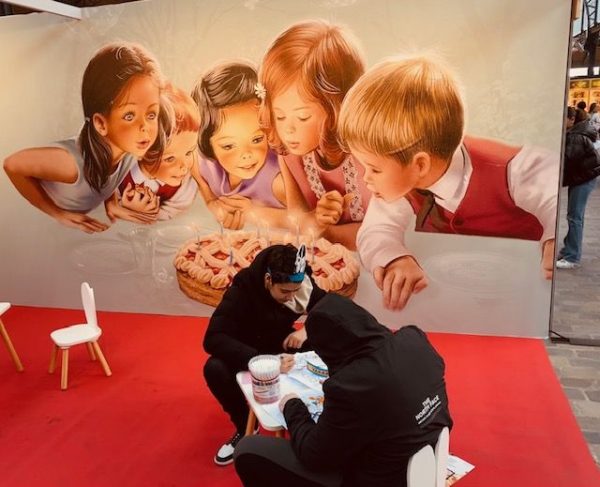
Stock taking
From time to time it is necessary to take stock of production and to review the material that has accumulated. As I have been working in archives, official book depositories and libraries for years, it comes almost naturally to deal with questions of how to keep track of all that content. Digital solutions are excellent devices in this regard. I do not have to deal with digitalisation, a huge issue for all historic archives and many recent small museums as well. I have to deal with backups at regular instances. To be sure, each engineer will assure you, better make a backup of your backup … . Yes, I do this as well. Now the ultimate backup of digital work is ? Got it, a printed copy of your digital work. The best advice I received on this comes from a computer magazine “ct” gadget mug with imprint advocating “No backup, no mercy“. To facilitate my printed archive I start with monthly collections of blog entries (Link to pdf-file December 2023 ->Brainstorming 23-12). The simple conversion yields 63 pages, a printer friendly version 56. Hence the expected yearly volume (60*12) will be somewhere near 720 pages. That is for the archive only or in case my eyes do no longer support online reading on screens for too long.
Digital archives have, of course, many other advantages. It is possible to reassemble my collection of entries by subject through a more thorough editing. Specific edited volumes will surface from this, which I have in my mind but only careful long-term followers of the entries might see already. Political economy and sociology are obvious candidates. Public health, labour, the world of arts and music could constitute other edited volumes. Lots of branches grow out of the trunk of content. 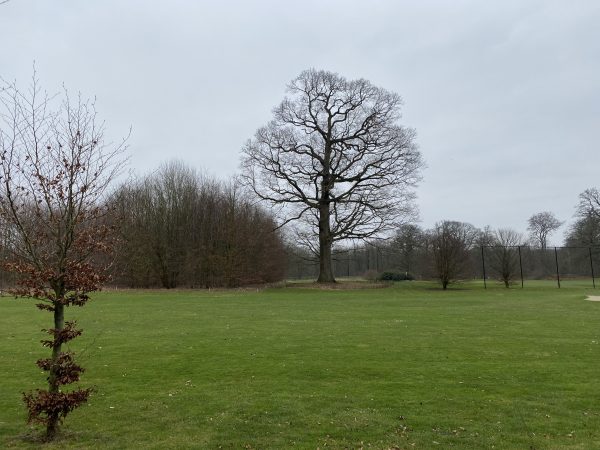
Only for Kids
We all have, hopefully, fond memories of children books. Sometimes authors are not so keen to tell that they are just writing books for children. This is often present in many biographies of authors of books for children. This is grossly unfair. Not only is the book market for children’s books one of the best- selling part of literature, but there are lots of interesting collaborations between authors and illustrators. Most books are expensive to produce, particularly if, additionally, translations are needed to reach more children and their parents. For small countries this might be a barrier. The Scandinavian countries have a tradition to translate and publish some selected children’s books in multiple Scandinavian languages and beyond. Therefore, it is no surprise to find a children’s book entitled “Kant” by Norwegian author Jon Fosse, illustrator Roj Friberg with the text translated into Swedish and published by the Danish Editor Carlsen, all in 1990.
The illustrations allow to understand the “bilderbok med text av Jon Fosse” using an enlightening imaginative visual language. From the cover already It is clear we deal with the universe and endless open space. There are black holes in it as well. Jon Fosse deals with “möjliga och omöjliga”, possibilities and impossibilities. Tackling such philosophical questions with children needs the best authors to address these issues. How to speak of the unspeakable, things we have hardly any words for remains a challenge. Relating to the world of dreams, appealing to children and their parents, does the trick. After all, you just need to close your eyes and you start to travel the universe and make lots of exciting encounters. The book has no page numbers, interesting. The image below is from page 25, just as an appetizer.
For more insights of how to deal with “nothingness” I refer to Friedrich C. Heller (2020) “Towards nothingness. Ideen der Reduktion in zeitgenössischen Bilderbüchern” (in Benner et al. editors 2020). Susan Sontag (2005) „die Ästhetik der Stille” (in Eugen Blume 2005, editor) will also help us along on the subject of stillness and minimalism. Maybe it is these essentials we should talk more about especially with our kids.
To continue the exploration of space and stillness just go to the webpage of the hubble telescope or the James Webb Space Telescope. The journey of your dreams will be hard to stop. 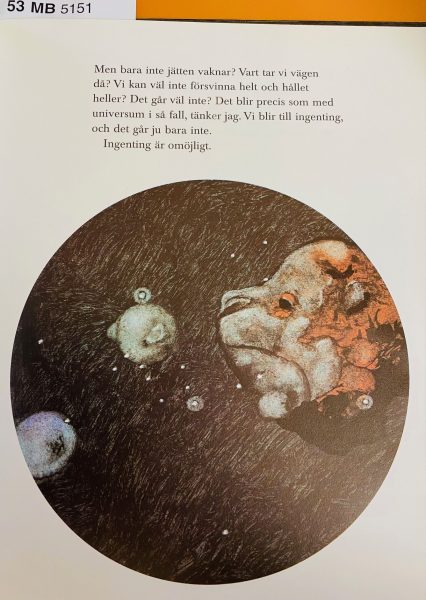
CO2 Footprint of Books
In view of the worldwide size of book publishing we should also keep an eye on the CO2 footprint of book publishing. The Italian association of publishers gave a brief overview of the likely CO2 footprint the printing of a book causes. Their best guess is at ½ a kilo of CO2 on average. For simplicity of calculation and assuming that an editors’ association is unlikely to overstate the amount, let us assume it is 1 Kg CO2 per book. The most CO2 is consumed not in the book production but in the transport of the items, machinery and personnel involved in producing, editing, selling etc. Of course, paper is recycled to a large amount. Certified sustainability of paper from trees has become a standard in most countries.
Nice twist to the issue: your own library at home has become a CO2 storage, if you keep them or lend them or pass them on to others. Reading can be a little bit addictive and buying books as well. Reading online or electronic books reduces your CO2 footprint. The best way to imagine the reduction of your CO2 footprint, however, is to buy or to borrow a book on travelling which replaces the actual journal by reading on the couch. Yes, being a couch potato is good for the planet, and if you want to buy a book, walk to the book shop or the library if possible. If you enjoyed flying previously shift over to buying books on planes, airports, clouds in images or stories that involve extensive travelling instead for the sake of your own CO2 footprint and future generations.
Even a book will need somehow wood as input, many alternative ways of leisure time or professional activities are worse in terms of CO2 footprint. Any e-book, e-journal or e-newspaper is even better for the planet, especially if we think of the millions of paper copies across the world that are printed but never sold. Knowing your market is crucial to reduce misallocation of ressources. E-books are so much easier to store as well using regenerative energy for the content servers around the world. 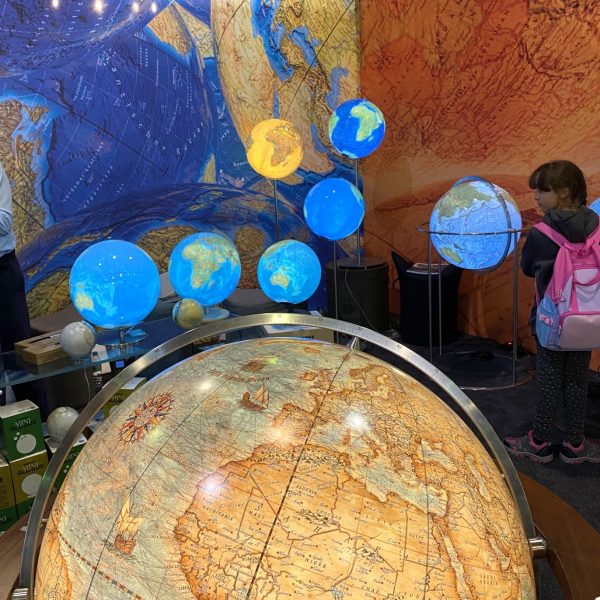
Book traders
Some book traders have a mission. They assemble little corners on their book shelves or in tiny cupboards reserved for their passion or mission. In some book shops you’ll find a corner devoted to a specific language or translations, in some a world region is represented as a specific predilection. The choises are as numerous as there are books. Of course, from an economic point of view national and international bestsellers will be shown in the most prominent places. Second come books for children, cooking, life and travel guides. All those are the cash cows for book shops and traders.
But beyond those, it is always worth the effort to search for those little carefully curated corners in a good bookstore that derive from the vision or mission of the book trader, employed or owning the shop. In some areas this contributes even to a small community building. Readings of authors add to the function of book sellers to build a relationship to their non-random book buyers. I keep going back to my favourite book stores and libraries with those curated corners for decades and across countries to find inspiration and updating of special topics.
There is a danger that we are going to lose all this professional work of thousands of well-trained book traders that guide readers in addition to publishing houses, literary critics, numerous awards and huge marketing campaigns of derived products (as with Harry Potter). Living up to your mission while running a book store must be a great experience. If is really increases the buyers and readership for the topic, would be a great result. However, I suppose many bookshops manage to keep their little curated areas despite economic pressure to go with the mainstream marketing campaigns and top selling books and gadgets.
With the decline in the number of smaller book shops (in Germany from ca 5000 to 3000 in about 20 years) we see a parallel increase in number of franchises of the big book sellers (Thalia.de 500 stores in D). Big chain increase seems to cause fewer professionally trained book traders (-10% in D) within a country. For younger generations TikTok (BookTok) has taken over large parts of the “book counselling” of book traders previously. This was a big event at the Frankfurt Book Fair 2023 as well.
Time to rush to your local bookstore and book trader before it is taken over by a big chain or simply disappearing silently. We are likely to lose many of those book traders with a mission to make this world a better, more beautiful, more tasty, enjoyable or inclusive place. 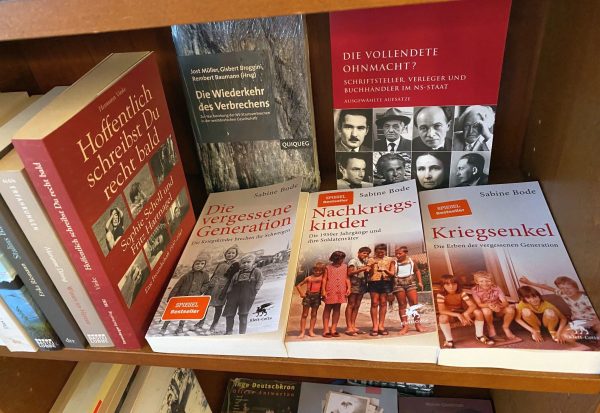
Comme les peintres
« Moi aussi, comme les peintres, j’ai mes modèles ». So beginnt ein Gedicht von Jacques Prévert. Ein Klassiker der französischen Poesie. Prosagedichte sind eine Gattung der Gedichte, die in kurzen Texten einen Moment oder Augenblick einfangen und sublimieren. In diesem Genre publiziert Philippe Delerm seit Jahren prosaische Gedichte. Der in 2023 erschienene Band „Les instants suspendus“ reiht sich ein in die Sammlungen von Momentaufnahmen, die sprachlich veredelt die Wahrnehmungen schärfen und sie zum Salz des Lebens werden lassen.
Für Weinliebhabende drängt sich die Assoziation „vendanges tardives“ (späte Lese) auf. Während wir in deutschen Weinanbaugebieten ganz nüchtern die zu erreichenden Öchsle für die Spätlese zählen, verbindet Delerm mit den „vendanges tardives“ „une jeunesse prolongée, glissant vers la mélancolie, et célébrant mezza voce le mariage de l’automne et de l’été “. (2023, S.87).
Die Sammlung „Les instants suspendus“ – auf Deutsch vielleicht „Momente, die schweben“ bietet zahlreiche, aufheiternde und, ja auch erhebende Augenblicke, die trotz der Intensität der Schilderung für viele Menschen Anknüpfungspunkte bieten. Übersetzen lassen sich die Szenen schon, aber es schwingt bei den kurzen 200-300 Wörter umfassenden Texten viel französisches Flair mit.
Bei „Commander l’eau“ wird „Le bruit de l’eau dans la bouteille devient chant“. Wasser einfüllen ist Musik. Oder, « Le moteur de la deux-chevaux », der Motor des 2 CV, « c’était humble et c’est devenu chic », das war bescheiden und ist schick geworden. (S.82). Das federnde, schwebende Fahrgefühl wird bei Delerm ein „accord prolongé“, zu einem nachwirkenden, verlängerten Akkord.
Aus dem Netz der Spinne (toile d’araignée) wird der Stern der Spinne (étoile d’araignée) auf Seite 101. Fast alle hätten diesen Versprecher schon gemacht, aber es ist einer der Wenigen, den die Erwachsenen nicht berichtigen.
Lassen wir den Kindern ihre „instants suspendus“, ihre Momente der Poesie.
(Image: Innenansicht und S.9 Anregung Proust zu lesen im Vorspann). 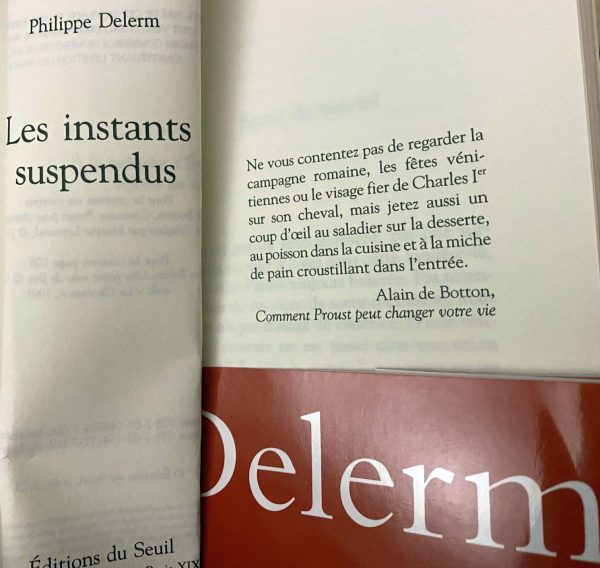
Gespenster
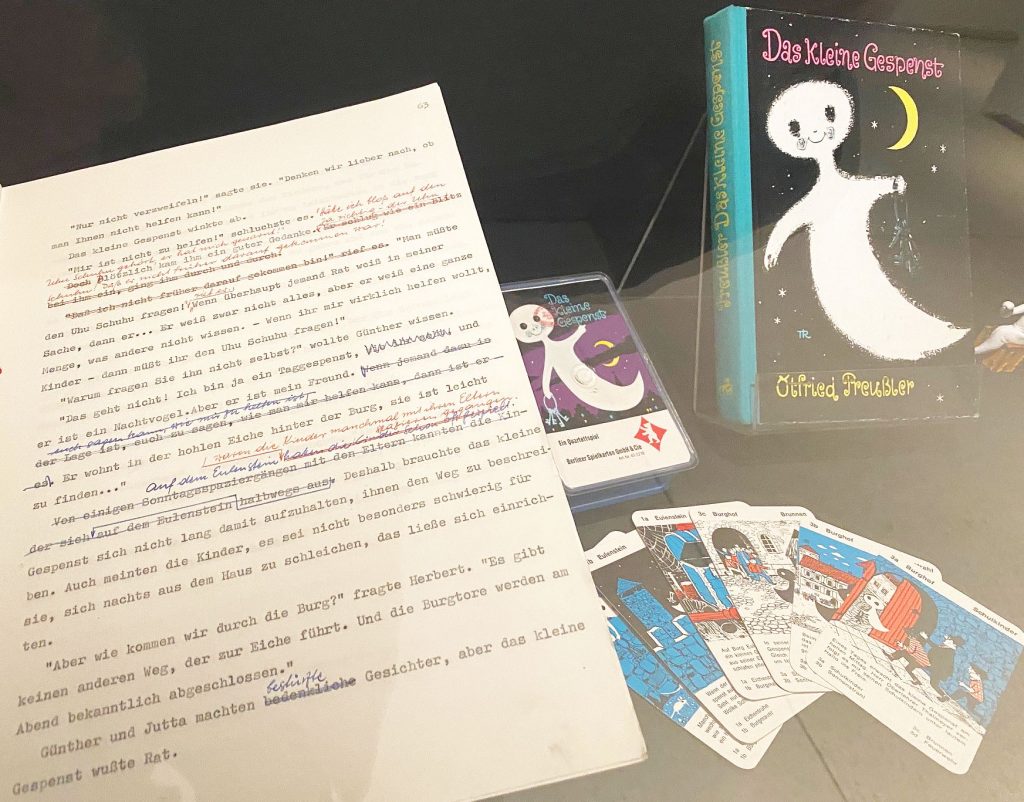
Passend zu dem alljährlichen Hype und Kommerz zu Halloween Ende Oktober, öffnet die Sonderausstellung zu Otfried Preußlers 100. Geburtstag. „Die kleine Hexe“, Das kleine Gespenst“, „Der Räuber Hotzenplotz“ oder seine deutsche Übersetzung des Kater Mikesch haben mehrere Generationen von Kindern und Eltern begleitet. Fantastische Geschichten haben bereits seit langer Zeit Kinder begeistert. Eine gute Hexe und ein liebenswürdiger, eigentlich ungefährlicher Räuber passen in die kindliche Vorstellungswelt. Lange vor dem Spektakel um die Meerjungfrauen, hatte Otfried Preußler den kleinen Wassermann erstehen lassen. Diese Geschichten machten Otfried Preußler zu dem erfolgreichsten deutschsprachigen Geschichtenerzähler nicht nur für Kinder. Ein Glück, dass der Nachlass seit ça 10 Jahren in der Stabi Berlin aufbewahrt wird. Es hat sich bereits ein reges Besucherinteresse eingestellt, denn die Bilder zu den Geschichten haben sich tief in das Gedächtnis von Kindern und Eltern eingegraben.
Die vielfältig zusammengestellte Ausstellung bietet abwechslungsreiches, unterhaltsames und hintergründiges Material, um den Werdegang und Schaffensprozess des Schriftstellers zu verdeutlichen. Die liebenswerten Figuren der bekanntesten Werke wurden in viele Sprachen übersetzt. Verwertungen von der Augsburger Puppenkiste bis zu den Fernseh- und Kinofilmen in späteren Jahren haben die Geschichten mit ihren liebenswerten Charakteren ein bleibendes Kulturgut werden lassen. Mit den dunkleren Kapiteln seiner Vergangenheit hat er sich ebenfalls in seiner Geschichte „Krabat“ auseinandergesetzt, die jedoch viel weniger bekannt ist. Das Verdienst dieser Ausstellung ist jenseits der emotionalen Verbindung zu den Geschichten Otfried Preußlers, Hintergründe zu beleuchten. Nach anfänglichem Misserfolg, Ablehnung eines Verlags, dann 9 Monate warten bis ein positiver Bescheid eines anderen Verlags vorliegt, entschied sich der Leiter einer Volksschule seinen Lehrerberuf in gesicherter Anstellung aufzugeben. Mit seinen Kinderbüchern hat er unzählig viele Kinder mehr erreicht. (Link zur Ausstellung online Material)