Utopian Mobility

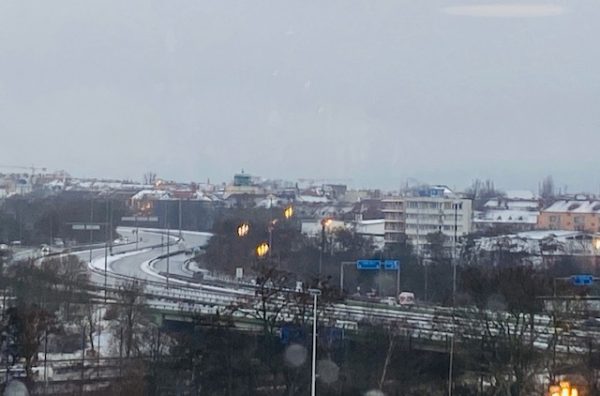
From time to time we have to reconsider our investments in mobility infrastructure. What seemed to make sense in the 50s,60s or 70s often makes no sense 60 years later. Highways, which separate city districts like walls belong to rather utopian visions about City life and mobility, progress and living conditions. These utopian individualized mobility solutions don’t seem to serve us as well as we believed, or were made to believe, more than half a century ago. Empty highways midday at the turn of 2025/26 tell their own story about liabilities from the past and outdated ideas of technical and social progress. Sharing solutions have become very popular and the younger generations adopt already different mobility patterns than older generations. Each generation adheres to its own more or less utopian mobility model, adjustments are likely to be made accordingly. 

Embedded Artists

The Brussels districts have their specific identities. 

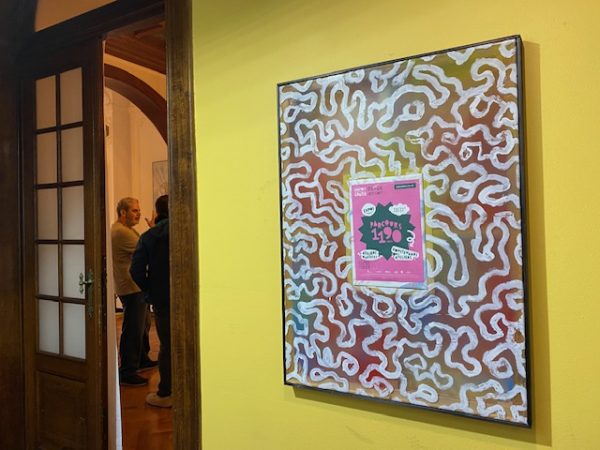
The Forêt district is reconfiguring itself rapidly. In addition to the Modern Art Gallery Wiels, It hosts a multitude of diverse artists. Many of them opened their doors to the public as part of the 4 days of Parcours 1190. It turned out to be a truly Inclusive experience in the broadest sense possible. The immersive experience of seeing the work and the artists, some of them in their private homes, created a sense of an embedded connection to their work and personalities. The artists are embedded in the district around them nd the people of the district might feel a bit more connected to the artists surrounding them. The artist has integrated the pink poster of parcour1190 into one of his works under the overarching theme of inclusion. Social inclusion can take many forms, The Brussels district Forêt has added new dimensions to it. (Image entry to Hassan Bouzougarh‘s exhibition on 2025-10-5, Brussels Forêt). 

Paris History

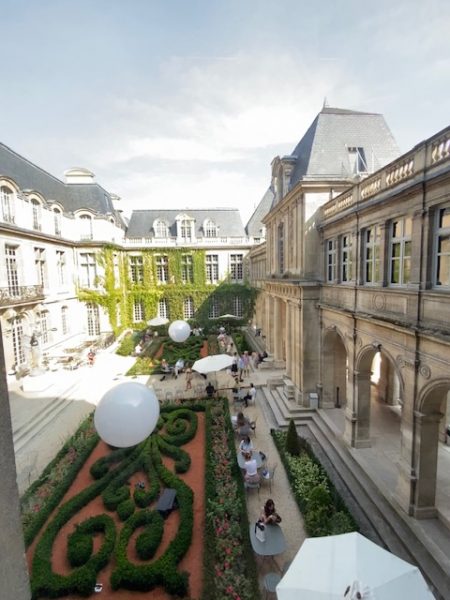
The “Musée Histoire de Paris Carnavalet” is the starting point for visitors of Paris and social scientists to better understand the making of this metropolitan city throughout centuries. The only common factor over the years is the astonishing determination to reinvent the city every 100 years whilst the best features of the previous periods are preserved. It is the concern for the very long-term time horizon that makes the city quite unique. Even a social revolution (1789) unlike most other countries managed to preserve most buildings, churches and royal palaces. Restorations are undertaken with a careful approach to shield its architectural and social heritage. Even the radical transformation by Haussmann over almost 20 years until 1870 to build large corridors in the city is subject to revision in modern visions of the future of Paris. The app of the museum is very helpful to learn more details about each chosen object of the permanent exhibition. The social fabric of the city can be studied further through app’s feature when representatives of local social organizations speak about their personal piece within the huge collection on display. The larger the “fundus”, the more the rationale for selecting pieces becomes an issue. (Image: Musée Histoire de Paris Carnavalet inner court 2025).

Emotional history

The making of emotional memories of a city is an art in itself. Many cities have professional photographers who accompany all major events in a city over years. Paris has had the chance that artist photographers and film makers have contributed greatly to the emotional history of the city. Agnès Varda was such a formidable person whose images and movies moved people and allowed to share emotions about the city’s busy and diverse neighborhoods. The « Musée Histoire de Paris Carnavalet » combines an autobiographic perspective with the emotional depiction of live in Paris from the 1950s onwards into the late 20th century. (Image: Agnès Varda, 1950 self-portrait, MEP Paris). 

Paris Gare

Train stations in metropolitan inner cities are hot spots of traffic and mobility. The number of people passing through these exchanges are impressive. Public transport systems are continuously put to the test of their capacity to handle passengers who want to get from A to B the fastest way possible. In Paris the RER lines, metro and buses to a great job in handling the affluence of passengers. The comparatively small number of passengers arriving and departing nyy taxi, however, still take a disproportionate amount of space. That’s part of the differentiation or inequality of mobility in Paris. Person‘s in need of assistance should have special access to central points of mobility like train stations. Everybody else could rely on shared modes of transportation otherwise the millions of inhabitants will not be able to get around in a comfortable way.


Berlin Mind

For a long time now, I have been asking myself the question: What is like to be in a „Berlin state of mind“. The exhibition of the 2 photographers of the Berlin Landesarchiv as part of the Berlin activities of the EMOP contributed to understanding and more precise description of the „Berlin state of mind“. As we shall celebrate in 2025 the 80th anniversary of the liberation of Europe, Germany and Berlin from Nazi rule and terror, we have seen endless reconstruction and reshaping of the city. The ever growing need for housing and space-grabbing office buildings bring about a permanent feeling of change, of becoming, of under construction. The years of the separated city as well as the building and taking down of the Berlin wall created many new opportunities for developers of the city and its structure of quarters, arrondisements or „Bezirke“ and „Kieze“ within the districts. 

Due to the continuous urban renewal also of basic infrastructure Berliners have the impression that there is construction work all around us all the time. With the abundant construction works come the construction fences. They too have changed. Some fences show digital prints of virtual worlds of the Berlin living in some future time. However, the promises often mask the reality that fences will be replaced by concrete walls and inaccessible buildings for most people of the neighborhood as gated business space or city blocks grab the space to form and reform the metropolitan landscape. The construction fences themselves become the contested areas where different strata of society interact or intersect. The „Berlin state of mind“ is one of becoming. Longing to become something else, something aware of the overwhelming historical duties, but still rising from the ashes. The experience to see a wall come down between cold war enemies liberates a belief that we can overcome frontiers. However, this in-between state of mind has brought us multiple fences of all sorts. Construction fences are only the most visible ones that surround the many spaces under construction. In the imagery of Berliners and visitors beyond the wall, fences are continuously on our minds in the „Berlin state of mind“.

Birds again

There are many ways to have more birds again in inner cities. Less pollution and poison are part of the solution. Second, increase the food available to birds. Some plants or vegetation is more suited than the other one. Combined with the question of cooling houses in summer and more isolation in autumn and winter, the greening of facades in cities has a simple effect to provide hiding, nesting and feeding spaces for birds. Birds will discover this vegetation as their natural habitat offering relatively safe shelter and food. It is an incredibly simple way to catch 22. Your new shelter is selective in the choice of birds that it will house. Singing birds seem to value the places most. Other predators may follow. At least in late autumn and early winter the energy rich power food is a welcome addition of the diet. Nesting in spring and summer might be another option to have more birds again. We shall need many very small steps again to keep biodiversity or bring back some of it. Birds again is a small initiative.

Paris Vision

You got to have a vision in urban planning. Long term visions are best to then realize them step by step. The center of Paris has been restructured since the time of Haussmann at several places. The previous commercial center of Paris with « Les Halles » and the building of the commodities exchange « La Bourse de Commerce «  have been turned into a pedestrian area long ago. This axis runs nowadays from the home of the Pinault Collection to Les Halles almost to the Centre Pompidou (in the background of the image below). Whereas Les Halles is usually very popular and crowded with people the art museums are a bit less busy. Walking around in the area is offering amenities for people of all walks of life. It is an area, better called a pedestrian boulevard, where the wealthy and the poor may meet or at least pass by. Social urban planning is in high need to be considered as a vision not only for Paris, but many places and cities again. Inclusive societies also begin with a rather simple vision of togetherness putting people first.

Mobi Tech

There is much more to mobility and technology than new cars and bicycles. Innovative infrastructure provided by new public services allows new forms of mobility technology to strive. Charging points across a country are crucial to ensure smooth and smart mobility for example with e-cars and e-bikes. Software guides us to next or cheapest charging point in the surroundings. Public services provide the basic data on this and need trustworthy updating and repair of the infrastructure to avoid frustrations. Navigation systems need up-to-date info on areas with restricted mobility due to high emissions (diesel) or illegal parking of shared bikes and rollers to avoid a banning of share options in inner cities. Data allow the guidance of traffic and combinations of different modes of transport. Mobility tech is nowadays a largely data driven process and public services provide important basic services and information for innovation and reduction of emissions in the field of multimodal mobility.

Digital public management

Countries with large public sectors also have specialized research called administrative science. More than 25 years ago the whole discipline has been hooked on the idea of so-called “new public management”, which introduced “management by objectives” and “benchmarking” as new tools into the field of public sector management. In Germany Naschold and Bogumil (2000) have been publishing extensively on the topic.  In 2024 the new public management is well established and the now new challenge is “digital public management”. Berlin just hosted a fair on this topic (SCCON 2024). This allows to speed up administrative procedures, increase the reach of public administration into remote areas and creates new challenges to counter the digital divide of society. The modern public sector may shift from being pushed by private sector companies in terms of digitalization to being a forerunner of digital provision of services. Tax declarations in Germany are a good example, where for many years it is a widespread practice to rely on digital forms of declaration and communication between the tax office and its clients.
Other countries, like Estonia, have taken already many more far reaching forms of digital public management and digital provision of services. The scope of such reforms is huge and the administration of persons in remote areas and aging societies give additional reasons to push ahead with digital public management.
At the time when even emails become outdated among youth, some administrations are proud to feature their latest innovation in digitalization. A machine is opening physical letters and scans the documents automatically and stores them in a secured cloud for example. It is indeed an important “bridging technology” for administrations dealing with a generation of older persons who are used to this form of communicationd by (snail)mail.
Many interesting new digital solutions (hard and software) were on display at the SCCON 2024 and many more are in the pipeline or pilots have been implemented already, well worth studying in more detail.