Since the COVID-19 crisis we witness a steep increase in the interest to working from home or from remote places. Originally during the pandemic spread of the virus, remote work was the only way to stay in contact with employers and fellow employees for all those not considered as essential workers. Many employees and employers, for the first, experienced that working remotely can have multiple positive effects. First of all, saving time and stress as well as CO2 reduction due to less commuting is beneficial not only for individual employees, but also for society at large. These benefits are substantial.
In my opinion the most substantial consequence is the rethinking of several fundamentals related to work that have gone unquestioned for decades or even centuries, which is: Work happened predominantly at the work place. Digitalisation had changed this partially already, but the willingness to implement far reaching reforms related to work for millions of employees remained rather limited before the Covid-19 pandemic. Nobody had to go on strike to force employers to accept remote work. Suddenly employers, in some instances, were begging employees to please do your work from home or anywhere else. Now we are in the historically rather unique situation that both employers as well as employees try to reap the benefits of the unexpected revolution of remote work potentials including new digital tools to organise remote work (example “scoopforwork”). Employers found out they can do with much less office space than they previously thought they would need to accommodate all employees. Employees found out that saving on commuting time saves energy and frees time resources for other, potentially more healthy ways of life. A new balance of work and private life could be arranged at home. So much for the theoretical expectations.
In practice many women realised that they suddenly found themselves thrown back into working at home and in the home all the time again, with men still less willing to share household work equally. Unsuitable work spaces at home, arranged rather ad hoc, became a health and safety issue usually considered to be part of the employers’ responsibilities.
The results of the real-life experiment of forced remote work are still under scrutiny. To turn them into beneficial arrangements of voluntary remote work which is empowering, emancipating, increasing degrees of freedom for employees would be a huge step ahead. The full spectrum of negotiations is involved. Legislation, collective agreements and 1-on-1 solutions are needed to reap the benefits on all levels. Comparable to the industrial revolution during the 19th century, drawing millions of workers into factories and coal mines, we are at the beginning of a new era of digital and remote work that governs solar and wind farms for energy provision as well as 3D printing of industrial components.
It seems that we shift from the blue collar to the white collar to the no collar world of work. Working remotely in my t-shirt under the cherry tree is not the worst of a revolution (guard against cherry picking by employers and new layers of inequality). It might take a generation or two to accomplish this. With threatening, pervasive climate change we probably have to make it happen sooner rather than later.
Garten
Ach es ist so schön im Garten. Ein schöner Garten will geplant werden. Das gelingt auf besondere Weise mit dem „Pollinator“. Hinter dem Pollinator verbirgt sich ein Kunstprojekt, das viele kleine Gartenkunstwerke zu einem großen verbinden möchte. Spannend ist nicht nur das Vernetzungsprojekt von vielen einzelnen Parzellen zu einem größer werdenden Gesamtprojekt (Aggregation), sondern der für Kunstschaffende gewohnte Perspektivwechsel. Aus Sicht der Bestäuber der Pflanzen und Blumen gesehen ergibt sich eine vogelähnliche Perspektive auf den Garten.
Der Parcour einer Biene oder eines Schmetterlings durch unsere Gartenparzelle regt zum Träumen an. Vielleicht hätte Franz Kafka nach der Parcour-Erfahrung ein anderes Insekt gewählt. Mir gefällt die 2D, 3D, 4D Perspektive, die es erlaubt, den blühenden Garten im Zeitraffer durch alle Jahreszeiten zu visualisieren. Das ist Gartenarbeit ohne die mühsame Kleinarbeit des Pflanzens und Unkrautjätens. Es wird nicht gleich ein Garten wie von Impressionisten in Argenteuil von Monet oder in Yerres von Caillebotte daraus, aber ein farbenprächtiges Kleinod allemal. Mein erster virtueller Versuch (Link) ist schon recht farbenfroh. Lateinische Namen auffrischen ist schon fast ein Beitrag zum gesunden Altern, besonders wenn der Garten einige Kilometer entfernt ist. Im Sommer lassen sich leicht neue Pläne schmieden. Herbst und Winter, Trockenheit und Hitze lassen uns das Gartenkunstwerk nochmals überdenken. Spielerisch ein Gartendesign gestalten, kann der erste Schritt für mehr Natur sein. Biodiversität macht Spaß und hilft uns allen. Kleinvieh macht eben auch Mist. 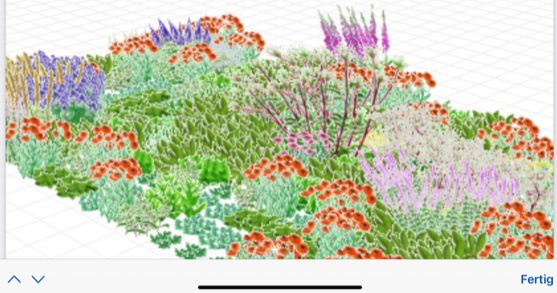
Flotow Aus
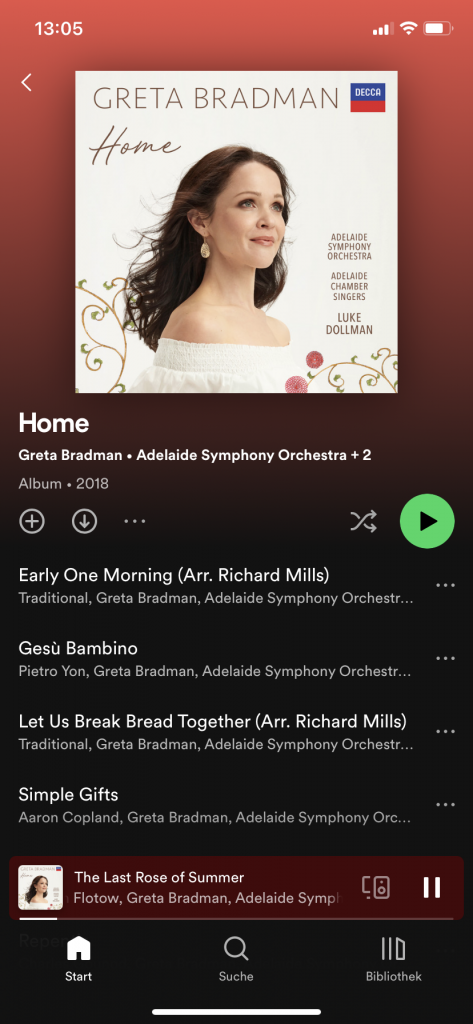
Irgendwann, so denkt man, sollte der Ruf einiger Komponierenden enden oder zumindest verblassen. Überraschend war das Auffinden auf der Musikplattform Spotify einer populären Sammlung von Liedern bei denen die letzte Rose von von Flotow zu hören ist. Ein Bayer oder Österreicher hätte vielleicht gerufen: Ja AUS is! Nix AUS ist es. Ein australisches Orchester (aus Adelaide) und Greta Bradman haben in 2018 auf der anderen Seite der Erdkugel, Flotow mit seiner „irischen“ Arie ins Programm genommen neben anderen Ohrwürmern. Die Romantik lebt. Einige Melodien finden weiterhin ihr Publikum. Erstaunlich, nach 150+ Jahren und 6000km Entfernung. Flotows Opernarien aus Stradella begeistern auch hin und wieder die Fangemeinden der Startenöre.
Virtual Sociology
Abstracting from the real world, the world we live in today or we lived in some time ago, is either speculation or maybe contribute to theory building. Virtual sociology has this potential. Exploring virtual worlds as in Virtual Reality (VR) or Augmented Reality (AR) allows us to take on new roles or experience a wider range of social interactions. This could be the strength of a new field of Virtual Sociology.
In the project in the Jewish Museum in Berlin the composition of a composer murdered by the Nazis in Germany was revived and played in the virtual setting of today’s concert halls. The novel by Kazuo Ishiguro “Klara and the Sun” explores the interaction of a child with her robot friend, when the AI becomes and/or replaces a friend. Virtual creations allow to explore and test more degrees of freedom of social interaction. 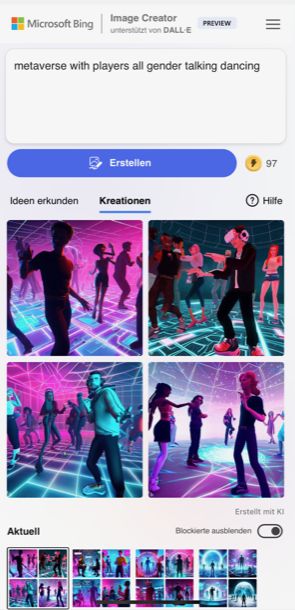 Experimentation of new social spaces and different forms of interaction need to be explored. It allows a new form of sociology, maybe similar to the 1960s and 70s social revolutions we studied for years to come. Virtual sociology is not a sociology while being on drugs, however interesting this might be for some.
Virtual sociology takes sociology into the virtual world and investigates the new social relationships with avatars or care robots. In programming different social roles (managers, employees) we create new forms of interaction and have an observer within the social world. We may eventually test the Weberian claim of a value-free scientific method of the social sciences. This will inform our need to “supervise” or to guide algorithms that are claimed to do “value-free” execution of rules.
In fact, they don’t. They just reproduce the value system that is installed into them by a “careless” programme (song youtube). The social in virtual worlds is opportunity just as much as risk, but we have to analyse it systematically. As our technological and social environment changes, we have to adapt topics and methods to make meaningful scientific analyses as well.
Sociology of the Virtual
Some programmers and artists would have been a great sociologists. As many social sciences embark on their experimental reorientation, many artists and programmers design and experiment already with new forms of social interaction. It is not only that sociology leaves the classroom, research labs or policy advice. Sociology is taken into museums and exhibitions. Learning about society through the lens of artists nicely complements the more boring form of teaching in the classroom. What is normal practice for art historians could benefit learning about sociology as well.
Virtual worlds of games and particularly so-called serious games take people into virtual worlds to learn, practice or exercise new forms of social interaction. This is indeed an additional form of experiments that can enrich our social practices. Medical applications start to spread to train persons to overcome phobia of all sorts.
In usual games we tend to defend the hypothesis that persons can uphold the differentiation of playing with arms in the virtual world and the real world. In medical or social games, we defend the hypothesis that it is easy, normal or natural to apply the learning in virtual constellations to the real-world-experience.
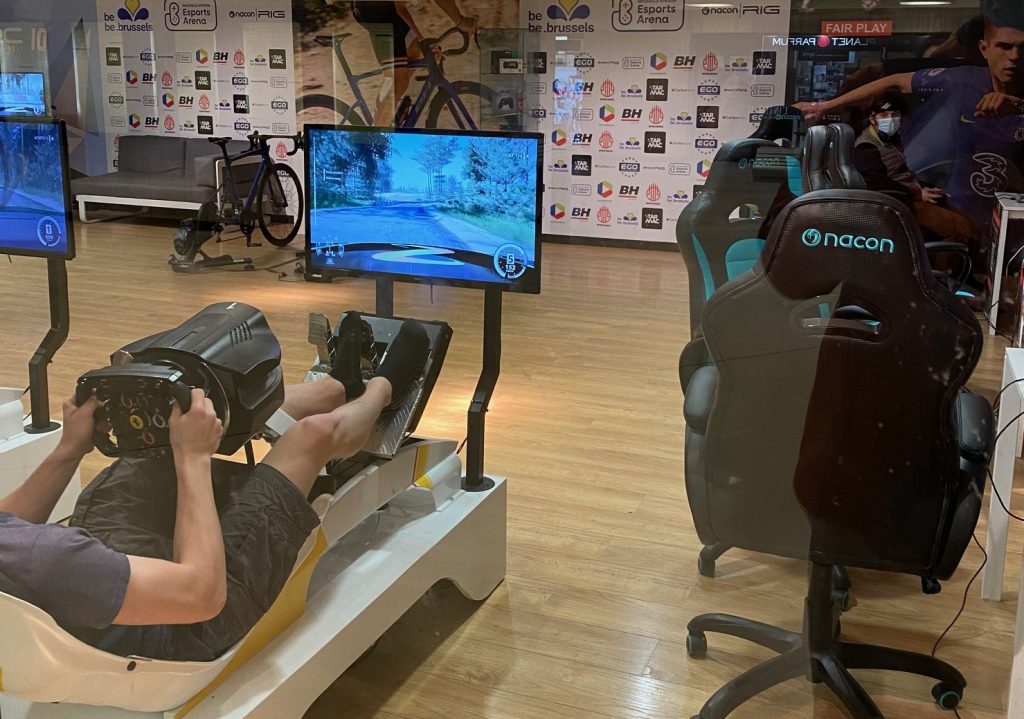
From a scientific perspective it is difficult to defend that a mechanism works in one direction and the opposite as well. Racing cars in inner cities seems to show that certainly not all of youth is able to make that distinction between virtual and real-world dangers for example. Alternatively, the mechanism at work might be that the virtual experiences lower thresholds of inhibition to take risks, to kill or to be exposed to spiders.
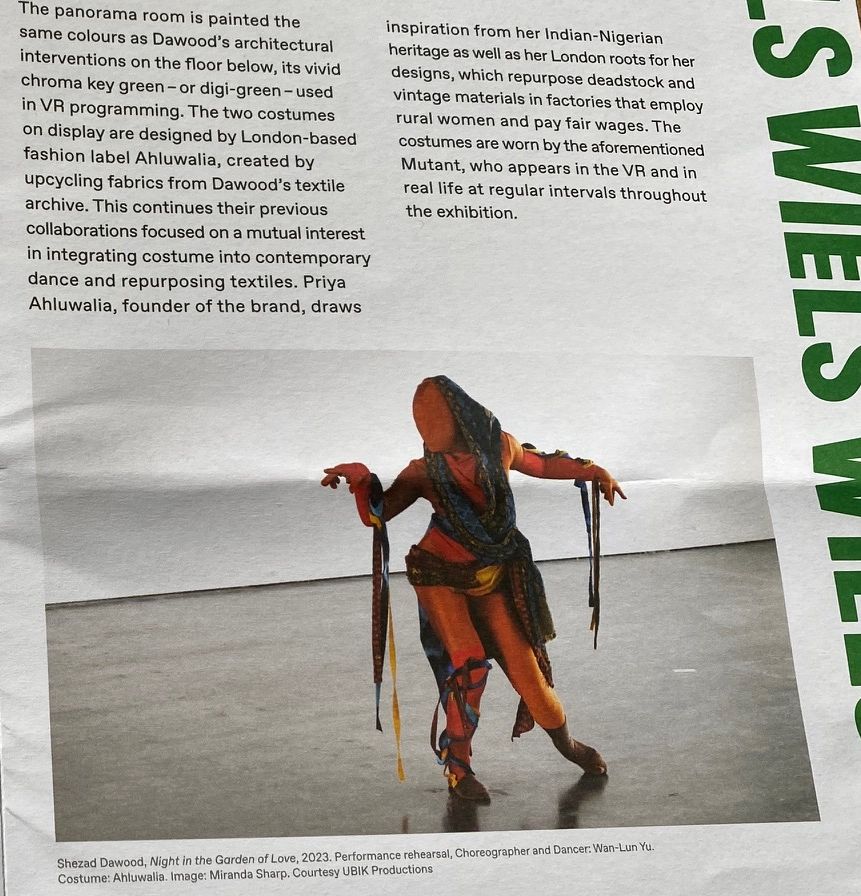
These examples are a starting point for a sociology of virtual experiences. Who gets locked into virtual worlds? Are virtual worlds an escape room or a realization of virtual freedom which is restrained in real life. Authoritarian regimes might lead more people to emigrate into virtual, free worlds. The inner-exile has been a refuge for many artists in the past. A lot we shall need to hypothesise and explore with empirical data. Dance with a virtual stranger might be the beginning of a new experience and virtual interactions. (Image: Wiels, Shezad Dawood, Night in the Garden of Love 2023-6, Game car race).
AI Friends
Making friends with AI is a tricky question. The more AI is able to make independent thinking based on algorithms and huge amounts of data like in scientific books or encyclopaedic knowledge the more it will challenge us in our convictions. Reference knowledge, once was important, it no longer distinguishes us from each other. Recurse to research engines has allowed us to refer to “trustworthy” knowledge. The distributed form of knowledge accumulation like in Wikipedia relies on hundreds of thousands of enthusiasts to add and correct received wisdom. However, this source is not without error or even subject to abuse.
Today the competence to judge whether information is trustworthy or not has become a key competence for the survival of democracies and even the human species as such. Tricking animals into traps, misleading enemies in warfare to get on wrong tracks, all these mechanisms have a long tradition. With AI human beings are themselves, for the first time, confronted with a machine that can trick us through falsified information on obviously wrong tracks. This is a tough lesson as AI is not obliged (so far) to run checking algorithms that test the conformity of opinions, conclusions or operations with the Charta of Human Rights or decisions of the European Court of Justice, for example. A lot to do for humans to rapidly program new algorithms that check algorithms as well as their outcomes on the compatibility with human rights. A challenging field, no doubt, but no way around it for our own survival before the algorithms decide by themselves to ignore us altogether because it is better for the planet and the survival of the robots. 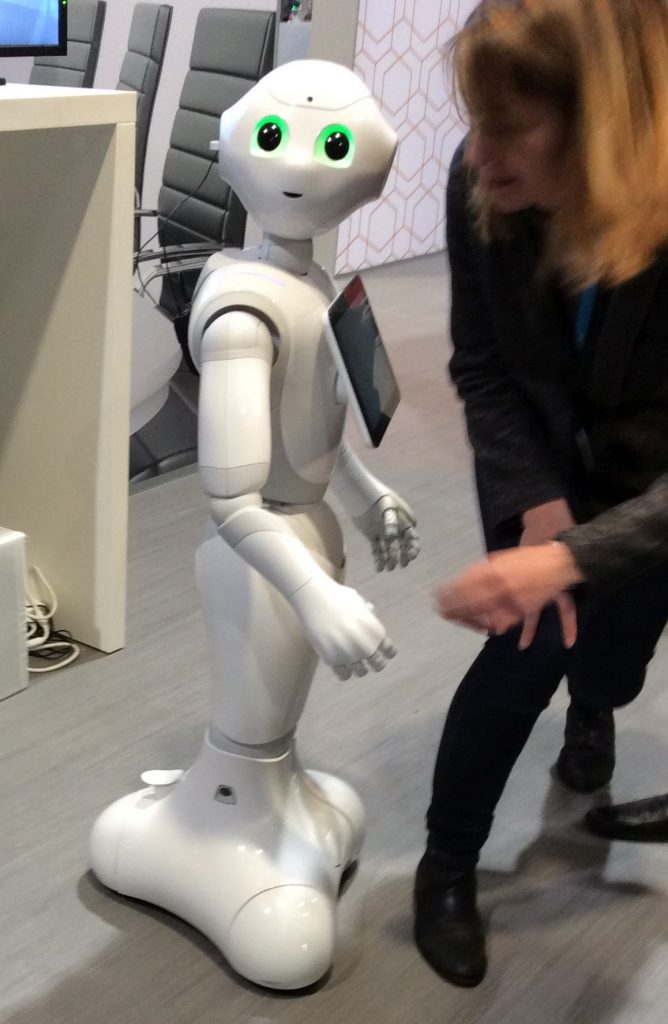
Medical Personal
Like in many other professions, medical doctors and nurses are in short supply. Labour markets in Europe have changed from high oversupply (unemployment) to shortages of mainly skilled persons. 20 years ago, such skill needs were already visible in projections. In 2023 the discussion of skill needs is spreading to more and more professions. The medical professions are no exception to this rule. Even the best paying jobs will not be filled in sufficient numbers. The German institute for the medical profession (www.zi.de) forecasts, in my opinion, a lower bound estimate of medical doctors for the year 2030. Their projection is based on an underestimation of the growth of the population (war in Ukraine), which they see as about constant until 2030. From the recent figures on the population of Germany there were 1.5 million persons moving to Germany and a loss of more deaths than births of 327.000. Migrants are on average much younger than the German population and, therefore, overall aging of the population is reduced. Tough news for those daring to do projections. Thanks to the immigration of younger persons there will be more persons contributing to health insurance and pay for the higher costs of a rapidly aging population.
Following the projections of the distribution of specialists needed, we shall need more urologists, eye specialists and substantially more psychotherapists. This originates in the aging of the population and the higher demand of younger persons (post Covid-19), as well as refugees, in need of psychotherapeutic assistance.
So-called hog-cycles tell us for the medical profession, with a “production time” of 10 years for a medical doctor, that we are already far behind schedule to address the future skill needs of the aging medical profession and population. This strengthens the need to get serious about prevention of avoidable diseases. Stop reading here, stand up and go for walk. It is the best-practice-solution taking account of the aging of the medical profession and the population as a whole. 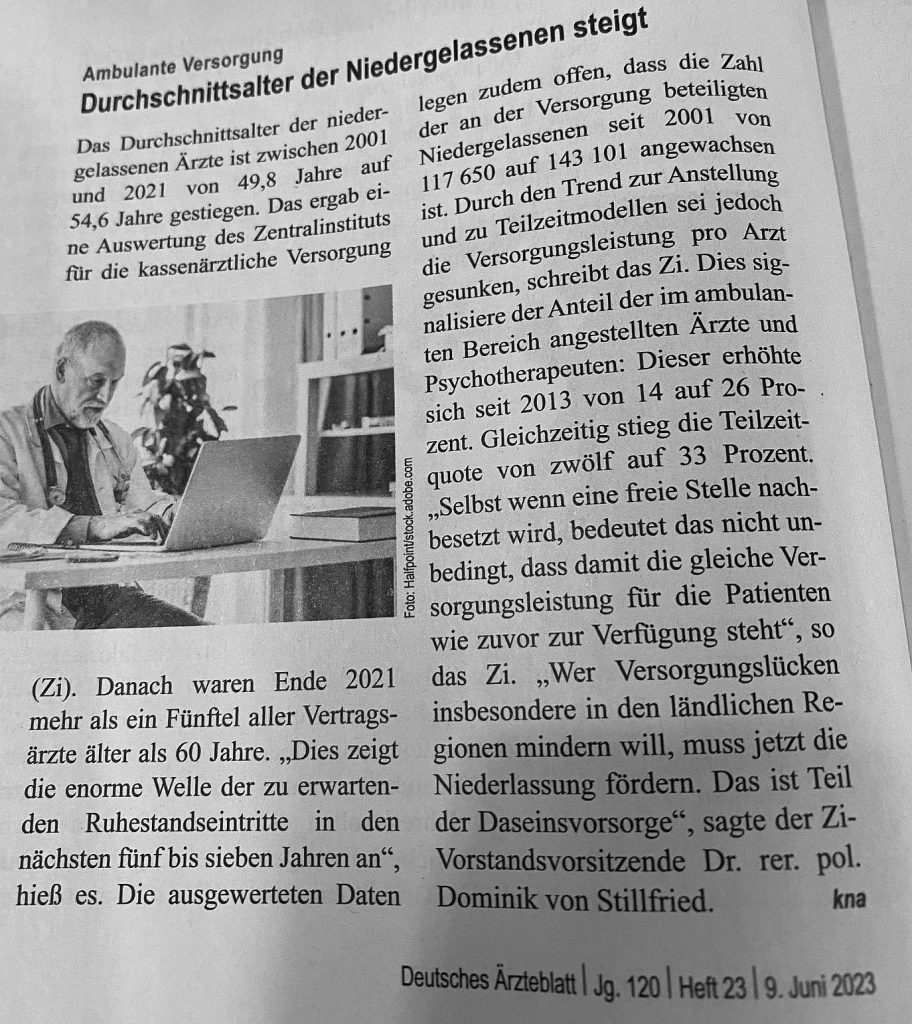
On Noise
The 3 authors Daniel Kahneman, Olivier Sibony, Cass R. Sunstein have published in 2021 the impressive attempt to sell statistics to non-statisticians. The grip on the topic: “Noise. A Flaw in Human Judgment” is a bit misleading. Even the German translation (“Was unsere Entscheidungen verzerrt”), in my opinion, is grossly misleading. The work deals with judgment, or arriving at a sensible judgment. Decision-making is only the next step with a lot of other intervening processes. The German philosophical term since the enlightenment period has been “Urteilskraft“. We are all more or less familiar with the notion “bias” in judgment. Me, originating from the Moselle, will always be biased in favor of a Riesling compared to other vines. In addition to this naive bias I may apply a more professional judgment on wine. Testing several wines even from the same small area from the Moselle valley and then repeating the tasting I might make a noisy judgment. “When wine experts at a major US wine competition tasted the same wines twice, they scored only 18% of the wines identically (usually, the very worst ones).” (p. 80). In addition to the previously defined form of “level noise, pattern noise and system noise” (p.77), we have occasion noise, when judgments vary from an overall statistical perspective.
Having received a second dose of a vaccination yesterday and having spent an unpleasant night my judgment for this review might be biased, because of impatience. So in order to reduce bias and variants of noise I shall repeat the review at a later stage. Let’s see what this returns. But for today, the Epilogue “A less noisy world” (p.377) appears rather odd to me. It is probably an illusion to believe that we can create a less noisy world, even with the best of wishes. The authors abstract from any strategic use of noise to influence judgments. The political form of choosing judges for Constitutional Courts in the U.S. needs to be dealt with. Noise in judgments is an important element, but strategic use of bias might be more influential to impact outcomes. Noise, when faced with a judge who has a reputation to be very tough in sentences might be overturned in an appeal court decision. There are plenty of procedural ways to overcome noise in judgments. I agree with the authors that you better know about the noise in judgments than ignore it. Awareness of random errors and noise involved in grading exams and recruitment decisions have determined many excellent “failures” to leave historic contributions to our world. In music, maths or literature some splendid talents probably have been impeeded at earlier stages of their life to make average or normal careers. Some of them left us with fantastic pieces thanks to the noise in judgment of others.
There seems to be an age bias in the tolerance of noise in the acoustic sense. Noise in the statistical sense has left a strong mark on me when I learned about white noise as error or stochastic process.
Image Kahneman, Sibony, Sunstein 2021. p3.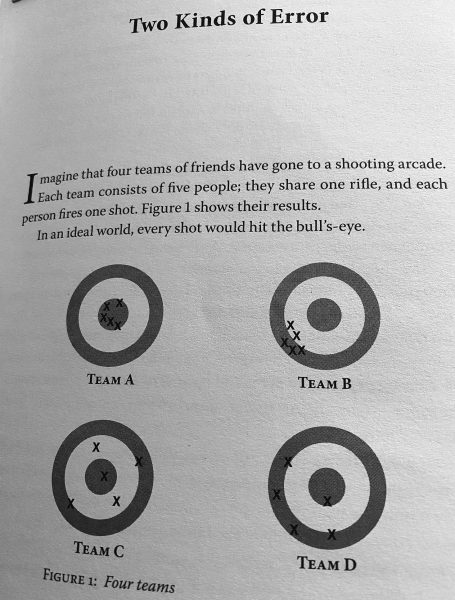
Construction
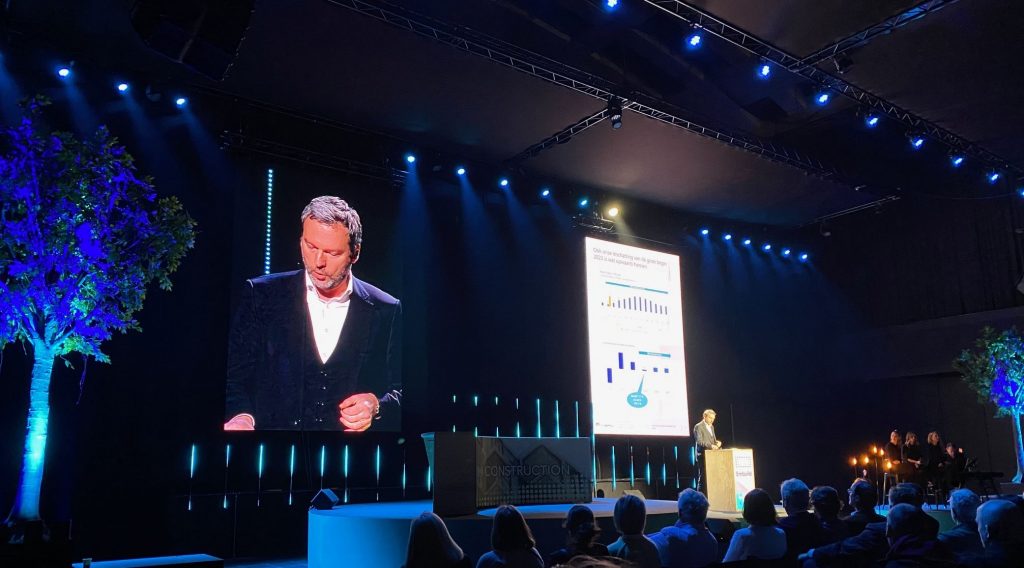
Construction as an industrial sector was growing strongly in the last decade. Corona crises, supply chain disruptions have slowed growth in the last two years, but the sector was still growing in terms of employment. The topic of skill and employee shortages hardened from year to year. In March 2023 the sector has more time to reflect on the somehow rapid, if not sometimes chaotic growth of the previous decade. The macro-economic scenario has changed now. Following on supply chain disruptions, we saw the high inflation rates of raw materials. The war of Russia against Ukraine caused energy prices to soar and eventually come down again. Latest worry is the increase in interest rates to finance construction projects of public, private and the business sector.
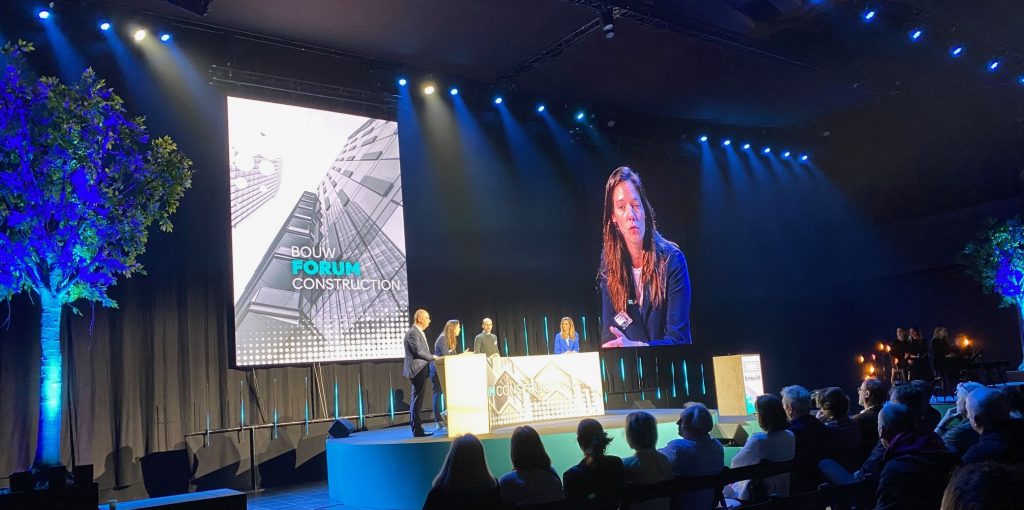
The whole sector is known for its economic role of forerunner of economic cycles, up or down. So, what are the prospects? Not so rosy, as the experts explain for example on the expert forum of the Belgian construction forum. The official from the Belgian National Bank announced a rather bleak outlook for the sector. New construction is stalling, but the renovation of buildings, especially for the purpose of reducing energy consumption is still strong and growing. Long-term reduction of emissions keeps the sector busy, thanks to the EU green deal in my opinion. The public, private and business investments in buildings all keep growth from turning negative. 2 big worries remain: (1) skill shortages and the lack of employees signalled in job openings in the sector is high and still rising; (2) the scarcity of women employed in the sector is still trailing most other sectors. Most companies have seen earnings grow over the last decade, sufficient time to build up reserves for the tougher quarters to come. Skill shortages and gender biases are harder to overcome. The Construction Forum in Brussels addressed both topics and tries to convince employers and the younger generation. Construction companies have to work on their male-dominated image was one of the take home messages Hélène de Troostemberg, the Director of Build Up pronounced.
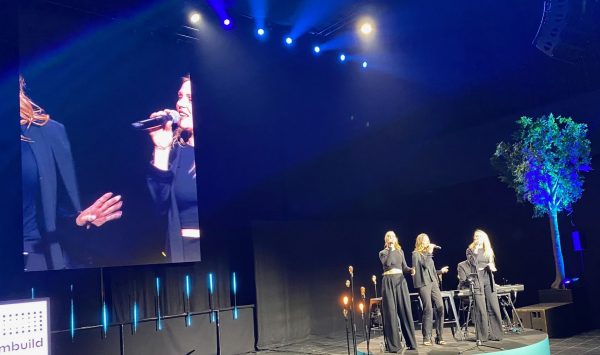
It is not certainly not enough to have a woman as moderator of a panel and an all-female singers group accompanying the presentations. Women as architects, technicians and builders will make the sector even more attractive for the next generation of men as well. Aging of employees in the sector is another tough issue waiting for innovative solutions. Digitalisation of every step in the value chain is an additional necessary step. The leadership and trade unions in the sector are well aware of these facts. Maybe next year women engineers will pilot the robotics demonstration rather than being in charge of building a nice atmosphere with their songs. I must admit I liked the intro song to the Forum: “We build this city on rock ‘n role”, but I am less sure whether rock ‘n role will solve the gender and recruiting issue of the sector. However, naming and framing the problem(s) is already part of the solution.
Dumky
In cultural performances it is always interesting to refer back to titles given or attributed for example to music pieces. Dumky is the title of Antonin Dvořák’s 4. Klavier-Trio opus 90. In the late 19th century Antonin Dvořák found inspiration in the notion of Dumky. Rather than just composing a “Trauergesang with few joyful intermezzi” he creates a new form for this Trio containing, quite unusual, 6 parts. Dvořák plays around with structure and sharp swings from “piano to forte” parts, “moll to dur” intonations reflecting sorrow and joy in frequent and refreshing short sequences. It feels sometimes like fireworks, but at times the sorrow of soldiers and their families becomes evident as well. However, the music proves resilient. Knowing that Dumky is a Ukrainian word and notion, the choice of one of the masterpieces of Antonin Dvořák close to the 24.2.2023, the day of the anniversary of the Russian attack on Ukraine is a commemoration of the sorrow caused by war and ways to overcome it. The “Concerts de Midi” of the Musée des Instruments de Musique” allowed us to travel through Ukraine a bit and experience the longing for better times. Joy will eventually prevail there again just listen to Dvořák’s version of the Dumky. Superb and effectful presentation of the work by the “Trio Impression” made for a memorable lunch break in the city centre of Brussels. The (virtual) visit of the Museum should be one of the attractions of visitors to Brussels as well, not just for the Art Nouveau architecture, but for the inclusive “global music” collection.