AI is crucially dependent on the input it is built on. This has been already the foundation principle of the powerful search engines like Google that have become to dominate the commercial part of the internet. The crawling of pages on the world wide web and classifying/ranking them with a number of criteria has been the successful business model. The content production was and is done by billions of people across the globe. Open access facilitates the amount of data available.
The business case for AI is not much different. At the 30th anniversary of the “Robots Exclusion Standard” we have to build on these original ideas to rethink our input strategies for AI as well. If there are parts of our input we do not AI to use in its algorithms we have to put up red flags in form of unlisting parts of the information we allow for public access. This is standard routine we might believe, but everything on the cloud might have made it much easier for owners of the cloud space to “crawl” your information, pictures or media files. Some owners of big data collections have decided to sell the access and use to their treasures. AI can then learn from these data.
Restrictions become also clear. More up-to-date information might not be available for AI-treatment. AI might lack the most recent information, if it a kind of breaking news. The strength of AI lies in the size of data input it can handle and treat or recombine. The deficiency of AI is not to know whether the information it uses (is in the data base) is valid or trustworthy. Wrong or outdated input due to a legal change or just-in-time change will be beyond its scope. Therefore, the algorithms have a latent risk involved, i.e. a bias towards the status quo. But the learning algorithms can deal with this and come up with a continued learning or improvement of routines. In such a process it is crucial to have ample feedback on the valid or invalid outcome of the algorithm. Controlling and evaluating outcomes becomes the complementary task for humans as well as AI. Checks and balances like in democratic political systems become more and more important. 
Sepsis
Sepsis is a major cause of mortality. Therefore, early detection of sepsis is of high importance. Antibiotics constitute a powerful antidote. However, the application of antibiotics without need, i.e. for purely risk reduction in general, has side effects in antibiotics losing their effectiveness later on.
The paper published in The Lancet Digital Health by van der Weijden et al. (2024) reports on the effort to provide an open source access to a calculator of early onset of sepsis (Link). The Neonatal early-onset sepsis calculator developed by Kaiser Permanente builds on the use on the risk carried by mothers like time since membrane rupture, regional infection risks of mothers per 1000 population and the infants presentation at birth. It is important to point out the combination of risks put into the calculator. New systems of artificial intelligence might equally make predictions or recommendations about the application of antibiotics implicitly making use of such a calculator without disclosure.
From a sociological point of view it is interesting to scrutinize the indicators used in the calculation. The approximation of mothers carrying a sepsis risk relies on national, regional or better local indicators. This information is rarely accessible to the public. The choice of a hospital, speed of access to it in case of membrane rupture as well as staffing come into the calculation of an overall risk of sepsis.
It is great to follow the progress of digital health and the increased transparency of critical health decisions at the earliest stages of the life course. Inflammation as a precursor of sepsis should be taken serious at all stages of the life course. (Image calculation based on Kaiser Permanente digital tool Link)

Election Re-election
Politics is a lot about decision making, coalition building and communication strategies. Therefore, there have been well established election and re-election cycles in all democracies, even the so-called illiberal pseudo-democracies. The time span between elections is itself a constituent part of democratic practice. 4 years of office for an elected parliamentarian seems to be common sense across many countries. More intensive participation and election schedules have advantages in tighter checks and balances, but may have disadvantages with respect to democratic fatigue, i.e. the time and effort needed to stay informed and cast votes. “Liquid democracy” is a concept of decision making which requires highly engaged persons willing to get involved beyond average commitments. Delegation to politicians within parties and parliaments remains an effective version of democratic practice. Checks against corruption and illegal practices is a necessary condition of each system of delegation. Rapidly changing governments are similarly perceived as a risk to democracies as the repeated call to the ballot box might be unsettling more than calming the spirits.
Berlin in 2024 (like 2023) provides another lesson on the sense of elections and re-elections. The repetition of parts of the federal election in parts of Berlin was required by the constitutional court. Due to failures in correct provision of access to voting and voting material results might have been biased. According to an online reporting by the local radio station (rbb24) based on the official electoral statistics, the participation in the re-election decreased from 75% to 51% in the 455 out of 2.256 districts that repeated the election. There seems to be a high level of democratic fatigue in these districts where the re-election in general accounts of participation in elections marks a low point in achievement. It appears worthwhile to question the judicial decision to repeat the election to the drastic reduction of representativity of the re-election. In statistical terms we trade one form of bias against another form of bias with an unclear overall outcome.
Organising elections is a professional task and requires specific competences. As this is at the heart of democracies, we need to improve our organisation and surveillance of this fundamental democratic process. Repetition seems to be worse than other second or third best solutions. Investing in democracy starts also at the ballot box. Electronic voting is not a panacea, but might be part of the solution. (Image source: Landeswahlleiter Berlin, left: Erststimmenmehrheit, right Wahlbeteiligung, combined election + re-election) 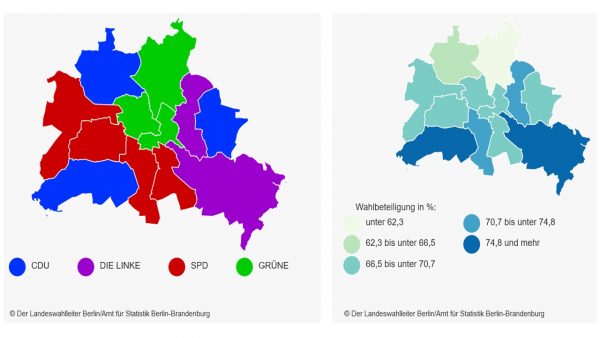
Digital organising
Since the digital innovations continue to broaden our scope of how to organise, we have to make conscious choices which way to choose. The traditional form of sending out newsletters and waiting for responses is still a feature that is prevalent across Europe. Most organisations have shifted to digital plus physical versions by now, just like newspapers. Young organisations by founding year have started or shifted to digital only for speed of delivery, CO2 and cost saving mainly. We may derive a first dimension of organising between the digital and physical. 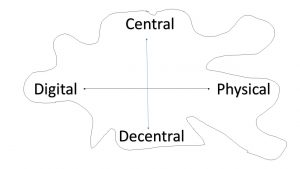
A second dimension consists in the central versus decentral forms of organising. Similar to the franchise principle of organising companies, organisations have a choice to keep a central structure with varying degrees of freedom at the regional, sectoral or local level. Organisation theory is helpful in this respect. Various hybrid forms are equally possible. Centralised in financial aspects, but scope for local decisions on content.
Bohn et al. (2023) define digital organising as “collective purposeful alignment and distributed action fostered through digital technologies”. Centralisation and/or Decentralization become a matter of conscious choice. The processes of datafication and connectification, whereby every bit of information becomes a data point and any electronically enabled device can be connected with each other. Organisations now have a choice of how to organize including digital organising. The opportunities are within the space opened up by the 2 dimensions (figure below). A specific subject matter may require more physical presence and maybe centralised structure, but digital only forms with highly decentralised forms are powerful tools in the 21st century. New as well as established social movements may well take advantage of these digital technologies as well. (Image: Digital Organising 2024 Protest Berlin). 
Flotow CH
Noch 20 Jahre nach seinem Tod wurde Friedrich von Flotow recht prominent aufgeführt. Im Stadt- und Aktien- Theater der Stadt St. Gallen stand seine Oper “Martha” an einem Mittwoch 26.4.1905 auf dem Programm (Anfang 8 Uhr präzis), gefolgt von Mozarts Zauberflöte 2 Tage später. Was für eine Konkurrenz. Das Plakat zur Aufführung ist in der Digitalen Bibliothek der Kunstbibliothek in Berlin anzusehen (Link).
Die Geschichte des Theaters in St. Gallen ist aus ökonomischen, gesellschaftlichen und architektonischen Gründen interessant. Das Tagblatt berichtete in 2007 über den Abriss der historischen Städte und den sehr verspäteten Neubau einer moderneren, größeren und wirtschaftlicheren Spielstätte. Damals zu Beginn des 20. Jahrhunderts schon standen populäre Werke wie die Martha und die Zauberflöte auf dem Spielplan. Die Aktionäre des Stadt- und Aktien- Theaters der Stadt St. Gallen haben wohl schon immer etwas mehr auf das Geld geschaut, auch wenn es um Kunst geht. Mehr Zuschauende und Zuhörende ist demokratisch und nebenbei gut für’s Geschäft. Der Abriss war beklagenswerter Weise im Jahr 1971. Ein Neubau an anderem Ort startete bereits 1968. Dieser Bau musste ebenfalls nach 40 Jahren Spielzeit grundsaniert oder abgerissen werden. Heute findet sich darin ein lebhaftes Programm mit Musicals als ausgezeichnetem Schwerpunkt und beispielsweise des Theaterstücks „Gott“ von Ferdinand von Schirach . Die Stadt und die Aktionäre sind wohl aus der finanziellen Verantwortung, aber das Kanton St.Gallen und der Lotteriefond sind eingesprungen.  Bildquelle und Großansicht Kunstbibliothek SPK Berlin.
Mastodon
In the Post-Twitter-world there is room for other platforms to take over the information function and opinion exchange on an international level. Mastodon has made a good start to fill this gap. The number of registered users has surpassed the 10 million users by large. If the anger about the union-busting and Trump supporter Elon Musk increases further, more and more people will join Mastodon as users and content providers. Advertisers will follow where they can reach their appropriate audiences. If you sell seats on a spacecraft to the moon you will advertise on eXit-Twitter. If you care about responsible investment you advertise on elsewhere or on Mastodon, because that is where your audience will be. Ethically responsible advertisers started to make such moves already. The decentralised structure to potentially filter human rights violating hate messages will need to grow accordingly on this platform. This is a challenge for all platforms and involves costs. To better understand the idea behind Mastodon, think of a platform which connects many other local networks or platforms. Yes, it is a platform of platforms. Decentralised instances provide and can remove access to the local platform. Even whole sub-platforms might be shut out. This increases the potential to build a “caring platform”. Decentralised organisation often incurs higher costs than a central instance that decides and administers a one-size fits all solution. But it is worth a try.
An example makes is more clear, what are the advantages of such decentral organisation to achieve more shielded privacy. For example, a small local chess club targeting primarily youth can open its own server on mastodon and admit only its known members to the network. It is easy to control who gets access to your posts of solutions to riddles or innovative game and learning strategies. Access to other Mastodon instances is an additional option. For enterprises or larger organisations, it needs the communication department to talk to the IT-service to get such a structure on its way. A dedicated person needs to monitor what content gets posted and what kind of “traffic” is generated. But this can largely be automated. In case you know your members of the local platform it is much less likely to occur than on the eXit-Twitter or other centralised huge international platforms.
Many federated structures will find it useful and part of their social-DNA to join the FEDIVERSE. We shall have to wait for some more time to get the so-called social media platforms civilised. These are social investments and learning processes which deviate from the profit-maximising rationale of other platforms. (Image: screenshot from @mastodon-user on 2023-11-30). 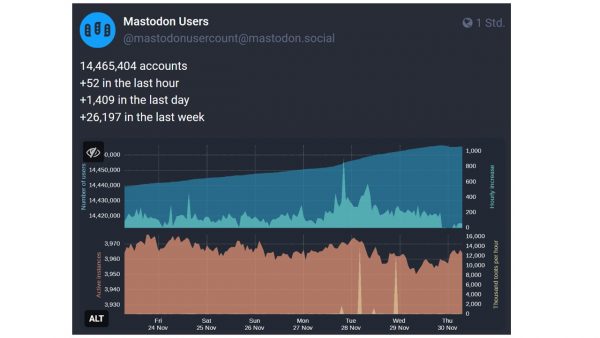
Twitter Retreat
There are many migrating species in nature. Birds form a large part of the them. This follows a kind of annual or seasonal pattern. Depending on the migration experience and dangers some, sometimes many don’t come back. This seems to describe the migration experience of the tweeting bird called twitter. Changing the name from Twitter to X, whereby X for maths-oriented people stands for a variable name that can be filled with any value. For the cinema industry X stands for x-rated adult only content and has rather obnoxious content. This might hold for web content as well.
Online through “https://netzpolitik.org/2023/x-odus-immer-mehr-medien-machen-schluss-mit-twitter/ the disastrous consequences of harsh human resource policies and lack of political sensitivity can be followed. Multiplying biased opinions of right-wing extremists, the platform has been highjacked and many tweeting birds leave or have left already.
Leaving is not easy though. People and enterprises have invested substantial amounts of money into tweeting and software developers have created specialised features to make it easy to spread press releases or info via these add-on services. I myself benefitted from services to show my tweets on my webpage or to easily publish info or links to the webpage. As of now, with migrating away most of these investments will be lost. It was smooth and easy, but now we start this all over again with other comparable platforms and assistance from developers. Mastodon and Bluesky are on the rise as alternative platforms and most likely we shall use both for some time just like Netzpolitik and many others. If already 1/3 of users intend to leave Twitter/X the impact of big advertisers leaving the platform has even more impact. After all they pay for reaching potentially millions of platform users, but now they reach only a steeply biased subset of previous users. Deleting the Twitter/X app saves you from other potential unwanted monitoring or tracking. Only the addresses on Mastodon for example are a bit longer like @mastodon.social@klausschoemann. Decentral monitoring of illicit undesirable content has advantages and disadvantages. We shall have to monitor this a bit ourselves and contribute more actively to save such platforms from bad weather or seasonal migration. 
Over a generation the association with the word mail or AI has changed. Younger generations will automatically think of email as the obvious association with “you have got mail”. Asking people for their mail address, most people will respond immediately with their email account. That has certainly changed over the last 20 years. Email has become extraordinarily important for contacts, content and “crime”. The original set-up of mail servers were supposed to exchange data and information between trusted and trusting individuals. Nowadays we have become “anyone” on an email-list or part of a cascading email-chain. Pishing emails that try to lure us to potentially fake webpages to enter personal information is widespread. A whole new industry of cybersecurity has evolved in parallel with ever faster pingpong of new threats and costly remedies. Most critical remains the human factor to protect email and vital information from abuse. All training to better manage email should therefore begin with awareness building on the need to take cybersecurity seriously right from the beginning. It is not an issue to deal with towards the end of learning about it. Some general points have become common practice. Think carefully if you need to open the mail. Check whether there are external links in it. Do you really need this extra information? Be careful about the number of persons you forward or put in the copy field of your mail.
Unfortunately the simple mail transfer protocol (SMTP) makes it technically fairly easy to abuse email addresses and send an email from a domain name which you do not own. Same holds true for the content of emails. Originally only basic letters and numbers were allowed, no Umlaut etc. But then the “multipurpose internet mail extensions” (MIME) enabled more formats of attachments and illicit links and files within the email content.
In consequence it became necessary to scan emails en masse for malware and obnoxious content. Hence the quality of your email programs reveals itself with the amount of spam you still receive. Next come the email filters that sort your inbox for spam and other modern plagues like unwanted newsletters or notifications.
In consequence we sometimes wonder that we never received certain emails albeit the person sending it reiterated that the email was sent. Even checking your spam folder in the email program might not solve the issue because your receiving email server has been instructed not to accept emails from previously unknown mail servers. Not much you can do about this as an individual person, you mail server is just not on the so-called white list from which to accept incoming emails.
With a mail address from the big national or international companies you have little to worry about in this respect. Smaller companies or organizations might suddenly face a thorny issue if their i@xy.z address appears on a dubious list. You will end up sending but nobody receives your emails. It might take you quite some time to find out about it and even more to fix the issue. Hence the take home message is, have more than one email address registered on different mail servers to check that sending out and receiving emails works properly for you. Managing an own webpage with email service for members or employees is a nice service, but beware of the implications for cyber security as well.

Digital Egal
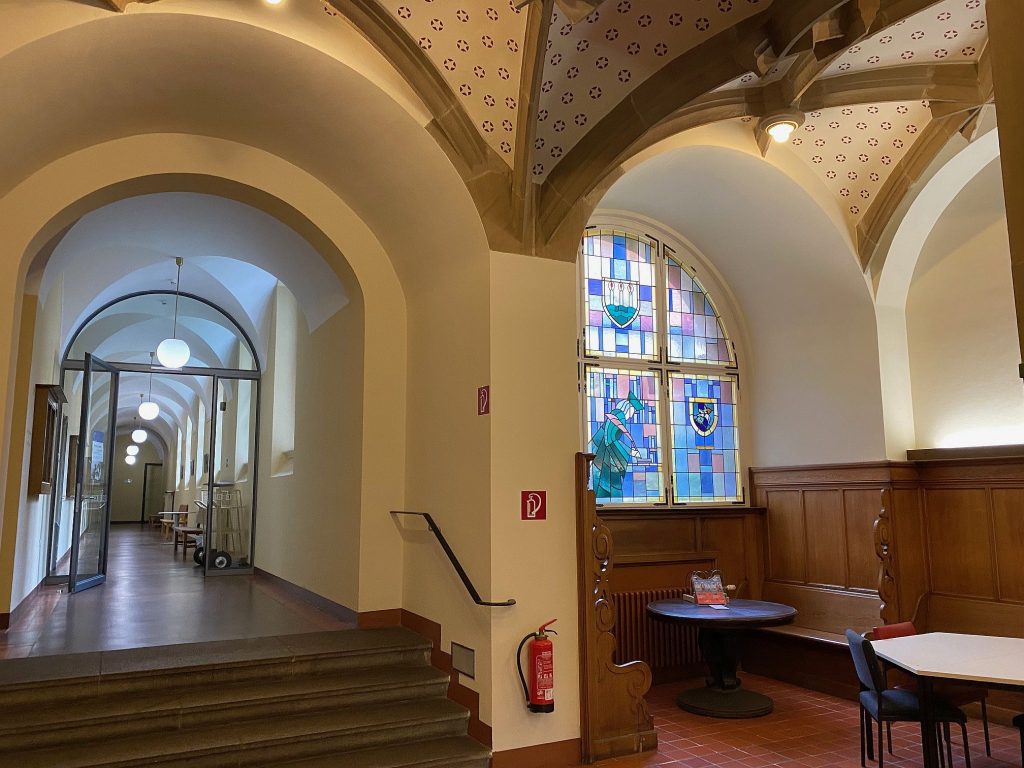
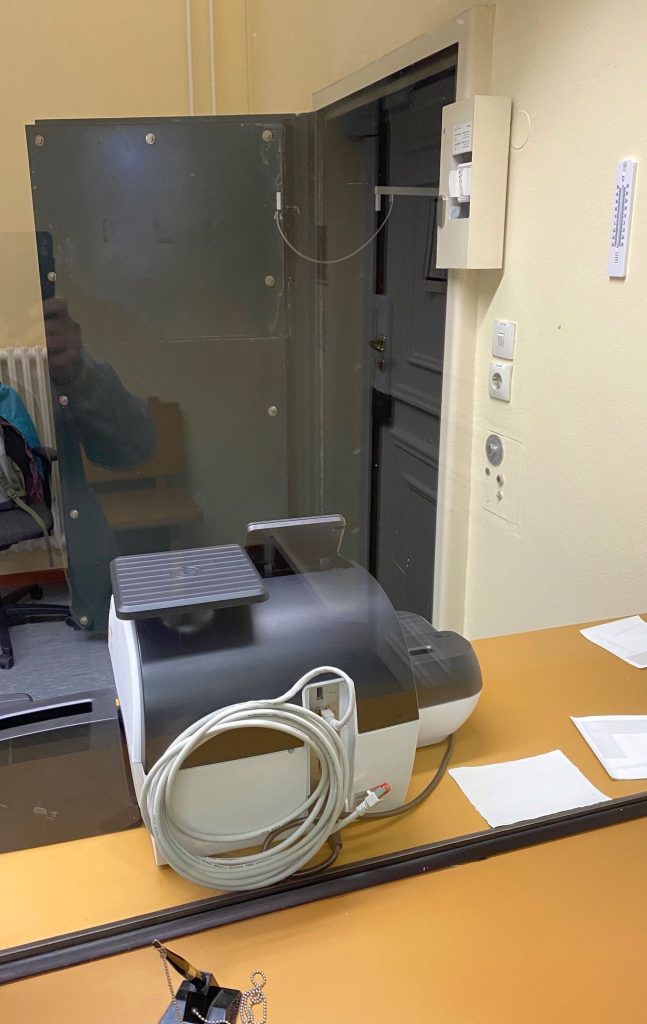
In den deutschen Amtsstuben geht es Ende 2023 oft noch erschreckend analog zu. Für einen Grundbuchauszug, beispielsweise, hatte ich das außerordentliche Vergnügen das Grundbuchamt am Amtsgericht in Berlin Ringstraße aufzusuchen. Sonst nimmt man sich ja nicht die Zeit, solche Sehenswürdigkeiten von innen zu besuchen. Die Überraschungen waren vielfältiger Art. 3 Personen Wachpersonal und Metalldetektor, wie bei der Flugabfertigung. Für den Auszug aus dem Grundbuch ist selbstverständlich eine Gebühr fällig, die nur bar entrichtet werden kann. Auf zur Zahlstelle, immerhin auf dem gleichen Flur. Die nächste Amtsstube hat zwar noch einen richtig historischen Tresor, aber die Erfassung der Zahlung läuft wohl noch auf alten Geräten. Vielleicht per relativ unsicherem WLAN verbunden. Das LAN-Kabel ist jedoch schon mitgeliefert, das dann irgendwann einmal eine sicherere Netzanbindung ermöglichen wird.
Über einen Dienstleister lässt sich der Verwaltungsakt auch online erledigen unter Herausgabe der Kreditkartendaten und sonstiger Daten (Cookies) samt Unterschrift per Maus (!). Das ganze für die doppelte Verwaltungsgebühr. Dank des 49 € Tickets wollte ich mir diesen Spaß jedoch live gönnen. Wahrscheinlich werde ich das nochmals mit den Enkelkindern so als lebendigen Museumsbesuch nachvollziehen. Wer weiß, wie lange das noch möglich sein wird. Das Personal trägt es mit Fassung und dem nötigen Humor.
Bisher kannte ich die Diskussion über die Digitalisierung der Verwaltungen mehr aus wissenschaftlichen und technischen Diskursen. Jetzt kann ich so richtig in das Jammern darüber einstimmen. Produktivitätsfortschritte lassen sich hier in ungeahntem Maße erzielen. Einer geht noch: Was ist das längste Wort in dem Amtsvorgang und wie viele Buchstaben hat es?
Gerichtskassenstemplerabdruck (auf der Quittung).

Barbie explore
The film on Barbie after more than 60 years of the first puppets to arrive on the market is a huge money spinning exercise. Hitting more than 1 billion $ is really a huge box office success. More interesting even is the banning of the film in some countries like Algeria. This gives the film an interesting subversive touch to it, which we in the Western countries no longer see as something special. Emancipated women pose a threat to authoritarian regimes.
However, we see in the stereotypes of beauty-driven dolls not that much of an emancipatory chance. To view emancipation independent of the looks of a person is another interesting twist to the role in stereotypes of beauty. It is not only fun to play around with stereotypes, that is mostly, if you are not negatively affected by them (age, gender, ethnicity, extraordinary persons). A nice task for sociology and psychology to explain the working of stereotypes in society and possible remedies. Tolerance is a competence that needs to be learned and updated continuously, from early age onwards.
Therefore, the website created by the US Design Agency Rvnway offers an entertaining way to play around and learn about stereotypes. Perceived, generalized beauty or gender roles can be explored using the tool. Maybe some see themselves differently after such explorations. Everybody is a model. This is the message. www.bairbie.me will let you explore other formats of yourself. After 3-D rendering and printing your children or grandchildren will decide what role they would like you to play in their playfull, or virtual “real” life. I suppose many of us will be up for a big surprise. Go on and imagine in 4D. In the age of selfies all around us, all the time, we believe we are very modern, but the artists of the 19th and 20th century following all great painters before, frequently started their careers with an “autoportrait” or “Selbstbildnis” or series of those as they were aging.