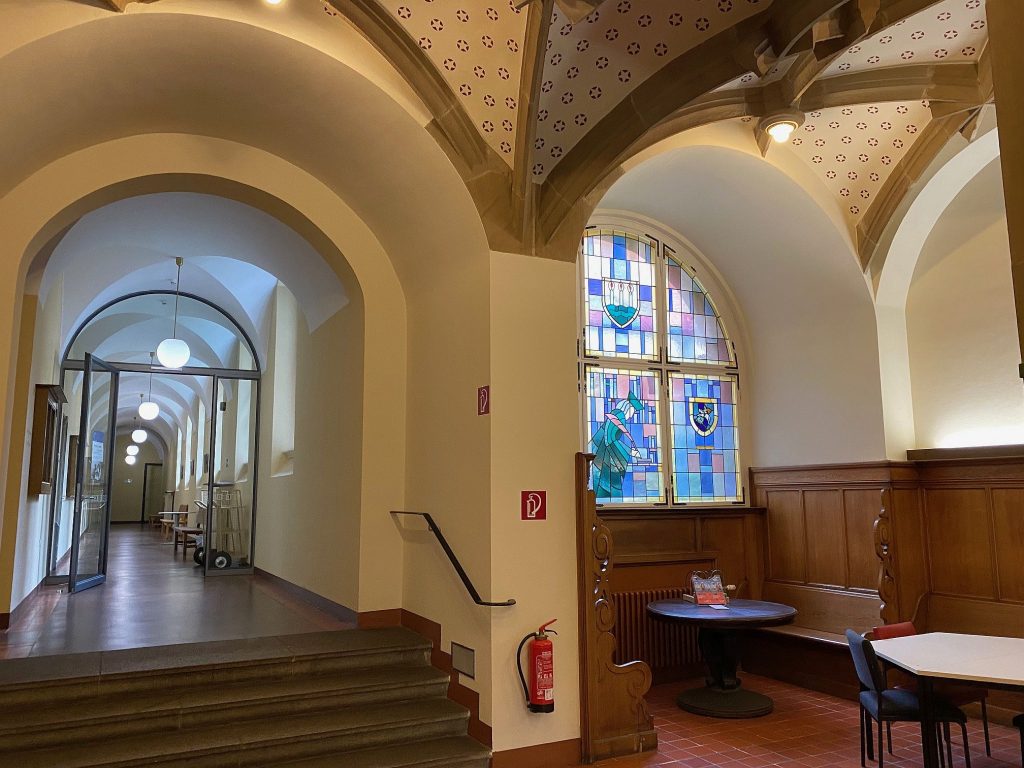
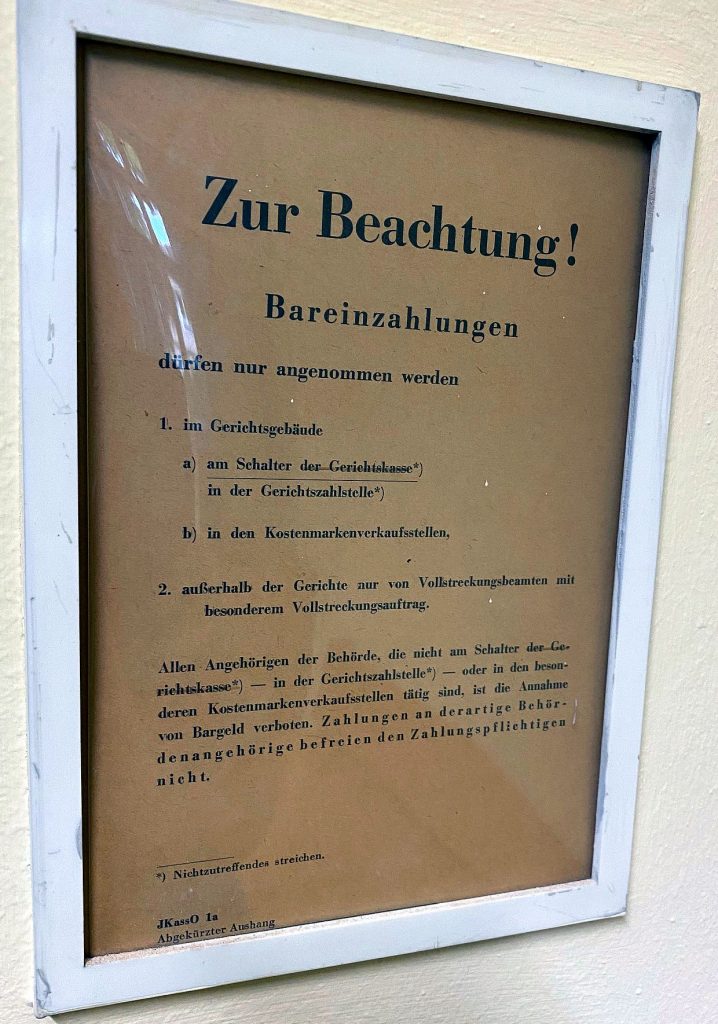
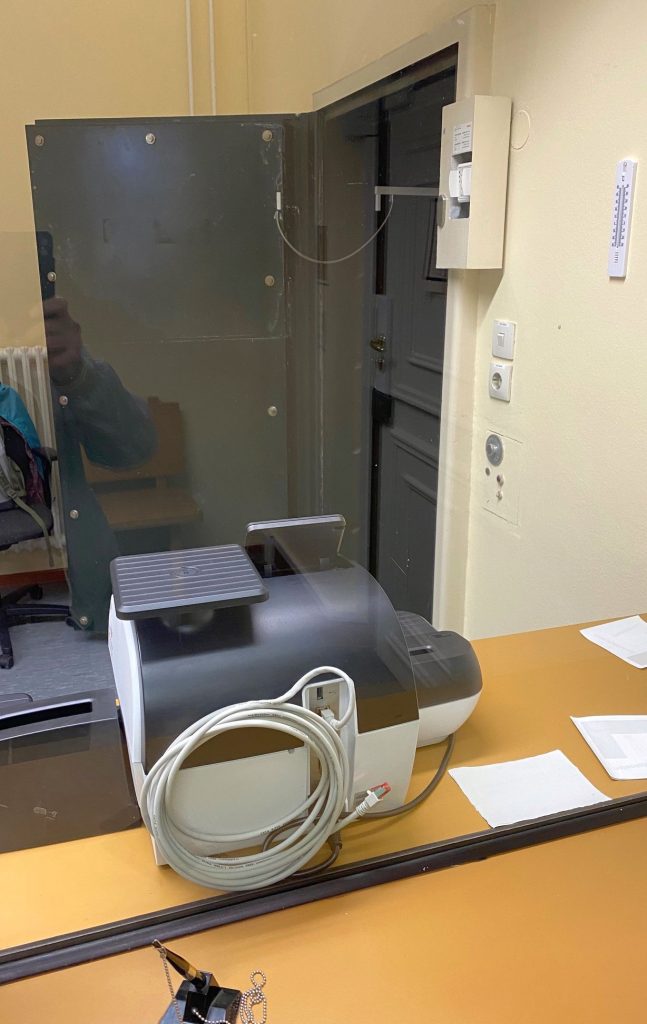
In den deutschen Amtsstuben geht es Ende 2023 oft noch erschreckend analog zu. Für einen Grundbuchauszug, beispielsweise, hatte ich das außerordentliche Vergnügen das Grundbuchamt am Amtsgericht in Berlin Ringstraße aufzusuchen. Sonst nimmt man sich ja nicht die Zeit, solche Sehenswürdigkeiten von innen zu besuchen. Die Überraschungen waren vielfältiger Art. 3 Personen Wachpersonal und Metalldetektor, wie bei der Flugabfertigung. Für den Auszug aus dem Grundbuch ist selbstverständlich eine Gebühr fällig, die nur bar entrichtet werden kann. Auf zur Zahlstelle, immerhin auf dem gleichen Flur. Die nächste Amtsstube hat zwar noch einen richtig historischen Tresor, aber die Erfassung der Zahlung läuft wohl noch auf alten Geräten. Vielleicht per relativ unsicherem WLAN verbunden. Das LAN-Kabel ist jedoch schon mitgeliefert, das dann irgendwann einmal eine sicherere Netzanbindung ermöglichen wird.
Über einen Dienstleister lässt sich der Verwaltungsakt auch online erledigen unter Herausgabe der Kreditkartendaten und sonstiger Daten (Cookies) samt Unterschrift per Maus (!). Das ganze für die doppelte Verwaltungsgebühr. Dank des 49 € Tickets wollte ich mir diesen Spaß jedoch live gönnen. Wahrscheinlich werde ich das nochmals mit den Enkelkindern so als lebendigen Museumsbesuch nachvollziehen. Wer weiß, wie lange das noch möglich sein wird. Das Personal trägt es mit Fassung und dem nötigen Humor.
Bisher kannte ich die Diskussion über die Digitalisierung der Verwaltungen mehr aus wissenschaftlichen und technischen Diskursen. Jetzt kann ich so richtig in das Jammern darüber einstimmen. Produktivitätsfortschritte lassen sich hier in ungeahntem Maße erzielen. Einer geht noch: Was ist das längste Wort in dem Amtsvorgang und wie viele Buchstaben hat es?
Gerichtskassenstemplerabdruck (auf der Quittung).
Aging Challenge
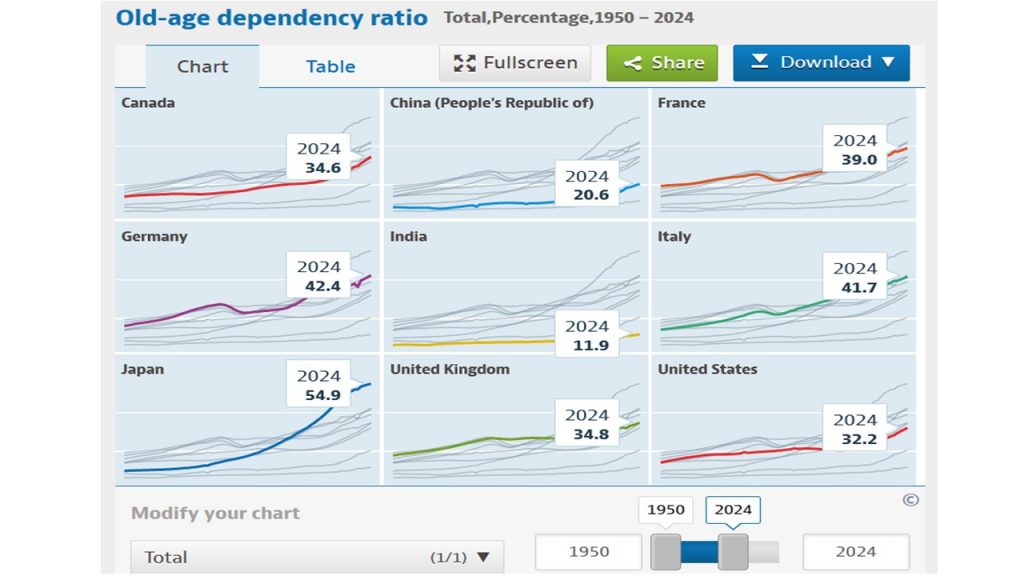
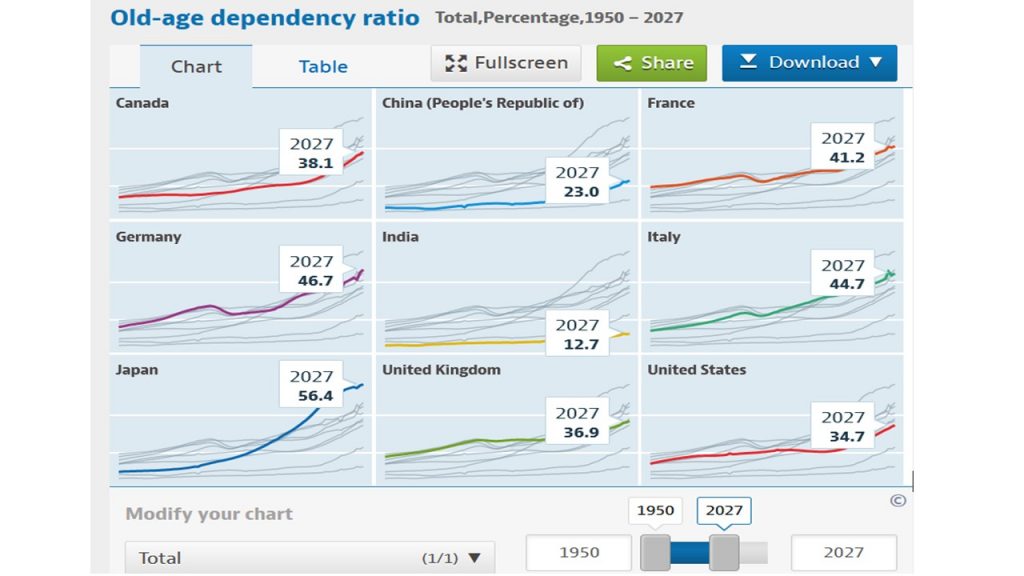
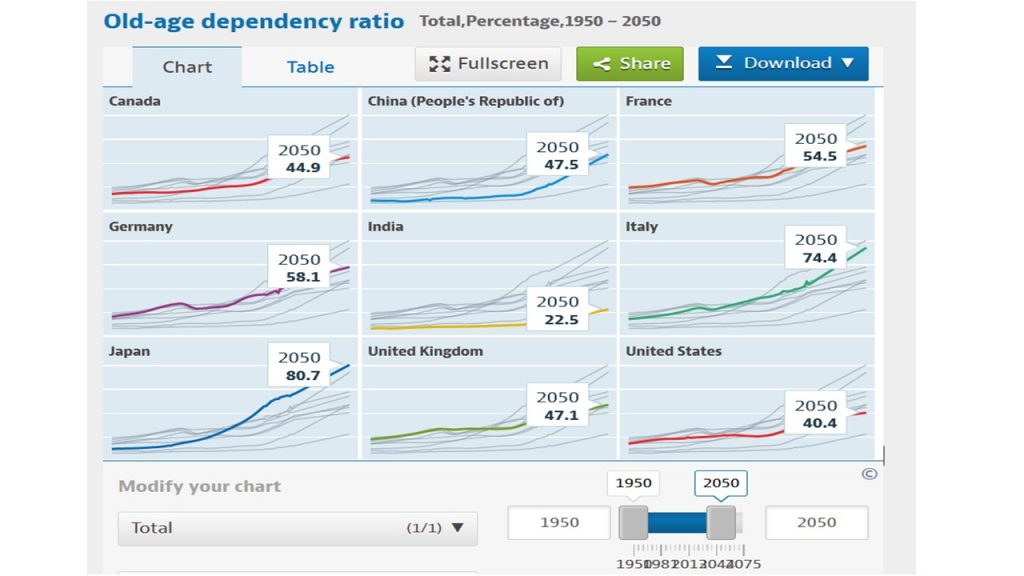
Several countries face an aging challenge now and in the near future. The OECD provides some basic data, figures and projections. All data to calculate the aging challenge are more subject to change than they used to. The Covid-19 rise in mortality rates has implications as the number of premature deaths of the elderly (65+) has risen even in the economically advanced countries. The so-called old-age dependency ratio is a widely used indicator to assess the charge or pressure on the working-age population (20 to 64) to finance those in retirement (65+). demographic ratio is defined as the number of individuals aged 65 and over per 100 people of working age defined as those at ages.
Major factors that have an impact on the ratio are mortality and fertility rates as well as migration, but also participation rates in employment for those younger than 20 or older than 65 years of age. Seminal shifts in participation of women in the labour force contribute also to reduce the old-age dependency ratio. An influx of about 1 million of refugees who have immediately a work permit like Ukrainians in Germany have a substantial impact as well. Life expectancy is expected to rise again after the years of reduction due to Covid-19. In 2024 and 2027 these ratios do not move too much. Extending the time horizon to 2050, when people born in 1985 would start to retire shows more reason for concern. Whereas in 2024 France, Germany and Italy are still fairly close to each other (2.4 percentage points), the gap starts to widen as of 2027 (5.5 percentage points). In 2050 Italy is projected to have an old-age dependency ratio of 74.4%, about 20 percentage points higher than France.
Okay, in the long-run we are all dead, says an economist joke, but changes to increase fertility or allowing more migrants in are not in sight for Italy. Therefore, the urge to react is increasing there. Younger generations might not be able or willing to foot the bill of high pension expenditure in Italy. Compared to Italy or even Japan the pressure on France is much less pressing, contrary to the national government’s opinion and policy initiatives to increase retirement age without parliamentary majority.
Source for projections and figures: OECD (2023), Old-age dependency ratio (indicator). doi: 10.1787/e0255c98-en (Accessed on 04 October 2023).
Nations Fail
Ever since Adam Smith wrote on the “Wealth of Nations” the topic concerns social scientists. The discourse around the wealth of nations has become even more fundamental these days. Beyond wealth calculated in economic terms we are convinced to add well-being of the population as well as the state of the environment into the accounting procedures like national accounts. But wait a second. Similar to the term wealth we have to widen our perspective in what is considered to be a nation. Shifting borders through wars (Russia aggression on Ukraine) or separatist tendencies of regions, (re-)unification of Germany or Korea (eventually) show that the nation is a concept in flux. Considering migrants from former colonies still as having residential rights in the colonising country shows, there is more to nations than a one size fits all nation concept.
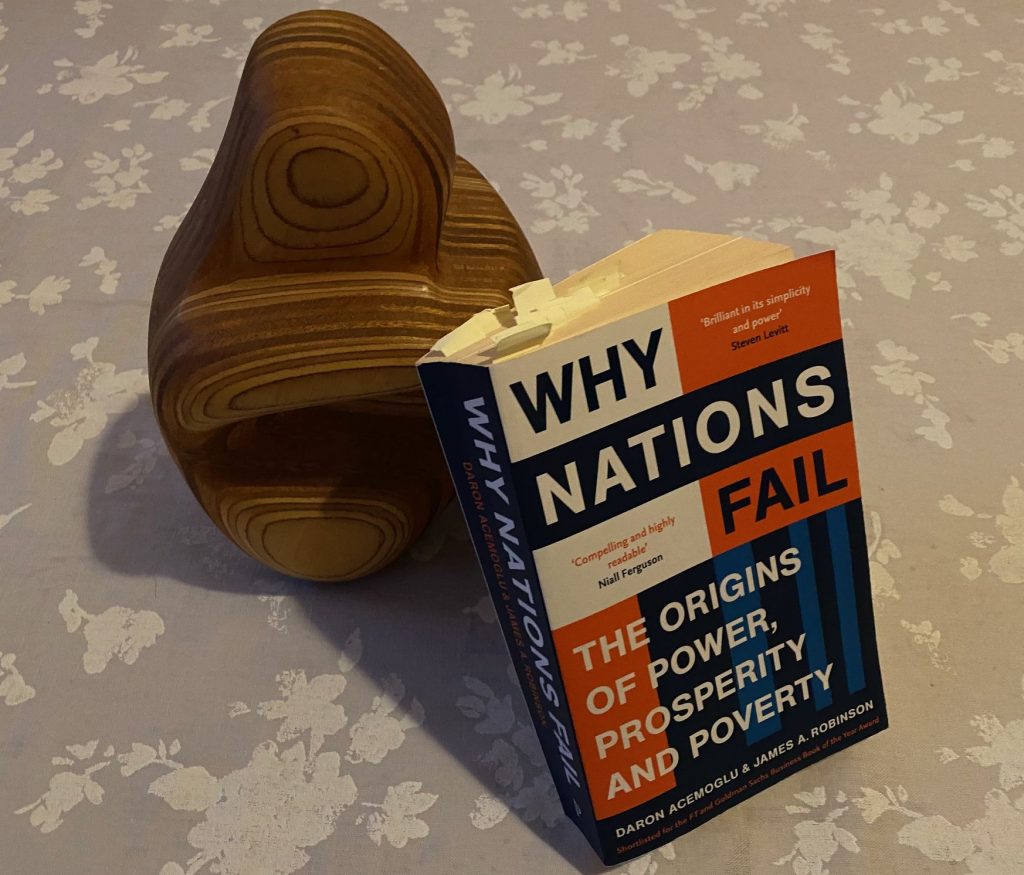
Daron Acemoglu and James A. Robinson had published the book on “Why nations fail. The origins of power, prosperity and poverty” already in 2012. On the 3rd of October Germany celebrates its re-unification only because the Russian dominated German Democratic Republic (and the other Eastern European satellite states under Russian control) can be considered as a failed state. These Russian dominated states crushed private initiatives and build corrupt systems where party allegiance and hierarchical structures were overemphasised. Following Acemoglu and Robinson (chapter 10) the lack of diffusion of prosperity is likely to be the root cause. Even similar to the French revolution, which brought about tough measures of redistribution, the external threats to the post-revolution France demanded subscription of masses into armies to defend the young republic against aristocratic rulers in the surroundings. If monarchy in France is a failed state, the post-revolution France survives due to high identification with the republican idea. The Soviet dominated Ukraine is a failed state, but the Ukraine of today resists due to its willingness to defend its own republican ideals. To get virtuous circles of development started, inclusiveness across the board is necessary. Leave nobody behind, seems to be a shortcut summary. It is much easier said than done. Loosing younger generations in the sense that they no longer subscribe or feel part of an inclusive wealth of the nation is a highly dangerous path. Failed states have a history in failed inclusive social and economic practices. Democracies are at risks just as much as authoritarian nations. However, democracies have better institutional settings to address the lack of inclusion and in multiple ways.
When I celebrate the 3rd of October in the Federal Republic of Germany I celebrate (1) the accomplished failure of the GDR, its undemocratically elected elites, corrupt institutions and the failure of the thousands of willing collaborators of the Russia-backed regime; (2) the peaceful resistance movement, (3) the relatively short-lived humanitarian focus of the Russian leadership at the time to not send in the tanks and (4) the willingness of the FRG to support 20 million new citizens for many years to come (5) the allies of the FRG to accept the potential security threat of a strengthened Federal Republic of Germany, which might entail a shift in the balance of power in Europe.
And yet, even in 2023 we pose questions on what is the concept of failure, when authoritarian regime can still survive for sooo long and some still accomplish extensions. We keep questioning the sense of the term “nation” in modern times and across the globe. Too many wars are still fought in the name of a “nation” even if only a handful of military-supported leaders and single autocrats try to impose wars in the name of some rather vague or plainly mistaken claim of nationhood.
On the 3rd of October we celebrate that “nations can fail” opening a path into a more prosperous and inclusive society. Some nations fail, just because they were no nation in the first place. The GDR was such an artefact of international compromise as part of the overall “balance of power” and the Cold War. The result of this process gives so much hope to other divided nations (Korea) or nations under authoritarian oppressive rule. 
Energy Food
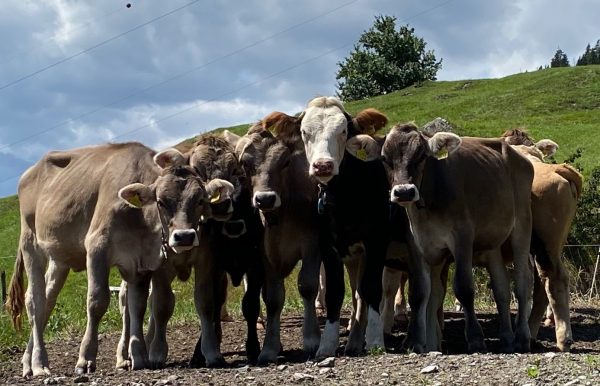
For more than a decade now researchers have shown the link between energy prices and food prices. At first sight this might seem surprising. In traditional or romantic associations with growing food, there is no link between the cost of energy and food production. Growing crops in your garden does not need more than sunlight, soil and water. Yes, that was long ago. Industrial production of food is heavily relying on energy to heat, feed and water plants or animals. Additionally, the supply chains have become far more distant, which increases the CO2 footprint even further. Therefore, it is no longer surprising that a great number of econometric studies confirm the close link of energy prices and subsequent pressure on food prices. This is not restricted to Europe, but has reached global contamination.
Enjoying seasonal local food is a double catch solution. You grow according to local weather conditions and use traditional conservation methods, if the crop is exceeding your demand at that time. Providing heating for animals to increase productivity or quality of products appears to be one of the most wasteful ways to further increase the spiralling up of energy and food prices.
In agricultural science there is a lot of research into the “energy intake” of animals to better grow or produce more milk etc. This is the expensive intermediary step using energy to produce energy intake for animals rather than humans. It is surprising that we take so many years to address these well-known linkages that have turned to serious problems after Russia’s war on Ukraine. Agriculture and farmers can be part of the solution rather than a problem themselves, if the link of energy consumption and food prices is taken seriously. 
10000
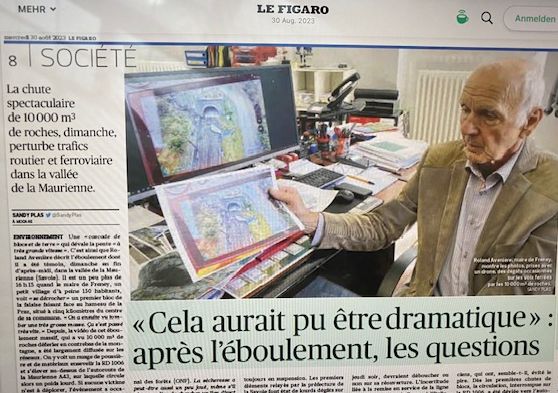
In France 100.000 is associated with Monsieur 100.000 Volt Gilbert Bécaud due to his dynamic singing and performance style. Since August 2023 we now have an additional association with the number 10.000. Ten thousand m3 was the size of stones that came down from the mountains near the popular skiing resorts in the French Alps (Le Monde Link+video). To visualize the amount, a back of the envelope calculation with a standard container size of 25 m3 returns 400 loads of lorries to be removed from hard to access landscapes. Count this into the costs of running ski resorts.
A study in the scientific journal “Nature Climate Change” in 2023 highlighted the increasing risks to European skiing sites. Same holds for the Alpes in Switzerland. Some areas relying on water resources to create artifical snow do so in less and less safe areas. Costs accrue to communities who benefit only indirectly from the skiing hype, celebrating 100 years of Olympic skiing next year. After all it is big business to sell or lend equipment, provide hotels and meals for all those sports women and men.
The so-called collateral damage is probably even worse. Interrupted railways, bridges, motorways and traffic in general becomes a severe disruption for quite some time adding to the total costs of having fun in winter. Is it worth it? A tricky question to ask in a referendum. We shall have to revise our past decisions to expand skiing resorts in light of the new evidence of higher risks and costs involved. A book on 10.000 years of history of glaciers is full of side-effects of glaciers melting away, which cause instability to valleys on the sidelines. In the most recent break-up of rocks it is actually more the access to the skiing resorts that was blocked, but this demonstrates to all: passing this area now, is not without serious side-effects. 
Too big
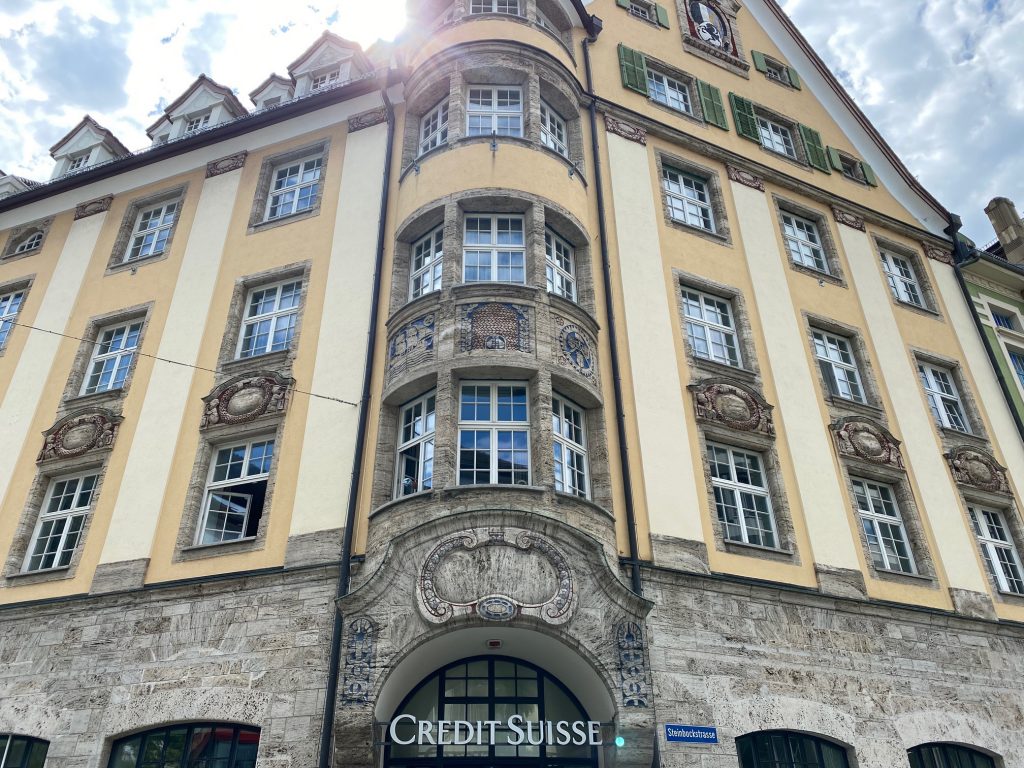
Too big to fail. We all thought that after the financial crisis some fifteen years ago, we would not deal with the same kind of problems again. The banking sector in Switzerland has proven us wrong. One of the 2 big banks Credit Suisse in Switzerland was about to default and asked for 170 billion state guarantee middle of March 2023. Only after a forced merger with the other big bank UBS (which was rescued in 2008 already) and the huge state guarantee the solvency of the even bigger bank was re-established. Tax payers were expected to foot the bill. Less than 6 months later the Finance Minister Karin Keller-Sutter announced that there is no longer a risk for tax payers to pay for the mismanagement of the bankers involved. This is a relief for the political system which is going to the polls next year.
Many unresolved questions remain. Financial market supervision is faulty to say the least. Banking left to bankers as controllers is risky. Apparently fines do not work only prohibition to exercise similar functions (internationally) again is likely to be effective (NZZ 2023-8-9 S.19). Other remedies lie in a complete overhaul of the governance system of banks and beyond. Supervisory boards should in theory be able to assess the risks incurred by the management board. Failure to do so has no consequences for them either. Representatives of the employees in the board is likely to introduce more longer term concerns into decision-making. Saving jobs is a valuable goal not necessarily in the interest of investment bankers. Capitalism is at high risk of survival and with it our democratic systems. It was not a bank in Niger that got into trouble, but at a major European financial center. Too big to fail in a tiny country still sends shivers throughout Europe. And the other big bank is growing even bigger now, probably un-savable now. If I had a bucket of Swiss Franks, I would rather sell them.

Anger
It feels like we live in the “age of anger”. Anger was a predominate feeling in the “French yellow vest movement” spurred by sharp increases in petrol prices. In Germany the notion of “Wutbürger” had a short career to express anger of citizens against, against whatever could arise anger. There are plenty of issues of course that will cause arousal in public politics. The more a government enacts change, be it necessary or not, the more it is to arouse its citizens. Parliamentary democracy is thought to solve this through majority voting of the equally represented in parliament. Minority rights have been installed to safeguard the majority to become too overwhelming, but any close decisions on hotly debated topics are likely to cause substantial anger within a society.
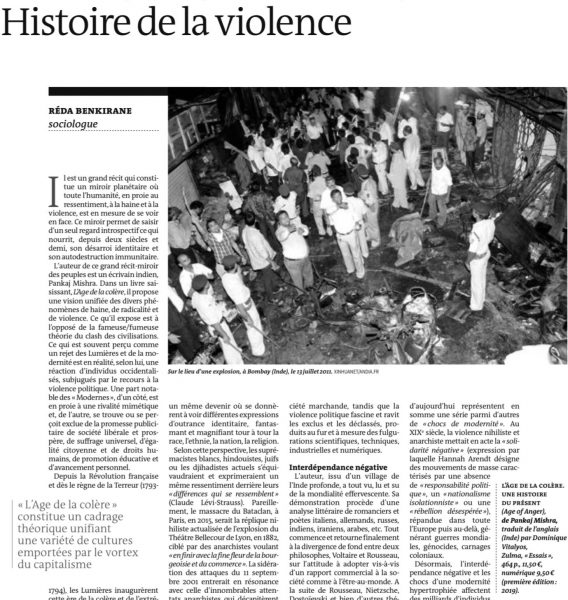
This is far from being an issue only in Western democracies. Pankaj Mishra claims, this is a world-wide phenomenon and history provides ample examples for it. In his book on “The age of anger” he challenges the predominantly Western political theory, deriving from an opposition of Voltaire’s and Rousseau’s political thought to hold the individualisation and globalisation of an economic model, traditional capitalism, responsible for the rise of anger across the globe.
This critique of capitalism is now translated into French. Several movements of anger in France probably find some unifying roots of seemingly unrelated outbreak of anger, violence and subsequent repression. Old arguments of critics of capitalism stand up again. The challenge to democracy comes from the extreme right even more than from the extreme left. Re-imagining capitalism is needed more than ever to safe the survival of democracy. Participative democracy like in Bürgerräte in Germany or deliberative democracy practiced by President Macron in France are an important part to stimulate involvement of more people in the preparation of decision-making. Not perfect as procedures, but small steps ahead to confront and address anger of the citizens and people at large. 
Work Stress
The empirical evidence on life stress is relatively clear cut. Based on the animal model, life stress causes multiple metabolic disorders among them “insulin resistance, glucose and lipid homeostasis, as well as ageing processes such as cellular senescence and telomere length shortening” (Kivimäki et al. 2023). Besides sleeping we spend most of our life in work-related contexts. Stressful commuting to work and stress at work create a rather unhealthy lifestyle. More stressful working lifes have very likely contributed to currently increased risks of obesity around the globe. Unhealthy nutrition adds to risks just as too little exercise or walking. Time to act for the benefit of all of us. It is not correct to put the blame on individuals, if we know that work and life styles jointly contribute. Urban planning can do a lot to contribute to insulin resistance of inhabitants through more walking or cycling paths for all not only in the wealthier suburbs. The more stressed winner of the daily race might come last in the longer run. 
Geister
“ Herr, die Not ist groß!/ Die ich rief, die Geister/ werd ich nun nicht los.“ Dieses Zitat aus dem Zauberlehrling von Goethe aus dem Jahr 1797 könnte im Juli 2023 von Putin ausgerufen worden sein. Als der von ihm geförderte und üppig finanzierte Chef der Wagner-Armee Prigoschin plötzlich auf Moskau losmarschierte. So sehen das viele Analysten zu Beginn des scheinbaren Angriffs auf Moskau eigener Söldnertruppen. Frei nach Goethe fragen wir uns also: Wer und Wo ist der Meister? Wer ist hier der Zauberlehrling? Aber schon Goethe hat seine Ballade rasch und ohne Überraschung aufgelöst. „In die Ecke, Besen, Besen! Seids gewesen. Denn als Geister ruft euch nur zu seinem Zwecke, erst hervor der alte Meister.“ So entpuppt sich am Ende Putin wohl als der Meister und Progoschin „nur“ als sein Zauberlehrling.
Das ist nicht die herrschende Meinung der Redakteure und Editorialisten (Süddeutsche, LeMonde). Literatur der Romantik sollte besser aus der Tagespolitik herausgehalten werden. Weit gefehlt. Sie weitet den Blick auf Herrschende, meist Autokraten, und ihre tragischen Lebensverläufe.
Jetzt mal eine ernsthafte Vision(?) eines Politikberaters. Da die Mission von Prigoschin mit Unterstützung oder angeordnet von Putin in Butcha als abgeschlossen galt, und das Staatsheer diese Aufgabe übernommen hatte, wäre Prigoschin arbeitslos geworden. Den treuen Chefkoch Prigoschin aus St. Petersburger Zeiten, der Putin in seinen Restaurants schon hätte vergiften können, hat seinem Meister vorgeschlagen, Putins faktischen Schutz vor einem Anschlag oder einer militärischen Einsatzgruppe zu testen.
Militärisch gesprochen, läuft das entweder unter einer „false flag attack“, eines mit russischer Flagge getarnten Angriffs, oder einer „white flag attack“, dem Vorspiegeln einer geschützten friedlichen Mission (vgl. trojanisches Pferd).
Aus der Sprache der Börsianer kennen wir ebenfalls die „weiße Ritter“ Attacken. Dabei versucht ein anderes Unternehmen, eine InvestorIn oder eine im Hintergrund agierende Person (Progoschin), eine feindliche Übernahme eines Unternehmens zu verhindern. Dabei sind Mehrheitsbeteiligungen am Zielunternehmen oder Fusionsangebote die gewollte Lösung und Abwendung der feindlichen Übernahme.
Im Internetzeitalter kennen wir die bezahlten Hacker, die eine Webseite eines Unternehmens oder Behörde auf Schwachstellen testen und damit Datenschutz, Erpressung und Ausfälle vermeiden helfen.
Klingt alles kompliziert, ist es aber nicht. Es ist einfach Teil des modernen Arsenals von Strategen à la Clausewitz. Schachspielen mit echten Söldnern ist grausam und kostet echte Menschenleben für den Machterhalt. Der militärische Probealarm wurde getestet und der Schutz um Putin, den Meister mit seinem Zauberbesen kann verbessert werden. Sein Zauberlehrling Prigorschin ist wohl vielleicht sogar vom Springer (Schachfigur) in einen Turm eingetauscht worden. Vielleicht ist er aber schon längst die Dame an der Seite des Königs oder eben einer der Geister im Umfeld von Putin.
Political theory and inflation
A political theory in the area political economy is prone to be labelled as classical, neo-classical, Keynesian, Neo- or Post-Keynesian or heterodox economics. This is a university level course in the history of economic ideas, if you like this. Let’s try something creative here. We have unprecedented levels of inflation currently in Europe and many other parts of the world. Reasons for this are higher prices for energy, transportation and food. Anything else you need for life? You must be an artist or a priest, a bit off the normal, it seems to many economists. Add to this that, we want to foster strategic autonomy in Europe rather than anything from China that is cheaper and more polluting. In 2023 we have inflation stay with us for some years. Central banks give out warnings in this direction now as well, having negated the problem for far too long (their own statistics ECB on long-term forecasts of inflation).
Besides the ample economic advice (IMF), depending on which theory of money and the economy you adhere to, political theory allows a refreshing perspective on these economic facts and trajectories. (1) From an international strategic perspective, countries that have to renegotiate a lot of their debt or take new credits to finance imported food, energy or transport will run into insolvency rather quickly. Self-sufficiency becomes an economic asset not only a geo-strategic one. Turn around globalisation is a side-effect.
(2) Countries eager to build new public infrastructure, irrespective of concerns for bio-diversity, might reschedule or abandon huge projects, thereby reducing their CO2 footprint. This reduces the official counting of GDP, but has beneficial effects to save the planet in the medium term.
(3) Individuals and households will have to reconsider their consumption patterns: more expenditure for food, less for energy and/or transport. Behavioural changes might be induced by inflation. Less of some form of consumption, guided by inflation, will induce reductions in CO2 most likely as well.
So far this is only applied economic theory as in any textbook. A more challenging political economy question is to ask: can we come to like inflation? Can we change our preference set (ECB growth dogma) for economic variables? Southern countries in Europe seem to like inflation more than the North. Does this depend on historical experiences or is it cultural or personality trait? There is again a huge money transfer due to inflation within the Eurozone. The less indebted countries pay with loss of their purchasing power of their savings and indirectly pay for the highly indebted countries mainly in the South. European and international solidarity will be put to a tough test.
As governments fear of being voted out of power they tend to soften the price signals from markets. Again, it is cultural more than economic to what extent people are willing to accept state interference in economic affairs even of households need for food. From an ecological point of view inflation could be our friend due to the potential to induce behavioural changes. However, more expensive bio-products seem to get crowded out due to further price rises and many even middle-income households seem to return to cheaper non-bio food in many countries. The distributive effects of inflation are a major issue here. Same rationale seems to apply to transport. If you can no longer afford CO2 saving transport by train, since it has become overly expensive more people are likely to take a heavily polluting low-cost flight to your holiday location.
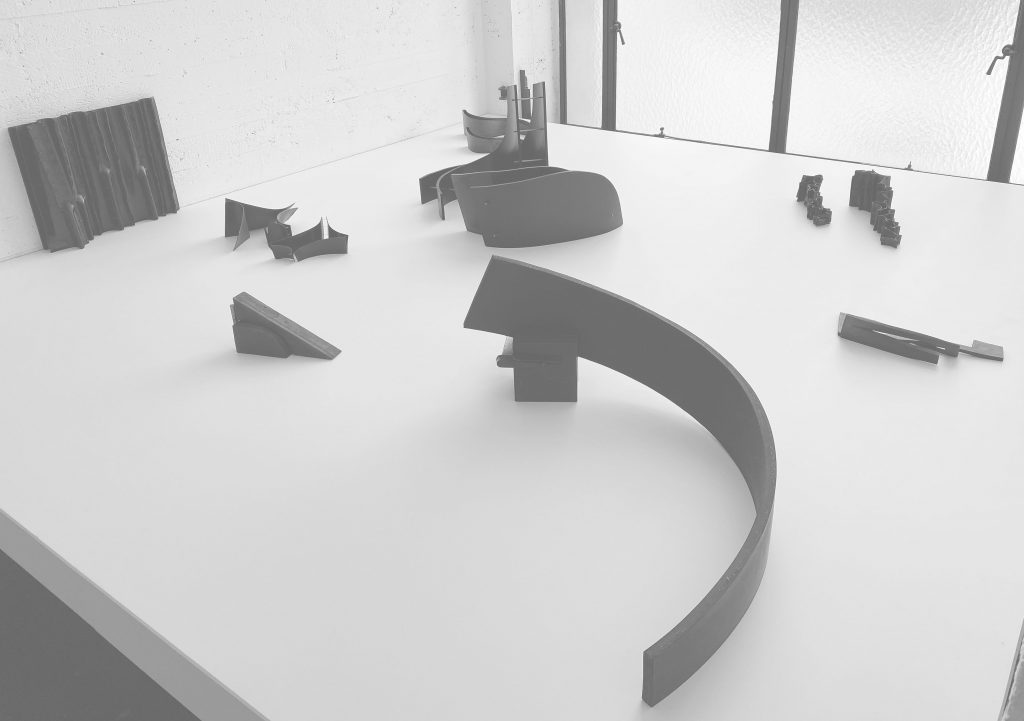
Hence, from a political economy perspective liking inflation might well turn out to be a rich, white man’s perspective on the economy as the global South is likely to suffer most having no resources left to invest in energy and CO2 -saving in general. Price signals may induce behavioural changes for the better of us all. However, the story it is not only about allocation of resources, but also about distribution. There we should embrace a renewal of trade union strength to correct imbalances in the distribution of earnings as the basis for consumption and investment of households as well. (Image: Tapta, at Wiels Gallery in Brussels, 2023-6, mostly untitled work, one with title: on the edge of time).