Mehr vom Meer

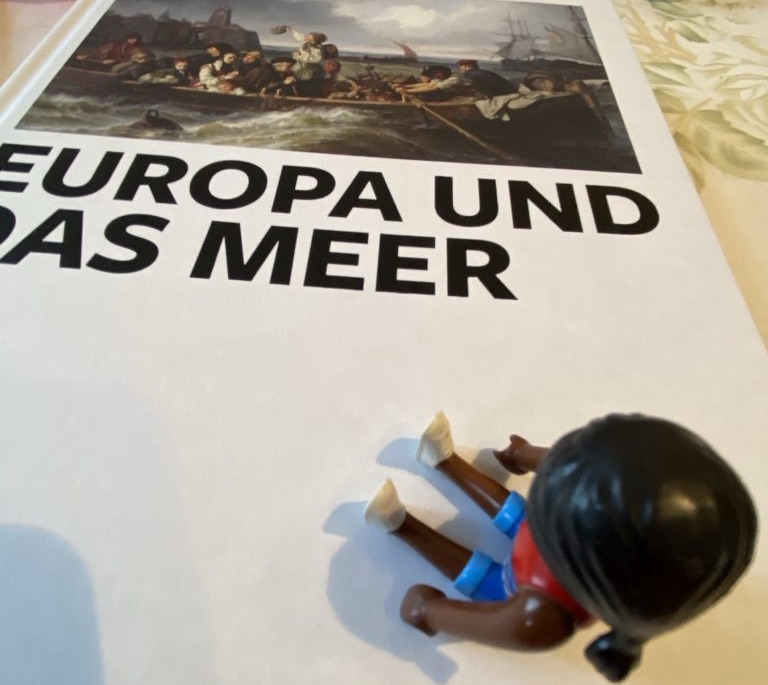
Wir sollten uns mehr um das Meer kümmern. Länder ohne Küsten finden meistens wenig Gründe, warum sie sich um das Meer bemühen sollten. Es ist doch so weit weg. Weit gefehlt. Erderwärmung erhöht die Meerestemperaturen und das wiederum beeinflusst massgeblich die Regenfälle im Inneren der Kontinente. Wir sitzen buchstäblich alle zusammen in einem Boot. Historisch betrachtet war das Meer mindestens seit der Antike Teil des machtpolitischen Kalküls der Beherrschung der Welt und der sie Bewohnenden. Wirtschaftliche Interessen waren ebenfalls Bestandteil der Erkundung und Eroberung des Meeresraums. Die Hansestädte in Europa bieten dazu noch heute gute Beispiele. Nach dem Sklavenhandel sind heute die Überseekabel und Rohstoffe des Meeres die begehrten Schätze des Meeres. Der Artenreichtum der Tiefsee wird erst seit kurzer Zeit intensiver erforscht. Externalisieren von Kosten des Umweltschutzes zu Lasten unserer Meere hat noch wenig Berücksichtigung in Wirtschaft und Gesellschaft gefunden. Tourismus- und Migrationsströme zum Meer, auf dem Meer und über das Meer stellen uns vor große Herausforderungen. Wir werden sicherlich mehr über das Meer reden müssen, und das ist keine Mär. Image aus „Europa und das Meer“ (DHM).
Opportunity Costs

Skiing in winter is a pleasure that has become more elitist. The downhill skiing has always been an expensive sport, but affordable school holidays gave the sport a more accessible touch. The cheaper version of long distance skiing or skating on larger trails involves much more endurance. The report of the French Cour des Comptes in 2024 questions the sense of the huge investment that is still devoted to save the pleasure of the few. I
nstead of investment to the benefit of relatively few persons, these funds could put the money into a more sustainable, socially and ecological productive purpose. Installations could be used all year round rather than in the few weeks at best months with snow. It is remarkable that the court has highlighted this kind of opportunity costs of such installations. Instead of investing in soon to be obsolete infrastructure at lower altitudes like water reservoirs and water canons, this money could already start the eventually necessary transition process. Each € spent is not only lost for the transition, but might create additional environmental liabilities and damage.
From economists it is to be expected that they mention competition in their arguments. Not all stations of skiing will survive. Put more dramatically, in the process of closing skiing at lower and middle level altitude, competition intensifies between stations and of who can survive. Public funds should not be misused in this endeavour. Lobbying is strong and political incumbents tend to favour the merit and legacy of digging for the white gold. Changes of mind sets, investment narratives and decisions are tough. From much downhill skiing we might soon remember only the downward slope before the healthy aspects of climbing a slope takes the upper hand.

Cancer Inequality

Inequality is a hugely important topic for societies. Inequality has many different dimensions and differential longitudinal patterns. New data in this field of social research are helpful to inform on possible ways to prevent increasing inequality. At the same time, it is important to reflect on factors that may reduce inequality in and between societies. Inequality in health is both an outcome of inequality experienced during previous stages of the life course as well as a factor in causing inequality in the evolution of the life course later on. Disentangling the factors is a difficult research issue.
A first descriptive pattern across Europe allows to get a snapshot impression of the status quo as a first indication of what health inequality looks like. Cancer is a major cause of mortality across Europe and by 2045 it is estimated to be the leading cause of mortality.
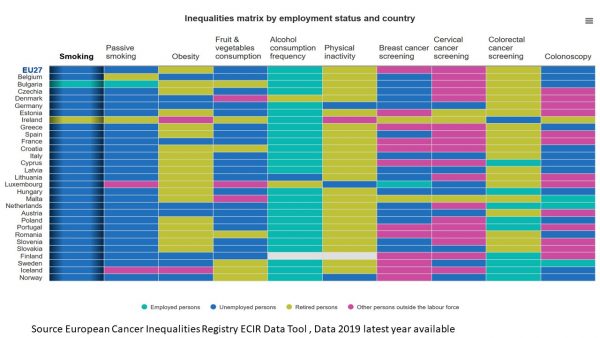
Without precisely analyzing the causal factors the overview across European countries allows to give a first impression on fields that need more policy attention and more in depth studies. The European Cancer Inequalities Registry and the ECIR Data Tool is based on data from 2019  (Link). The overview matrix by employment status reveals the highest prevalence of smoking among the unemployed (followed by the employed, not shown in figure) and the frequency of alcohol consumption is highest among the employed. Low physical activity is mostly prevalent among the retired.  This has consequences for cancer and gives hints to how an intensified prevention may work.
The OECD report (Link) based on these data and additional country case studies and policy data base reiterates the known prevention recommendations: Reduce smoking, alcohol consumption, air pollution as well as more physical activity. The dimensions of inequality are gender, age, employment status and most of years spent in education. The curing of cancer also suffers from inequities as to the amount of and access to screening of cancer. Cost coverage and shortages in medical personnel add to multiple sources of inequality in treatment of cancer within countries by regions and between nation states. The Lancet Public Health editorial contributes to the spread of the awareness among scientists and the medical profession.
(Image: ECIR data tool download 2024-2-22)

Gas Reduction

Gas consumption in the EU has been reduced by about 20% since the beginning of Russia’s war on Ukraine. This is a considerable accomplishment and has been sustained for 2 years now. The major element in this has been the reduction of gas consumption in industry, but also households have successfully managed to reduce heating of rooms and water with gas.
Diversification of provision with sizable increases in the provision by the U.S.A is another element in the beginning of a trajectory of gas reduction in Europe. Germany as a major consumer of this type of energy supply is also making strides in shifting consumption. This is my short summary of the report by IEEFA.org in 2024-1. All electric devices like heat pumps could speed up the gas reduction further according to the policy recommendation by IEEFA in 2024-2 reducing costs of living and CO2 emissions further.
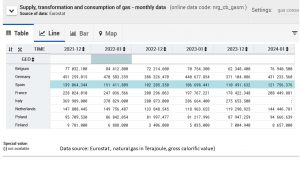
Data from Eurostat allow to compare monthly data across Member States. The overall trend is a market decrease with differential patterns of refilling supply capacities. Big countries in the EU made and continue to make a real difference compared to previous years (see table below). The comparison of December and January figures across years reflect the months with high sensitivity of the public for heat and cold. Further reductions of gas consumption is feasible due to the mild winter months of 23/24 which allow to reduce heating costs for many households and offices. Good news for the planet and hopefully a move in the right direction to shift away from heating with gas.
Processed food

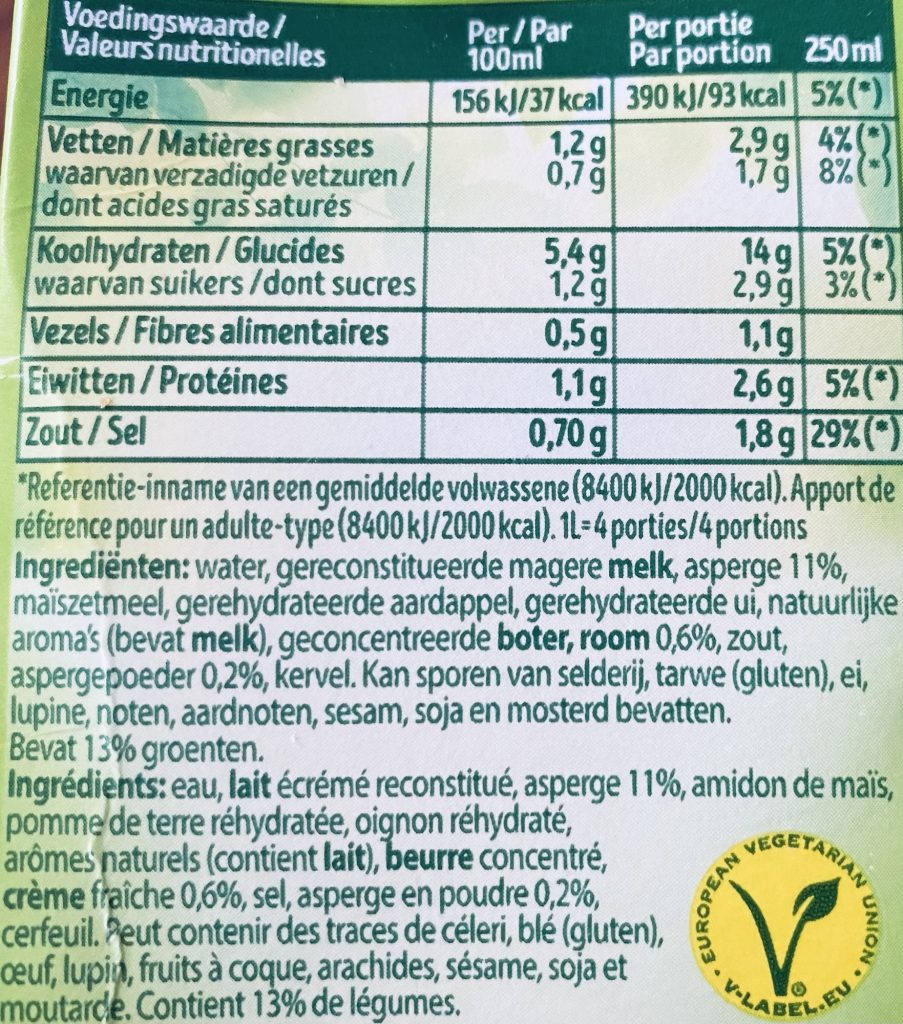
We eat a lot of pre-processed food. Our busy work schedules allow us to take only short breaks for meals in order to get more work done while in office or at work in general. The intensification of work has reached the next level and we move from pre-processed food to ultra-processed foods (UPFs). In medical journals and nutrition recommendations the warnings to not eat too much ultra-processed foods are abundant. The signs of obesity in societies reach higher levels from year to year. Especially younger people seem to be at higher risks to consume a lot of ultra-processed foods. Freisling et al. highlight the “risk of multimorbidity of cancer and cardiometabolic diseases” due to UPFs. The discussion between scientists is a lot on which UPFs are most harmful (beyond animal origin or and artificially sweetened beverages) and/or whether it is the combination of UPFs that additionally increases the danger of UPFs. Preventing the “too much of each” is probably the safest recommendation. Being able to read the nutrition information on the labels is already a difficult task. Just making the information abundant and very small print discourages most efforts to compare across products. Learning about basic human needs like food has never been more difficult. Combined with “shrinkflation” we have a hard time to make informed choices of what to buy and eat. There are many hurdles to overcome for a healthy meal.

Wage indexation

Currently inflation increases rapidly in many countries. Yes, Argentine. The Euro-zone and EEA have mastered the peak of inflation due to shifting away from Russian dependency and cheap prices for energy and dealt with carry-on effects related to high energy inputs. The annual rate of inflation calculated for January 2024 has returned in the Euro-area to 2.8 % close to the European Central Bank target of 2% (compare figure below).  Inflation puts wages under pressure, because household with little savings have a very hard time to cope with sudden price increases. For society as a whole, inflation raises many questions of differential impact of inflation on different parts of society. Savings become devalued, but debt might become easier to be repaid in so-called real terms.
Wage earners suffer in terms of lower purchasing power unless in subsequent wage negotiations pay rises can be achieved. This then depends of negotiation power of groups or sectors of the economy. Trade unions have to enter into tough negotiations and conflicts to even regain the same status quo previously achieved in wage negotiations. A series of conflicts and economic readjustments by more or less powerful sectors or representation comes into play.
All this is happening in a year of a series of national and regional elections as well as the European Parliament election in June. Political turbulance and the rise of extremists might be a result of a lack of taking into account the needs of lower wage groups who are likely to feel the full blast of the high inflation previously still today. Wage indexation as in Belgium, which fixes wages to the rise in inflation previously takes out most of the explosive power of a sudden rise in inflation at the risk of an upward wage-price spiral. The recent inflation figures for Belgium, however, show that this is not the case. An overshooting has been followed by an undershooting of the Euro-zone inflation. The political disturbance and risk of redistribution to more powerful groups in society can be limited through general wage indexation or indexation of for example just minimum wages.
The Russian caused spike in inflation has been successfully mastered in the EU. The political economy of redistribution through inflation will remain an important element unless wage indexation is used in more countries to escape populists’ and extremists’ voices. (Image Eurostat data and ESTATEC app)

Greedflation

The teaching of economics and socioeconomic policies has to deal with the topics around inflation and economic inequality for centuries. Greedflation has become a newly coined term for the rise of inflation due to greedy firms who use a window of opportunity to achieve extra profit margins or windfall profits. At a time of perceived price rises in many sectors, sectors that have no cost increases might still try to push prices higher simply because almost everybody else does so. Higher profits then show up in the reporting season of enterprises quoted at the stock exchange and the increase in inequality between wage earners and shareholders will rise. Greedflation is a summary term for it. The ECB European Central Bank has mentioned this and Reuters has reported on it as well end of June 2023. Since then a wait and see strategy has been adopted. Now in February 2024 we witness the wider spread of extraordinary profits of big firms not only in the fossil energy sector but also bog banks. The economies and societies suffer huge losses and a massive redistribution of capital. Subsidies introduced to lower the shock of the coronavirus crisis and the Russian aggression are unpopular to be scaled back. Employees and their trade unions have a hard time negotiating adequate wage increases whereas most companies use the momentum of seemingly general price rises to push profit margins. The translation of this mechanism to the political economy risks to jeopardize the support for capitalism and market forces in general. Another wave of increasing inequality endangers the survival of democratic societies. Countries with only a short experience of the functioning of market economies are at a particular risk. Germany’s decline into dictatorship in the 1930s after the severe economic crisis should be remembered as a major threat. Greedflation is a very serious and very real threat which we have to address with economic and social policies rather than waiting until the European elections have passed. Time to act, the thinking has been done. Evidence accumulates to make the political case.

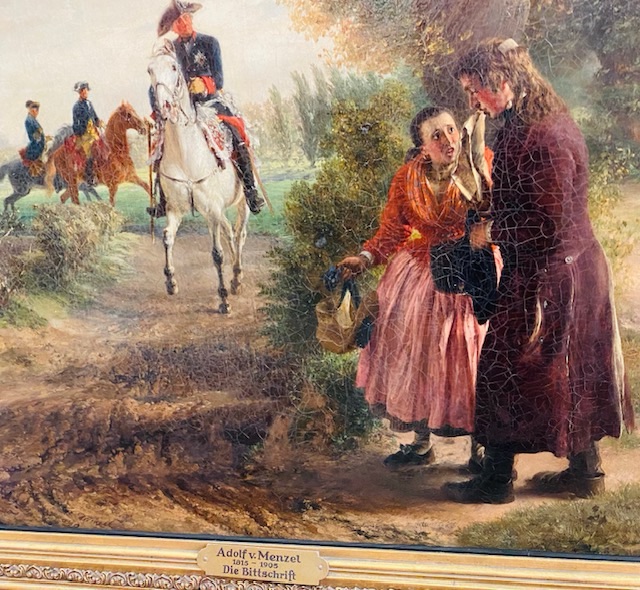
Adolf von Menzel, The Petition, Alte Nationalgalerie Berlin

Skill loss

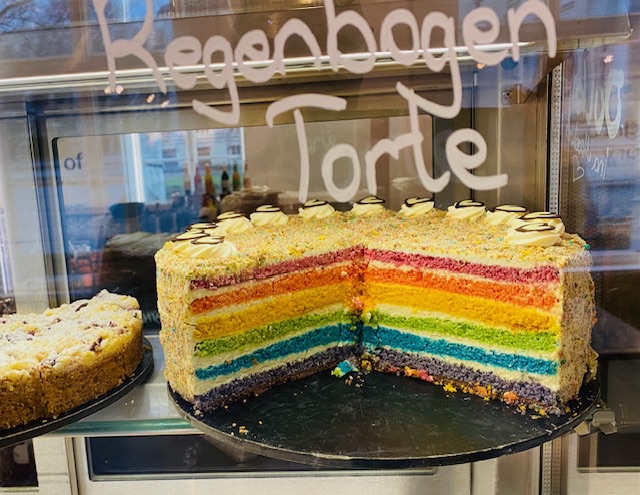
There is a sense of skill loss in watching the trends to increase comfort. We all use washing machines and maybe dishwashers. Households can save a lot of time by using those machines. Some porcelain and clothes should not be left to the machines. The need to organize traditional washing routines is almost forgotten after 1-2 generations. The same holds for many technical skills. Bicycle and car repairs or small repairs of electrical appliances are delegated to specialized repair shops. Not using or having learned these skills puts you in a form of dependency and at the risk to pay a price for specializing on other skills. Find out and focus on what you are best at. This has been the mantra of economic theory since Adam Smith. The potential value of satisfaction with an own production rather than a bought product is frequently acknowledged for baking cakes yourself rather than simply buying one in a shop. The same rationale holds for many other skills. Autonomy of own production with possibility to improve or repair are forgotten values. The have become a luxury item or a necessity for persons lacking financial spending power to buy products from others. Many skills will be lost rapidly because products have become so cheap to replace or order for home delivery. Industrial production is desperately searching for skilled persons but losing skills is pervasive at the same time. Public schools and academic curricula will not be able to stand the tide of pervasive skill loss.

Postmodernism

The grand narratives of the modern world, like modernism itself, are under serious criticism. Deconstruction of the modern way of thinking has become philosophical mainstream. Economics as a science is in the middle of the behavioural shift and changing or at least complementing its narratives. Sociology has embraced postmodern thinking in theoretical as well as empirical forms (Mirchandani, 2005). The empirical measurement focuses a lot on the groups and people who hold postmodern beliefs and values. The discussion in the social and literary sciences continue. In the arts reading on modernism and postmodernism is a must in order to understand much of contemporary art or art from the 19th and 20th century.
Bookstores in art galleries that cover long spells of history can make surprising links between historical periods of art. Books of postmodernism appear next to books on romanticism. A lot of the ideation of postmodernism rejoins romantic depiction about nature, re-naturalizing or the emotional connotations of wildlife, isolated places and stillness.
On the other hand, we are confronted with the brutal world of war, drugs and crime. Classical warfare and strategies are back in Europe with tanks and rockets killing like in previous wars. The Russian empire of a specific version of modernism strikes back as if it were to stop the postmodern turn of the 21st century. Neo-fascism tries to build on the losers of the transitions to the socio-ecological economy and society. There are manifold backlashes of modernism, but the postmodern world is under continuous construction, most of in our mindsets.

AI or I

Generative AI receives a lot of attention. One of the main issues is, to study how AI interacts with humans. The hiring decision by managers or an AI algorithm is an interesting application. According to Marie-Pierre Dargnies et al. (2022) the preference for human decisions remains strong despite reasonably unbiased performance of an algorithm. The main issue is with the transparency of the algorithmic decision-making. As a worker or as a hiring manager the preferences continue to sit with the person rather than the AI. It is a worrying outcome, however, that if the rule of gender equality is removed from the algorithm both workers and managers tend to prefer the algorithmic outcome. I interpret this as a latent preference of study participants for gender bias, which could lead them to expect a more favoured outcome in case the AI makes the decision. Knowing what decision-making rules have gone into the hiring algorithm has an impact on all persons involved.
A new managerial competence is to be able to assess tasks carefully, whether you should perform the task yourself or delegate to AI. In this sense the old question: to do the task yourself or to delegate has simply been enlarged by an additional delegation option. The decision-tree goes from (1) To delegate or not to delegate, and (2) if I want/need to delegate, should I delegate to AI or somebody in person (not allowed to use AI).
I opted to use AI for image creation rather than to take a photo myself or by one from a professional photographer. (Image creation: NEUROFLASH AI – Image-Flash 2024-1-26)