Research is beginning to provide empirical evidence and experimental modelling results on the widespread use of generative AI. First results by Doshi and Hauser point at the individual benefits of using artificial intelligence but the widespread use of it is likely to narrow the scope of novel content. This research is particularly interesting because it deals with the micro level to macro level aggregation effects. It is fine for me to use AI. If it becomes a mass phenomenon, we expect in sum a negative outcome for society as a whole.
The example at hand deals with the capability to innovate or to come up with novel content. As more and more texts or newspapers are published with extensive use of genAI, the real element of creation will remain the domain of humans for quite some time.
In my opinion this is due to the difficulties for algorithms to differentiate between the positive and too risky negative aspects of innovative solutions. A query for AI might ask to come up with an innovative solution for auto-mobility of short distances. A human being might propose walking due to the additional health effects the AI might propose helicopter lifts. The not so stupid machine would need a lot of additional information about circumstances to generate useful solutions. Therefore it is not surprising that sometimes public transport apps propose to walk short distances rather than waiting for “delayed or unreliable services“ they provide themselves. Personal circumstances like mobility with children, other dependents or luggage are usually beyond the scope of the information base of the algorithms.
On the other hand, if the AI knows that 50.000 persons after an event want to take public transport at the same time the indication to walk or wait solves an aggregation problem of individual preferences to adapt to available capacities. Lots of issues to solve for AI and us or better yet, us and AI.
(Image creation: AI using Microsoft Dall-E Image creator: Prompt: a person with notebook in profile and in front of 5 other persons in Office with windows 26.1.2024, 8:24 PM) 
Shrinkflation
Shrinkflation is a hybrid term that combines “to shrink” with “inflation”. The trick is to keep prices at the same level for a product, but to reduce the weight or amount sold at a constant price. The intention of producers is to indirectly increase prices without touching at price tickets on products. As consumer you are likely to remember the price tag of a product, but much less the unit costs. However, the unit price is the basis for fair comparisons. In supermarkets there is an obligation to print also unit prices (€/kg or €/L) next to price labels. Comparisons allow information irrespective of package size. In shrinkflation the higher unit costs of a product will drive the official measure of inflation (Destatis, 2024). In Germany inflation for food had the top inflation rate in 2023, surpassing even price rises for energy.
On the one hand, shrinkflation is cheating on consumers to sell them less for the same price. On the other hand, oversized products that solicit higher consumption are part of the health and environmental problems we face. The obesity pandemic is part of the XXL consumption hype the food industry and supermarkets have created. In this respect, more expensive food (Eurostat info) potentially may trigger the rethinking of consumption and nutrition. “Eating better instead of less” has always been more expensive.
Besides the profit-maximising logic of shrinkflation, there is at least a small hope that behavioural changes might be triggered to consume less, to use less detergent in washing, less sugar drinks, smaller size pizza and so on. Shrinking our food intake is part of the solution for many problems. In the end cutting out most convenience food will save you a lot of money. As a side effect of such behavioural changes, eventually prices are likely to come down some time later again. 
Flotow CH
Noch 20 Jahre nach seinem Tod wurde Friedrich von Flotow recht prominent aufgeführt. Im Stadt- und Aktien- Theater der Stadt St. Gallen stand seine Oper “Martha” an einem Mittwoch 26.4.1905 auf dem Programm (Anfang 8 Uhr präzis), gefolgt von Mozarts Zauberflöte 2 Tage später. Was für eine Konkurrenz. Das Plakat zur Aufführung ist in der Digitalen Bibliothek der Kunstbibliothek in Berlin anzusehen (Link).
Die Geschichte des Theaters in St. Gallen ist aus ökonomischen, gesellschaftlichen und architektonischen Gründen interessant. Das Tagblatt berichtete in 2007 über den Abriss der historischen Städte und den sehr verspäteten Neubau einer moderneren, größeren und wirtschaftlicheren Spielstätte. Damals zu Beginn des 20. Jahrhunderts schon standen populäre Werke wie die Martha und die Zauberflöte auf dem Spielplan. Die Aktionäre des Stadt- und Aktien- Theaters der Stadt St. Gallen haben wohl schon immer etwas mehr auf das Geld geschaut, auch wenn es um Kunst geht. Mehr Zuschauende und Zuhörende ist demokratisch und nebenbei gut für’s Geschäft. Der Abriss war beklagenswerter Weise im Jahr 1971. Ein Neubau an anderem Ort startete bereits 1968. Dieser Bau musste ebenfalls nach 40 Jahren Spielzeit grundsaniert oder abgerissen werden. Heute findet sich darin ein lebhaftes Programm mit Musicals als ausgezeichnetem Schwerpunkt und beispielsweise des Theaterstücks „Gott“ von Ferdinand von Schirach . Die Stadt und die Aktionäre sind wohl aus der finanziellen Verantwortung, aber das Kanton St.Gallen und der Lotteriefond sind eingesprungen.  Bildquelle und Großansicht Kunstbibliothek SPK Berlin.
Stock taking
From time to time it is necessary to take stock of production and to review the material that has accumulated. As I have been working in archives, official book depositories and libraries for years, it comes almost naturally to deal with questions of how to keep track of all that content. Digital solutions are excellent devices in this regard. I do not have to deal with digitalisation, a huge issue for all historic archives and many recent small museums as well. I have to deal with backups at regular instances. To be sure, each engineer will assure you, better make a backup of your backup … . Yes, I do this as well. Now the ultimate backup of digital work is ? Got it, a printed copy of your digital work. The best advice I received on this comes from a computer magazine “ct” gadget mug with imprint advocating “No backup, no mercy“. To facilitate my printed archive I start with monthly collections of blog entries (Link to pdf-file December 2023 ->Brainstorming 23-12). The simple conversion yields 63 pages, a printer friendly version 56. Hence the expected yearly volume (60*12) will be somewhere near 720 pages. That is for the archive only or in case my eyes do no longer support online reading on screens for too long.
Digital archives have, of course, many other advantages. It is possible to reassemble my collection of entries by subject through a more thorough editing. Specific edited volumes will surface from this, which I have in my mind but only careful long-term followers of the entries might see already. Political economy and sociology are obvious candidates. Public health, labour, the world of arts and music could constitute other edited volumes. Lots of branches grow out of the trunk of content. 
Ethics of posterity
We have not inherited the earth from our ancestors; we are borrowing it from our descendants. (native American saying). Adeline Johns-Putra (2019) states this early in her book on “Climate change and the novel.” Her concern is how to think and write about the ethics of posterity. Approaches of ethics in the sense of parental care (for the planet) or motherhood environmentalism do not suffice in view of overpopulation of our planet. Shifting our identity away from toxic production and consumption is advocated in many novels. Science and science fiction offer many dystopian examples.
De Shalit (1995) wrote early on why posterity matters. It is not the standard of living of contemporaries that matters but we should consider ourselves as a part of a transgenerational community. The time horizon of our decisions matters. In pursuing arguments by John Rawls who re-established a contractionalist perspective on justice, we have to include future generations into our contractual obligations. Following this approach we might arrive at Brundtland’s perspective on the ethics of posterity which is called sufficientarianism in opposition to simple utilitarianism. In sufficientarianism we owe future generations a just and decent living or at least the possibility to have similar starting conditions. Shifting beyond the apocalyptic view of environmental disasters Adeline Johns-Putra (2019) brings to the forefront that we have to substantially lengthen our time horizon both for consequences of climate change and for dealing with it, albeit the fact that most destructive practices operate much faster than the re-establishing of greater biodiversity.
P.S.:Thanks to the curators of the Lese Lounge Staatsbibliothek Berlin for ease of access to the literature.
(Image: Natur & Kultur in “Extreme tension: Art between Politics and Society” Collection of the Nationalgalerie 1945-2000“. 2024-1) 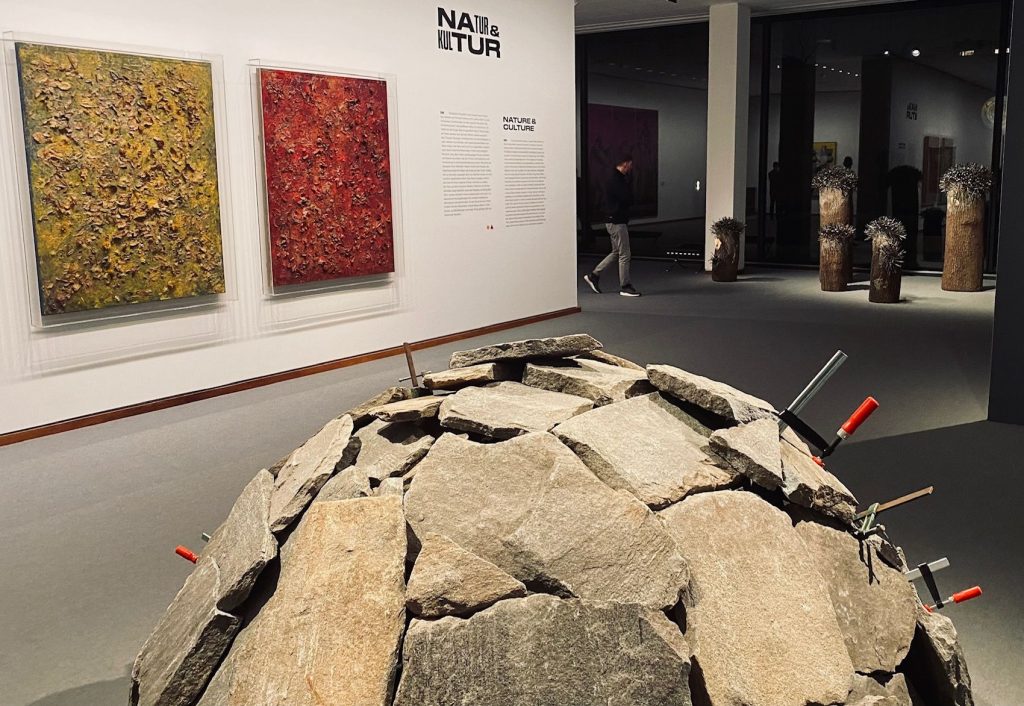
Air quality EU
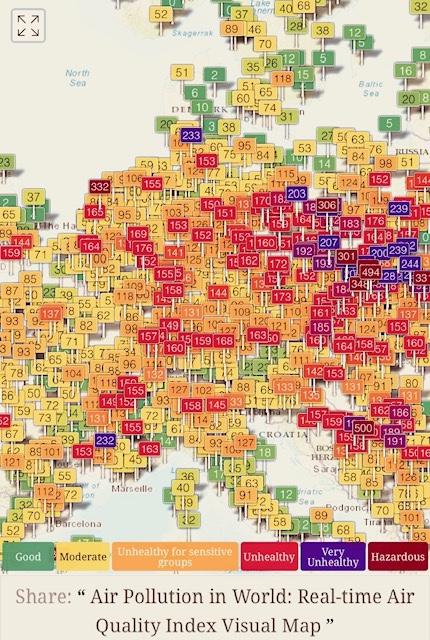
On some days of the year there is a cumulative effect of bad influences on air quality in Europe. Cold winter temperatures increase emissions from heating. Outdated heating with coal, still important in Eastern Europe, causes high amounts of extra particles in the atmosphere. In January 2024 a train conductor strike in Germany irrespective of the good reasons for it, makes people take their cars. Road blockades by opponents to reducing diesel subsidies to agri-business add to the pollution situation on a specific day. Overall the population suffers and breathes additional amounts of cancerous particles. Particles settle as dust on crop producing soil, of which we all feed ourselves. This is a vicious circle, which we need to break in the interest of all of us, particularly for the more fragile people and children. The latter start to crowd the medical doctors with sometimes lacking the delivery of crucial medicines for this target group. Where do we go from here? Compromises are key, security of supply chain and allowing, not too much, time for transition periods.
Renewables
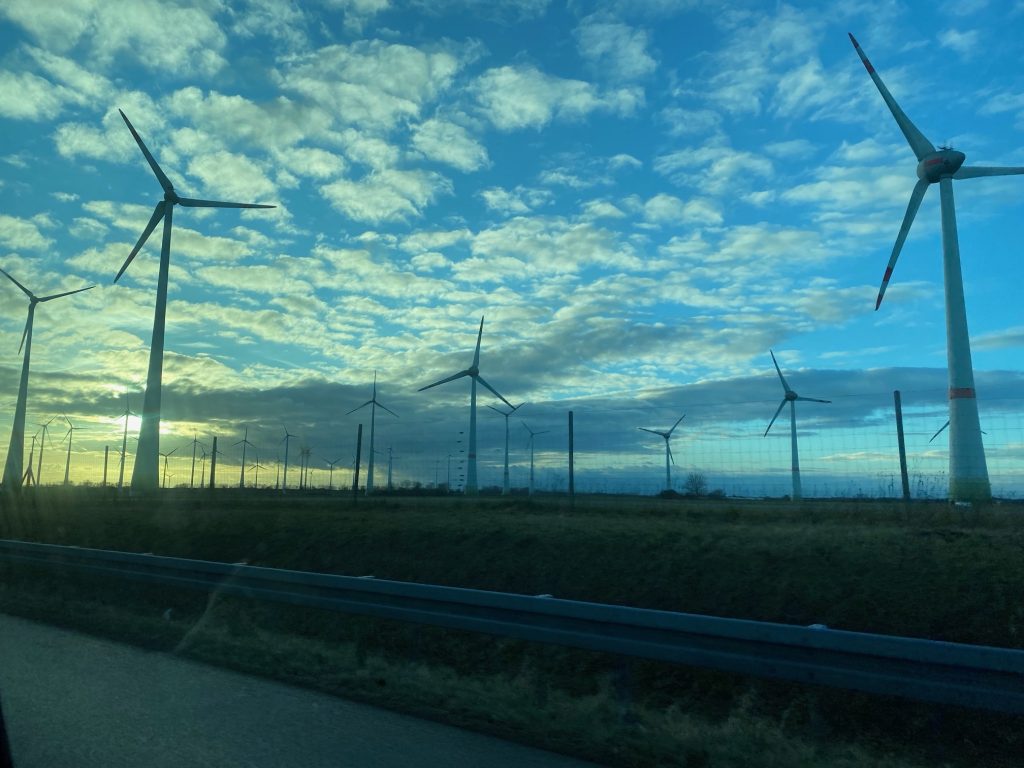
Renewable energy has reached for the 1sr time a share of more than 50% in Spain and Germany in 2023. This is an astonishing milestone in the energy transition of both countries. For Spain a report from Red Energy Espanola attributes the Spanish success story to the expansion of mainly wind energy (Link). The increase of renewable energy in Germany is due to a more rapid expansion of solar energy (Link). In any case a continued expansion of both forms of renewables allows to reduce the share of fossil fuel even more rapidly than previously estimated. Good news for the planet particularly to phase out energy from coal due to its highly polluting side effect. Countries with faster trajectories shall serve as examples that it is feasible to manage the energy transition also for large countries. Political instability might be a price worth paying considering the positive effects for future generations. Managing the transition in a just way which means to assist poorer households, ensures the respect of social policy targets at the same time. With this in mind the energy transition can be perceived by all as an opportunity rather than a threat to their welfare and wellbeing.
Museum Orga
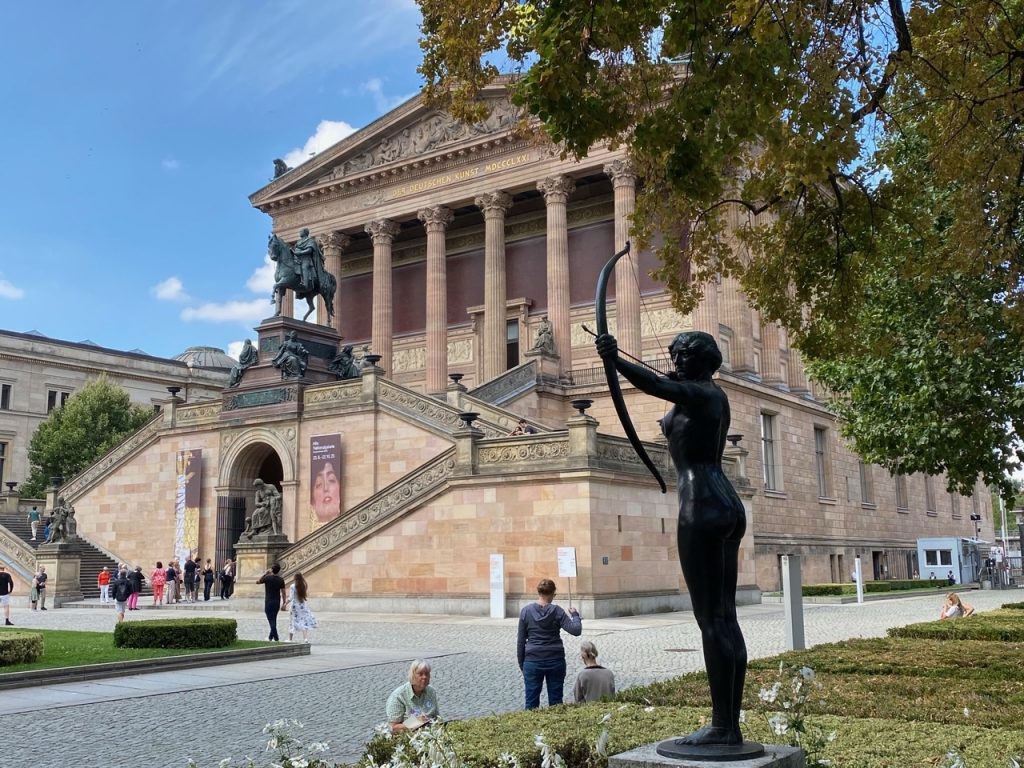
The cathedrals of modernity are under permanent scrutiny. The discussion in Germany was sparked by a recommendation of the scientific advisory council to the federal government (Wissenschaftsrat) to separate the Prussian heritage museums and institutions (SPK) in Berlin into separate entities that have higher autonomy to shape their individual profiles. Too much hierarchy blocks innovation and openness to new approaches that might not fit an overriding instance of decision making. The arts and sciences as well as their libraries need substantial degrees of freedom to flourish in their specific cultural and societal environment. The same discussion is currently occupying Paris and France, since overall the visitors after the Covid-19 crises have not yet come back to the same levels. Digitalization has opened up new opportunities and potentials to reach new audiences. This needed new resources even at a time of budget constraints. Museums have started to take their social functions more seriously besides their role to preserve the cultural heritage. Economic thinking in terms of scarcity of art works, competition between museums and cities or countries for tourism have entered the stages as well. Prices of entry and quantities of visitors have become additional concerns in the organization of the museum landscape. A lot to cope with and to balance multiple policy targets. Accessibility of those treasures is key. Opening up to broader audiences is costly but crucial to provide the justification of the public funds allocated. Great to see more complementary private investment in this exciting field. The prominent archers in front of the Berlin museums have moved ahead into a new round of competition in the organization of museums.
Eco-trees
This time we thought to advance with our ecological version of Christmas. We use LED lighting and instead of advocating real horse riding we opted for the wooden replacement. We reduced the size of the tree by 27.5% to further cut down on the carbon footprint of our event. As we were all feeling pretty confident that we are on the right track now, we learned from the media reports in Germany that the trees usually grown specifically for Christmas are taking away precious land where otherwise food would be grown. Much worse is the fact that pesticides are very often applied to facilitate the production of trees. (Link to study and test results).
We know that there is a problem in Germany to be frank about environmental dangers of diesel and glyphosate, but we did not want to believe that we inhale glyphosate in our living rooms after the diesel disaster in cities. We thought trees were synonymous for nature. Far off the truth. Better check the ecological impact and risks incurred even for trees. Trust and good faith seems to be utterly misplaced when it comes to nature turned into a product.

Infrastructure
For some societies and cities it is a continuous question of how much resources we should invest in infrastructure. Access to funding is a major concern. The calculation of the viability of the project needs careful examination and evaluation. Societies have very different kinds of preferences and, interestingly, about time horizons for their deliberations.
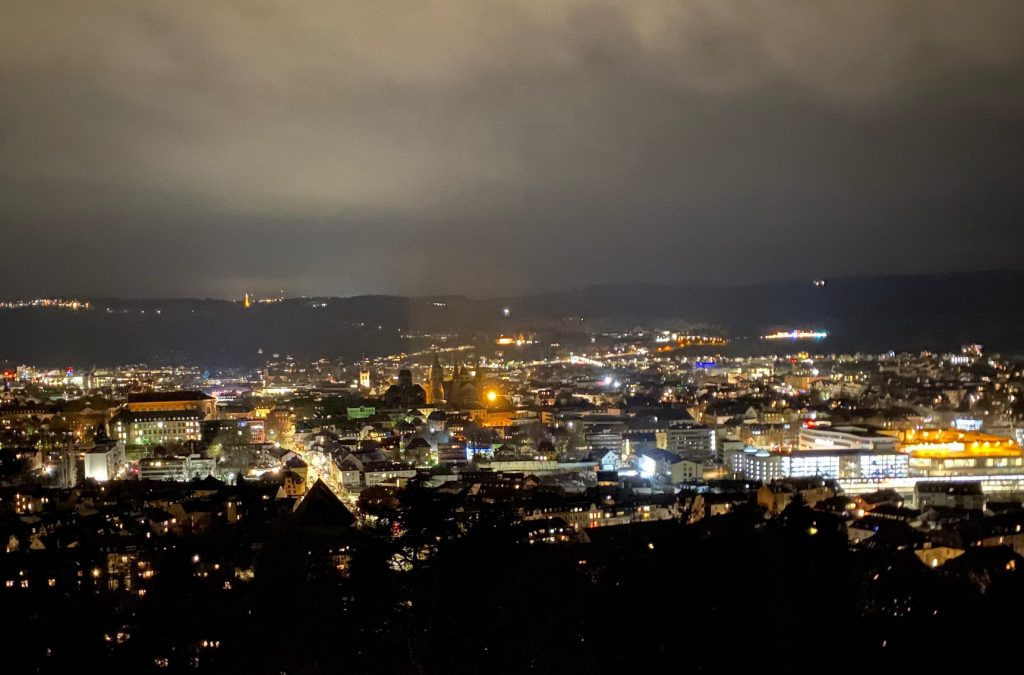
There are examples that have been built to last a century and lasted 2000 years. Other worst scenario examples are built for just one World Expo and torn down afterwards. The Eiffel tower is such an example of the latter kind, but it lasted longer than 100 years by now. We should be thinking more about time horizons as it remains an often overlooked part of investment in infrastructure. The oldest city in Germany has many buildings from the Roman occupation that still characterize the city’s architecture. This remains an important economic factor for the city of Trier as an attractive location for tourists throughout the year. Only wars or negligence may cause severe deterioration if infrastructure has been built with an emphasis on its lasting value. The narrow-minded investment in downhill skiing like in the Swiss Alps is at best expected to last 20 years. For trees to grow there again it will take 50+ years. Sustainable investment will be viable and vital in many respects. High interest rates force us to recalibrate our societal and private s again. Taking into account a longer time frame for investment we indirectly build infrastructure that should last longer. Moving beyond short-termism is necessary, particularly in the field of investment in infrastructure.