Legal illegal business

The world of business has to be quite well defined in order to make the borders between legal and illegal practices clear, transparent and enforceable. You name the business or trade and then check the rules governing it. For pharmaceutical products we have rather strict regulations, but smuggling across borders can be a challenge to national customs if online commerce can easily circumvent national controls. Trading on ebay in small amounts is not defined as a tax registered trade, if it is below certain amounts. However, this might be difficult to control and legal rules are at times tough to enforce. The construction sector has been closely scrutinized for illegal practices and sketchy applications of regulations with regard to health and safety of employees. Regulations can be a pain, but they have contributed to safe lives in many instances. (Image: construction of “Scheune” (barn) in Berlin 2026-9, future center of Kulturforum). 

Kulturforum construction 2026-9

VLOPs flopped

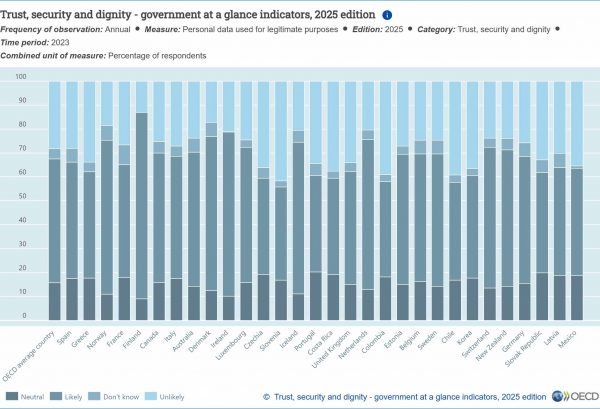
Well, not quite. This is wishful thinking. Let’s start slowly. Very Large Online Platforms (VLOPs), the platforms we all use on our smartphones, are subject to the European Digital Services Act (DSA). As of the year of its adoption in 2022 by the European Parliament, the European Union has a mandate to act, for example, against fraudulent websites that attempt to steel money from customers with fake content on VLOPs and, of course, on smaller platforms as well. To put it bluntly, the European Union has to defend its population from mainly American VLOPs massively exploited by Russian criminals to impinge on our European digital sovereignty. These external threats have to be taken very seriously as they touch upon the satisfaction and dissatisfaction with the European democratic political system and trust-based societies. The level of trust in Europe, particularly with respect to “Personal data used for legitimate purposes” is high in the Nordic countries and Ireland, but much lower in the UK, most Eastern, Central and Southern European countries. (Data retrieval from OECD on 2025-12-1, compare figure below, figure build Link).
VLOPs might be important drivers of eroding trust not only in data security, but also how democratic institutions are able to protect its citizens, youth and children. About time to act accordingly.

Sovereign data spaces

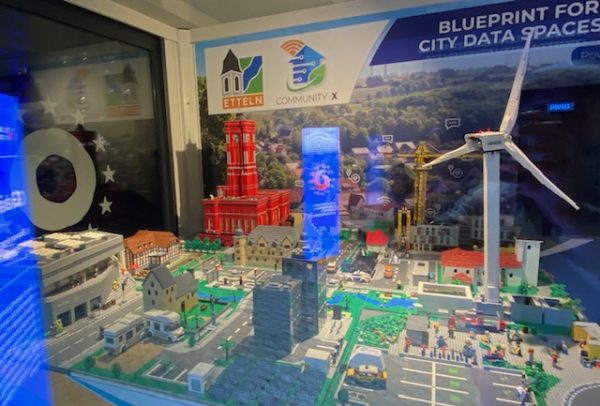
Data is the new gold, petrol or diamonds. In order to bring this message home to all people in the EU, the European summit on digital sovereignty had a small exhibition of projects that address these issues. City data spaces is such an initiative which has been running for quite some time now. In fact, from a city planner and data scientist perspective cities collect already huge amounts of data and can offer them to service providers, businesses and each and every one of us to organize our energy consumption, improve mobility patterns or any form of data or video streaming services. The amount of data captured and to be stored is growing rapidly. Just think of the Internet of things (IoT), maybe that’s only your wifi-connected coffee machine, oven or heating. Now add AI to this which allows the system to learn about your daily patterns to start the device in time for you to focus on other tasks. As we would like these data to stay confidential, the need for European digital sovereignty becomes sufficiently clear. It will take a huge effort to provide an adequate digital infrastructure for this “brave new world” and many people to work towards this objective. Train the trainers already, cause otherwise this is going to take ages before we can harvest the benefits in safe and sovereign manner.  

Balance and justice

Justice is often represented with the symbol of a balance. This dates back at least to the Roman times when the Roman law reached an unprecedented spread across Europe. The philosophy of law dating even further back to the Greek philosophers, notably Aristotle, founded comparative law with his comparison of constitutional principles in various Greek city states of his time. Striking the right balance, therefore, is encrypted into law, legislation and the American constitutional principle of checks and balances. In Paris the sculpture in the “Parc du Palais Royal” of heavy metal balance at the opposite end of the park is moving as well. Facing the ”Conseil d’état” and the “Le conseil constitutionnel”, this is a forceful reminder of the basic principles of a republic and democracy.
In the 21st century, particularly, since the weights attached at each end of the balance pull more forcefully at the moment in several countries.
Institution building and safeguarding the existing ones have become “the challenge for democracies in 2025 in many “centuries-old” democracies.
(Image: Sculpture by Raul Mourao in Parc Palais Royal, Paris 2025-10)

Sovereignty of People

In France the judiciary has made an influential decision to ban a politician from the possibility to be elected after conviction of fraud. This is just what is to be expected from the 3rd power in the organization of a democratic state. It is surprising that there was a political debate about a person convicted for a crime to be eligible for public office. Several eminent scholars published columns in major newspapers to support the judicial decision. Pierre Rosanvallon focused both on the justification of the verdict and the constitutional role attributed to the judiciary to operate as a kind of memory of the “general will of the people”, the ultimate sovereign. In the struggle of power within a state the judiciary defends individual rights as well as moderates between the executive and the legislative branch. In the theory of democracy this creates a double bind situation in which the individual has a right to be defended against the state and individuals who ask for judgment of cases one against another one. Eric Halphen has also argued in favor of the often neglected role of the judiciary to stand up for the “general interest”, a notion which is not easy to define without historical references in each country and its historical trajectory of democracy. The short debate about the role of the judiciary has strengthened the defensive capacity of the French democracy. Other, even mature democracies may turn their eyes on the decision of the judges involved not to shun away from unpopular decisions. The independence of the judiciary is part of the sovereignty of the people and non-negotiable part of it.

Korea relieved

On Saturday 14th of December 2024 the Parliament of Korea voted with 204 out of 300 votes, the required 2/3 majority of the parliament to dismiss the president. The declaration of martial law has been the most serious attack on democracy in Korea since its founding in 1987. It is the 3rd impeachment of a Korean president in this short time of democratic life cycle. After impeachment the constitutional court has to confirm the impeachment also with 6 out of 9 judges in favor of impeachment. In 2017 the judges confirmed the impeachment of a president due to corruption charges, but in 2004 another president was reinstated after illegal campaigning charges were retracted. Democratic procedures hinge on checks and balances in the constitutional set up of a state. Nominations, votes of confirmation of judges are important safeguards against illegal martial laws to restrict or even abandon democracy. Pressure from the street, the people at large, is another safety net of democracy. It should not be the last resort for democracy’s survival as it is likely to come at high costs of human lives.

Sociolegal Circularity

At times legal systems feel like going round in circles. Legal procedures move from one stage to the next and they may get referred back to the previous instance to resolve a particular issue or restart the procedure. This has good reasons with the aim of “doing justice”. Sociolegal circularity, however, begins before the, right at the beginning and negotiation of legislation on which all legal systems are based in democracies, that is. Hence, the legal definition of waste, recycling as part of the circular economy and society is rather crucial.
Circularity is a complex sociolegal issue as the example of PFAS in plastics demonstrate. In economic theory the existence of externalities invites profit seeking of the kind like: “the sea in large part is owned by us all and there is no price attached to the (ab)use of it. Dumb PFAS into the sea, because the costs of cleaning up will be shared by all of us”. In order to limit the extent of this economic logic, we have to rely on sociolegal processes. The precise definition of property rights and liabilities beyond the PFAS issue have to be well-defined. It is an intergenerational topic as well, not only in view of deferred payments.
Parliaments have to be rather competent to look through all the complex issues of producing and recycling of materials to make sound provisions in law including future generations. Going round in circles in parliament is yet another element of necessary condition of circularity in a rather broad sense.
The air we breathe and the water we drink have become part of this “economic externality”, which is a very internal, inside of our body kind of sociolegal affair. Who is responsible for the bad air we breathe and the contaminated water we drink? Air and water have for a long time become marketable products. The more your local water is polluted, the more we are forced to buy water. The more the air in inner cities is filled with fine dust particles, the more medical doctors, hospitals and rehabilitation facilities we need to construct.
For GDP calculations these are win-win-win situations, although they make us all worse off. Society and politics are in charge to define and redefine (yes, circles again) the legal basis with a lot of precision and scientific detail. Sociolegal circularity is key. You just have to turn it in the right direction.
(Image, Palais de Justice, Brussels view from Forest district).

Democracy in Korea

For all scholars of the theory of democracy the writings of Alexis de Tocqueville (1835) “De la démocratie en Amérique” are a major point of reference. The comparison of the democracy in America with the French king and both constitutions reveals comparative strengths and weaknesses of political systems. Korea after the 4th of December 2024 is yet another warning of what are the dangers to democratic systems. The attempted “coup d’état” by the president of Korea together with a former defense minister and several hundred soldiers has failed due to the speedy reaction of the elected members of parliament and an attentive and reactive public (Korea Times reports).
Tocqueville (p.130-131, French edition online) states, beyond the separation of powers (John Locke), the importance of the right to nominate key positions in a society also public opinion for the survival of democracy. Modern social media have increased the “reaction time” of public opinion and the “time to action” if need be. The combination of both elements of public opinion ensured that parliamentarians in Korea rushed to parliament and used their potentially last chance to vote against the imposed martial law, which started to seal off parliament already.
Several lessons for democratic systems derive from this. Separation of power remains key for democracy. The distribution of state functions on many shoulders under the control of parliament are essential. Legal mechanisms, in case of a spontaneous attack on the system, have to be able to react fast in order to avoid spreading fake news about legality/illegality of interventions. Public opinion, the people at large, should have their opinions distributed rapidly as well. This is necessary even beyond the traditional media of TV, radio and print. In Korea 2024 the attempted “coup d’état” tried also to block traditional media and prominent figures of the opposition with high power of influencing and reach on social media.
Tocqueville stated already that kings are threatened by revolution. Elected presidents have to fear public opinion. A lesson still valid beyond the US., France and Korea in the 21st century.
(Image: joint exhibition at “Traditional Korean Painting”, Korean Cultural Centre Brussels, 2024)

Legal devices

In the 1st chapter of “The code of capital”, Pistor (2019, p.3) specifies the 6 major modules of the code that creates a lot of wealth, but is also eager to keep it to a few privileged persons in society. In order of appearance and not exclusively they are: “contract law, property rights, collateral law, trust, corporate, and bankruptcy law. In these modules 4 major attributes of assets are defined for the holder and later exercised courts as well as other state institutions: (1) priority, (2) durability, (3) universality, and (4) convertibility. In other words, the legal devices rank claims in a qualitative sorted order and guarantee the value of such claims over time and space. The fatal vice of the device is the convertibility of private claims in to one against the state as the ultimate insurance against a risk of credit default by other parties. Similar to bitcoins today, the financial derivatives make it possible to “create money” out of nothing, just like a “deus ex machina”. The states had and still have no control over this “artificial creation of money without being linked to a kind of reserve value.
Such intangible assets may contribute to wealth creation as tools that facilitate a faster turnover of goods and services in an economy or between countries and thereby create corresponding real value. The control of trade and currencies, however, becomes also subject of additional possibilities of fraud and crime. Here again it is the legal system that is challenged to protect the application and efficient functioning of the 6 major modules of the code of capital. The concerns of inequality in and through law are relegated to politics and policies within single states.
The final chapter 9 states rather bluntly: “capital rules by law” (p.205), but it enumerates several ways, how to curtail this code of capital. Tax sheltering in other countries or taxation by choice of country should be made more difficult. Blacklisting is efficient in most cases (p. 225). Arbitration might work if somehow an equality of power is achievable. Internalization of externalities is easier said than done, but needs to be considered right from the beginning of  changing laws. Purely speculative contracts should be referred to “casinos” and betting instances and no longer be eligible for business contracts. The revision of the education of lawyers is another part of the counter measures. The autopoiesis of the legal system and its profession has been highlighted by Niklas Luhmann before. A great deal of the difficulties we face with the code of capital appears to be due to the self-referential exclusionary practice of legal devices. We have to bring society back into the discourse of law in order to preserve democratic structures and the equality of chances in society.
The strength of “collective rights” in labour law, of cooperatives or the share economy allow for potential remedies to the hijack of law through capital and exchange markets. Open source movements as in software creation are forward-looking models that the creative commons licensing for security, but also equality purposes. Employees’ input in the process of capital creation should be rewarded and codified accordingly. Last, but not least, countries will have to reclaim legal authority in parts of law that affects “the wealth of a nation” and its distribution. Similar to  “no taxation without representation” we should claim “no legislation on us, without us”. The role of legal advisory firms to draft laws outside of parliament has probably gone too far already. The task of politicians to understand the consequences of what they vote for in parliament has become more and more difficult, yet there is no way around a drastic increase in competences, legal and otherwise.

Juridification

Law has entered almost all domains of life. This has a lot of positive effects. Law in general, we tend to believe, has an intrinsic link to justice. If you go to court after failed attempts of mediation you will get a judgement(s) from several instances at times and with substantial delays. Justice, however, is a much more complex issue. Ethical concerns enter the stage as well as the ability and willingness to devote substantial resources to support a legitimate or legal claim. A kind of balance of power appears to be a necessary precondition for justice to be achieved. Of course, jurisdification is a process, where time plays to the advantage of one or the other side of contestants. The book by Katharina Pistor, “The code of capital. How the law creates wealth and inequality” has highlighted the importance of the legal intermediaries in the juridification and codification of modern societies. The basis of today’s capitalism relies on an expansive definition of what constitutes capital. The transformation of debt into a product, which can be traded by a “second hand” rather than the “invisible hand”, had created a warning to societies that the extension of rights and volumes led to a financial crash of the most powerful economies. The states, i.e. taxpayers, had to step in to guarantee credits taken out by banks and other financial institutions and ensure the solvability of underwritten debt. The state guaranteed for losses of capital and enforced the rule that deficits had to be shared among all. A well calculated bankruptcy of the system was then managed by lawyers and bankers rather than the politically elected representatives of the people.
The juridification has been extended to intellectual property rights as well. This made the fruits of intellectual property tradeable. It is rarely the authors that negotiate translation rights or the use of a novel as a screenplay. You better rely on a specialised lawyer to assist you in the national or transnational defence of intellectual property rights.
Artificial intelligence relies on huge data inputs. It is not an easy task to define ownership of data, especially of what we believe are “your own” data. Juridification means that a process of narrowing down definitions or the opposite, absence of a proper definition, creates market opportunities to trade data and the right to collect or use those data for specific or encompassing purposes.
Are we still all equal in front of the law? Or do the better informed have a significant advantage over the rest of society? Financial resources play a vital in the legal system as well. Collective solutions, like associations of consumers or trade unions, have demonstrated that they may operate as a societal antidote in the biased codification of capital. Democracies are well advised to open their eyes to the blind spots in the “regard” of justitia.
(Image: Auguste Rodin, Cariatide à la pierre, enlarged bronze statue in Paris)