Some city museums have a difficult time to present the richness of their historical heritage. Additionally, the question of city heritage maybe entangled with a process of nation building and citizenship altogether. The focus I advocate is on the evolution of democracy and the process of civilisation. The Zagreb City Museum on the top of the hill comes pretty close to such a perspective on history or historical perspective. Due to the recent efforts to excavate remains of the iron age underneath the more recent City Museum the historical line of Zagreb civilisation can be traced back even longer. The tumuli are worth a whole new section in the Museum. The process of civilisation with “burying cultures” are more than 2600-3000 years old in Zagreb. Democratisation as a process can also be studied with all its ups and downs over the history of the city and the Croation nation building. Capitals and city live play an important driving force in this process. Zagreb has experienced a bombing of the city centre as recently as 1991 (Banski Dvora) and again in 1995 (city of Zagreb) in the Croatian war of independence.
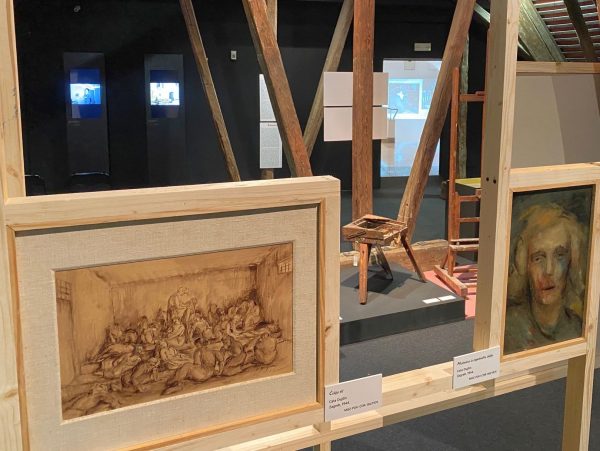
It is a real pleasure to walk through centuries of historical evolution beginning with the recent excavation of the iron age as well as the arts and crafts since the medieval times. Even passing the horrors of the 2nd world war through the eyes of the author and painter Cata Dujsin (image below from 1944) speak to us even today.
There is no linear process of civilisation which is improving over time. There have always been backlashes and there will be. It is even more important to be aware of the continuous risks to independence and democracy. The current setup of the Zagreb City Museum seems to focus on the Croatian population to remind them of their great heritage. With more English and foreign language subtitles and inscriptions the example of civilisation and democracy will be more accessible for even larger crowds of visitors. The online visit accessible in English is already an excellent appetiser.
The City Museum is moving from the internal Croatian function more and more to additional external function to offer learning experiences beyond the Croatian visitors in this tourist attraction that is internationalising in its work force at a rapid rate. 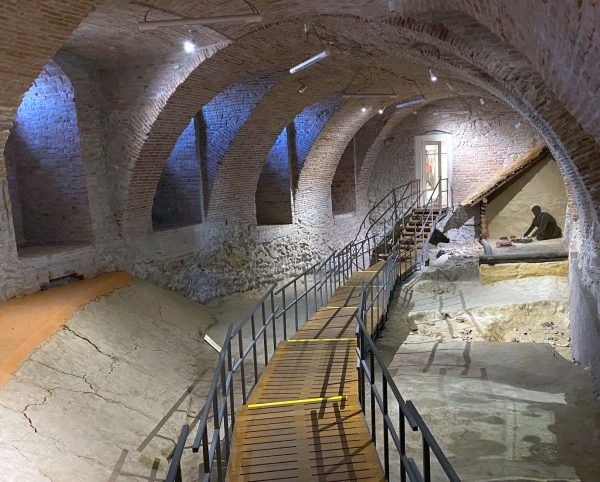
Beer Temple
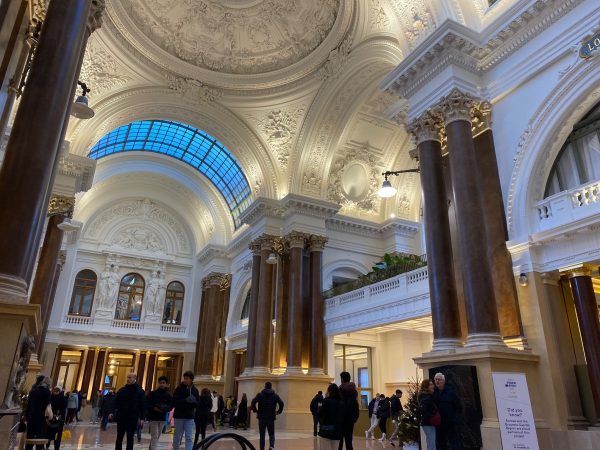
Brussels has recently opened a new attraction. A splendid temple-like building devoted to the unnamed God of beer-drinking. The renovation over several years of the centrally located “Bourse” has created a new popular attraction right in the centre of Brussels. From the outside the building reflects the classical temple architecture from Greek and Roman times. Although the building was for a long time the trading place of shares, obligation and currencies and thereby very closely linked to a country’s wealth and economic fate, it has found a new destination to represent the diverse and spirited culture of the people or peoples of Belgium through the lens of a beer glass. Of course, this is surrealism à la Magritte et al. (Museum and galleries within walking distance). The shifting fate after a financial crash to transform the “Stock Exchange” into a temple of surrealistic experiences is great idea and its realisation as popular move to transform the stock market into a temple to worship beer, beer drinking and conviviality a great idea. Without joking, the restaurant in the temple proposes good food that can be matched with a selection of 30+ kinds of Belgian beer (including 4 non-alcohol-containing beers).
Framing beer drinking culture differently from the image of beer and football hooligans is hard to achieve. Public images of beer drinking on television are all around us, anew every weekend. The Brussels stock exchange is a great place to reflect on shareholder versus stakeholder issues. Brussels has opted for a popular conversion of the building. Paris has gone for the upmarket more exclusive transformation of the previous stock exchange (Bourse commerciale) into a gallery of modern art from the private Pinault foundation.
The museum of beer in the upper ranks of the building in Brussels offers even tastings we were told. Well, beer drinking and stock trading (gambling) have both addictive potentials. Ruining yourself, the one or the other way, is equally disastrous not only for yourself but potentially others.
Know your limits is easier said than done. It is a behavioural phenomenon for individuals as well as regions or whole countries. With the apparent “Limits to Growth” for our planet or our ways to trade, even praying in the renewed beer temple is unlikely to solve the bitter-sweet issue. Perhaps discussions in the new Brussels temple will spur new coalitions and stimulate new ideas to overcome the locked-in political trading positions. Maybe the European Parliament should have a futuristic surreal session in the historic site. The only problem is, they would no longer want to return to their usual forum for debates. 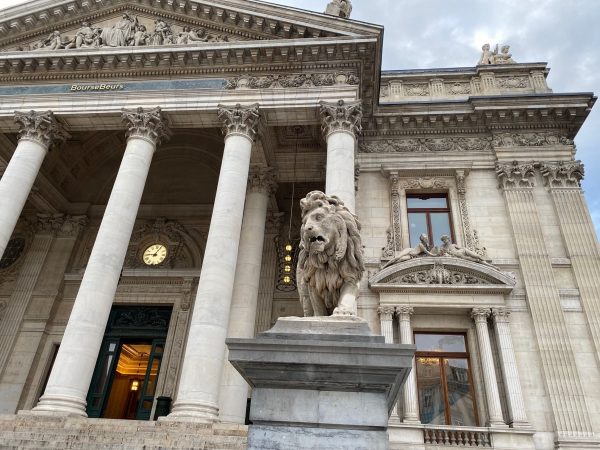
Art to People
It is a timely move to not only rely on people to come to exhibitions or a museum, but for art and artists to go towards people. Advertising exhibitions is a first step in this direction. As photography and selfies are all around us, it is a small step to get more people interested in art through photography. The treasures of archives and libraries complement the markets for art and photography. Susan Sontag has taught us the social sciences related to photography. Learning by looking is just like the well-known learning by-doing.
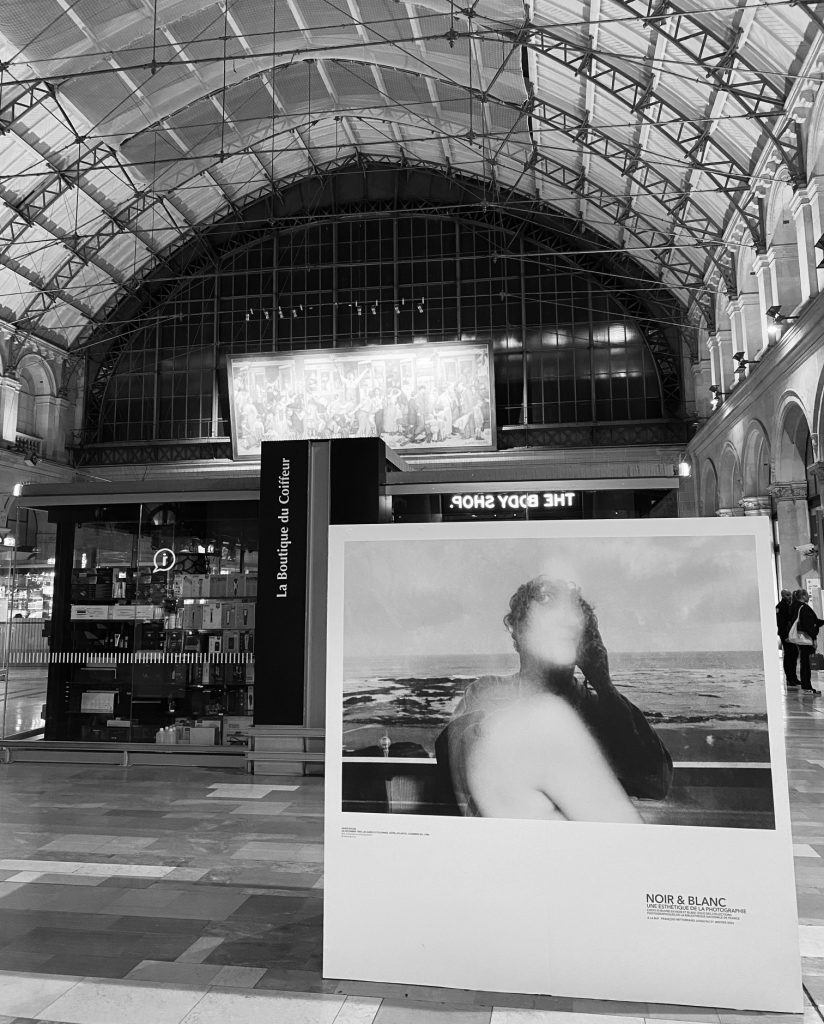
The BnF in Paris is advertising at the Gare de l’Est in Paris. Passing by the board might inspire thousands of travelers and commuters to stop for an instant. Eventually being bothered and to take notice of the intriguing image or images in this reproduction of a photograph or maybe 2 blended ones. A few might note down the address or take a screenshot with their mobile camera to remember. All these instances enlarge the audience for the exhibition or motivate people to go beyond the quick shot with their smartphone camera. The artwork related to photography mostly starts after the first shot. It is in fact sometimes quite a long journey to come up with the final image. Just go for it.
Komposition
Es ist eher selten geworden, dass sich große Häuser der Musik den Komponisten der Moderne widmen. Es sind wohl auch nicht viele Publikumsrenner dabei. Das liegt sicherlich zu großen Teilen an der mangelnden Bekanntheit der Werke moderner Komponierenden und ihrer Werke. Karlheinz Stockhausen bildet da keine Ausnahme mehr. Das Konzerthaus Berlin hat in seiner Reihe 2 x hören einen Abend einem Werk von Stockhausen gewidmet. „In Freundschaft“. Wichtig ist zu diesem Werk eine Einführung in die Kompositionstheorie von Stockhausen. Die serielle Komposition baut auf einer einfachen Struktur von Notengruppen auf. Christian Jost erläutert zusammen mit den Vortragenden in einzigartiger musikpädagogischer Weise die Komposition. Eine Information über Wikipedia vorab erleichtert den Zugang und lässt uns die Komposition vereinfacht nachvollziehen. Auf Youtube gibt es dann verschiedene Versionen für jeweils andere Soloinstrumente zu finden. Beispiel Klarinette hier. Die Basiselemente bestehen aus 1,3,2,5,8 Noten, also ein Gesamtthema von 19 Noten aus 5 seriellen Bestandteilen. Die Variationsmöglichkeiten bilden bereits eine vielfältige Auswahl plus den anderen Varianten wie Spiegelungen oder Transkriptionen auf höhere oder tiefere Tonlagen. Komponieren wird spielerisch und bleibt ein Klangerlebnis. Reinhören online lohnt sich zum Verständnis moderner Ansätze der Kompositionstechnik.

Selfie 3D
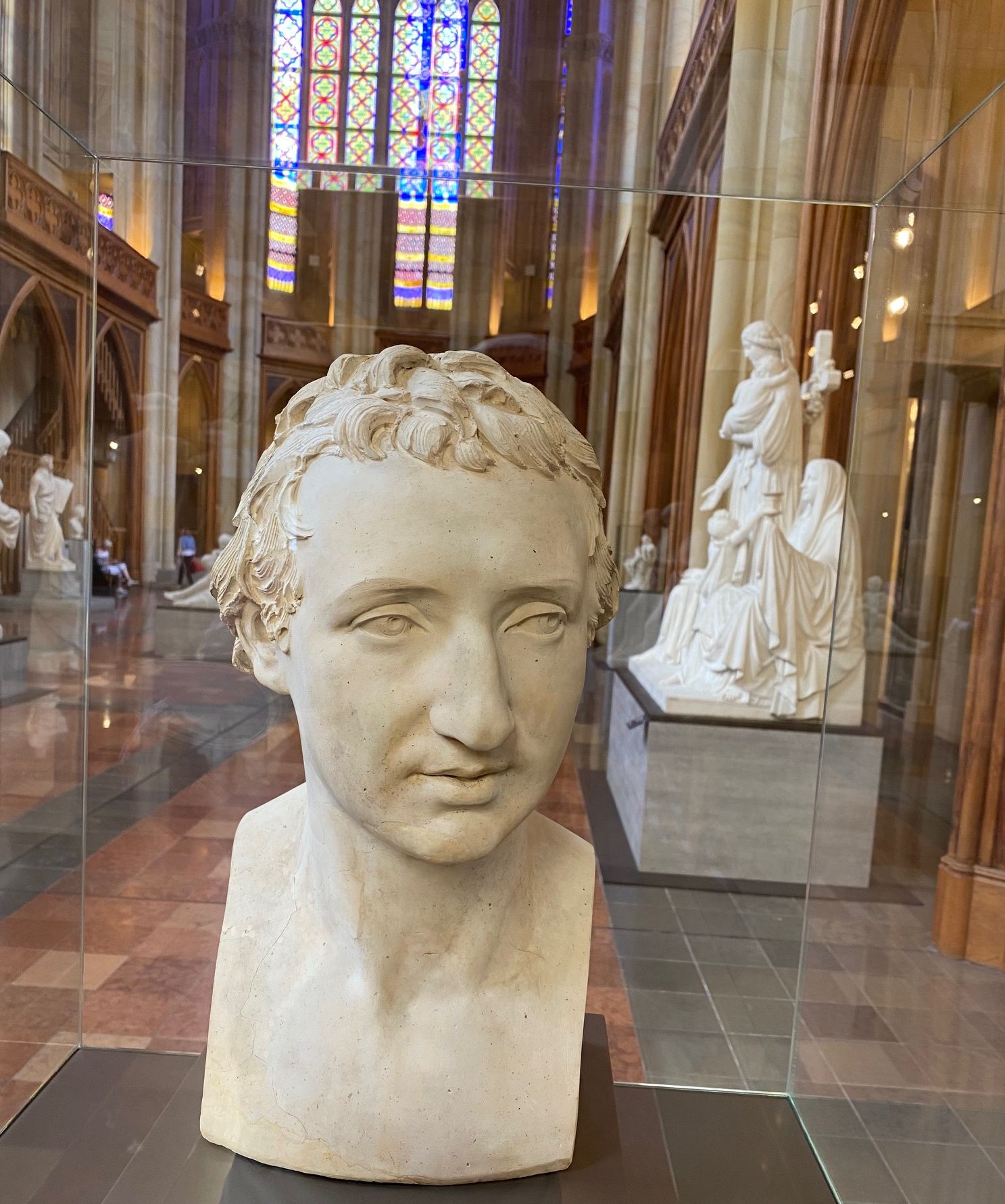
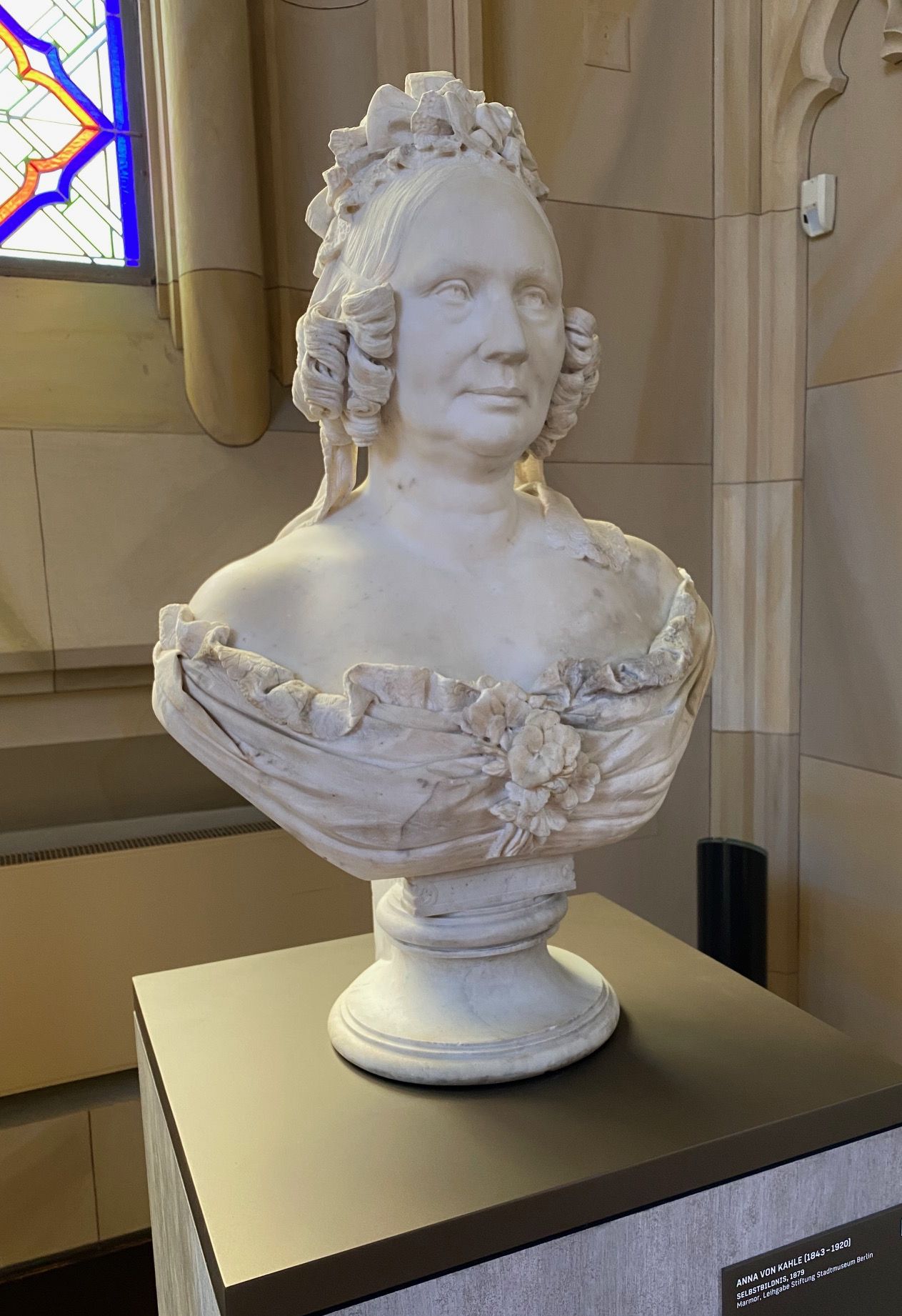
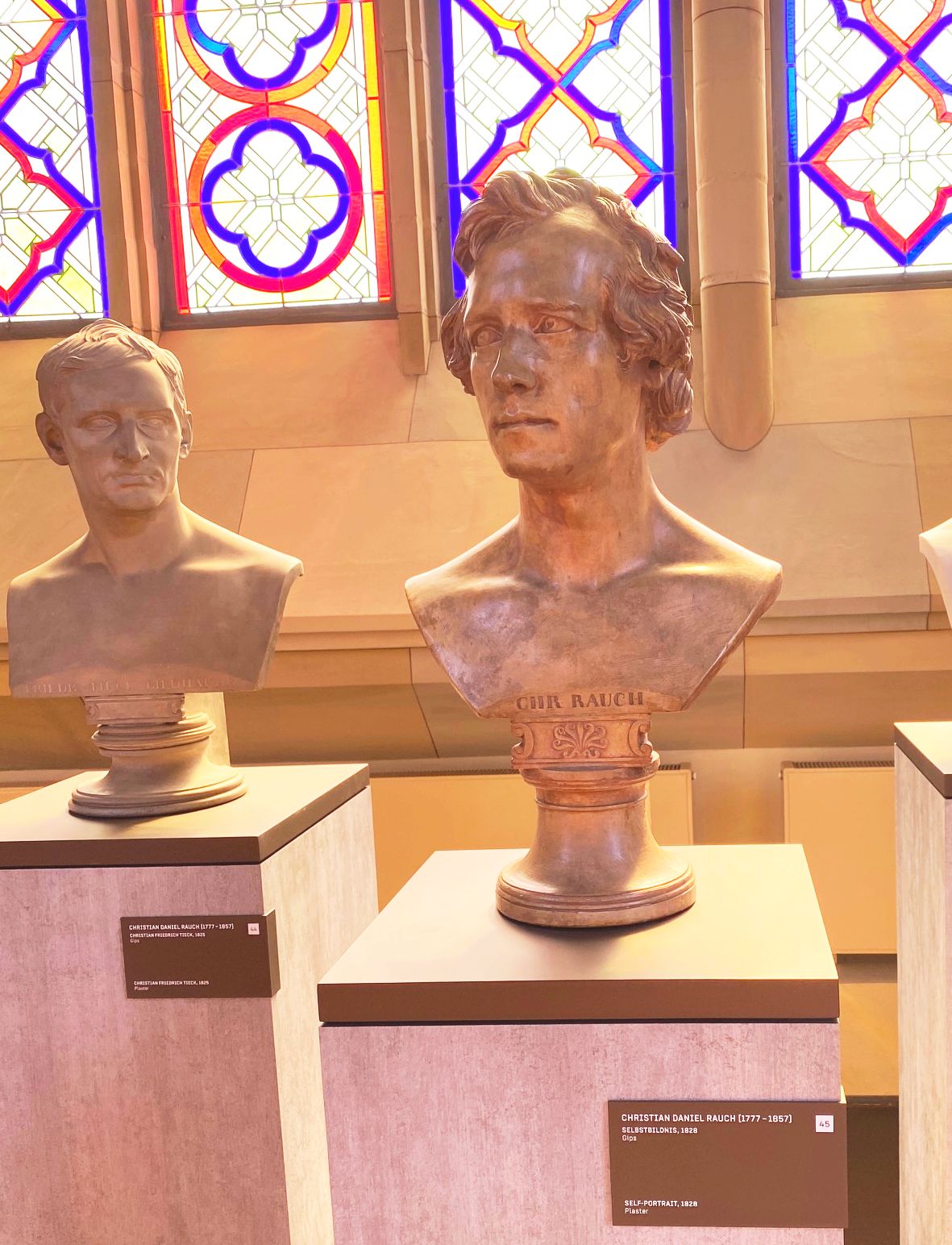
Wir meinen gerne die heutigen Gewohnheiten, wie die ständigen Selbstbildnisse seien eine Erscheinung des 21. Jahrhunderts. Weit gefehlt. Wer es sich früher schon leisten konnte, hat sich malen lassen. Photographen haben später diesen Markt übernommen. Aber eben auch Kunstschaffende haben seit langer Zeit ihr Selbstbildnis gezeichnet, gemalt und in Stein oder Gips geformt. Selfies sind daher eher die Demokratisierung der Möglichkeiten, sich selbst zu inszenieren. Eben sich so zu portraitieren, wie sie oder er sich selbst sieht, sehen möchte oder gesehen werden möchte. Es ist daher weniger ein narzisstischer Charakterzug die Antriebsfeder, sondern für die meisten Menschen steht ein Teilen, eine Form der Interaktion mit anderen im Vordergrund. Die portraitierte Person ist da, auch wenn sie gerade nicht da ist.
Diese Intention haben Herrschende jahrtausendelang genutzt und sich Mausoleen und Pyramiden errichten lassen. Gut, dass diese Praxis weit in den Hintergrund getreten ist. Heute regeln wir bereits unseren digitalen Nachlass in Ergänzung zu unserer analogen Hinterlassenschaft. Für viele werden dabei, ganze Sammlungen von vielfältigen Selbstbildnissen zu verwalten sein. Die 3D-Ausdrucke unserer Gesichtscanns samt mehr oder weniger noch vorhandener Haarpracht kommen dann in eine eigens vorbereitete Vitrine. Selbstverständlich gehören die MRTs und sonstige Scanns von ZahnärztInnen auch in die Sammlung. 3D ist schon ein guter Anfang auf der Interaktionsreise mittels Selbstbildnis. 4D Realisationen, wie Yoko Ono mit ihrem Cut Piece 1967 kamen dann später. (Photos from Friedrichwerderschen Museumskirche, Berlin 2023 Austellung Ideal und Form, li: Schadow Selbstbildnis, mi: von Kahle, re: Rauch).
Silence
In the modern world places of silence have become rare. During the industrialisation noise has become a synonym for modernism. Many people even celebrate noisy engines as an image of strength or horse power. In the wake of the 21st century is has become evident that this co-evolution has made us sick and whole cities suffer from the abundant sources of noise.
Can we talk about silence? No, wrong approach, but we can write or realise images dealing with silence. Yes, surely. Spiritual locations often build on the mystic experience that silence might incur. Measuring silence in physics is a lot more complicated. Sound has several forms of measurement. Also, silence is probably experienced by most of us as a relative concept. Compared to a noisy atmosphere we might appreciate less noisy situations as more or less silent already.
Therefore, a reasonable, but evasive definition of silence is the absence of noise. Depending on our auditive capabilities different persons will define silence at different levels. Sound near us blends into sound in the background and vice versa.
Temporality plays an important role. In complete silence we might imagine even to be dead. Otherwise, some distant vibes or vibrations will reach us and potentially stimulate our senses. Silence works as a bridge between two atmospheric impressions. It creates a feeling of expectation for something still unknown. Silence is underrated as our smart phone attempts to disrupt silence as much as possible to draw our attention to messages or reminders. Hence, silence is about to be turned into a new status symbol. Practice of meditation, listening to isolate and subsequently to discard sound, has become an advanced level competence, not only for musicians. Feel free to be silent and see what happens around you. It is easy in locations of supposed spirituality or in most libraries. Almost everywhere else you have a hard time to experience a silent atmosphere.
The composer John Cage made silence the title of one of his quite well known pieces. The willingness to pay for the entry to the silent concert might be surprising although the listening experience is unique to each location and diversity of audience. Composing silence remains a challenge, making noise is easy. (Image: NASA/ESA Hubble Space Telescope, extract of Link) 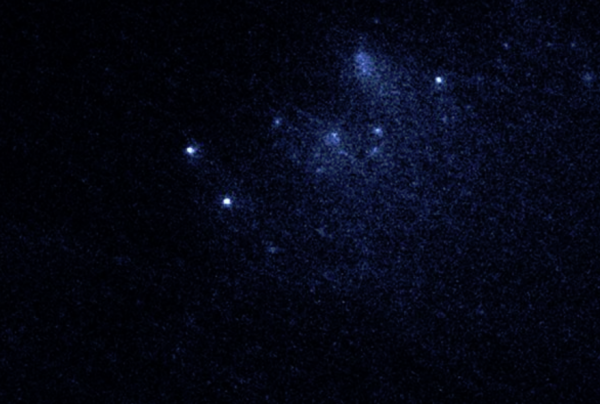
Everyday objects
If you were wondering whether everyday objects can be a piece of art, then the exhibition at the “Neue Nationalgalerie Berlin” is for you. Isa Genzken challenges our traditional view of everyday objects through small transformations of these objects. At first sight you “only” see something utterly familiar to you. A window, a radio, a rose or a wheelchair are immediately recognisable. However, all objects have a little twist to them causing some alienation, questioning or finding new connections. This is the stimulating experience of a visit of the exhibition. The booklet gives an informative overview of choice of sculptures chosen for the exhibition. Walking around in the spacious entry forum allows to appreciate the objects from many angles and in different lighting including twilight. Allow yourself to be challenged. Distancing your perspective beyond the obvious object you recognise broadens our vision of what we see and how we perceive it. The huge pink rose in front of the gallery overshadows even the monumental appearance of the Neue Nationalgalerie. In memoriam “Rosa Luxemburg” and Karl Liebknecht who were murdered not far away, near the “Landwehrkanal” in 1919.
Some visitors might like the skyscraper models she created to remind us that “design catastrophe” with the usual high rising buildings are pervasive around the world. Sculpture as architecture or architecture as sculpture has been her forward looking work from 2008 “Ground Zero – Hospital”.
With the construction work in full swing in the neighbourhood of the gallery with the design of a barn (Scheune) we understand the choice of the artist as a timely reminder that Berlin could be more daring in the architectural design. 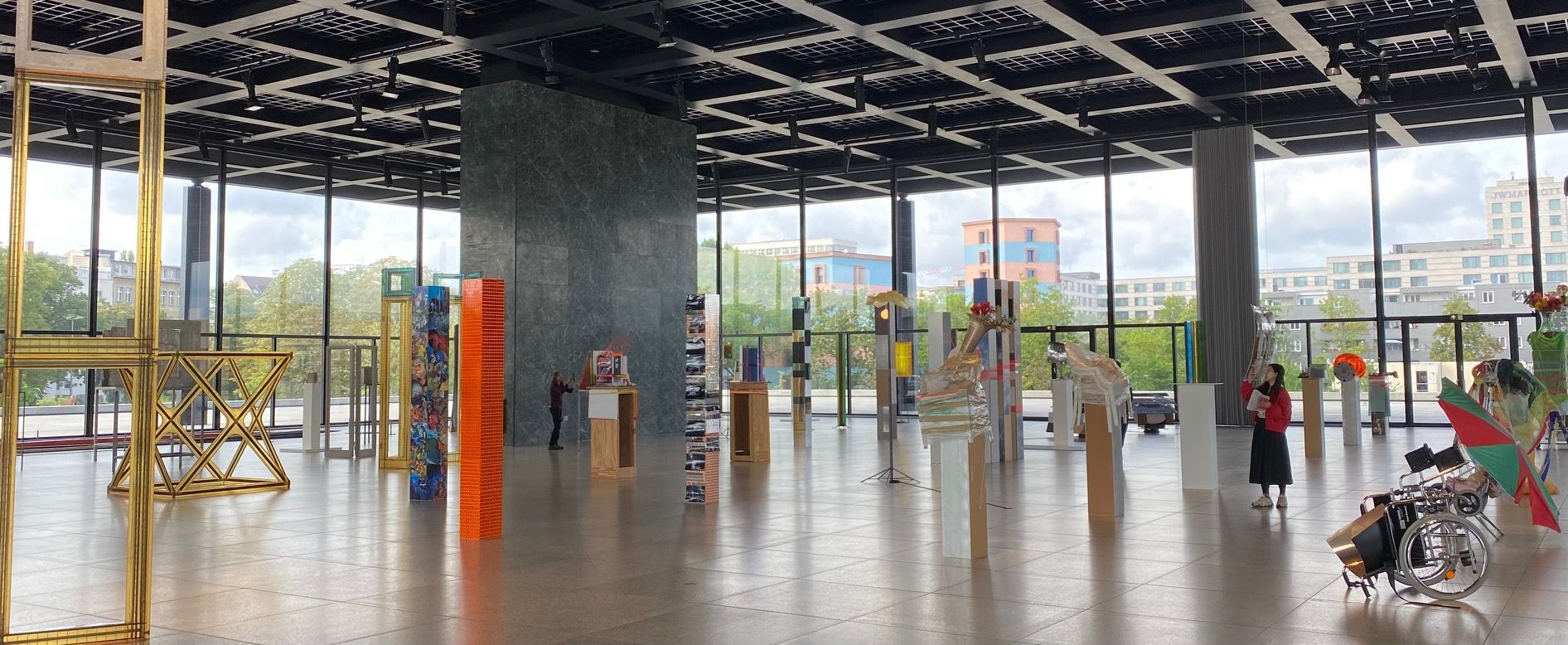
Stilfindung
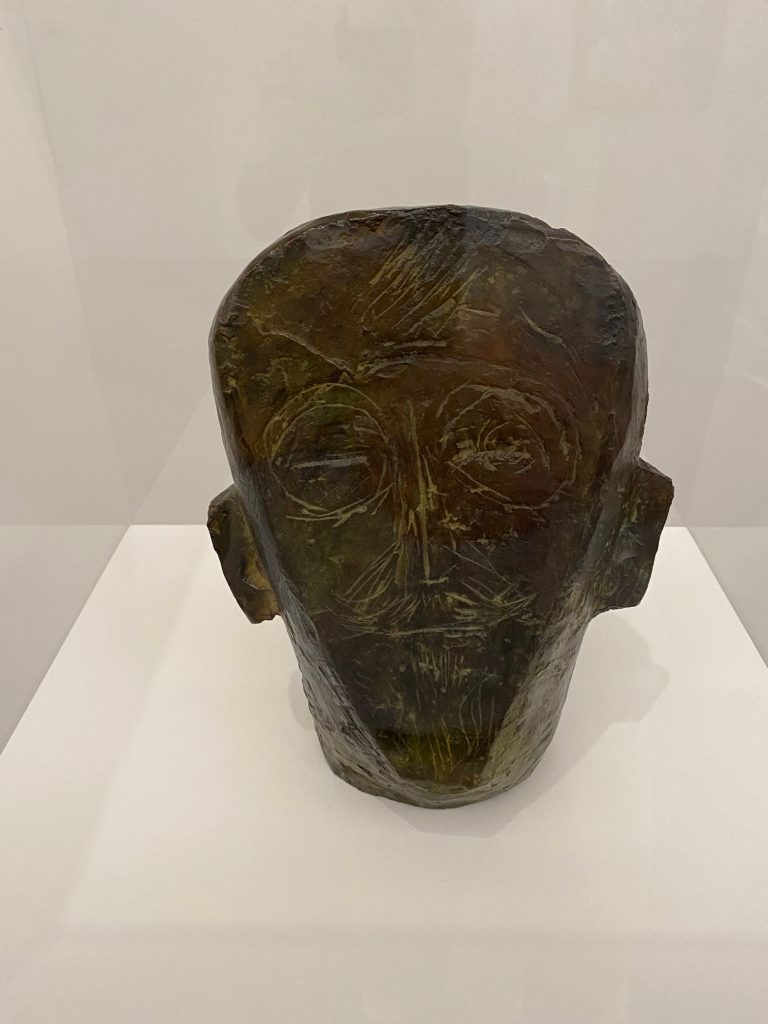
Kunstschaffende brauchen Jahre, oft auch Jahrzehnte, um ihren eigenen Stil zu finden. Das ist durchaus ein schwieriges Unterfangen. Frühes Ausprobieren verschiedener Kunstrichtungen ist dabei so etwas wie ein Experimentieren mit unterschiedlichen Werkzeugen. Da hilft es enorm, wenn schon einmal ein reichlich bestückter Werkzeugkasten im Elternhaus vorhanden ist. Das war in der Künstlerfamilie der Giacomettis der Fall. Der kleine Alberto hat mit Vater Giovannis Tinten, Federn, Ölfarben und Pinseln früh angefangen, sich auszuprobieren. Eltern, der kleine Bruder, Landschaften, Posen vieler Verwandten und Bekannten sowie jegliche Gegenstände wurden zu Objekten des Skizzierens für den Jugendlichen. Schule war nicht wirklich interessant, selbst die École des beaux arts in Paris erweiterte zwar sein Repertoire an Techniken und Sichtweisen, aber auf dem Weg der Selbstfindung scheint es nur eine Passage gewesen zu sein. Auf dem Weg der Abstraktion hat Paris allerdings die Kreativität stimuliert. Seine Skulpturen von Köpfen der Familie haben sich verallgemeinert, hin zum Universellen. Weit über seine Heimat hinaus sagen die Skulpturen des späteren Albertos uns etwas über Menschheit und Menschheitsgeschichte. Den Weg zu verstehen, den der „L‘homme qui marche“ bis zu seiner Verwirklichung beschritten hat, ist in der Ausstellung im Bündner Kunsthaus nachvollziehbar. Vielleicht mehr ein Lehrstück in Pädagogik und Kunstpädagogik, als in grandiosen Werken der Giacomettis. Welch ein Glück, dass sich Alberto von den Stilrichtungen anderer abgesetzt hat und einfach sein eigenes Ding gemacht hat. Beruf und Berufung können nahe beieinander liegen. Das ist die gute pädagogische Message.
Giacometti
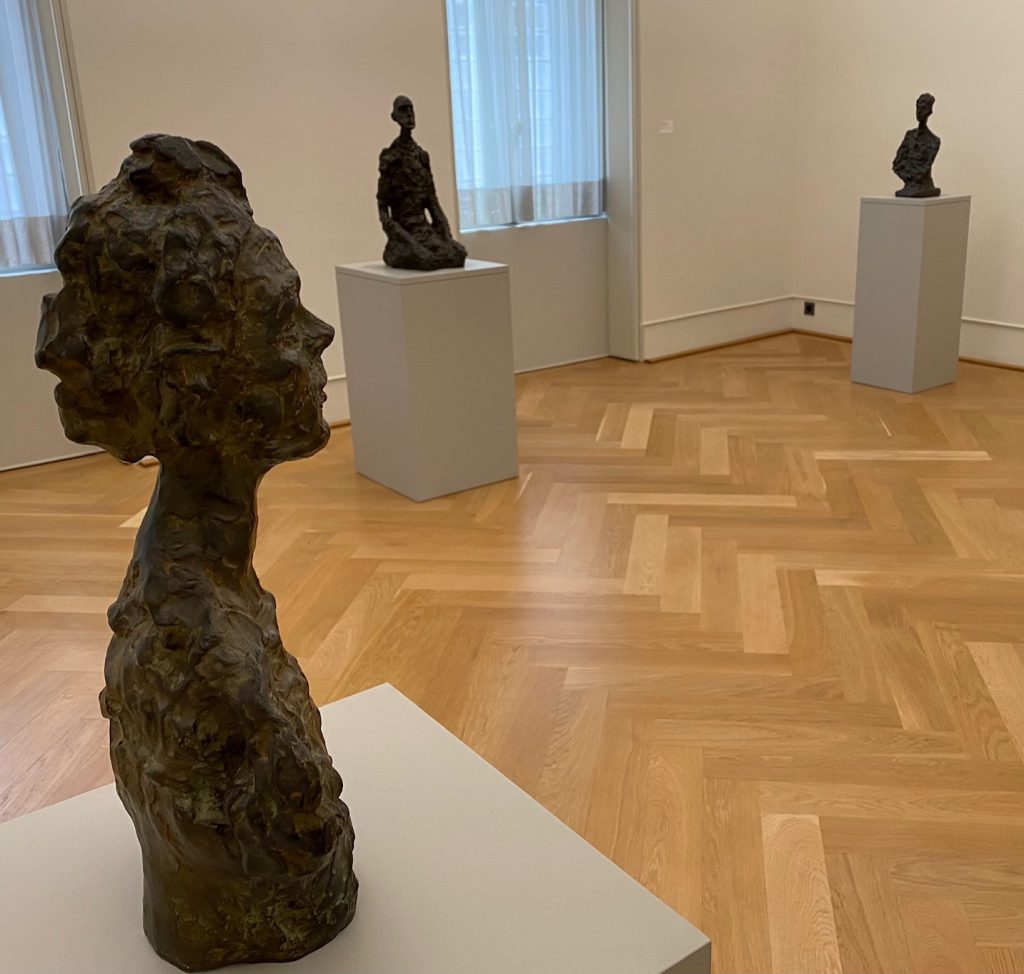
For everyone who enjoys a good walk, with or without dog, Alberto Giacometti is an artist of interest. The world-famous statue “L’homme qui marche” can be admired in several places. Chur (CH) is the artist’s place of death. The most prestigious galleries in Switzerland all have one or several of his art works. In the Bündner Museum in Chur three sculptures of women are perfectly put into correspondence in one exposition room. Eli and Anette from the years 1961 and 1965 talk to Francine with her arms closed in front (title: buste d’une femme). The latter one is from 1962, but was only finished and released as sculpture in 1966, the year of his death or departure. This seems to close a wide circle of creation in the life course of this itinerating artist. Walking the exhibition from sculpture to sculpture is a first step towards meditation walks. Awareness of the stories of the personalities involved widens our horizons. Alberto Giacometti is one of the many artists from the family of the Giacomettis. In the museum in Chur the other family members are well represented, too. Women artists seem to be missing there, probably this needs additional generations.
Indigo Waves
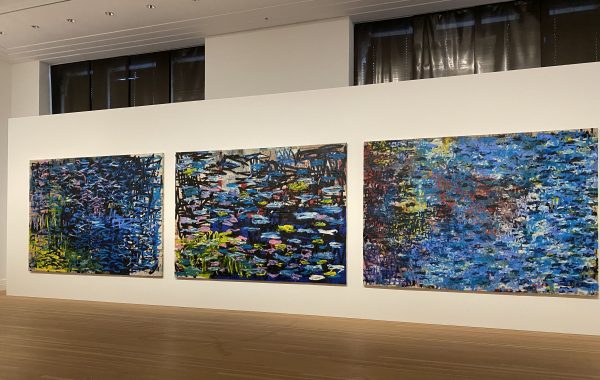
„Indigo“ is an almost mystical colour. Its deep blue nature refers to profoundness and in combination with oceans to a surprisingly still largely unexplored world of biodiversity. Additionally, in association with endlessly forthcoming and retreating waves, indigo reveals its many possible shades. Oceans separate or link continents and it is this feature of Oceans which is explored in the exposition “Indigo Waves and Other Stories” (Gropiusbau). Beyond our all to common focus on the transatlantic relationships, “Indigo Waves” explores the links between the African and Asian continents. Embarking on a new narrative for the Afrasian Sea, i.e. the Indian Ocean, we are taken to new horizons through the continuous challenge to our value systems, comprehension of art, poetry or culture more generally. The exposition, through multiple challenges, succeeds in displacing us into the context of other perspectives. Following Oscar Murillo, imagine to view the water roses from Claude Monet (Les Nymphéas) from below the surface. What do you expect? In Europe? Near a barrier reef in the Indian Ocean? Beauty is often not visible at first sight, yet it is co-determined by the currents that build and potentially destroy it (compare photo from exhibition below). The balance of social ecosystems is easily messed-up just like the beauty of ecosystems in nature. “Indigo Waves and other stories” tells us other versions of the colonial stories most of our history books told us for centuries. It is an eye-opening exposition, but probably not the way we expect. Following a poem towards the end of the exhibition by Tishani Doshi “Do not go out in the storm”, we are drawn into the ambiguity of our existence irrespective of the continent of origin. Jack Beng-Thi preserves a poem from Jean Joseph Rabearivelo in his artistic book creation and installation to bring to light “indigo waves”. “vos yeux clignotent dans l’azur, et je les appelle : étoiles. ” (Translated suggestion: “your eyes blink in the blue sky, and I call them: stars).