Olympic Nature

Nature and its biodiversity can teach us many lessons. This is made very explicit in the small exhibition in the “Jardin des Plantes” in Paris. The treasures of (lost) biodiversity are exposed in the adjacent “Muséum National d’Histoire Naturelle”. In a pleasant environment within Paris you can stroll along rare flowers and trees to pass the posters that demonstrate the astonishing achievements of some species (Les champions of nature). For example ants would surpass us in weightlifting in relationship to own weight. A marathon of 42 km is a very short distance for birds flying across continents with rest. High jump or long jump is rather easy for frogs, but we struggle already to jump a little bit higher than our own body length. Lots of other examples are shown the exhibition and should make us a bit more humble concerning the sport accomplishments of humans. Beyond Darwin and Mendel there is a lot to see and experience in the Great Gallery of Evolution. After the question remains whether we are really at the top of the evolutionary ladder. In terms of marketing our successes irrespective of many species disappearing with rapid speed, we still appear rather unique in the evolution. Learning from other species as in bionics is a powerful strategy which is also quite effective to empower humans compared to other species.

Impressionism 150

How many impressions made impressionism? Too many to be expressed in a single number. 150 years after the movement started with a spectacular exhibition in Paris the admiration of the paintings still attracts huge crowds. As a kind of revolutionary movement the artists mounted their own exhibition as they were not allowed to expose their paintings in the official exhibition of the Academy of arts in 1874. They accumulated a sufficiently large group of artists to form their own distinctive style of paintings. Painting outside in the countryside was a joint predilection. The regions, nowadays in the suburbs of Paris where many people daily commute to Paris has discovered the attraction to review the original scenario of the paintings as well as their living environments. Yerres, for example, hosts in 2024 an exhibition to show paintings from Claude Monet and Gustave Caillebotte which highlights the inspiration both painters took from the surroundings. Nowadays it is also interesting to see that the agglomeration makes efforts to make more people aware of the treasures to see in their own surroundings. Even if conservation of nature is hard to achieve the parks of yesterday have remained visible today. For us to transmit the cultural heritage and landscape to future generations as well. An affordable booklet that documents the cultural heritage allows people to dig deeper into the subject also for those who live in the region only because of a job nearby in Paris or Orly airport.

Park surrounding Maison Caillebotte, Yerres

Paris Parks

There are many splendid parks in Paris. They all have an important function to cool the city in summer. Good for exercise and walking all year round as well. The latest addition is the “parc suspendu” between Gare de l’Est and Gare du Nord (Jardin Marielle-Franco).
Many travellers pass there from one station to the next. The creation of this space is rather tricky and avoids the building of yet another shopping mall for tourists. The cleaning of the park and the growing of the grapes are a challenge for those in charge.
This park is an interesting melting pot of very diverse social groups. The sportspersons and walkers confront “la misère du monde” of people entering to sleep rough in the park or attempt to do or deal drugs there. Paris is fighting back for its public spaces and devotes resources to these purposes.
The “Cru bourgeois” is also challenged in this area. Living together accepting the unresolved social problems and to confront them rather than to ignore them, this creates the “metropolitan experience”. Parks in and around Paris build on a great historic tradition. “Le Nôtre” stands for the creation of Parks that were copied across the world.
The cleaning up of Paris for the Olympic games 2024 is a tremendous effort. The swimming in the Seine (rather than singing in the rain) is probably the steepest challenge of all efforts, even if in retrospect the opening ceremony happened during heavy rain.
Parks need water, rainwater is best. Hence, the alimentation of parks from sources far away from them is part of urban and landscape planning.

(Image: Jardin Marielle-Franco in Paris between Gare de l’Est and Gare du Nord)

Animal Victims

Animals, like birds, dogs and horses are more than just good pets for people. In previous wars like WW1 and WW2 they have served the armies as messengers, logistical support and detectives. This is yet another tragedy of war times that is rarely told. Dictators, just like Hitler, like to show off in the company of animals, although the record to be responsible for millions of killed persons and animals is rather striking. The disrespect of life, be they humans or animals, is an underlying theme. Beware of persons in power who try to soften their public image with the presence of animals at political events. A faked show of care for subordinates and a romantic relationship with animals can be used as an “image-washing” of a cruel personality. A pet-loving image attracts views and attention, sometimes for the wrong purposes. The commemoration of animals that served the French army and people is an important lesson about the extended horrors of war of the past and present. (Image Parc Caillebotte, Yerres France)

Nutrition Policy

The evidence on nutrition policies has accumulated a series of policy recommendations based on the best available evidence. The German Institute of Human Nutrition has presented these results repeatedly not only to the scientific community, but also to the interested public at the Science Week or the Long Night of Science. Their leaflet on the tools to improve our human nutrition in market economies highlights “nutrition competence” as a key component of a broad strategy to improve our food and subsequently health. Nutrition goes beyond the biological ingredients of food to include basic understandings of human metabolism including the times and timing of meals. This competence has to be transmitted to preschoolers, pupils as well as adults to stem the waves of obesity (ARTE Docu). Learning how to manage your own nutrition is a crucial competence to strive and survive. In schools it can have substantial impacts on performance and inequality of opportunities as well.

The science-based policy recommendations propose to alter the structure of costs, for example via tax reductions, in favor of healthy food. Plain water should be substantially cheaper than sweet beverages or alcoholic drinks. Nuts and proteins from vegetables fall in the same category as plain water. It is in the longer term interest of all of us that schools, canteens at work places or homes for the elderly offer also healthy nutrition at least as a daily option. More sustainability in food production is last, but not least part of nutrition policies. A lot to chew on to improve nutrition.

Competence Nature

Nature can be approached without competence. Emotional attachment is fine. If we delve deeper into the issue, we realize that a lot of processes that have evolved over years or even centuries are hard to study. The learning about nature is manifold and many scientific disciplines deal with nature in the broad sense of the word.
Today the study of nature is scattered across so many disciplines that an overall view of the field seems hard to achieve. This creates a problem to teach a competence to deal with topics around nature. Water, air, species, soil, climate or reproduction are all topics in which we have to make far-reaching individual and collective choices. This requires adequate competences to allow judgments about opportunities and risks involved.
For more than 100 years now we have researched education systems and processes, but the competences to talk and explain basic processes in nature are still scarce. Classification systems are a static way to sort nature into categories. Processes of evolution and development have more or less human input.
We all gain if we keep an eye on education and learning processes that have been applied years ago. The field of the history of education provides clues about some forgotten approaches. Learning about nature and how to acquire competence in the field has been an issue in this field for at least 100 years. It is time to test some of these approaches again to see what went wrong in learning about nature. Man-made climate change is only at the end of a causal chain of things and people moving in the wrong direction. We probably have to press the reset button and start from scratch with the learning and the tracing of wrong decisions. Maybe, the start is the appreciation of a splendid bouquet of flowers. Want to know more? Try to grow and assemble them yourself.

Infinite Landscapes

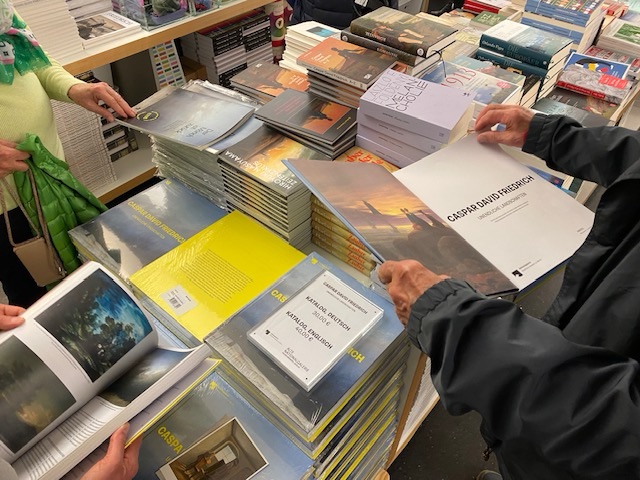
The “Alte Nationalgalerie” celebrates the 250th birthday of Caspar David Friedrich in Berlin. With a considerable effort to unite in one exhibition many paintings and drawings that stem from other collections of public and private origins. This particularly remarkable as a section of the exhibition is devoted to paintings that were intended originally to be seen next to each other (compare catalogue p. 233). Comparing 2 images from the same painter evolve into a narrative. This raises curiosity as in some instances the 2 paintings do not treat the same subject. Your very own interpretations and associations will make for an individual journey through the sheer endless spaces. The exhibition allows to grasp some of the many questions posed by the period of enlightenment not only in Germany. After “God is dead” what will happen? How is mankind defined? What is its relationship to nature? Are we just left alone or what comes after individualism? Even for painters, much like scientists, it is just as important to pose the right questions. Leaving the exhibition with more questions than answers will put you in the “Berlin state of mind” of 200 years ago. Greiswald, Dresden, Rügen and Copenhagen as well as nearby mountains were influential locations and landscapes for Caspar David Friedrich. Berlin 1906 „Jahrhundert Ausstellung“ made him famous again, despite decades of being forgotten. Yet another question to ponder and wonder about. An additional merit of the exhibition is the section on painting techniques and the use of his sketches and drawings for the preparation of the oil paintings. The final riddle to be solved is the price differential between the German and English version of the catalog in the bookshop next to the usual merchandising props.

Electricity

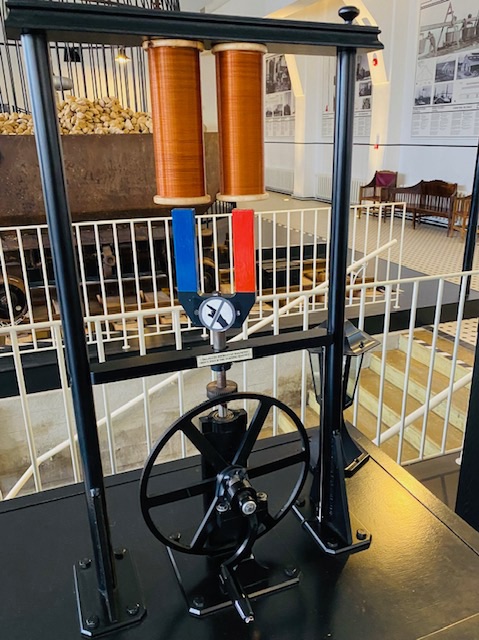
We all use electricity, not only daily but continuously. But do we really know or remember how it works? Surprisingly, we care very little about the energy provision or the physics behind it. Therefore, from time to time it is useful to dive into the details of generating electricity and thereby energy and how it arrives at our doorsteps or desks. In science museums you can literally walk through the history of power generation. A fine example is the Energy Discovery Centre in Tallinn, Estonia. Even for those you did all at school turning the handles of generators is a playful reminder of the basic principles of electric power generation. The efficient use of it, is a topic that needs to be covered as well. Searching the web for demonstration videos is fine as well, but the physical activity of moving induction coils and releasing sparks is difficult to rival. Opening up your mind for the physics of our lives yields a better grip on the challenges of electricity grids and local production of electricity. Are you already a prosumer? Combining electricity production and consumption in one household is surely a forward-looking strategy. Raising awareness for these topics concerns all generations. Take time for a power play, it is truly enlightening. For teaching professionals or want to be there are exciting programs out there, too. Just one suggestion for 2024 in Colorado, US.

Energy Discovery Centre Tallinn

Forest Management

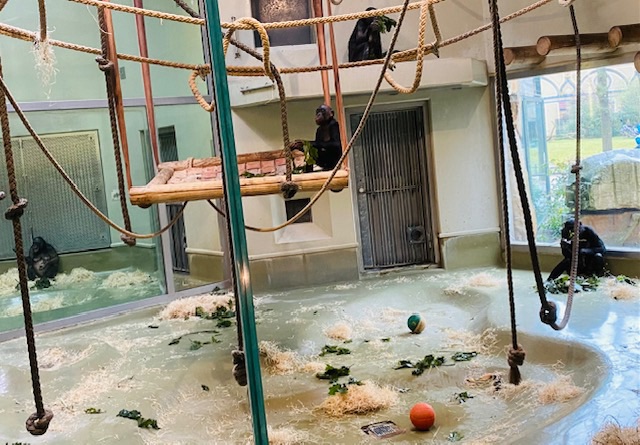
Responsible forest management is key. To safeguard against the loss of biodiversity the management of forests can achieve a great deal as the study in Nature of 2024-4-10 has demonstrated. Reducing hunting by humans in dense tropical forests allows bigger species to survive and thrive compared to forests with easy access by roads. FSC certification of forests helps significantly to protect wildlife. The ability to ameliorate biodiversity of forests is assisted by the Forest Stewardship Council (FSC) through the responsible management, preservation and limitation of access to wild forests. This is an important message that in fact it is still possible to preserve wildlife also of larger species if we only really commit to the cause. It is well worth to support such initiatives and monitor the progress. Of course, any such success attracts new hunters and a continuation of the FSC efforts is needed for the benefit of the whole biodiversity on our planet as there is no planet B.

Berlin Zoo 2024

L’Albatros

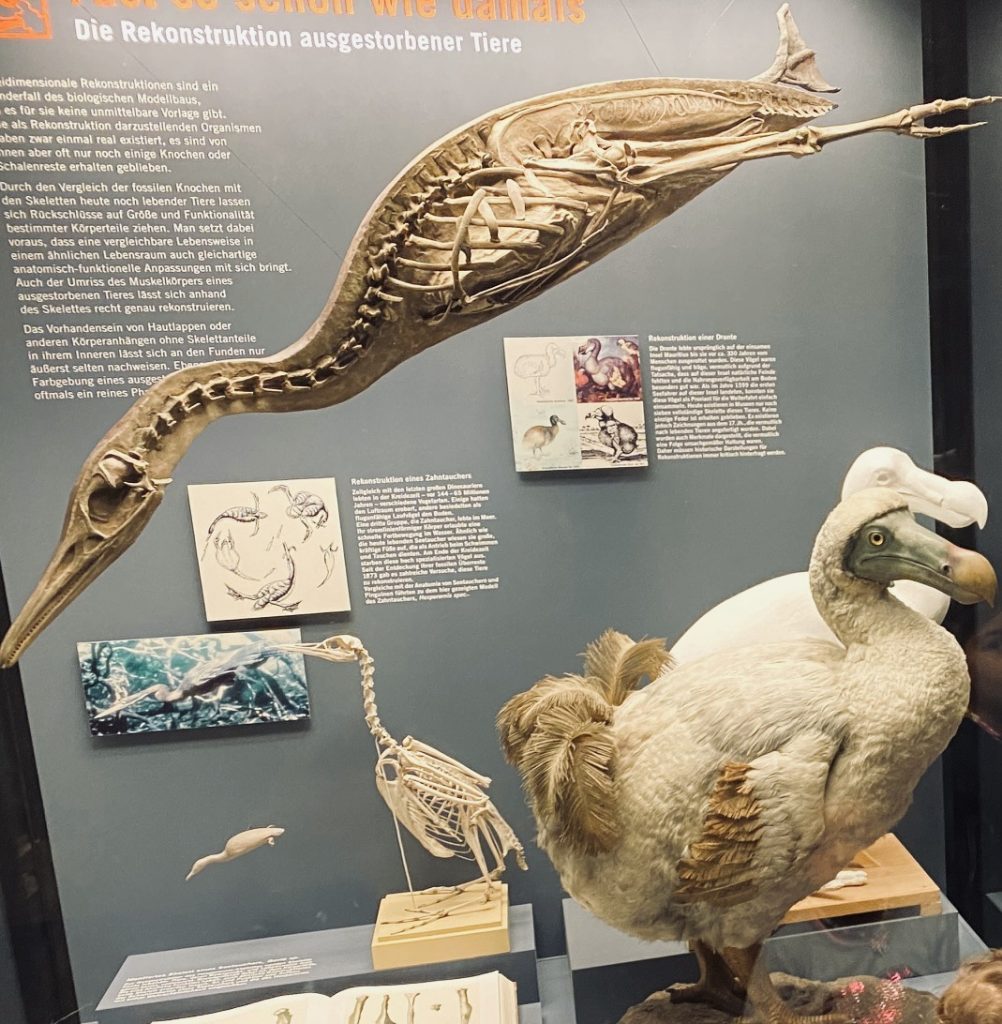
Charles Baudelaire has immortalized the albatross in his poem entitled “L’Albatros”. For me it appears like a poem about the beauty of the sea and sea life. The marvelous creatures that populate the sea and its surroundings sometimes seem strange to us. The albatross with its large wings unable to move properly on earth is one of these special animals. They are threatened by human beings in their very survival up to extinction even. A dedicated website to “Les fleurs du mal” with multiple English translations of the same poem may give us the impression that all those who translated the poem wanted to feel this little moment of sublimation like a poet just forgetting for a little while the weight of our earthly existence. The gospel tells us a similar story of life up in the air. It must be so much better to be free and not to be bound to restrictions of gravity. As gods would prefer to stay away from earth just somewhere up in space. The albatross and the sea keep teaching us lessons beyond their physical appearance. (Image bird “dodo” now extinct, model in Berlin Natural History Museum 2024)