Exercise and neurons

The neurons in the brain have an active part even in training effects of physical exercise. Morgan Kindel et al. (2026) have accomplished a rigorous test that demonstrates the involvement of brain neurons when mice were exercising repeatedly. Training effects were larger if the neurons of brain cells were involved as well. The cell’s learning ability encodes the experience of exercise and is prepared for a repetition of the exercise. This is roughly what happened in their experiments in my own words. Runners might know the effect that running on track or treadmill uses up less calories than running cross-country where the brain is more challenged to avoid missteps or loss of orientation. However, the latter are different tasks whereas the former experiments demonstrate that the brain is involved in physical exercise even if we do not notice it. Exercise might spur brain plasticity just by doing it. Hence, just do it.  
Rule and divide leadership

We have known the leadership style, which has been coined as “rule and divide”, at least since the Roman imperial period.  In conquered countries it was a strategy to rule by way of creating divides between peoples or regions within a conquered country. The struggle for power within a country is likely to avoid that a powerful opposition to the occupant can build up. What is well researched in the history of international politics, has also been applied to the realm of management strategies. Anthony Galluzzo demonstrates that the strategies of management often attempt to split the workforce in at least 2 different camps in order to better keep employees and their trade unions under some sort of control. For society as a whole, so-called dual labor market theories have hypothesized the existence of such management strategies since the 1980s. With the labor practices in food and grocery deliveries as well as in taxi services such management strategies are applied again. “Old wine in new bottles”, but still seems to sell and catch on. (Image: extract from Butler Charles, 1637, Monarchia faeminina)


Collaborative Leadership

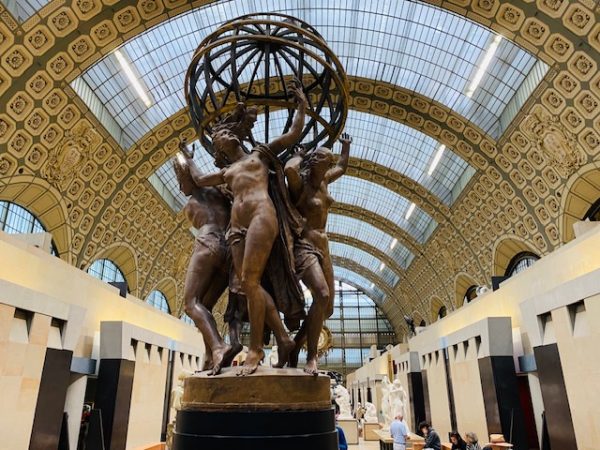
There are many reasons to praise collaborative leadership. Work climate, learning climate and innovation in teams and organizations benefit a lot. Absenteeism from the workplace is a proven and close correlate of hierarchical leadership styles. The theory and empirical evidence is rather clear in this respect, however the effective practice of collaboration among a leadership team is hard to sustain. Not only the ways to reach leadership positions is mostly rewarding tough elbows on the way to the top, the multiple rounds in the competition for top positions tend to train the toughest strategic  behavior. A return to more cooperation and collaboration appears to be a real challenge for persons that eventually arrive in top management positions in politics or business. Administrative science or organization science deserves much more attention especially if we are moving into the age of multilateral international institutions and multinational corporations and organizations. (Image: Les quatre parties du monde soutenant la sphère céleste, 1872, Musée d‘Orsay Paris).

Time occult

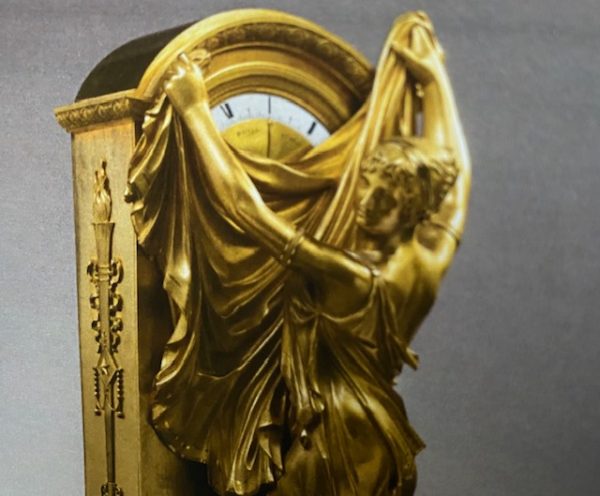
The passing of time may occult what has happened years or decades earlier. However, archives can do a great job to preserve historical facts that time might otherwise occult. The term of occultation has not only the meaning of making something secret, it can also mean that something is hidden from the public or direct visibility. The latter more obvious perspective has become a fashionable feature from time to time. As early as mechanical clocks existed, the arts and crafts have found ways to occult time in the sense of not distracting people from too much attention to the passing of time. At least at some moments in time, it may be of interest to hidden the time to devote more time to a specific moment or event. In the early 19th century this was a very upper class concept. In the early 20th century people wore closed watches in their costumes. Early 21st century people wear wrist watches that might have the light switched off, albeit being always on and connected. There seems to be an awareness among people that there can be too much attention to the passing of time.   (Image: extract from Claude Galle et Bailly 1819 „L’amitié cache les heures“, Musée Marmottan Monet, Paris).  

Time in Leadership

We identified already the importance of monitoring in democracies. The same theoretical considerations hold for an analysis of leadership irrespective of the organizational context, be it a government, governmental organization, non-governmental organization, association or private enterprise. In democracies, it is in most cases a constitutional rule that leadership positions are limited in time and it is “best practice” to have clear rules about renewable terms of office as well.
In private enterprises this seems to be of lesser importance, but the issue deserves more close scrutiny, not only by shareholders in case of a shared ownership or stocks. A particular person in the leadership position might be a good match for a company at times of growth or scaling of a start-up, but the same leadership is less likely to be an equally good match for the period of eventual stagnation or shrinkage.
Therefore, as an alternative hypothesis it might be wise to adopt leadership rules similar to filling leadership positions with politicians. Fixed-term and 1 renewal could be worth testing at the leadership level (like in presidential republics, USA or France), even if this does not preclude close monitoring of leadership processes. As a starting point for empirical research, Vogel, Raes, Bruch (2022) offer a toolkit to assess organizational energy and leadership trajectories. Learning from democracies as well as democratic procedures might be a worthwhile leadership model to follow. (Image: ceiling painting in chateau  Vaux le Vicomte)

Time to prevent

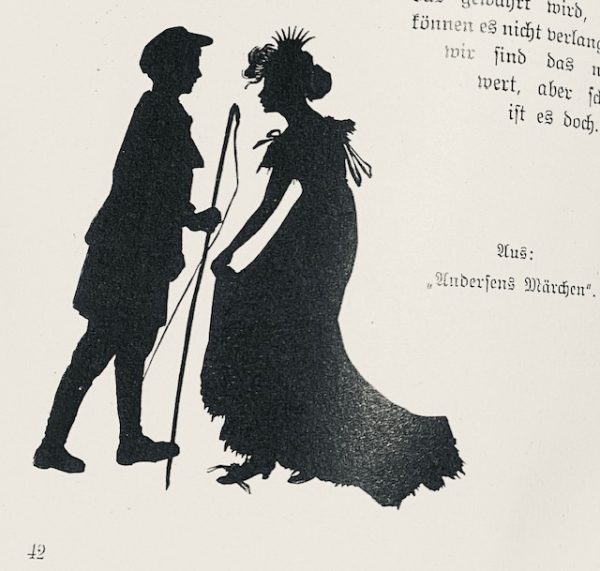
If we take a medical life course perspective, we shall become aware that for each event there shall be a time to prevent it. From a scientific and socio-economic point of view, this is the crucial time to prevent failure of an organ, duration of an illness, death or an otherwise disruptive event. Taking our lung or liver as examples we intuitively know that there is a long time spell during which we have a chance to work on prevention. The monitoring of the early onset of disease is (Ge et al. 2026), potentially, a very cost-saving way as well in addition to avoid humans suffering later on in multiple ways. From a theoretical point of view it will be interesting to “think intervention as prevention” already, rather than the predominant way of intervention “post-hoc”, which means after the onset of disease. This implies a rather complete overhaul of medical research just as much as social research to guide policy makers interested in the “survival” of our social security systems as we know them currently in Europe. (Image is illustration in book on fairy tales: Beckmann in exhibition at Kunstbibliothek Berlin, 2026)

Time wasted

It is a rather narrow, mainly economically driven, view on time that time can be wasted. Maybe, it is just interpreted as the opposite of „carpe diemcarpe diem“ (make use of the day). In the immediate instance time might appear as not used in a productive manner, but with a longer time perspective in mind, wasted time might happen to have contributed substantially to a valuable outcome. The measurement of time can be done in a neutral fashion like using a digital or analog clockdigital or analog clock. Time wasted, however, is a judgement and attaches a value on a duration. In retrospect, or from a life review standpoint, wasted time may be subject to revision. How much of reading is wasted time? Some reading becomes relevant only at later times during the life course. Just keep wasting time this way. Sing songs like from Honahlei „Where has all the time gone“, there will be long term benefits. (Image: extract from Anna Dorothea Therbusch, Selbstbildnis, 1782, Gemäldegalerie Berlin)

Medical Life Course

The analyses of the life course have taken individuals as their starting point and linked their life courses to broader societal developments like periods of educational expansion, job growths or periods of high unemployment. Medical life course research has further dis-aggregated the life course of a person into, for example, the life course of human organs.
There is already an established line of research which collects and analyses lung function trajectories. The research starts even before your first “autonomous” breath and typically ends at death, although transplants become feasible. It is helpful to think of those measures lung function trajectories as a life course of lung health, because the air we breathe is subject to many social and environmental impacts. Some we are in control of (active smoking, less so with passive smoking), some others like inner city smog or pesticides inhaled in areas of agricultural production. Work environments play an important role in the life course of the lung as well. Global warming, particularly increases in summer heat, pose additional challenges on the overall aggregate level to lung health trajectories.
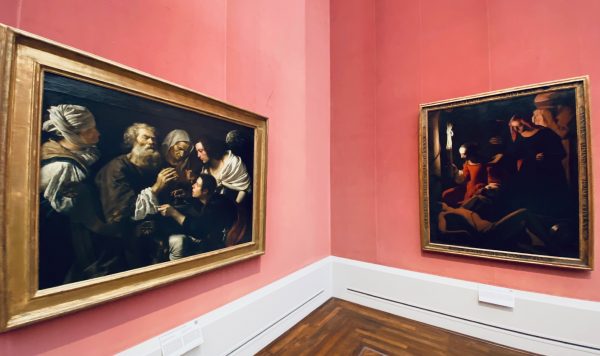
Inhale, exhale, … then force your breath out quickly, … keep breathing normally. That’s about the instruction for the “Forced Vital Capacity test”, which is a standard measure of your FVC just repeated over the life course. (Image: The healing of Tobit 1630, follower of Caravaggio and The finding of Sebastian 1649, Georges de la Tour, Gemäldegalerie Berlin)

Illness duration

The focus in medical analyses is primarily put on the diagnosis of illness. This is the best strategy, if the onset of an illness has a precise beginning and ending. In all processes, where either the beginning and/or the ending is less well-defined as precise point in time, the progression, as phase in or phase out of illness, is also of substantive interest. A duration analysis can inform about the potential presence of a co-morbidity in case, for example, an infection continues beyond the normally expected duration.
Financial pressures in the medical systems makes it necessary to release patients in a timely fashion. Therefore, has become more important to monitor patients even after release from hospital. Digital devices can support such a monitoring.
The study by Josi Levi and co-authors (2026) shows that smartphones or just the monitoring of the number of steps of patient offers a rather reliable indicator on the health status towards the end. The information that a patient has recovered to the normal level of activities as before the onset of the illness works quite well as indicator of recovery. A more precise measure of the duration of an illness is important for patients, care persons, the health system overall. The duration is one of the cost-intensive factors of any illness and it is surprising how little we know about the issue of time and duration in many health processes.

Regulation and bureaucracy

Economists will celebrate 55 years of the theory of regulation pioneered by George Stigler, which was published in 1971 in 2026. The basic question asked at the time and today is: why do we have regulation? The pubic choice and political economy answer of Stigler (1971) and many scholars after him, is that the industry of a specific sector will acquire the regulation or the public interest in this regulation and, subsequently, the industry will design and operate it to its benefits. At least, this is in a nutshell my summary of the literature inspired by Sam Peltzman (2021, p.20). If we add to this the perspectives of theories of bureaucracy (Sharma, 2020), we become skeptic of an efficient implementation of regulations by governments or governmental agencies.
In the field of pharmaceutical applications, it is the “European Diabetes Forum” which calls for a regulation on reliable “glucose monitoring devices” with industry and user backing. Of course, this asks for bureaucratic control of the regulation, imports and markets of such devices later on. The one (regulation) is rarely coming without the other (bureaucracy). It is about time to acknowledge this for societies as a whole as well.