Medical Life Course

The analyses of the life course have taken individuals as their starting point and linked their life courses to broader societal developments like periods of educational expansion, job growths or periods of high unemployment. Medical life course research has further dis-aggregated the life course of a person into, for example, the life course of human organs.
There is already an established line of research which collects and analyses lung function trajectories. The research starts even before your first “autonomous” breath and typically ends at death, although transplants become feasible. It is helpful to think of those measures lung function trajectories as a life course of lung health, because the air we breathe is subject to many social and environmental impacts. Some we are in control of (active smoking, less so with passive smoking), some others like inner city smog or pesticides inhaled in areas of agricultural production. Work environments play an important role in the life course of the lung as well. Global warming, particularly increases in summer heat, pose additional challenges on the overall aggregate level to lung health trajectories.
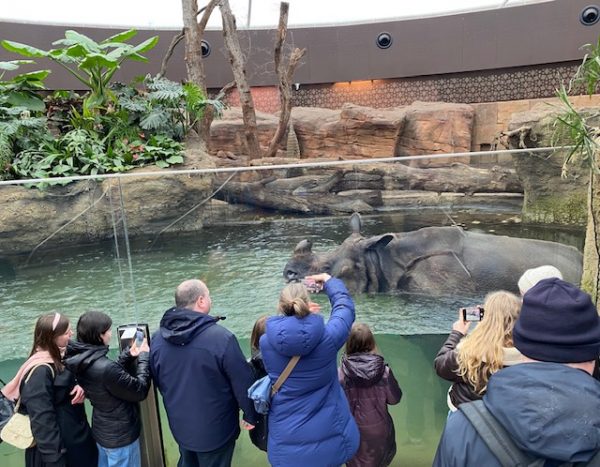
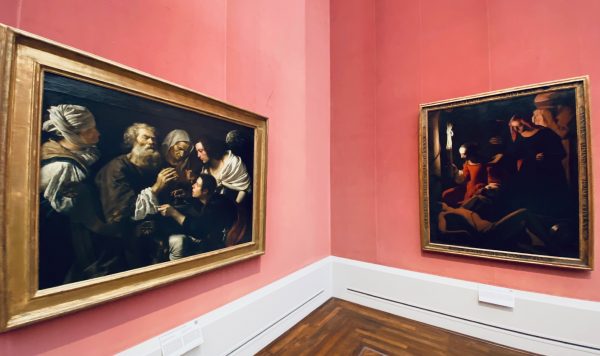
Inhale, exhale, … then force your breath out quickly, … keep breathing normally. That’s about the instruction for the “Forced Vital Capacity test”, which is a standard measure of your FVC just repeated over the life course. (Image: The healing of Tobit 1630, follower of Caravaggio and The finding of Sebastian 1649, Georges de la Tour, Gemäldegalerie Berlin)
Illness duration

The focus in medical analyses is primarily put on the diagnosis of illness. This is the best strategy, if the onset of an illness has a precise beginning and ending. In all processes, where either the beginning and/or the ending is less well-defined as precise point in time, the progression, as phase in or phase out of illness, is also of substantive interest. A duration analysis can inform about the potential presence of a co-morbidity in case, for example, an infection continues beyond the normally expected duration.
Financial pressures in the medical systems makes it necessary to release patients in a timely fashion. Therefore, has become more important to monitor patients even after release from hospital. Digital devices can support such a monitoring.
The study by Josi Levi and co-authors (2026) shows that smartphones or just the monitoring of the number of steps of patient offers a rather reliable indicator on the health status towards the end. The information that a patient has recovered to the normal level of activities as before the onset of the illness works quite well as indicator of recovery. A more precise measure of the duration of an illness is important for patients, care persons, the health system overall. The duration is one of the cost-intensive factors of any illness and it is surprising how little we know about the issue of time and duration in many health processes.

Regulation and bureaucracy

Economists will celebrate 55 years of the theory of regulation pioneered by George Stigler, which was published in 1971 in 2026. The basic question asked at the time and today is: why do we have regulation? The pubic choice and political economy answer of Stigler (1971) and many scholars after him, is that the industry of a specific sector will acquire the regulation or the public interest in this regulation and, subsequently, the industry will design and operate it to its benefits. At least, this is in a nutshell my summary of the literature inspired by Sam Peltzman (2021, p.20). If we add to this the perspectives of theories of bureaucracy (Sharma, 2020), we become skeptic of an efficient implementation of regulations by governments or governmental agencies.
In the field of pharmaceutical applications, it is the “European Diabetes Forum” which calls for a regulation on reliable “glucose monitoring devices” with industry and user backing. Of course, this asks for bureaucratic control of the regulation, imports and markets of such devices later on. The one (regulation) is rarely coming without the other (bureaucracy). It is about time to acknowledge this for societies as a whole as well.

Climate, time and space

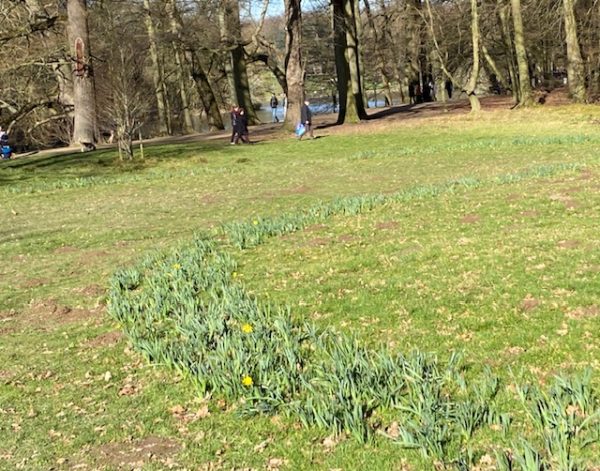
For statistical analyses is good practice to not only study averages, but whole distributions over time and space. Climate change is an obvious candidate to apply such a methodology. The analysis of US data on temperature changes across quantiles of the distribution in 48 regions over 70 years finds distinct patterns of temperature changes. The authors María Dolores Gadea Rivas and Jesús Gonzalo published their findings in PLOS Climate, which showed different patterns of climate warming. Taking into account that it is not only average temperatures that may shift, but only the lower winter temperatures or the warmer summer peaks, they find overall 84% of the regions experienced a statistically significant warming effect. Whereas a higher summer peak is commonly perceived as a climate warming problem, a warmer winter usually is less associated with climate change. This leads to an overall misinterpretation or lower perception that climate warming is and has been happening over the last decades. With yellow daffodils on 2026-2-8, usually a winter day in Brussels (see image), the warm winter days are also evidence that global warming is well under way all year round and across the planet.  

Time and power

Who commands our time? Who commands your time? Both macro- and micro-level analyses of power relationships related to time need to be investigated. Time policies are most obvious when it comes to regulations of working time, permissions of business hours or so-called bank holidays. On the micro or individual level, it is often the question of who spends more time on work, care and repair. Hourly wage rates have been claimed by economists to guide or decide societal time spent on one or the other activity. An extension of this rationale with an overriding objective of happiness might considerably change the impact of power relationships on time. Longer time perspectives on health shall also shift the view of how power impacts the time spent on various activities. Time sovereignty is a precious value in its own right.
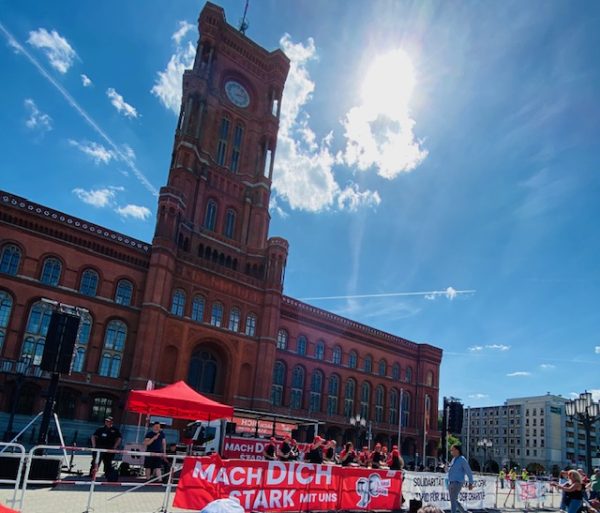
The power play between employers and employees keeps shifting the balance, albeit the overall trend over the last 100 years has been towards a reduction of working time and increased time sovereignty of employees as a form of democratization of working life. This constitutes one form to share the benefits of productivity gains over decades as well. (Image clock on Berlin City Council building on labor day 2025).


Multilateral world

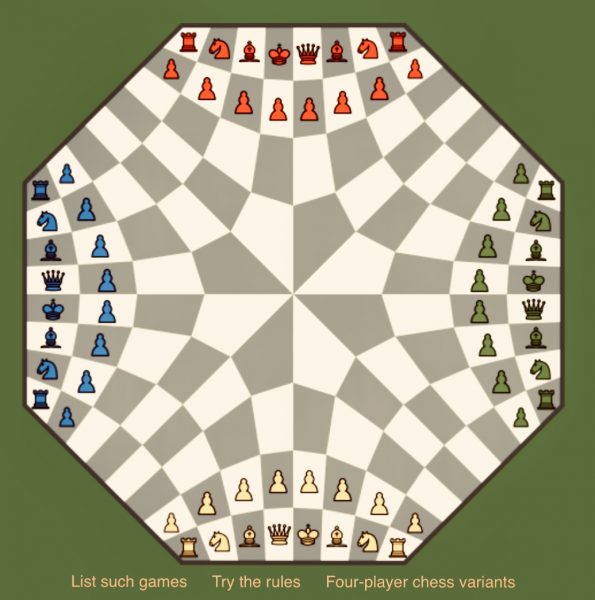
In the relatively brave new world of 21st century, it is not only a question of how the super powers like the USA, China and Russia shall push their strategic goals, but also what role so-called „Middle Powers“ will play. Europe and the European Union will have to make up their minds, whether they want to belong to one or the group, individually or jointly. New as well as shifting alliances seem to be a realistic scenario. Coalitions of middle powers will be effective counterparts to the threat of domination by a single or joint brutal force of superpowers. The power of interference of middle powers in the confrontation of superpowers is considerably higher if they were to collaborate more effectively than with each of the superpowers previously in a simple 2 opponents game of chess, much more familiar to us so far. (Image: Game of chess with 4, 5 or 6 players on the same board, here adapted from chessboard for 4 players, source: greenchess.net webpage)

Democracy in democracy

The more we are confronted with illiberal turns of democracies, the more we need to watch out for democracy washing in democracies. What do we mean by this? The NGOs like Transparency International, for example, keep records of states and their tendency to use in-transparent means or corruption to pursue their political objectives. In addition to such criteria there a number of non-negotiable items in democracy, which justify to carry rightfully the label of being a democratic state. Separation of powers, independence of the judiciary, freedom of the press figure among the best known criteria. Some states or theorists of democracy would add a federal organization to this list. The control over the military forces and the freedom to object to subscriptions is particularly relevant at times of armed conflict. Equal rights for women and men and laid convictions as well as freedom of consciousness or religious beliefs have been and still are a challenge in some countries. Each of the broader topics have to be broken down into more specific issues and indicators to measure the evolution. Advances in some areas might be confronted with regress in other areas. Each of us may have their own list of priorities what makes a democracy a democracy. On many criteria the USA has lost a leading role. The evolution of democracy in the US-American democracy has become a substantial threat to other democracies. Such analyses of comparative democracy research should guide us in the way which alliances we want to choose in the new multipolar world.

Democracy in art

The depiction and imagery about democracy in the history of art is according to my own anecdotal evidence and visits across Europe much less frequent than depictions of royalty, mystery like religion or autocratic rulers. Therefore, visits of museums on art history, let us say prior to the impressionists, have to be approached with an obvious skepticism. The impressionist art movement rebelled against the official art academy and started their own salon and are still much acclaimed for this as well as the fight for their own vision of art. The worst authoritarian backlash came from the Nazi-terror, which annihilated large parts of democratic ideas in and about art. A second major issue is about who visits the museums in contemporary societies. Democratizing the crowd who visits art museums is a steep task. Ease of access also beyond  costs of entry, they still pose barriers of access to reach a representative sample of a population to participate in art. (Image Kunstforum new barn in construction).

Democracy in Energy

Can there be democracy in energy? Power supply and power distribution are core topics in the theory of democracy as well. One of the foundations of democracy is the separation of power into a legislative, executive and a judicial power. A resilient democracy can assure a sufficient functioning of this fragile “balance of power”. In an energy market or a nation’s energy distribution a comparable balance of (electric or gas) power provision might be envisaged. The costs of parallel infrastructures of power distribution are high, but the resilience of overall power distribution will benefit. Also from a redundancy perspective, more than one distribution system may step in if there are failures or delivery problems with one of the distribution networks. The democracy in energy perspective goes beyond this simple analogy. Power supply as well as power distribution have been concentrated in large public or private enterprises, which might care little in terms of security or reliability of the overall system, not only during armed conflicts. Independent energy production and use, for example through wind and solar energy including batteries have pushed the feasibility of more democracy in energy to new boundaries. These technologies have enabled a new bifurcation and make room for more democracy in energy. It is a rather realistic version of a previously rather utopian vision.

Democracy in architecture

Over centuries we have pondered how to bring more democracy into architecture. This very idea is different from designing parliaments or other democratic institutions like courts or the representation of executive power in a democracy. Bottom-up or direct participation, beyond the pseudo open participation in a competition for the chosen best design, could take the form of voting by and/or listening to the people before any realization. Rather than relying on the choice of elected representatives, we may envisage the observation of people’s choices. Such a kind of bottom-up approach has been chosen by Anna Jung and Lea Krueger who let persons chose, where they wanted to take a rest at the Kulturforum in Berlin by moving chairs to a  specific place or a nearby location. Rather than yet another grand design people could freely choose their favorite niche for 1 or 2 chairs. Sometimes just looking for shadow next to a wall or under a tree, sometimes desperate for a little green spot. Democracy in architecture can simply mean to think architecture from the people’s perspective or an observed user’s experience. Democracy in architecture could resemble a bit more the internet revolution and think in terms of user interface, UX-design. With the construction of the “Berlin Modern” well under way, such green niches shall be appreciated by many people passing by and those who would like to rest for a while.