Printing is a more than 5 century-old industry. The invention of the printing press is mostly attributed to Johannes Gutenberg from Mainz. However, the Asian precursor of mobile type letter printing of Cai Lun of the Jikji dates back to 1377 in Korea. These early masterpieces of the inventors of print can be inspected at the Bibliothèque nationale de France (BnF). The summary term for this technical innovation by historians is the “age of start-ups”. The procedure for Gutenberg to have 2 financing rounds with his “business angel” Johann Fust, who is later claiming even almost the full rights of the printed volumes, resembles the start-up spirit of today as much as that of the 15th century. Not belonging to the Patrician families, it was very difficult to defend your rights in courts of the gilds. The printers also became a very powerful intermediary themselves. They either sold pre-ordered books or had to take the risk of assessing the market for their product. The editors of today do much the same in the trading world of books and rights of authors and translators. Merchandising products of the church and later churches (protestants Luther Bible) had a particular value to both the clergy and its devotees, not to mention the shop keepers in-between as well. Pilgrimage business was another start-up industry still going strong in the 20th and 21st century and popular in all religions. The early prints and typographs applied are fascinating in themselves, but there is a lot to be learned about the foundation of a new industries that still employs millions of people and is at the origin of learning revolution similar to the one we are living with the digital technologies today. The European languages with respect to printing had a certain competitive advantage, based on 26 letters of the alphabet, far fewer types were needed to print books than the more than a thousand different signs for printing a Korean text. In terms of printing this is cost-reducing and probably you do not need to be able to read yourself to be a printer or it makes proof reading more accessible favouring benefit margins. After all, the age of industrialisation probably had a precursor in the printing industry. The potential of the printing industry was only exploited much later to the full extent. Comparable to “peak oil” we hope to have reached “peak paper” at last as well for the sake of our planet and our own survival. 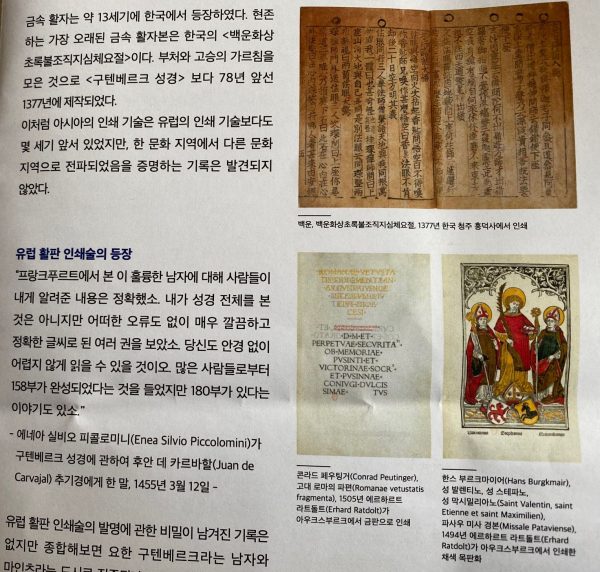
Immune system
A brief review of the press on the coronavirus 3 years after its first appearance shows that we have learned to live with it. Everyone has found the personal way to balance exposure to risk and protection against infection. Long-term consequences are severe for pupils. Many lost friendships, were lonely at home and accumulated missing out on peer advice or effective teaching.
Overall, strengthening of the immune system is another more complex issue. Some people swear by masks and others keep washing hands, or both. More rare is the vaccination approach against COVID-19. The evolving virus seems to adapt to a seasonal pattern as the influenza had done decades ago. The term seasonal greetings nowadays has an additional flavor to it. We have come out of the 3rd year of the pandemic reasonably well. Preparing for the next winter is left to the scientists to study the ever new variants arising, probably in parts of the world where winter is just beginning. Working on our immune system’s strength, however, is up to us. Happy Walking and cold Showering. 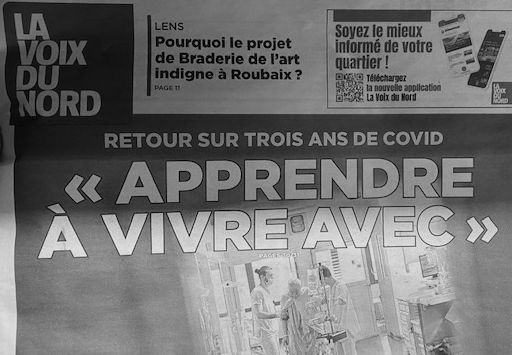
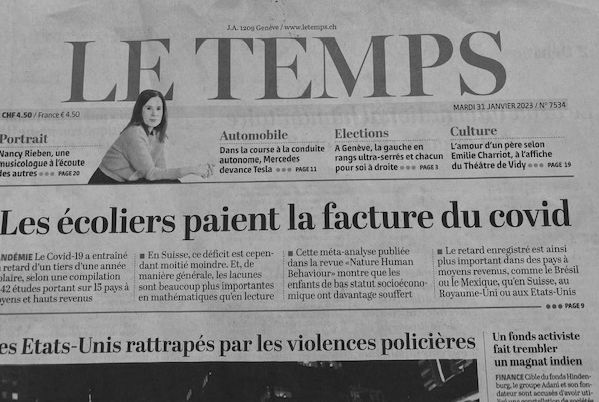
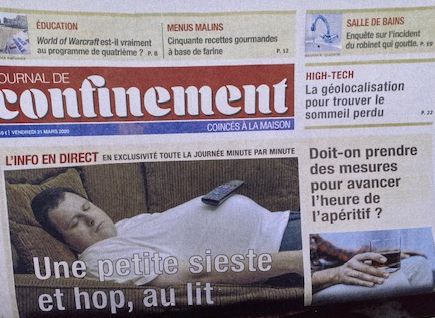 2 real newspapers, 3rd one “Pastiche” exposé à la BnF, Paris April 2023.
Musée quai Branly
“Musée du quai Branly – Jacques Chirac” receives relatively few visitors compared to the much more popular art museums in Paris. The proximity to the Eiffel tower, however, allows easy access within walking reach from the most visited tourist attractions in Paris. A cheeky impression of the design of the building and surrounding gardens of the Museum resemble to me a shadow of the Eiffel tower in the afternoon sun in Paris. Some might even say with a westerly wind the tower would fall exactly on the museum. No, of course the tower is not tumbling. In the shadow of the tower there is superb place to meditate in the gardens or enjoy the many exhibitions of cultures from across the world. 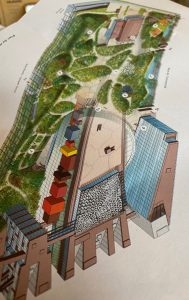 In remembrance of former President Jacques Chirac, Asian cultures have had a strong impact on the collections and the organisation of the garden. Very different from the French park “à la Le Notre” at Versailles or Fontainebleau, the garden of the museum du quai Branly follows a completely different design focusing on bio-diversity. The architect “Jean Nouvel”, is quoted having said, that the garden is not a complement to the museum, but the garden is the museum. Hence, it is possible to have very unexpected views not only from the museum buildings, but also of the Eiffel tower nearby. It is possible to view the Eiffel tower through different continental perspectives on it. To the extent that you might not even recognize the massive tower in the neighbourhood being immersed into wild life. Then try one of the special expositions or the permanent exhibition, if visiting for the 1st time. We travelled continents without devastating CO2 effects. Additionally, Paris is easy to reach by train. You may complement the intercontinental experience by visiting the headquarters of UNESCO, at least the book shop, in Paris also nearby.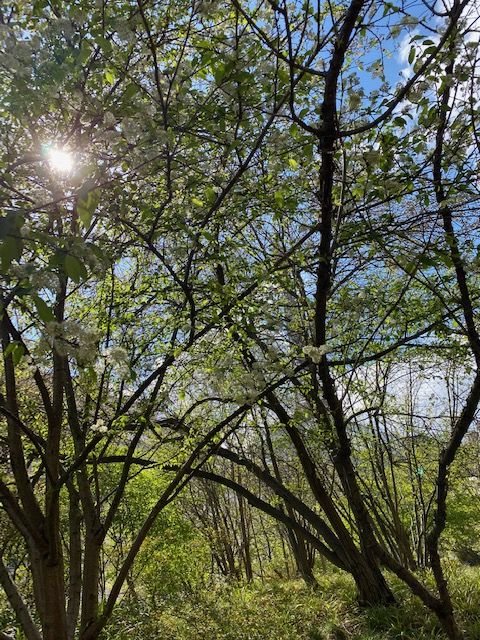
Quercus
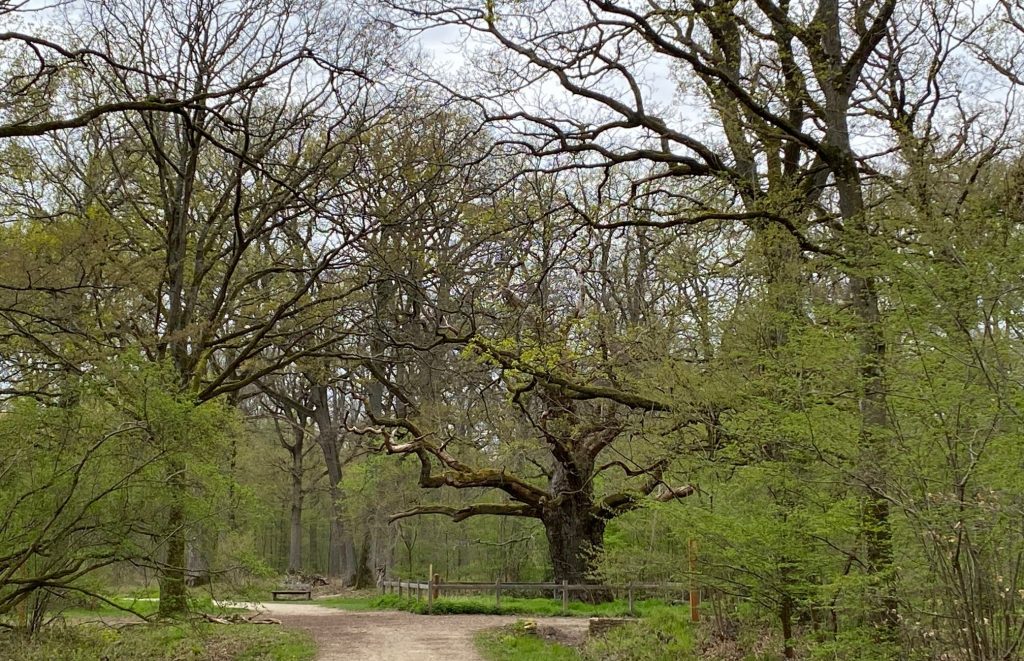
“Quercus petraea” is the classification name of the sessile oak, the Irish Oak or “chêne sessile” in French, “Eiche” in German. Many European nations cherish their oak trees. It can reach the size bigger than a normal family home and they may live longer than the person who has planted it. Within less than a century, due to industrialisation, most of our more than a century old trees have been lost or used for timber wood. Therefore, it is quite unique to find a reference to a 500 year old oak tree nearby Paris. Despite a fire in this forest 5 years ago (climate change in full action) the old oak tree has survived. Birds around keep spreading the message that it is worth to preserve nature. We could do it, if we really wanted. Now the oak tree older than the protestant revolution is a rare testimony of the stubbornness of nature to resist. 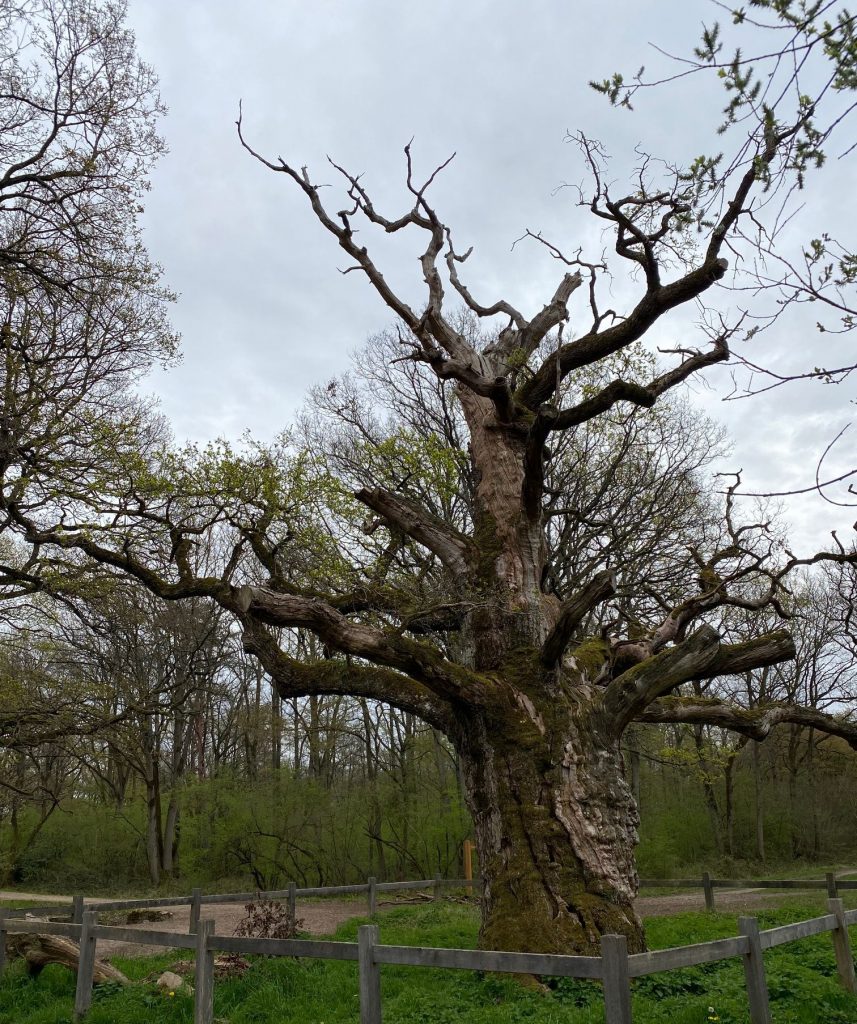
Walking
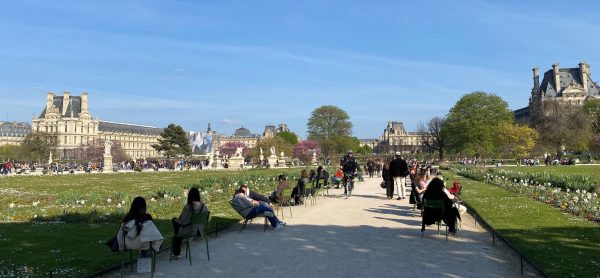
Yes, walking again. It is so nice, if there are a few roads blocked for car and bus traffic in central cities. Walking the city becomes a marvellous experience. On Easter Sunday 2023 the Champs-Élysée is great because strolling down the avenue without paying attention to road traffic offers an even better view on the surroundings. Why don’t more cities dare to lock out cars to facilitate pedestrian circulation and reduce air pollution at the same time. No problem to reach more than the WHO recommended 10.000 steps/day on such a sunny day in Paris. Inside the Louvre, another chance to achieve new records in mileage by foot. 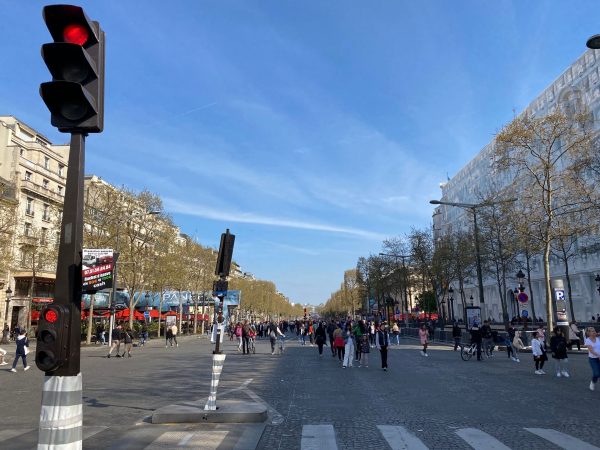
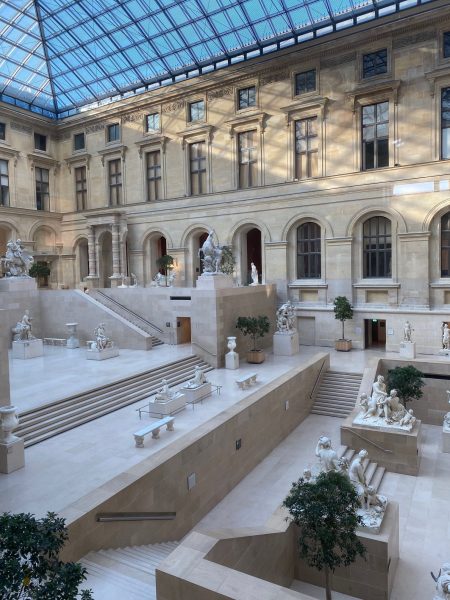
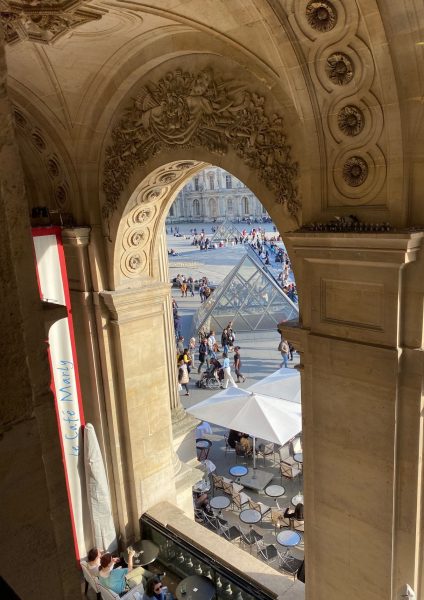
Walk
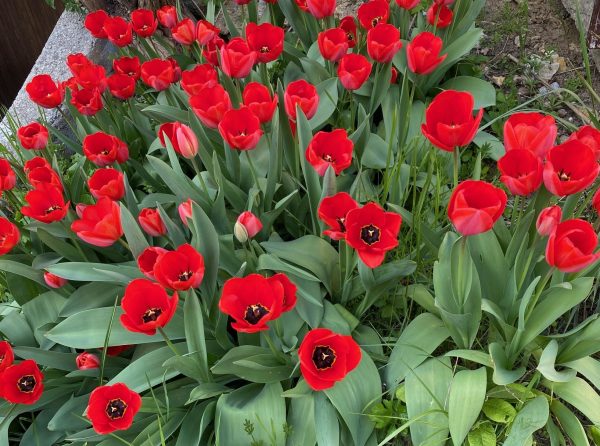
Spring is the ideal time to start walking more than in the past 6 months. Flowers all around and sunshine invite to go outside. It is so good for our health. Our mobile phones count steps for us so it is easy to reach targets you set yourself. No pressure just fun. Chose a nice surrounding, city or landscape, and the benefits will accumulate rapidly. Improving sleep afterwards is just one of the many side effects. No excuse on the long Easter weekend with bank holidays as well. Anyway, that is what I do. For our health every stride counts in the short run and even more so in the long run. Hence, let’s go. Take a few photos to look at afterwards as your special self-made reward. Cheers and Happy Easter or seasonal greetings. 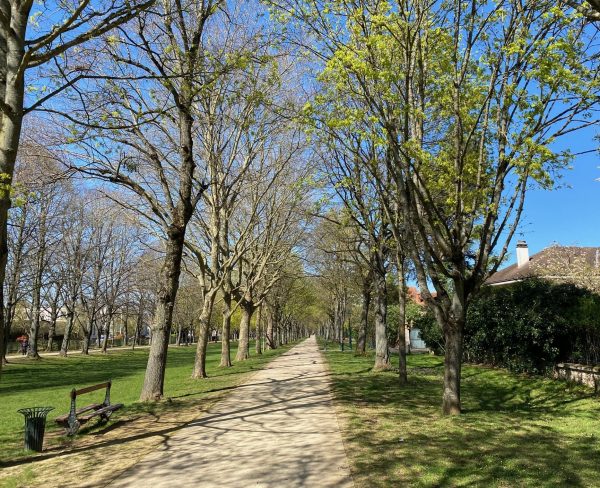
Bauhaus Haus
Zu den Ursprüngen des “Bauhaus” in Weimar gehört das Haus, welches die Feder von Georg Muche entworfen hat. Auch wenn das Bauhaus überwiegend mit Walter Gropius assoziiert wird, ist die Parallele von Georg Muche zu dem französischen Maler und Architekten Le Corbusier frappierend. Beide waren geprägt durch die eigene Malerei und Zeichenkunst. Die Entwürfe für Häuser oder Villen folgten Zeichnungen, die wiederum einer “cognitive map” mit Prinzipen der Konzeption und der Konstruktion folgten. Treu den Ansätzen des Bauhauses verwirklichte Muche bereits in 1923 sein Musterhaus. Modulare Bauweise, preisgünstige Erstellung, aktuelle Technologie, perspektivische Blickwinkel und Lichtspiel. Eine gewisse Parallelität zu der Villa La Roche und Jeanneret von Le Corbusier besteht nicht nur in der zeitlichen Dimension, sondern auch in dem Einfluß von kubistischem Spiel mit Perspektiven in Haus und auf das Haus. Die von der Malerei herkommenden Architekten entwerfen ihre Räume mit “The painter’s eye“. Vielleicht kommt nicht zuletzt daher der Traum vom Eigenheim, der so prägend bleibt in ganz Europa und der westlichen Welt. Geprägt von den 1910er und frühen 1920er Jahren war kostengünstiges Bauen eine wichtige Rahmenbedingung. Relativ kleine Grundrisse, modular erweiterungsfähig, preiswerte Baustoffe sorgten trotz Schwierigkeiten für rasche Realisierungsmöglichkeiten. Eine gewisse deutsch-französische Parallelität drängt sich auf. LeMonde vom 6.4.2023 beschreibt ausführlich das Dilemma des 21. Jahrhunderts. Der Traum vom eigenen Haus wird für die nächsten Generationen schwieriger zu realisieren sein. Rohstoffpreise, Grundstückspreise, Arbeitslöhne, Kreditzinsen schnellen in die Höhe. Der Traum vom Eigenheim bleibt ein Traum älterer Generationen oder der glücklichen Erben solcher Häuser, fast unerreichbar für Durchschnittsverdienende. “Gemeinsam statt Einsam” ist die noch gültige Schlussfolgerung, die bereits Henning Scherf formuliert hat. Die neue Herausforderung für den Bau war, ist und bleibt die soziale Frage, der wachsenden Ungleichheit entgegen zu wirken. 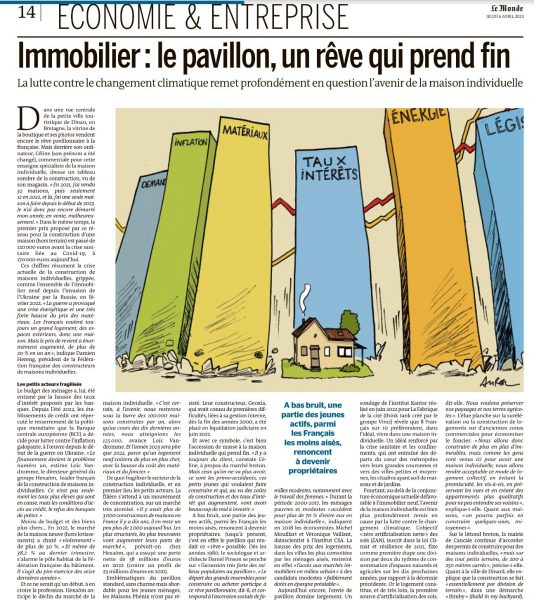
Corbusier
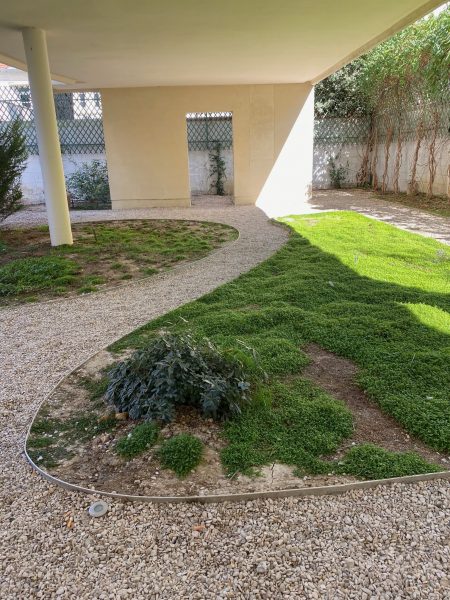
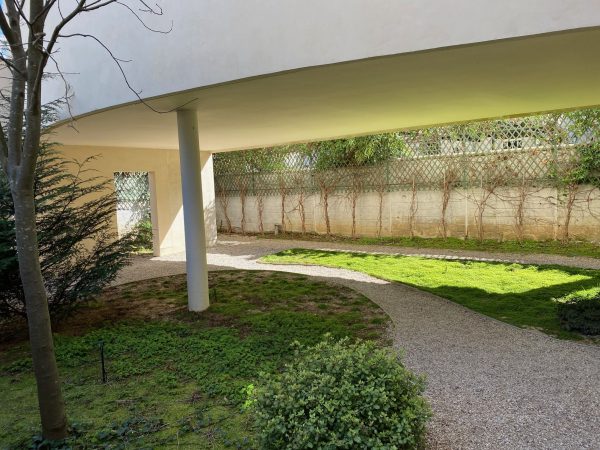
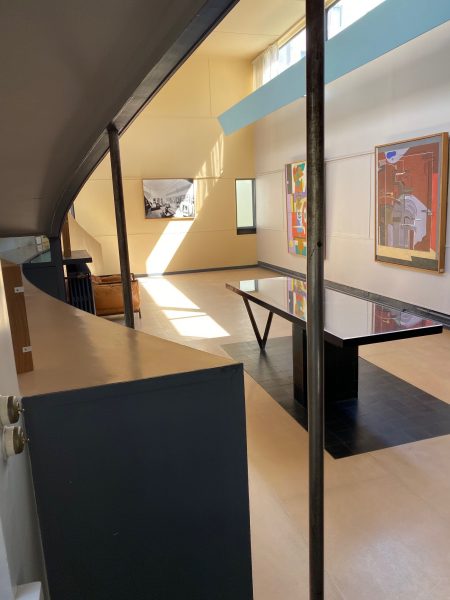
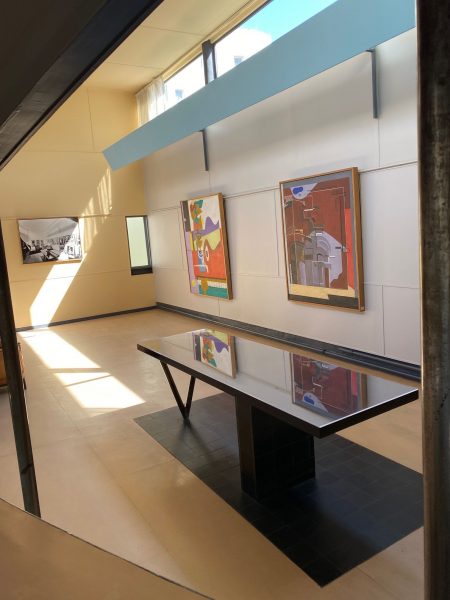
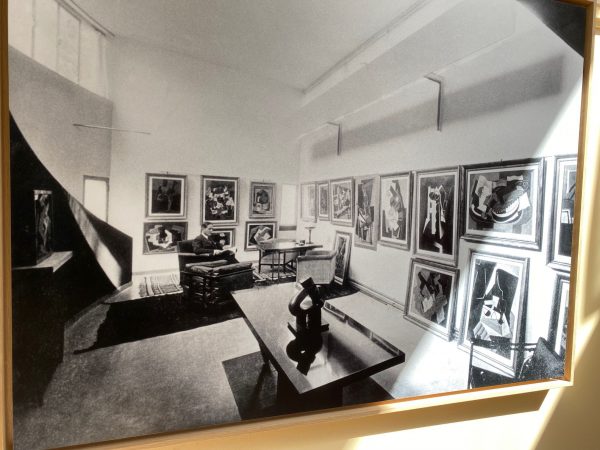
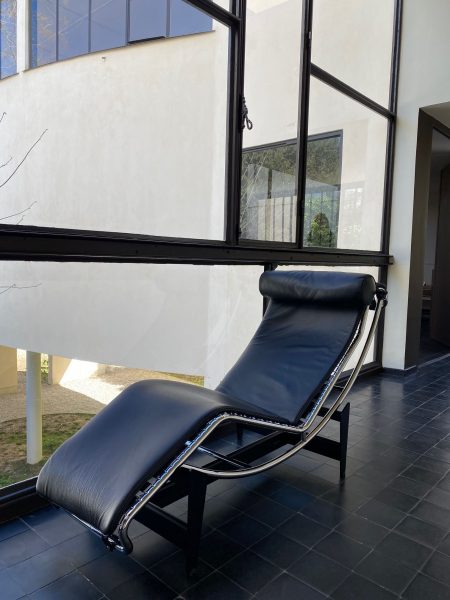
Le Corbusier (1887-1965) chose his artist’s name instead of his lengthy original name of Charles-Édouard Jeanneret at the age of 33 (in 1920) after having moved from Switzerland to Paris in 1917. He established a theory of modern architecture often summarised in his 5 major principles of modern architecture: 1. Pilotis as grid of pillars, 2. freeing ground floor design, 3. more open facades, 4. windows stretch horizontally, 5. garden, terrace on the roof. All these principles allow a more healthy living environment due to more light, less humidity in buildings and ease of circulation. The house Le Corbusier designed features surprising effects of light and lightness of living. “Les maisons La Roche et Jeanneret” date from 1923 and was completed in 1925. These purists Villas breathe thanks to the impression of abundant empty spaces despite relatively small surfaces. One Villa is designed for a small family, the second for a single person (Raoul La Roche) with a collection of paintings to be exposed in a small gallery. The focus on essentials of living, health, light, water, air and art combine to a relaxing and inspiring atmosphere. Despite many of his convictions to build affordable housing for many people, which received mixed success, his “maisons bourgeoises” in Paris and elsewhere remain masterpieces beyond the 1920s and the 20th century. Le Corbusier was concerned about tuberculosis. Today the corona-crisis has reached comparable health concerns. Architecture might react to the latter crisis in re-considering the lessons from the former. Relaxing in a Le Corbusier Chaise longue and meditating in front of a Picasso, Braque or Léger painting is indeed more than a little bit elitist. But copies of such images or your very own slide show or museum VR-clip in this surrounding make this experience more affordable and compatible with living arrangements for millions of people of the middle class as well.
Architecture
Architecture is all around us. However, we rarely consider the build environment as “conditioning” feature of our life. Architecture is contributing extensively to our perception of “social space” (Bourdieu). Inner cities, suburbs or spacious residential areas have diverse impacts on our perception of, for example, security, modernity, health or sanitary sensations. The corona-crisis has made it clear to most people that a healthy environment is a very essential part of our perception of comfort. Here the psycho-social perception of living and/or working space enters into the co-creation of housing people. Technology is a big driver of change in housing, urban spaces and rural imagination. In order to avoid corona infections a new culture of working from home for the masses become a health-driven imperative. Payment without contact, home delivery of meals, food, books, medicine have changed the living style of many people. Too little movement for our bodies has caused another silent pandemic of obesity. Enough reasons to rethink architecture from a sociological perspective on it. This probably starts with speaking of architecture as architectures. By this we mean to think of architecture from its social origins, functions, impacts and perceptions. Great historical examples of architects have implicitly or explicitly formulated a social theory of architecture or space as the basis of their “concrete” realisations. The sociology of professions of architects and the many construction-related professions needs empirical foundation beyond the cliché of socialisation as artist versus technician. Still recent forms of participatory democracy as part of urban and rural planning as well as realisations. Participatory individual or community housing are likely to stay with us. People want to get involved in co-creating their living and working space as their social environment. Architecture as social process and specific layer of the network society will be the new mantra. It has always been there, implicitly. Up to us to strengthen the social discourse on architecture. 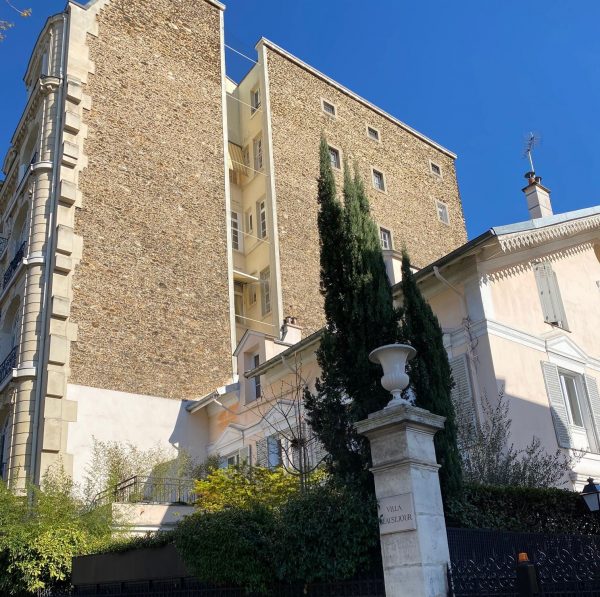
Wasser im Wald
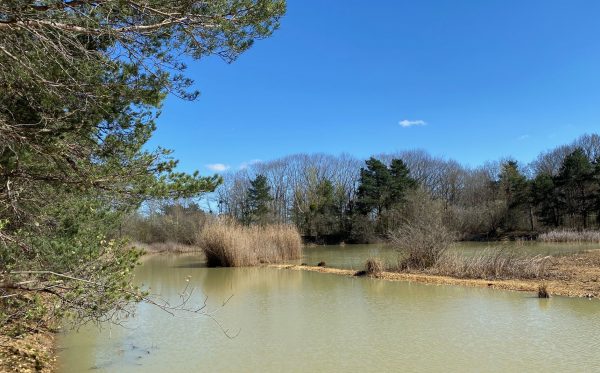
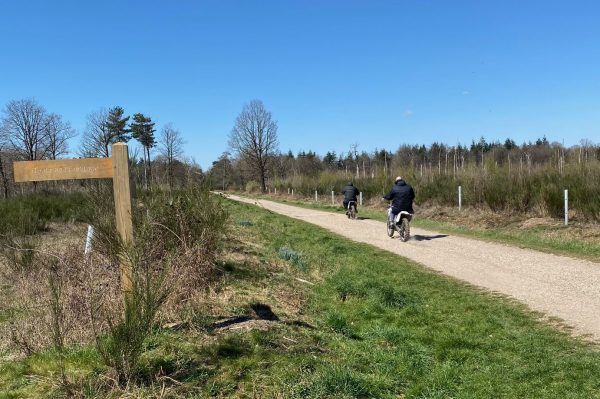
Wasser im Wald hat viele Funktionen. Historisch erleichterten Wasserstellen an denen sich Wildtiere genüsslich im Morgengrauen laben, die Jagd des erschöpften Monarchen. Einfache Ziele, die jeder Jagende sich zu nutzen machen kann. Kleine Seen dienen aber auch als Wasservorrat beim Löschen von Waldbränden und nicht nur den Badenden im Sommer. Viele kleine Seen in Frankreich leiden an erheblicher Wasserknappheit. Wasserstände, die sonst im Spätsommer erreicht wurden, nach Trockenheit und Verdunstung, sind im Frühjahr 2023 berreits erreicht. Ein Waldbrand könnte kaum mit vor Ort vorhandenen Wasserreserven gelöscht werden. So hängen Feuer und Wasser im Wald recht eng zusammen. Austrocknende Seen vernichten zusätzlich die Biodiversität im Wasser, denn weniger Lebensraum im Wasser hat Konsequenzen. Das heizen mit den Motorrädern im Wald, hab ich selbst gemacht vor vielen Jahren, ist heute eh schon verboten. Aber Verbote und Jugend sind ein eigenes Thema. Wir haben der Jugend die Freiräume geraubt, die wir noch hatten und jetzt beschweren wir uns über die stubenhockenden Jugendlichen mit ihren Computerspielen und Social-Media-Aktivitäten!?! Ein völliges Überdenken des Wassermanagements ist von Nöten. Das sind wir den nachfolgenden Generationen schuldig. Welche Arroganz besitzen wir, dass die Jugendlichen von Heute viel klüger und noch schneller erwachsen sein sollen als wir selbst in diesem Alter. Aus Fehlern lernen wir, aber wir scheinen das Lernen, den späteren Generationen überlassen zu wollen. Leider funktioniert das so nicht, wir müssen schon an unser Verhalten ran und von uns verursachte Schäden selbst reparieren. Das Fegefeuer brennt schon, ob wir es noch rechtzeitig löschen können?