Short circuit electrification

The electrification of the automotive industries is well under way. However, there is still the resistance of a few warriors from a village called “Gaulle” that fight the imperial forces that dominate these markets. The abundance of cars with batteries and electricity-based traction keeps growing, More utility vehicles shift over to this technology as well. With India and China making significant shifts in this direction, the market has made a significant technological shift until the beginning of 2026. The share of hybrid or solely electric power in cars has risen sharply, but a small segment (10% of diesel engines seems to survive or is only slowly petering out in the coming decade. The publication by Béla Galgóczi (editor) demonstrates the challenges this poses to the companies, their employees and the automotive sector as a whole, as it comprises a large amount of employment and technologies in the traditional supply chain as well. The need for a substantial and costly shift has started, but the downsizing of companies, as electric cars need far fewer pieces than conventional ones, could offer an opportunity, if the skilled employees can be converted to other productive use.
A single sector study offers a lot of “deep” insights into a sector, but the opportunities and openings in other not to distant sectors tend to be overlooked. The European sovereignty in the area of military, standardised technology, which is also still based on many precision and metal components might come as a rescue not only to Ukraine, but to Europe as a whole.

External-Internal Threat

In a time perspective of at least since the German unification of 1990, we have to reconsider the perception of what constitutes an external versus an internal threat. Prior to the implosion of the Soviet Union and the Glasnost years, the external Russian threat has been transformed across the globe into more hybrid threats coming from internal forces which have been “instrumentalized” by external forces. In an essay by Valentine Faure (Le Monde 2026-2-21) this twist to internal politics has been described as a form of new forms of interference of external forces into European internal political, economic and social affairs. In fact the basic strategy is as old as the famous Trojan horse, but the strategy has been refined and to work over much longer time spans as well as in other scientific applications. Any form of powerful, interested party would rather use the soft power of persuasion than brutal force to reach political objectives. Corruption and buying votes, directly or indirectly, has become a legitimate way in this hybrid or open use of power from the inside of a society than through a more traditional external affairs strategy. The confrontation of the bipolar world made it easy to put emphasis on external military power. A multilateral as well as more multilayered international political arena precludes to some extent the bipolar confrontation as conflicts on several frontiers  increases risks exponentially. In search of other strategies it seems plausible to turn to hybrid as well as disguised external force. Europe and democratic systems in general are more vulnerable than autocratic states, because the belief in an open form of society is part of its DNA. Open societies shall have to sharpen their sensory systems to transformed external to internal threats.

EU Presidencies Review

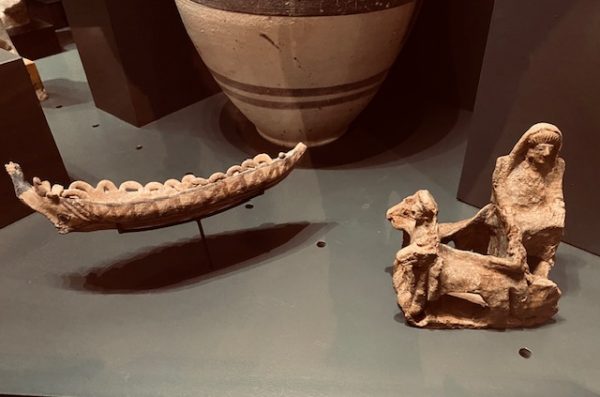
There is a turnover at the EU presidency every 6 months. A full cycle of all presidencies takes 13 and a half years as each presidency lasts the same length irrespective of country size. CY 2026 is the current one, where CY does not only stand for “see you” in smartphone slang, but for Cyprus in 2026. The procedure to determine a working program for the Council presidency is well established and unresolved matters keep coming back in regular time intervals. The big overarching topic in 2026 is EU autonomy facing up to new challenges of the multilateral world. In the EU presidencies small countries can showcase their concerns and demonstrate what their preferred topics and proposals of solutions are. It is also a chance to make people aware of why they have been eager to join a political, cultural and economic union in the first place. Already in the founding documents the issue of security and defense were addressed. They are again on the top of the agenda in the enlarged EU. The multi-ethnic and multi- religious experience of Cyprus, a country that has lived through multiple strategic dominations over centuries, can probably teach us a lot about how difficult it is to be autonomous if other more powerful countries have put an eye on your territory. Choose your allies wisely. (Image: exhibits Cyprus at BNF 2026, CY2026EU) 

Cyprus Aphrodite

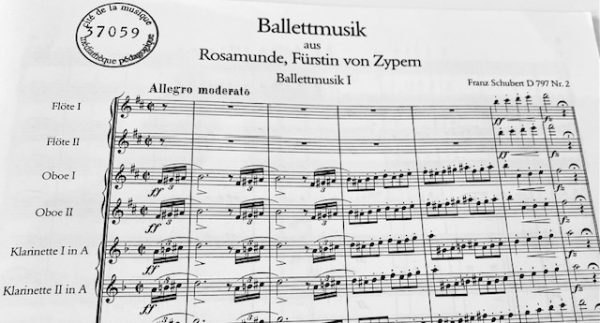
The legendary tales about Aphrodite and Cypriote cultural heritage have inspired not only a series of conquerors, but also composers of the romantic period in the 19th century. Somehow in praise of monarchy, Fromental Halevy composed the Opera “La Reine de Chypre”, inwhich the last Queen of Cyprus had to abdicate in the medieval era.  As a formidable example of French opera style, Richard Wagner transcribed it for salon-type recitals for voice and piano. The ballet music by Franz Schubert “Rosamunde, Fürstin von Zypern“ is yet another romantic piece built on the legendary associations with the island and its history. The exhibition “Cyprus at the BNF” in Paris proposes a transversal view across centuries based on their multiple collections. The western bias of what we in the western hemisphere of the world defined as being of interest becomes visible and transparent. The oriental perspective has been complemented by a small selection of exhibits from the Bank of Cyprus Cultural Foundation. A critical perspective on what enters our collections and archives is a great scientific accomplishment, at times when biased views from politicians have become more common again. 

Time horizons

There is an interesting stream of research in psychology that investigates the future time perspective of individuals. There is a considerable variation across the life span (Katana et al. 2020) where older persons report shorter time perspectives in such studies. At the same time we know that older persons think more about and how to transmit to following generations. Additionally, there exists a less well understood link between shifts in future time perspectives and overall societal, demographic and biological life expectancy. Taken together this allows to discuss  time horizons more generally on the level of social development. In political science it is customary to assume the future time perspectives of politicians to be the next election unless there is ineligibility after repeated terms in office. If politicians start talking about a time horizon of 1000 years like the Nazi-regime in Germany than the time horizon is likely to be abused as an excuse for atrocities in the present or near future. Beware! (Image: Exhibit in « Deutscher Dom » Berlin on NS-State, 2026).

Rule and divide leadership

We have known the leadership style, which has been coined as “rule and divide”, at least since the Roman imperial period.  In conquered countries it was a strategy to rule by way of creating divides between peoples or regions within a conquered country. The struggle for power within a country is likely to avoid that a powerful opposition to the occupant can build up. What is well researched in the history of international politics, has also been applied to the realm of management strategies. Anthony Galluzzo demonstrates that the strategies of management often attempt to split the workforce in at least 2 different camps in order to better keep employees and their trade unions under some sort of control. For society as a whole, so-called dual labor market theories have hypothesized the existence of such management strategies since the 1980s. With the labor practices in food and grocery deliveries as well as in taxi services such management strategies are applied again. “Old wine in new bottles”, but still seems to sell and catch on. (Image: extract from Butler Charles, 1637, Monarchia faeminina)


Collaborative Leadership

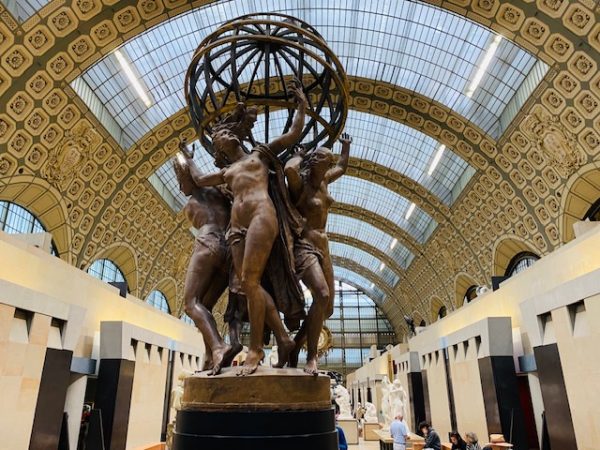
There are many reasons to praise collaborative leadership. Work climate, learning climate and innovation in teams and organizations benefit a lot. Absenteeism from the workplace is a proven and close correlate of hierarchical leadership styles. The theory and empirical evidence is rather clear in this respect, however the effective practice of collaboration among a leadership team is hard to sustain. Not only the ways to reach leadership positions is mostly rewarding tough elbows on the way to the top, the multiple rounds in the competition for top positions tend to train the toughest strategic  behavior. A return to more cooperation and collaboration appears to be a real challenge for persons that eventually arrive in top management positions in politics or business. Administrative science or organization science deserves much more attention especially if we are moving into the age of multilateral international institutions and multinational corporations and organizations. (Image: Les quatre parties du monde soutenant la sphère céleste, 1872, Musée d‘Orsay Paris).

Time occult

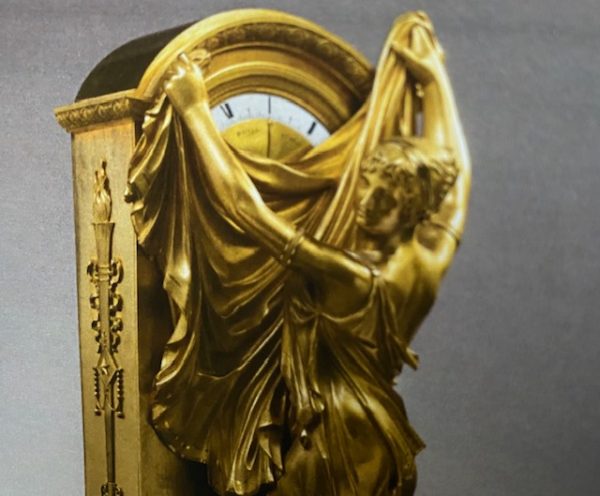
The passing of time may occult what has happened years or decades earlier. However, archives can do a great job to preserve historical facts that time might otherwise occult. The term of occultation has not only the meaning of making something secret, it can also mean that something is hidden from the public or direct visibility. The latter more obvious perspective has become a fashionable feature from time to time. As early as mechanical clocks existed, the arts and crafts have found ways to occult time in the sense of not distracting people from too much attention to the passing of time. At least at some moments in time, it may be of interest to hidden the time to devote more time to a specific moment or event. In the early 19th century this was a very upper class concept. In the early 20th century people wore closed watches in their costumes. Early 21st century people wear wrist watches that might have the light switched off, albeit being always on and connected. There seems to be an awareness among people that there can be too much attention to the passing of time.   (Image: extract from Claude Galle et Bailly 1819 „L’amitié cache les heures“, Musée Marmottan Monet, Paris).  

Time in Leadership

We identified already the importance of monitoring in democracies. The same theoretical considerations hold for an analysis of leadership irrespective of the organizational context, be it a government, governmental organization, non-governmental organization, association or private enterprise. In democracies, it is in most cases a constitutional rule that leadership positions are limited in time and it is “best practice” to have clear rules about renewable terms of office as well.
In private enterprises this seems to be of lesser importance, but the issue deserves more close scrutiny, not only by shareholders in case of a shared ownership or stocks. A particular person in the leadership position might be a good match for a company at times of growth or scaling of a start-up, but the same leadership is less likely to be an equally good match for the period of eventual stagnation or shrinkage.
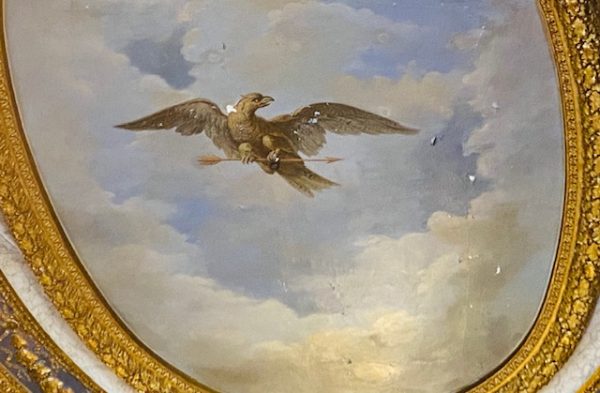
Therefore, as an alternative hypothesis it might be wise to adopt leadership rules similar to filling leadership positions with politicians. Fixed-term and 1 renewal could be worth testing at the leadership level (like in presidential republics, USA or France), even if this does not preclude close monitoring of leadership processes. As a starting point for empirical research, Vogel, Raes, Bruch (2022) offer a toolkit to assess organizational energy and leadership trajectories. Learning from democracies as well as democratic procedures might be a worthwhile leadership model to follow. (Image: ceiling painting in chateau  Vaux le Vicomte)

Time to prevent

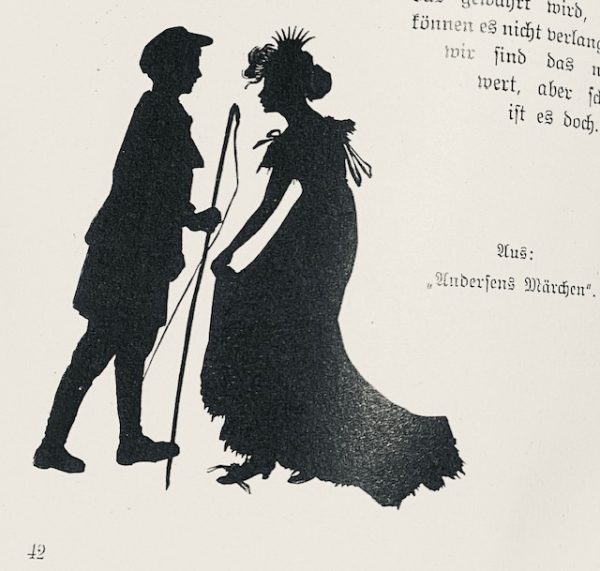
If we take a medical life course perspective, we shall become aware that for each event there shall be a time to prevent it. From a scientific and socio-economic point of view, this is the crucial time to prevent failure of an organ, duration of an illness, death or an otherwise disruptive event. Taking our lung or liver as examples we intuitively know that there is a long time spell during which we have a chance to work on prevention. The monitoring of the early onset of disease is (Ge et al. 2026), potentially, a very cost-saving way as well in addition to avoid humans suffering later on in multiple ways. From a theoretical point of view it will be interesting to “think intervention as prevention” already, rather than the predominant way of intervention “post-hoc”, which means after the onset of disease. This implies a rather complete overhaul of medical research just as much as social research to guide policy makers interested in the “survival” of our social security systems as we know them currently in Europe. (Image is illustration in book on fairy tales: Beckmann in exhibition at Kunstbibliothek Berlin, 2026)