Democracy in democracy

The more we are confronted with illiberal turns of democracies, the more we need to watch out for democracy washing in democracies. What do we mean by this? The NGOs like Transparency International, for example, keep records of states and their tendency to use in-transparent means or corruption to pursue their political objectives. In addition to such criteria there a number of non-negotiable items in democracy, which justify to carry rightfully the label of being a democratic state. Separation of powers, independence of the judiciary, freedom of the press figure among the best known criteria. Some states or theorists of democracy would add a federal organization to this list. The control over the military forces and the freedom to object to subscriptions is particularly relevant at times of armed conflict. Equal rights for women and men and laid convictions as well as freedom of consciousness or religious beliefs have been and still are a challenge in some countries. Each of the broader topics have to be broken down into more specific issues and indicators to measure the evolution. Advances in some areas might be confronted with regress in other areas. Each of us may have their own list of priorities what makes a democracy a democracy. On many criteria the USA has lost a leading role. The evolution of democracy in the US-American democracy has become a substantial threat to other democracies. Such analyses of comparative democracy research should guide us in the way which alliances we want to choose in the new multipolar world.
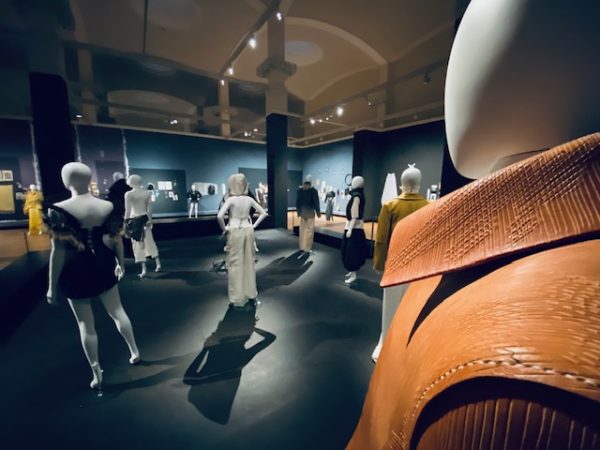
Democracy in art

The depiction and imagery about democracy in the history of art is according to my own anecdotal evidence and visits across Europe much less frequent than depictions of royalty, mystery like religion or autocratic rulers. Therefore, visits of museums on art history, let us say prior to the impressionists, have to be approached with an obvious skepticism. The impressionist art movement rebelled against the official art academy and started their own salon and are still much acclaimed for this as well as the fight for their own vision of art. The worst authoritarian backlash came from the Nazi-terror, which annihilated large parts of democratic ideas in and about art. A second major issue is about who visits the museums in contemporary societies. Democratizing the crowd who visits art museums is a steep task. Ease of access also beyond  costs of entry, they still pose barriers of access to reach a representative sample of a population to participate in art. (Image Kunstforum new barn in construction).

Democracy in Energy

Can there be democracy in energy? Power supply and power distribution are core topics in the theory of democracy as well. One of the foundations of democracy is the separation of power into a legislative, executive and a judicial power. A resilient democracy can assure a sufficient functioning of this fragile “balance of power”. In an energy market or a nation’s energy distribution a comparable balance of (electric or gas) power provision might be envisaged. The costs of parallel infrastructures of power distribution are high, but the resilience of overall power distribution will benefit. Also from a redundancy perspective, more than one distribution system may step in if there are failures or delivery problems with one of the distribution networks. The democracy in energy perspective goes beyond this simple analogy. Power supply as well as power distribution have been concentrated in large public or private enterprises, which might care little in terms of security or reliability of the overall system, not only during armed conflicts. Independent energy production and use, for example through wind and solar energy including batteries have pushed the feasibility of more democracy in energy to new boundaries. These technologies have enabled a new bifurcation and make room for more democracy in energy. It is a rather realistic version of a previously rather utopian vision.

Time Concatenated

As a measure of the psychological and social pressure time may convey on people, it is useful to look into how time is concatenated. In a calendar we often make appointments in a form where time is concatenated in ever smaller time slots and condensed time sequences. The organisation of appointments into slots of 15 minutes, with or without a break in between, might be a dense schedule, but we have come to think in time as linked to dates, space and precise timing. We shall experience time as rushed or forcing us into concatenated sequences in our professional life more than in our private life. In IT we even integrate these separate columns into just a single column for computing efficiency. Our calendars allow to structure time in ever smaller sequences. We tend to organise our lives more and more according to these shorter concatenated time.

Time as surprise

Sometimes, time comes as surprise. Time seems to run faster as we perceive it, or time might pass more slowly in actual terms than we perceive or think it does. What makes the difference? There is the objective measure of time with various types of clocks and watches versus the subjective or perceived lapse of time. The discrepancy between the two constitutes an interesting case for further study. Marketing strategies will try to make us believe that a specific kind of product will shorten or lengthen the difference between objective and subjective time. The entertainment industry works very hard on our perception of time relative to one or the other form of entertainment. The best result seems to be that objective time has been much longer than perceived time so that we “lost” our reference to time while being entertained. The so-called social media interaction is rather successful in this form of entertainment, infotainment or edutainment. The moments in life when time comes as a surprise might be great ones in our lives. Particular deviations between objective and subjective time make strong impressions on our memories, too. 

Time and Emotions

In psychology, time and emotions are a matter of milli- or even nanoseconds. Showing emotions, intrinsic ones or controlled ones is passing rapidly through our brain and, for example, facial muscles. Hence, time plays a role in how we react emotionally to an image or any event. The author Rüdiger Safranski starts his history of the concept of time with the emotional experience that time appears lengthy or tedious. In his view the emotional understanding of the concept of time is key to a better grasp of the philosophical roots of the concept of time. Starting with Greek philosophers, the Stoic tradition, Augustinus, the history of ideas is full of reflections on time, what it does to us, and how we best deal with the effects time has on us. In famous literature from Marcel Proust or Samuel Becket, we were reminded of the creative power of lengthy periods of time and the importance or futility to ask fundamental questions about time and our destiny. Beyond the rational thinking about time, the emotional experience of time makes up much of the spice of life. 

Time and money

In the English-speaking world, most people will be familiar with the expression “time is money”. In times of working for money as pay, rather than growing your own crops, we calculate hourly, monthly or yearly salaries. Time is a habitual point of reference in production systems and calculations of economic growth. Inflation and depreciation speak to value over time, just as investment and returns accrue over time. For comparisons of different investments the chosen horizon becomes a decisive factor. Of course, in the long run we are all dead, but in the meantime time matters a lot, doesn’t it? Take out a loan and you realize how much time will matter, suddenly. Now, let’s turn around the causality, Money is time or can be buy time with money? For many processes this seems to be the case. With money you can buy time off working, or pay somebody to do work instead of doing the work yourself. You can “win time” or gain more free time this way. However, towards the end of your life, money might no longer suffice to buy you time before death even with lots of disposable income or cash. From a philosophy of science perspective, we might even question the concept of time-linked causality altogether. The relationship between time and money gets even more interesting if. we take intergenerational considerations into account like inheritance and environmental heritage. … and “the times are a changing”.  

Social time

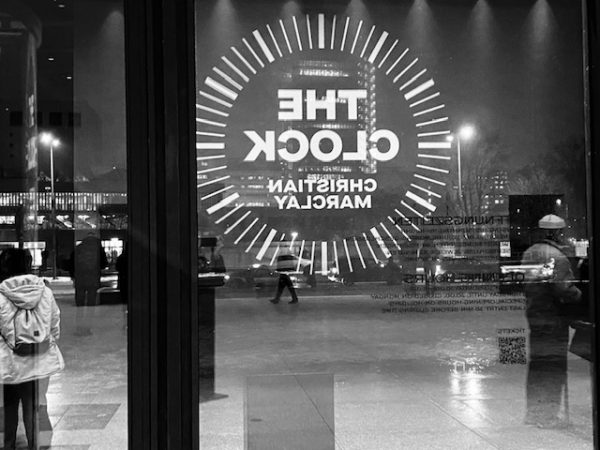
What does the „social“ have to do with time. Well, time is a perfect case of a social construction or a fundamentally social construct. The definition of time as „Greenwich mean time“ is nothing but a useful socio-political statement to synchronize time across the world, or previously an imperium. Points in time, as shown on a clock(s), can be helpful to synchronize human behavior. We might want to show up on the same point in time to start or end work. Of course there are thousands of ways in which such synchronization might go awfully wrong. This makes for splendid drama and movies have a long history to capture our attention on this matter. Social expectations, a social, psychological, and even a biological concept in extreme cases (Pavlov effect) make many of us to get a bit itchy, if time is getting short to meet other persons or an expected event is going to happen. A lot of social pressure is transmitted through the ticking away of time. The mechanism to internalize social patterns (for example prayer), via time and the clock, is quite powerful and has been used in movies throughout the history of the cinema. Even the individual endpoint in time is in almost all cases a shared social experience and turns into a kind of socially relevant time. (Take your time to watch The Clock by Christian Marclay).

Time – The Clock

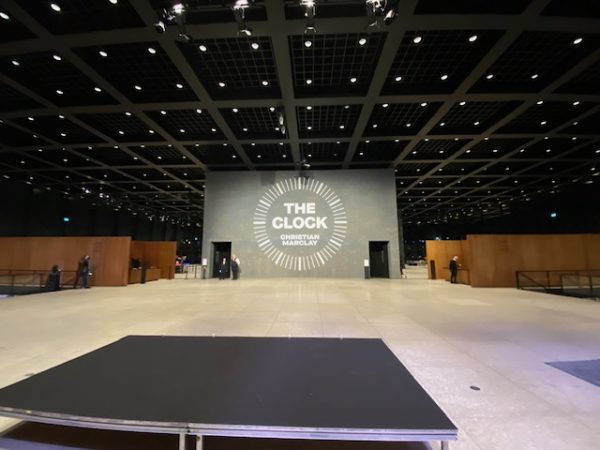
Time keeps puzzling us. The 24 hours of concatenated clips from well-known cinema films are a bit overwhelming or even lengthy. However, this spurs lots of time to reflect on time, on a kind of meta level. We see the clock or clocks ticking in all sorts of situations and environments. Nearly all emotional states can be interpreted relative to a time stamp provided by a clock. Christian Marclay’s oeuvre is screened at the Neue Nationalgalerie in Berlin at a time when we feel multiple clocks ticking at the same time. For the sociologist, there is time on the macro-societal level, like overall socioeconomic development, but also individual time. A single person or a single moment in time may have very different macro-social implications. The possibility to live through the cineastic interpretations of ten to, as opposed to, ten past the hour, are interpreted by us with very different meanings. In a longer or historical sense, the timing of time does not matter that much. Point in time or time as duration, that is the question. Art in cinema can play with this like rock around The Clock. Don’t ask me how much time I spent watching, thinking and feeling through time in this movie exhibition, Should we always measure time with a clock.  Want it or not, we measured by our smartphones all the time and on multiple timelines.

Premium for silence

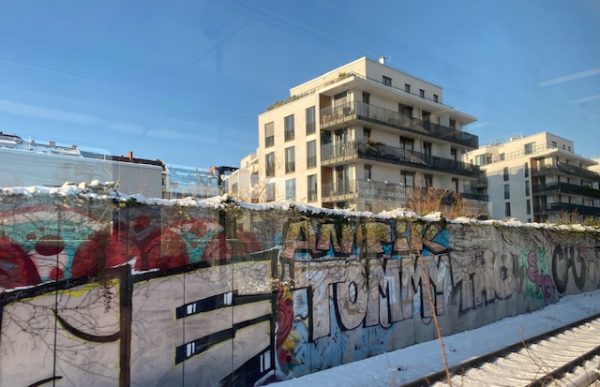
People are willing to pay a premium on housing prices for a more silent environment. In the study Enrico Moretti & Harrison Wheeler (2025) estimate that the construction of a silencing wall near a noisy traffic junction or road will increase prices for every decibel of noise reduction by about 3%. Distances closer to the noise shields get higher increases and this mechanism works even up to 400 meters away from the isolation. The investment in decibel noise reductions (not statistical noise) meets a willingness to pay a premium on housing prices. Investment in positive environmental effects (silence) have an obvious marketable premium value. This is most likely just the obverse effect that noise nearby housing is penalized and part of the social mechanism of gentrification. Housing prices and rental costs are known to be powerful drivers of gentrification as well.