Sink / Rise

Nick Brandt presented his engaged photographic projects “The day may break” in Brussels at the Hangar Gallery space in Brussels (2025-9-21). The photographic work spans the globe to document and tell the story of a an endangered planet. The environmental and social fabric is at risk of an unprecented scale in the 21st century. Rather than producing hours of documentation, Nick Brandt focuses on images that stick. His “mise en scene” is meant to haunt us. And it succeeds in it. In the best sense of a tradition of a “photographe engagé” he intends to convey messages, even whole narratives to us about and from people in remote places, who are endangered through our inaction or paralysis in front of the challenges posed by global warming and climate change as well as the social and societal consequences.
We can save people from drowning in floods and rising sea levels. The chapter Sink / Rise of this project was produced with people from the Fiji islands who participated in the futuristic scenario of a sunk island. Without accusations, these people question us. Why? How? What for? Where to? – without speaking a word. They spend time in on a sunk island, surrounded, submerged by beautiful, but morbid, turquoise water and the graveyard-like remainders of a broken coral reef. These are photographs not of these people, but about them, about their likely fate, and (very important) produced with them as empowered actors. May they have a chance to rise like a phoenix from the ashes from these photos.
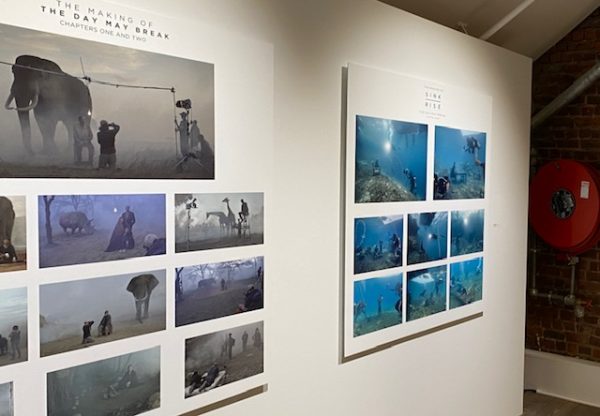
The documentation on the “Making of …” (image below) as part of the same exhibition allows transparency and additional insights into the artist’s work and proceedings.
(Image: Hangar Gallery, Brussels 2025-9-21, On the making of Sink / Rise by Nick Brandt)
 

Marc Aurel critics

In the literature on and about Marc Aurel (Brenan 1882, pp. 484) the end of the ancient world is mentioned frequently. This refers to the beginning of the end of the Roman empire and the rise of Christianity to be become more influential. What caused the decline? The nepotism in the governance structure through the placement of family members to influential positions and as successor alienated many followers who previously believed in the high moral standards advocated by Marc Aurel.
Justifications of superiority by social origin are standard at the time of writing, but Marc Aurel did not see the potential of a more equitable distribution of offices. Women were relegated to subordinate or no public positions and are not mentioned with respect to  the importance of reasoning or social competence either, none but one in his acknowledgements (Book 1). The discrepancy between the formulation of virtues as well as ideal standards versus own practices of hierarchical leadership, recourse to slavery and brutal upholding of the empire should not go unmentioned.

Chatbot Me We

In order to dig deeper into the functioning of AI, I deemed it expedient to construct, for example, a simple chatbot on a limited knowledge base from my own writings on AI (link to reader in previous blog entry here).
A toolbox from Google offers powerful assistance in such an endeavour. The outcome uses only my input text and no other sources. It is dynamic in the sense that it interprets questions and searches within the text file provided only. The answers are edited with a LLM (large language model) and provide flawless English texts. You can try it here using catchat as magic formula and Google account so far.
With a bit of programming knowledge (htlm, python, Java) and related learning sites it is feasible to come up with a “static” chatbot hosted at a free of charge provider as well. For learning purposes this step by step building and coding of a chatbot is helpful. The outcome is rather limited or requires a lot of time to increase the scope of Q & A interactions and to move from a static (predefined Q & As) to dynamic ones.
Full control of answers, excluding any hallucinations and high-speed replies, come at a cost. Take a look here. It is a very basic version so far, just to get the idea of it. full web address:
https://schoemannchatbot.eu.pythonanywhere.com/

AI Podcasting Me

Content producers have lots of tools at their disposal to get their content across to very different audiences. For some time the traditional media of newspapers, radio and TV were the prime outlets for content distribution. Social media have changed this to many more senders of content than before.
In the 21st century, AI allows to automate media productions. In a trial run I just used Google’s NetbookLM to generate 3 podcasts based on my own writings on AI over more than a year by now. The result is available and using artificial voices it is possible to broadcast yourself without revealing your own personal voice. I am not done with the evaluation of the outcome(s) yet, but the first impression is an interesting other form to spread content.
More tests are necessary to check for hallucinations as well.
Here are the links to my virtual podcasts:
AI, intimacy and insecurity

AI, Society and the Human Spirit

AI and the Human Mosaic: Navigating Our Interconnected Future

Mind Map Me

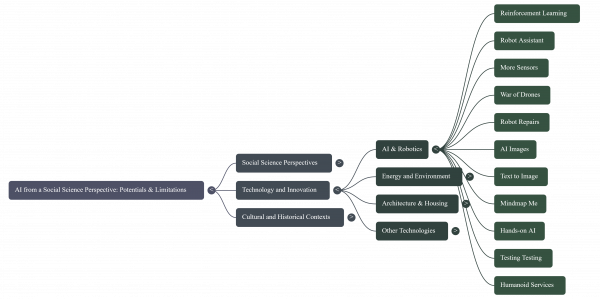
AI tools are great to assist learners in the task to get more structure into larger documents or books. It is up to the teachers or lecturers to use the tools themselves to pre-structure content they want other persons to learn. Mind maps are useful to summarise larger content and offer a tree-like structure to a text moving from the general to more specific content and then into details by at the same time not loosing sight of the overall structure of the content. Basics can be provided by Google’s NotebookLM and you may rework this basic structure yourself linking the mind map to the detailed content. Learning may start with a comprehensive mind map at the beginning to move on to details. Alternative versions of a mind map are equally feasible to come up with new combinations of subjects. This can be done using the tags of the blog entries in addition to the categories and fast search keywords.
It is a fascinating way to mind map yourself based on longer texts written by yourself. This clarifies a bit what potential readers or learners are likely to retain from reading your document(s) or blog entries.
Its worth trying, as others will most likely use these tools from now onwards anyway, whether we like it or not.
Image: Google NotebookLM Mind Map of my AI blog entries 2025-9-9.

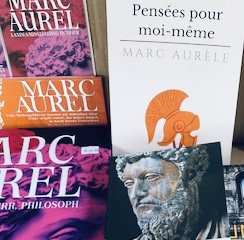
Marc Aurel Philosopher

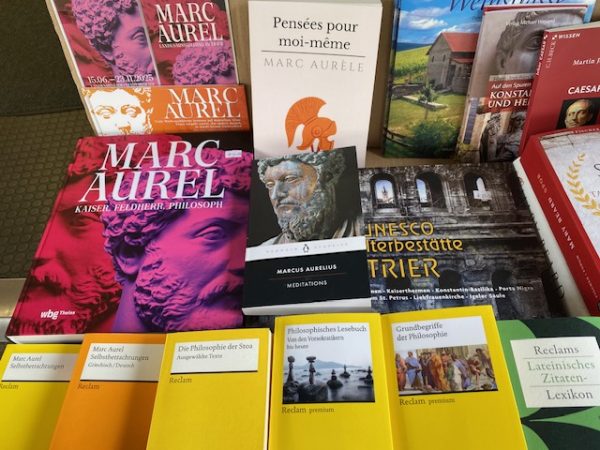
2025-9 marks an additional landmark in the achievements of the late Marc Aurel. In the Roman built city of Trier, 3 museums offer exhibitions on the life, ideas and imperial governance style of Marc Aurel. Libraries and bookshops around the city portray a wealth of books and studies by and about Marc Aurel as well in many languages (image below 2025-9). The stoic author and practitioner has served as an example of a leadership style which became for many subsequent leaders a hard-to-achieve precedent. The writing style of Marc Aurel in short paragraphs and aphorisms proved highly accessible, although his readership swell only after a Latin translation of his Greek original appeared in the 16th century. The title “Meditations” in English, “Pensées pou moi-même” in French or “Selbstbetrachtungen” in German demonstrate the difficulty to get to grips with the author’s intention and objectives in writing down these reflections on life, ethics, humanity and good governance. Through the use of Greek rather than Latin he puts himself in the line of Greek philosophers rather than the succession of Roman emperors. As the numbers of bad leaders still outnumber the good governance style advocated by Marc Aurel, these exhibitions in the Simeonstift, the Landesmuseum and the Stadtbibliothek are a perfect opportunity to demonstrate that good governance is something that can be studied and learned even in the distant Roman history.  

Former Crypto currency

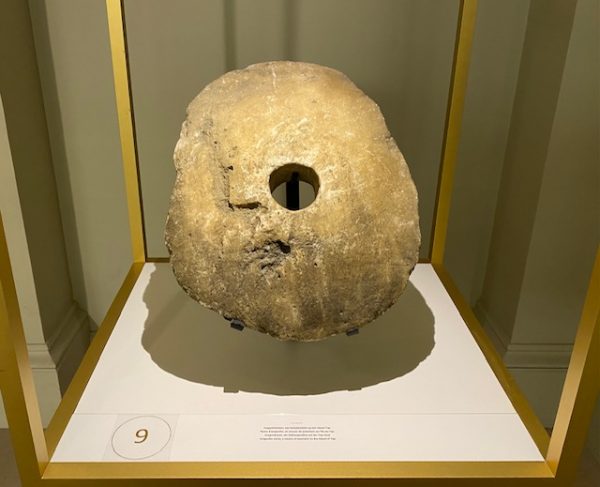
The rationale behind a Crypto currency is quite an ancient idea. In the absence of a central bank or in addition to it, people may choose to establish their own currency or currencies. The central idea is to secure assets (currently and in the future) as well as to enable an exchange between a community of people. The Museum of the National Bank of Belgium (image below) has a “Yap stone” on display which originates from the Pacific Yap Islands. Even very heavy and big stones served as wealth storage. The idealistic value of a particular stone conveyed additional value. In the true value of the word these people were banking on stone money in a way not to distant from what Crypto currency embodies today.

AI in Central Banks

Yes of course, Central Banks will use AI, and some do so already (Kazinnik and Brynjolfsson, 2025). Beyond the standard application of AI by its employees, there are many potentials to use AI to analyse and publish data at a faster rate or in order to detect financial crimes. Similarly, data collection based on webpage harvesting might yield new indicators of inflation, expenditure for environmental risks (heat waves, flooding etc.) earlier and in addition to the normal set of indicators. Hence, Central banks might be better and faster in forecasting inflationary tendencies using more AI tools in their daily routines. Of course, it is difficult to predict a disruptive tariffs policy of a major economic player in the world economy, but the calculation of more, even hallucinatory scenarios become more feasible. It is feasible to weigh overall risks of different scenarios to the economy.
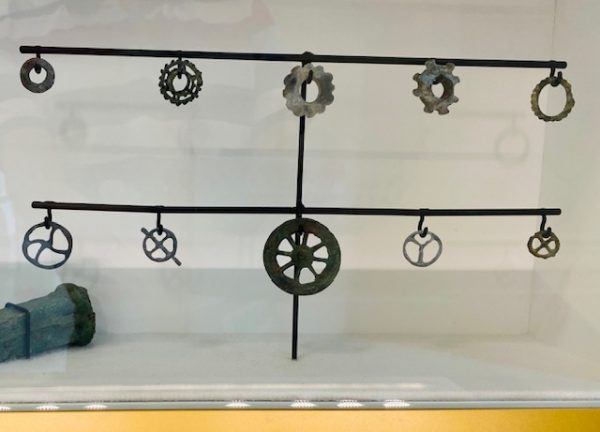
(Image: Celtic coins, Museum of the Belgian National Bank)

Claudel & Hoetger

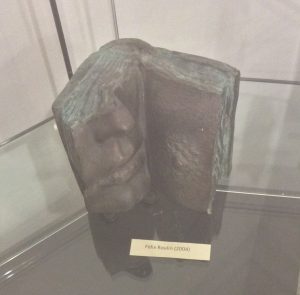
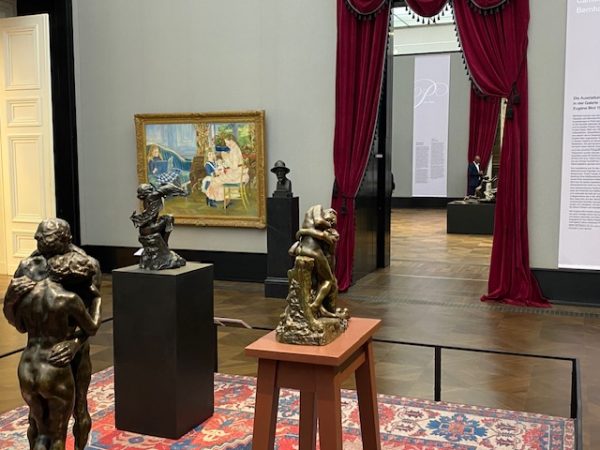
It is well known that artists joined other artists and groups to get inspired. The entangled relationship between Camille Claudel and Auguste Rodin has become a special example of the tricky relationship between learning and co-creation or inspiration. The role of galerists in building a reputation for artists is less well understood. The “Alte Nationalgalerie“ in Berlin opens up this black box a bit through juxtaposition of Camille Claudel, Bernhard Hoetger as disciples of Auguste Rodin. The influences are rather obvious, yet each disciple developed her/his unique style. The emancipation was not without frictions. The galerist Eugène Blot organized a joint exposition of both disciples in 1905 in Paris, which is partly reproduced in Berlin 2025. Great work by the curators of the exhibition Yvette Deseyve and Sintje Guericke who managed to bring together unique sculptures from 3+ museums and a great explanation of the links between the artists as well as the proximity of ateliers. (Image: view of showroom in Alte Nationalgalerie Berlin, Claudel & Hoetger 2025)

Jewish Heritage

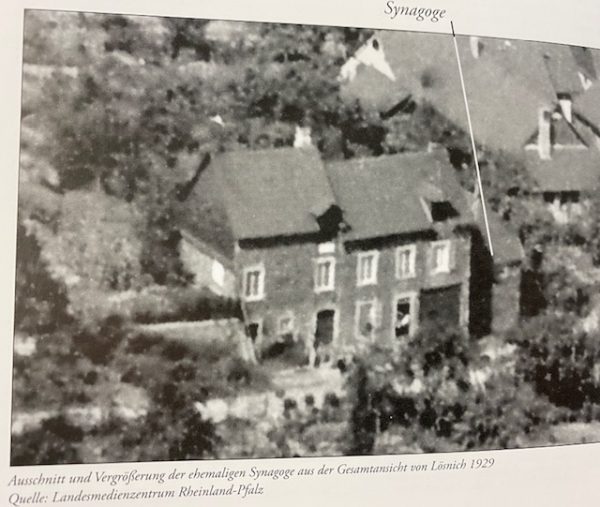
In the Germany of the 21st century, we have to dig deeper into history to understand the Jewish heritage due to the horrific terror of the Nazi-regime and it’s millions of supporters. The traces can be found in some historic photographs even in the countryside. Marie-Louise Conen and Hilde Weirich (2010) have thoroughly studied such documents for the Moselle village of Lösnich. The little annex to a house served as a Synagogue (image below). The village has a history of Jewish settlements which extended to neighboring villages as well. Interestingly, the heritage of Napoleon’s occupation of the Rhine and Moselle regions brought equally for all men (not yet women) and the separation of the state and religion making Jewish life, property acquisition more easy. The tolerance of the 19th century was then reversed by Nazi Germany again. History is present in many places, where we do not seem to expect it nowadays.