From AI to xAI

As humans, we like the feeling to be in control of things. This applies even to immaterial things like religious beliefs. Generative AI has created problems with its hidden structures and lack of transparency of their applications of algorithms (and combinations of algorithms) to basic data bases of knowledge and information. The use of xAI, which stands for explainable artificial intelligence, can address some of the concerns about the lack of transparency and explanation of responses from AI systems. Many users want to know in advance about the consequences of the use of specific words or notions in an instruction to AI. The interpretation of each single word by xAI can inform about the precision of interpretation (cheap versus cheapest, for example) or highlight the sensitivity to gender-neutral language or not in its guidelines. Additionally, ex post the xAI could indicate alternative notions in a prompt and, briefly, how this would affect results.
Yes, there is a trade-off between brevity of answer and room for explanations. As in psychology, there some value in a “thinking aloud” procedure for respondents in order to better understand (implicit) the reasoning behind a reply. xAI takes us a step further in this direction of asking AI to think aloud or more explicitly in a human compatible way of logic and broader reasoning.
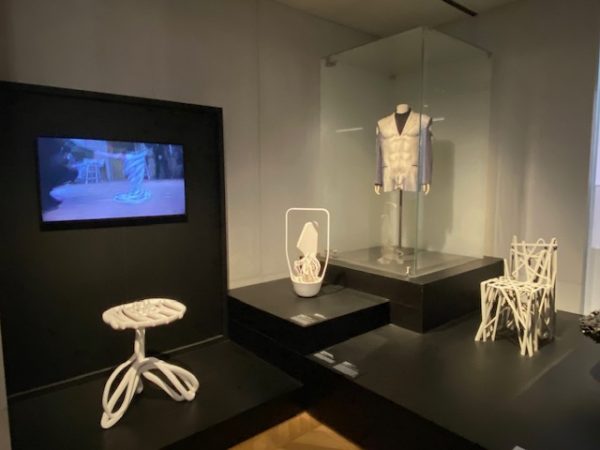
Put AI on the psychotherapist’s bench and xAI will be to the advantage of many more humans again. Humans just don’t like black box systems that lack the necessary as well as sufficient transparency. (Image on the right: Patrick Jouin, chaise solide C2, MAD digital humanism).
Classic Farces

Molière’s theatre pieces were popular pieces. Born with the name Jean-Baptiste Poquelin and son of a rich “tapissier” of the rue Saint-Honoré in Paris, he made a tough choice to devote his life to touring as a ”farceur” and comedian, having studied also law in Orléans before. Only after his first successful performances, farces and theatre plays, he could afford to buy the theâtre du Palais Royal, despite a bankruptcy about 20 years earlier with his own theatre. The much later title “Troupe du Roi” (of Louis XIV) and a pension by the King assured a financial and political independence rarely found in this period of classic theatre.
Molière’s “Les fourberies de Scapin” was written towards the end of his life and as a classic farce in the 17th century. The story is full of funny scenes and witty dialogues, which make it a great “intergenerational” theatre play even today. The plot about the institution of marriage addresses a cleaving social and legal construct “marriage”, which continues to excite all generations and across centuries.
(Source: Histoire de la littérature française XVII siècle. Robert Horville  in (Georges Décote series editor)

Sociology in Theatre

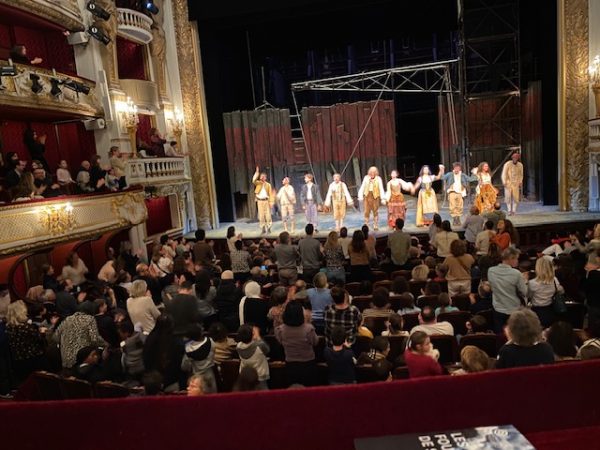
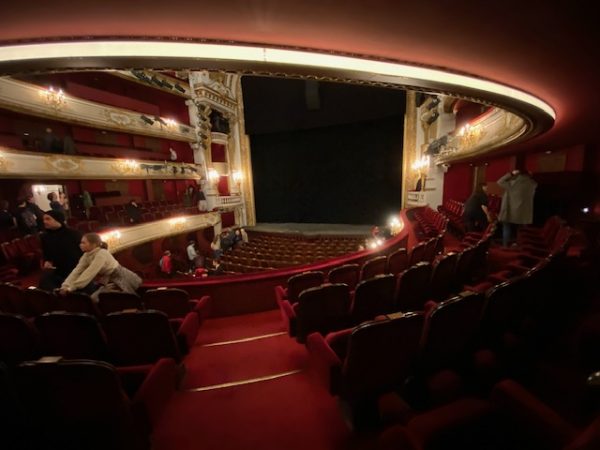
Thanks to the inspiring direction by Denis Podalydès of Molière’s “Les fourberies de Scapin” we can experience the fruitful application of sociology to classical theatre production. This combination of thoughts has been performed at the “Comédie Française” for more than 7 years in 2025-11. The accompanying booklet of the performance mentioned the ample inspiration of Denis Podalydès by the French sociologist Pierre Bourdieu. Personalities in Molière’s theatre are represented as incarnations of the “habitus” each character stands for. Such an interpretation of the roles in the theatre play, raises awareness about the subtle differences between personalities. Even two rich men may differ in their habitus, because their fortunes are of different size or kind, yet they may share even more personality traits. Molière was a particularly crafted author, director and actor to stage such subtle differences, which are embedded into societies often across generations.  

Polypharmacy issues

As we age, we become more likely to confront polypharmacy issues. Polypharmacy is defined as taking 5 or more medications per day. The study reported in The Lancet healthy longevity by Payne et al. 2025 had participants with a median of 4 health conditions and a median of 8 prescriptions. Even a comprehensive set up which involved several experts from medical doctors and pharmacists did not manage to achieve a significant improvement in polypharmacy outcomes in this experimental study with otherwise carefully matched intervention and control group. However, the mental health (measured in patients as “health-care-related quality of life”) slightly increased and the “treatment burden” experienced by patients was slightly reduced.
In combination with a previous study the probability of errors in nurses, who are the prime persons responsible for the administration of medications in institutionalized settings, the reduction of potentials for errors like they are to be found in polypharmacy should continue to be a prime target of this research in future. Together with the knowledge about the prevalence of functional illiteracy at older ages, polypharmacy remains a critical issue on the public health agenda beyond the experimental settings in this study.

Codes of Emperors

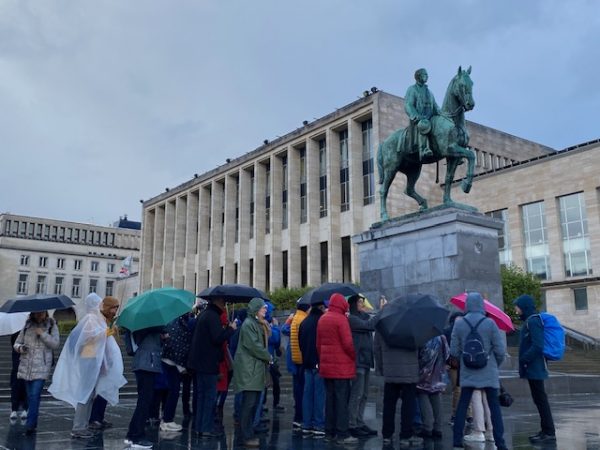
Even in the 21st century we spot the ancient codes of emperors. In Brussels the statue of King Albert, who ruled until 1933 and celebrated the first centenary of the Kingdom of Belgium in 1930, shows the Emperor riding a horse without saddle. This iconic position was started as a symbol of a powerful leadership by Marc Aurel and continued by Napoleon’s reign as well as several other ones.
The position on the elevated podium of the emperor on the horse, which further raises him beyond the level of the people, all contribute to the idealized perception of the king above the people. Such a vertical or hierarchical perspective on society or even mankind, including the colonial approaches of the emperors, are the lasting attributes of those times.  According to Els Witte et al. who wrote on the political history of Belgium, King Albert I was also named King Knight by some.
The portrayal and self-portrayal played an important role already centuries ago. No surprise that democracy has brought about an avalanche of idealized self-portraits or “selfies”.

Weaponized Interdependence

The shift in the international political system is clearly expressed in the contribution by Henry Farrell and Abraham Newman in “Foreign Affairs” (2025 (Nr. 5) p.25). “… governments must navigate a terrain with many more players, figuring out how to redirect private-sector supply chains in directions that do not hurt themselves while anticipating the responses of a multitude of governmental and nongovernmental actors.”
As the number of bigger global players increases, the complexity to identify best strategies increases as well. Going it alone is only second best to coordinated actions. New matches of interests may result in the medium term. This could entail enormous long term realignments.
Russia attempted to play the China, and subsequently the India, card to achieve new strategic partnerships in this multipolar world. Other international players test new forms of alliances and strategies (like hybrid wars) in this period of weaponized interdependence as well.
The weaponization of such interdependencies puts critical limits to the basic economic rationale and a world building on comparative advantages together with trade, rather than going it all alone or try the coercive way of exploiting dependencies of mineral resources, supply chains, computing power and AI.
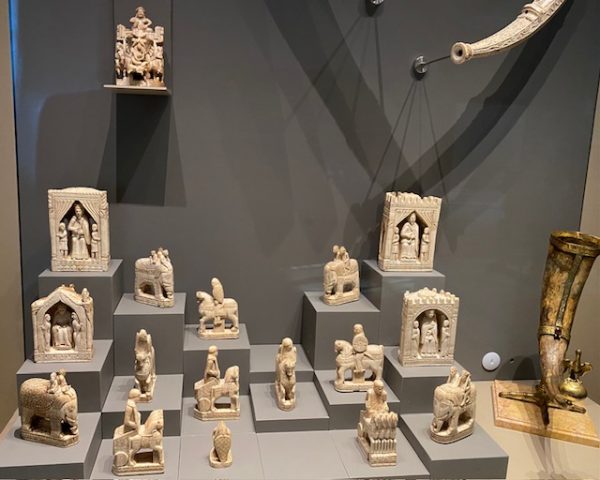
(Image: Chess figures attributed to Charlemagne, dating from 1080-1100 ” BNF Galerie Mazarin 2025-10)

Balance and justice

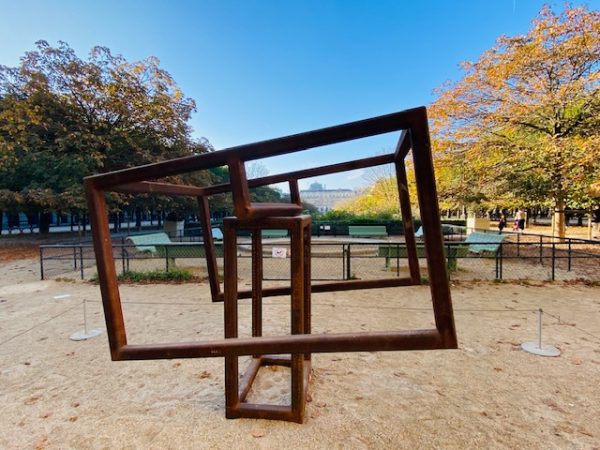
Justice is often represented with the symbol of a balance. This dates back at least to the Roman times when the Roman law reached an unprecedented spread across Europe. The philosophy of law dating even further back to the Greek philosophers, notably Aristotle, founded comparative law with his comparison of constitutional principles in various Greek city states of his time. Striking the right balance, therefore, is encrypted into law, legislation and the American constitutional principle of checks and balances. In Paris the sculpture in the “Parc du Palais Royal” of heavy metal balance at the opposite end of the park is moving as well. Facing the ”Conseil d’état” and the “Le conseil constitutionnel”, this is a forceful reminder of the basic principles of a republic and democracy.
In the 21st century, particularly, since the weights attached at each end of the balance pull more forcefully at the moment in several countries.
Institution building and safeguarding the existing ones have become “the challenge for democracies in 2025 in many “centuries-old” democracies.
(Image: Sculpture by Raul Mourao in Parc Palais Royal, Paris 2025-10)

AI as individualizer

In a one pager in the journal “Rolling Stone” (2025, p. 9) Bruno Patino writes about the legendary David Bowie who was the first rock musician to launch a new song on the internet before it became available as CD (Telling Lies, 1996). As a pioneer in co-creation, Bowie anticipated somehow the trend and wish of people to personalize preferred songs even further and distribute such versions among friends. In this process, AI has become a powerful tool to push individualization even further and the digital social media allow even broader audiences beyond a more narrow circle of friends. Music maybe setting the trend  for some in the same field, other creative fields might follow the footsteps. The need to co-create collective experiences and participate in collective musical moments is likely to rise again as well.
Good news for music festivals across the world. Live concerts are the new form “collective individualism”.

Deus ex machina

The term “deus ex machina” used to be applied more in its figurative meaning. With the rise of digital tools like chatbots, facilitated and enhanced through AI, God is speaking to us not only in multiple languages, but also from our pockets through our smartphones and headsets. This is a rather recent form of “deus ex machina”, which we did not expect some years ago. The bible as e-book or pdf-file has been around for some decades, but only more recently we can enter conversations with God through chatbots as another version of “deus ex machina “ about almost everything (and pay for it via digital credit card). Programming of such an AI-tool is easily achieved. AI will prepare a weekly or daily sermon or prayer for you, following your predilections of your favourite quotes of the bible. An interesting twist to the programming is to use authorized as well as unauthorized translations of the bible across several centuries.
Another interesting enlargement of the input data base is the inclusion of interpretations and discussions not only within your own religious community, but beyond. Maybe the discussion of several different religious chatbots with each other could prevent aggressions due to differences in basic beliefs. These “dei ex machina” might further our understanding of what makes us humans different from machines and machine-based solutions of human conflicts.
As genetic clones of ourselves have become already technically more feasible, our digital alter-egos (the comprehensive collection of traces in the internet and digital images, plus social scoring) help to empower those “dei ex machina”.
This kind of “Brave New World” asks us to be rather brave ourselves.
(Image: interior St Denis Basilique Cathedral Paris 2024)

Inclusive images

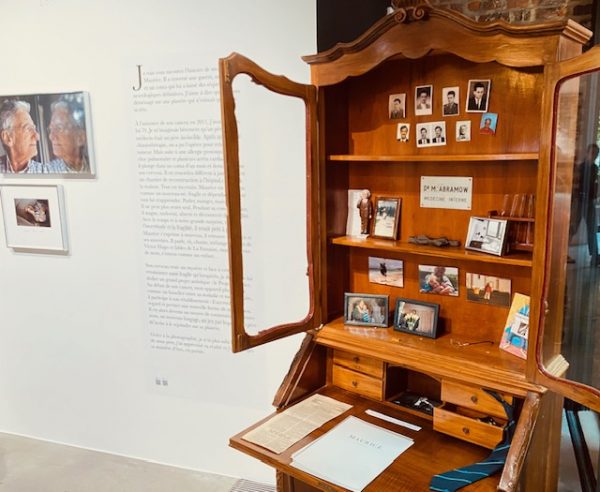
In the last 2 decades we can observe a strong concern among photographers to broaden the spectrum covered by images beyond well established imagery of non-binary gender. Diversity in imagery has taken a broader scope to extend, for example, the age range of people who are portrayed as central topic of exhibitions. The topic of mental diversity is more recent and needs a similar or even increased sensitivity to do justice to the whole spectrum of people. The photography of people with mental challenges necessitates a much more careful approach to the persons and complex personalities the photographer intends to portray. Trust and the development of trust of more vulnerable persons is a time sensitive process. The work by Charlotte Abramow “Maurice, Tristesse et rigolade” is a fine example of a photographer who portrayed over a long time of taking care of her father, previously a medical doctor, The years of the final stages of the life course of her father have been the subject over many years as the survivor of an extended medical coma had to struggle with the tough challenge of re-learning basic life skills again.
Abramow portrays her father as an actor of his “second life”, where the borders between reality, reconfigurations of his memories,   and “mise en scene” to co-produce the images. The images go far beyond the portrayal of aging and mental challenges as a deficit of persons. Yes, it is an integral part of these persons, but there is so much fun and positive emotions that derive from the intensive collaboration of actor, father and photographer that the images stick with us for a longer time. The presentation of props along with the photos creates an immersive installation, which strengthens the emotional bonding with the inclusive images of the later phase of the life course of Maurice.