V for Value


Value in its singular form refers for most people to the value of things. Since Karl Marx we have been fighting about the surplus value of a worker’s work. Nowadays, we have to deal with speculation bubbles on the value of property or even basic elements of nutrition (Water, wheat, energy). Max Weber introduced us to the rigorous analysis of value judgements. In political science the plural “values” refers to basic human rights as fundamental values of humanity. Many other associations with the letter V pop up and arouse emotions: victory, video, view(s), vision, visit, voice, vote, vulnerability.
Creating lasting value seems to transform itself into part of our system of values later on. The longitudinal dimension of value is often neglected, particularly in the short-term focus of much of economic reasoning. Value over time, in addition to the distribution question, or as part of distribution over time, excites researchers of inequality and policy design for generations. Approaching the end of the alphabet increases the stakes of the “endgame”, it seems. Value for me, might not be of value for others. I hope you have found a person that values much of the same as you do yourself.
Interpersonal value, value exchange and intertemporal value are  own fields of research. Since the Scottish enlightenment and Adam Smith’s work on “The theory of moral sentiments (TMS)”, reciprocity in value exchange has been an issue, well before the utilitarian turn in his own writings on “The wealth of nations”. Even Adam Smith refers to happiness and interest as a kind of value and “very laudable principles of actions” (part VII.ii.3.15 in TMS).
Children learn and experience value as natural part of growing up. Material things which you valued highly as toddler, you are ready to trash or exchange a couple of years later at much lower prices. Above which monetary value are you ready to trade in your humanitarian values? Never? History and bargaining theory is full of experiments and experiences that teach us otherwise. Corruption is the prominent example of exchanging or trading material value against immaterial values. Reading Kwame Anthony Appiah on “Experiments in ethics” is highly instructive. This bring me back to the economist joke I used to tell in lectures: You know that you’re an economist, if you ask your child, whether s/he prefers 20 Euros in cash, a trip to an adventure park later, a basket ball set or a pizza party for the next birthday. Economists do all this to find out about the value of each item, the preferences, the time frame of delayed reward or discounting of value also called the net-present value. Reading up to here is equal to the value of, maybe, an online bachelor in economics or social science. In your very own life review of learnings you then can estimate the value of your readings to you, your community or humanity. Alternatively, enjoy the joy of just living in peace with optimism.

T for Time

“The times they are a changing“, end of blog entry T.
We live time forward, but we seem to understand it only backwards or in retrospect. Towards the end of each year, it is common practice to look back and review the last 12 months. Then we imagine what will the future be like. Our concept of time is past, present or future oriented. In classical physics we reflect this with a depiction of time on a linear axis. However, modern concepts of time include Einstein’s relativity theory, whereby in 2 different places time may run with different speed. Similarly, quantum physics allows that the causal relationship between 2 physical states is no longer observable in a logic that follows linear time. A particle may exit in 2 states in parallel. Hard to imagine, maybe, but demonstrations of these effects are found in textbooks for pupils already. Our grasping of the world around us is enhanced through scientific rigour.
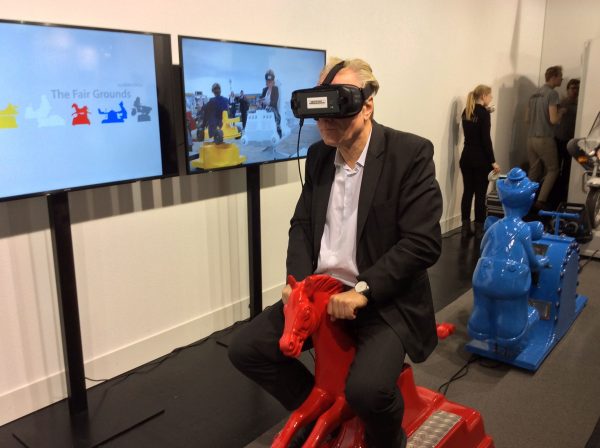
Story-telling also plays with time frames. Analepsis and prolepsis are common techniques constructing a story, a film or any form or narrative. We tend to perceive chronological time even as boring. Our memory is also playing tricks with us on time scales. When was …? Additionally, we have multiple clocks ticking away. Time to submit a report, pay taxes, until the next medication or the psychological concept of “time until death”. Strangely enough, depending on which ticking clock we focus most, our behaviour is likely to change. Mobile time management tools have been created for centuries for us to handle all this jazz (call them a watch). They all have not changed our concept of time, only the precision to measure and cramp more activities or the same one faster into our daily life. Happier since? Test your self-efficacy, more general than time management! Try meditation to slow down the pace, use an app!? I started to clone myself with a virtual presence to experience the quantum effect of my life. Podcasts are played with 1,5x the normal speed now. Rhythm and music are the remaining traditional metrics of time. Even there, John Cage’s piece “silence” managed to abandon the time reference, partly at least. Okay, time is up, next letter, please.

N for Nature

The first association with nature for me is the nature surrounding my childhood. Rivers, forests, vineyards, mountains. Maybe a little bit of German romanticism surrounds this. I still enjoy occasionally listening to some nature romantic songs (Lieder) from Schubert, Schumann, Flotow or Mahler. Beginning with adolescence natural sciences took over, but what does natural really mean in the natural sciences. In the “Encyclopedia Britannica” the term natural has already been dropped. What has been referred to as natural sciences is just found under the term sciences. The social sciences or psychology are not included under entry of sciences. One of the high reputation scientific journals is still named “nature”. Only a small fraction of the papers deal with what ordinary people would associate with nature. The nuclear fusion or nuclear energy research and applications in practice figures still prominently in there. Ever since Tschernobyl, Fukushima or Hiroshima, horrific  dangers are associated with nuclear energy. The power plant of Saporischschja in Putin’s war, dominates public concerns in 2022. The natural sciences frequently are certainly not researching in the interest of nature. Hence, the social sciences need to deal with the social consequences of (natural) scientific advances. Science and technology have an intrinsic link to each other.
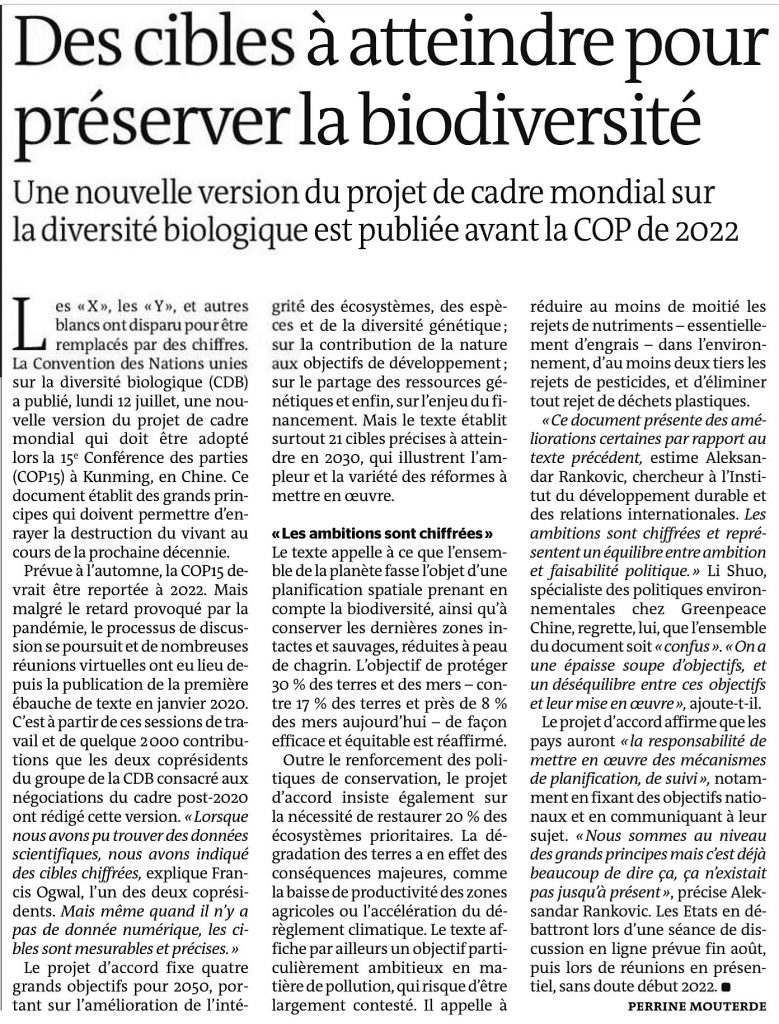
The loss of biodiversity is the most obvious demonstration of how cruel our own species is towards any other form of live. Not only is demography reminding us that with 8 billion of us we might further contribute to our own overpopulation, we might sooner or later destroy the whole planet either slowly with polution or through weapons of mass destruction. Poor nature, instead of pure nature is our destiny. Our western lifestyle is not sustainable and  we have no right to impinge on the rights and resources of future generations of us or those who have not poluted the planet like us in other parts of the world. So, when did it all start to go wrong? Probably our creed for more of everything has been nurtured for far too long. Less is more has to replace it somehow. This is also part of our nature. 

L for Law

Contrary to a popular misunderstanding. Law is not boring. The history of ideas is full of exiting projects based on laws. Starting with the foundation of empiricism, i.e. the comparison of laws governing the different Greek city states pioneered by Aristotle. Considering law from the perspective of legislation gives it an actionable touch and makes it more exciting to many persons. Contrary to a static perception of law, laws can be changed and are subject to interpretation continuously by courts and judges. The fascination with law might start with the philosophers of the French enlightenment like Montesquieu. “De l’esprit des lois” – explains already the need to look behind the literal text of law. What is the spirit of law, becomes the driving question. Not only the categories of countries like republic, monarchy and despotism were argued by him, but also the separation of powers into an executive, legislative and judicial power is his original contribution. These principles govern the German “Grundgesetz” and are a common understanding of the founding states of the European Union as well as a potential breaking point.
A sociological perspective on law is formulated by Niklas Luhmann (short intro in D) and highlights the danger of laws as a self-referential system. This dominated by experts who develop the system further independent of the concerns and understandings of wider society. In order to understand this concern, it is probably useful to think of climate change as an urgent problem. Bio-diversity has for much too long not been of much relevance for legal founding principles of our constitutions. In the same vein, women judges or diversity in the legal profession is a point of concern. Majorities versus minority rights create intrinsic tensions in law, legislation, execution and interpretation. Analysing the half-life of laws is interesting, i.e. how fast do they really change or get abandoned altogether. Equality in front of the law remains a thorny issue. It is a huge issue when moving from law to justice as primary concern. The most interesting point is the view of law as a changing matter, hopefully for the better, but this is another question altogether. Reveillons-nous l’esprit des lois ! (pas seulement au Reveillon).

H for Health

Health is not just a personal issue. Of course, in modern times most people are primarily concerned with their very own health. Particularly, if pain is involved, we tend to put ourselves first. Only various religions and ideologies put God or some other bigger thing, for example identity, in front of personal pain. This bigger thing is believed to decide wars, like Russia trying to anihilate Ukraine. Russia’s military agression stands against the fight for freedom, democracy and perpetuates corruption.
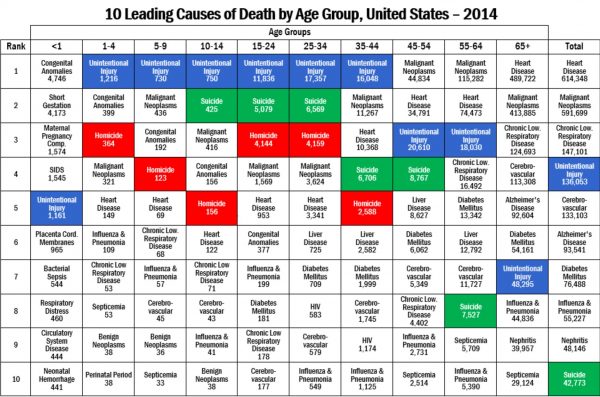
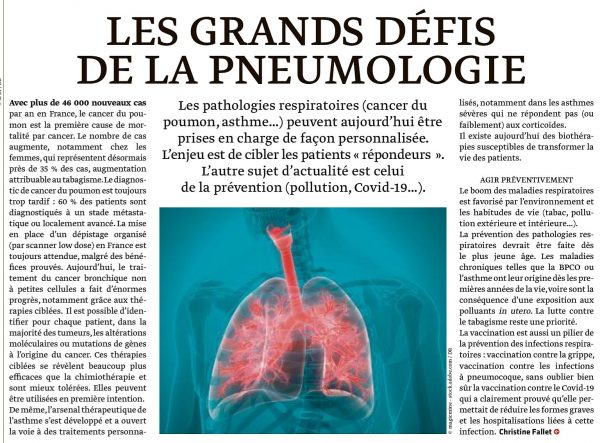
At the beginning of the Corona-Crisis most persons and societies still believed health and infections are only a very personal issue. Researchers with knowledge about “public health” knew already, viruses have accompanied humanity since its beginnings and maybe continue to do so even beyond our disappearance. Hence, addressing the topic of society and health from a public health perspective has become much more popular as prevention is key to fight pandemics as early as possible. However, for prevention to work you have to involve and rely on individual behaviour. As soon as we leave the personal issue of health, we have to address a whole set of other topics like patient – carer relationships, cooperation, interdisciplinarity, public expenditure, public-private partnerships, corruption or behaviour of large crowds.  We have developed antidotes against most difficulties, probably the strongest one is solidarity. Social systems that address inequality of provision (e.g. between regions) or inequality in access to and quality of medical services (e.g. doctors, care or pharmaceuticals) have a strong role to play. Structural, financial and political issues play a powerful role in health. As we think more about prevention and costs we start to understand that we have to start with nutrition, mobility, mortality and our western style of life in more general terms, particularly if we think about health on a global scale. There is no planet B where we could travel to, once it has become impossible to lead a healthy life on our planet. Topics of health over the life course or ageing will need a lot more attention. Findings on the risk of suicide after onset of physical health problems (Link to study) asks for fast responses. Access to digital tools might be part of the solution like “Sympatient” as well as being part of the problem like data leakage.

Human Rights

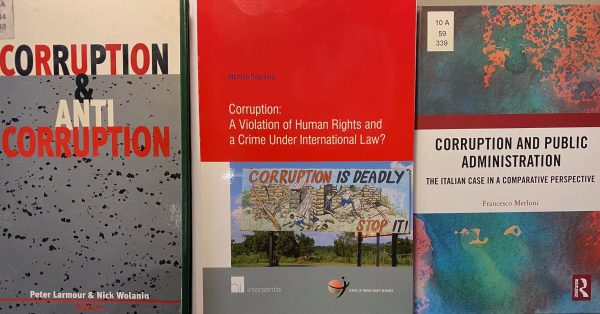
It is 10 years after the publication of a Ph.D. thesis on “Corruption: a violation of human rights and a crime under international law?” by Martine Boersma that at the top level of the European Parliament and the International Trade Union Congress the smell of corruption is investigated by police and judges. Following “Qatargate” (Radio France Link) this means that the persons accused of corruption, forming a criminal group and money laundering have changed their lobbying in return for accepting cash. Exploitation of workers and more than 100 deaths in Qatar was the result, due to the heat when building the stadiums for the Football World Cup which took place in 2022. Following the recommendations of Boersma corruption in this respect can be interpreted as these persons contributing to and being guilty of abusing their political positions to silence criticism and whistle-blowers, and the right for defendants to a fair trial for example. The advocacy to counter corruption with developing international human rights legislation and persecution in this respect is dearly needed now. “This line of reasoning transforms a corrupt act into a possible starting point for legal action, be it at the national level, …, or at the international level by submitting a complaint to a regional or global human rights monitoring body.” (Boersma, 2012 p.376) The International Criminal Court or “alternative such as the establishment of a permanent anti-corruption court, or anti-corruption commission to monitor compliance with the UN Convention Against Corruption should be kept in mind, as well as the possibility of setting up ad hoc anti-corruption tribunals” (p.380). Not much to add to this, act now, before the practice spreads.
Francesco Merloni wrote in his book (2019, p.132) on corruption with Italy in comparative perspective: “when corruption is defined in its wider meaning of maladministration, we are looking at a mass phenomenon which is “sub-criminal”, yet nonetheless with strongly negative implications for the efficiency and effectiveness of public administration and democracy in general.” The practice of excessive salaries of the Italian parliament (p.131) is mentioned in the list of case histories of corruption just like the international event of the EXPO 2015 in Milano with huge construction projects (LeMonde on Panzeri l’ex-eurodéputé). Learning from case studies is best practice in many business schools and probably beyond. Finally, attention should be drawn to prevention of corruption. Here the reading of Corruption and Anti-corruption by Larmour and Wolanin (2001, p.235) offers good advice. The micro-economics of corruption (pp. 119) states for example that “If expected penalties are sufficiently high, bribery is deterred” (p.126). Equally the real threat of a full and explicit audit of operations, promotions and financial transactions might deter corrupt activities. Most importantly the authors state, “the social networks approach to corruption allows the corruption investigator to conceptualise the operation of corrupt networks in terms of power flows and relationships rather than the attributes of actors. The question to be asked by the corruption investigator is not whether actor A is corrupt. The question should be, what is the relationship between actor A and other potentially corrupt actors in the network.” Re-reading some classics of sociology like Max Weber on bureaucracy, but also James Coleman’s foundation of social theory provide basics for understanding social interaction when things go fundamentally in the wrong direction. We might even need to use artificial intelligence to detect corruptive practices to shield and support the trade union movement.

Marx-Wagner

Begleitend zu den Ausstellungen zu Karl Marx und Richard Wagner fand eine vom DHM organisierte Vortragsreihe statt. Die Links (hier) zu den Hördokus sind eine anregende Erweiterung der Ausstellung und stützen die These der Verbindung zwischen Karl Marx und Richard Wagner auf einer abstrahierenden Meta-Ebene. Die Vorträge, Gespräche und Diskussionen informieren und vertreten wissenschaftlich fundierte Thesen. Die müssen gerade nicht von allen geteilt werden, aber eine Haltung zu dem Thema haben die meisten Menschen in der Welt, besonders wenn wir an die Millarden von Menschen jenseits von der westlichen Welt denken. Es ist also auch an uns, diese Diskussion über den Kapitalismus zu führen. Hören wir mal rein. Alle dauern 1h-1.30h!
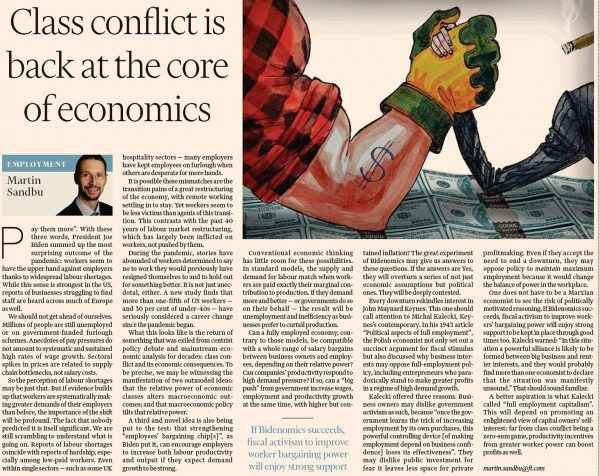
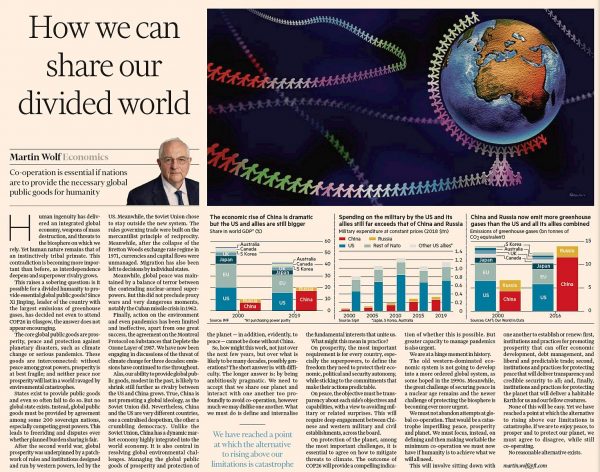
Einleitung,  M&W Kosky + Bisky, M&W Nietzsche, M&W Mahatma Gandhi, M&W Viktoria Kaiserin Friedrich, Ein Artikel aus der Financial Times von Martin Sandbu vom 18.8.2021 und Martin Wolf vom 21.11.2021 ergänzen die Diskussion: Wenn der Kapitalismus weltweit gewonnen hat, was war dann noch mal der Wettbewerb? Bitte öffnen Sie jetzt ihren Computer, Sie haben 3 Stunden Zeit für die Beantwortung. $???$ Danach speichern Sie bitte das Dokument in der Cloud und nehmen es zur Evaluation nach 10,20,30,40 Jahren wieder hervor. Hat sich ihre Meinung über den Sachverhalt zwischenzeitlich verändert? THX for your feedback.

Wagner Kontrovers

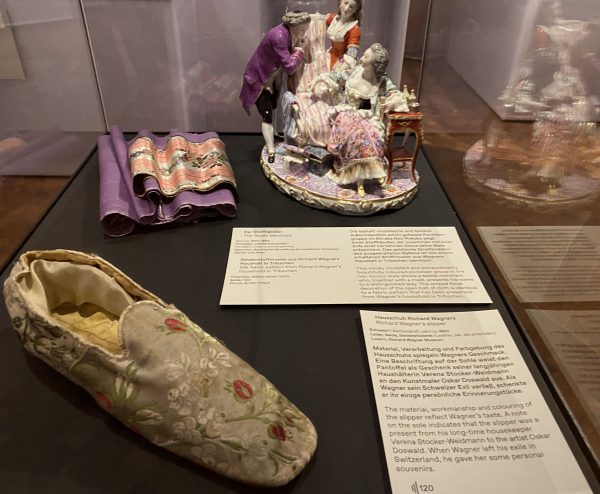
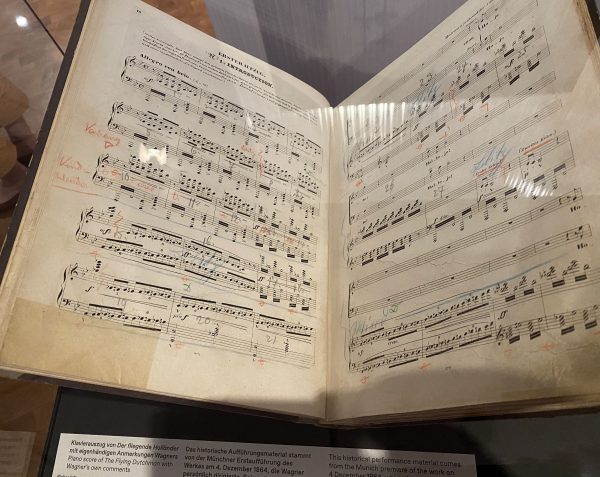
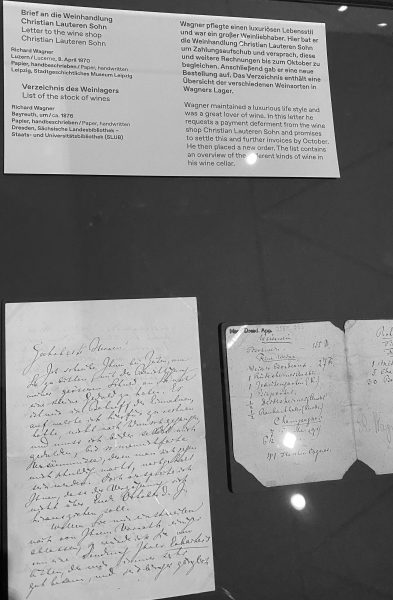
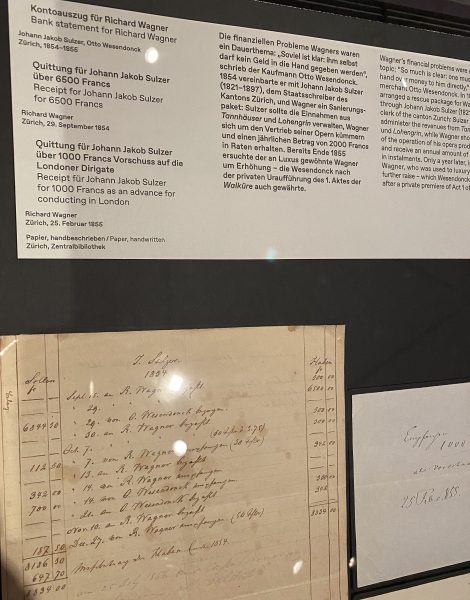
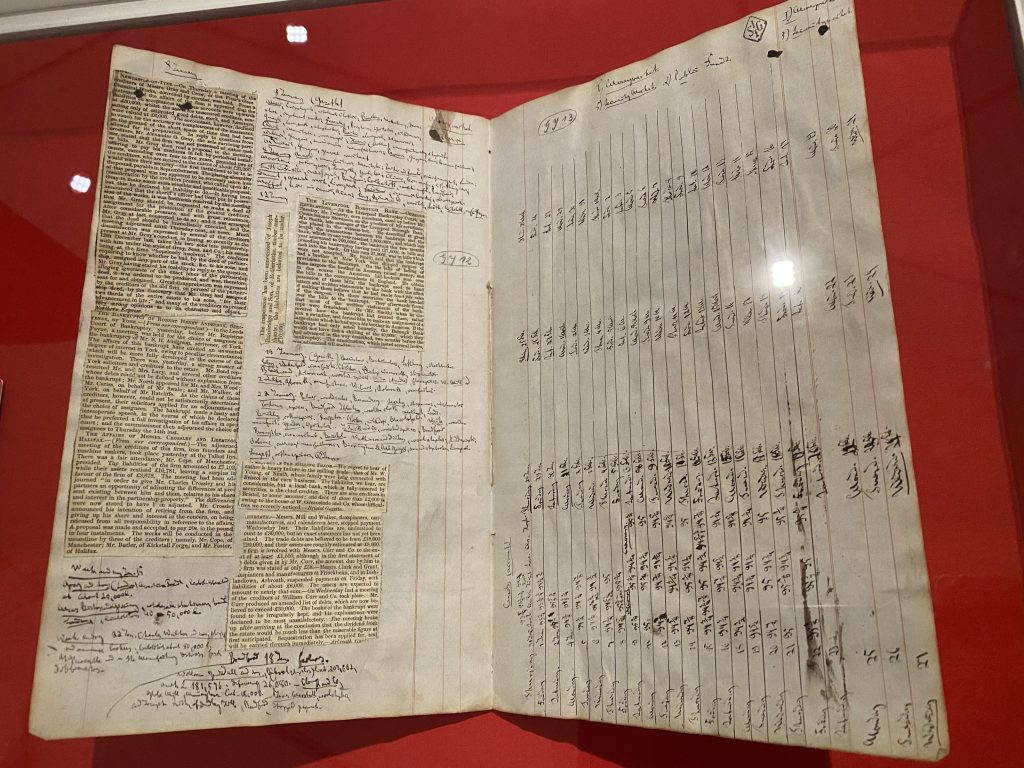
Selbst im 21.-ten Jahrhundert lesen wir weiter von Kontroversen um Richard Wagner (z.B Molnar und Molnar 2022 S.161-186). Dazu hat auch das DHM beigetragen mit einer Ausstellung, die interessante Assessoires aus dem Leben Wagners kürzlich in die Vitrinen stellte (s.u.). Neben Dokumenten zu seinem hartnäckigen Antisemitismus, bereicherten die extravaganten Kleidungsstücke, Maßanfertigungen, Beispieldrucke zu seinen politischen Überzeugungen und Dokumente zur kontinuierlichen Geldnot, die Sichtweise auf das musikalische Schaffen des Komponisten. Verliebtheit in kostspielige Details bei gleichzeitigen Überredungskünsten bei Stiftenden und Gönnern, haben sein überragendes Lebenswerk erst möglich gemacht. Die Zusammenschau von Leben der Person und seinem Werk konnte zeitgleich zur Ausstellung über Karl Marx in Nachbarräumen des DHM in 2022 besucht werden. Die überraschende, aber gelungene, Parallele oder Klammer für beide Ausstellungen ist die von beiden auf völlig unterschiedliche Weise betriebene Kapitalismuskritik, wie ein Begleittext und in Führungen durch die Ausstellungen berichtet wurde. Müssen wir zur Freistellung des Schaffens von Wagner dem Vorschlag Adornos folgen, die Musik des Komponisten frei zu machen von seinem Antisemitismus und der späteren Vereinnahmung durch die Nazis? Es fällt mir äußerst schwer, diese Trennung vorzunehmen. Es ist jedoch Wagners eigenen Schriften zu schulden, dass er einen Absolutismus predigte und darauf hinarbeitete. Das Werk „Muette de Portici“ von Auber, welchem er sogar die Revolution in Belgien zuschrieb (Colas 2012 S.26) hatte ihn schwer beeindruckt. In einem Aufsatz „Über deutsches Musikwesen 1840 S.165, schreibt Wagner, zitiert nach Colas, „La Muette entspricht einem Nationalwerke, wie jede Nation höchstens nur eines auszuweisen hat“. Die kurze Zeit Wagners in Paris ab 1839-1842 hat ihn mehr beeinflusst als er zugeben mochte, vielleicht durch Ablehnung in Frankreich sogar in eine dialektische Entwicklungsrichtung hineinbewegt. Die libertäre und kritische Einstellung Wagners zu politischen und wirtschaftlichen Zuständen seiner Zeit, bei gleichzeitigem Ausleben eines extravaganten Lebensstils, lässt den Tonkünstler in zwiespältigem Licht erscheinen. Dieses Facettenreichtum der Persönlichkeit und des Werks kam in der Ausstellung im DHM gut zur Geltung. Ambivalenz aushalten, lehrte diese Ausstellung. Anregen zu weiterer Befassung mit Person, Werk und Wirkung ist die Folge. Bei mir hat das gewirkt. Die in dieser Zeit sich vertiefenden “Mythen der Nationen” (Flacke M. DHM 1998) in europäischen Ländern, spiegeln den Wettstreit der Komponisten um nationale und überregionale Geltung wider. Ein anderer Komponist dieser Zeit, der als Vermittler zwischen den Kulturen wirken wollte, ist dabei etwas in Vergessenheit geraten, sowie viele andere KomponistInnen dieser Zeit, die sich an dem anzettelten deutsch-französischen Kulturkampf nicht beteiligen wollten. Der Tod von Wagner am 13.2.1883 ist 3 Wochen nach Friedrich von Flotow, 1 Monat vor Karl Marx. In dem Jahr veröffentlicht Nietzsche “Also sprach Zarathustra 1.Band”. Bewegte Zeiten.

Kapitalismus Kritik

Das Deutsche Historische Museum in Berlin (DHM) zeigte vom 10.2 bis 21.8.22 die Ausstellung “Karl Marx und der Kapitalismus“. Die Verbindung von Leben, Werk und Wirkung des in Trier geborenen Sozialwissenschaftlers Karl Marx st eindrucksvoll. In einer knapp gehaltenen Dokumenten- und Exponatensammlung wird die Bedeutung von Marx für die Weltgeschichte durch seine Kapitalismuskritik deutlich. Viele schreckliche Taten wurden in seinem Namen ausgeübt. Dabei geht oft die wissenschaftliche Analyse, die von ihm betrieben wurde unter. Gerade in seinem Verständnis von wirtschaftlichen Krisen hat er Beiträge geleistet, die uns in der Bankenkrise 2007 nochmals klar geworden sind. Weiterhin sind die Arbeiten zur Ungleichheit zwischen Kapitaleignern und Beschäftigten eine grundlegende Herangehensweise geblieben, die von SozialwissenschaftlerInnen auch im 21.-ten Jahrhundert, beispielsweise von Piketty fortgesetzt und mit aktuellen Daten nahezu weltweit untermauert werden. Die Folgen der industriellen Revolution, die er damals erforschte, befasst uns heute wieder in anderer Form zum Beispiel mit den Auswirkungen der Digitalisierung auf Beschäftigung und Lohngefüge. Selbst den von ihm geprägten Begriff der Ausbeutung, verwenden wir weniger auf Beschäftigung, als auf die Ausbeutung der Natur oder unserer Umwelt zugunsten von einseitiger Kapitalvermehrung. Kurz gesagt: Karl hat keinen Murx gemacht, sondern Methoden und Analysen geliefert, die noch die heutigen Jugendlichen und nächsten Generationen beschäftigen werden. Damit wird das DHM einem Postulat gerecht, das bereits bei der Eröffnung des Historischen Museums Frankfurt von Hilmar Hoffmann formuliert wurde: “Ein demokratisches historisches Museum ist kein Museum, das Kriegschroniken in goldenen Lettern schreibt oder die Mächtigen zu Übermenschen stilisiert. Es informiert vielmehr über die Geschichte des Volkes, über die Sozialgeschichte der Durchschnittsmenschen”. (S.33 in DHM Ideen-Kontroversen-Perspektiven 1988). Zu all diesem hat die Ausstellung “Karl Marx und der Kapitalismus” unzweifelhaft einen guten Beitrag geleistet. Was bleibt? x-tausend BesucherInnen und ein dicker Katalog. Reicht das?  Wirkungsforschung zu Ausstellungen könnte hilfreich sein.

China altert

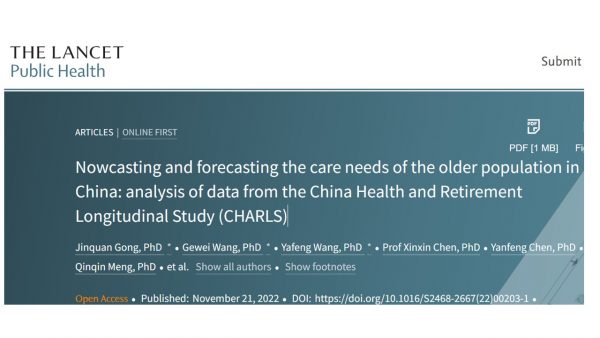
Zurückgehend auf die frühere strikte 1 Kind Politik erhöht sich der finanzielle Wohlstand der Chinesen alleine dadurch, dass das gleiche BIP auf weniger Köpfe verteilt werden muss. Eine Generation später ergibt sich aber durch das rasche Altern der Bevölkerung eventuell ein hohe finanzielle Last für weniger Beschäftigte bei gleichzeitig mehr älteren Menschen. Die Beschäftigungsquoten der älteren Menschen waren niedrig im Vergleich zu Europa, das bedeutet ein gestresstes System zur Finanzierung der Renten und, wie eine neue Studie (Lancet Public Health 2022) zeigt, für die Pflege der Älteren. Bis 2030 werden laut der Studie bis zu 14 Millionen Menschen zusätzlich Pflege benötigen. Das betrifft überwiegend Frauen und Personen im ländlichen Raum. Das ist bei uns auch so, denn Zugang zu ärztlicher Hilfe, Krankenhäusern und Unterstützung im täglichen Leben ist aufwendiger bei größeren Entfernungen und Fachkräftemangel. Das Ausmaß der Pflegebedürftigkeit hängt stark von dem gesunden Altern ab. Dies ist wiederum vielfach bedingt durch Bildungsniveaus und Lernfähigkeit und -wille im Alter bezüglich der eigenen Gesundheit.  Bewegung ist der Schlüssel zu mehr Gesundheit. Damit lässt sich die Pflegebedürftigkeit lang hinauszögern. Also raus, auch wenn es frisch ist. Open access Lancet paper (hier)