Heritage Day

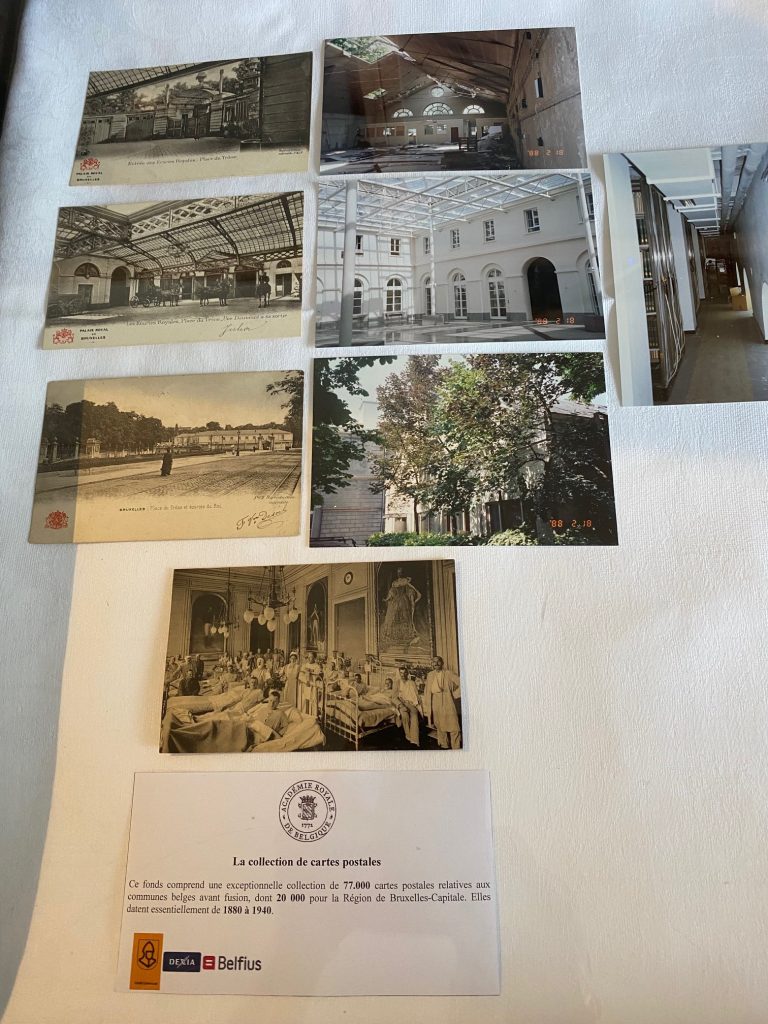
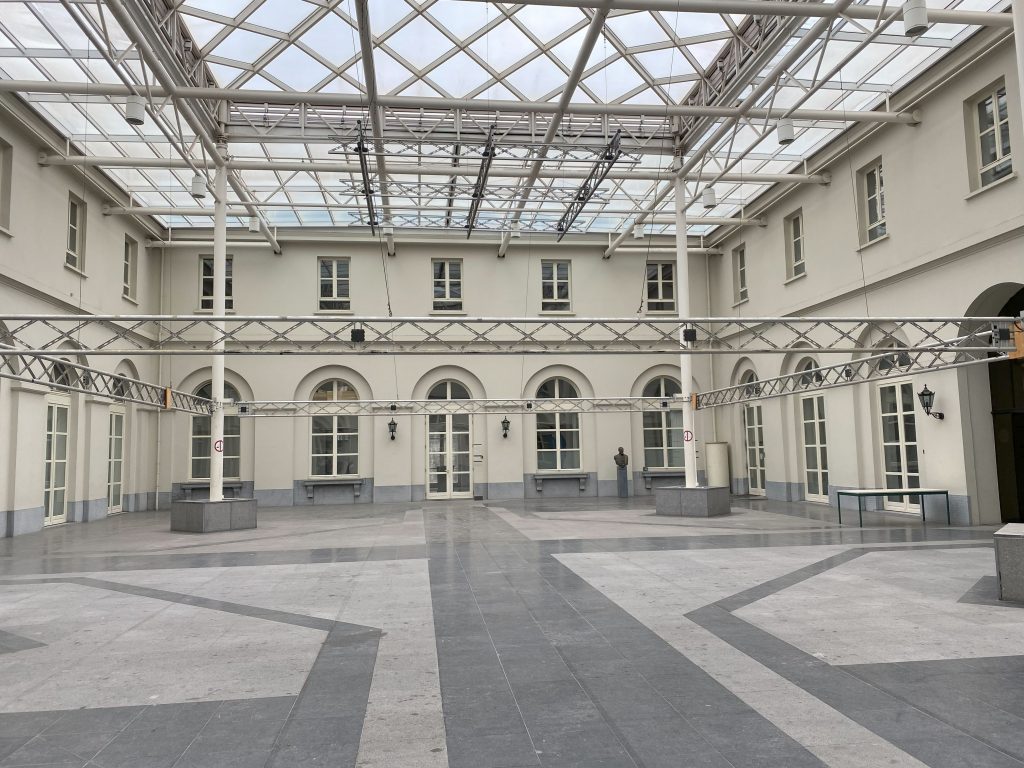
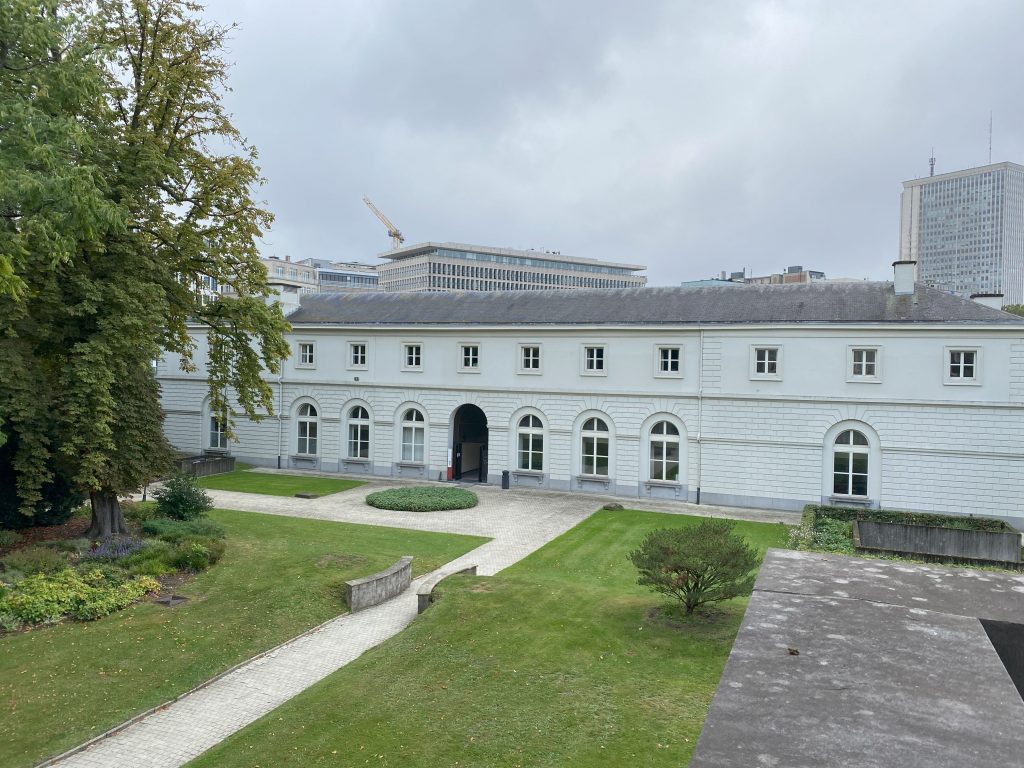
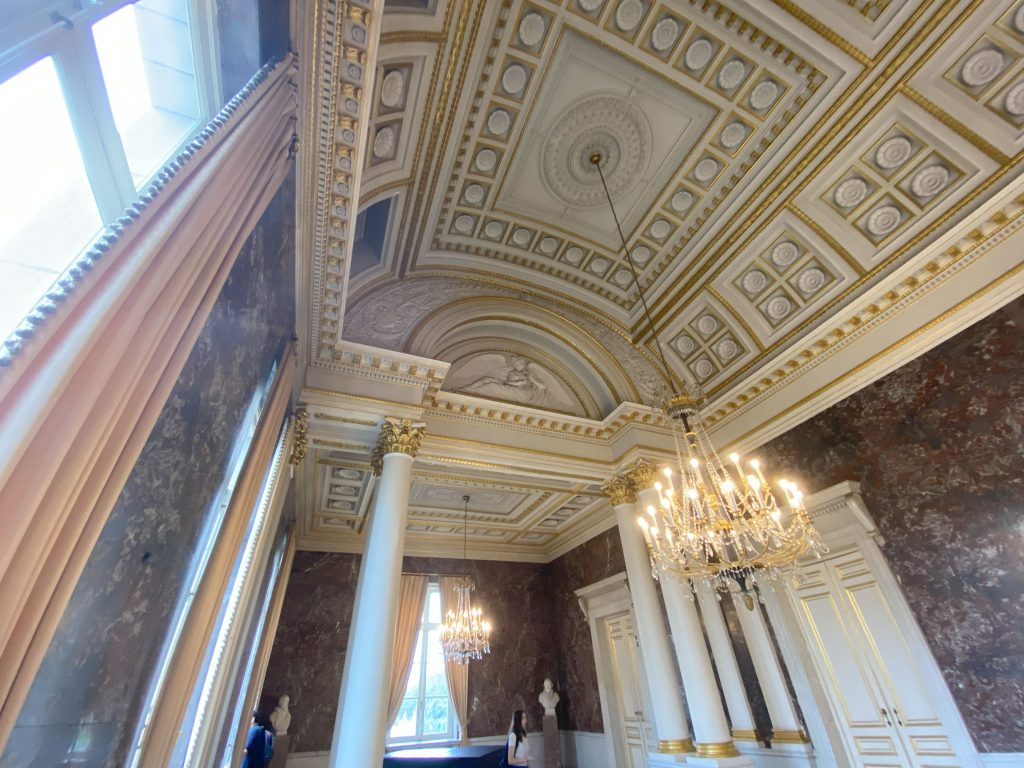
A heritage is something you might carry with you, no matter whether you like it or not. In architecture this is most vivid and visible. On the 2023 heritage day i Brussels many monuments and institutions open their prestigious buildings to the public and show off their “silver” or gold plated walls and ceilings. Just next to Royal Palace is the home of princesses and princes now inhabited by the Royal Academy. Even the stables have been packed with books now, all in all 19 km of shelves packed with papers of all sorts. Great that many academics and academies have shifted to electronic publishing so that the CO2 footprint of science and art can finally be reduced as well.
Of course, we adore the old postcards to learn about historical trajectories of architecture and specific buildings. The collection is a great collective memory.

Royal Academy Archives Brussels 2023

Get mobile

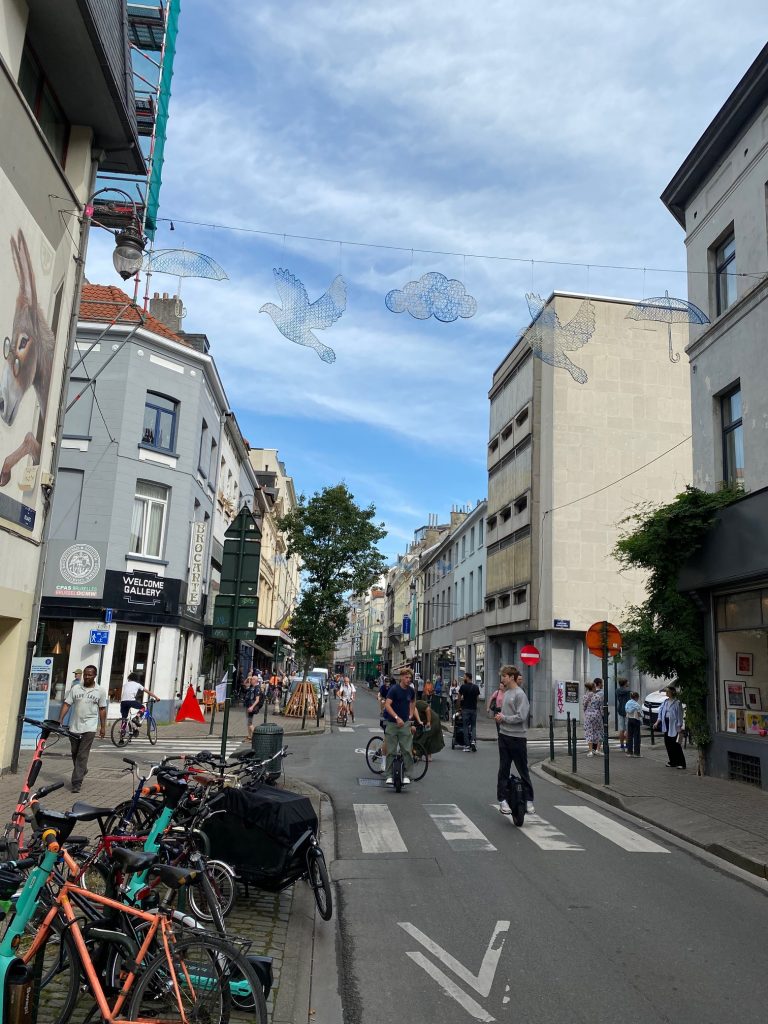
In inner cities, plagued by horrible traffic jams and pollution by cars and lorries, we dearly await at least the one day per year without this nuisance. Mobility can be organized differently. Brussels demonstrates this in an exemplary fashion. Many families gear up for this one day to teach kids how to cycle technically without the dangers of the fight for space, speed and breathable air. Older persons also feel much more save then and walk or cycle longer distances than they usually do. So many winners and only a few forced to not use their cars during 10 hours. Massive health benefits for the whole city, especially on too warm a day in autumn 2023. All these kinds of ideas were already discussed before the COVID-19 crisis on a mobility fair in Brussels. It is not the ideas that are missing, but the political will and courage to try new ways forward. Learning that walking and cycling in cities do not hurt you, prepares the readiness to go further along this path. Just do it. And do it faster than in the past. The planet needs it, people seem to really like it, too. Enjoy.

Car free sunday Brussels 2023-9-17

Participative Art

Beyond participation in the performance based on Yoko Ono’s Cut piece 1964, you had the possibility to imagine yourself as a sculptor by touching a sculpture of art attached to the Genzken exposition, nothing less than the head and bust of Nefertete, also a piece transformed by Genzken and exposed, untouchable, in the exposition. You can hardly get more involved and incited to participate with hands-on experience, so to speak.
Additionally, there is the perspective from the performing artist in “Yoko Ono’s Cut Piece” to confront the spectators with a silent, stoic expression hardly moving during the more than 90 minutes performance. Imagine, what kind of vulnerability you are risking. Artists give a lot from themselves to the public. Imagination is even going beyond the act performed. Mastering your own fear of mutilation or being exposed to views, touching and multiple other forms of sensation.
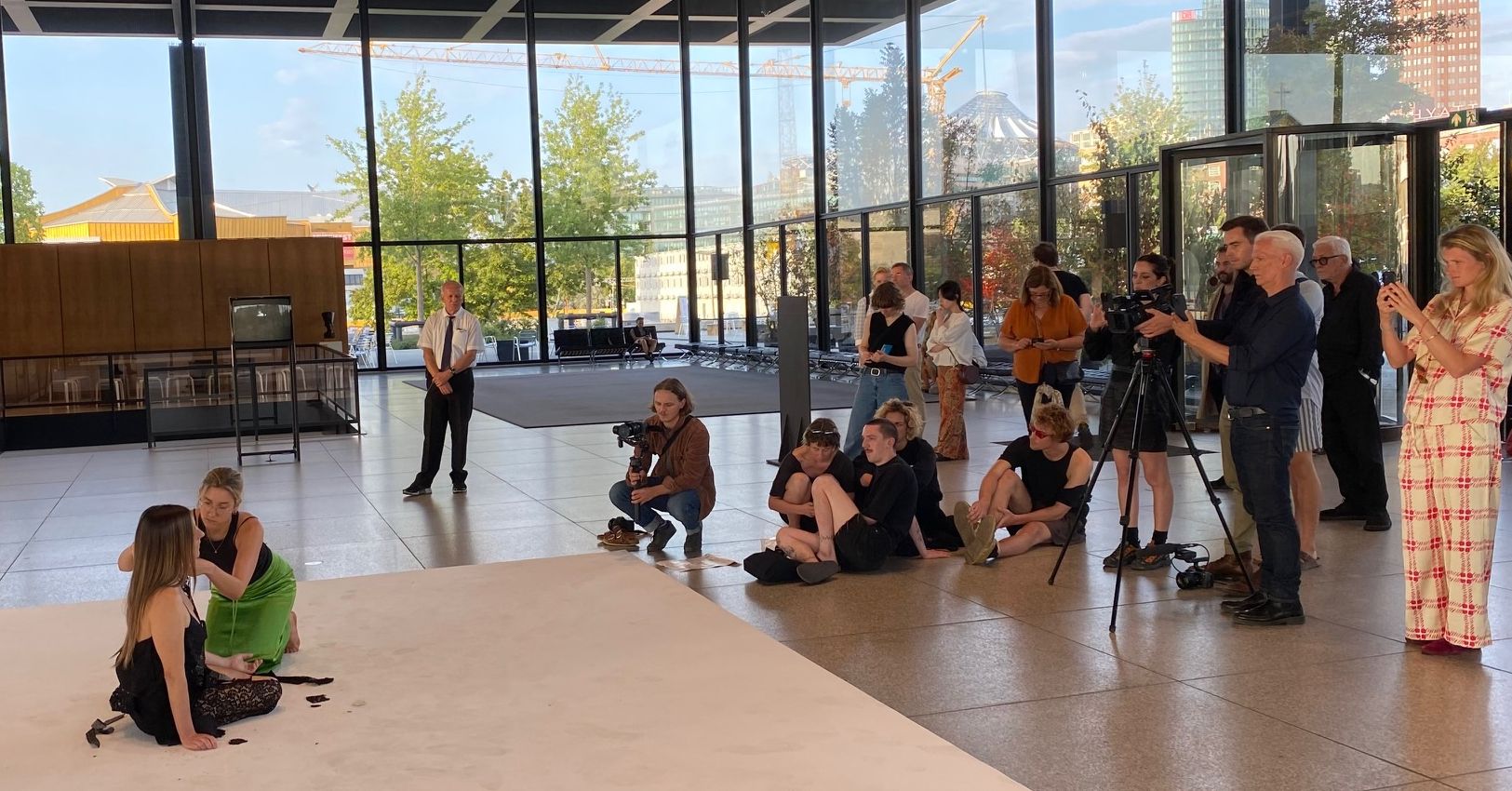
This surely is an exercise of mental strength. Spectators also interact with other participants as, for example, spontaneously another spectator too the scissors to cut his own shirt in front of the performing artist and covered the shoulder of the performer. The personal interaction assures a more intense experience of art.
After all, this is a well-known principle to enhance learning experiences as well. Imagine all the people, each taking just a tiny little piece and remember their experience that they, as well, can be actively contributing to art. Reviving this participatory experience is leading beyond imagining only your participation. Democracy is built on this stimulating experience as well. It is ever so necessary to foster participation and to overcome indifference or abstention. Learning  by doing, or experiencing through touching, offer many additional insights.
(Images and videos taken on 2023-9-12, Berlin)

Yoko Ono Cut Piece 2023 Berlin

Revival

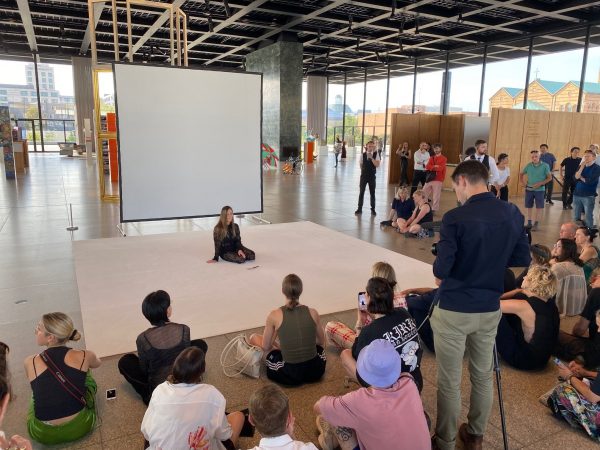
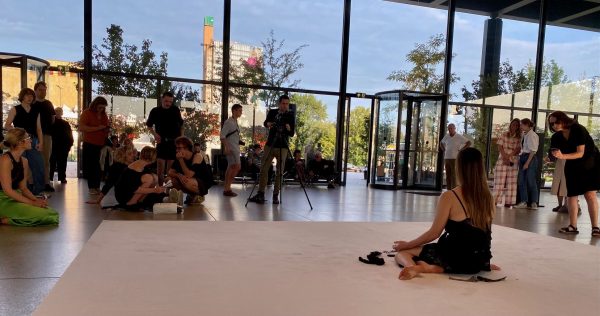
Almost 50 years after the first performance of Yoko Ono “cut piece” (1964), as a silent performance, it was performed again at the beginning of the Berlin Art Week (BAW2023). The “Neue Nationalgalerie” opened the art week somehow, in honour of her. The performance consists in the interaction with the audience inviting persons to approach her in front of the other spectators to cut a piece of her dress. They are allowed to keep the cutting and walk away with a little piece of her dress. In the 60s this was quite a big deal. Nowadays, after the fall of the wall and the wrap-up of the Reichstag by the Christo couple, we have become used to such kinds of take-home pieces and sharing in art work or historic moments. Hence, this was the chance for Berliners to add another valuable piece to their collection consisting of a piece of painted concrete from the Berlin wall as of 1989, Christo-foil in 1995 from the Reichstag and now the tissue from the live performance in honor of Yoko Ono.
The participation in the art performance invites several interesting approaches.
First the artist exposes herself in an extremely vulnerable fashion. The scissors in front of her make for a weapon in the hands of an aggressive person. Therefore, the number of security guards was beyond the scope of a normal protection of art hanging on the wall or sculptures exposed. In the background of the performance is the exposition of work from Isa Genzken which has been much less of a security risk. Her super-size rose in front of the gallery is accessible night and day. Some of the images taken have a somewhat blurred, more distant view on some pieces of Genzken’s work as well. The entry hall of the Neue Nationalgalerie allows a fabulous transparency of art and invites persons passing-by to attend spontaneously the performance as well.
(Images and videos taken on 2023-9-12, Berlin). Video Clip here.

Li-Be

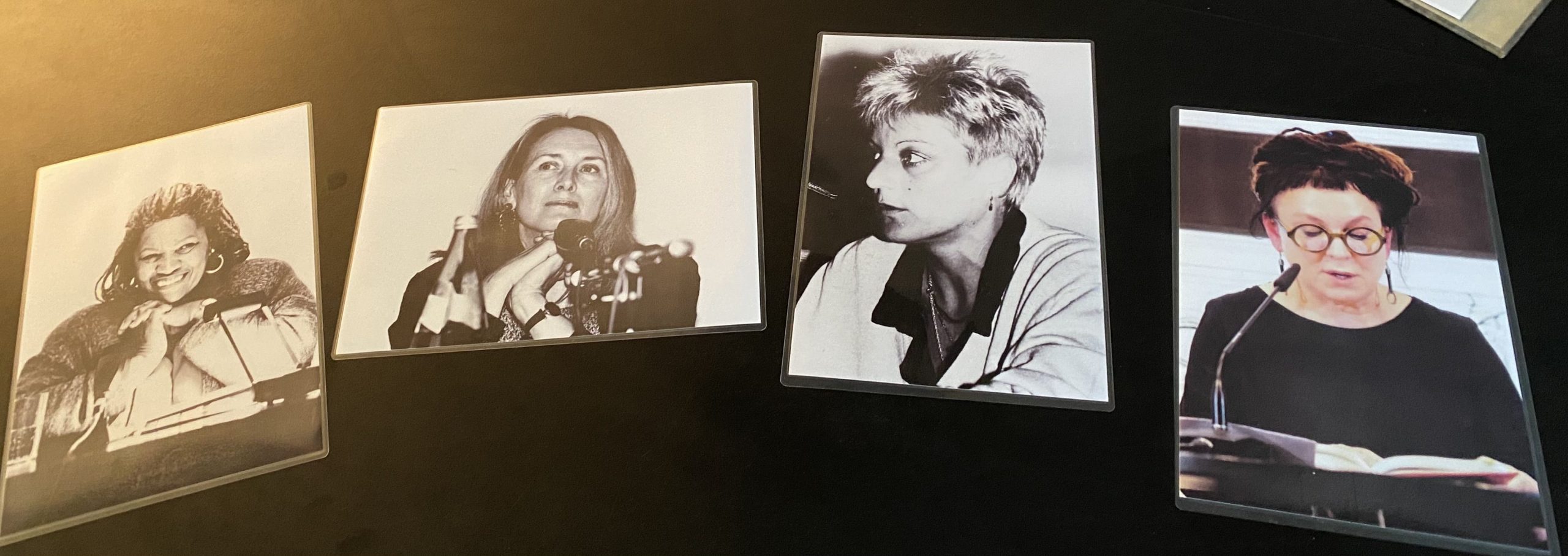
Jede/r hat so seine Assoziationen mit Li_be. Für eine kleine Gruppe von Literaturbegeisterten steht Li-Be seit langem für das Literaturhaus Berlin. Das war nun ebenfalls, anlässlich des Tag des Offenen Denkmals, im September 2023, als solches zu besichtigen. Zentral am Ku’damm plaziert, in der benachbarten Fasanenstraße, liegt diese geschichtsträchtige Villa in mitten eines kleinen Gartens. Trotz wechselvoller Geschichte konnte die Villa als Ganzes erhalten werden, nachdem der Denkmalschutz Veränderungen untersagt hatte. Das Haus der Li-Be hat wirklich alles gesehen, was Leute sich unter Liebe so vorstellen und wahrscheinlich noch einiges mehr. Nach den familiären Nutzungen der Gründerzeit, wurde in den wilden 20er Jahren dort ein russischer und ein arabischer Studentenclub eingerichtet in Verbindung mit der Humboldt-Stiftung, die sich auch heute noch um den wissenschaftlichen Austausch bemüht. Das Rote Kreuz hatte eine erfolgreiche Suppenküche dort in der unmittelbaren Nachkriegszeit betrieben. In den 60er Jahren war es ein Nachtlokal, aber auch einige Jahre ein Studio für modernen Tanz von Manja Chmiél, einer Schülerin von Mary Wigman. Die heutige Nutzung hat weiterhin viel mit Liebe zu tun. Lesungen und Workshops laden laufend ein, sich mit Literatur zu befassen. Der Zeit angemessen finden sich in den Archiven des Literaturhauses zahlreiche Prominente AutorInnen, die Lesungen dort abgehalten haben. Starke Frauen bildeten dabei seit den Anfängen als Literaturhaus einen Schwerpunkt. Nobelpreisträgerinnen gehören zu den Vorleserinnen seit geraumer Zeit. Annie Ernaud und Herta Müller traten schon lange vor den Nobelpreisen dort auf. Toni Morrison und Olga Tokarczuk im  Jahr der Preisverleihung oder kurz danach. Ein wahrlich toller Ort und dennoch keineswegs mit BesucherInnen überlaufen. Es bleibt eben so eine Sache mit der Liebe, auch im Li-Be.

Widmann

Jörg Widmann hat seinen Einstand bei den Berliner Philharmonikern als „Composer in Residence“ gegeben. Die Schwester, Carolin Widmann interpretierte das Violinkonzert Nr. 2 von Jörg Widmann als Solistin. Das war ein ganz besonderer Abend. Die Widmanns haben doch tatsächlich gemeinsam die Einführung in das Programm des Abends mitgestaltet, eine ¾ Stunde vor dem Konzert im großen Saal der Philharmonie. Mit Begeisterung haben die beiden Geschwister von der gemeinsamen Zeit der Entdeckungen rund um die Violine in ihrer Kindheit erzählt. Damit wird die faszinierende kindlich, unschuldige, nahezu naive unbedarfte Herangehensweise an das Instrument verdeutlicht, die so charakteristisch ist für den Anfang des Violinkonzerts. Die Entdeckung eines Klangkörpers (vom einzelnen Instrument bis zum Tutti) geht aber rasch weiter zu einer Demonstration der vielfältigen Gefühls- und Virtuositätsregister der Violine. Paganini lässt grüßen, könnte man meinen.
Kaum klingt eine virtuose Passage an, da hinterfragt der Komponist die eigene Begeisterung. Ist das nicht einfach nur Akrobatik, um dem Publikum zu gefallen? Zweifel stellen sich ein und etwas Distanz zum gefälligen Wohlklang. Reflektierte Virtuosität, der Soziologe würde vielleicht auch reflexive Virtuosität als kompositorisches Element verwenden wollen. Notation von Musik und Klängen hat seit dem wohltemperierten Klavier relativ feste Vorgaben. Daran hat sich Jörg Widmann zu 98 Prozent wohl gehalten. Die anfängliche Erkundung des Klangkörpers Violine lässt sich aber nur anders notieren. Innovativ, mit mehr Raum für Interpretation in der Aufführungspraxis. Das betonte so auch die Schwester, die nun wirklich dem Komponisten sehr eng verbunden ist. Interessant war daher ihr Kommentar, dass diese Anfangsstelle für sie gleichsam die größte Herausforderung darstellt.
Die folgende „Fantasie für Klarinette solo“ von Jörg Widmann passte daher gut zu dieser Erkundungsreise von Instrumenten des Symphonieorchesters. Die Klarinette hat in allen Musikepochen und Stilrichtungen ihren Platz behauptet. All diese Anklänge lassen sich in dem Solo, welches der Komponist selbst dargeboten hat, wiederfinden.
Nach dieser aufregenden Reise durch die Jahrhunderte der Musikgeschichte stand die „Reformationssymphonie“ von Felix Mendelssohn-Bartholdy auf dem Programm. Spannend war die Umsetzung „dieser Art von Teufelsaustreibung“ (Worte von Jörg Widmann) mit dem „2. jüdischen“ Satz und dem „3. protestantischen“ Satz der Symphonie in denen Felix Mendelssohn-Bartholdy seine beiden Wurzeln in den Gesängen und Liturgien in Andeutungen aufnimmt. Mit Klängen und Fängen der ausgehenden Romantik wurden wir in den weiteren Abend entlassen, samt Eindrücken aus der Ausstellung zu der Entstehung (60 Jahre) und der Architektur der Berliner Philharmonie und dem Scharoun Ensemble (40 Jahre) der Gebäude einschließlich der Stabi West. Das Mendelssohn Archiv hat in der benachbarten Stabi West einen kleinen, feinen Ausstellungsraum mitten im großen Lesesaal. So haben wir einen umfassenden Rundblick und Ausblick genießen können, die dem Kulturforum in eindrücklicher, dennoch unaufdringlicher Weise, eine hervorragende Stellung einräumen.
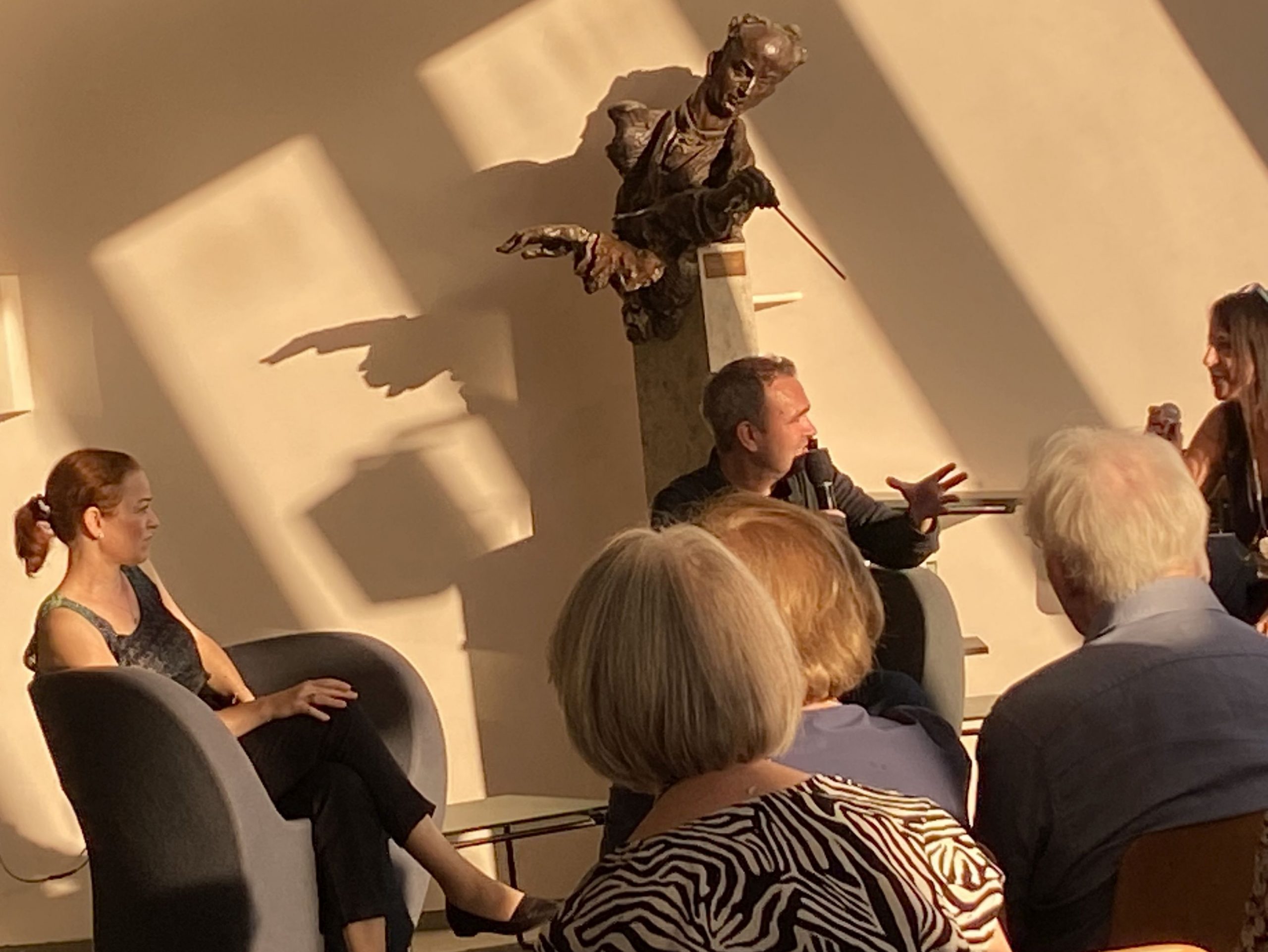
(Image: Jörg Widmann jenseits des Schattens von Furtwängler 2023-9-9)
Denkmal

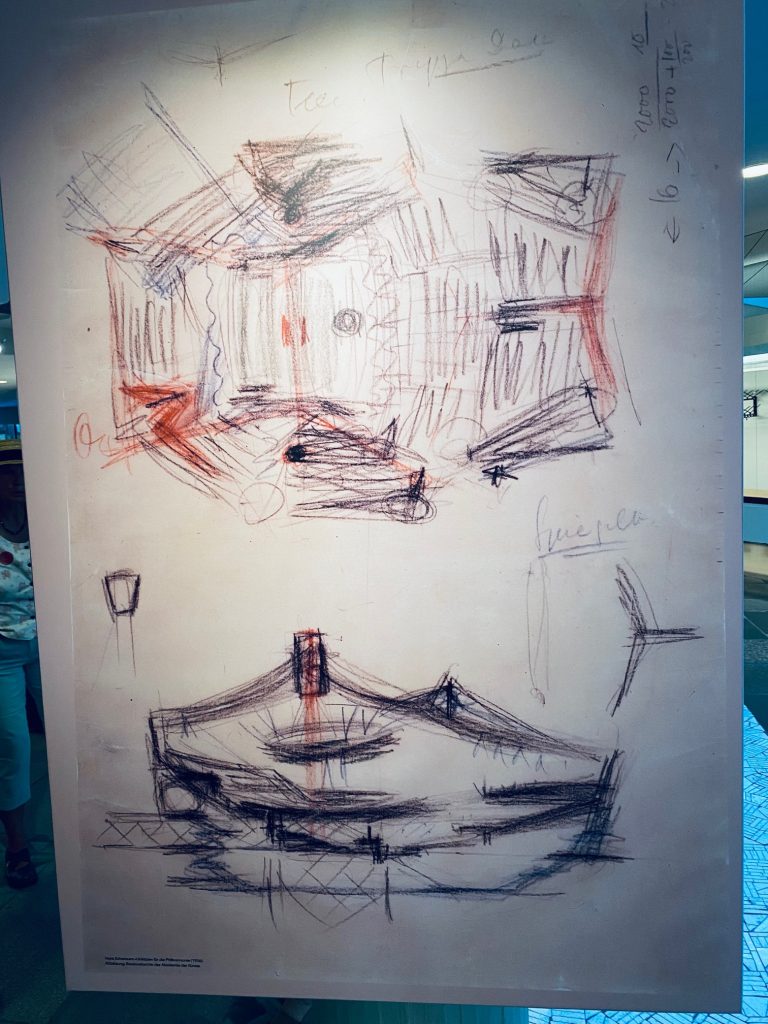
Jedes Jahr gibt es die hervorragende Möglichkeit am Tag des offenen Denkmals, historisch wertvolle Gebäude und Anlagen zu besichtigen. An heißen Tagen, wie in 2023, sind Altbauten oder klimatisierte Räumlichkeiten besonders bevorzugt. Die Philharmonie hat erneut die Möglichkeit geboten ohne langwierige Voranmeldung, spontan vorbeizukommen und an einer Führung teilzunehmen. Das von Hans Scharoun entworfene Gebäude samt seiner akustischen Spitzfindigkeiten bietet spannende Einblicke. Stille, Sound und Noise in einem Gebäude und Konzertsaal will sorgfältig geplant sein. Kompromisse mit verfügbaren finanziellen Mitteln und Planungsverfahren gehören zur baulichen Realisierung, wie eventuell zu den Kompositionen, die dort aufgeführt werden. Heute erscheint uns die gelungene Akustik als historischer Meilenstein. Ebenso die Form des Konzertsaals mit Plätzen hinter dem Orchester, aber auf das Gesicht der Dirigierenden bietet einzigartige Einblicke in die Praxis der Aufführung. Für 10 Minuten war selbst bei der Führung zufällig ein Zuschauen bei der Generalprobe der Berliner Philharmoniker von weitem erlaubt. Komponist und Dirigent Jörg Widmann probte noch Ausschnitte aus der am Abend aufzuführenden Werke. Selbst hoch unter dem Dach der Philharmonie konnten die leisen Ansagen des Dirigenten leicht verstanden werden. Akustische Meisterleistung der Architekten. Wer hätte gedacht, dass Anfang der 60er Jahre eine solche Glanzleistung möglich war, im Berlin, das gerade erst durch die Mauer getrennt werden sollte und dann geteilt überleben musste.

Entwurf Hans Scharoun Ausgestellt in Berliner Philharmonie 2023

Corrupt-2

New scientific evidence on corruption and stereotypes about corruption reveals surprising behavioural responses. Social psychologist classified corruption as a behavioural trait of a person. The new evidence of a study that includes country-specific stereotypes into a corruption experiment shows there are always two sides to consider: the corrupted as well as the corrupting person. Both hold stereotypes about the likelihood another person (from a specific country background) is likely to accept a bribe.
Using a widely accepted index from Transparency International on corruption in countries the experiment uses real payouts to test the probability that a person from country X is trying to bribe a person from country Y. Rather than a personal trait, the study finds that many persons become “conditionally corrupt”. This describes the behaviour to offer a bribe to a person occurs more often if you believe the probability that the person accepts corruption is high. Dorrough, Köbis et al. (Link publication) is cited in “nautilus” explaining this by, quote, “when in Rome, do as the Romans do”. Additionally, the stereotypes on corruption prevalence leads people to act more on what they believe is common practice rather than what is the basic legal or ethical standard.
From behavioural ethics we know the urge of people to find justifications for their unethical behaviour to themselves or to others. This is called “justified ethicality”.
Following this rationale, it will be easier to accept a bribe, if the person originates from a high reputation of corruption. In order to correct for such bias due to stereotypes it is important to pursue corruption vigorously and, just as important, communicate a lot about this behavioural change so that stereotypes begin to change in the mindsets of other persons as well. There are many ways to Rome and some turn out to be quite long.

Silence

In the modern world places of silence have become rare. During the industrialisation noise has become a synonym for modernism. Many people even celebrate noisy engines as an image of strength or horse power. In the wake of the 21st century is has become evident that this co-evolution has made us sick and whole cities suffer from the abundant sources of noise.
Can we talk about silence? No, wrong approach, but we can write or realise images dealing with silence. Yes, surely. Spiritual locations often build on the mystic experience that silence might incur. Measuring silence in physics is a lot more complicated. Sound has several forms of measurement. Also, silence is probably experienced by most of us as a relative concept. Compared to a noisy atmosphere we might appreciate less noisy situations as more or less silent already.
Therefore, a reasonable, but evasive definition of silence is the absence of noise. Depending on our auditive capabilities different persons will define silence at different levels. Sound near us blends into sound in the background and vice versa.
Temporality plays an important role. In complete silence we might imagine even to be dead. Otherwise, some distant vibes or vibrations will reach us and potentially stimulate our senses. Silence works as a bridge between two atmospheric impressions. It creates a feeling of expectation for something still unknown. Silence is underrated as our smart phone attempts to disrupt silence as much as possible to draw our attention to messages or reminders. Hence, silence is about to be turned into a new status symbol. Practice of meditation, listening to isolate and subsequently to discard sound, has become an advanced level competence, not only for musicians. Feel free to be silent and see what happens around you. It is easy in locations of supposed spirituality or in most libraries. Almost everywhere else you have a hard time to experience a silent atmosphere.
The composer John Cage made silence the title of one of his quite well known pieces. The willingness to pay for the entry to the silent concert might be surprising although the listening experience is unique to each location and diversity of audience. Composing silence remains a challenge, making noise is easy. (Image: NASA/ESA Hubble Space Telescope, extract of Link)

Write, write, write

A poster announcing the “internationales literaturfestival berlin 2023” prints in big letters: “Read, read, read, … 14 times”. This is a quote from Werner Herzog when he was asked what makes a good filmmaker. The message from Manjeet Mann to the young audience at Berlin added to this: “write, write, write”. At least this was my impression as a summary of the talk and her short readings from her novel in verse “The crossing”.
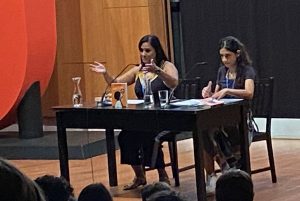
The lecture hall of the “Stabi” was packed with students from high-school who felt at ease with the English language presentation and talk. The host Shiva Mesgarian managed to get the crowd of students to ask questions in the huge lecture theatre. Manjeet was giving a lot of insights into writing, editing, motivation and the difficulty to give a voice to persons from marginalized backgrounds. In her case as a person of colour herself, born and raised in England with additional links to India, she took issue with the topic of refugees. Living in Folkestone (Kent), she is confronted with people crossing the Channel on a daily basis.
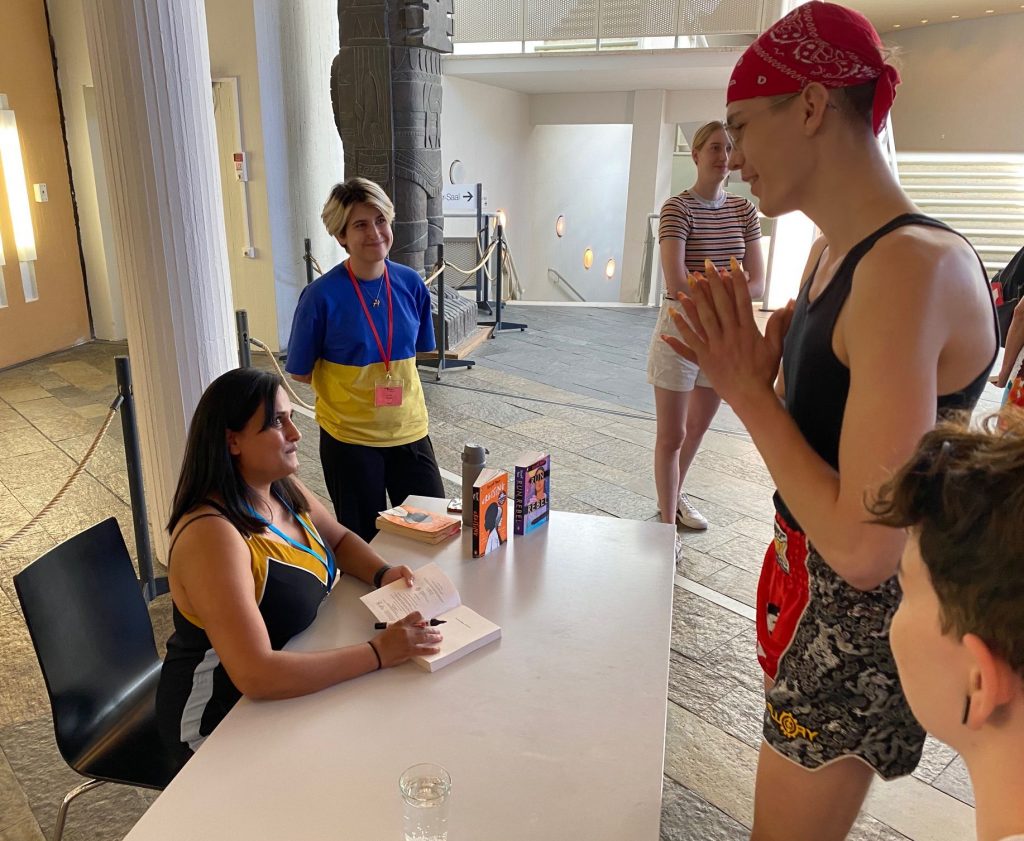
Her book “The crossing” is actually building bridges between countries and continents. Her entertaining way to talk about her hard work as writer motivates, inspires and encourages young persons to pick up their pencil and/or notebook to start writing. Just don’t stop. Journaling helps. Take your emotions of an issue seriously, then work on it. Give characters a voice who have not received much attention. Go out and interview persons to get authentic input.
It is not about appropriation of a story. It is about meeting and exchanging with marginalised persons. Return your written pieces to those “sensitive readers”, whose story you attempt to develop. All this takes time. Re-writing is an important element as well. “Having written the story for yourself, you then re-write it for the readers”. Edit, clarify, sharpen, blur, attend to detail – all this helps the reader to follow and enjoy. These were the messages to all the students who were grateful for advice as the new season of essay writing in school, university and beyond is about to start.