Colette Home

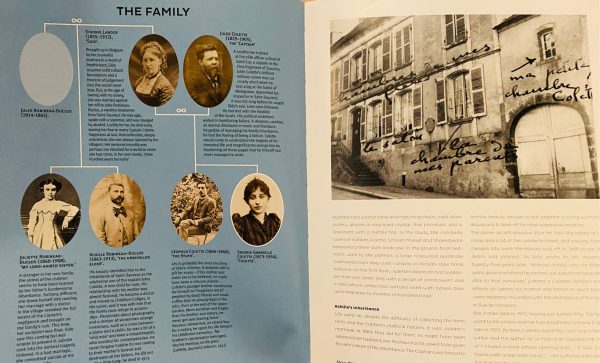
  1. The home of Colette, the French writer of the first half of the 20th century, is an interesting example of the high attributed value for her later creative career. The home and the gardens around, seemingly had a huge and lasting impact on her imagination.Her writings are firmly embedded into not just her home of childhood and adolescent years, but also the changoof homes and contexts literally made Colette. The documentation of this in the “Musée Colette”, which presents the different phases of her life course, allows to get a better understanding of the interconnected world of experiences and artistic work. It takes an especially broad set of influences to form such a polyartist. The libretto for an opera orchestrated by Maurice Ravel or a model for Matisse, stand for the openness to new experiences and take risks when she embarked on new creative endeavors. (Image Musée Collette catalog p. 6)  

Polyartist Colette

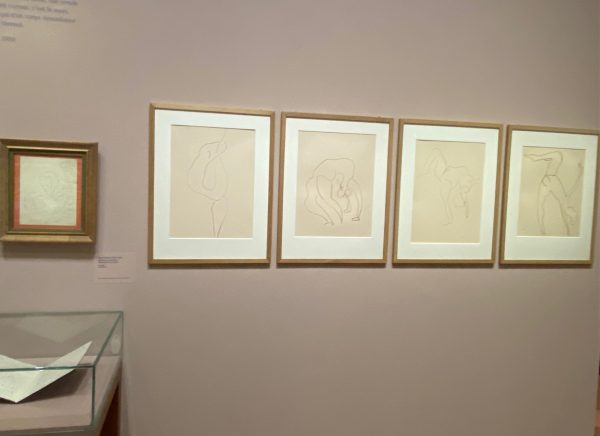
It is a complex task to do justice to a polyartist like Colette. The curators of the exhibition “Les mondes de Colette” (BNF 2025) Bouvard, Dimerman, Le Bras do a great job to present the biography of Colette, the writer, journalist, dancer in music halls, model (for Matisse) and entrepreneur in all facets of her activities. The role model of an emancipated women as early as the 1910s, 1920s and 1930s. The struggle of women artists in the early years of the 20th century to make a living from art is well documented already. To make a living of writing has always been a challenge if you do cherish your independence and liberty of expression. Versatility in artistic production is one escape route. Colette made a strength of this in diving into different forms of art and professional activities close to the artistic and creative world. In a quite unique way, she became her own muse for her own artistic work; and a character and inspiration exploring many facets of live. The economic misfortune experienced her parents became a source and force of inspiration.
Contrary to the expectations of the market of arts and literature, she did not feel like sticking to just one activity. Her most lasting achievements, probably, were her literary accomplishments for most people, although Matisse immortalized her in his specific style of abstraction.
Polyartists just like Polymaths, make more comprehensive contributions to our experiences.
(Image:Lithographie by Henri Matisse of Colette, exhibition Colette at BNF 2025).

Digital Social Networks

Social networks have become the place to be. The need to distinguish the digital social networks from the social networks of people in the analog or “real” world is important, as we realize that many young persons seem to suffer from loneliness despite a hundred personal links in the digital social networks. This paradox of digital and non-digital social networks needs careful attention of researchers because of the opportunities and risks involved in the transferability of contacts from one network to another.
There is s a kind of “conversion rate” of digital contacts into face-to-face contacts and even purchases for marketing purposes in the world of business. The sociology of the virtual has to deal with these paradoxical social relationships and study the increasing phenomenon of being «alone together». Increasingly we are alone, but together. Over the life course this phenomenon and the digital social network paradox change as well.
To research such a topic we need rather intrusive, personal data and access to the digital traces of people as they construct and deconstruct either form of social networks. 

Social Anthropology

Dina Dreyfus, married several years to Claude Lévi-Strauss, has shared with Claude the long anthropological expedition to Brazil in the 1930s. They jointly studied the social organization of indigenous people across Brazil. Their abundant notes of field studies have now been digitized and the BNF is making this accessible.
Additionally, an exhibition on these field studies reveals the close collaboration of both partners. Returning to France in 1939 meant that soon after the return due to their Jewish decent had to interrupt their academic careers in France and some notebooks were lost during the Nazi occupation of France. After the war both separated and Claude Lévi-Strauss embarked on the drafting of the structuralist theory, Dina became influential in the field of the philosophy of education and teaching philosophy herself.
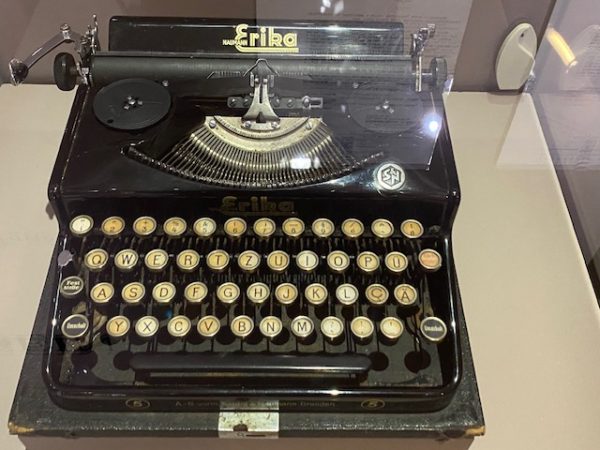
Besides all these lasting achievements, the exhibition shows the typewriter which had accompanied them for many years. The German language layout is quite remarkable as this asked for an additional mental versatility in putting their thoughts and experiences into the form of a manuscript. According to Claude Lévi-Strauss the use of this technical device allowed him to detach himself emotionally from his analytical work.
(Image: Exhibit: typewriter Claude Lévi-Strauss, BNF 2025-10)

Sponge Mofs

Many people might have come across “SpongeBob” as a TV-series. Well, in 2025 it is time for an update. The Nobel Committee has awarded the Chemistry prize not to SpongeBob, but the research linked to the sponge-like Mofs, i.e. metal-organic frameworks to Kitagawa, Robson, Yaghi. These Mofs have in fact properties  similar to a sponge or cages in some applications. They consist of porous materials, which have large surface areas in relation to their apparent volume. Due to the modelling of network structures the surface of a grid can be expanded drastically.
Due to the application of such modelling techniques, the combinations of materials/organics and, thereby, the applications to modern technological challenges have increased tremendously. The exponential growth of research papers based on these foundations largely justify this honourable award. Not only the potential of carbon capture, but also the storage capacity of batteries as well as medical applications might benefit from this basic research and findings, eventually.
Playing around with a sponge, doing your dishes – also for men, or watching Spongebob might be considered differently from now on. Maybe, just start with a virtual visit of the Nobel museum for further inspiration.


Passing barriers

In quantum physics the real trick is not the rebound of electrons like the rebound of droplets, but the passing of electrons of an insulating barrier. The experiment of the ”Josephson junction” has set a precedent to research the surprising macro-effect of “quantum tunnelling”. The 2025 Nobel Prize has been awarded to Clarke, Devoret and Martinis who observed these effects on a macroscopic scale. The applications in the most advanced quantum computers of today shows the enormous potential of this demonstration in pushing computing speed boundaries. The international competition to develop such, ever faster computers, based on quantum physics, is running on high development speed. In combination with the artificial intelligence (AI) developments, these types of combined machines are likely to outpace the development of human-based intelligence. It becomes even more important to define the limits for those machines by us. Subsequently, we shall have to make sure that such combined machines stick to the rules, we define(d).

Place of the Church

What is the place of the church(es) or religion in society? Some would answer that the answer depends very much on the historical period which you focus on. Social scientists would zoom in on the changes that have taken “place” and the reasons as well as major actors of these societal changes. Churches are highly symbolic places with exposed visibility and demonstrations of power. Therefore, it is interesting to follow the changes in the architecture of churches. Whereas biblical communities gained in wealth and power over the centuries, they moved from the backyards to the city centres and the market places for centuries.
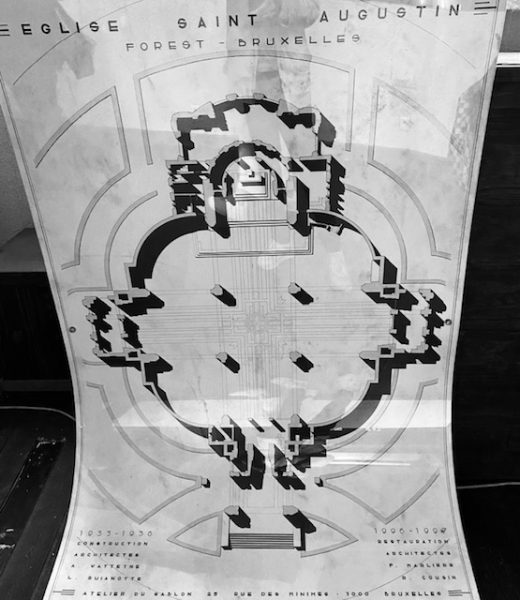
In the early 20th century many cities have grown so rapidly that in newly built suburbs new churches were considered an obvious extension of the places where churches belonged as well. In several instances the planning of a city’s extension was still being organised around the idea that a church should be the (new) focal point. At the same time the ideas of democratisation entered into churches as well leading to the deviant choice of round shapes rather than the traditional linear structures. The hotel became visible from all angles and was positioned as the mid point and rayons or beams could be imagined to reach into the newly built suburban areas. Frequently the road traffic was organised accordingly. Saint Augustine church in Forêt Brussels is a prominent catholic architectural example of this.
Another example of a round shape church with a place defining architectural function is the evangelic Königin Luise Gedächtniskirche in Berlin. Much smaller in size and in the axes that originate from there, the “Place of the Church” aims to fulfil a similar function, a central place in the new suburbian area.

Modernist Urban planning

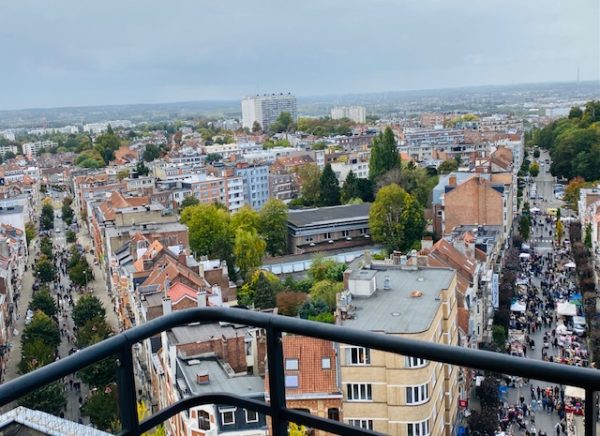
Saint Augustin in Brussels is one of the lesser known defining architectures in Brussels. It is visible from far away much beyond the immediate surroundings. Situated on Altitude 100 it is on the highest hill in Brussels with a 58 meters high Campanile built out of concrete in 1933 in a predominantly art nouveau style. The order of the St. Augustines in the center of Brussels was terminated and at the outskirts of Brussels as a new city suburb was being built starting in the late 19th century An appropriate way to demonstrate continuity despite discontinuity was the placement of the church in the middle of a roundabout and a star-like organisation of roads des descending from the top. The form of an equal length (orthodox) cross is in the spirit of the unity of the Christian churches. Even despite the prominent and exposed situation, most people pass by with little concern for the innovative, architectural features of this edifice. (Image: View from capanile St Augustin Brussels). On a small scale this urban planning concept resembles the Paris of the « Arc de Triomphe » and the views and corridors which we designed and implemented.


Embedded Artists

The Brussels districts have their specific identities. 

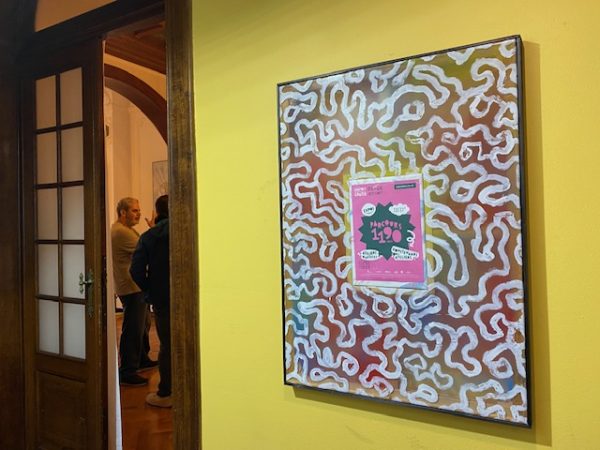
The Forêt district is reconfiguring itself rapidly. In addition to the Modern Art Gallery Wiels, It hosts a multitude of diverse artists. Many of them opened their doors to the public as part of the 4 days of Parcours 1190. It turned out to be a truly Inclusive experience in the broadest sense possible. The immersive experience of seeing the work and the artists, some of them in their private homes, created a sense of an embedded connection to their work and personalities. The artists are embedded in the district around them nd the people of the district might feel a bit more connected to the artists surrounding them. The artist has integrated the pink poster of parcour1190 into one of his works under the overarching theme of inclusion. Social inclusion can take many forms, The Brussels district Forêt has added new dimensions to it. (Image entry to Hassan Bouzougarh‘s exhibition on 2025-10-5, Brussels Forêt). 

Unity is key

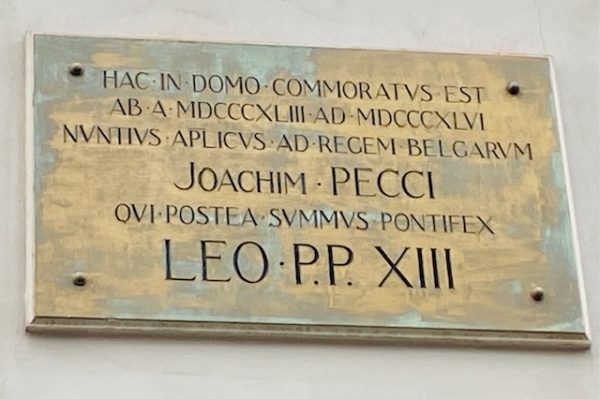
The choice of the motto “In illo uno unum” by the new Pope Leo XIV of the catholic church in 2025  highlights his choice to devote his efforts to the unity of all christian churches on earth. This is a centuries old dream of the diversified interpretations and practices within the christian beliefs and traditions. The inaugural sermon of a Pope therefore takes the form of a high stakes announcement for the coming years (Link). The next document from Leo XIV speaks to the importance to preserve the earth as the creation of God with all its diversity as a whole as well as in its parts. We might translate this back into “In illa uno unum”, where in illa stands for the earth, as a female and nature-turned version of the Pope’s chosen Motto. The choice of the tradition of Popes named Leo, like Leo XIII previously was another matter of signalling to his followers that he is firmly embedded into the Augustine tradition of Christian beliefs and traditions and practice. A concern for unity is necessarily bound to bring together peoples from all corners of the planet on the foundation of equality and a sharing and preservation of the riches of the world. (Image in Brussels, Joachim Pecci as ambassador of Vatican in Belgium before he became Pope Leo XIII).