360 days of traumatising war of Russia in Ukraine. Yet, Ukrainians manage to stem the invasion this time for a year. My generation of baby boomers in Western Europe no longer knows the day to day horrors of war. A photo-realistic exhibition organised by Dr. Justyna Napiórkowsak together with the Ukrainian Embassy in Brussels brings to us more than images of destruction. The Exhibition builds on a transparent organisation. All day and night long you can feel and reflect in front of the gallery windows of what war means to people affected. Rather than passing over the daily horrific news, it is important to take in images that will last within you. Since the exhibitions excels in linking to strong own emotions, the images tell lasting stories. Communicating about war is difficult. This exposition at the “Mont des Arts 8” in Brussels, not far from the “Place des Martyres” is symbolic. Ukrainian artists are going to stay with us, showing us what “The year of resilience. courage, determination and solidarity” mean in the Europe of today. Ukrainian youth, like the whole population, demonstrates all of this in posing for their 2022 graduation photo (Stanyslav Senyk, 2022) actually within the ruins of their city. They seem to sing: “We shall build this city on rock and roll” again. Ukrainian culture is unique. Putin’s Russia is still living in the 50s state of mind. The Russian soldiers might soon have their 60s moment “make love, not war”. For persons with Russian roots in Eastern Europe it feels like what you believed or were told was a friend before is now turning around and you shooting at you including committing war crimes (Geneva convention) on you. The exposition is a “homage to Ukraine”, Ukraine’s resistance and resilience. Teaching us lessons, lessons we should like to learn fast for the survival of democracy and our way of life based on freedom not coercion. The sociology of war informs what the term “Zeitenwende” means. Look at it, rather than look away. As previous College Master at Jacobs University Bremen graduation ceremonies were very personal and emotional events meeting students, many with their families. Ukraine 3.0 will prevail eventually. Thanks, Justyna for putting images 360° and 360 days next to this optimistic message. 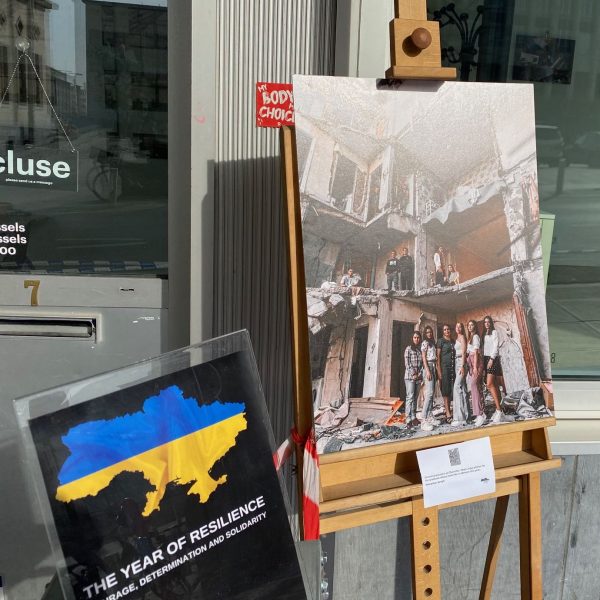
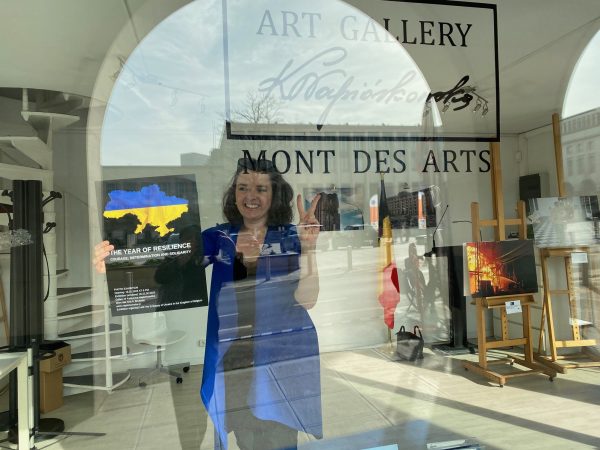
Photo K
The self portrait is a timely topic for an exhibition of photography. As part of the European month of photography (EMOP), the PhotoBrusselsFestival offers a good overview of what photography deals with in the 21 century. The Korean cultural centre (KCC) in Brussels has a long tradition to serve as an exposition in the centre of Brussels (Sablon) and is joining this year’s photo festival. The 2023 photography festival has the “Self-Portrait” as a guiding theme. Rather than entering the debate about “portrait chosen or portrait endured” (Photographica 5,2022) the self-portrait has more degrees of freedom in it. Even if it is apparently a choice to portrait oneself, there are ample examples, where the urge to produce a self-portrait is part of a wider concern for fundamental issues.
The exhibition of 5 artists from Korea at the KCC invites us to reflect on the pervasive self-portrait practice all around us. The self-portrait is not only a tool of self-reflection, which has a long tradition in art (just think of a famous drawing by Albrecht Dürer of himself), but self-portraits are also pervasive on media and social media today. Additionally, the self-portrait is a powerful tool of thinking and imagining yourself at various stages of the life-course. For centuries it had been a social or political privilege to have your portrait taken. It still is to some extent, but only if the person taking the photograph, has a special reputation. In a market difference to the selfie, the exhibition of artists in the KCC highlights the process of self-reflection that is part of creating the portrait as well as the ensuing reflection by the spectator. In looking at the self-portrait of the photographer, we might involuntarily deal first with our own perception of the image. Danger, dreams, fantasy, sorrow, pain, self-assertion and reconstruction of the self, all these themes come to mind when confronted with the self-portraits of the 5 artists (Bae Chan-hyo, Jeong Yun-soon, Lee Jee-young, Ahn Jun, Choi Young-kwi).
KCC director Kim Jae-hwan names this collection, curated by Seok Jae-hyun, “An odyssey of images leading to self-re-flection”. In referring back to the protagonists in novels from Hermann Hesse, he points our attention to the “unique journey through images as they find themselves”. To embark on the journey visit KCC in Brussels, ask for a copy of the catalogue or start by reading the title of the exposition: “Who Am I” – it is apparently no longer a question after the journey. Is it for you? More reflection on images and photos here. 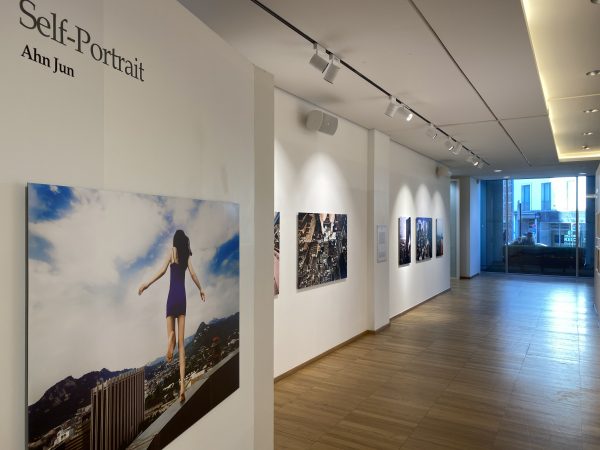
Affordable Art
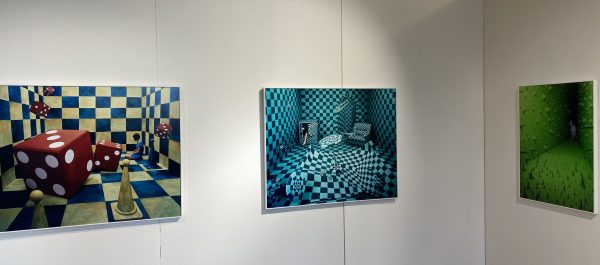
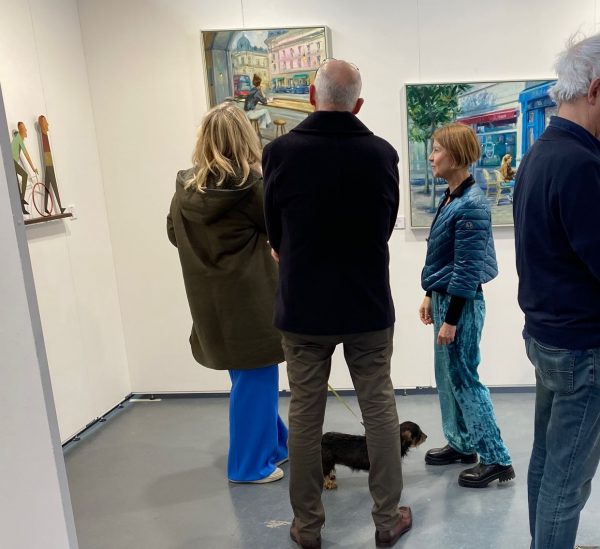
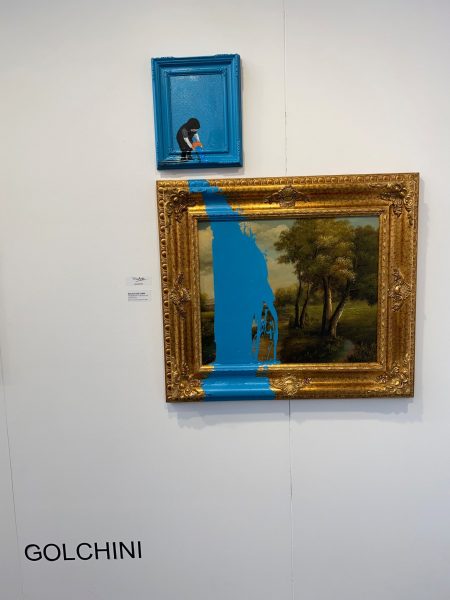
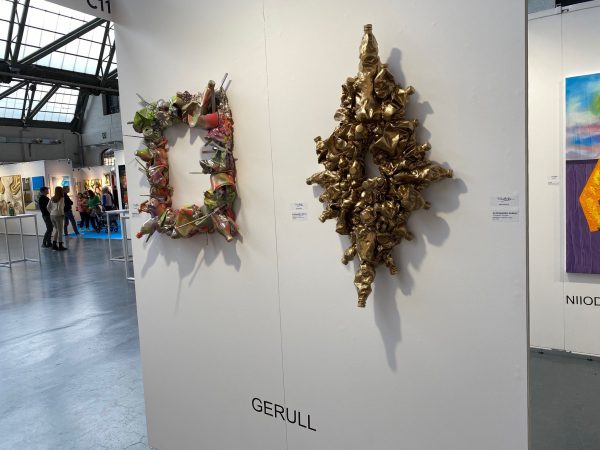
The affordable art fair in Brussels 2023 has different rules than other art fairs. First of all, well behaved dogs are allowed to visit. Underdogs might have a problem. The entry fee is an astonishing 20€, only 5€ less than “Brafa”. Inflation hits affordable art apparently more than the prestigious fair, at least at first impression. It remains questionable, whether artists represented as affordable art can actually afford to make a decent living from their art, now and at retirement. Taking into account the cost of rent, material and working time of artist, gallerist and transportation, art is frequently the art of minimalist approaches. The “garbage cycle N18” by Alessandro Gerull presented by WinArts challenges our habits of endless production of garbage by use of recycled material for making art. Not an entirely new idea, but still intriguing at affordable prices. Similarly, from the same gallery the work from Golsa Golchini invites us to “Remember to water the plants” as we might have asked somebody to help us out.
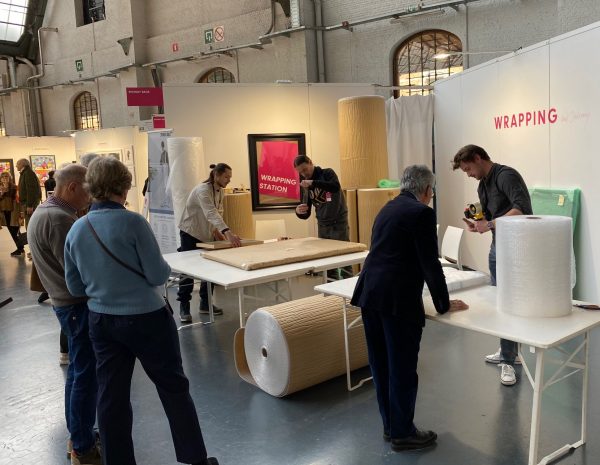
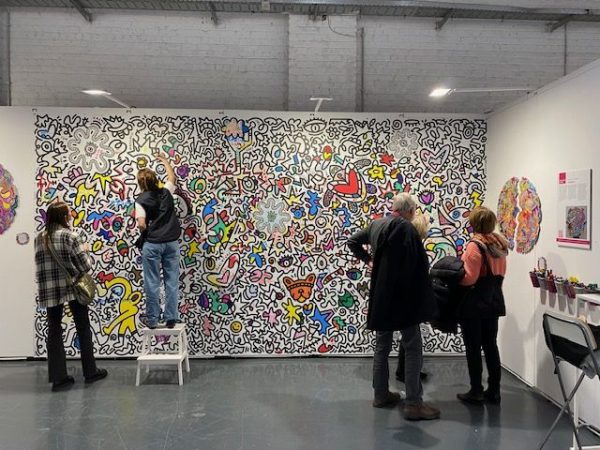
Re-use of material or innovation in photography are present at many places. Discovering new talents at affordable prices is a feasible feature of affordable art around the globe. The thresholds of entry are considerably lower than at Brafa. The surroundings of the old Tour & Taxis Logistics Centre in Brussels are an interesting excursion in modern renovation of old industrial sites as well. Not many skill-shortages in arts, except the more critical and provocative artists probably have still a hard time to find their way into galleries and art fairs. Other cities dare more daring art, be it affordable or not. The concept is a bit like coffee or “art to go”, quite many people walk away with a nice, little parcel in their hands. Even participatory art is represented, a kind of do-it-yourself, or finish it yourself drawing. It is fun to experience and to be part of affordable art of that kind to leave with some positive vibes (Roxehga). Enjoy!
Art Un-Fair
The Brussels Art Fair (Brafa 2023) with its long tradition is certainly a major highlight in the world of art in Brussels. In view of the languages spoken at the fair, mainly French and Dutch, some English with here and there a word in Spanish or German, the international reach is probably still not at the level of before the corona crisis.
The availability of established, internationally recognized art over many centuries on the art market is remarkable. Whereas before the crisis speculators bought art to shield their fortunes from a high inflation and/or politically instable period, nowadays it seems to me, that some art is returning to the market due to the need for liquidity of speculators or risks of confiscation in case of dubious previous acquisitions or ownerships. Renowned galleries, of course, provide impeccable certificates or information on them, a tricky business in itself. Anyway, the tour on the fair is a “parcour” through the history of art, mainly through the Western or European arts across centuries rather than decades. Most persons will find splendid examples according to their preferences of art ranging from paintings, sculpture, prints or other artefacts. Beyond the impressive individual art work, the arrangements and “mise en scene” of art is another learning experience at the fair. Whereas most public museums are happy to make accessible as much as they can of their collections and archives, the private art market has another objective. Effective and convincing presentation of the artefact is likely to “enrich” the value of art work as well as the seller and the dealer. Technology allows great lighting and some otherwise “sombre” artwork becomes a shiny little piece catching eyes, hearts and wallets. For some visitors it works probably the other way round.
For persons overly stimulated by art, I recommend to close the actual or virtual visit with a look at the little bit cheeky artwork presenting Belgian chocolate next to royalty (Gallery Delaive, showing Peter Anton’s “Paradise Variety” next to Andy Warhal’s depiction of a Queen, see below or their Instagram presentation). A sublime moment to repeat the experience at home at moderate prices with your very own box of chocolates. At a price of 10€ each box you can enjoy roughly 2000 of them for the price of the art work. The question is: What is more healthy? Think about mental health as well. Alternative question: Art on a Fair is fair, unfair or fair traide? 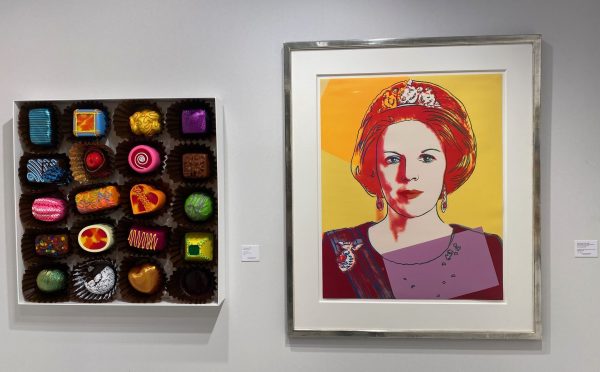
Time3
The evolution of time is fascinating as research topic. Both in theoretical as well as empirical approaches. Beyond the precise measurement of time and the use of time in measuring working time, which intensified during the industrial revolution, we witness continued struggles over the length and the organisation of working time. The 30+X hours week working time could be reorganised into a 4-days week to improve work-life balances for millions of people. The effects are not only on employees directly concerned, but also on their families and/or households involved.
The changing perception of time (as being short of time) and its evolution over time needs huge surveys collected over time (known as “Time use studies”). Inequality over the life course remains an issue with a persistent gender bias. Unhealthy and excessive overtime work is still a problem, usually negated by upper ranks in hierarchies.
Let us start to imagine different concepts of time to maybe one day overcome the shortcomings of our current understanding and use of time. Usually, time is considered a linear concept, one day follows another day and so on. Time, depicted as an arrow or a horizontal axis in graphical representations, is helpful for most processes we observe. If our aim is to explain a social process which evolves over time, we could perceive time as running with different speed in, for example, urban and rural areas of the same country. The liberalisation of women or peace movements evolved or spread with different speed in different regions. The 60s became known for many women as the decade when the control of reproduction allowed different life styles. Concerning reproductive behaviour and divorce rates a break in series compared to previous periods is observable, reduction of reproduction and diffusion of divorce throughout societies. Instead of continuous time we might speak of discrete time, in for example decades like the 60s, 70s, 80s. In retrospect “social time” seems to have passed faster in one decade than the other. We might also imagine time as growing exponentially as time². Taking into account the slowing down and successive rise again of evolution over time, the time trend might look like a rising wave (time² + time³). In econometric models testing of such hypotheses is feasible, although it is more difficult to convince reviewers of an alternative theoretical model of time.
An investigation of trends of democratic behaviour over time would need to adjust for the potential and sometime measurable return of undemocratic practices for periods. A depiction of such “social time” of democracies as an upward rising line with periodic relapses is a plausible theoretical framework. Trajectories of inwards or outwards spiralling processes are already fairly complex trends for the process of democratisation as the phenomenon to explain or the modelling of a time trend to explain the level of democratisation reached so far. Challenges of time frames for independent and dependent variables in social processes might be questioned altogether to claim that time is a spurious occurrence of events much like a process of a so-called “Brownian motion” also named white noise. In fact, not being explicit about the concept of time applied in social analyses amounts to a severe neglect. Examples of such neglect are certainly all those cross-section studies, still pervasive practice, in social sciences or opinion polls. The linear concept of time, as a chronologically processing arrow of time, is a convention useful for synchronisation of action. However, this synchronisation is already debated more forcefully with more persons being unsatisfied with the use of synchronisation as a tool to regulate our “social time” and social processes. Time zones, summer and winter times challenge our day-to-day perception of everybody living at the same time, speed or intensity. Bedtime for me, wake-up call for others, or vice versa. 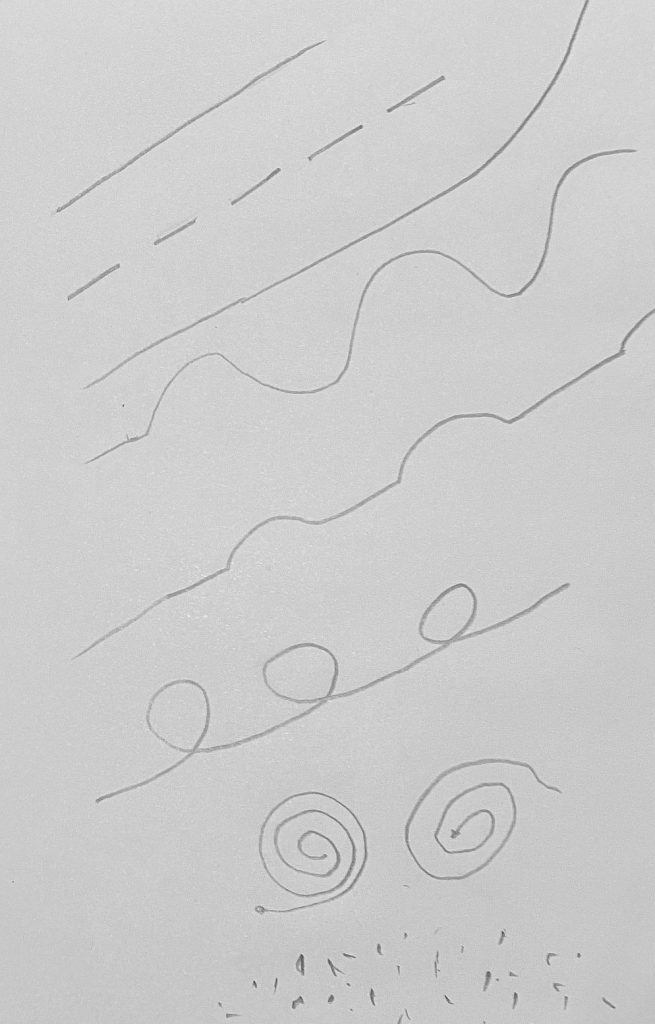
70s
In autumn 2019 the Cosmopolitan featured a headline “Stop fighting it: the ´70s are back”. At least in fashion the 70s are still with us. Platform soles, moon boots, hot pants, all had their first appearance in the 70s. We keep seeing them in fashion shows even 50 years later. In politics, the retreat of the U.S. from Vietnam in 1972, with more than 50.000 killed soldiers from the U.S. and many more Vietnamese persons, is certainly a success of the sizable activists’ peace movement of the 60s. Willy Brandt’s kneeling in Warsaw in front of the heroes monument in honour of the Warsaw ghetto marked the beginning of a reconciliation with Eastern parts of Europe.
The oil crises 1973 and 1979 caused mass unemployment and from the beginning of the 70s “Greenpeace” started its on-site activist approach against nuclear weapons, killing of whales and dumping of toxic waste. The network of independent organisations is contemporaneous to the invention of e-mail between large so-called mainframe computers using the now common address format x@y.z. The feminist movement achieved major successes with a UN resolution to ban discrimination against women. The male dominated aggressive and excessive punk movement occurred almost in parallel. New products like the Polaroid camera for instant photos and prints, video cassette recorder, the chopper bike “Bonanza” as well as the collapsible Maclaren Buggy for children defined a lifestyle around a more mobile society. Plastic furniture, bright colours with uncommon combinations brought with it a more diverse culture. Societies exploded into different lifestyles. Some taking the new Concorde, so-called supersonic speed delta airplane between Paris and New York, whereas others walked around in “wooden clogs” as a kind of folk fashion, watched Kojak the bold police inspector, listened or sang to ABBA tunes, danced like in “Saturday night fever”. In December 1979 Pink Floyd released “The Wall” which became with 23 million sales the top seller of all 70s productions (Champ Hamish p.120). Some of these artists we can still enjoy jumping up and down on stages across the world or being honoured with a Nobel prize in literature like Bruce Springsteen.
The wild 70s are remembered for the sexual revolution, the philosophy of love and peace as well as the continued spirit of the civil rights movements (Particia Massó, 2010). The sexual revolution spurred women’s liberation just as additional exploitation by thriving borderless consumption industry. Sex sells and it sold well. The cinema and print industry cashed in on the new trends and the spreading the new trends. Social relationships became much more unstable, divorce rates increased sharply in the 70s. In response, “surviving the 70s” (DeMott, 1971) as a kind of survival guide tried to give advice of how to stem the tide, largely unsuccessful for some decades.
Societies continued to explore new forms of life, while some niches of conservative life styles started to shield themselves from these outrageous trends. Vasarely imitating tapestry and design invited new forms of facing your own walls. Where to go on from this liberalisation? More equal rights for all, was a claim, but it took several additional decades to achieve some of the claims. Intersectionality, viewing for example violence as an across gender, social class and ethnicity as an overall mankind issue, became a claim much later only. “All in all, it was just bricks in the wall”, a huge wall it still is. We haven’t climbed it yet. 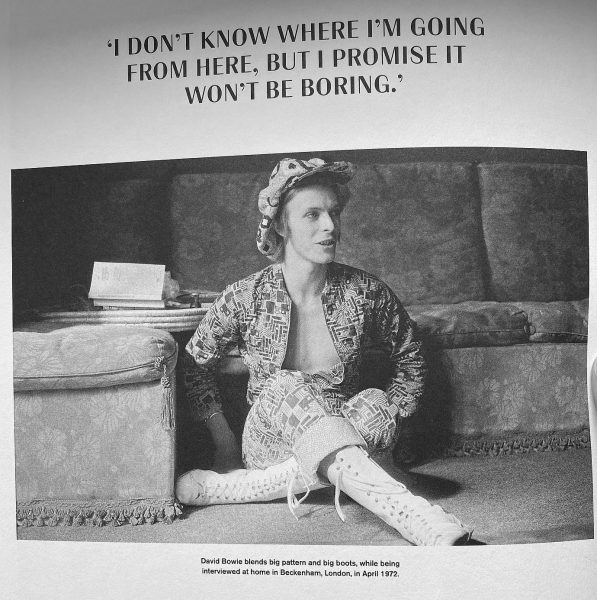
80s
The colourful 80s. That could be a summary of the years from 1980 to 1989. Certainly in fashion and design a multitude of colours dominated the 80s. Mariel Marohn (2010, Ed.) published 20 years later a visual summary of the 80s. Often thought as less spectacular than other decades, the 80s had seen some defeats to start with. John Lennon shot dead in New York December 1980. The NASA space shuttle Challenger explodes 2 minutes after the launch in 1986. Nuclear accidents (after three mile island 1979, Tschernobyl 1986,or the finding of the Titanic demonstrated not only the “limits to growth” (1972), but reminded us of deadly consequences of technological ambitions wanting to move too fast in time. Ghettoblaster, Walkman, first cell phones, facilitated a more mobile life style to more people. Overcoming the oil crises of the 70s, mobility roared ahead again. Cars, bikes, planes, CDs, windsurfing and aerobics become part of the lifestyle in these years.
Mass culture in music reached all levels of society. Music was no longer perceived as a protest movement, but a normal part of the freedom of expression. Fusion of music and dance, but also music and street art like in hip-hop music and graffiti art become part of day-to-day experiences of commuters. In the anthology of poems of the 80s we find on page 141 “Commuters” by Edward Hirsch 1983 who singles out the commuting practice as the way of life, he does not want to identify with. “Malgré lui”, in spite of himself, he finds himself in cars, trains travelling distances every day. More, faster and with more colours, time moved on. The fall of the Berlin wall 1989 was thought of as a “Zeitenwende” already. Royalty in the press with the marriage of Diana & Charles, was replaced by Madonna as the Queen of Pop and Michael Jackson as the King of Pop. The digital age entered into a new era with the Apple Macintosh desktop computer with an accessible visual interface to computing. Reaganomics and Thatcherism pushed for a revival of liberal market economies ploughing the fields for digital multinationals (GAFAM) to thrive ever since. These lasting technological changes define this period as colourful, grabbing all our senses and attention. Want to breathe a bit of the air of the 80s – visit MAD Paris. 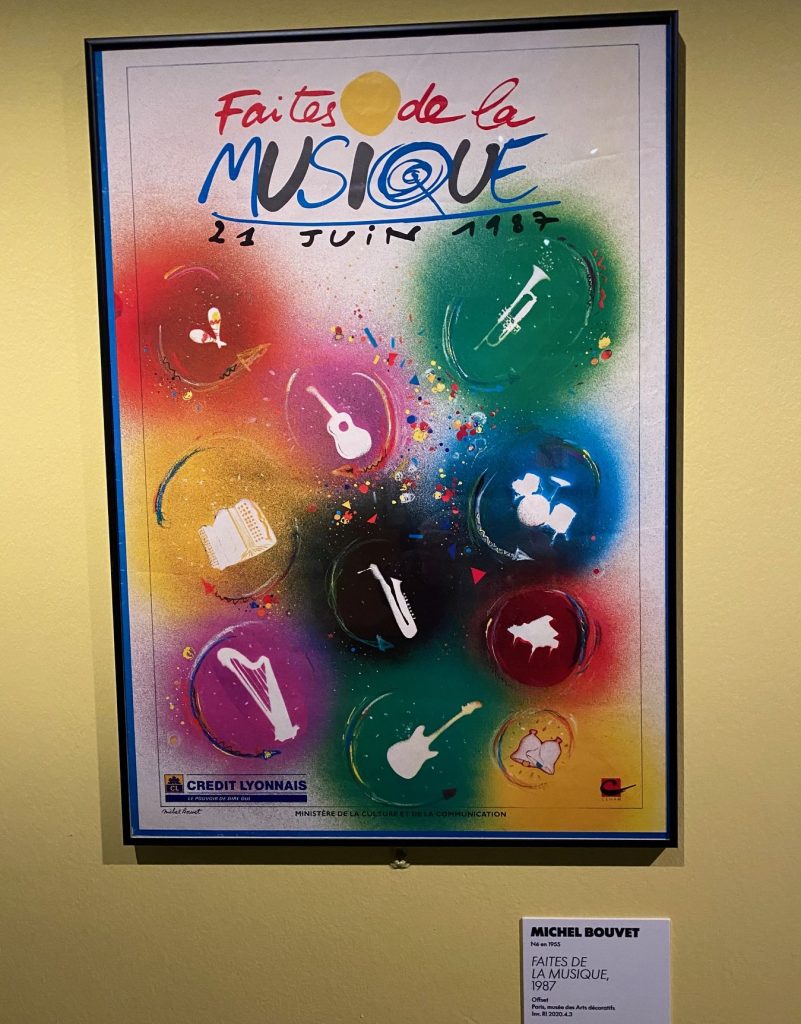
Linguistics2
Languages are simple once you understood the making of them. Take children, they learn the alphabet first, and use notions or images in alphabetical order, which you associate with this list of short words from A to Z in western cultures. From short words like “Cat” and “Dog” the learner moves on to longer ones like “Bird”, just 4 letters now. More advanced learners then use more letter words like “supercalifragilisticexpialidocious” invented for amusement in the Disney-film Mary Poppins. It sounds a bit like one of those never-ending long German words with lots of nouns just added on. This is exactly what we shall do in the following. A bit like in computational linguistics when ChatGPT is predicting the next word, we use algorithmic thining to form new combinations of an alphabetical list of notions. We start in the table below with column 1, then tell our spreadsheet to copy cells A1-01 to Z1-26 list and insert it in the second column just one cell below and insert Z2-27 at the place on the top of the list of column 2, which is A2-01. Then take this column 2 and repeat. Stop after, lets say the repeat counter is N=25.
The first 2 words combination then is “Action Zero”. Take this, enter it into Computer Search and take the top entry. “ActionZero” is an actual company name proposing actions to achieve net-zero emissions. Following this, we produce a whole encyclopedia of pretty up-to-date knowledge from the WWW with hardly any humans involved anymore. We only need to cut out duplicates and nonsense entries. That’s what most editors or teachers are used to do. Knowledge creation might no longer be reserved to the human species. Oh my God – but the machine might eventually sort this word out as nonsense concept, too. The new mantra could be ZeroGod or let us try the reset like in GodZero. In other words we move from HamletMachine to our own KnowledgeMachine. 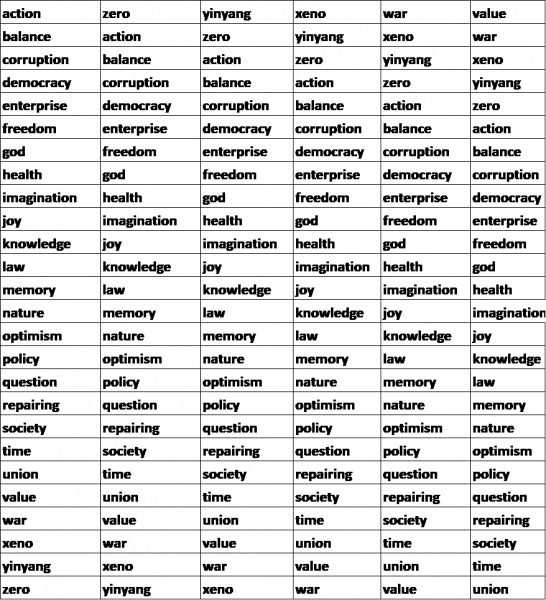
knowledgeable
It is the role of scientists to ask questions. “The New Scientist” asked in one of its recent editions the fundamental question of what are the limits to knowledge? Nice, they provide 5 parts of an answer to the question. (1) According to Karl Popper, the falsification guy, knowledge is only valid as long as it has not yet been falsified. Hence, a limit to knowledge exists where we cannot falsify a hypothesis or theory, i.e. for example when empirical measurement is impossible. (2) Mary Douglas’s messy problems have been claimed as another limit, or as the New Scientist puts it, “when things are outrageously complicated”. Chaos theory, applied in climate modelling leads us to learn about the potentially huge impact of tiny, little things. (3) Our tools to look into the sky have improved since Ticho Brahe‘s time before the telescope was invented. Most of our knowledge about the universe has only be as accurate as the tools to capture radiation or to observe planetary movements. Therefore, the next limit arises from the fact, “when our best tool to describe the universe may be unreliable”. (4) “When we can’t directly experience something”, we might be unable to understand the concept of colour another person or animal is experiencing. Listening to colours is possible for some, but generally we would not accept such experiences without recourse to drugs, maybe. Bats use ultrasound frequencies, especially trained blind persons use “click sounds” for orientation. Dialetheism is another branch of the philosophy of science and knowledge, a bit hard to digest, as empirical evidence may lose its importance. Its all dialectic or what? (5) If “logic itself is fatally flawed”, what are we left with to construct as knowledge, beyond logical sequences or even causality itself is in question. The Condorcet paradoxon or the impossibility theorem shown by Ken Arrow is an example where it is impossible or very tricky to arrive at a logically consistent solution to a social choice issue. Our tree of science and knowledge grows, undeniably, every second even. Where are we located in this forest now? Thinking of a tree up-side-down shows some have roots even bigger than the visible branches.
Does the Panda bear in the Berlin Zoo have a cognitive map of the cage in his mind? Do they care? Only recently they even had a baby Panda bear there. 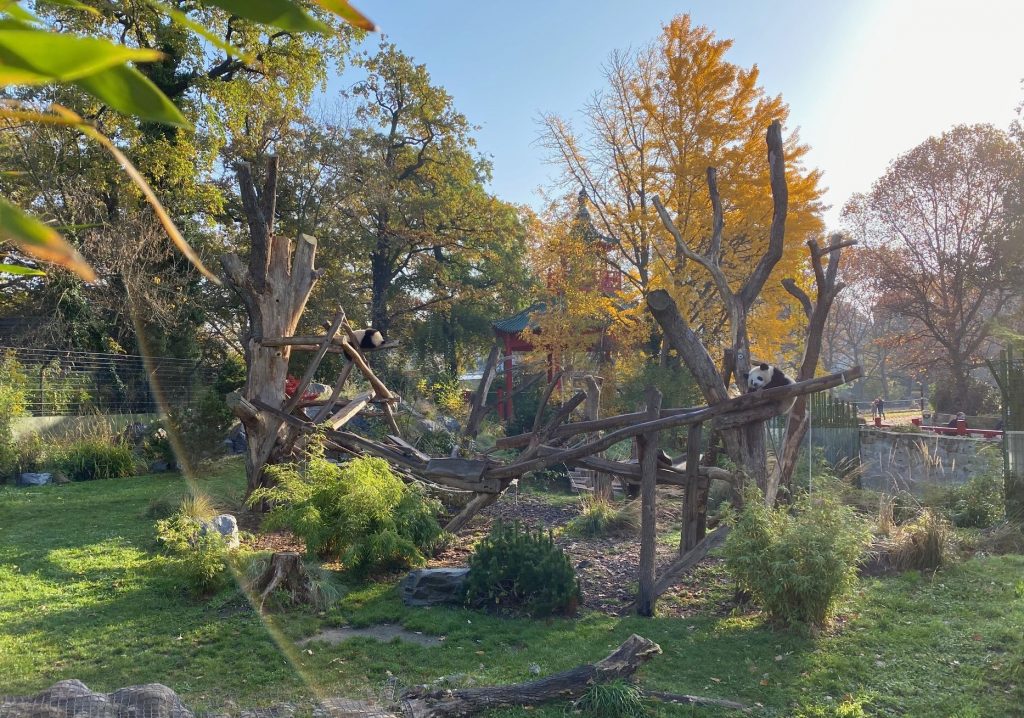
Romanatik2
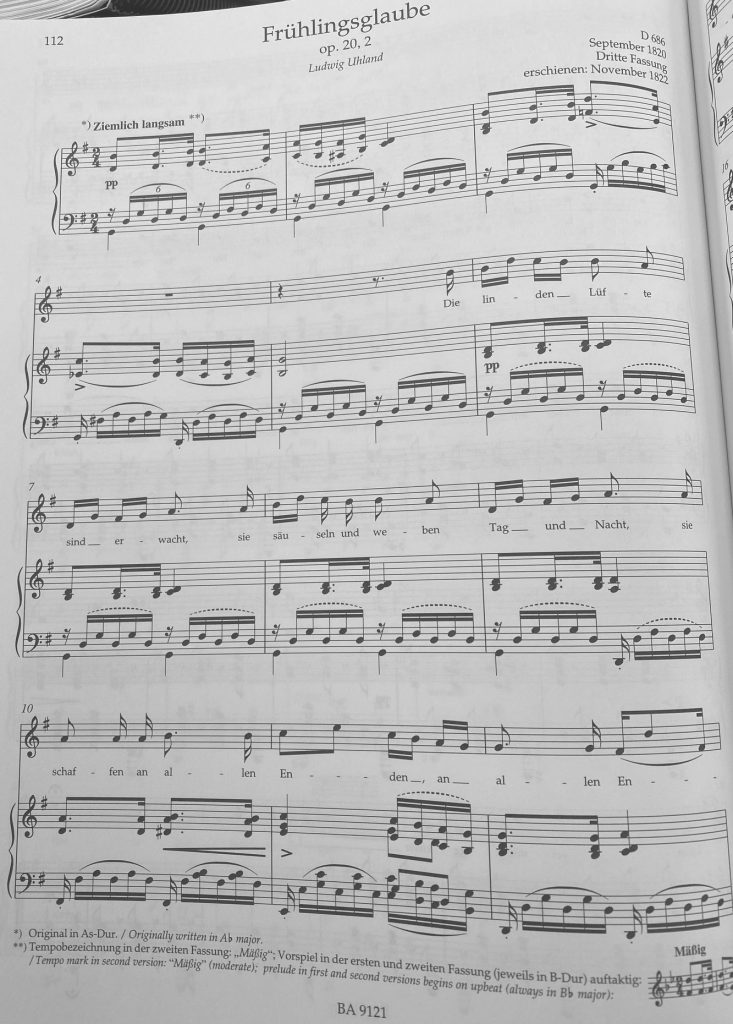
Zur romantischen Periode gehören die bekannten Lieder von Schumann und Schubert. Meine Auswahl dazu liebäugelt besonders mit den Liedern zum Lindenbaum. Die Linde mit ihrem süßlichen Duft an warmen Tagen hat Malende der Romantik sowie die Dichtenden und Komponierenden betört. “Am Brunnen vor dem Tore da steht ein Lindenbaum …” kannte vor 50 Jahren jedes Kind. Etwas weniger bekannt sind die fabelhaften Rückert-Lieder von Gustav Mahler: “Ich atmet’ einen linden Duft …”. Für mich steht dabei die Atmosphäre in der Nähe der Linde im Vordergrund. “Unter den Linden” assoziieren viele nur noch mit der Verkehr in der Hauptstadt auf dem Weg zum Brandenburger Tor. Zum Reinhören und Reinversetzen in die Romantik sind die Lieder ein idealer Weg. Der Frühlingsglaube (Schubert Op.20.2) besingt die linden Lüfte und das Aufblühen der Natur. Es keimt die Hoffnung auf, dass sich alles zum Besseren wendet. Doch etwas Skepsis ist schon angebracht. Im Lied “Die abgeblühte Linde“, ebenfalls von Schubert vertont, ist dann das Altern und die Treue thematisiert. Der Zyklus der Natur und Jahreszeiten nimmt scheinbar unaufhaltsam seinen Lauf. “Nur der Gärtner bleibt ihr treu, denn er liebt in ihr den Baum”. Das weise Herz will Gärtnern und erhalten, was so viele Emotionen und Optimismus hervorgebracht hat. Wir müssen die Bäume retten, aus Pflicht die Romantik inklusiv und erlebbar zu erhalten. Dazu können wir mit den Linden ja schon einmal anfangen.