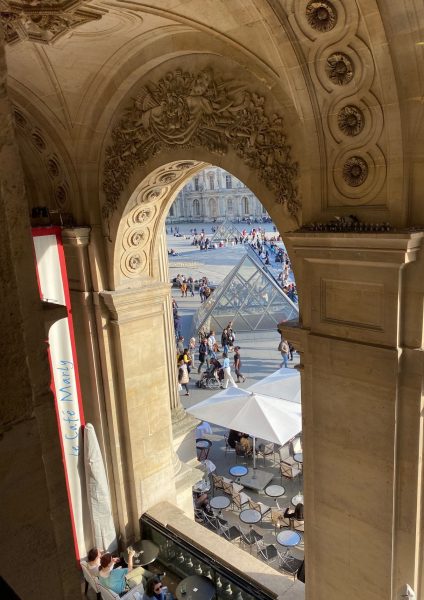
State capitalism

It is the 2025-12-17 edition of the Wall Street Journal (WSJ) that touts President Trump’s governance as “state capitalism”. Through a listing of recent state interference into the functioning of the economy, the branding of this as state capitalism by the capitalist-owned press is without precedent. The President’s office has obliged NVIDIA to pay 25% of revenue from its China business on advanced semi-conductors to the Trump-run government. We might call this a kind of kick-back or blackmailing, if you want to expand or keep your business with a specific client. Major institutions like the Central Bank (Federal Reserve in the USA) are tackled to follow state orders rather than keep an eye on their independent assessment of facts about the economy. Nomination of governor positions have been subject to persistent interference from the president’s office rather than the government taking a moderating role of divergent interests, competences and lobbying.
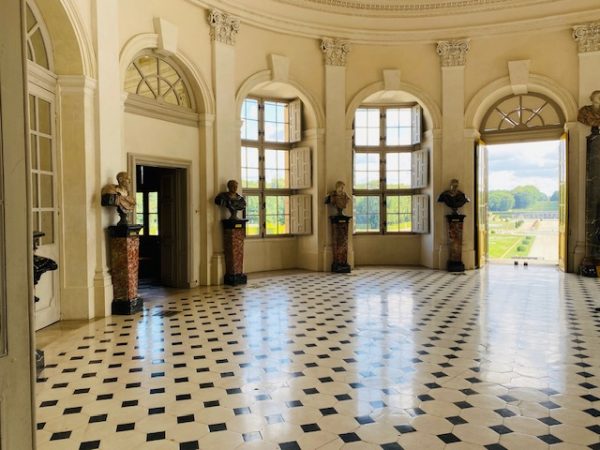
The medium and long-term inefficiencies of an “at-will economy” have several examples, many in South American economies. The US economy is moving South in several respects, with the loss of the value of the $ compared to the €, maybe even devaluation is used as a strategic economic weapon. (Image: Ballroom in Chateau Vaux-le-Vicompte, France)

Bulimia Capitalism

Each time a wave and speculative bubble in the economy is building up or even bursting there are thousands of people who become drawn into chaos. Let us quickly review: Oil bubbles in the 70s, financial crisis and  subprime lending in housing markets, 1st internet bubble and the year 2000 bugs, AI excesses in 2025. These boom and bust cycles resemble the medical and psychological patterns of a bulimia nervosa. The overly optimistic outlook for AI companies’ future profits and shifts in the size of office space needed for companies announce bulimic behavior when at the same time vomiting by the same companies occurs with regard to investments in nuclear energy plants even in the sites like Fukushima in Japan or Three Mile Island in the USA. Bulimia Capitalism seems to be eating its own children. The upcoming year 2026 will be full of revelations in this respect. (Image: collection of about a hundred barbies exposed on a flea market in Brussels on 5 levels).

Legal devices

In the 1st chapter of “The code of capital”, Pistor (2019, p.3) specifies the 6 major modules of the code that creates a lot of wealth, but is also eager to keep it to a few privileged persons in society. In order of appearance and not exclusively they are: “contract law, property rights, collateral law, trust, corporate, and bankruptcy law. In these modules 4 major attributes of assets are defined for the holder and later exercised courts as well as other state institutions: (1) priority, (2) durability, (3) universality, and (4) convertibility. In other words, the legal devices rank claims in a qualitative sorted order and guarantee the value of such claims over time and space. The fatal vice of the device is the convertibility of private claims in to one against the state as the ultimate insurance against a risk of credit default by other parties. Similar to bitcoins today, the financial derivatives make it possible to “create money” out of nothing, just like a “deus ex machina”. The states had and still have no control over this “artificial creation of money without being linked to a kind of reserve value.
Such intangible assets may contribute to wealth creation as tools that facilitate a faster turnover of goods and services in an economy or between countries and thereby create corresponding real value. The control of trade and currencies, however, becomes also subject of additional possibilities of fraud and crime. Here again it is the legal system that is challenged to protect the application and efficient functioning of the 6 major modules of the code of capital. The concerns of inequality in and through law are relegated to politics and policies within single states.
The final chapter 9 states rather bluntly: “capital rules by law” (p.205), but it enumerates several ways, how to curtail this code of capital. Tax sheltering in other countries or taxation by choice of country should be made more difficult. Blacklisting is efficient in most cases (p. 225). Arbitration might work if somehow an equality of power is achievable. Internalization of externalities is easier said than done, but needs to be considered right from the beginning of  changing laws. Purely speculative contracts should be referred to “casinos” and betting instances and no longer be eligible for business contracts. The revision of the education of lawyers is another part of the counter measures. The autopoiesis of the legal system and its profession has been highlighted by Niklas Luhmann before. A great deal of the difficulties we face with the code of capital appears to be due to the self-referential exclusionary practice of legal devices. We have to bring society back into the discourse of law in order to preserve democratic structures and the equality of chances in society.
The strength of “collective rights” in labour law, of cooperatives or the share economy allow for potential remedies to the hijack of law through capital and exchange markets. Open source movements as in software creation are forward-looking models that the creative commons licensing for security, but also equality purposes. Employees’ input in the process of capital creation should be rewarded and codified accordingly. Last, but not least, countries will have to reclaim legal authority in parts of law that affects “the wealth of a nation” and its distribution. Similar to  “no taxation without representation” we should claim “no legislation on us, without us”. The role of legal advisory firms to draft laws outside of parliament has probably gone too far already. The task of politicians to understand the consequences of what they vote for in parliament has become more and more difficult, yet there is no way around a drastic increase in competences, legal and otherwise.

Juridification

Law has entered almost all domains of life. This has a lot of positive effects. Law in general, we tend to believe, has an intrinsic link to justice. If you go to court after failed attempts of mediation you will get a judgement(s) from several instances at times and with substantial delays. Justice, however, is a much more complex issue. Ethical concerns enter the stage as well as the ability and willingness to devote substantial resources to support a legitimate or legal claim. A kind of balance of power appears to be a necessary precondition for justice to be achieved. Of course, jurisdification is a process, where time plays to the advantage of one or the other side of contestants. The book by Katharina Pistor, “The code of capital. How the law creates wealth and inequality” has highlighted the importance of the legal intermediaries in the juridification and codification of modern societies. The basis of today’s capitalism relies on an expansive definition of what constitutes capital. The transformation of debt into a product, which can be traded by a “second hand” rather than the “invisible hand”, had created a warning to societies that the extension of rights and volumes led to a financial crash of the most powerful economies. The states, i.e. taxpayers, had to step in to guarantee credits taken out by banks and other financial institutions and ensure the solvability of underwritten debt. The state guaranteed for losses of capital and enforced the rule that deficits had to be shared among all. A well calculated bankruptcy of the system was then managed by lawyers and bankers rather than the politically elected representatives of the people.
The juridification has been extended to intellectual property rights as well. This made the fruits of intellectual property tradeable. It is rarely the authors that negotiate translation rights or the use of a novel as a screenplay. You better rely on a specialised lawyer to assist you in the national or transnational defence of intellectual property rights.
Artificial intelligence relies on huge data inputs. It is not an easy task to define ownership of data, especially of what we believe are “your own” data. Juridification means that a process of narrowing down definitions or the opposite, absence of a proper definition, creates market opportunities to trade data and the right to collect or use those data for specific or encompassing purposes.
Are we still all equal in front of the law? Or do the better informed have a significant advantage over the rest of society? Financial resources play a vital in the legal system as well. Collective solutions, like associations of consumers or trade unions, have demonstrated that they may operate as a societal antidote in the biased codification of capital. Democracies are well advised to open their eyes to the blind spots in the “regard” of justitia.
(Image: Auguste Rodin, Cariatide à la pierre, enlarged bronze statue in Paris)

Patient Capital

There is something cultural about capital. Different cultures use different narratives when they commonly talk about capital. In Western capitalist societies it is common practice to cite “capital is a fugitive dear”, meaning that people who command sizeable amounts of capital tend to flee places once they become to agitated, especially by politicians. The Eastern narrative surrounding capital is more focused on “patient capital”. The newspaper “China Daily” has more than 6.000 entries referring to this term. On 2024-9-26 (p.9) the Japenese economist Kazuyuki Motohashi praised the Japanese economic system and its specific form of patient capitalism as based on” long-term, stable investment, which enables companies to achieve sustainable growth in the long run”. The Chinese economy suffers as Western capitalism from excessive focus on short-term profit seeking and this causes huge market flucturations shifting quickly from shortages to oversupply and back again. Short-term rent seeking is driving whole industries into fluctuations that are hard to attenuate through other economic (fiscal and monetary) as well as labour market policies (training, re-locations, internal migration).
It is interesting to witness that recently in Germany an example of a bank that had benefited from a patient capital approach of the German government for more than a decade (Commerzbank) is now prone to a bit of a hostile takeover from another bank probably more interested in the short-term rent-seeking. After all, banking and the varieties of capitalism approach highlight that at the very heart of economic rationale there remains a little bit of a cultural twist to understand what is happening in international economics and competition.(Image: Musée Rodin Paris 2024, Le Penseur”)

Anger

It feels like we live in the “age of anger”. Anger was a predominate feeling in the “French yellow vest movement” spurred by sharp increases in petrol prices. In Germany the notion of “Wutbürger” had a short career to express anger of citizens against, against whatever could arise anger. There are plenty of issues of course that will cause arousal in public politics. The more a government enacts change, be it necessary or not, the more it is to arouse its citizens. Parliamentary democracy is thought to solve this through majority voting of the equally represented in parliament. Minority rights have been installed to safeguard the majority to become too overwhelming, but any close decisions on hotly debated topics are likely to cause substantial anger within a society.
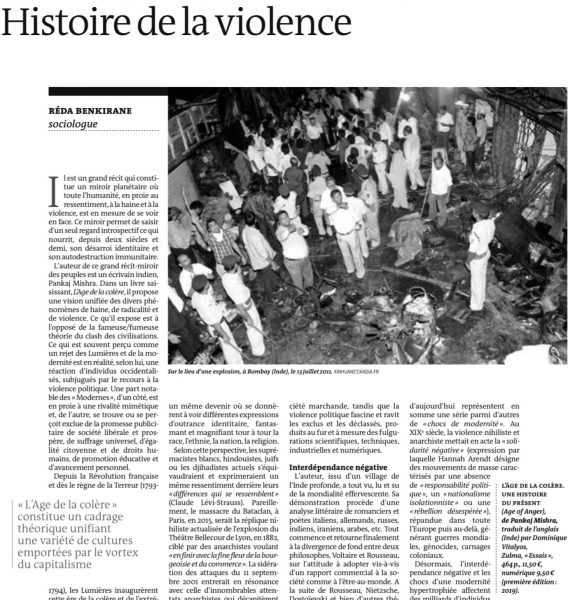
This is far from being an issue only in Western democracies. Pankaj Mishra claims, this is a world-wide phenomenon and history provides ample examples for it. In his book on “The age of anger” he challenges the predominantly Western political theory, deriving from an opposition of Voltaire’s and Rousseau’s political thought to hold the individualisation and globalisation of an economic model, traditional capitalism, responsible for the rise of anger across the globe.
This critique of capitalism is now translated into French. Several movements of anger in France probably find some unifying roots of seemingly unrelated outbreak of anger, violence and subsequent repression. Old arguments of critics of capitalism stand up again. The challenge to democracy comes from the extreme right even more than from the extreme left. Re-imagining capitalism is needed more than ever to safe the survival of democracy. Participative democracy like in Bürgerräte in Germany or deliberative democracy practiced by President Macron in France are an important part to stimulate involvement of more people in the preparation of decision-making. Not perfect as procedures, but small steps ahead to confront and address anger of the citizens and people at large.

Political theory and inflation

A political theory in the area political economy is prone to be labelled as classical, neo-classical, Keynesian, Neo- or Post-Keynesian or heterodox economics. This is a university level course in the history of economic ideas, if you like this. Let’s try something creative here. We have unprecedented levels of inflation currently in Europe and many other parts of the world. Reasons for this are higher prices for energy, transportation and food. Anything else you need for life? You must be an artist or a priest, a bit off the normal, it seems to many economists. Add to this that, we want to foster strategic autonomy in Europe rather than anything from China that is cheaper and more polluting. In 2023 we have inflation stay with us for some years. Central banks give out warnings in this direction now as well, having negated the problem for far too long (their own statistics ECB on long-term forecasts of inflation).
Besides the ample economic advice (IMF), depending on which theory of money and the economy you adhere to, political theory allows a refreshing perspective on these economic facts and trajectories. (1) From an international strategic perspective, countries that have to renegotiate a lot of their debt or take new credits to finance imported food, energy or transport will run into insolvency rather quickly. Self-sufficiency becomes an economic asset not only a geo-strategic one. Turn around globalisation is a side-effect.
(2) Countries eager to build new public infrastructure, irrespective of concerns for bio-diversity, might reschedule or abandon huge projects, thereby reducing their CO2 footprint. This reduces the official counting of GDP, but has beneficial effects to save the planet in the medium term.
(3) Individuals and households will have to reconsider their consumption patterns: more expenditure for food, less for energy and/or transport. Behavioural changes might be induced by inflation. Less of some form of consumption, guided by inflation, will induce reductions in CO2 most likely as well.
So far this is only applied economic theory as in any textbook. A more challenging political economy question is to ask: can we come to like inflation? Can we change our preference set (ECB growth dogma) for economic variables? Southern countries in Europe seem to like inflation more than the North. Does this depend on historical experiences or is it cultural or personality trait? There is again a huge money transfer due to inflation within the Eurozone. The less indebted countries pay with loss of their purchasing power of their savings and indirectly pay for the highly indebted countries mainly in the South. European and international solidarity will be put to a tough test.
As governments fear of being voted out of power they tend to soften the price signals from markets. Again, it is cultural more than economic to what extent people are willing to accept state interference in economic affairs even of households need for food. From an ecological point of view inflation could be our friend due to the potential to induce behavioural changes. However, more expensive bio-products seem to get crowded out due to further price rises and many even middle-income households seem to return to cheaper non-bio food in many countries. The distributive effects of inflation are a major issue here. Same rationale seems to apply to transport. If you can no longer afford CO2 saving transport by train, since it has become overly expensive more people are likely to take a heavily polluting low-cost flight to your holiday location.
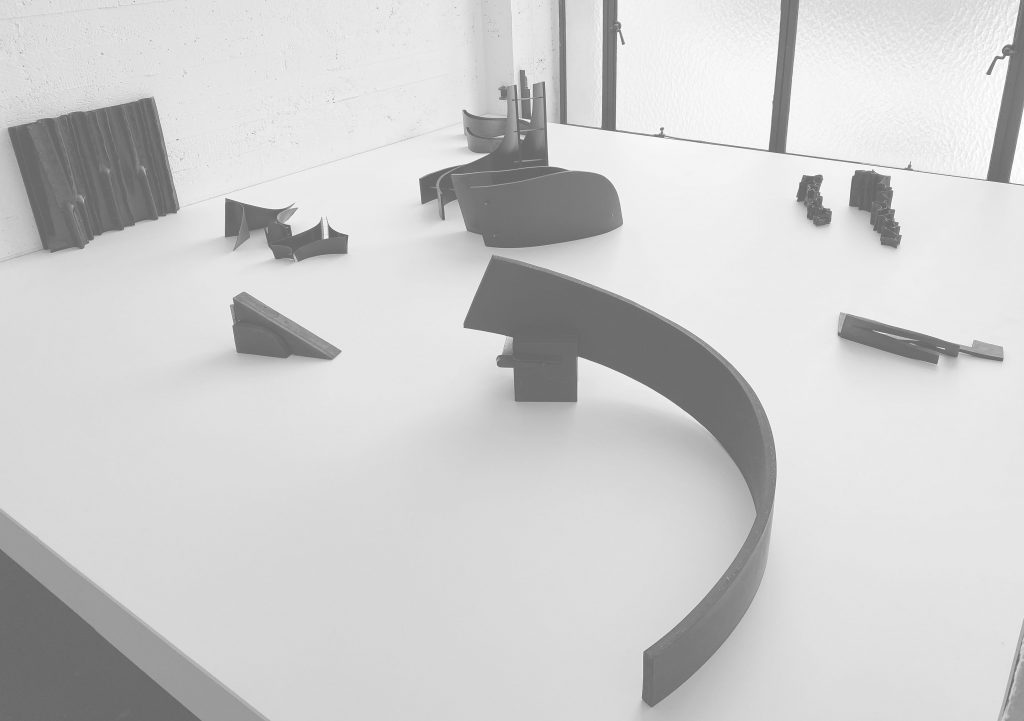
Hence, from a political economy perspective liking inflation might well turn out to be a rich, white man’s perspective on the economy as the global South is likely to suffer most having no resources left to invest in energy and CO2 -saving in general. Price signals may induce behavioural changes for the better of us all. However, the story it is not only about allocation of resources, but also about distribution. There we should embrace a renewal of trade union strength to correct imbalances in the distribution of earnings as the basis for consumption and investment of households as well. (Image: Tapta, at Wiels Gallery in Brussels, 2023-6, mostly untitled work, one with title: on the edge of time).
Gaslager

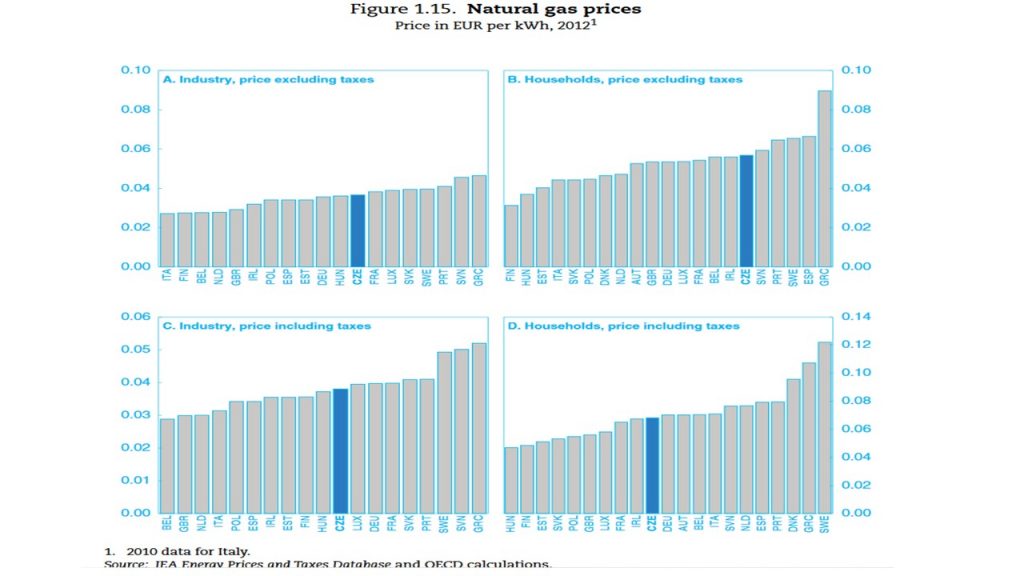
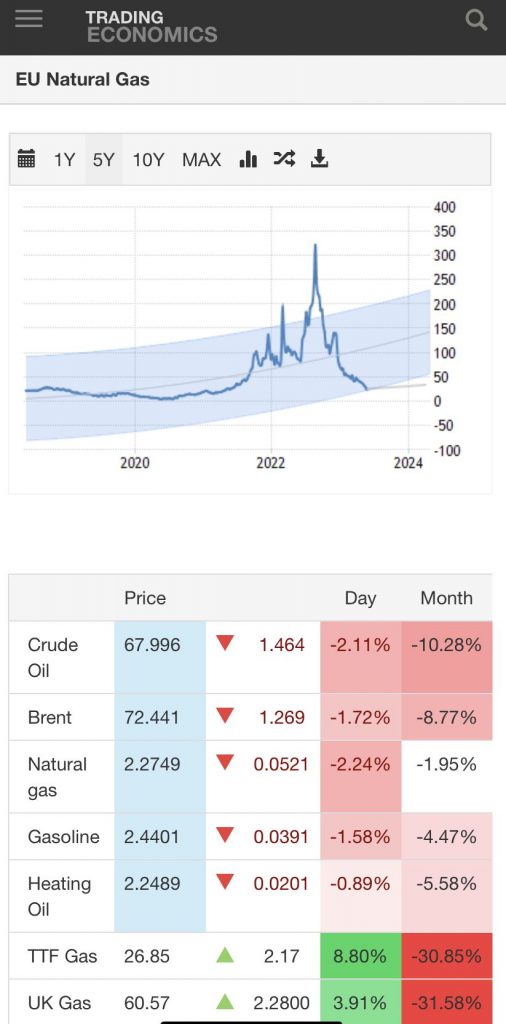
Der Gaspreis (TTF in Amsterdam) ist zum Ende Mai 2023 auf ein Tiefstwert von 23,50 € pro Megawattstunde zur Auslieferung einen Monat später gefallen. Der Unterschied zum Höchstpreis von ca 300 € übersteigt die Erwartungen der meisten Kunden. Das sind die Spekulanten und Zwischenhändler. Der Preis für die Endverbraucher bewegt sich weniger. Kartellbehörden in Europa müssen wachsam bleiben damit die Endverbraucher nicht zusätzlich zur Kasse gebeten werden. Gaslager für zivile und militärische Zwecke wurden vom Bund billig vor Jahrzehnten verkauft (Privatisiert) und sind jetzt wieder zu einer unverzichtbaren Infrastruktur geworden. Der Kapitalismus fällt immer wieder in seine eigenen Fallen durch exzessive Volatilität. Öffentliche Infrastruktur braucht langen Atem und sollte dazu dienen, die übertriebene Spekulation mit der zeit Grundversorgung der Bevölkerung zu vermeiden. Gaslager, Öllager, Wasserspeicher und Stromspeicher bei zentraler Stromerzeugung gehören dazu. Dezentrale Lösungen verstärken die Resilienz und Souveränität weiter. Europäische Solidarität hilft enorm, diese Herausforderungen zu meistern. Wichtig ist nicht nur der Einkaufpreis, sondern der Preis vor und nach Steuern sowie Unterschiede zwischen Industrie und Haushalten (Beispieldaten OECD 2014 für Jahr 2012, IEA Gas Market Report various years). Die ökologischen Sauereien rund um die Shale-gas Förderung in den USA haben uns wohl geholfen, besser durch die künstliche Verknappung von Gas für Europa durchzukommen durch die Erhöhung der gesamten Fördermenge. Ein weiteres “worst case szenario” zur Bekämpfung von Preisschocks. (Paper Link)

Macht Raum Gewalt

So heißt der Titel der umfangreichen Ausstellung im Haus der Akademie der Künste, direkt neben dem Brandenburger Tor. Nur 3 Monate bis 16.7.2023 lässt sich durch die Architektur, Planung und Umsetzung zur Zeit des faschistischen Regimes in Deutschland taumeln. Angesichts der monströsen Verbrechen und der unterliegenden ideologischen Doktrin wird die Frage „macht Raum Gewalt?“ auf 2-fache Weise beantwortet. (1) Raum macht Gewalt und (2) Gewalt macht Raum. Das gestalterische Element von Architektur schafft Räume, die individualisieren, personalisieren oder entpersonalisieren können. Die Uniformität im Faschismus kreiert eine visuelle Sprache, die durch ihre Art Räume und Räumlichkeiten zu gestalten gezielt entpersonalisiert. Gewalt- und Machtausübung fällt darin leichter. Räume und Gebäude wurden der Menschlichkeit enthoben, gebaut, den Menschen zu überleben.
So fällt es in entpersonalisierten, bewusst überdimensionierten Raumkonzepten, leichter Gewalt gegen Menschen vorzubereiten und durchzuführen. Die 1. These „Raum macht Gewalt“ lässt sich sozusagen empirisch in der Ausstellung durchwandern. Die 2. These „Gewalt macht Raum“ wird ebenso eindringlich durch die Dokumentation der Zwangsarbeit, Konzentrationslager und massenhaft ausgeübten physischen und psychischen Gewalt durch die herrschenden Faschisten verdeutlicht. Wenn Wörter und Stimmen von Augenzeugen zu fehlen beginnen, werden die Texte, Zeichen, Bilder und Stummfilme zu Dokumenten, wie mit Gewalt Raum gemacht wird. Der expansionistische, imperialistische Drang der Faschisten machte vor keinen Grenzen halt. Juristische Grenzen, menschenrechtliche, moralische oder Landesgrenzen spielten keine Rolle mehr. Rechtsbeugung und Missbrauch war an der Tagesordnung, um Raum, Macht und Gewalt menschenverachtend durchzusetzen.
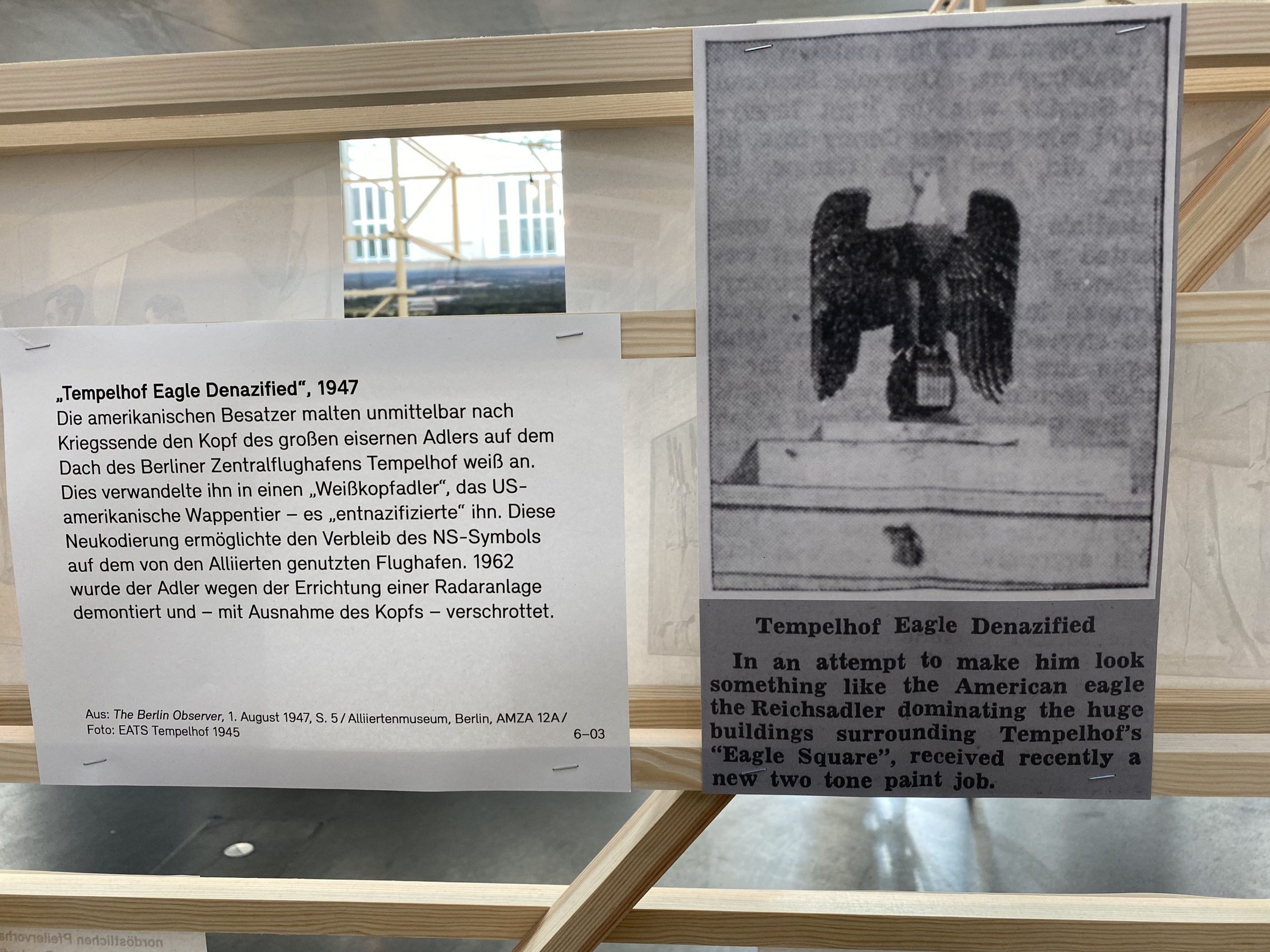
Die architektonischen Nazi-Hinterlassenschaften, weiterhin sichtbar in Berlin, München und Nürnberg werden nur in den markantesten Bauwerken dokumentiert. Das reicht schon, den historisch bewussten Blick zu schulen. Selbstverständliches Hinnehmen von diesen Anblicken verbietet sich. Das Übertünchen des Adlerkopfes mit weißer Farbe, Symbol für den amerikanischen Adler, sollte in uns die Dankbarkeit für die Befreiung von der Nazi-Diktatur festigen und dazu beitragen, den Tag des Sieges 8.5.1945 der „Alliierten Streitkräfte“ als Tag der Befreiung zu feiern.

Walking

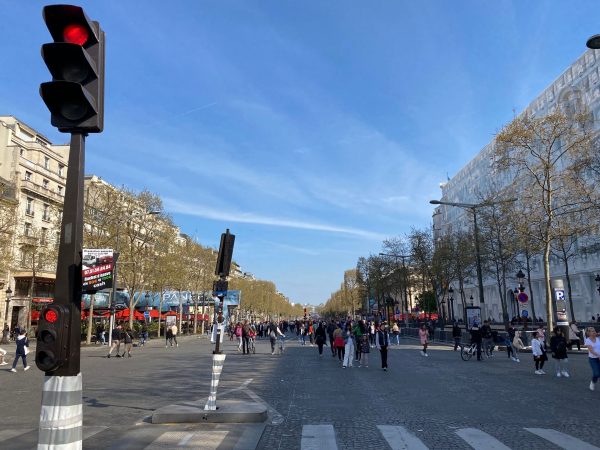
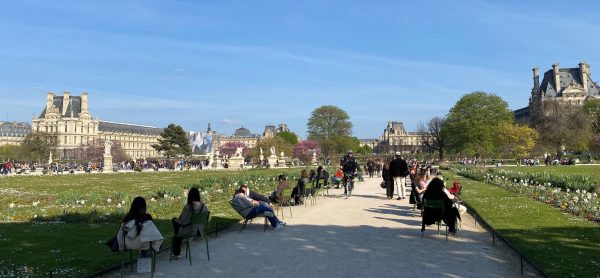
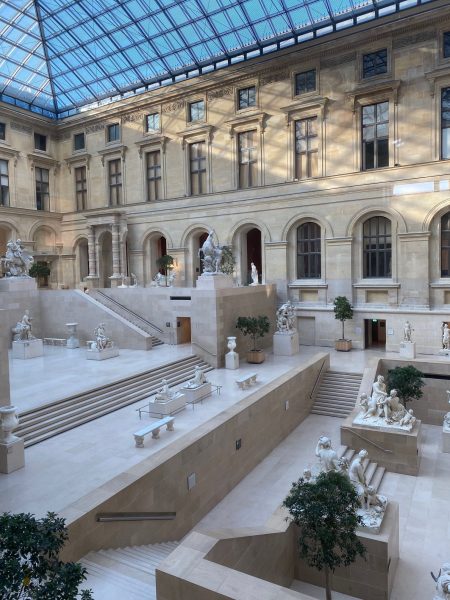
Yes, walking again. It is so nice, if there are a few roads blocked for car and bus traffic in central cities. Walking the city becomes a marvellous experience. On Easter Sunday 2023 the Champs-Élysée is great because strolling down the avenue without paying attention to road traffic offers an even better view on the surroundings. Why don’t more cities dare to lock out cars to facilitate pedestrian circulation and reduce air pollution at the same time. No problem to reach more than the WHO recommended 10.000 steps/day on such a sunny day in Paris. Inside the Louvre, another chance to achieve new records in mileage by foot.