In political science the stability- instability paradox is much discussed (paper with game-theoretic analyses). The reliance on nuclear weapons, supposed to enhance stability in the world order, is rather driving the instability making conventional wars even more likely. Michael Beckley argues that containment of China’s expansionary policies is needed to avoid even more disastrous confrontations (Foreign Affairs, 2023 Nr.5).
Different from the German cold war doctrine “Wandel durch Annäherung” Beckley argues that commerce has not brought US and China closer together, but it is actually driving them further apart. After decades of trade imbalances with China the economic power of China can be felt as overwhelming. But there are multiple risks to its economic model and strategic interests to secure raw materials from across the world. Aging of China is another economic and social fallacy difficult to overcome with short-term measures.
We are about to witness another couple, triangular or more relationship to establish as “enduring rivals”. This may last for centuries rather than decades, although the French- German couple has managed quite successfully to turn such rivalry into an “entente” relationship of importance to the whole European continent. The shift in emphasis of US foreign policy is going to be significant. Containment with Russia has worked, so why should it not work with China as well. The likely answer is demographics again. The size of the internal market of China is sufficiently large to continue a splendid isolation after heavy one-sides trading is over. State control of the internet and social scoring of the population is also a powerful tool to suppress the formation of free will and independent opinions. After all, instability in external relations might even be used to ensure internal stability. Such strategies are common to all political systems. The stability- instability paradox is staying with us and this is rather stable even if the discussion changes continents. (Image: Comical battlefield Map 1854, by Berendsohn shown at Waterloo, Museum 2018) 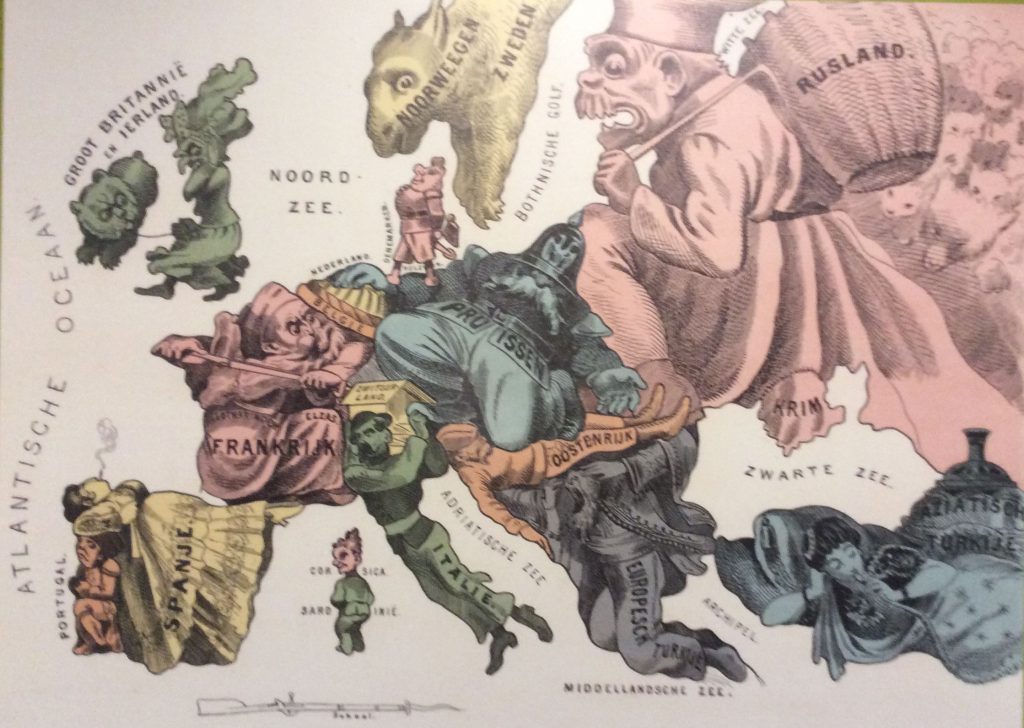
Politicians and Literature
Biographies as well as autobiographies of politicians receive a lot of attention. Even spouses of politicians or artists benefit from this sensational effect (Obama). But beyond these ex-post or after-office effects, it is more interesting to look at what literature or authors have had an impact on the life and, maybe, office of presidents. So-called literary couples or specific relationships between artists or authors can reveal interesting additional information to understand “what made these personalities”.
In “Le Monde” there is a series of articles devoted to such relationships. It is a kind of romantic summer reading satisfying nosy looks into the private lives of politicians and other celebrities of a more intellectual kind. On the 25th of August 2023 it was the turn of the relationship between Francois Mitterrand and Marguerite Duras entitled … “menteurs sublimes, forcément”.
Their long-standing relationship had in common to cover-up some of their failures in the Nazi-occupied France.
Post-war each person had more than just sympathy for the other person’s accomplishments. The interesting feature to accept advice and criticism from the other person is rare for highly exposed persons. Relationships between artists and presidents are somehow tricky for both. As artist you can get instrumentalised by power rather quickly. As politician you run the risk to open-up too much, as they are rarely unobserved. Paparazzi or other agents go a long way to get or make up a good story. “Tell me what you read, and I tell you who you are”. The relationship between literature, politics and politicians will never be easy. It remains good stuff for literature and cinema. 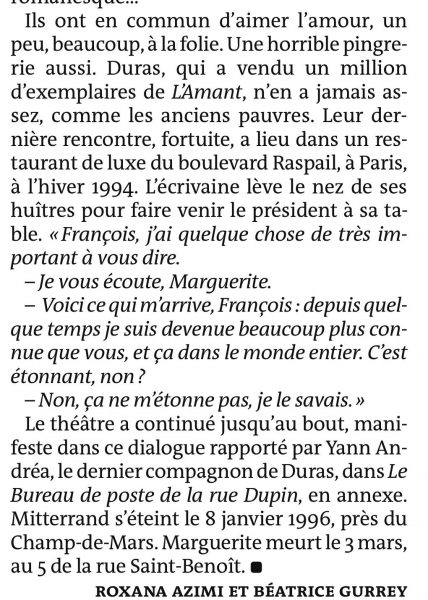
Reformation
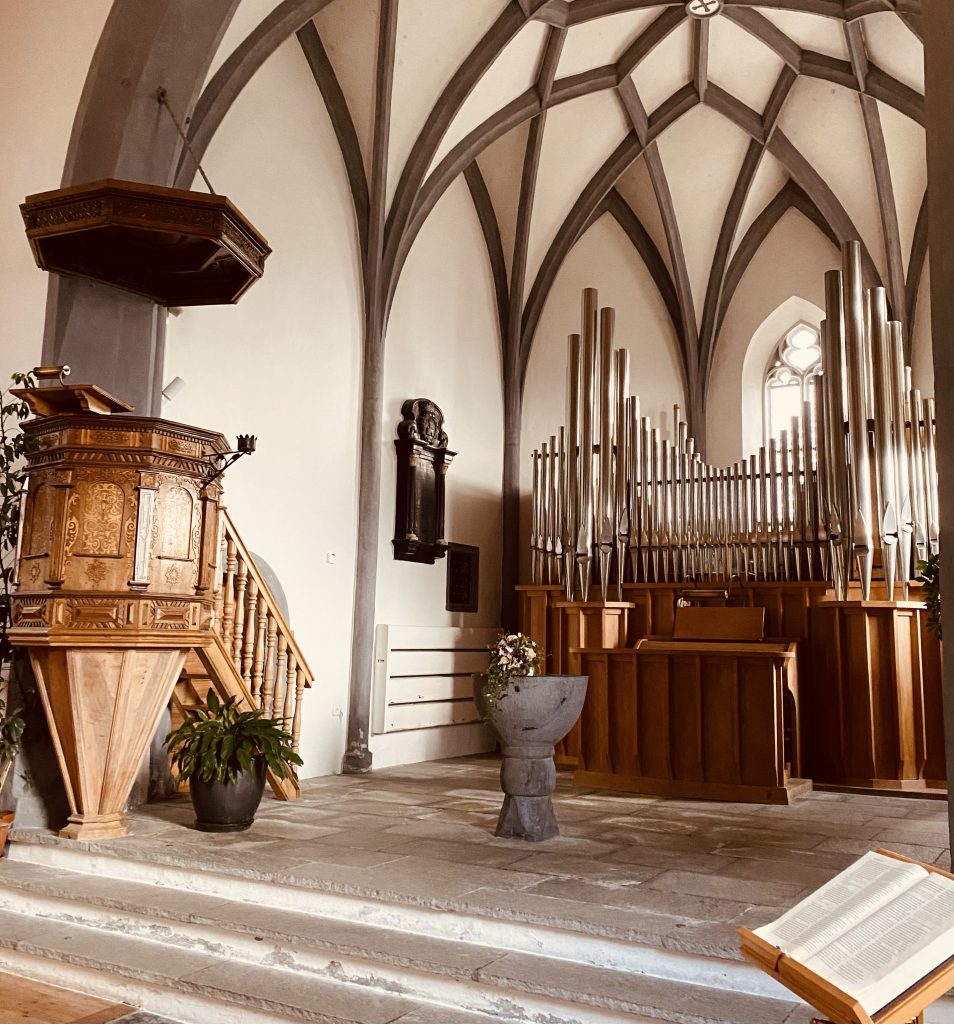
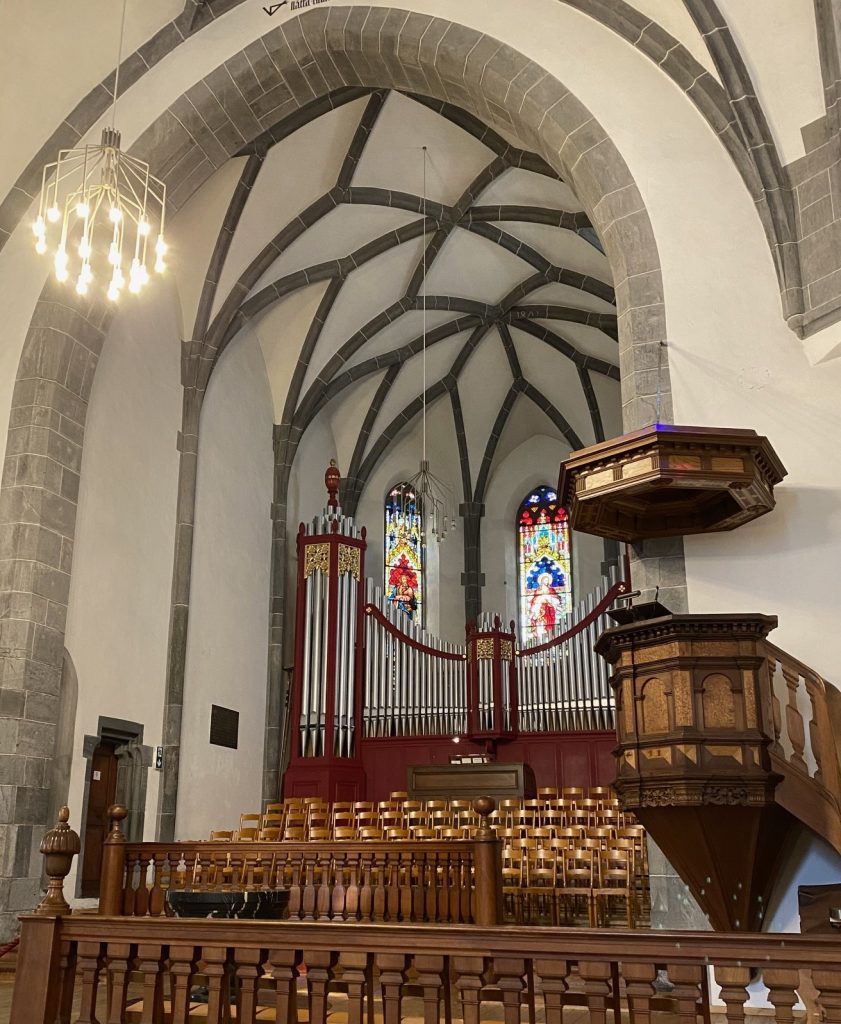
Die Reformation vor 500 Jahren war fantastisch. Die schweizer Stadt Chur hat dabei ihre eigene 500 Jahr Gedenken und Geschichte der Reformation. Jetzt steht uns die Reformation der Reformation bevor. Wie wird die aussehen? In einer kleinen Kirche im Kanton Graubünden, nein diese Geschichte beginnt mal nicht im Stall, steht bereits eine Orgel im Zentrum des kirchlichen Geschehens hinter dem Taufbecken. Vor 7 Jahren spielte selbst ein Mitglied der Berliner Philharmoniker, Albrecht Mayer, ein Kammerkonzert dort. Musikalische Aufführungen oder kleine Theaterstücke,wie Krippenspiele zu Weihnachten kennen die meisten, aber wer kann die historischen Kulturgüter innerhalb einer Kirche noch erkennen und ihre Bedeutung im historischen Kontext erklären. Ein Taufbecken ist schon eine krasse Idee, umrahmt von diesen finsteren Bildern und oft Fenstern.
Die Reformation der Reformation beginnt vielleicht mit dem Öffnen und der musealen oder musikalischen Verwendung, das heißt Erfahren und Erläutern der Architektur sowie des Licht-, Klang- und Raumerlebnisses im historischen Ort. Die angebotenen Weiterbildungen zum Kirchenführer mit Denkmalschutzkomponente sind ein innovatives und zukunftsweisendes Konzept. Es könnte viel kirchliches Personal auf die Reformation der Reformation vorbereiten und weitere Interessierte ansprechen. Die Banken haben zuerst ihre Filialen brutal aus dem ländlichen Raum abgezogen. Bei den kirchlichen Vertretern hoffen wir auf eine menschenwürdigere Reformation der Reformation.
Checks and balances
The principle of checks and balances refers back to the separation of powers introduced by the French political theorist Montesquieu in his writings “De l’esprit des loix” in 1748. 40 years later in 1788 James Madison wrote as §51 in “The Federalists Papers” explicitly about the system of checks and balances as part of the constitution of the USA. For maintaining the principle of separation of powers it is necessary to install a system of checks and balances between the powers to prevent one power dominating the others. These well-known principles of democracy face, nevertheless, continuous challenges as to the balance of the powers (legislative, executive, judiciary). In order to safeguard democracy a basic scepticism towards the exercise of power is warranted. “In framing a government which is to be administered by men over men, the great difficulty lies in this: you must first enable the government to control the governed; and in the next place oblige it to control itself. A dependence on the people is, no doubt, the primary control on the government; but experience has taught mankind the necessity of auxiliary precautions.” (Federalist Papers, 1788, p. 239).
The necessity of auxiliary precautions has led modern democracies to a multiplicity additional checks and balances. Independent Anti-fraud offices, disciplinary committees within the separate powers as well as the checks and balances between the separate powers play a role in the survival of democracy. Recently, in July 2023 services like the internal service of the police to overlook the adequate execution of the force applied by police have been much in the headlines. Checks and balances apply to each branch of separate powers internally, and if they prove inadequate, they have to be corrected by other powers. This is the procedural as well as fundamental interaction within the separation of power. Presidential systems, where this system of checks and balances has major deficiencies, are very likely to fail its people through an overpowering executive. Neither the country of Montesquieu, nor of the Federalists is free of these dangers. Freedom of speech, freedom of movement and to meet with people, all contribute to strengthen checks and balances in a democracy. “A dependence on the people is, no doubt, the primary control of the government” (p.239). 
Law’s Violence
In legal studies the use of social thoughts are marginal, although AI has the potential to replace millions of lawyers just guiding through the jungle of laws and jurisprudence especially if several languages are involved (fiscal rules). Only with the eruption of major crises like police violence we start referring back to social and political thought and theories that enlighten the relationship of law, legislation and the social spheres. There is a huge, mainly American, literature on “law’s violence” even beyond the issue of capital punishment, the most obvious form of law’s violence (Sarat and Kearns, 1995). Basic elements of the relationship of law and violence follow from the notion of enforceability of law. Force is a constituent part of law, whether we like it or not, much like Derrida stated decades ago. Walter Benjamin and Albert Camus, both have contributed substantially towards our realisation that law is intrinsically linked to violence.
Linked to political theories, we have the conservative and liberal doctrines that see legitimate violence of the state as part of the normal organisation of statehood. The humanist tradition stresses the function of law as community-building as well as creating meaning, joint objectives and shared vision through law. In daily politics governments refer to one or the other doctrines as they see fit.
Sarat and Kearns (1995, p.8) also point to the tendency in legal studies to refer to singular cases and singular judgements, “discrete acts of its agents” and institutions rather than the overall picture of the violence of law. With respect to violence of the police the authors refer back to Jerome Skolnick, “Justice without trial”(1967), which in 2023 we link to the police violence in France. Police men provoking violence, execute their personal vision of justice and without a chance for a trial of their victim. The 60s are back on streets in Paris. The violence of law is visible for millions as the ratcheting up of power in favour of police to apply more violence in prosecuting “delinquents”. This had recently been voted by the French parliament with a conservative and liberal majority (LeMonde 2023-7-2 p.). The notion “Gewaltspirale”, a spiralling-up of violence, seems to be a fair description of what we currently witness in France.
Violence is embedded in words, uses of language and not only acts. Even in the field of representation and representative democracy, violence is present. Who represents or decides about life and pain for a fatally ill person? Why are persons of 14, 15, 16, 17 years of age not represented in parliaments, if others are deciding on their compulsory education, prison sentences and poverty relief.
At times it is necessary to take a step back and refresh our memories of the “pain-imposing, death-dealing acts” (Sarat and Kearns, 1995, p.10) of law. The abundant presence of violence of law in religious narratives is, however, another element worth analysing as part of the history of ideas at another time. (Image: Extrait de Frans Snijders, La chienne et ses petits 17th century)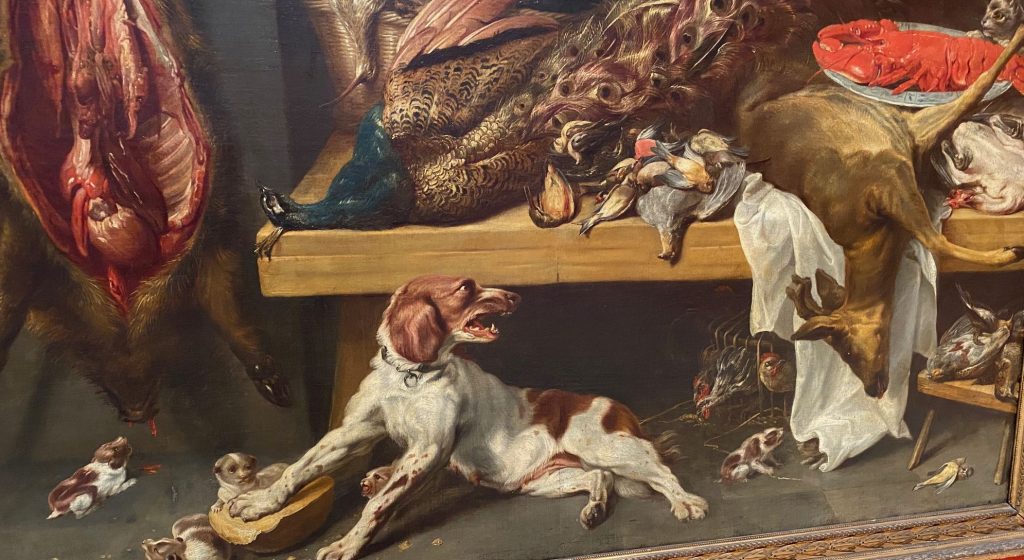
Political theory 2
Chris Brown (2004, pp. 289) comments on the tension between the notions of political theory and international relations in the Handbook of political theory. Whereas the former notion has a foundation in the “cause and effect” rationale, the latter notion has predominantly developed into an approach of “Realpolitik”. Realpolitik that starts from observed facts, normative or historical approaches rather than scientific methodologies applied in “natural” sciences. The link of this approach to the theory of democracy is obvious, but it is also under a lot of discussion within the disciplines concerned.
One of the corner stones of political theory in international relations is the concept of the “balance of power”. Derived from a rational choice perspective this approach holds that states can only be controlled by other states and, taking this for granted, international relations are built on power relations. Therefore, moving away from a bi-polar balance of power to a multi-polar balance of power will entail some frictions. These frictions might be wars of independence where states attempt to relocate themselves within the new multi-polar world and space. Even “Brexit” becomes a strategic move to remain an independent power in the upcoming new multipolar world. Russia is testing this multi-polar world order right now. The big countries like Brazil, Russia, India, Nigeria and China, (which I abbreviate BRINC) have huge populations, country size and economic potential. From the Arab States certainly Saudi Arabia has the potential and is eagerly beginning to play a more important role in the world arena. Beyond capability it is a question of willingness to get involved in costly matters of world affairs.
In the 1940s, post-World War 2, the entry ticket into the Security Council of the UN required the possession of a nuclear weapon of mass destruction. As this technology and the ban of these weapons is no longer really working internationally, we shall have to rethink the requirement of an entry ticket. A radical solution would be to ban all countries who own nuclear weapons from the international assembly of the people of a peaceful world. In theory this sets an incentive to dismantle the deadly threats of nuclear weapons. As a side-effect, nuclear power plants used to enrich uranium for use in weapons would no longer be necessary as well.
Political theory allows us to rethink the bi-polar world, which is no longer bi-polar for some time now (perhaps only in the psychiatric sense of the word). The multi-polar world has to be prepared. It is a question of political design. The toughest issue is not only the design, but the implementation of the transition to distributed power systems with multiple rising and failing states or actors. It might get ugly before peace will reign. 
Political theory
In the Handbook of political theory, Chandran Kukathas (2004, pp.250) explains the uneasy relationship between nationalism and multiculturalism in politics and political theory. The Russian war in Ukraine can be considered as a way of suppression of multiculturalism in Russia by negating the right of Ukraine to be an independent nation. As Russia is not allowing “group rights” (Offe, 1998) for Ukrainians or other minorities like the Chechens within Russia, the secession of regions is a permanent threat to the survival of the Russian state.
“How the many can live as one remains a salient question in political theory” (Kukathas 2004, pp.261). Democracies have squared this circle with reference to federalism. Remember, the very foundation of the United States of America has been built on the Federalist papers. Organising regional diversity is at the heart of democracies’ success and failure. In most democratic political systems 2 chambers have contributed to make the voices of the regions heard at the central level. It remains an obvious question to doubt the possibility of authoritarian states to ensure unity despite diversity.
In non-explanatory theory, if we consider those still a theory, we could derive a hypothesis that authoritarian states will eventually fail to accommodate multiculturalism or allowing sufficient diversity and still survive as political unity. The history of the fall of empires is full of examples in this respect. Another more internal threat has been and still is corruption. Corruption was on the list of issues mentioned in the June 2023 uprise and defeat of the rebel military group “Wagner” in Russia. Non-explanatory political theory might still offer some clues, rationale and hypotheses to stimulate the analysis of international relations. The survival of democracies and/or authoritarian regimes estimated on the basis of huge data bases are hard to come by or lack crucial indicators or timeliness. Such reasoning makes the referral to Clausewitz as theorist of war still a common point of reference. The recent example of Russia , however, shows acting in the national interest can easily be claimed by multiple actors in international politics. (Image: House of European History, Brussels). 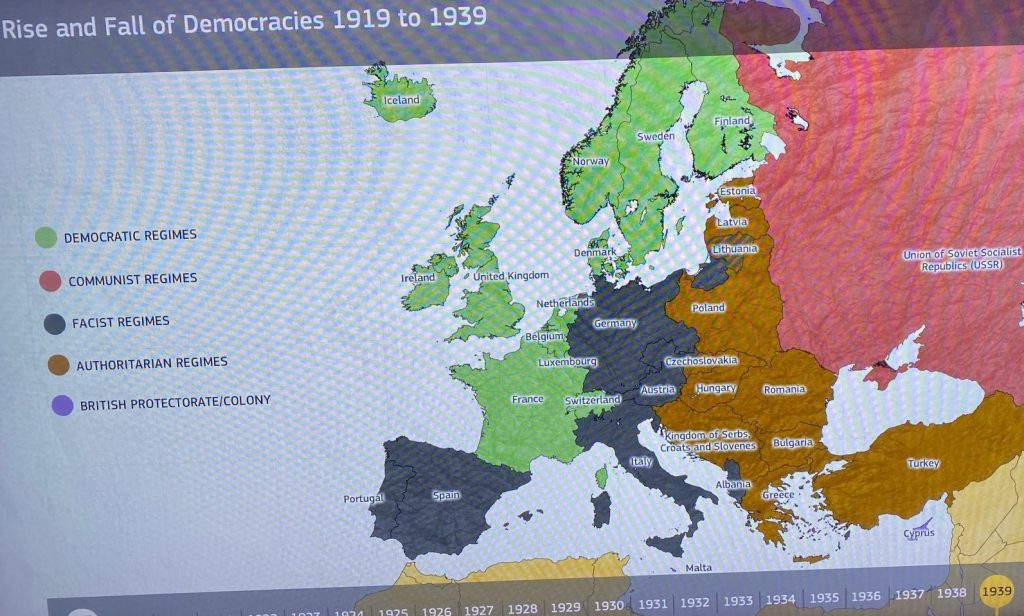
Air pollution
Only if we measure air pollution , we shall be able to be sure it is not getting worse or is improving. The European Environment Agency has developed an app that gives us fairly accurate measure of several important indicators of air pollution or air quality as they prefer to name the indicators. With the wild fires in Canada and the repercussions of this in U.S. cities we are certainly aware that air pollution by neighbours is just as important to know as air polllution originating in your own country.
In Europe this matters as well. Therefore the comparative view on air pollution is a necessary precondition to coordinate action within the EU. Specific meteological conditions yield SMOG in winter and too much heat facilitates SMOG in summer. Thousands of people die every year due to effects of air pollution. This is all well-known and documented.
In Science Advances (2023-6-9) new evidence is presented that fine particles (PM 2.5) in air transport influenza H1N1 viruses into the lower respiratory system and even other more distant organs like liver and kidneys. The conclusion is easy: Reduce air pollution much further, this saves lives and lots of costs in the health system as well. Well-being is advanced sometimes by doing less rather than more. Working more in the home office than in the inner city might reduce the peak of an influenza wave. New solutions to old problems are feasible with new technological advances and implementation like fibre-optic cables for fast internet service also in remote areas. Using the “Science Advances” should allow us to rethink our production and consumption model for the improvement of living and working conditions for all. Many extensions of our economic model shall be based on the “beyond growth” logic. We just need to dare to think and implement policies accordingly, rather than to continue to do the same mistakes over and over again. (Image: still building new Autobahn in Berlin 2022 in residential areas). 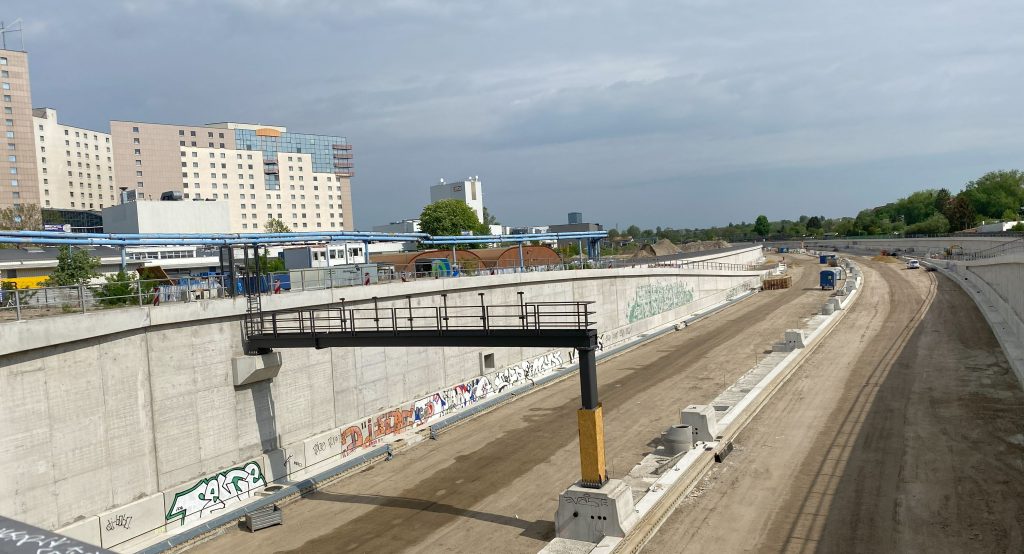
Birds
The study published in PNAS in May 2023 is demonstrating the loss in bio-diversity with respect to birds over last few decades. Our economic growth has caused considerable costs. Some of these costs we shall never be able to make up again. Species gone for ever, we should care. Measuring the loss is a first step in calculating the negative impact our economic growth models have already caused. Time to stop, repair and reverse as much as we still can. It is not fair to next generations to destroy a large amount of bio-diversity now and leave the exploited planet to “no-future generations”. A good documentation of the losses (radio-france-LINK) allows us to pin down who is most responsible for the losses. Agro-industry with the heavy use of pesticides is well known for the huge negative impact it has on bird populations and us as well. It is not only a European issue, but rather a world-wide issue. However, starting at home is a huge step to practice agriculture differently. Most of this is known for some time. It is the implementation of the necessary policies where powerful lobbying is successful to carry on as usual. Thinking “Beyond growth” delivers many useful perspectives and solutions to these problems. 
Repair 3
Repair is our new mantra. Think of repairing in all domains as of now. Nature is showing us the way how to repair in many ways. Culture is also embracing the shift towards repairing as caring. If we really care about our planet, and there is no planet B, we shall have to repair in many more domains. We are used to repair bicycles, cars, roofs, windows etc. Repairing is never boring. You can improve the performance of a device or building by repairing it, even with relatively small budgets. Isolation of buildings is a good example of investing in upgrades through repairing. Rather than throwing away a functioning heating system repairing it with an energy saving device is enhancing its performance and produces fewer emissions in the short run. Heat pumps are the way forward for new installations. Shifting a sector, heating with gaz, to ensure longer lasting repair and improve options would save a lot of raw materials and CO2 as well. The construction sector has repair work almosts in its DNA, the energy sector will have to make that shift as well. Dare to repair.