Heat Health Protection

The heat waves of 2026 had serious health impacts in Europe and beyond. Hence, it is urgent to propose better protections to shield people from negative heat exposure which worsened the health of millions of people. Digital tools which work to personalize heat warnings and increase preventive strategies like drinking water or reduce physical activity outside during the hottest times of the day. Sounds simple, but thousands of people continue to put themselves at risk to suffer seriously from heat exposure. The macro-level general population warning’s could be much more specific if they included additionally the relevant medical conditions of an individual (Du et al. 2026). Prior health conditions affect the general preparedness to cope with heat. We have an obvious case of bi-directional causality. A worsening heat health spiral could be at the origin of so many premature deaths during heat waves. Search for “cool locations” should be considered very seriously for heat-health protection.
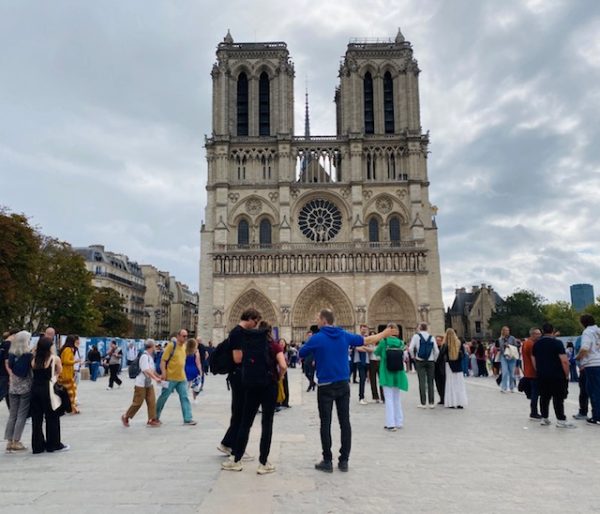
Notre Dame Paris 2026-8

Gone sailing

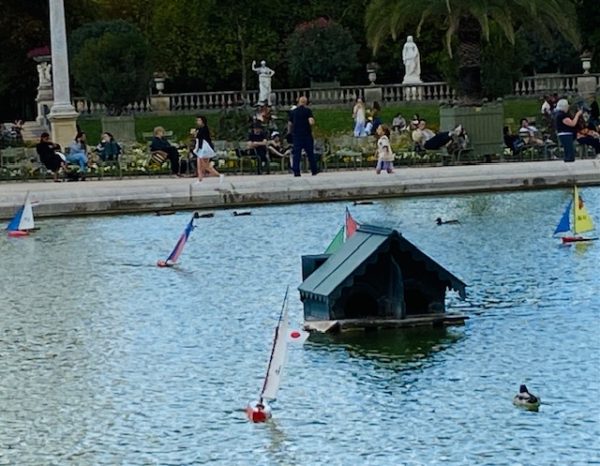
There are numerous ways to spend a nice vacation and take off your mind from daily routines. Sailing is certainly one of those leisure activities which ask for full concentration. Steady winds are more the exception than the rule and the skipper is asked to adapt rapidly to changing wind directions and other conditions. Waves and other sailing boats may of course ask you additionally to adapt your course to unforeseen circumstances. All this is a great training to keep on track even in stormy weather conditions around you. Team work helps to set sails as well as in manoeuvers to enter into ports. The Paris Jardin de Luxembourg (image below) allows training of parts of these competencies from an early age on and into old age as well. The physics of power and capsizing are part and parcel of sailing as well just as much as rules for crossing course, of course. 

Loss of green

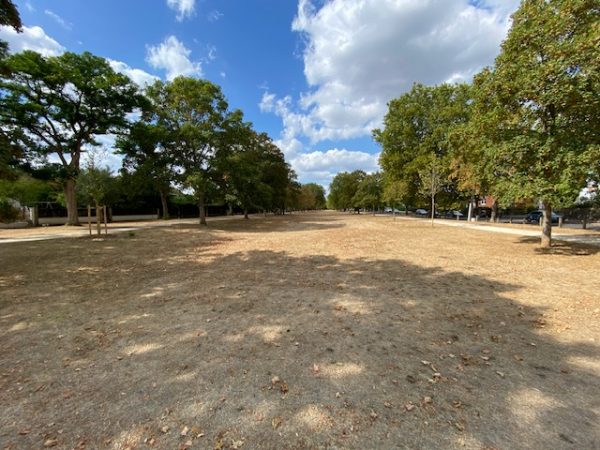
In many instances we learn only if we have lost something. The loss of biodiversity is rather abstract. The loss of a favorite green, allay or park due to a severe drought, however, is fairly visible. The point of departure of the Tour de France more than 100 years ago in Montgeron and the green alley which was built to allow to ride through the Forêt de Sénart to Fontainebleau has suffered from the 2026 repeated heatwaves and droughts. The scientific evidence accumulates to the manmade responsibilities over time. What used to be a fantastic area for leisure and walks after work has turned into a dusty place. Even the recent efforts to improve the greenery further has been surpassed by the unexpected lack of precipitation, although forecasted by some scientists. The costs of climate change, global warming and therefore more difficult water management become pressing policy issues. 

Green loss due to heat and drought 2026 France

Ocean Acidification

No, the abbreviation of acidification is not AC/DC. Acidification stands for the process that our oceans turn more acid due to the absorption of CO2 from the atmosphere. This has several harmful consequences. Lower calcification, slower growth of corals and mollusks (oysters and mussels) for example, shall reduce biodiversity in the medium term of species with calcium-based skeletons. The UN highlights this in several reports, but action upon this evidence (Ifremer 2026) is slow or even absent. Besides the acidification, the oceans have increasing temperatures. Some researchers frame this process already as the “tropicalisation”, the warming of sea water and migration of fish according depending on their preferred or necessary temperatures of sea water. Some move to cooler water, other species move into or “invade” due to higher temperatures.
This can be observed and studied in citizen science projects across the globe and by tourists with a little interests in what is happening near the beaches. Just take a litmus-strip with you to test the basic or alkaline pH-value of the sea water in a glass of sea water. Then add a bit of soda water and test again. That’s a bit exaggerating, what acidification of oceans is about, but the underlying mechanisms is the same.

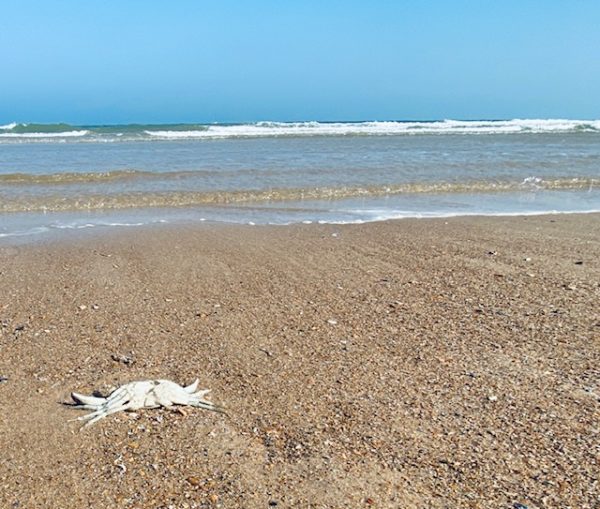
asidification-of-ocean-skeleton-Ostende-2026-beach

Cool Cooling

The human body has a pretty cool cooling mechanism to protect our functions. This ranges from the brain to our toes. Even we are usually not to keen on sweat, it still is our best way to achieve cooling for our bodies. Physical, for some also mental exercise can heat us up quite a bit. Water on our skin allows to extract most of the heat from our bodies due to the evaporation effect. This is our natural survival mechanism during heat waves or exhaustive exercise. Not all people sweat easily nor similarly in all areas of their bodies, but externally applied water for evaporation reasons does the same trick. Fever reduction through a humid cloth is another well known example of a proven “medical” cooling device. In architecture or home cooling we might exploit the evaporation cooling mechanism to create ambient temperatures in our home, office or home office. Multiple layers of humid structures or a special dice shape can create vast cooling surfaces even in tiny spaces (Stavric 2026). Cool cooling solutions can assist us in many ways without negative impact on global warming.

Water pleasures

Maybe some of us associate water pleasures with the splendid fountains in the castle of Versailles (France). Our daily concerns, however, are much more about making cities more resilient and able to cope with water scarcity. According to a study by Krueger et al. (2025) the user perspective and behavioral challenges that go along with saving water by end users has been neglected for years. Water management in cities is part of the infrastructure package that has to be managed efficiently. Aging water distribution infrastructure is just as much a problem on the supply side of water as consumption has its (increasing) price on the users side. Rainwater capture, re-use and recycling are promising alternatives to simply providing more water. Pollution is, of course, another hazard that needs our attention. In the meantime we may think of water pleasures for all including the animal world.

Berlin Futures

The city of Berlin is projecting itself into the future. Two long-term goals, Olympic Games 2036 or an Expo organization 2035, are potentially looming and all actors have to project themselves as to what role they want to play in such processes. Trades and industries have an essential role to play to realize any vision of the future, at the same time, local trades and industries ask for amenable conditions to do business in the necessarily restricted city space.
There is competition between housing projects and business parks across each metropolitan area as any form of growth needs space to grow in. The “1. Berlin Future Day of business parks” highlighted this potential source of conflict and business leaders exchanged their experiences and strategies how to arrive at manageable comprises.
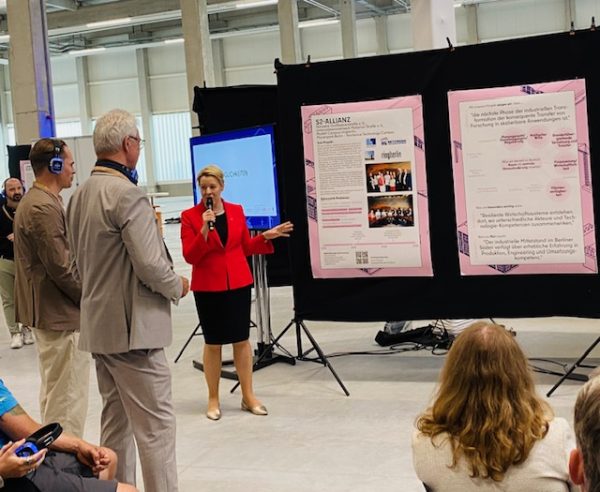
There are several Win-Win constellations in which for example an additional stop on a metropolitan “S-Bahn” line benefits the business area and all those (future) employees going to and back from work. Infrastructure like transport, mobility, energy, internet speed and security, all play key roles in such visions of future. If networks of organizations address policy makers with well-defined requirements, politicians can act as facilitators to ease sometimes lengthy bureaucratic impediments. The call for public infrastructure investments by private business initiatives is a reminder of the need for public-private partnerships to create promising Berlin Futures. (Image: 1. Future Day of Business areas in Berlin, Senator Franziska Giffey 2026-7-15)

Water in Parks

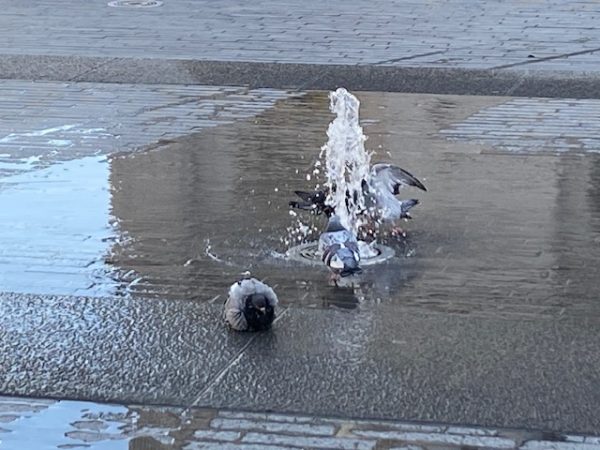
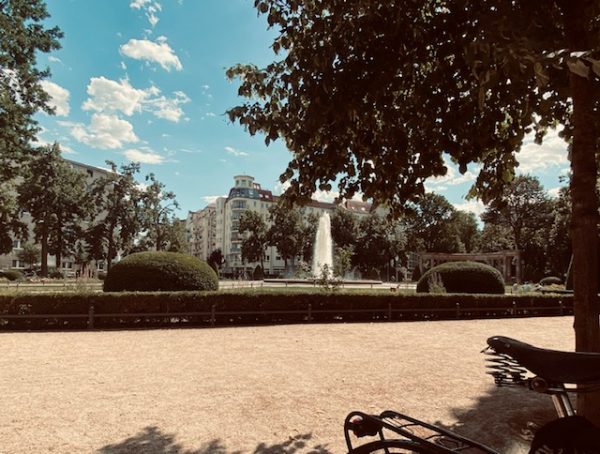
In 2026-7 and a 3rd hear wave approaching, the real luxury consists in water in inner cities. As a source of refreshment and cooling when temperatures rise, water provides a natural source to cool down nearby people, buildings as well as any trees. The wisdom of a hundred years ago appears again as a major solution as global warming progresses. Evaporation of water is cooling. Some simple facts deserve to be repeated over and over again as urban planning seems to have forgotten such simple physics. We have think about a lot of green and blue spots again in our cities to achieve the much needed cooling effects. (Image: Viktoria-Luise Platz, Berlin 2026-7)

Gone Gliding

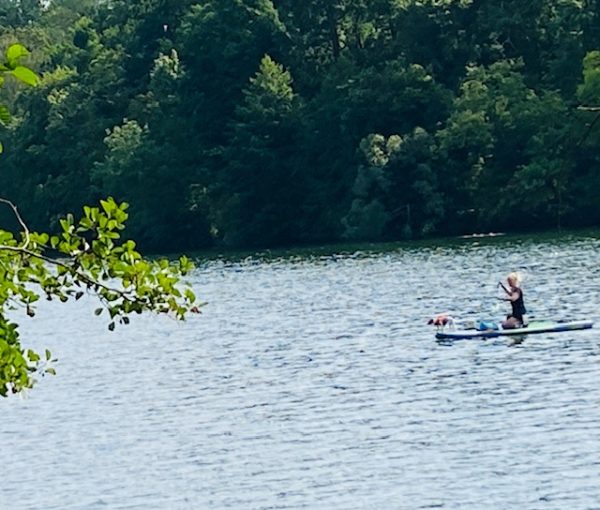
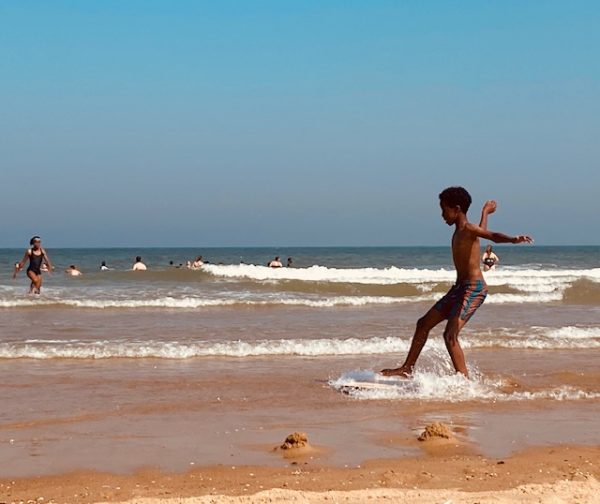
The seaside resorts offer additional experiences to people beyond swimming. Gliding on the water or in waves is an affordable exercise for everyone. It  just needs a small board and off you go. Falls are a usual part of the exercise. Beware of them if you have any prior conditions. For the 50+ generations some regular prior falling exercises are a must. Youth has the advantage of sufficient power per kg of body weight to afford repeated falls. Water and sand soften the falls. The gliding experience, however, is a great compensation for the risks taken. Not for everyone, but early experiences in or beyond schools give pupils a head start on how to balance out yourself in specific situations. Spectators and the experience to be under observation might influence your performance for the better or worse. Balance is a rather complex experience combining body and mind coordination for all ages. 

Autonomy in swarm

Swarm behavior is a fascinating research area. Almost all scientific disciplines feature some interest and publication in this area. The biological origins have been associated a lot with the marvelous behavior and patterns formed by fish moving about in swarms. Some species of birds show similar patterns of collective and somehow coordinated swarm movement. It appears to be tricky to safeguard some form of autonomy in the overriding mass behavior and mass movement.
Recent advances in this field by Li, Li & Zhao (2023) model such behavior within a predator-prey framework to explain the evolution of overall swarm behavior. Whereas “prey” strategies consist in “flocking” and “swirling” to irritate predator(s), the predators make use of “dispersion”, “confusion” as well as “marginal predation tactics”. Additionally, several assumptions go into the modeling of swarm behavioral evolution: agent observation, agent dynamics, and the environment. The mixed cooperative-competitive multi-agent setting applies reinforcement learning, additionally. The framework of evolution has 5 driving forces: (1) homogeneity of a swarm (parameter sharing); (2) actor with decentralized critic network; (3) replay buffer to enhance learning; (4) rewards for predator and loss for prey; (5) learning algorithm.
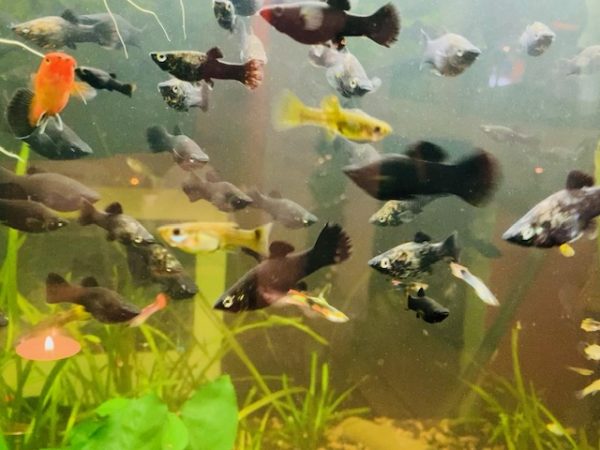
The modeling approach reveals the impact of an agent-critic network (potential of autonomous behavior) for protection of a swarm in a predator-prey scenario. (Image: fish in fish bowl 2024)