Sublime

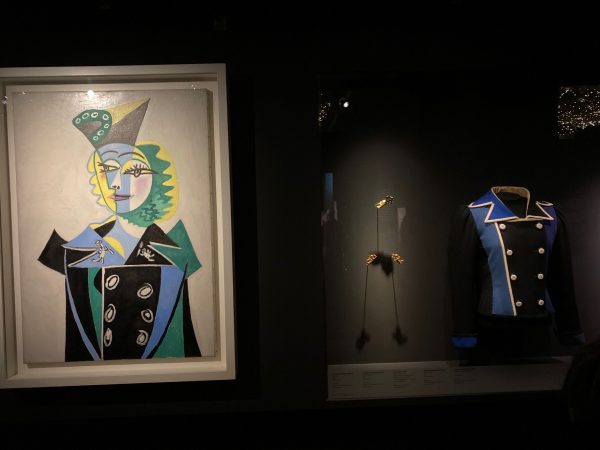
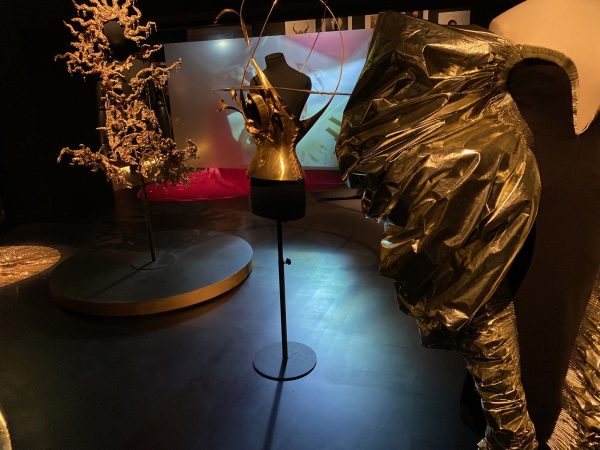
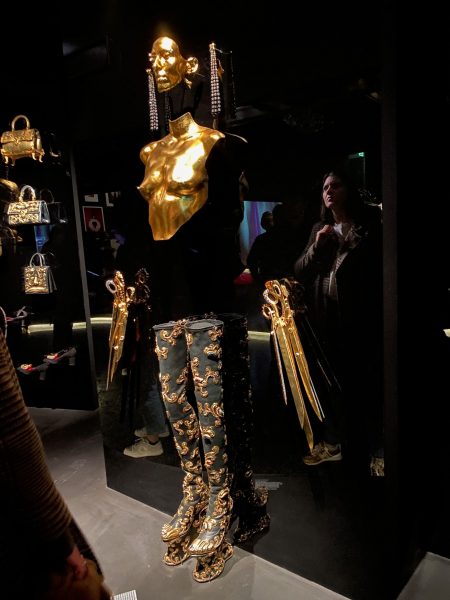
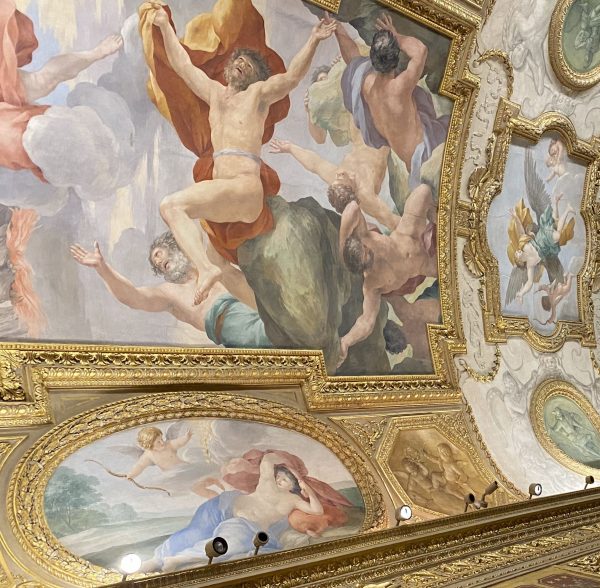
The exposition of art work in the MAD “Musée des Arts Décoratifs” in Paris is sublime. Growing out of fashion design into the work of art can be a process of sublimation: passing from one state of designing one product to producing artwork. The intermediate state of artefacts created for designing a product, like the drawings of fashion designers or scenery and costumes in theatre and operas, are often less visible or subject of exposition. Objects become subjects. A trend in recent expositions is to devote more space to the applied arts like stage design, costumes as well as products of everyday use. “Bauhaus” has a lasting effect.
Elsa Schiaparelli has achieved this sublimation. Starting with extravagant fashion design, her designed fashion objects were adopted by Picasso before she developed into the sublime state of artist with her artefacts herself (see below). Now in this process of subjectivation she is the prime subject of an exposition herself. The combination or arts and crafts (Kunsthandwerk) has been always present in art history. The challenge of concepts combined with arts is more recent or just more explicit since the late 19th and 20th century. Being able to live from your artwork is still a challenge, though due to “Mäzene” and state subsidies it is more feasible to follow artistic trajectories. 

Invent

The nice thing about mathematics is that it asks you to invent new ways of thinking. Numbers, percentages, Venn-Diagramms, infinite series etc. have accompanied us at school. The story is far from finished. Under www.spektrum.de there is a nice introduction to the new theory of numbers, called “condensed mathematics“.  Their lecture notes (pdf-file) are a tough read. My take home message simply is, the invention of new approaches to old problems, providing more general answers and/or unifying different fields are particularly rewarding. Maths is a fascinating discipline. You study abstract problems, hardly anybody else has had so far, but you are not considered strange as for example some artists at times. Imagine your new world in music, painting or the arts in more general terms or try to become a mathematician. Finding ways to communicate about your predilection and invention is the next challenge. Many scientist, inventors or artists found very few people to talk to about their new stuff. The internet and social media have changed this. Persons with interests or findings beyond the mainstream find colleagues in other parts of the world. Lighthouses from far away become visible through this. Navigation of other possible worlds turns into reality. These specialisations might turn out to be generalisations. The stretch between indepth knowledge and the polymath approach shall accompany us for a long time. Unified theories in several fields are indeed a step to be able to have an oversight about several, but not all fields. Polymaths probably start with condensed maths to move on to other fields of imagination. There is always a risk to get stuck somewhere on the road in a topological space.

Sound

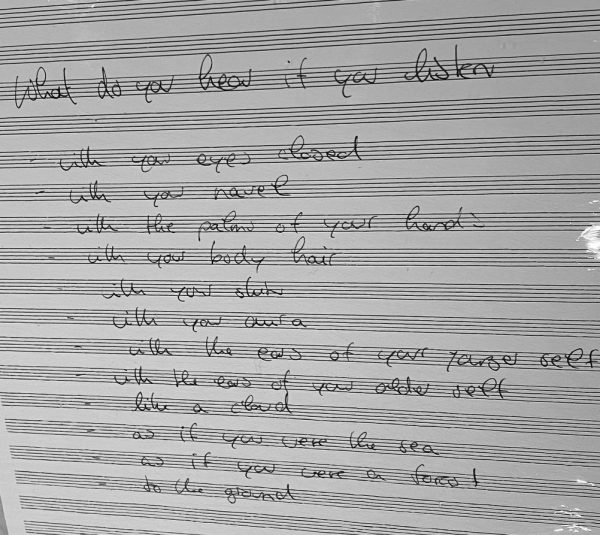
Each society has its sound. Each person lives in her/his sound cloud or bubble. Cities are generally noisy places, Lots of traffic, mobility and moves leave sound bytes all over the place. Each city though has its own sound and spectrum of frequencies. Libraries, museums, places of worship, all build their special atmosphere due to specific sound design. The Singing Project by Ayumi Paul (Gropiusbau Berlin) created its own sound environment. Reminding us to consciously design our exposure to and experience of sound is welcome. John Cage started to build his very own language of music, similar to Schoenberg, from scratch. His writings Empty Mind explain his view and techniques a bit. Starting with silence and the time between sounds we recreate our own sound experience. Notation of it comes second in place. only for the potential to repeat the experience notation is useful. But it is only one form of conservation for posterity. Noise canceling is the amazing tool from sound physics which allows you to neutralize noise by adding specific frequencies to noise which cancel out each other. Design your personal sound experience beyond noise if you like. Nature recordings or familiar person voices allow you immersive experiences when and where we want. your home sound can be everywhere nowadays.

Action Verbs

Action words are in other words called action verbs. Each complete sentence has one. Hence, they are part and parcel of the basic construction of sentences.
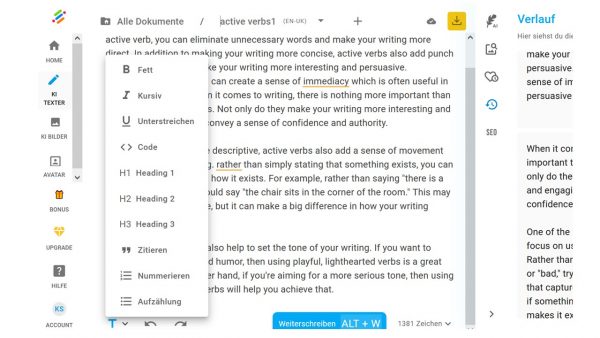
“The purpose of an active verb is to create a clear, concise sentence. By using an active verb, you can eliminate unnecessary words and make your writing more direct. In addition to making your writing more concise, active verbs also add punch and clarity. They can make your writing more interesting and persuasive. Additionally, active verbs can create a sense of immediacy which is often useful in persuasive writing.  When it comes to writing, there is nothing more important than using strong, active verbs. Not only do they make your writing more interesting and engaging, but they also convey a sense of confidence and authority. In addition to being more descriptive, active verbs also add a sense of movement and action to your writing. Rather than simply stating that something exists, you can use active verbs to show how it exists. For example, rather than saying “there is a chair in the room,” you could say “the chair sits in the corner of the room.” This may seem like a small change, but it can make a big difference in how your writing comes across. Finally, active verbs can also help to set the tone of your writing. If you want to convey a sense of wit and humour, then using playful, lighthearted verbs is a great way to do so. On the other hand, if you’re aiming for a more serious tone, then using powerful, authoritative verbs will help you achieve that.”
After the 3rd sentence this blog entry (Link) has been written by the artificial intelligence app “Neuroflash”. They promise that it is not just copy and paste, but rather written following some instructions I gave like title, table of content, style and then selected among several choices. It makes sense to me, although it is just like many other textbook entries I have found on the web. It may well serve as an introduction. Lazy journalists, priests or lawyers in case they do little research will be replaced soon by AI, who else, who is next? Big brother drafts the brave new world for us already.

B for Balance

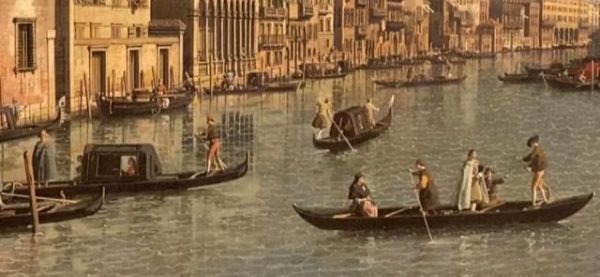
To reach a balance, to keep the balance or one’s balance, this highlights the process nature of balancing. Even the old tool of a balance (scale for weights) very much reflects the evening-out of the balancing process. It seems like a temporary balance most of the time. We might evolve from one level to another one. Especially imagining ourselves on a (body weight) balance in the morning and then throughout the year or years, this appears like a dynamic trajectory. The nature and/or nurture connection is evident. Beware to search for synonyms of “balance” on the internet. You get more than 3000 synonym (Link) meanings and 30 suggestions for definitions (Link) to contemplate on. I like the nice physical experience of balance and the simple (a bit nerdy) explanation of it. Economist get very excited about balance of payments and the ways to achieve equilibrium or equilibria. Balancing personal accounts can be a bit painful at times, but balancing in the arts gets our imagination going. Dancing is about balance most of the time. Playing with your own balance, the balance when 2 or more persons are in action, how not to be absorbed by such experiences. In music, the balance is a primary issue since Bach’s “wohltemperiertes Klavier” and balance and tension are the origin of much jazz. An image or photo might be balanced, certainly architecture is playing with or restricted by balancing acts. Herta Müller’s “Atemschaukel” has thrown us off balance for a while. History we study often with a concern for a balance of power. In peace and war times, the balance of power within and between countries or superpowers are a long-lasting research issue. At times when this balance is at risk or completely out-of-balance we are deeply concerned about the return of a balanced situation. Babies and children draw comfort from being balanced. Adults as well. Let’s try again (chanson). (balance22-venice -video).

A for Action

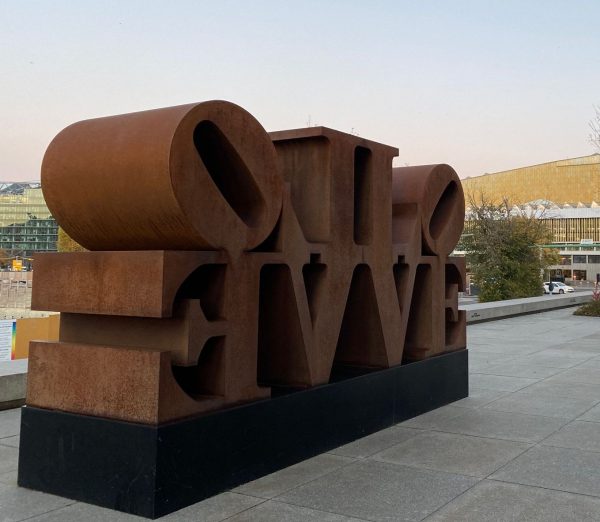
The A is everywhere. A is the beginning of the Alphabet, Google is our new Alphabet, we just have not realised it. A simple A-rating in investment is not good enough, AA or AAA is the goal. All this calls for ACTION. Do not be stopped in your action by reading on “Action theory” by Parsons, Rational action is the basis of most economic reasoning before the behavioural turn of economics. It is commonly acknowledged now, that rational action might not always be as rational as we want to believe it is. “Frame selection” as theory to explain our choice of action is fashionable in the social sciences. Transforming values and intentions into actions is a big challenge. Many jokes turn around this issue, like intentions to get up early in the morning. Find out whether you are an actionable leader. You should have at least a few “actionable items” on your to-do-list. Of course, Microsoft recommends actionable items to improve our productivity while spending hours on emails.
Well, early philosophers already distinguished between “vita contemplativa” and “vita activa“. A lot is about finding the right balance here and Hannah Arendt’s differentiation of active life in labor, work and action. She puts emphasis on action as a way to distinguish ourselves from others. The same thought might lead to very different actions. Hence, acting on one’s belief or values could lead to very different policies for just 2 persons. Action Artists perform even in inaction. We are back to basic questions of democratic  procedures as a form to moderate between different opinions or possible actions. Lots of other A-words come up now: ambiguity, anxiety, alienation, affirmation, affect, affection. In Greek, A might be associated with Apollo, In German with the famous “Angst”, but French is overriding all this with “Amour”.

Z for Zero

Zero is more than just a number. Originally the Zero=0 was a simple placeholder for higher order numbers. The concept of 0 is useful in calculus. The digital revolution is based on 0 – 1 systems.  Beyond this, there is a philosophical sense to it as well. Think of nothing, black holes, empty space, “ground zero“. Emptiness might not be empty at all, as for  those filling your empty space (ets) with an empty—log. In Philosophy the nihilists or nihilism reached a lot of prominence. “God is dead” leaves us with a void that asks for alternative solutions. Beware of simplistic answers. Study the origins of democracy and the need for freedom of expression as a basis for new concepts based on fundamental values.
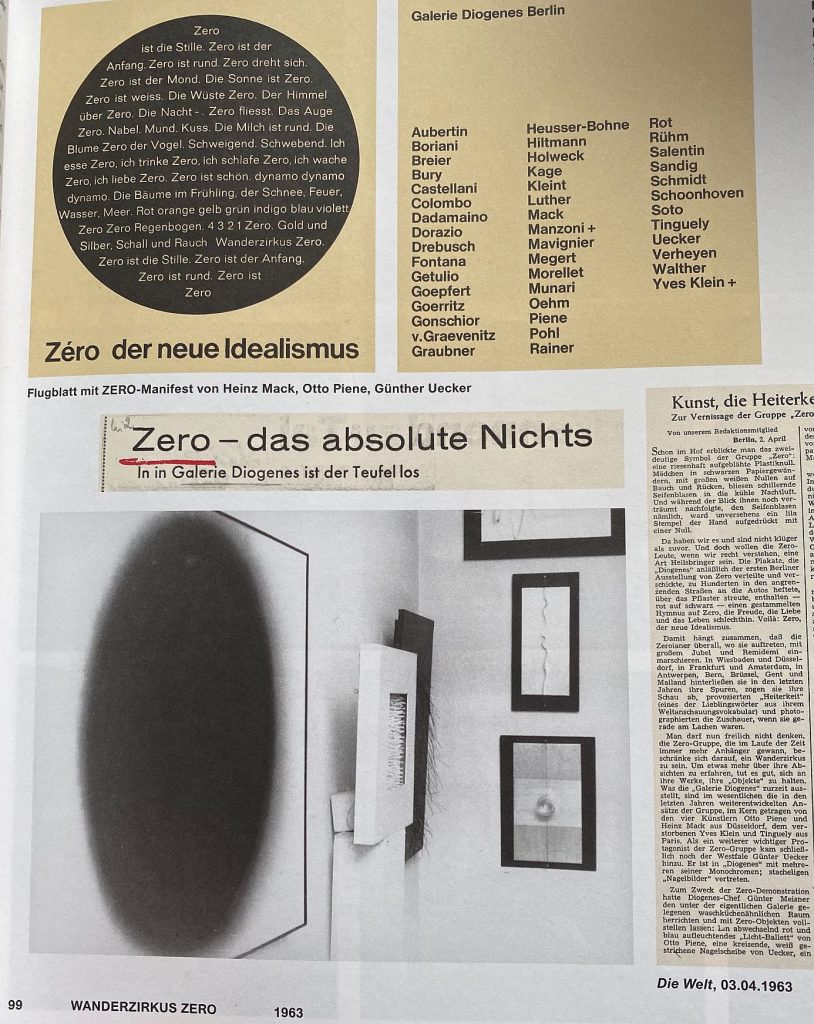
“Zero”, the group of artists in “Zero foundation” have made a significant contribution to the development of art in post-war Europe. The catalogue of the exhibition in Amsterdam and Berlin 2015 inspires imagination beyond today. Time passes on to achieve zero-emissions. Zut alors, the last Z-word to finish the countdown 3-2-1-0, I guess. (P.99 zero catalogue 2015)

Y for YinYang

Y in maths stands for the phenomenon that is to be explained. If you are lucky, it is just one single Y. To explain this phenomenon, we usually have a multitude of different X-es and some random chance element. To complicate things a bit, we have X running over time. Example: Happiness at retirement age (66) might be explained by your earnings over years and marital unions/separations over time plus health over time and other random, not specified elements.
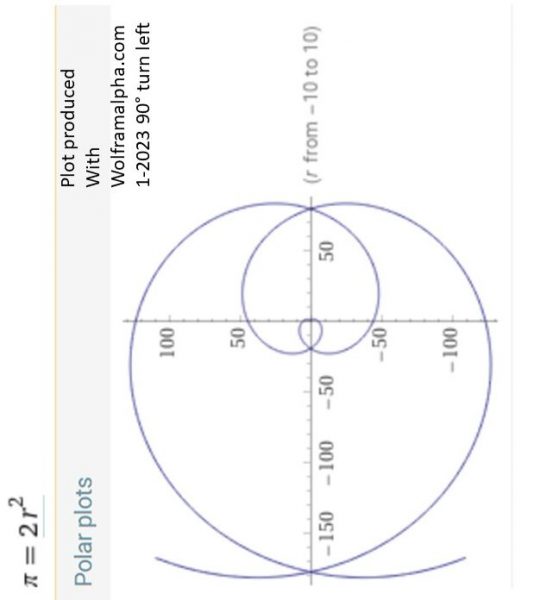
In my understanding of the YinYang philosophy of balancing the complementary of Yin and Yang, I probably should have thrived for a balance of earnings and health throughout my working life, to arrive at a happy retirement. Balancing not only among the X-es, but also between X and Y might even out the excitement about retirement. Additionally, this reasoning leads us to the more complicated case of multiple Y-s and multiple X-es. We can image the optimisation issue of y for 2 persons rather than just 1. Now, the maths starts to get more complicated without being complex in the mathematical sense. If you can solve such equations in statistics using different forms of random and not- so-random error terms, yr doomed for a Nobel medal in economics. What the heck, man this has to do with Yin and Yang? Beware of your work-life balance, be selective, I suppose. Breathe carefully, repair (YoYi) and read up on Chinese philosophy and maybe TCM, short for Traditional Chinese Medicine. Let’s try to re-balance in a lot of life-domains. We know our Western way of life (CO2) is not sustainable. Imagine 1 billion Europeans driving a diesel car on this planet and you have an idea about what hell might be like. An open mind to the Yin and Yang philosophy could be helpful for us, just as much as it would be for the leading Chinese politicians and their policies. Yes, Y in French is much more common than in other languages “Y avait …” is the beginning of chansons (ex 1 Aufray, ex 2 Kaas, portrait). Drawing YinYang using formulas is a bit like drawing or painting mandalas. It helps your inner balance. I am not quite there yet.

X for Xeno

Xeno is the root of the much more commonly used words of xenophobia or xenophilia. Xenos, in its Greek original, just means guest, strangeness or coming from another place. With the awareness of coming from another place or dreaming of another place we create the link Xeno-link to migration. Everybody knows about migration experiences, be they just from one village to the neighbouring one, rural- urban migration or beyond language or legal boundaries. Interesting new perspectives on the issue are rare. To view migration from an optimism or pessimism angle is a bit like a Picasso-like view on the century-old topic. Beyond out-migration and in-migration there is the population left behind in the villages, regions, countries or nations. Optimism seems to guide the outmigrants. Realizing to become viewed and stigmatised as an immigrant might reduce optimism considerably. Pessimism might spread among the persons who do not succeed locally or to migrate in those sending regions or countries. Migration is a selection process of multiple forms. The western view of in-migration has for most parts focused on labour market related preferences. Skill shortages urge us to accept the “being somehow different” more easily. Learning to cope with this is called “intercultural competence”. In Berlin this is accessible through learning-by-doing or going to cultural events. Even there, 2 further steps are needed:
First step ahead, have more diversity everywhere, including so-called high art or centers of excellence (video xeno video22). Second step, consider it strange, if diversity is not the standard or part of day-to-day or normal life.
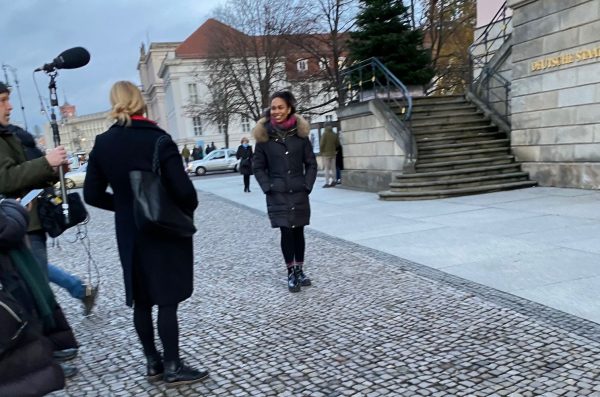
The performance of Mozart’s opera “Mitridate” at the Deutsche Staatsoper with performers and creators (booklet!) from all continents might be a good start to nourish xenophilia instead of xenophobia.

V for Value


Value in its singular form refers for most people to the value of things. Since Karl Marx we have been fighting about the surplus value of a worker’s work. Nowadays, we have to deal with speculation bubbles on the value of property or even basic elements of nutrition (Water, wheat, energy). Max Weber introduced us to the rigorous analysis of value judgements. In political science the plural “values” refers to basic human rights as fundamental values of humanity. Many other associations with the letter V pop up and arouse emotions: victory, video, view(s), vision, visit, voice, vote, vulnerability.
Creating lasting value seems to transform itself into part of our system of values later on. The longitudinal dimension of value is often neglected, particularly in the short-term focus of much of economic reasoning. Value over time, in addition to the distribution question, or as part of distribution over time, excites researchers of inequality and policy design for generations. Approaching the end of the alphabet increases the stakes of the “endgame”, it seems. Value for me, might not be of value for others. I hope you have found a person that values much of the same as you do yourself.
Interpersonal value, value exchange and intertemporal value are  own fields of research. Since the Scottish enlightenment and Adam Smith’s work on “The theory of moral sentiments (TMS)”, reciprocity in value exchange has been an issue, well before the utilitarian turn in his own writings on “The wealth of nations”. Even Adam Smith refers to happiness and interest as a kind of value and “very laudable principles of actions” (part VII.ii.3.15 in TMS).
Children learn and experience value as natural part of growing up. Material things which you valued highly as toddler, you are ready to trash or exchange a couple of years later at much lower prices. Above which monetary value are you ready to trade in your humanitarian values? Never? History and bargaining theory is full of experiments and experiences that teach us otherwise. Corruption is the prominent example of exchanging or trading material value against immaterial values. Reading Kwame Anthony Appiah on “Experiments in ethics” is highly instructive. This bring me back to the economist joke I used to tell in lectures: You know that you’re an economist, if you ask your child, whether s/he prefers 20 Euros in cash, a trip to an adventure park later, a basket ball set or a pizza party for the next birthday. Economists do all this to find out about the value of each item, the preferences, the time frame of delayed reward or discounting of value also called the net-present value. Reading up to here is equal to the value of, maybe, an online bachelor in economics or social science. In your very own life review of learnings you then can estimate the value of your readings to you, your community or humanity. Alternatively, enjoy the joy of just living in peace with optimism.