Shift to Linux

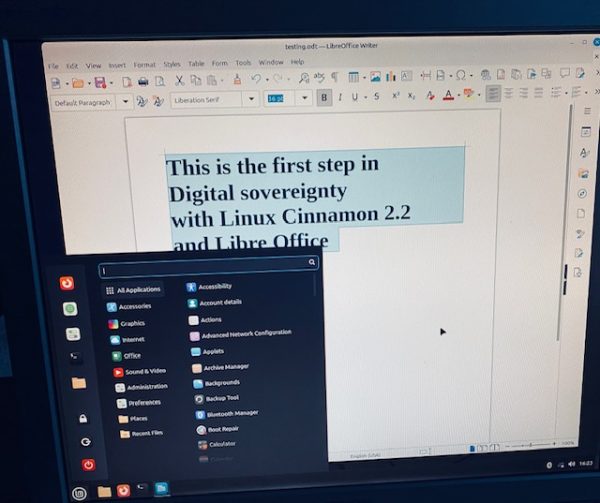
We have become rather lazy and sometimes even ignorant when it comes to what kind of operating system we use on our computers. The phasing out of security support for Windows 10 based computers creates worldwide a huge pile of computers that cannot update to 11 due to limited hardware 4Gb of active memory only. However, for many simple tasks these computers work perfectly fine. Browsing through the internet or just drafting texts or spreadsheets doesn’t ask for larger sizes of memory. Most AI applications run on the web and not locally on your computer. No need to throw away these devices and spend, spend, spend on the latest technology. It takes a bit of time and effort to read through the guides for such a shift. Maybe you need to come back several times between documentation and a bit of trial and error, but the learning of digital skills is always a rewarding experience as well. My fanless computer will serve me for many more years as a quiet companion in drafting blog entries and research. Additionally, it is a step towards digital sovereignty so many people talk about these days. (Image: Computer Screen with Linux cinnamon 2.2 and Libre Office in background).

Deep Fake Threat

Our Western democracies are aware that “deep fake videos”, radio, online-newspapers and most of all social media platforms are all around us already. However, more scientific voices alert us that this threat to our easy or comfortable way of life to consume information eventually threatens the survival of our democracies. Previously, interference in elections used to focus on rigged election procedures, but in the 21st century powerful other alternatives can do the dirty job to bias elections against the original intentions of the electorate. The widespread use of AI will exacerbate the already practiced ways to produce deep fakes. In a preparatory self-test of an AI-assisted chatbot I was surprised myself of the quality of the output. A person not very familiar with my original voice in a second language would assume that it is me who is being interviewed in person. Based on a fake news text, any form will be automatically translated into voice only and/or video based on basic visuals.
Statisticians used to joke some decades ago: “Don’t believe in any statistics, unless you faked it yourself.” This is meant to encourage people to be aware of dangers of the use of statistics to influence opinions or official decision-making, like in policy making of central banks, which might be based on biased accounting for shrinkflation, cheatflation or greedflation to name just a few,
Hence, the need to strengthen awareness, analytical skills and critical thinking should be high on the agenda to defend our democracies. There are not only external military threats, but additional ones masked as internal threats.
(Image:: mice as humans in living room 2 couch potatos 1 on rocking chair, tea time)

MD-11 crash

Some analysts have followed the acquisition of McDonnell Douglas by Boing as a merger of 2 big aircraft constructors in 1997. The merger meant that the construction of 200 MD-11 trijet aircrafts was discontinued a few years later in 2001. They have still been flying around as cargo airplanes and 50+ were still in use in 2025 by UPS and FedEx combined. The recommendation by Boeing is to stop using the planes and run more extensive technical checks before reuse. The aviation authority will have to comment on the safety as well, since the death of 14 persons on board remains a high toll for potential negligence of timely revisions or too few regular controls. Failure times of components necessitate check-ups, even if they are deemed expensive. Boeing has a difficult reputation in this field due to its lack of timely reaction in the two 737-Max cases. The precautionary principle probably could have saved lives also in this case. However, before jumping to conclusions we need to follow the analyses of this crash of the MD-11 more closely.
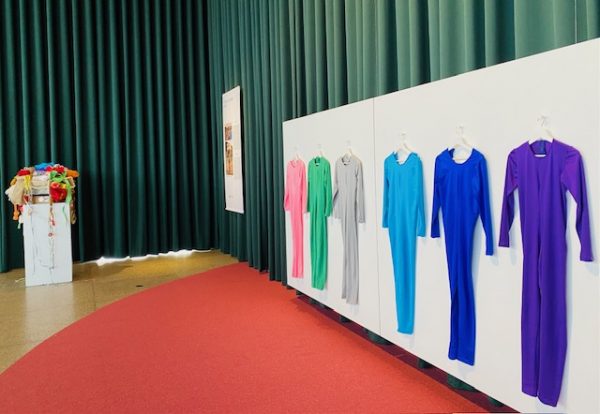
(Image: Corpo Coletivo by Lygia Clark 1970 performed in Berlin Neue Nationalgalerie 2025).

Robotics Hype 2026

Towards the end of 2025, it is common practice to look back on the last 12 months to summarize a year and to contribute to the “collective memory” of the year. From a “society and technology” perspective we shall not be surprised if such summaries will be full of images and praise of AI and robotics. However, large parts of the innovations that shall be declared to have marked 2025 were already around 10 years ago. It is just the timing for the new momentum and the creation of a hype around these technologies that is really remarkable (compare WSJ 2025-11-24 p 1-2 by Konrad Putzier).
It is true, playing around with robotics was reserved to universities, research institutes and some big players in industry. The public and financial markets showed little interest in these “nerdy” fields of applications. Although we were hardly able to compete with our chess computers, Watson solving math problems for us including the steps for us to follow. Video, image and textual support was provided by specialized applications already at high levels and in multilingual versions. In 2025 these techniques have enhanced with machine learning and neural network programming reaching higher speed and being able to use ever larger data sets as input.
But there are areas where the hype is coming to an end. How about all the artificial reality (AR), virtual reality (VR) applications? Many have seized to exist. Have you visited or invested in “Second Life” platforms? Opened a shop in the VR-world? Bitcoins have lost 7% of their value between 1.1.2025 and 24.11.2025 and they suffer still from high volatility rather than an uninterrupted rise.
War has fuelled the rise of shares in 2025 and “dual-use” technology benefits as well. AI has been driven by, and drives both trends.
In sum, it is much less the technological innovations in 2025 that are astonishing, but the political economy of how to orchestrate a sensational hype around the technologies.
(Image Hannover Industry Fair 2016-3-14).

Sovereign data spaces

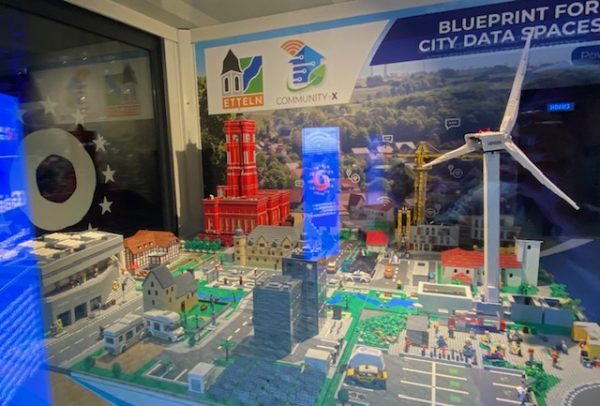
Data is the new gold, petrol or diamonds. In order to bring this message home to all people in the EU, the European summit on digital sovereignty had a small exhibition of projects that address these issues. City data spaces is such an initiative which has been running for quite some time now. In fact, from a city planner and data scientist perspective cities collect already huge amounts of data and can offer them to service providers, businesses and each and every one of us to organize our energy consumption, improve mobility patterns or any form of data or video streaming services. The amount of data captured and to be stored is growing rapidly. Just think of the Internet of things (IoT), maybe that’s only your wifi-connected coffee machine, oven or heating. Now add AI to this which allows the system to learn about your daily patterns to start the device in time for you to focus on other tasks. As we would like these data to stay confidential, the need for European digital sovereignty becomes sufficiently clear. It will take a huge effort to provide an adequate digital infrastructure for this “brave new world” and many people to work towards this objective. Train the trainers already, cause otherwise this is going to take ages before we can harvest the benefits in safe and sovereign manner.  

Failure time

In mechanical as well as medical components it is interesting to know about the usually hidden failure time of a product. The failure time simply means probability the component will seize to function properly or altogether. Usually, this probability of failure increases with the duration and the intensity of use. We might know this from cars or heating systems, but airplanes and heart valves obey the aame basic statistical models. Programmed failure time is a nuisance, which works against all efforts of sustainability, Over-engineered products would work much longer than the actual use case. Locomotives with steam engines that still function well even today might serve as an example of the latter case. The issue becomes a bit more complex if we consider not only the product but each single component. Maximizing profits often leads to taking risks with failure times or failure rates over a fixed time (a more general term than the guaranteed lifetime of a product). This sounds rather abstract thinking, but in modern military equipment the consideration of failure time, self-destruction or destruction by enemy play an important role again. Failure time of military equipment has moved to the forefront of issues of equipment and is part of strategic planning, like it or not.  

EU Digital Sovereignty

If we try to search for digital solutions, we shall encounter a whole lot of American and Chinese products, but very few European companies that are able or willing to compete. Hardware mainly comes from China, software from the US, at least until AI was not working in the background. If we add Russian interference to destabilize our digital infrastructure to the scenario, we are not really fit for the challenges of the 21st century. The very definition of a country or political union is the affirmation and competence to assure its sovereignty, particularly in cases of territorial conflicts with neighboring countries. My health or mobility data are a rather private affair, however, our state governments in EU-Europe have done little to ensure our data integrity. Business is also at a loss, if they do not spend heavily on data security themselves, usually relying on external cooperation. 

The EU digital sovereignty summit took place in Berlin on the EUREF campus in 2025. It can only constitute a beginning for intensified cooperation in  this long overlooked policy area. It will be tough to catch up where production has been abandoned for decades.  

Memory design

The progress in the field of genetic editing and design is astonishing. The research group of Johannes Graeff tested the “behavioral consequences of epigenetically editing the Arc promoter within engram cells”. Plasticity is a key feature of memory formation and the experimental evidence shows that this plasticity can also be interrupted. Moreover, the scientists were able to demonstrate a reversibility of retention or un unlearning of manifestations in memory of mice. The bidirectional reversibility of memory expression has potentially therapeutic value for traumatized humans eventually. However, if memory becomes part of a design feature of human species, the risks involved are just as important as the potentials. In totalitarian political systems techniques of “memory design” might be able to adapt such influences on memory, which used to be called brainwashing. Ethics commissions could get ready already to define safeguarding of human memory.  (Image: The fountain of Bacchus, Museum of Paris, 18th century wine merchant entry)


Typewriter history

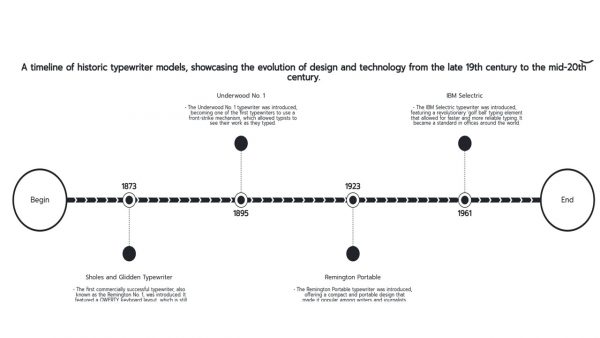
The history of the typewriter and typewriter is comparatively short compared to the history of literature or other technologies as partners in the creative process. With the advent of AI (here as part of infografix, see image below) the skills of using and mastering a typewriter have become almost obsolete. The original design by Remington (timeline below) has dominated for almost 100 years the technology of typewriters. Then came the electronic IBM technique with an automated correction type, which was not only faster, but also more forgiving of “typos”, short for typing errors.
The craft of handwriting had suffered a tough blow, despite its almost intimate touch to it. Knowing the typewriter outline by heart allowed typing with closed eyes or a focus on another text or image as well as a parallel thought process. Scientists and writers (Claude Levi-Strauss) reported on their creative process as intrinsically being linked to their typewriter.
QWERTY outlines for English language typewriters still dominate the keyboard typing today. With the AI interaction on the rise, we might move away from typing as a “Kulturtechnik” a technology of our cultural era and focus more on human-machine interactions via our voice and microphones. The underlying question, however, remains the same: What is the best technology to enhance our thought process? This, in fact, tends to be a very personal human choice, where technology plays only a subsidiary role.

From AI to xAI

As humans, we like the feeling to be in control of things. This applies even to immaterial things like religious beliefs. Generative AI has created problems with its hidden structures and lack of transparency of their applications of algorithms (and combinations of algorithms) to basic data bases of knowledge and information. The use of xAI, which stands for explainable artificial intelligence, can address some of the concerns about the lack of transparency and explanation of responses from AI systems. Many users want to know in advance about the consequences of the use of specific words or notions in an instruction to AI. The interpretation of each single word by xAI can inform about the precision of interpretation (cheap versus cheapest, for example) or highlight the sensitivity to gender-neutral language or not in its guidelines. Additionally, ex post the xAI could indicate alternative notions in a prompt and, briefly, how this would affect results.
Yes, there is a trade-off between brevity of answer and room for explanations. As in psychology, there some value in a “thinking aloud” procedure for respondents in order to better understand (implicit) the reasoning behind a reply. xAI takes us a step further in this direction of asking AI to think aloud or more explicitly in a human compatible way of logic and broader reasoning.
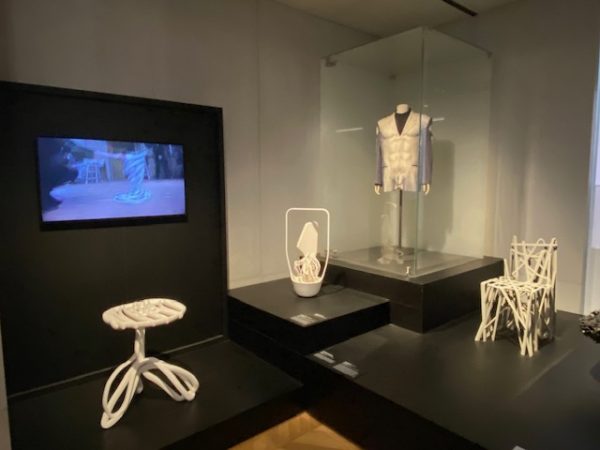
Put AI on the psychotherapist’s bench and xAI will be to the advantage of many more humans again. Humans just don’t like black box systems that lack the necessary as well as sufficient transparency. (Image on the right: Patrick Jouin, chaise solide C2, MAD digital humanism).