Too big

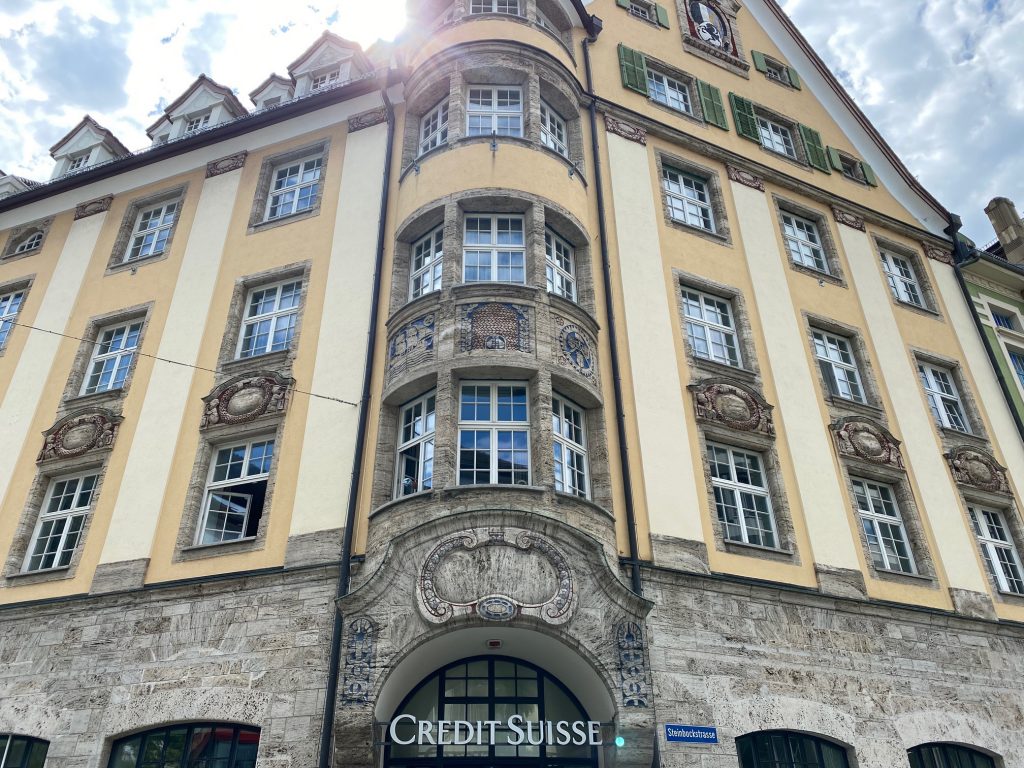
Too big to fail. We all thought that after the financial crisis some fifteen years ago, we would not deal with the same kind of problems again. The banking sector in Switzerland has proven us wrong. One of the 2 big banks Credit Suisse in Switzerland was about to default and asked for 170 billion state guarantee middle of March 2023. Only after a forced merger with the other big bank UBS (which was rescued in 2008 already) and the huge state guarantee the solvency of the even bigger bank was re-established. Tax payers were expected to foot the bill. Less than 6 months later the Finance Minister Karin Keller-Sutter announced that there is no longer a risk for tax payers to pay for the mismanagement of the bankers involved. This is a relief for the political system which is going to the polls next year.

Many unresolved questions remain. Financial market supervision is faulty to say the least. Banking left to bankers as controllers is risky. Apparently fines do not work only prohibition to exercise similar functions (internationally) again is likely to be effective (NZZ 2023-8-9 S.19). Other remedies lie in a complete overhaul of the governance system of banks and beyond. Supervisory boards should in theory be able to assess the risks incurred by the management board. Failure to do so has no consequences for them either. Representatives of the employees in the board is likely to introduce more longer term concerns into decision-making. Saving jobs is a valuable goal not necessarily in the interest of investment bankers. Capitalism is at high risk of survival and with it our democratic systems. It was not a bank in Niger that got into trouble, but at a major European financial center. Too big to fail in a tiny country still sends shivers throughout Europe. And the other big bank is growing even bigger now, probably un-savable now. If I had a bucket of Swiss Franks, I would rather sell them.
Sichtweise

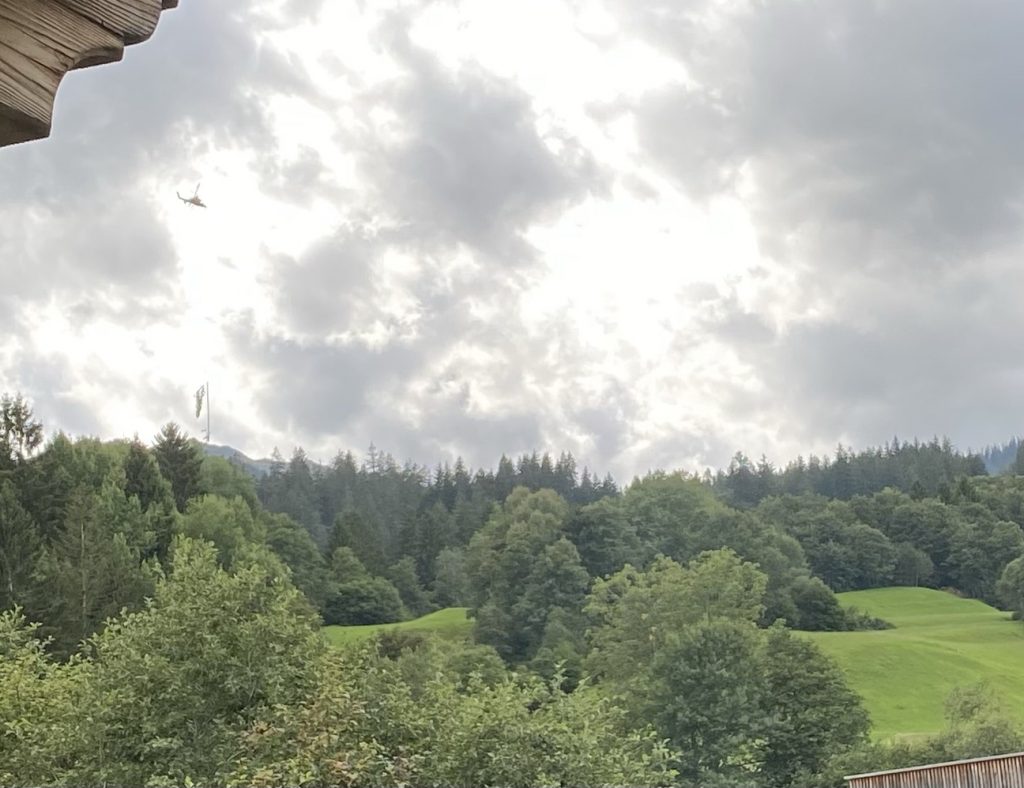
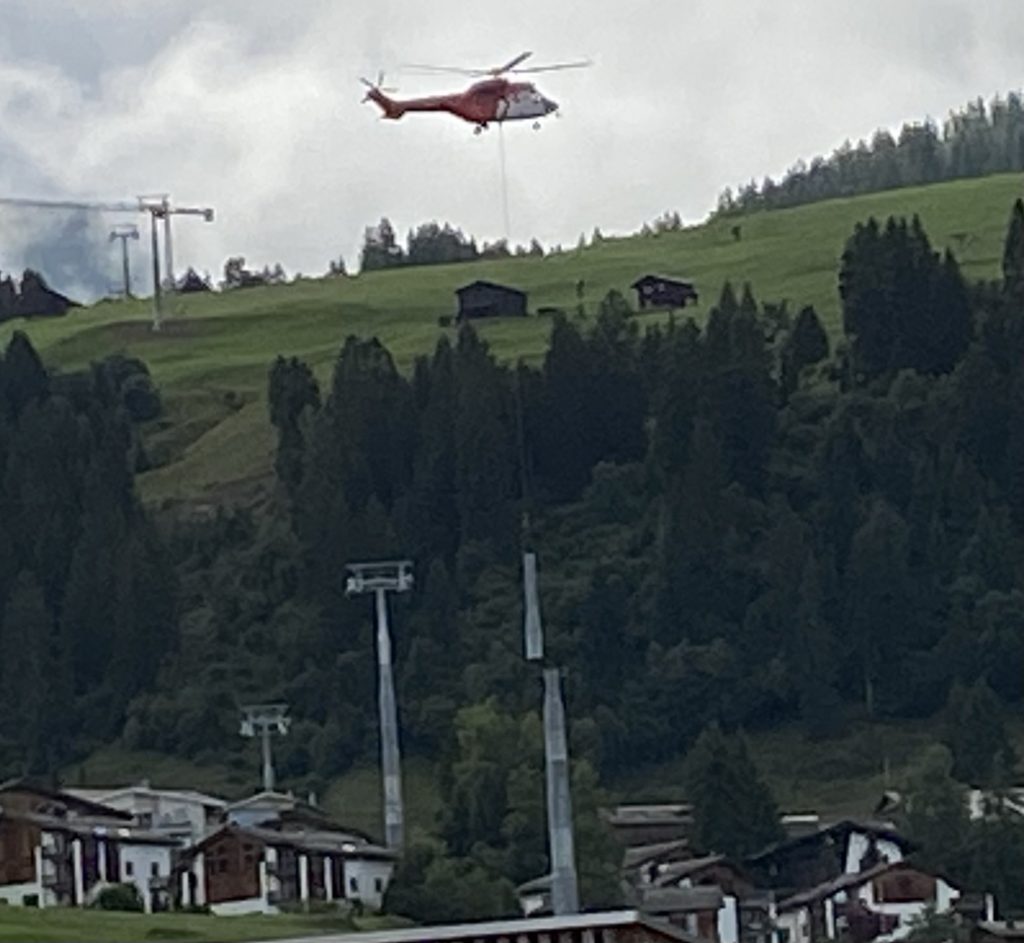
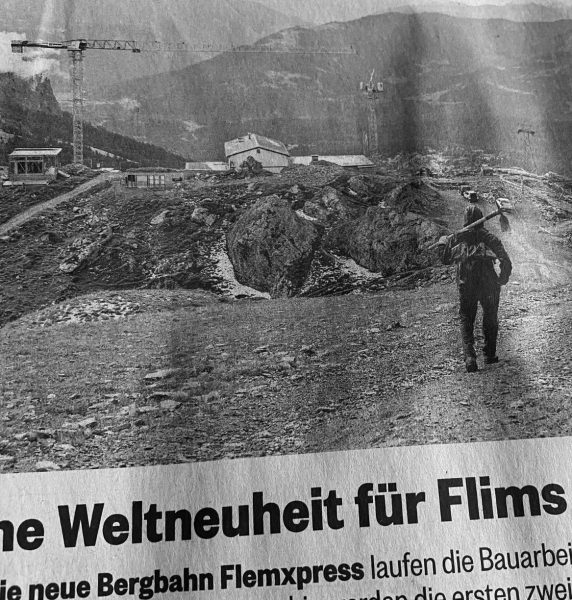
In vielen Fällen stimmt die eigene Sichtweise nicht mit der Sichtweise von anderen überein. Das kann sich bei Personen bis hin zu Persönlichkeitsstörungen auswachsen. Bei ganzen Gesellschaften, Kantonen oder Regionen führt die verzerrte Selbstwahrnehmung zu gewissen Befremdlichkeiten oder Entfremdung. Die Lokalpresse der Südostschweiz zeigt zwei fröhliche BauarbeiterInnen, die gemütlich auf ihre Baustelle zuwandern. Weit gefehlt. Der Helikopter hat längst die Hauptarbeit übernommen und diese BauarbeiterInnen (à la Heidi) gehören einer Vergangenheit an, die längst untergegangen ist.
Aber Zeitungen verkaufen sich lokal wohl besser, wenn sie an dem idyllischen Bild der Vergangenheit als Selbsteinschätzung und Selbstvergewisserung festhalten. Die Fremdsicht kommt eben auch nur von Fremden. Die Personen zahlen letztlich gerne für den Lift, um das Naturspektakel der Alpen auf 2000m noch eindrucksvoller erleben zu können. Dabei wäre mit Bussen und einer kleinen Bergwanderung dasselbe Panorama bei höherer Endorphinausschüttung zu erleben. Ob es für das Transportieren der Mountainbikes im Sommer nach oben und mehr Skifahrenden bei weniger Schneegebieten im Winter eine solche Investition benötigt, die noch mehr Grünflächen verschwinden lässt, bleibt äußerst fraglich. Der Kampf zwischen Mountainbikern und zu Fuß gehenden Personen wurde bereits durch getrennte Strecken entschärft. Zwischen den Menschen, nicht aber die weitere raumgreifende Nutzung der Natur.

Geologie

Mehr GeologInnen braucht das Land. In der Schweiz beunruhigen derzeit zunehmende geologische Risiken. Der Klimawandel lässt Permafrost in den Höhen schmelzen, der jahrhundertelang Gestein zusammenhielt Gleichzeitig sinkt die Schweiz, nicht die Aktienkurse, selbst die Credit Suisse ist bereits untergegangen, aber rein geologisch, nüchtern betrachtet (NZZ, 2023 „Die Schweiz sinkt“). Das verlangt nun doch einige gründliche wissenschaftliche Untersuchungen. GeologInnen messen bereits mit unzähligen Messstationen die Bewegungen der Erdkrusten. In der Schweiz lässt sich sicherlich mit dem zunehmenden Abschmelzen der Gletscher und der Veränderung der (mehr) Regenfälle statt Schneefälle in den frühen Wintermonaten eine neue Gefahrensituation aufzeigen, nicht nur für den Tourismus. Die üblichen Reflexe: mehr Investieren in Schutz und neue Versicherungen wird alleine nicht mehr helfen. Biodiversität auf den unteren Skipisten ist eh Fehlanzeige, aber die Baumgrenze steigt. Das könnte genutzt werden, statt die vielfach kranken Fichten, die wegen ihrer kurzen Wurzeln kaum ein Gewitter überstehen (Ruinaulta vom 4.8.2023 S.6 und S.16-18). Diese Gewitter werden durch den Klimawandel wahrscheinlich häufiger werden. Noch mehr Versicherungen werden die Welt nicht retten können. Wir werden umdenken müssen auch wenn Verhaltensänderungen sehr schwerfallen.
Das Abbrechen von Bergspitzen, wie am Kantersteg (BE) oder der Bergsturz am Piz Cengalo 2017 in Graubünden, ereignen sich dann eher in den wärmeren Sommertagen. Die GeologInnen werden viele Arbeitsstellen haben (nicht nur im Geopark Sardona UNESCO Welterbe) und gehören zu den Berufen mit höherer Nachfrage durch den Klimawandel.

Work Satisfaction

There is an important distinction between job satisfaction and satisfaction with one’s work. Being satisfied with the work you have done or something you created or co-created has become almost a privilege. Production in capitalism has mostly different objectives like rent seeking rather than satisfaction with one’s work. Compromises between both are a major learning process about the functioning of labour markets. Remote work, for some, contributes a lot to more job satisfaction. For others a healthy work environment is the top priority. Many people however focus simply on pay packages and this is often out of sheer necessity to escape poverty eventually. Trades have a tradition to allow satisfaction with one’s work, more than most jobs in industry. Flat hierarchies and subordination to your own standards, rather than pressure from supervisors, are much more common. Recognition of your work adds to the pay you receive. Job turnover is related to job satisfaction but also to satisfaction or even identification with the product of your work.

There is more to work than pay. Recognition in form of winning a price in a competition may help to keep awareness high that pay is only one element of remuneration. “meilleur ouvrier de France“ is such a kind of recognition. It encourages people to try new things and test new ideas. This is a major source of satisfaction with one’s work. We might even feel sorry for someone shouting “I can get no satisfaction”. He probably has to try in a simpler or different fashion rather than to try harder. The city Dijon in Burgundy seems to have a pretty high number of people with high levels of work satisfaction and happy to show it.

Greenwashing

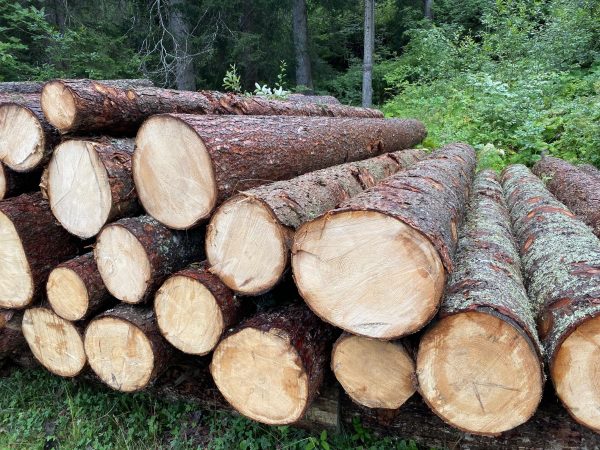
We mostly think of greenwashing of big polluting industries , but there many other ways to cheat with green labels. When you travel through green Switzerland you might be surprised of how the Swiss way of greenwashing works. In order to survive as tourist attraction with less snow (Study published in Nature Climate change 2023) and reduced numbers of trees, greenwashing has to happen quickly before tourists arrive again.

The challenge is to clear your sick parts of the forest quickly and to build new ways for fast lifts to heights in the mountains where you are likely to find snow at least for the next 30 years after which the investment is amortized. (quote from Neue Zürcher Zeitung 5.8.2023 p11). This all is carried through in speedy fashion and probably in the most polluting way you can imagine. Heidi would cry in the arms of her grandfather and join Greta in the school strike.

Graubünden 8-2023
Pilotis Pilotitis 2023

Gartenwelt

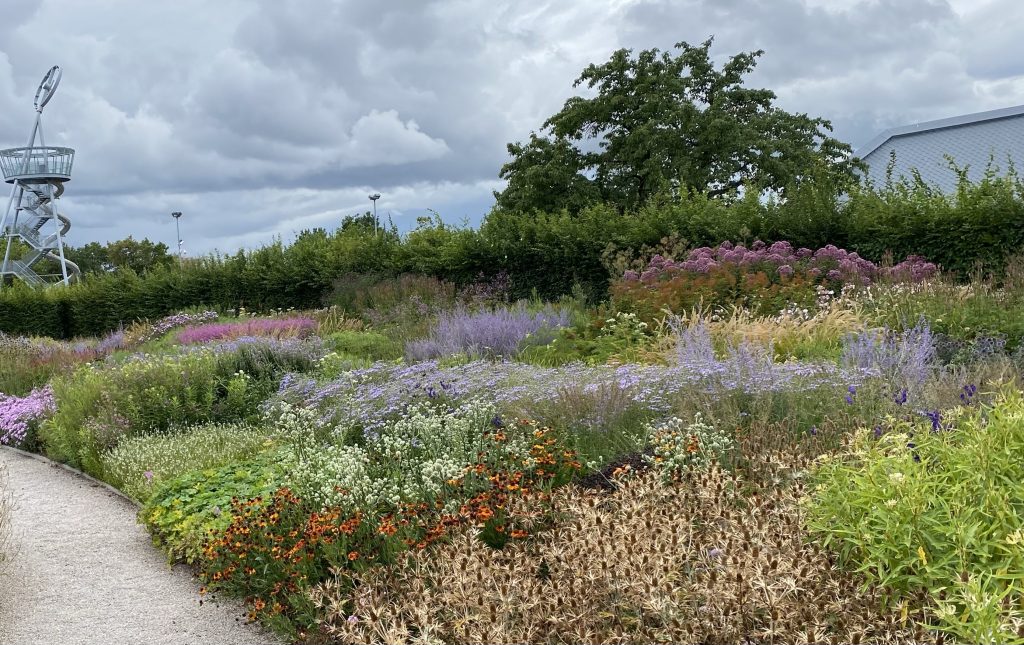
Gärten sind eigene Welten. Selbst im gleichen Garten sehen verschiedene Menschen unterschiedliche Dinge. Man stelle sich nur sogenannte Farbenblindheit vor. Jahreszeiten bieten zusätzliches Ansichtsmaterial. Animalische Perspektiven würden für erstaunliche Überraschungen sorgen. Nach den Vorarbeiten mit dem Polinatorprojekt online hatten wir die Gelegenheit eine konkrete Realisierung einer solchen Gartenwelt zu durchwandern.

Der reale 3-D Eindruck ist überwältigend und bringt die virtuelle Erfahrung des Gartens im Lauf der Jahreszeiten in die reale Welt. Zu jeder Jahreszeit, selbst im Hochsommer, ist viel Farbe im Spiel und das auf mehreren Ebenen. Paradiesische Gartenwelten erschließen sich bei der Bewegung im Garten. Das wirkt wie ein Ansporn zu eigenen oder besser gemeinschaftlichen Anstrengungen einer vergleichbaren Realisierung. Genau das ist auch Teil der Ausstellung und des Katalogs „Zukunft der Gärten“ im Vitra Design Museum.

Nuclear War

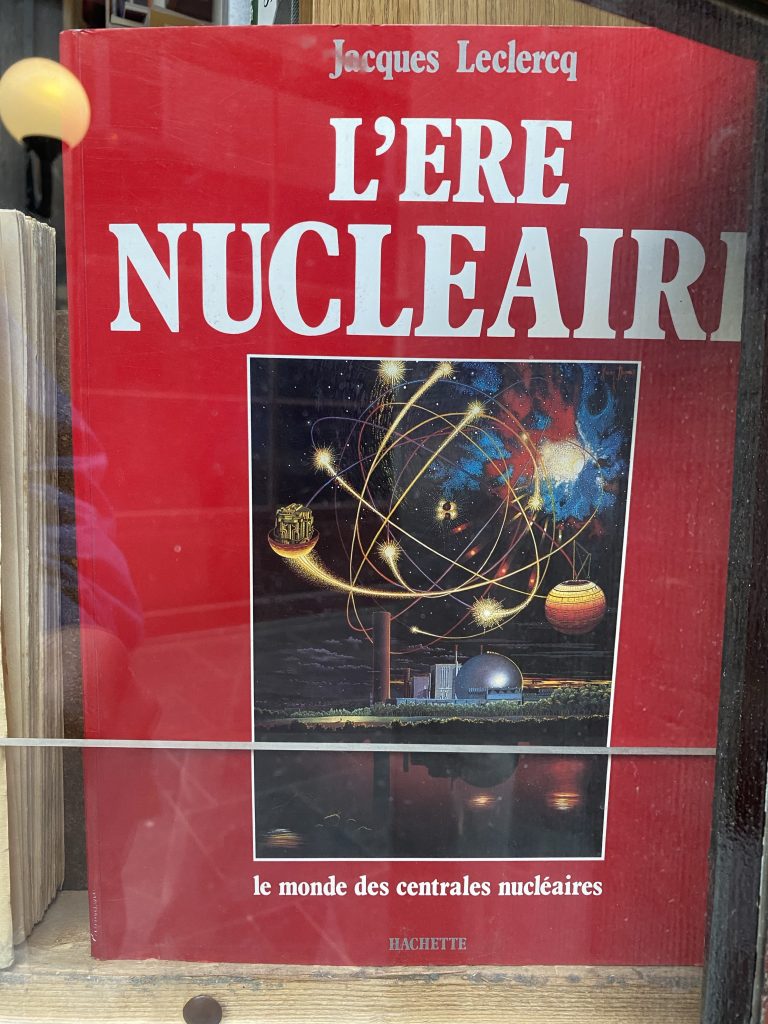
In the last few years we have witnessed a new surge in the investment in nuclear energy on the global level (IEA). Ever since the foundation of the initiative “International physicians for the prevention of nuclear war” in the 1980s, there have been relentless reminders of the devastating effects of such a war. In 2023 we are all aware of the real risk of attacks on the biggest nuclear power plant located in Ukraine. Nevertheless we continue to invest heavily in power plants that constitute a massive risk at times of war between irresponsible nations. Besides the publication of many high quality papers in The Lancet there is regularly space to keep the awareness of the dangers of nuclear war at a high level. Too many politicians shield themselves from dealing with such realistic dangers in the interest of supposed cheap and save energy for all. Both is no longer the case. Nuclear energy is expensive and unsafe in peace and horrible in war times. We cannot afford to abstract from these rising risks. The hype about anything nuclear like in the 1980s is grossly displaced (image of book below).

Anger

It feels like we live in the “age of anger”. Anger was a predominate feeling in the “French yellow vest movement” spurred by sharp increases in petrol prices. In Germany the notion of “Wutbürger” had a short career to express anger of citizens against, against whatever could arise anger. There are plenty of issues of course that will cause arousal in public politics. The more a government enacts change, be it necessary or not, the more it is to arouse its citizens. Parliamentary democracy is thought to solve this through majority voting of the equally represented in parliament. Minority rights have been installed to safeguard the majority to become too overwhelming, but any close decisions on hotly debated topics are likely to cause substantial anger within a society.
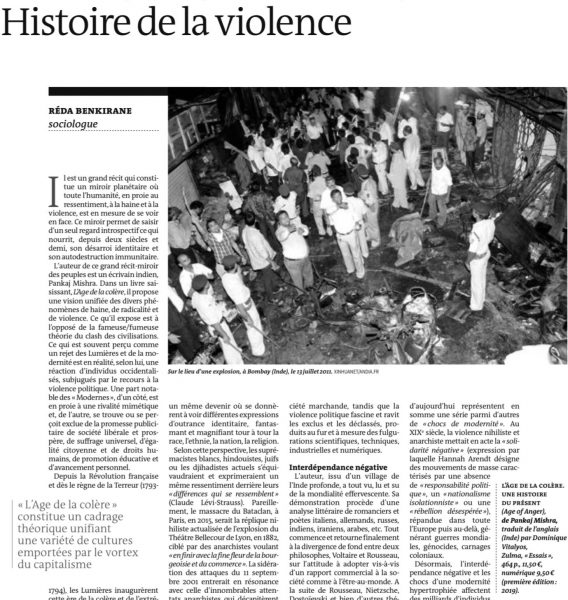
This is far from being an issue only in Western democracies. Pankaj Mishra claims, this is a world-wide phenomenon and history provides ample examples for it. In his book on “The age of anger” he challenges the predominantly Western political theory, deriving from an opposition of Voltaire’s and Rousseau’s political thought to hold the individualisation and globalisation of an economic model, traditional capitalism, responsible for the rise of anger across the globe.
This critique of capitalism is now translated into French. Several movements of anger in France probably find some unifying roots of seemingly unrelated outbreak of anger, violence and subsequent repression. Old arguments of critics of capitalism stand up again. The challenge to democracy comes from the extreme right even more than from the extreme left. Re-imagining capitalism is needed more than ever to safe the survival of democracy. Participative democracy like in Bürgerräte in Germany or deliberative democracy practiced by President Macron in France are an important part to stimulate involvement of more people in the preparation of decision-making. Not perfect as procedures, but small steps ahead to confront and address anger of the citizens and people at large.

Work Subordination

One of the defining principles besides the job description, working time, working place, remuneration of a work contract is the subordination to a superior. The employment contract entails some more or less strictly executed form of direction, but a right of direction nevertheless. This element of subordination has become a major issue in the definition of whether you are effectively an employee or a self-employed person. The digital revolution had enlarged the kinds of subordination. Platforms and algorithms, that distribute work among several employees (but named platform workers) disguised the subordination to a superior level of management to the platform and its seemingly anonymous algorithm. Many young riders were saying, I don’t like bosses, but I am willing to accept a “technical” platform that distributes work tasks only seemingly in a non-discriminatory way. Due to a failure of labour legislation to regulate early enough a thriving model of fake self-employment developed throughout Europe and beyond. Labour Courts have contributed a lot to correct the disguised subordination. Even Uber is advertising that they only operate as a broker of tasks, but have no subordinated employees. The related issue of subordination remains largely the same. Subordination to an algorithm of the distribution of tasks is the end result.
Many start-up enterprises use Kanban boards to facilitate project and team management. Shifting tasks between employees, introducing new tasks and self-selection of tasks are potentially subordination-free allocation of tasks (example software). Flat hierarchies seem more manageable through the use of such tools. The number of tools that integrate other office functions is impressive. When testing such tools, that become more popular also in the distribution of household tasks, beware of the data-hungry nature of such tools. For example, https://trello.com/ warns correctly in the small print that for its full functionality it would need to have permission to use “your” camera, microphone, contacts, photo library, calendar etc.
This demonstrates that subordination, nowadays, is complemented by the algorithmic use of a lot of privacy, we would never have agreed to a boss in person should even ask for. The new and old subordinators have powerful tools at hand, the subordinated will have to get their act together and limit the amount of subordination they are willing to accept.
Again, this is a generational topic. The low threshold to accept technical subordination in younger generations, your autonomous level-5 car is breaking earlier than you even perceive a risk, is confronted with the higher threshold to accept personal subordination for youth. Interestingly, for older generations the obverse is true. All in all, we have ample reason to rethink and re-define also in legal terms the manifold, disguised and new forms of subordination related to work.

Work Remote

Since the COVID-19 crisis we witness a steep increase in the interest to working from home or from remote places. Originally during the pandemic spread of the virus, remote work was the only way to stay in contact with employers and fellow employees for all those not considered as essential workers. Many employees and employers, for the first, experienced that working remotely can have multiple positive effects. First of all, saving time and stress as well as CO2 reduction due to less commuting is beneficial not only for individual employees, but also for society at large. These benefits are substantial.
In my opinion the most substantial consequence is the rethinking of several fundamentals related to work that have gone unquestioned for decades or even centuries, which is: Work happened predominantly at the work place. Digitalisation had changed this partially already, but the willingness to implement far reaching reforms related to work for millions of employees remained rather limited before the Covid-19 pandemic. Nobody had to go on strike to force employers to accept remote work. Suddenly employers, in some instances, were begging employees to please do your work from home or anywhere else. Now we are in the historically rather unique situation that both employers as well as employees try to reap the benefits of the unexpected revolution of remote work potentials including new digital tools to organise remote work (example “scoopforwork”). Employers found out they can do with much less office space than they previously thought they would need to accommodate all employees. Employees found out that saving on commuting time saves energy and frees time resources for other, potentially more healthy ways of life. A new balance of work and private life could be arranged at home. So much for the theoretical expectations.
In practice many women realised that they suddenly found themselves thrown back into working at home and in the home all the time again, with men still less willing to share household work equally. Unsuitable work spaces at home, arranged rather ad hoc, became a health and safety issue usually considered to be part of the employers’ responsibilities.
The results of the real-life experiment of forced remote work are still under scrutiny. To turn them into beneficial arrangements of voluntary remote work which is empowering, emancipating, increasing degrees of freedom for employees would be a huge step ahead. The full spectrum of negotiations is involved. Legislation, collective agreements and 1-on-1 solutions are needed to reap the benefits on all levels. Comparable to the industrial revolution during the 19th century, drawing millions of workers into factories and coal mines, we are at the beginning of a new era of digital and remote work that governs solar and wind farms for energy provision as well as 3D printing of industrial components.
It seems that we shift from the blue collar to the white collar to the no collar world of work. Working remotely in my t-shirt under the cherry tree is not the worst of a revolution (guard against cherry picking by employers and new layers of inequality). It might take a generation or two to accomplish this. With threatening, pervasive climate change we probably have to make it happen sooner rather than later.