Ozone

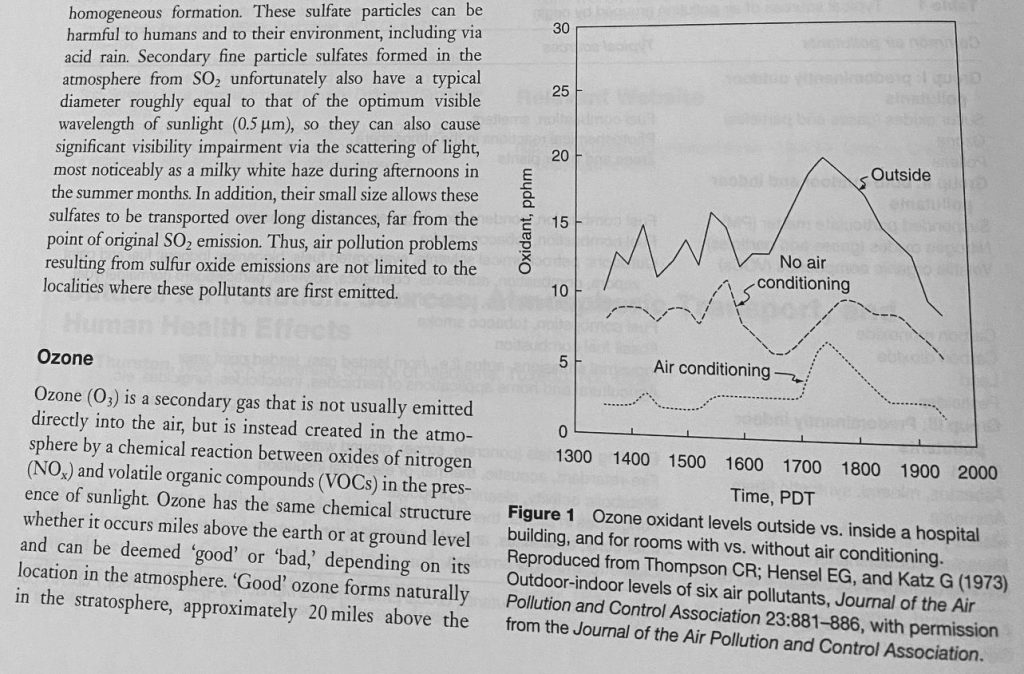
Ozone (O3) has a rather mixed reputation. High up in the stratosphere it protects us from too much radiation from the sun, but down on earth in our respiratory environment it causes and amplifies respiratory difficulties. Hence, it is very important to differentiate the 2 different layers and differential effects of concentrations of ozone in the air. A forthcoming study in the Lancet Regional Health Europe (Nov. 2023) by Tianyu Zhao et al. demonstrates the long-term, negative effect of higher concentrations of Ozone on lung function. The prospective cohort study followed individuals in multiple states and locations over 20 years and corrects estimated effects for other environmental effects (fine particles PM 2.5 pollution) and green environment. Faster decline in spirometric lung function is highly likely to be caused by higher ambient ozone concentrations. The study is based on 3000+ observations from 17 centres in 8 countries in Europe. Older persons in the range from 35 to 55 had a steeper decline in ozone-related decline in lung functions.
This is rather bad news for older persons living in inner cities where both ozone concentrations, mainly in summer, heat and micro-particles cumulate. Similarly, areas with frequent so-called inversion micro-climate, (a layer of cold air on top of SMOG blocks the renewal of air for extended periods) face particular health risks. Professions that work long durations outside in the sun or the exercise of sports during high ozone day-time run higher risks for a deterioration of their lung functions in the long-run. The medical evidence is there now, also for Europe, what had been shown already for the US before.
It is time to adapt our lifestyle to these health risks. High effort physical work outside should start as early as possible in the morning hours or even before sun rise. Staying indoors is highly recommendable for older persons and persons with reduced lung functions (asthma risks) during such periods of high ozone concentrations. Like it or not, even wearing a mask outside, when it is sunny and hot would be preferential, but is rather inconvenient. We need to shift airing living rooms or offices without climatization to early morning hours rather than ambient temperatures in the afternoon, when ozone peaks are prevalent.
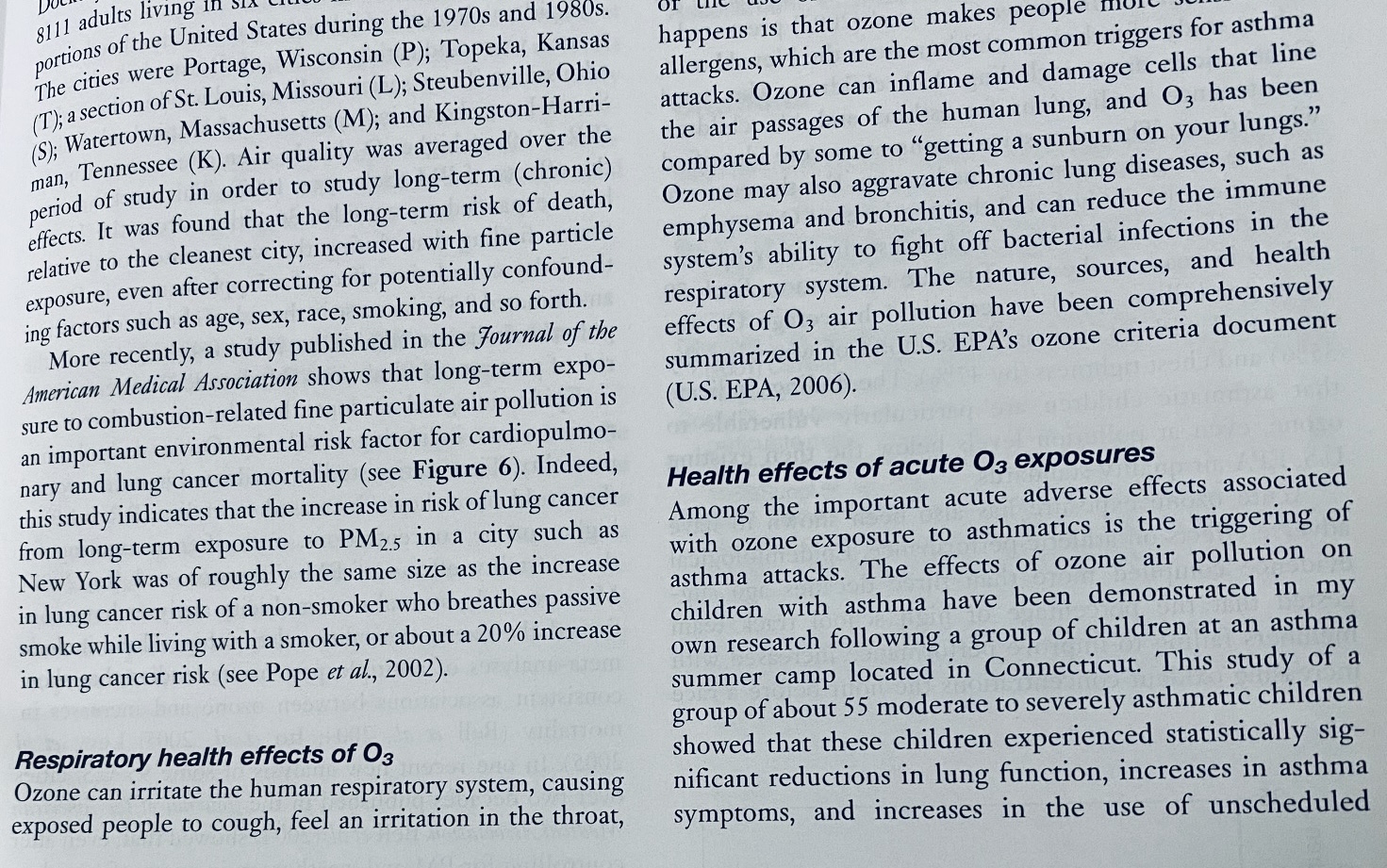
These effects and remedies have been known for some time, but the evidence is much more compelling now (Zhao et al. 2023). Climate change in form of global and local warming, particularly in inner cities, will only exacerbate these effects in the coming years. Prevention measures need to be considered in public health measures as well as urban planning. We can do it, if we want to. Start now to benefit from the effects a decade later or for the benefit of younger generations. (Image: Int. Encycl. of public health, p.702).
Energy Ethics

Around the topic of energy there many ethical issues that urgently need sorting out. Carlos Diaz-Rodriguez and co-authors have provided a sound basis for such ethical considerations. To leave the disastrous path of energy provision through polluting fossil fuels and, additionally very risky, nuclear energy, they propose a departure from the principles and values that have guided us into a dead end. In their opinion we suffer from a mistaken belief to be able to control in extremis, through scientific methods, the forces of nature. In ethics this mistaken belief has roots in religious beliefs that mankind is mandated to make the earth subordinate to its own will. The authors propose to overcome this old paradigm with a new paradigm. This builds on the (1) “precautionary principle”, (2) justice as equity, (3) protection and the (4) principle of responsibility.
Most European readers of philosophy and social science are familiar with these principles. The virtue of the paper is to expose and juxtapose these principles in a clear format and a stringent application to the ethics of energy (production as well as consumption of it).
The precautionary principle is part of the European treaty on the functioning of the European Union Art. 191, but its implementation on energy issues reveals that it is a tiger without teeth. Younger generations across the globe are right to claim a more forceful implementation of this principle.
The perspective of justice as equity is bringing in later born generations as well into the balance costs and benefits of “cheap energy today” but huge costs of dismantling, repairing, stocking deferred to the future.
The protection principle refers to the loss of biodiversity and exploiting resources in areas of world heritage, for example.
The principle of responsibility goes beyond the judicial and economic principle that the person, company or state causing damage through exploitation of resources, and in producing energy with it, has to pay for repairing those damages.
As this is hard to achieve in real terms, there is an urgent need to reiterate the responsibility principle at all levels. Despite the inefficiencies of legal systems, the international legal order in particular, there is no way around than to insist on responsibility from the individual behaviour, company strategic goals as well as objectives set by nation states and international organisations. The Paris agreement and all COP XY conferences only prove the fact that irresponsibility continues to be a guiding principle.
Maximalist positions as well as continuing like decades before is failing people on earth. Organising a discourse on these ethical issues is a first step, but we have to be able to address negationists as well.
The missing principle so far is the solidarity principle. Without a firm commitment to intergenerational and international solidarity we shall remain unable to solve the ethical puzzle. It is high time to organise solidarity related to the field of energy.
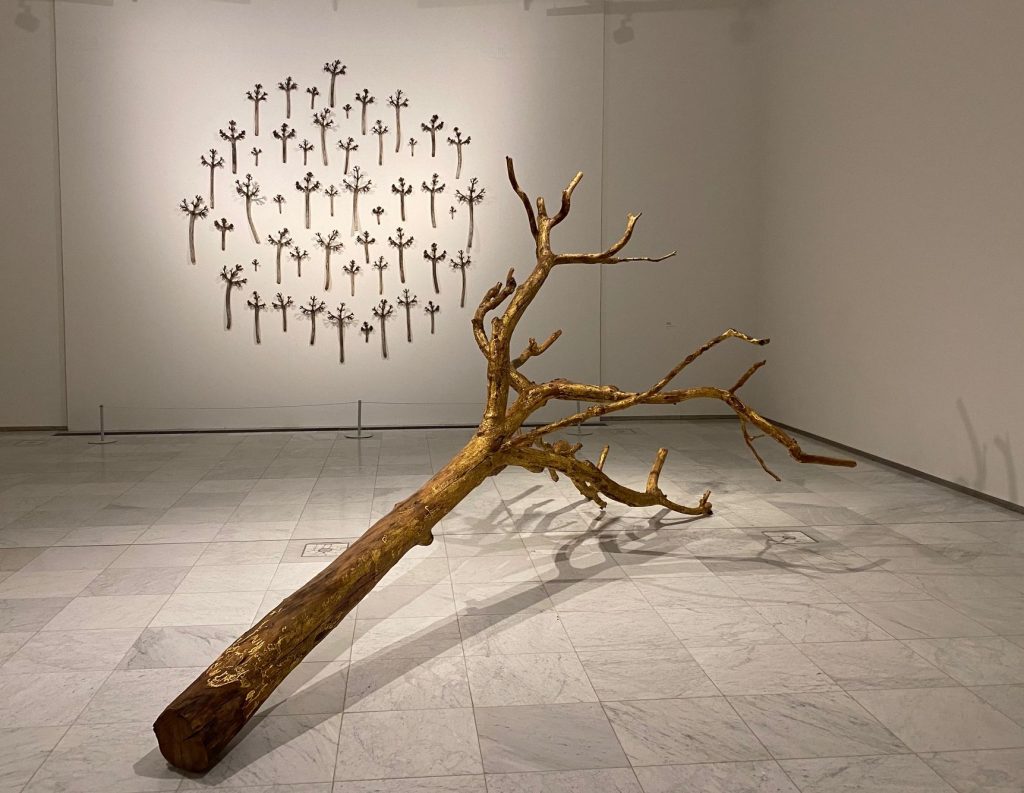
(Image: “The fallen tree of knowledge” by Fabrice Samyn. Exposition in Yerres, France 2021-11)

Energy Food

For more than a decade now researchers have shown the link between energy prices and food prices. At first sight this might seem surprising. In traditional or romantic associations with growing food, there is no link between the cost of energy and food production. Growing crops in your garden does not need more than sunlight, soil and water. Yes, that was long ago. Industrial production of food is heavily relying on energy to heat, feed and water plants or animals. Additionally, the supply chains have become far more distant, which increases the CO2 footprint even further. Therefore, it is no longer surprising that a great number of econometric studies confirm the close link of energy prices and subsequent pressure on food prices. This is not restricted to Europe, but has reached global contamination.
Enjoying seasonal local food is a double catch solution. You grow according to local weather conditions and use traditional conservation methods, if the crop is exceeding your demand at that time. Providing heating for animals to increase productivity or quality of products appears to be one of the most wasteful ways to further increase the spiralling up of energy and food prices.
In agricultural science there is a lot of research into the “energy intake” of animals to better grow or produce more milk etc. This is the expensive intermediary step using energy to produce energy intake for animals rather than humans. It is surprising that we take so many years to address these well-known linkages that have turned to serious problems after Russia’s war on Ukraine. Agriculture and farmers can be part of the solution rather than a problem themselves, if the link of energy consumption and food prices is taken seriously.

10000

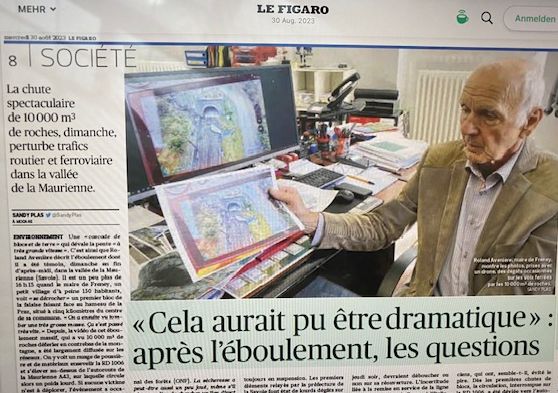
In France 100.000 is associated with Monsieur 100.000 Volt Gilbert Bécaud due to his dynamic singing and performance style. Since August 2023 we now have an additional association with the number 10.000.  Ten thousand m3 was the size of stones that came down from the mountains near the popular skiing resorts in the French Alps (Le Monde Link+video). To visualize the amount, a back of the envelope calculation with a standard container size of 25 m3 returns 400 loads of lorries to be removed from hard to access landscapes. Count this into the costs of running ski resorts.
A study in the scientific journal “Nature Climate Change” in 2023 highlighted the increasing risks to European skiing sites. Same holds for the Alpes in Switzerland.  Some areas relying on water resources to create artifical snow do so in less and less safe areas. Costs accrue to communities who benefit only indirectly from the skiing hype, celebrating 100 years of Olympic skiing next year. After all it is big business to sell or lend equipment, provide hotels and meals for all those sports women and men.
The so-called collateral damage is probably even worse. Interrupted railways, bridges, motorways and traffic in general becomes a severe disruption for quite some time adding to the total costs of having fun in winter. Is it worth it? A tricky question to ask in a referendum. We shall have to revise our past decisions to expand skiing resorts in light of the new evidence of higher risks and costs involved. A book on 10.000 years of history of glaciers is full of side-effects of glaciers melting away, which cause instability to valleys on the sidelines. In the most recent break-up of rocks it is actually more the access to the skiing resorts that was blocked, but this demonstrates to all: passing this area now, is not without serious side-effects.

Everyday objects

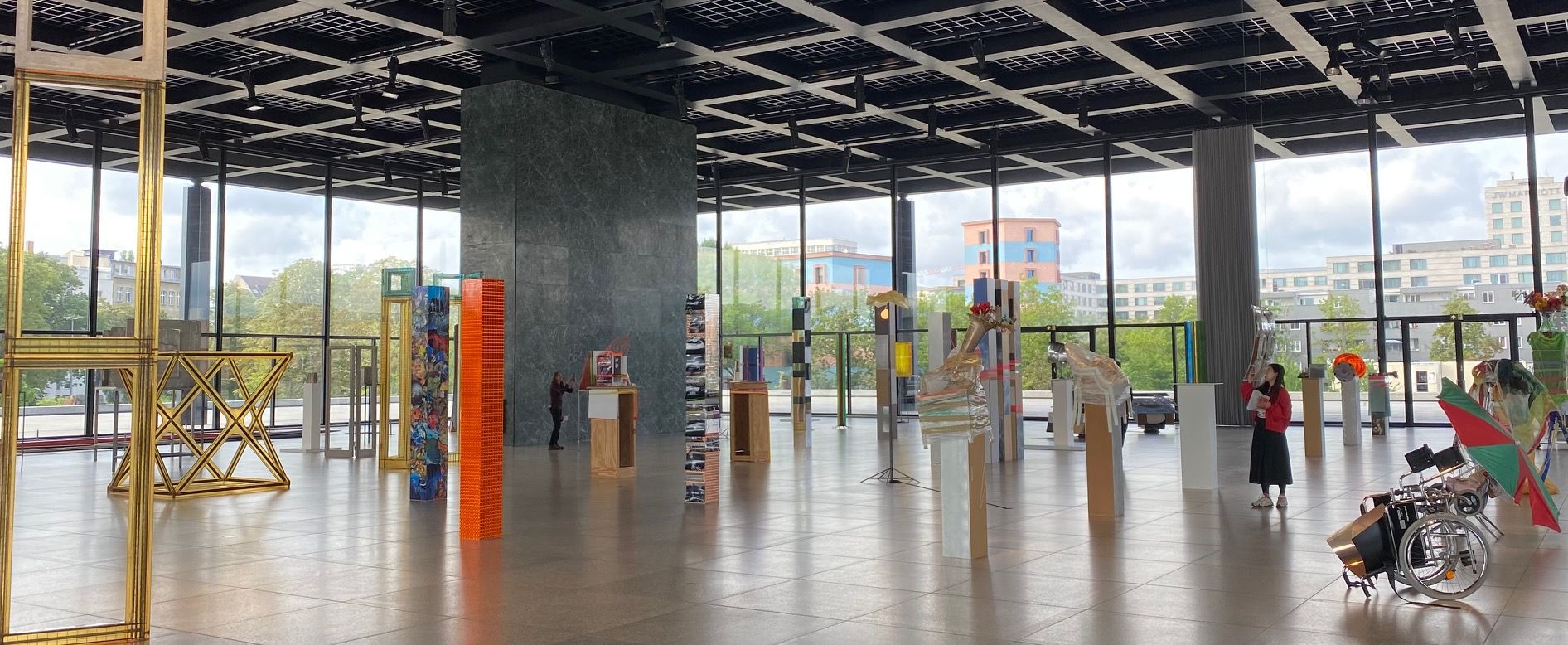
If you were wondering whether everyday objects can be a piece of art, then the exhibition at the “Neue Nationalgalerie Berlin” is for you. Isa Genzken challenges our traditional view of everyday objects through small transformations of these objects. At first sight you “only” see something utterly familiar to you. A window, a radio, a rose or a wheelchair are immediately recognisable. However, all objects have a little twist to them causing some alienation, questioning or finding new connections. This is the stimulating experience of a visit of the exhibition. The booklet gives an informative overview of choice of sculptures chosen for the exhibition. Walking around in the spacious entry forum allows to appreciate the objects from many angles and in different lighting including twilight. Allow yourself to be challenged. Distancing your perspective beyond the obvious object you recognise broadens our vision of what we see and how we perceive it. The huge pink rose in front of the gallery overshadows even the monumental appearance of the Neue Nationalgalerie. In memoriam “Rosa Luxemburg” and Karl Liebknecht who were murdered not far away, near the “Landwehrkanal” in 1919.
Some visitors might like the skyscraper models she created to remind us that “design catastrophe” with the usual high rising buildings are pervasive around the world. Sculpture as architecture or architecture as sculpture has been her forward looking work from 2008 “Ground Zero – Hospital”.
With the construction work in full swing in the neighbourhood of the gallery with the design of a barn (Scheune) we understand the choice of the artist as a timely reminder that Berlin could be more daring in the architectural design.

Smart watch

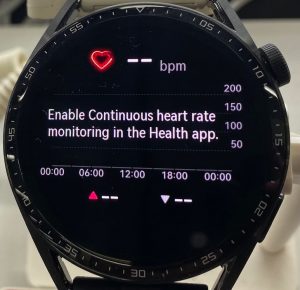
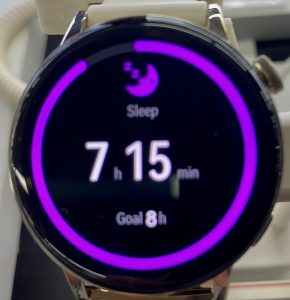
Das Handgelenk hat noch viel Platz für elektronische Geräte. Vom preiswerten Schrittzähler bis zur smart watch und intelligenten Armreifen oder sogar Ringen gibt es dort viel Potential für Innovation. Jenseits der Schritte werden mittels vielfältiger Sensoren eine Fülle von Daten erfasst. Datenschützer erschaudern geradezu. Das Potential für medizinische und soziologische Auswertungen dieser Daten ist immens. Vergleichbar mit einer elektronischen Waage, die Knochenmasse, Wasser und Muskeln erfasst erlauben die smarten Uhren noch mit Ungenauigkeiten, aber stetig besser werdend, kardiologische Werte und Schlafrhythmus zu erfassen.
Mit Daten von tausenden bald Millionen Datenlieferanten lassen sich wichtige Studien zur Früherkennung von Gesundheitsrisiken durchführen. Plötzlicher Herzstillstand ist eines der immer noch wenig aufgeklärten Phänomene. Die Studie im LANCET digital health hat solche Daten ausgewertet und kommt zu der Schlussfolgerung, dass dyspnoea für Frauen und Männer der größten Risikofaktoren darstellt. Für Frauen wird Entwarnung gegeben für Diaphoresis, exzessives Schwitzen, aber nicht für Männer. Letztere sollten Schmerzen in der Brust ebenfalls ernst nehmen. Daten sammeln kann durchaus Leben retten.
Dennoch droht dem Gesundheitswesen eventuell eine Welle an falsch positiven Selbsteinweisungen in der Notaufnahme der Krankenhäuser. Darauf sind wir noch wenig vorbereitet, inklusive der möglichen rechtlichen und finanziellen Konsequenzen. “Big brothers are smart watching you”. Müssen Ärzte die smarte Evidenz berücksichtigen, etwa so wie eine Patientenverfügung? Was wenn plötzlich der Notarzt unaufgefordert an der Tür klingelt? Wer hat meine Uhr gehackt, … , singt das Paulchen Panther jetzt.

Barbie explore

The film on Barbie after more than 60 years of the first puppets to arrive on the market is a huge money spinning exercise. Hitting more than 1 billion $ is really a huge box office success. More interesting even is the banning of the film in some countries like Algeria. This gives the film an interesting subversive touch to it, which we in the Western countries no longer see as something special. Emancipated women pose a threat to authoritarian regimes.
However, we see in the stereotypes of beauty-driven dolls not that much of an emancipatory chance. To view emancipation independent of the looks of a person is another interesting twist to the role in stereotypes of beauty. It is not only fun to play around with stereotypes, that is mostly, if you are not negatively affected by them (age, gender, ethnicity, extraordinary persons). A nice task for sociology and psychology to explain the working of stereotypes in society and possible remedies. Tolerance is a competence that needs to be learned and updated continuously, from early age onwards.
Therefore, the website created by the US Design Agency Rvnway offers an entertaining way to play around and learn about stereotypes. Perceived, generalized beauty or gender roles can be explored using the tool. Maybe some see themselves differently after such explorations. Everybody is a model. This is the message. www.bairbie.me will let you explore other formats of yourself. After 3-D rendering and printing your children or grandchildren will decide what role they would like you to play in their playfull, or virtual “real” life. I suppose many of us will be up for a big surprise. Go on and imagine in 4D. In the age of selfies all around us, all the time, we believe we are very modern, but the artists of the 19th and 20th century following all great painters before, frequently started their careers with an “autoportrait” or “Selbstbildnis” or series of those as they were aging.

More Design

How about a subject like Design in school. Rather than the same old boring teaching manuals in art, music, economics or social science, young learners have always been attracted to making things by themselves. The theoretical context is then coming to the subjects and objects more naturally. Economics as market design, design social security for platform workers, sound or furniture design could bring in the creative potential of the learners. Lessons learned through subsequent applications or realizations of prototypes allows the link of theory and practice. A school garden would even be a fantastic cross-discipline learning opportunity.

The most difficult part is probably to find competent coaches to guide the learners exploring and designing. The world is not perfect, so why should learners not be confronted with imperfections in learning set-ups. The most fun part in science is when experiments go wrong, hopefully not too badly though. Catching learners by their curiosity is very likely to get them hooked on more thorny scientific questions as well. Across Europe holidays are coming to an end and millions of pupils go back to their benches and rigid curricula. We should really care more about the next generation.

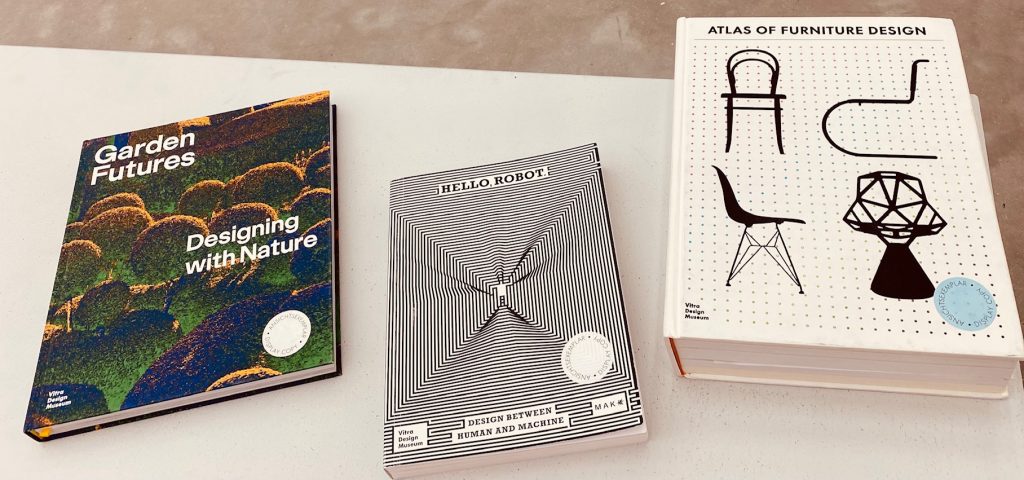
Vitra Design Exhibition and Campus 2023

Calendar Time

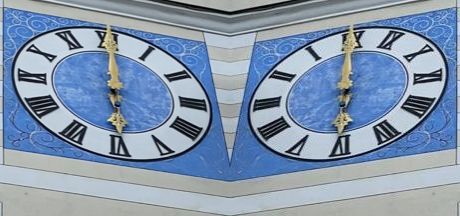
We all use calendars to organize our time almost unconsciously. This is helpful to organize and synchronize our time together. Working time, family and individual time tend to use the same time structure to facilitate community. Work arrangements depend a lot on a common method to structure time. The work-life balance hinges a lot on synchronization of calendars and joint time slots. Towards the end of the annual vacation period in Europe the annualized change of calendars is still common practice despite most people going digital. Annual overviews allow to allocate and potentially synchronize calendars for major events or periods (next break, period devoted to learning, family planning etc.). A cleavage that differentiated Europe in the analogous times was that some countries like Germany use(d) chronological calendars running from 1st of January until 31st of December and counting calendar weeks (1-52). Many other countries have long ago moved on to “functionalist” calendars running based on the school year from 1st of September to 31st of August each year. Different planning horizons appear to be the obvious outcome. Whereas the former might focus on the planning of the end of the calendar year 2023, the latter functionalist calendars begin to structure the new year-long period 2023-24 including the next summer break towards the end of the next schooling year.
In France you start end of August 2023 to plan ahead until end of August 2024. This comprises the Olympic games in Paris 2024. Don’t worry, most tickets are sold out already and attributed through lotteries. When people in Germany start to buy calendars for 2024 and organize a printed calendar, this occurs traditionally around Christmas time and New Year’s celebrations.
Specific professions follow their own calendar time. Academic years or accounting years may well differ from the other annualised organisation of time through calendars. Of course, religions have established their own calendars just as migrating birds or French revolutionaries in the 18th century. Meteorological calendars or sensor-based structuring of annual sequences of seasons like in trees, plants or insects add to the impression of the existence of multiple clocks.
A de-synchronisation of these multiple calendars increases the need to coordinate societies within or society and the economy, religion or ecology. I liked my printed calendars over the years. Now I shall print different versions for different countries and functions. I still wonder, if my life got easier or more complex. Probably, it has only become easier to organise complexity and diversity. Clock 6 video

Corbusier ZH

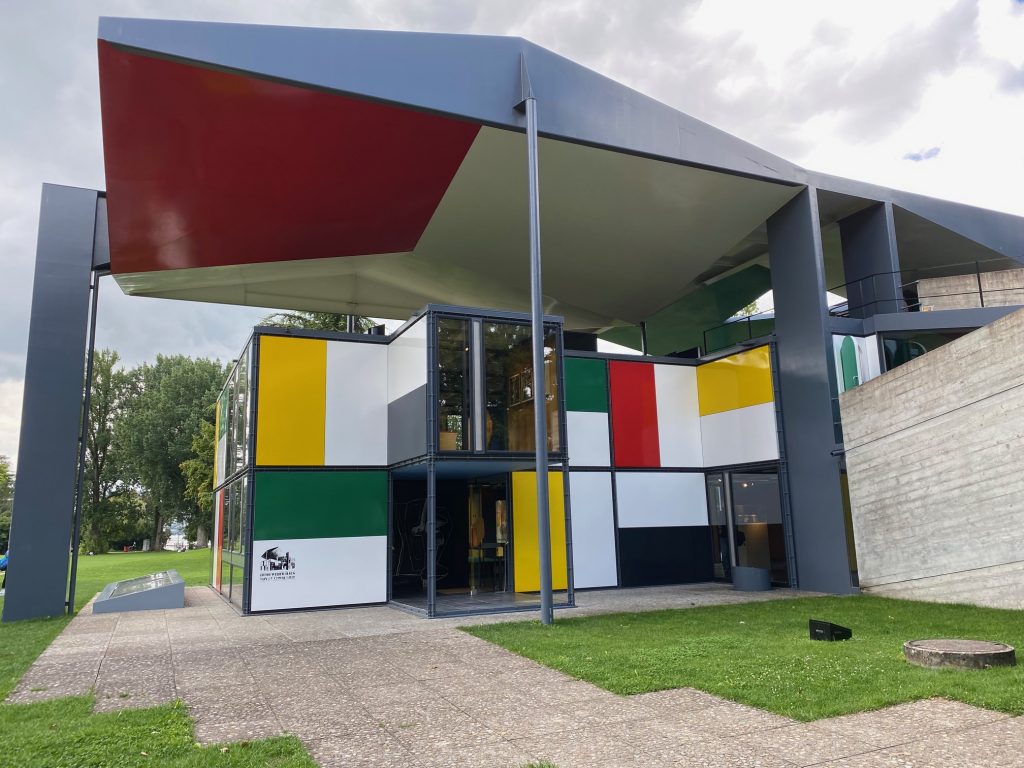
Realizations based on the theory of architecture by Le Corbusier are always worthy of visit. Passing through Zurich (CH) allows to discover another fine example of a villa he designed in the neighborhood of the old town. Within walking distance from the lake Zurich the spacious building allows just like the Paris example for an exhibition of art work within the villa. Horizontally stretched windows and a terrace on the roof make these villas look very modern. Rooftop bars and restaurants just stage a revival in inner cities as cool locations. Le Corbusier anticipated this long ago. Theories can have a long half value time of lasting.

The materials applied in the realizations were obviously less durable. This is the reason why the villa had been closed for renovations for many years. The reopening now shows the splendid views from inside out as well as from the outside. Colors are especially interesting in this example. Nothing is left to or build by chance. The Design language is spelled out in each detail down to door handles. An ongoing exhibition about the deterioration of materials and in some cases even toxic materials helps to understand the necessity to be aware of material science in construction. This makes visits even more informative. The confrontation of vision and sustainability becomes an additional topic also for the theory of architecture.

Le Corbusier Villa Zürich CH