Readers of the sociology and/or the philosophy of science or knowledge have a hard time. Each discipline is evolving at such a high speed that is terribly hard for humans to follow more than 1 or 2 fields. Perhaps the choice of Karma instead of knowledge would have made it easier here. Alternatively, in German it is easy to find many nouns starting with a capital K. Kapital, Krieg, Kritik or Käsekuchen would have been popular, I guess. Soon I shall open the comments for suggestions for additional nouns, as part of the empirical “swarm knowledge strategy” rather than the theory-driven deductive method applied in knowledge generation on my side so far.
But wait, we are already in the middle of the unsatiable quest for knowledge. On a meta-level we would deal with the multiple ways to acquire knowledge and create new knowledge. Artifical intelligence is certainly one of the hypes at the moment. New data and new combinations of data drive us forward in the expanding universe and knowledge space. We have witnessed the disappearance of the thick printed encyclopedia in most households, replaced by specilised digital dictionaries or the network society’s shared knowledge base of “wikipedia“. Knowledge is linked to the history of ideas and Peter Burke is a prominent figure to rely on as a reference in this field. 20 years after “A social history of knowledge: From Gutenberg to Diderot” he published the much acclaimed: “The Polymath. A cultural history from Leonardo da Vinci to Susan Sontag” in 2020. To synthesise across the many “monsters of knowledge” over centuries is a daunting task. I like quotes like the one from Leibniz (p.77) “the horrible heap of books that is constantly increasing” and then his own continuation: “Printing, once viewed as a solution to the problem, had become a problem itself”. The whole section is devoted to information overload. Fragmentation of knowledge into disciplines and, much worse, the manufacturing of false knowledge create new challenges to knowledge. Maybe transforming the term to “knowledges” rather than knowledge is likely to capture better the differences between artificial knowledge, created by artificial intelligence and specialised algorithms, and human based knowledge. In knowledge storage we have lost the race with computers, but in deciding what are promising combinations between different fields of knowledge, we are still a wee bit ahead of the machines. Klara tell me, where is the exit, or your synthesis of the whole lot. Meanwhile I continue to read – what? books and the like. 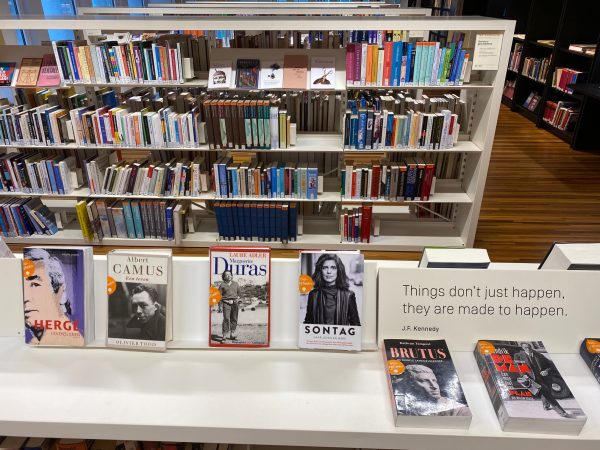
D for Democracy
Stand up for Democracy. Give me a D. Yes, we are passionate for democracy. Even if we are not singing Beethoven‘s “Ode an die Freude” every day, we are well aware that we have to defend democracy at numerous places. The essay in the New Yorker by Jill Lepore from January 2020 on the manifold risks to democracy and the way forward is a great inspiration. Democracy is always a “work in progress”. It improves and in most cases rises with the challenges. However, this demands to stay alert and wither the beginnings of threats to its functioning. Beyond the external threats, internal threats to democratic values are abound. The discursive element that is highlighted in the essay remains crucial. Debating in public is key. Transparency of arguments, reasoning and values are constituent parts of democracy. Clandestine ways of corruption, bribery and threatening of violence become apparent when fractions of society retreat from the public to form insider groups. Defenders of democracy need to speak out in public, publish they work, expose and perform their arts, challenge school curricula and be active in any policy field. This is a lot to do, but we have to prevail and rise to the continuous challenges to the democratic way of life. Too many dictators and autocrats around the world would like to see democracy fail. Worse, they work actively, like in “Qatargate” in November 2022 in Brussels to spread illicit practices of corruption. We have to strengthen our “antennas” and sensors to detect such practices. Prevention is key. Tough reactions with the force of the legal system to stop the spreading is also indicated. Let’s rise to the challenge, again and again with the latest technology. 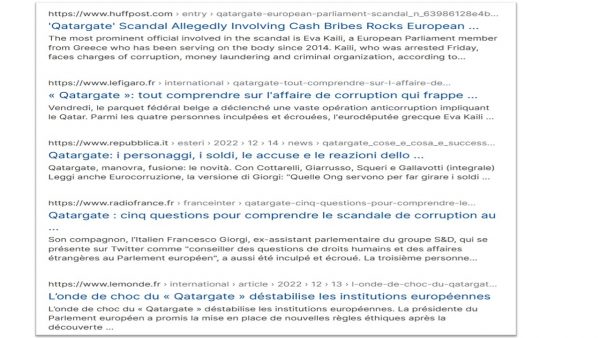
C for Corruption
After the association of C with crises of corona, climate, consumption and the church we have to come back to one of the original links: corruption. Beyond the work of describing and analysing corruption from the time of the Roman empire to the Americas of today (Link) by Thomas Strunck, the re-reading of Niccoló Machiavelli is recommended by a number of scholars (in latin here). Also, in Asia the work and writings of Niccoló have been rediscovered (Link). “non creando in veritá le cuose nove”. It needs “una ferma experienza”. As people don’t just believe in the truth of new reasons, a firm experience of them is needed. New princes cannot just pray, they have to install a new vision or belief with force (p.25) by literally forcing persons (forzare) or “fare … credere par forza” stated in Chapter 6 of THE PRINCE. If we just complement the term force by force of persuasion, or money as surrogate for both, the writing of Niccoló speaks directly to corruption in our times. History does not repeat itself. However, the history of ideas still teaches “some dogs old tricks” until they are found out by investigative journalism and an independent judiciary, which both did not exit at Niccoló’s time. (inspired by Chaudhuri, S. & Chakravarty, P. (2022) Machiavelli Then and Now: History, Politics, Literature. Cambridge University Press.) 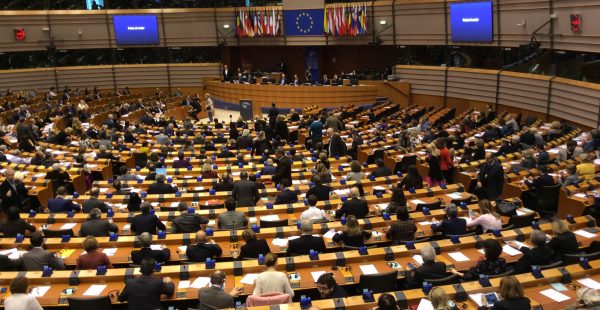
Human Rights
It is 10 years after the publication of a Ph.D. thesis on “Corruption: a violation of human rights and a crime under international law?” by Martine Boersma that at the top level of the European Parliament and the International Trade Union Congress the smell of corruption is investigated by police and judges. Following “Qatargate” (Radio France Link) this means that the persons accused of corruption, forming a criminal group and money laundering have changed their lobbying in return for accepting cash. Exploitation of workers and more than 100 deaths in Qatar was the result, due to the heat when building the stadiums for the Football World Cup which took place in 2022. Following the recommendations of Boersma corruption in this respect can be interpreted as these persons contributing to and being guilty of abusing their political positions to silence criticism and whistle-blowers, and the right for defendants to a fair trial for example. The advocacy to counter corruption with developing international human rights legislation and persecution in this respect is dearly needed now. “This line of reasoning transforms a corrupt act into a possible starting point for legal action, be it at the national level, …, or at the international level by submitting a complaint to a regional or global human rights monitoring body.” (Boersma, 2012 p.376) The International Criminal Court or “alternative such as the establishment of a permanent anti-corruption court, or anti-corruption commission to monitor compliance with the UN Convention Against Corruption should be kept in mind, as well as the possibility of setting up ad hoc anti-corruption tribunals” (p.380). Not much to add to this, act now, before the practice spreads.
Francesco Merloni wrote in his book (2019, p.132) on corruption with Italy in comparative perspective: “when corruption is defined in its wider meaning of maladministration, we are looking at a mass phenomenon which is “sub-criminal”, yet nonetheless with strongly negative implications for the efficiency and effectiveness of public administration and democracy in general.” The practice of excessive salaries of the Italian parliament (p.131) is mentioned in the list of case histories of corruption just like the international event of the EXPO 2015 in Milano with huge construction projects (LeMonde on Panzeri l’ex-eurodéputé). Learning from case studies is best practice in many business schools and probably beyond. Finally, attention should be drawn to prevention of corruption. Here the reading of Corruption and Anti-corruption by Larmour and Wolanin (2001, p.235) offers good advice. The micro-economics of corruption (pp. 119) states for example that “If expected penalties are sufficiently high, bribery is deterred” (p.126). Equally the real threat of a full and explicit audit of operations, promotions and financial transactions might deter corrupt activities. Most importantly the authors state, “the social networks approach to corruption allows the corruption investigator to conceptualise the operation of corrupt networks in terms of power flows and relationships rather than the attributes of actors. The question to be asked by the corruption investigator is not whether actor A is corrupt. The question should be, what is the relationship between actor A and other potentially corrupt actors in the network.” Re-reading some classics of sociology like Max Weber on bureaucracy, but also James Coleman’s foundation of social theory provide basics for understanding social interaction when things go fundamentally in the wrong direction. We might even need to use artificial intelligence to detect corruptive practices to shield and support the trade union movement. 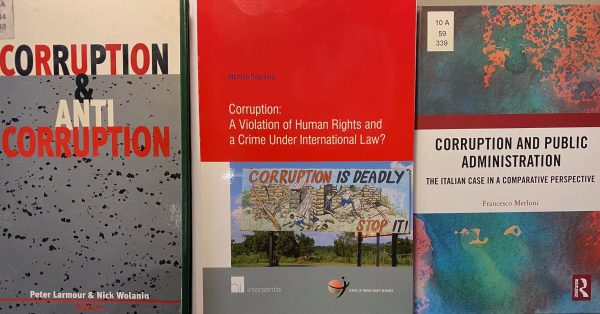
State of the Union
“The times they are a changing”. Currently, we witness that democracies are at multiple risks. One existential threat is, of course, war of external origin. Democracies have been perceived as often to slow to mobilize military forces sufficient to resist “Blitzkrieg”. What Nazi-Germany applied successful at the beginning took a long time and millions of dead persons to rectify. Similarly, the threat to Ukraine’s independence and liberal aspirations are threatened by Russian imperialism. The other existential threat is that of “the enemy within”. This is the conclusion by Canova (2011, p.213) when he writes on “democracy’s disappearing duties”. Whereas he has primarily in mind, that citizens need to participate more actively in the duties to democracy’s survival. These are “the duty to become informed and to vote, as well as rights and duties related to civic and/or military duties. The discussion, whether we need an army of the many or an army of specialists has shifted largely in favour of the need for specialists, simply think of cyber or drone war technology. However, the threat of the enemies from within becomes clear if we remember terrorist attacks targeted at democracies practice of free movement, free speech or art. Another centuries-old threat has come to our attention again. Corruption. The slow-motion erosion of democracies is hard to fight against as it operates not with visible tanks and weapons, but with clandestine and psychological ways of slow corrosion of organisations and institutions. Combatting corruption is even more tricky in cross-country settings like the European Union. Reference to cultural practices and exclusive or inner circles as cultural exceptionalism make it hard to introduce non-discriminatory monitoring and controlling mechanisms in democracies. Only a well-equipped security, police and judicial system can stem the risk to democracies from corruption and organized crime. It is not only a matter of state responsibility, but our democracies rely on an alert public to stand up continually for our basic values. Just singing the national and European anthem is not enough, fighting corruption is laboursome and cumbersome, particularly as corrupt circles do not refrain from using brute force and weapons (Reichsbürger, Mafia, etc.). Addressing inner and outer enemies at the same time remains high on the agenda for the surviving and thriving of democracies. The foundation ideas of the European Union were constructed by Monnet and Schuman on a sustainable democracy. Let’s not endanger this through a sluggish response on corruption.
inspired by Canova, T.A. 2011: Democracy’s disappearing duties. In: Democratic Citizenship and War. Peled, V. et al. (eds.) pp. 199-216.
Corruption
There is an extensive literature on corruption in the social sciences. However, the evil practice continues to ruin personal lifes, institutions and countries. Psychologists put corrupt persons in the psychopath life trajectory (Link) or explain corruption as result of the triad of personality traits for persons scoring high on not only psychopathy, but also on narcissism as well as Machiavellianism (Link). Some important lessons derive from a fast reading of the scientific literature. (1) Corruption develops over a period of time. The creed for ever more power seems a strong driving force. (2) Some personality traits are more likely to deteriorate into corruptive behavior and (3) institutions need to monitor carefully leadership practices and guard against abuses of power already at small instances like threatening with violence or dismissal. (4) Countries can do a lot to limit corruption through adequate legal systems, most notably through a truely independent judiciary as well as the need of investigative journalism to accompany potentially illicit behavior. All this comes at a cost, but without it democracies are at high risk. The European Union has to strengthen its defences in this respect to remain a credible institution, just as much as a great number of Member States. Not only the World Bank or OECD need to be monitoring countries, but we all need to be better equiped to read the early signs of corruption. Whistle blowing and the protection of these persons is part of an effective anti-corruption system. Early signs of “nepotism” and “favoring of friends” in the workplace are easy to identify, but taking measures against it, needs firm committment on the part of advisory boards, colleagues at work or other interested parties like stakeholders or investors in case of private firms (wirecard) . (Link to NZZ). 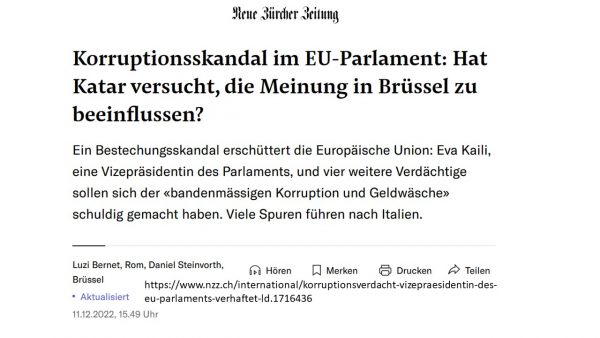
Berlin Kulturforum
Am 4.11.22 war mal wieder Museumssonntag. In großer Zahl strömten die Besuchenden in die Berliner Museen. Da war ich auch dabei. Rechtzeitig Zeitfenster zu buchen, war die Devise. Selbst das war mir gelungen. So habe ich mir einen musealen Overkill – “plein dans les yeux” geschaffen, der einen fantastischen kulturhistorischen Gesamteindruck vermittelt hat. Für mich beginnt die architektonische Zeitreise mit dem Bau von James Sterling und seiner “rosa, himmelblauen Denkfabrik” mit seinem einmaligen Grundriss. 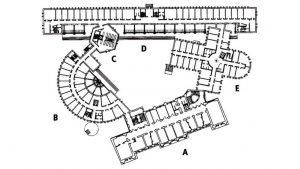 Dort lässt sich nicht nur im Campanile träumen (C Beispiel hier). Im Video gleich am Anfang zu sehen ist das WZB. Dann geht es über die Gemäldegalerie und dem Kupferstichkabinett zur Matthäuskirche samt Glockenschlag. Die Phiharmonie ist der gold-gelb strahlende Diamant der Schmuckreihe, sicherlich auch wegen der “ansteigenden Weinberge” (Zitat von Architekt Hans Scharoun) darin. Farblich sticht das Zeltdach des windigen Sony Centers hervor. Der Bahntower am Potsdamer Platz hat schon mal das Licht ausgeschaltet, damit die Züge noch rollen. Das Keuzfahrtschiff oder der Containerkoloss des gebürtigen Bremerhavener Scharoun (Staatsbibliothek) ist jetzt sonntags geöffnet und leuchtet in bescheidener Sachlichkeit. Die NNG – Neue Nationalgalerie lässt durch die Beleuchtung und transparente Architektur auf die laufende Ausstellung von “Bonvicini” blicken. Dazugehörig ist die Klanginstallation, die im Hintergrund zu hören ist, auf der äußeren Wandelhalle, die früher schon zu Choreografien inspirierte.
 Ach richtig, es fehlt noch etwas. Bei Tageslicht ist der Traum vorbei, da wird an dem nächsten Megaprojekt gebaut, “der Scheune“. Naja, den Grundriss kennen wir ja alle. Das Berliner Psychogramm am Ende des Videos zu sehen, heisst: “I must have a wall behind me”. Ich muss eine Wand/Mauer hinter mir haben. Aber so richtig los kommen von den Mauern, können wir hier nicht, oder?
Flotow Martha
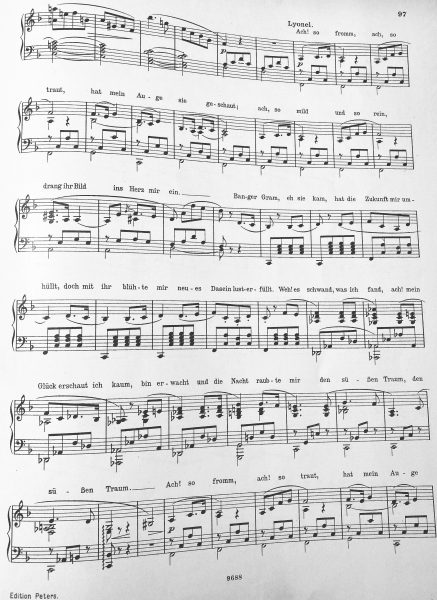
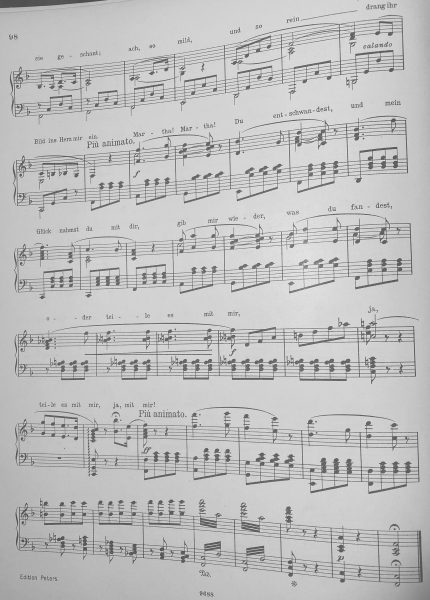
Die musikalische Schaffen des Fritz von Flotow ist recht umfassend. Seine aufwendigen Opern werden bis auf „Martha“ kaum noch gespielt. Die letzte mir bekannte Aufführung von Martha war in Schwerin mit Radioübertragung im Deutschlandfunk 2009. Im Auswahlrepertoire für den „Concour de la Reine Elisabeth“ war noch in 2018 auch die Arie “Ach so fromm” aus Martha zu finden. Der Sieger Samuel Hasselhorn hatte allerdings eine gute Wahl mit Fokus auf Liedern von Schubert und Schumann gelegt, die scheinbar bei der aus Bayern stammenden belgischen Königin Elisabeth sehr beliebt waren. Es verwundert nicht, wenn Fritz von Flotow, dessen Oper Martha in Wien uraufgeführt wurde, weiterhin auf der Liste der möglichen Stücke im Wettbewerb steht. Der Nachwuchswettbewerb hat eine karriereprägende Funktion für viele Teilnehmende. Die meisten Aufrufe auf Youtube hat die italienisch gesungene Version von Ach so fromm aus Marthas zum Beispiel von Pavarotti. Oder auch von Caruso oder von Placido Domingo, dessen langjährige Frau selbst Marta hieß. Die deutsche Fassung, gesungen von Placido Domingo ist eine von meinen Favoriten (hier). Die ältere Version, die ich von ZDFtheater gefunden habe, hat ihren eigenen Charme durch die pantomimisch begleitete Ouvertüre von Sama Molcho und die klar gesungenen Arien. Ab 1h17 gibt es dann die “Ach so fromm” in historischen Kostümen. Diese Interpretation erscheint mir sehr an die von Jacques Offenbach begründete französische Tradition der Operette angelehnt zu sein. Aus der Biografie von Rosine Swoboda, die Witwe von Friedrich von Flotow ist bekannt, dass sich die beiden Komponisten kannten und freundschaftlich verbunden waren. Mit 3 Mio Aufrufen ist „Die letzte Rose“ gesungen von Lila als Trauerlied wohl doch der populärste Hit vom Fritz. Das Europäische Jugendorchester hat Arie und Duett 2013 in London aufgeführt. Also, wer nun mal „Martha“ als Tenor mitsingen möchte, kann die Noten unten oder die karaoke Version oder Klavierbegleitung einer Pianistin aus Berlin-Schöneberg heranziehen. Worauf warten wir noch? Ich stelle die Dusche schon an, länger als 3 Minuten sollen wir eh nicht mehr duschen. Die Entzauberung der Tenorstimme können wir z.B. hier leicht verständlich nachlesen (Link), Schalldruck ist das akustische Geheimnis.
Merkel
Angela Merkel gehört nun endgültig zur Geschichte. Zuerst die Ausstellung von Merkel-Porträts von 1919-2021 der Fotografin Herlinde Koelbl im DHM mit Katalog erschienen bei Taschen, kürzlich das Interview des Spiegelredakteurs und die Quintessenz daraus in LeMonde vom 29.11.22, zusammengenommen eine kleine Bilanz der Amtszeiten. Die Porträts (1) in Draufsicht 2/3 des Bildes durch das Gesicht ausgefüllt und (2) stehend mit Händen zur Raute geformt, zeigen das Altern durch die Last der Ämter. Ist die Raute anfangs noch mit Druck und weit abgesreizten Fingern zu sehen, wird die Geste im Laufe der Amtszeit lust- und kraftlos. Der Gestaltungswille noch als Umweltministerin hat sich durch Getrieben-sein später abgenutzt. Das Bild 13 der Pressemappe zeigt die Kanzlerin 2020 mit Maske und nur noch 2 Fingern jeder Hand, die sich berühren. Aus der Versuch der Quadratur des Kreises in Amts-, Partei- und Koalitionsgeschäften. Auch das Bild auf S. 243 des Katalogs von 2021 spiegelt eher eine gequälte Kanzerlin statt eine streitbare Verfechterin ihres Amtes wider. In Rückschau erscheint es wohl doch zu lange gewesen sein für den Menschen Merkel. Der Verweis auf das freiwille Ausscheiden aus den Ämtern ist nur die halbe Wahrheit. Im Spiegel Interview (ab Minute 12!) berichtet Frau Merkel von 2 Dingen, die sie sich jetzt vorgenommen hat: mehr bewegen und mehr lesen. Das trifft es auf den Kopf.
Mehr bewegen, eben gerade in der Politik hätten sich Millionen von Deutschen gewünscht, dass sie mehr bewegt auf wichtigen Themen- und Politikfeldern. Überall da zum Beispiel, wo wir nun wissen, wir hinken hinterher: Klimaschutz, digitale und öffentliche Infrastruktur, Verteidigungssysteme, Bekämpfung von Ungleichheit, Steuergerechtigkeit, nachhaltigen Verkehr in Städten und auf dem Land, um nur einige zu nennen.
Mehr lesen, offenbart, das Hören auf Einflüsterer hatte einen hohen Stellenwert, scheinbar mehr, als das Erarbeiten einer eigenen Position durch Aktenstudium. Die Regierungskunst der Kanzlerin bestand hauptsächlich im geschickten Moderieren der unterschiedlichen Positionen innerhalb der Koalitionspartner, insbesondere auch mit der CSU. Im Rückblick heute kommen mir die 16 Regierungsjahre als Zeit der verpassten Chancen vor, aber die Bescheidenheit im Amt hat Deutschland gut gestanden. Das hat Olaf Scholz bei ihr abgeguckt, nur, ihr Nachfolger ist zu beherztem Handeln im Amt gezwungen. Das blieb Angela Merkel weitgehend erspart. Jetzt ist Bewegung gefragt, Aufholbewegung zunächst. Stillstand überwinden, Planungsverfahren verkürzen damit erneuerbare Energien sprießen. 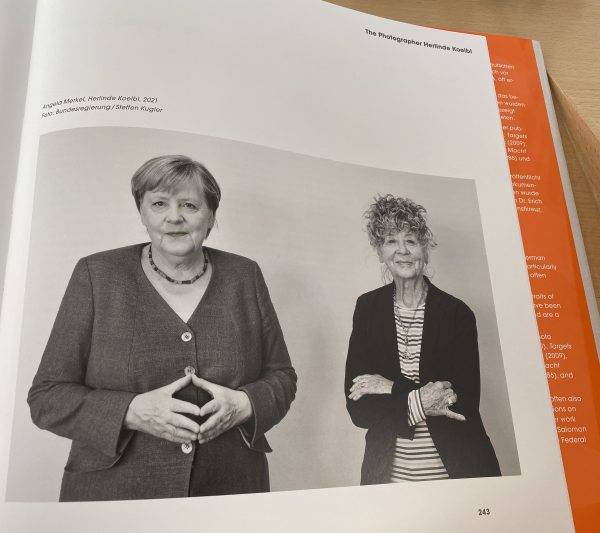
China altert
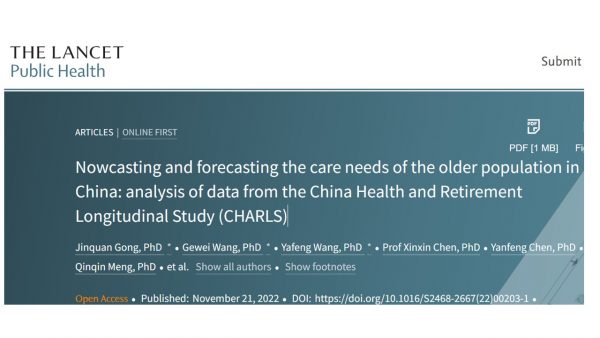
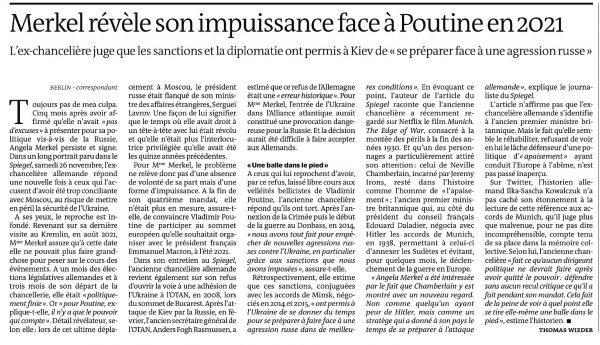
Zurückgehend auf die frühere strikte 1 Kind Politik erhöht sich der finanzielle Wohlstand der Chinesen alleine dadurch, dass das gleiche BIP auf weniger Köpfe verteilt werden muss. Eine Generation später ergibt sich aber durch das rasche Altern der Bevölkerung eventuell ein hohe finanzielle Last für weniger Beschäftigte bei gleichzeitig mehr älteren Menschen. Die Beschäftigungsquoten der älteren Menschen waren niedrig im Vergleich zu Europa, das bedeutet ein gestresstes System zur Finanzierung der Renten und, wie eine neue Studie (Lancet Public Health 2022) zeigt, für die Pflege der Älteren. Bis 2030 werden laut der Studie bis zu 14 Millionen Menschen zusätzlich Pflege benötigen. Das betrifft überwiegend Frauen und Personen im ländlichen Raum. Das ist bei uns auch so, denn Zugang zu ärztlicher Hilfe, Krankenhäusern und Unterstützung im täglichen Leben ist aufwendiger bei größeren Entfernungen und Fachkräftemangel. Das Ausmaß der Pflegebedürftigkeit hängt stark von dem gesunden Altern ab. Dies ist wiederum vielfach bedingt durch Bildungsniveaus und Lernfähigkeit und -wille im Alter bezüglich der eigenen Gesundheit. Bewegung ist der Schlüssel zu mehr Gesundheit. Damit lässt sich die Pflegebedürftigkeit lang hinauszögern. Also raus, auch wenn es frisch ist. Open access Lancet paper (hier)