Considerations about Space

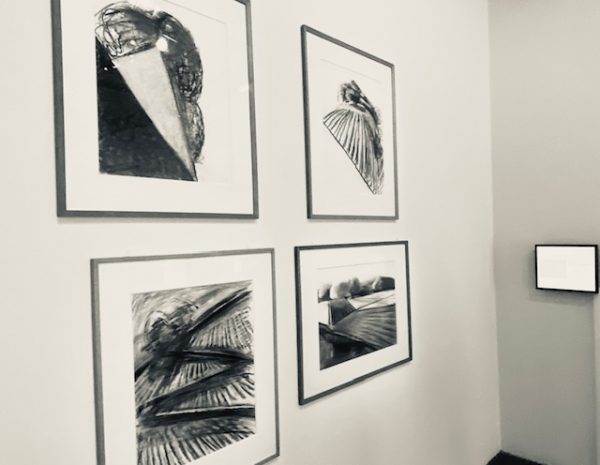
As is true for most architects, for example Le Corbusier, they are mostly remembered for their actual realizations (Scharoun, Mies van der Rohe), rather than the grand designs prepared for an architecture competition. Henri Gaudin has not only left concrete implementations of his ideas, but also several books on his perception and ideas about “concepts of space” (“Considérations  sur l’espace”), which comprises architectural ideas about “empty spaces“. Additional sources of inspiration were a relentless pursuit of drawing and designing what he saw, for example while travelling.  The BNF has received the extraordinary donation of the journals of Henri Gaudin, which allow to trace his continuous search for innovative representations of what creates a space, the impression of space and the relationship between spaces.
His travels with the TGV in France filled a complete “carnet” (booklet). Architecture is surely not about concrete. In the best cases there is a lot of research happening “backstage”, sometimes in small spontaneous sketches that can have a very lasting impact on many people’s perception of space later on. His own landscape drawings were an interesting inspiration for his architectural work as well. “Image: Landscape drawings by Henri Gaudin, BNF Paris 2026-6, Galérie des Donateurs).
Dronification

In a long row from californication, gentrification, desertification and electrification, not to mention quantification, juridification or enshittification,  we have arrived at “dronification” in the 2020s. Spurred by the extremely successful use of drones by the Ukrainian army to o bring to a halt the illegal invasion of Ukraine by Putin’s Russia,  conventional weapons like tanks and artillery lost out to the widespread use of drones. Few military observers, even experts of military equipment, thought prior to 2020 this would be possible. The lower costs involved, precision targeting and different skill sets needed for the orchestration of a drone based defense and attack, have made a strong case for the dronification of warfare.
As with many innovations, there are dual-use potentials. In this case the civilian use of drones received a considerable push in technology and acceptance. Rescue robots or delivery of provisions to frontline positions are part of the “everything-drone-thinking” during war. The surveillance of frontiers and territory is applicable to agriculture, properties and urban planning. Droughts and other environmental impacts on a large scale can be monitored in a  timely fashion as well. 4D imaging becomes more feasible as well in many domains. The potential in architecture is vast as well. Public infrastructure and distribution of frequency ranges is a crucial precondition to ensure an  orderly coexistence of military, security and civilian use cases.
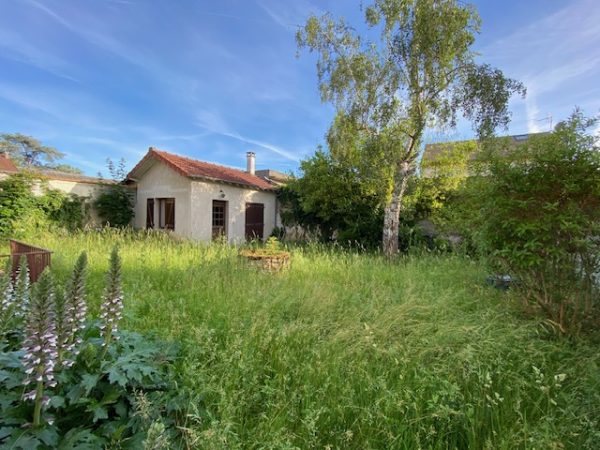
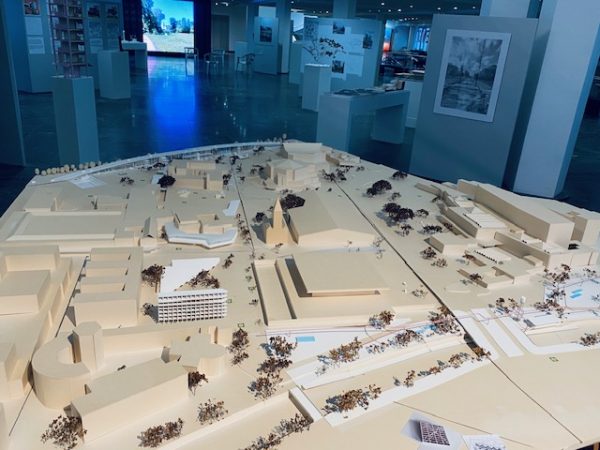
(Image: Exhibition: atelier le balto, Die Kunst des Gartens VI: FREI(B)AUM at Kulturforum Berlin 2026-1)

No mow May

For the sake of biodiversity we have learned how important it is to allow our gardens to grow during the month of May. Lots of insects shall benefit from the larger diversity of our greens. Equally, it is the perfect time to “collect” “pollen” from lots of neighbors’ gardens and fields, which will eventually show up in another garden. It is a bit similar to sharing flowers and plants in your local environment.
We just have to be careful about invasive species that have been quite successful to “surf” on the “No mow May” gardening wave.
In May 2026 the effects of global warming have been particularly felt in France. “Meteo France” has reported the very warm French month of May in 2026. Similarly, for most parts of Germany, particularly in the South West, the average temperatures were well above the 2° target already (Deutscher Wetterdienst).
With quite some rain before, the climate throughout May 2026 has favored rapid growth and advances in the blooming of the whole vegetation. You might have seen gardens in your neighborhood that looked very different from previous years for those who tried a “No mow May” in 2026.

Dry January

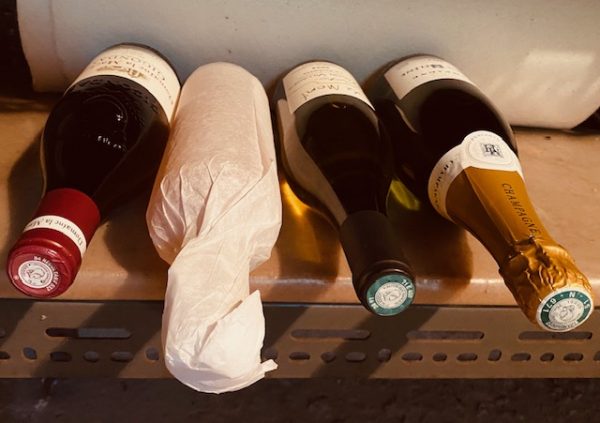
There is a health trend to pass a sober, “dry January” after the X-mas and New Year festivities. It seems to be rather popular, so that the French wineries have started a marketing campaign of a “French January“. We shall see what the battle of marketing campaigns means in the end for the health of our liver (Study Link). It might lead to changes in consumer behavior of the following kind. Take advantage of good price offers for French wine and champagne in January and drink it as of February.
For addicts of the “carneval season” this should not be too difficult, jointly with a couple of friends. Alternatively, you might not be bothered and continue a moderate consumption across seasons. Moderate consumption, however, is the tricky part of alcohol consumption. Medical guidelines (health of liver) have evolved recently to count each drop of alcohol into your total consumption in either fluid litres of pure alcohol or the equivalent measured in grams. 

Mammalian Aging

Mammals share a lot of similarities with respect to aging. The researchers Alexander Tyshkovskiy and Vadim N. Gladyshev et al. (2026) spearheaded multiple research to identify similarities across humans, macaques, rodents and mice. The outcome of this overarching study of mammalian aging and mortality is a set of biomarkers that can serve to predict time to death.
Why is this interesting? With the rise of the longevity interest in the 21st century, the need increases to use robust biomarkers that can assess any presumably miraculous innovation to smooth human aging or prolong the time to death. Steps towards “universal transcriptomic signatures” including CDKN1A and LGALS3 (compare across species), which proved to be important in mortality predictions based on the large UK Biodata.
It is the accumulation of damage, which drives  processes of aging . However, “inflammation, replicative senescence, metabolic inhibition and γ-irradiation” can be attenuated or occasionally even reversed. The aging of cellular components has been demonstrated using “modular-specific clocks”.
With these biological advances in the field of biomarkers, the BPS nexus (biology-psychology-society links) could receive more attention as well in order to enlarge the society-wide research into the causes of human aging.
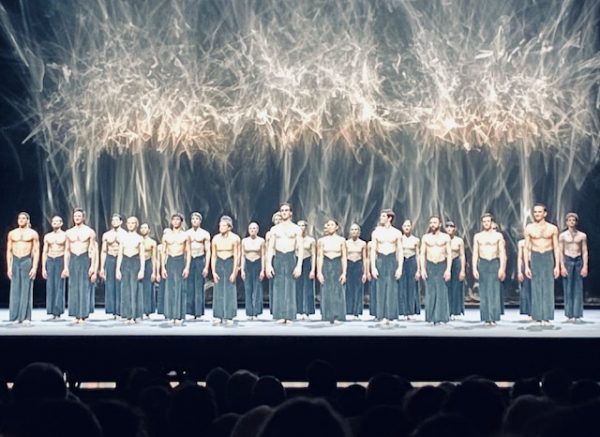
(Image: Staatsballett Berlin, Choreographie Crystal Pite, Gods and Dogs, Angels’ Atlas performed 2026-5, final applause)

Bicycle Garage

The 2020s are the years to explore sharing concepts. Beyond car sharing we have become used to share scooters and bicycles for intermodal transportation. The concepts are subject to continuous evaluation and the choice between free-floating versus fix point stations remains a hotly contested topic. Despite using either one of both sharing concepts, families and friends might practice their own sharing of modes of transportation. Whereas for cars the driving licenses and insurances might limit the sharing, for private bicycles there are no such restrictions.
A little bit of basic understanding and practice of repairs allows to share family-owned bicycles with little effort. Equipped with a GPS-tracker, even free floating might be an option in addition to theft protection. With less space taken up by cars in household garages, bicycles can occupy, at last, sufficient space including a little corner for maintenance and repairs.

History as Science

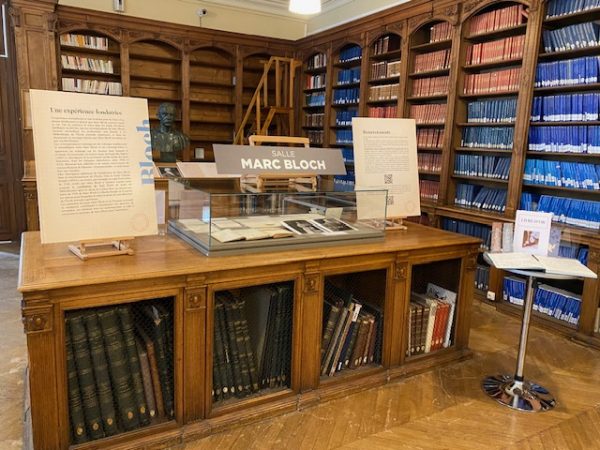
There are persons entering history and there is the science of history. Whereas the former persons may sometimes enter for very dubious reasons into history, responsible for killing people, the science of history draws on a whole lot of evidence, social, economic or demographic, to evaluate a person’s legacy or the merits of an epochal change. In the development of this scientific approach towards history, rather than a purely chronological, family structure or narrative-oriented approach, Marc Bloch has been a central figure. His research and exemplary own biography as student of history at the ENS in Paris, teacher and later Member of “La Résistance” is honored by an exhibition on his life and time at this formidable French institution of teacher training. In an exhibition in the ENS library you can even inspect a list of the books taken out by Marc Bloch as a student as well as his experiences as a student in London or Berlin before the 1st World War. A strictly science-based approach to history made him an influential historian and social scientist beyond his lifetime. (Image: Salle Marc Bloch at ENS Library Paris 2026-5) 

Nature as a concept

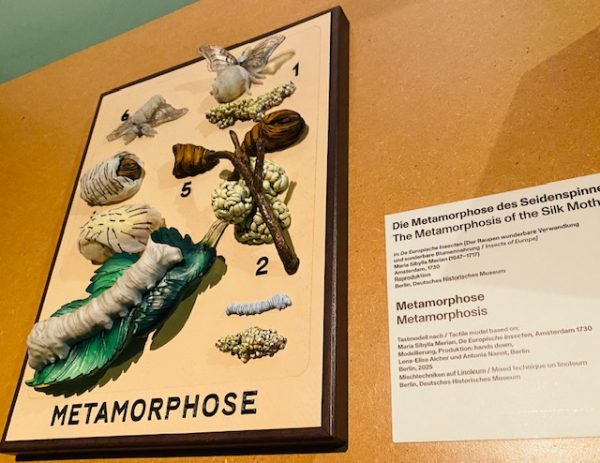
We all hold implicit or explicit concepts of nature in our minds. There are few countries that have “battled” over the course of history with changing and often “politicised” concepts of nature. The exhibition in the DHM “Deutsches Historisches Museum” on “Nature and German History, Faith – Biology – Power” is convincing with this cross-disciplinary approach to the subject. The chronological structure of the exhibition starts with Hildegard von Bingen’s vision of nature embedded into the huge diversity of plants with almost spiritual power. Admiration of plants and the animal world, however, became an economic resource just like gold and slavery during colonization, being followed by industrialization as the epitome of man’s power over nature. Counter movements have been on the rise in the 2nd half of the 20th century. Another power struggle over how and who defines the dominant concept of nature in the 21st century. As nuclear energy, bombs and waste redefined the long-term consequences of “treating” nature, the battles about the prevailing concept of nature intensify. The exhibition in Berlin 2026 is a fine example of a historical perspective on the relationship between society, nature and technology, where the concept of nature becomes a malleable concept between the other two players or systems. (Image: Metamorphosis of the silk moth, DHM 2026-5)

Security and Popularity

With webpages it is a bit like in the world of glamour. The more popular a webpage becomes, the more you have to invest in security features.
In a parallel webpage project, the choice has been to go for a popular name for the webpage and blog activities. After a year of sporadic blogging the site has become a regular target for hacking attempts by means of login attempts. This has led the administrator to previously allow only one single login attempt before banning login attempts from the same IP-address for several days. This does no longer allow a misspelling of the tricky password on your own behalf or the password-manager, if you happen to use one.
Security becomes a “sine qua non” condition for web-users as well as web-developers. We usually take only sufficiently care of this point, when it is “almost” to late. With 16.000+ login attempts over the time of about 1 year and 6 running locked-out IP-addresses, I almost gave up already on another domain with a more popular name. External backups become another necessity to prepare for the eventual failure to access own content and data bases.
Actually, I feel rather safe going out at night as a man in Europe, but the dangers of the global access to a web-page feels much less safe most of the time.

Magnifica humanitas

With the “Encyclical Letter” entitled “Magnifica humanitas”, Pope LeoXIV puts himself expressively into a long historical tradition of the catholic belief to be not only a religious leader, but also an institution that puts humanitarian values on the top of its agenda. As the catholic church is a globally active institution, which covers the whole life-course of individuals based on defined doctrines, the massive changes that are under way in the field of artificial intelligence asked for some guidelines to frame the church’s understanding of this relatively new “Deus ex machina” of the 21st century. In the Encyclical, there are several mentions with respect to comparable socio-economic developments of the past. In choosing the name of “Leo”, the Pope referred, from the earliest days of his Pontificat, to Leo XIII as a particularly important predecessor for himself. The latter has made his reputation in the Christian Church with the Encyclical “Rerum novarum”, which raised awareness to the risks to humanity with an industrialization and capitalism being pursued at all costs. “Res novae” of our time, which is AI and all its fields of applications have a potential to affect the course of humanity for decades to come. Leo XIV doesn’t condemn it as the devil in machine form, but puts emphasis on the potential of AI to assist us to enhance the “Common good”. This is the task of many, not of only a few, as he refers to in his Encyclical of 2026-5-15.
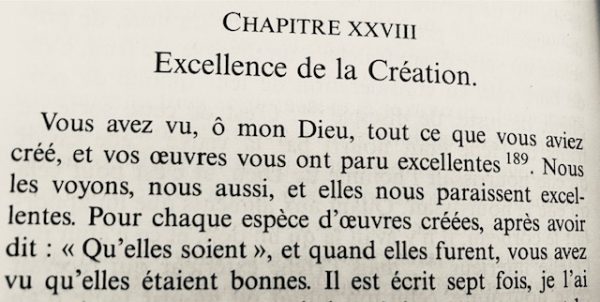
(Image: Extrait: Saint Augustin, Les Confessions, book 13, chapter 28).