We have been used to computers beating the average chess player and even the best players. In 2026-4 the journal “Nature” published the documentation of an autonomous robot (Ace) winning the occasional game against top-level Japanese table tennis players. Peter Dürr et al. (2026) described the robotics challenge as constructing a robot that can match the human capability and reaction time of “fast, precise and adversarial interactions near obstacles”. The high speed perception of movement is coupled with event-based vision and builds on AI-algorithms like reinforcement learning. The step ahead is remarkable.
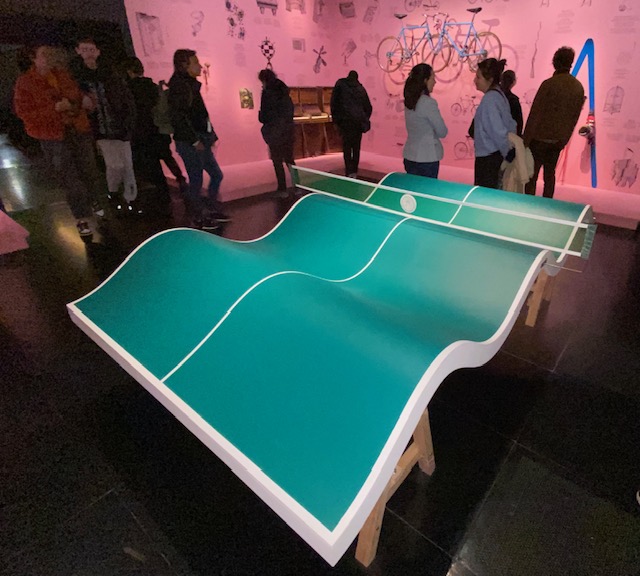
About 50 years ago, as coach in table tennis we used a machine or robot throwing balls towards us which moved from left to right in timed routine, for example. These simple robots we used to train humans. Now the robot is reactive and even interactive, learning from strategies and tactical moves. Technology can outperform us in most singular tasks in 2026. The combination of several of these skills is still quite unique to humans, but the clock is ticking for human singularity in technical matters. What was considered a “false good idea” in the Paris exhibition “Flops” at the Musée Arts et Metiers (see image below), might be an interesting response to challenge the new generation of autonomous robots.