Dementia Prevention

The United Nations reports on countries’ activities like dementia prevention plans. Focus is on the medical sociological analysis in which dementia is not only determined by a person’s individual life course, but it is also a society-level issue. Looking at dementia prevalence and incidence over time as well as major known risk factors, Mukadam et al. (2024) conclude that low education level, smoking, obesity, hypertension and diabetes all contribute substantially to the risk of dementia. The trick with education is simple. If you start on a dementia trajectory from a high level of education, it will take longer until you are fully dependent on other persons. For the other causes there intrinsic or genetic components, but a large share of dementia risks can be reduced through behavioral changes early in life. My all time and all ages favorite is walk whenever and as long as you can.

Public or Publics

With the advent of the internet and even more so with the (not so) social media, we can observe that the public political arena has been differentiated into several distinct publics. This constitutes a working hypothesis in order to check whether there are necessary as well as sufficient evidence that there is a lack of exchange of opinions between the various publics. Technology is an intervening process which basically might be able to advance or hinder exchange between groups of society. Following the much debated theory of communicative action of Jürgen Habermas the existence of one public is a precondition of the theory. Empirical tests are needed more than ever.  

Totalitarian Totality

In political science we study totalitarian regimes across history in order to better understand how the decline into authoritarian and then totalitarian regimes occurred. But it is not only a matter of historical interest. Authoritarian regimes can get worse, like the Nazi-terror demonstrated and it propagated and applied “total war”. Across the world it is necessary to keep monitoring the war like situations of hybrid war and whether we might have to face again totalitarian regimes entering into all encompassing terror and war. It is the people, no matter from which country, who will suffer the most. The installation by Monia Ben Hamouda in the art gallery ChertLuedde allows us to think beyond or what remains “After totality” (image below from 2026-3-24). Maybe the challenge to make people think beyond the totality is the only way to prevent it from happening or totality being repeated. The experience of the installation is impressive and encourages us to question every attempt of totality especially of totalitarian regimes. 

Urban rural voters

On Sunday 2026-3-22 local elections of the 2nd round took place in France and some parts and cities in Bavaria. The voters have in both instances confirmed the hypothesis that voters have very different preferences for political parties along the cleavage of urban versus rural voters. The sociological issue consists in the different socioeconomic as well as educational backgrounds of the populations. Across the 2 countries inner cities have environmental issues, safe transport and rents as major concerns. In rural areas a feeling of being disconnected and left behind is frequently the predominant concern, often in terms of lacking transportation infrastructure. Voters on the local level have a more direct connection to their elected politicians and scrutinize implementation as well as promises more closely. This is a much more complex issue for voters on the national level as more topics enter the equation. The political agenda, therefore, differs substantially for urban and rural voters. This is a tough challenge for the nationwide campaign teams to test the validity of their agenda locally as well. 

Time Response

Time enters in many studies of behavior as response time. It could be summerized under a mechanism defined as “action – reaction” in many instances. In the animal model this is studied not only from external stimuli and bodily reactions, but with direct brain or nerve stimulation and subsequent reactions in other parts of the body.
Within humans the same rationale is widely acknowledged as well (Kimura2023). In many processes it is not no longer a question, whether a response will occur, but the differences in response time play a crucial role, for example in processes of aging. In many mental processes, response time is a fairly reliable indicator of aging as response time increases and the reaction is slowed down. The focus then shifts on strategies how to keep response times within usual boundaries. Eliminating or at least reducing disturbing peripheral influences like noise or light as distractions become an issue. In jazz music, the “call – response” mechanism has entered as a successful element in composition and improvisation. Time and response or response time is a highly passionate, physiologic and emotional issue.

Screenshot

Disaster tourism

My personal background gave me lots of personal experience with almost annual next to a small river bed. Since I left the region for studies, the flooding has increased and several times have reached the scale of disasters. Therefore, I am very sensitive and have mixed feeling to the issue of disaster tourism. Such tourism is a nuisance at the time of the disaster, but cash through tourism helps the hard hit region and residents to overcome the losses faster. Would I travel to Tschernobyl or Fukushima for that reason? Probably not, but the intentional war disasters and crimes caused by Nazi-terror.  The Korean novelist Yun Ko-eun did not shun away from writing about a guide who takes tourists to places of environmental disasters until being sent involuntarily to such a site herself. This is not about the “K-Chicken belt”, a series of places with famous chicken dishes, nor about the potential consequences of repeated K-pop events of the famous BTS-boy group in Seoul in 2026. So glad to see that Korean youth has a chance to thrive under democratic rule. (Image: Exhibition in Korean cultural center Brussels 2026-3) 

Quantum battery

The first prototype of a Quantum battery has been successfully tested. The Commonwealth Scientific and Industrial Research Organisation CSIRO with corresponding author James Q. Quach published the paper on the “quantum battery tuned for strong light–matter coupling” (Kieran Hymas et al. 2026) open access. Although there have been close to 20 papers on the theory behind quantum charging already, the demonstration as a proof of concept (in business terminology) has been missing so far. The superextensive charging with photons builds upon “a laser pump pulse with bandwidth ~31 nm and resonant with the LP branch induces excitations in the quantum battery” (Kieran Hymas et al. 2026 p.3). Since batteries need not only be charged, but also discharged in a safe and fast way, the prototype demonstrated also this additional functionality.
This is a huge step towards the feasibility of the “All electric society” as the efficient storage which includes fast charging and discharging beyond storage have been a bottleneck in the wider adoption of the “All electric society”.
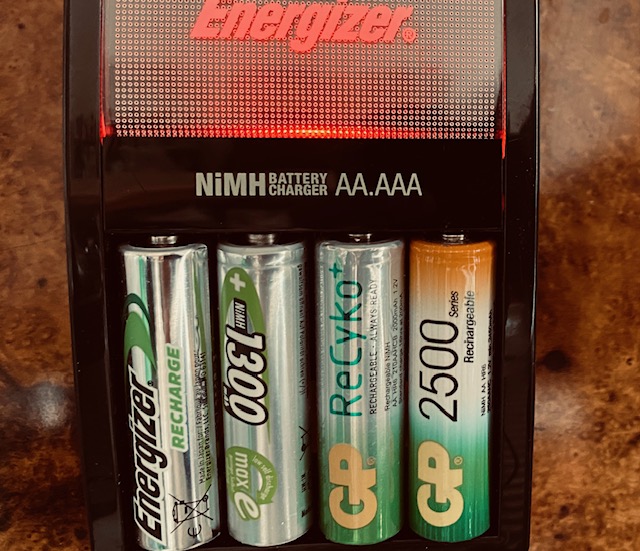
(Image: old fashioned NiMH battery charging at home)

Dual Task Processing

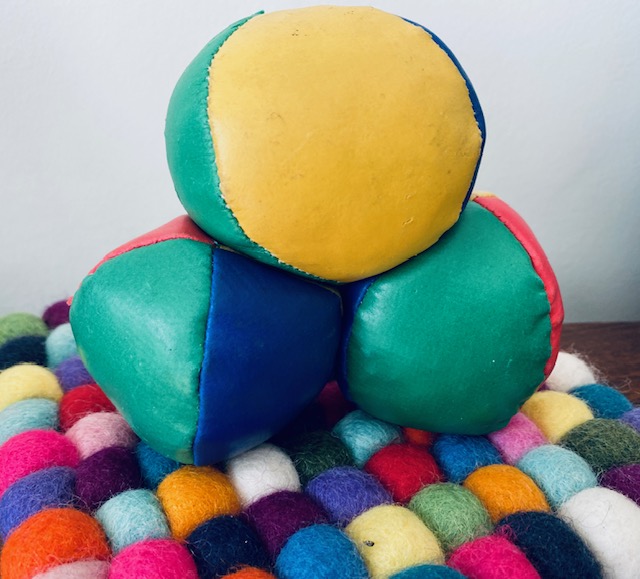
Extensive research into dual task performance shows that training of 2 tasks simultaneously can indeed enhance performance. New research by Schubert et al. (2025) indicates that there latent and persistent bottlenecks to the brain’s processing of such dual tasks, let alone multi-tasking. Out of own anecdotal exercise with “object tracking and touch” (gaming on tablet) a learning effect arises. However, it is unclear, whether this exercise translates to normal traffic situations in inner city situations for pedestrians or cyclists. The experiment of a dual task, combining a visual-manual and an auditory-verbal task, indicates also training effects, but the brain appears to return to sequential processing rather than simultaneous processing as much as it can. Such a dual task test may consist in juggling while singing a song or even leading a conversation with somebody. Quite a challenge or exhausting mental training even for those with a history of juggling objects.

Super fast spin

For all players of table tennis, tennis, pocket billards or football, the secrets of achieving a fast spin on the ball is interesting. The bouncing of a ball changes inherent with the speed of the spin.
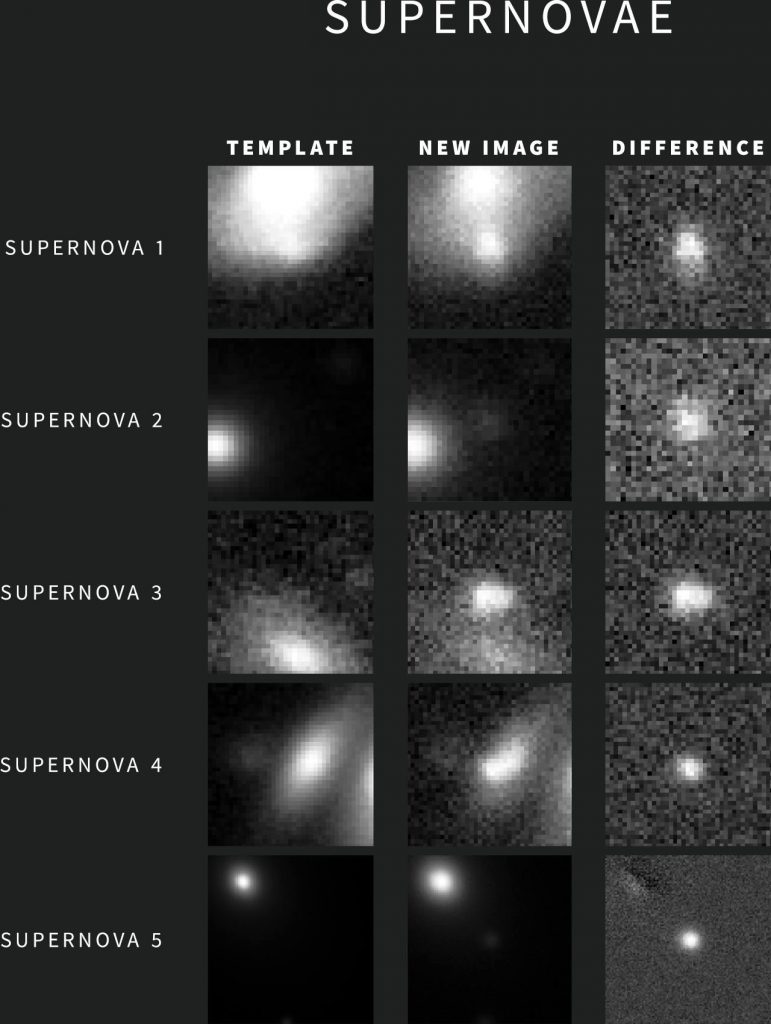
The maths and physics of such movements are well understood, the empirical phenomenon of super fast spin still draws large audiences. The earth is typically spinning about once every 24 hours, hardly noticeable for us living on it. Seen from space this changes already and it makes for marvellous views on the blue planet. The NSF Vera C. Rubin project has made available the first few images of super fast spinning asteroids. The 2025 MN 45 asteroid is such a fast spinning one. The asteroid has a rotation period of about 2 minutes only, with a size of about 700 meters as diameter.
Collisions with such a super fast spinning asteroid, made out of very hard material as otherwise it would have disintegrated already, is likely to cause substantial damage in space. It is not threatening us, but satellites or rockets on their way to planet Mars in space would certainly be knocked out due to any collision. For the time being, we may just admire the splendid images of space, spins and the occasional collisions. (Image: Link to source NSF Vera Rubin 2026, NSF-DOE Vera C. Rubin Observatory/NOIRLab/SLAC/AURA)

Rockets concept

Goddard’s rocket science concept had a hard time to get finally accepted. As early as 1926-3-16 he achieved a 2 seconds lasting propulsion of a rocket with an innovative liquid fuel concept. The combination of liquid fuels like gasoline (later hydrogen) with liquid oxygen allowed rockets to achieve longer distances with equal weight. Eventually, such rocket fuel would allow more control than relying on any other form of a combustion chamber. Rocket science celebrates 100 years of existence with spectacular successes as well as failures. The collection of scientific papers on the subject by the AIAA is a passionate reminder of how tough and lengthy scientific progress in fact is. Beyond rocket science we might ask the question what are we actually looking for up there or wherever the rocket might end up eventually. It is probably fair enough to say that we don’t always know in advance. This is keeping an open mind to technological innovation, but only if such technology is developed for the benefit of humanity rather than with an obsession to dominate others. The end phase of the 2nd world war told us such a lesson. It should be remembered at the same time as remembering 100 years of rocket science.