
It is the merit of youth to try out and get away with new things. The peace movements of the 60s and 70s have had their origin in peaceful actions or sit-ins that managed to raise awareness of aggressive foreign policies of the U.S. and allies. The aim of peaceful meeting was to have an impact on government policies by not being aggressive towards anybody. The political force stems from the power of peaceful persuasion by not forcing persons of other opinions. We are many and we think differently.
The climate activists of 2023 have chosen a different route before abolishing their so-called peaceful activism. This form of protest consists in reaching media attention by blocking road circulation at critical intersections. It turned out to be perceived as an aggression for many persons much unlike the peaceful actions from decades before, which were also sit-ins, but in areas with no or little traffic.
Similar to the distinction in freedom from violence versus freedom to do something. The notion of aggression has 2 orientations. Not being aggressive towards somebody or something could be understood as peaceful aggression if the activity or non-activity has an effect on other persons as if they suffered a form of aggression. In the eyes of the spectator the peaceful road blocks may have a violent impact. Reactions might follow accordingly in a spiral of violence rather than the proclaimed peaceful impact. There is, therefore, a fundamental difference between the peaceful peace movements and the “peaceful aggression” of many of the climate activists blocking roads. Rather than spreading peace, the outcome is a rather violent reaction against perceived unacceptable hindrance to do something.
To meet in a church in the presence of priests (2023-9-23, 12 apostles in Berlin-Tiergarten) does not change the thrust of the campaign, which I coin as peaceful aggression. Therein lies the eventual failure to reach more popular support for the cause and the action of the self-proclaimed “last generation”. In ratcheting up the spiral of aggression, the movement contributed to the rising frustration of persons with no or only very difficult alternatives to their means of transportation. Aggressive opponents of the movement received undue media attention and, probably, hardened the opposition to the climate cause.
In analogy to cold versus hot war, we have entered a period with peaceful aggression versus aggressive aggression. Difficult times for peaceful peace movements. 
Digital organising
Since the digital innovations continue to broaden our scope of how to organise, we have to make conscious choices which way to choose. The traditional form of sending out newsletters and waiting for responses is still a feature that is prevalent across Europe. Most organisations have shifted to digital plus physical versions by now, just like newspapers. Young organisations by founding year have started or shifted to digital only for speed of delivery, CO2 and cost saving mainly. We may derive a first dimension of organising between the digital and physical. 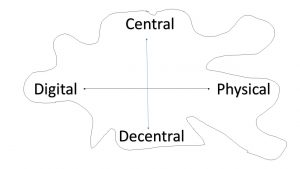
A second dimension consists in the central versus decentral forms of organising. Similar to the franchise principle of organising companies, organisations have a choice to keep a central structure with varying degrees of freedom at the regional, sectoral or local level. Organisation theory is helpful in this respect. Various hybrid forms are equally possible. Centralised in financial aspects, but scope for local decisions on content.
Bohn et al. (2023) define digital organising as “collective purposeful alignment and distributed action fostered through digital technologies”. Centralisation and/or Decentralization become a matter of conscious choice. The processes of datafication and connectification, whereby every bit of information becomes a data point and any electronically enabled device can be connected with each other. Organisations now have a choice of how to organize including digital organising. The opportunities are within the space opened up by the 2 dimensions (figure below). A specific subject matter may require more physical presence and maybe centralised structure, but digital only forms with highly decentralised forms are powerful tools in the 21st century. New as well as established social movements may well take advantage of these digital technologies as well. (Image: Digital Organising 2024 Protest Berlin). 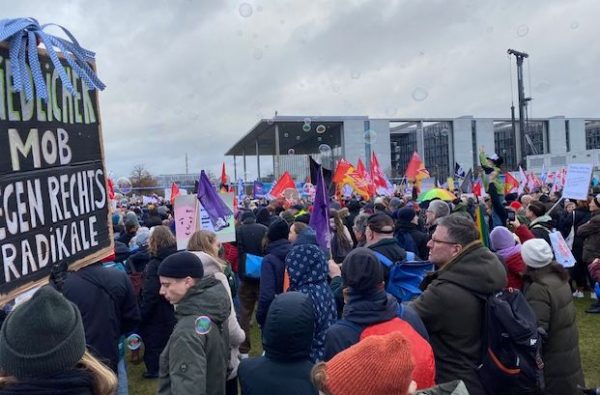
Spring has Sprung
In Europe it is expected that spring follows winter. The closer you move to the equator the more you find days equally long in winter and summer. In Northern Europe we have marked differences in terms of light between winter and summer. In January and February 2024 we had a very mild winter. As of 15th of February we had 15° C in Brussels and the first few blossoms showing up. Climate change is undeniable and the call for action to intervene urgently become louder and louder. Why is it so difficult to take action? Well, there are many vested interests and countries that hope to benefit from climate change. In simple economic theory this is not a problem as long as those who gain from climate change would compensate those who lose from it. However, if the total sum of losses is so much bigger than the sum a few will gain, the global balance sheet will deteriorate rapidly.
Monitoring climate change and the shifts in national and global wealth are part of the scientific endeavour. Rising inequalities on a national as well as global scale will create numerous new challenges which are difficult to forecast due to complex feedback and reinforcement loops. It would be wise to apply the precaution principle in this respect as well, but this seems to be hardly understood, let alone, to be followed.
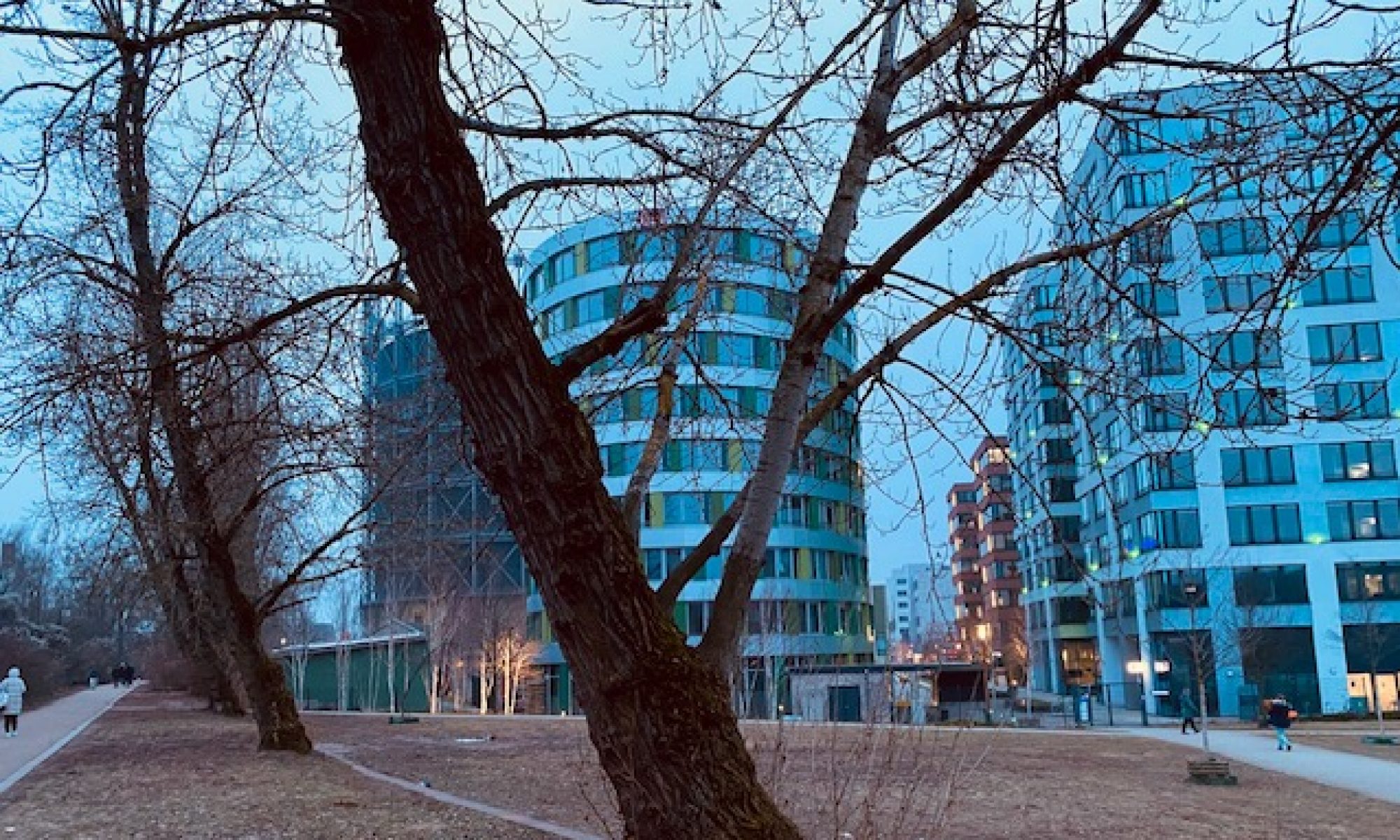
Sometimes it needs a cold winter, unusual flooding or a bad harvest to acknowledge to value and apply the precautionary principle in the following years. Only, this time it might be fundamentally different, because climate change is irreversible for generations to come. Early blossoms in winter as precursor of spring are nice, but we have mixed feelings considering the impact on irreversible climate change. (Image Brussels 2024-2-15) 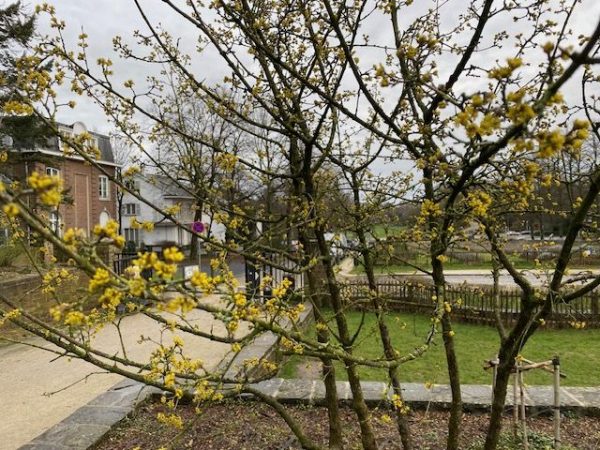
AI and Behavior
We start to analyze the impact of AI on our behavior. It is an important question to be aware of not only how we interact with AI (Link), but also what effect the use of AI (disclosed or not) will have on our social behavior. Knowing that AI is used might change our willingness to cooperate or increase or decrease pro-social behavior. The use of AI in form of an algorithm to select job candidates might introduce a specific bias, but it can equally be constructed to favour certain criteria in the selection of candidates. The choice of criteria becomes more important in this process and the process of choosing those criteria.
Next comes the question whether the announcement includes as information that AI will be used in the selection process. This can be interpreted by some that a “more objective” procedure might be applied, whereas other persons interpret this signal as bad sign of an anonymous process and lack of compassion prevalent in the organization focused mostly on efficiency of procedures. Fabian Dvorak, Regina Stumpf et al. (2024) demonstrate with experimental evidence from various forms of games (prisoner’s dilemma, binary trust game, ultimatum game) that a a whole range of outcomes is negatively affected (trust, cooperation, coordination and fairness). This has serious consequences for society. The social fabric might worsen if AI is widely applied. Even or particularly the undisclosed use of AI already shows up as a lack of trust in the majority of persons in these experiments.
In sum, we are likely to change our behavior if we suspect AI is involved the selection process or content creation. This should be a serious warning to all sorts of content producing media, science, public and private organizations. It feels a bit like with microplastic or PFAS. At the beginning we did not take it seriously and then before long AI is likely to be everywhere without us knowing or aware of the use. (Image taken on Frankfurt book fair 2017-10!)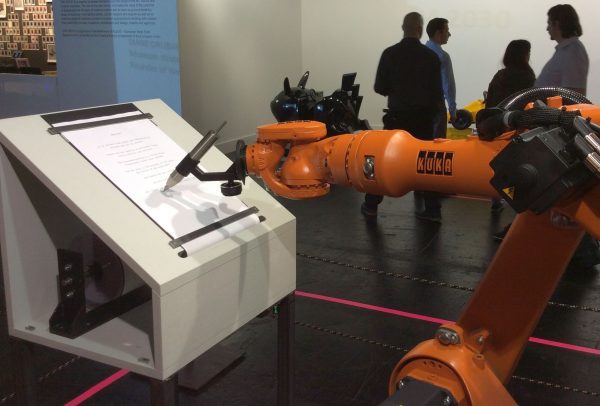
West Europe
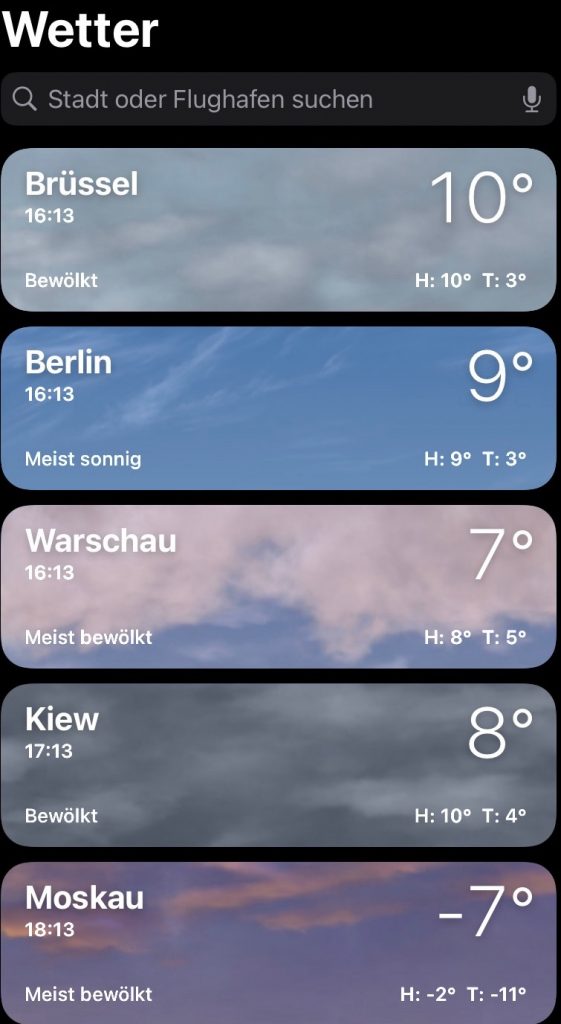
There has been a shift of political borders in Eastern Europe. Russia has been trying to shift its border further to the West by brutal force attacking Ukraine. Political defence and military action have managed to preserve western values in Ukraine. On the 13th of February 2024 the meteorological data confirm a clear belonging of Ukraine to the western climatic conditions. Temperatures in Kiev are very similar to the western hemisphere and very different from the cold in Moscow. This is just a little detail or coincidence but it bears a nice resemblance to the political weather currently in Europe. It is by all means much colder in Moscow than in western Europe. The time and the climate are a changing.
Stroke
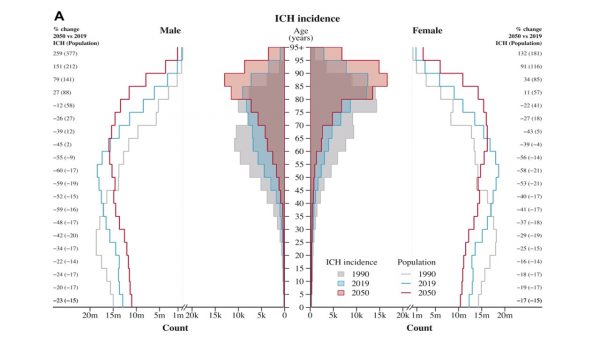
A stroke is a very serious medical incident. The NIH defines it in easy language as the the moment in which “blood flow to the brain is blocked or there is sudden bleeding in the brain“. Thanks to a European HORIZON project forecasting models are produced to estimate the likely incidence until the year 2050 by age and gender within Europe. The good news is major regional imbalances of incidence and mortality have been reduced and will likely be reduced across Europe. The challenge remains the aging of societies which necessitates to address the issue of strokes in each single region of the European Union. We know that the shorter the time to treat a stroke immediately after its occurrence, the better the survival chances and the better the prognosis for (partial) recovery.
In the US the widespread use of blood thinners which tripled over 30 years has not lead to the reduction of intracerebral hemorrhage (Link to studies). High blood pressure and arhythmic heart beat are major causes of this often disabling medical event. The study by Wafa et al. (2024) uses age-pyramids to demonstrate the effect that as European societies are aging the incidence of intracerebral haemorrhage occurs with increasing age and even more so for women than men of 80 years and older.
Prevention of high blood pressure through walking or careful endurance exercise seems even more indicated for an aging society.
Image below from Wafa et al. (2024), The Lancet Regional Health, Europe.
Publishing2024
With new channels of publishing online the publishing world continues to change. Scientific research moves also online and the reach of audiences has become a much more important factor in evaluation of success. Elite circles of in-groups publishing and quoting each other have a harder time to survive. It is a form of democratising the world of research which is by very large amounts financed by public budgets. Public radio and television now start to feel the heat as so-called influencers, some working independently, challenge the world of traditional journalism. The good news is that there are many more people active to produce news and entertainment and the two separate worlds become more and more integrated. Young people who have left the “official” media world, engage with their own peer groups and make their voices heard and more influential. The quality of the provision of information is, however, a matter of concern. Audiences will have to check even more carefully than before which sources can be trusted. This is not an easy task. Speed of spreading information becomes an additional factor. It has always been like that, but the rhythm of a daily or weekly newspaper was very different from the publishing and consumption of news and information today.
The second factor that has drastically changed is the influence of “external” influences and information as well as disinformation campaigns that have an impact on “internal” reporting and commenting. What used to be the world of professional journalists has become an accessible possibility for many more than journalists. Publishing has become a very different world from the printing days and yet printing remains one important channel of publishing. (Link to own edited volumes of blog post for printing here).
Previously, we prepared the manuscript in paper, nowadays this seems to move online and the edited and sometimes corrected versions will be published in print later on. The challenge to science and journalism is ticking. Not accepting that there is a serious challenge is no solution either. (Image from Exposition “Books that made Europe”, 2016)
Greedflation
The teaching of economics and socioeconomic policies has to deal with the topics around inflation and economic inequality for centuries. Greedflation has become a newly coined term for the rise of inflation due to greedy firms who use a window of opportunity to achieve extra profit margins or windfall profits. At a time of perceived price rises in many sectors, sectors that have no cost increases might still try to push prices higher simply because almost everybody else does so. Higher profits then show up in the reporting season of enterprises quoted at the stock exchange and the increase in inequality between wage earners and shareholders will rise. Greedflation is a summary term for it. The ECB European Central Bank has mentioned this and Reuters has reported on it as well end of June 2023. Since then a wait and see strategy has been adopted. Now in February 2024 we witness the wider spread of extraordinary profits of big firms not only in the fossil energy sector but also bog banks. The economies and societies suffer huge losses and a massive redistribution of capital. Subsidies introduced to lower the shock of the coronavirus crisis and the Russian aggression are unpopular to be scaled back. Employees and their trade unions have a hard time negotiating adequate wage increases whereas most companies use the momentum of seemingly general price rises to push profit margins. The translation of this mechanism to the political economy risks to jeopardize the support for capitalism and market forces in general. Another wave of increasing inequality endangers the survival of democratic societies. Countries with only a short experience of the functioning of market economies are at a particular risk. Germany’s decline into dictatorship in the 1930s after the severe economic crisis should be remembered as a major threat. Greedflation is a very serious and very real threat which we have to address with economic and social policies rather than waiting until the European elections have passed. Time to act, the thinking has been done. Evidence accumulates to make the political case.
Force of dependency
Drugs have their particular strength in creating dependency. This is well known for tobacco or alcohol. Helping people to overcome the forces of dependency has its merits. At the same time it is big business. Vaping instead of smoking might be a way out one dependence but into another one. In the end it is an empirical question how many persons can escape the force of dependency of both types. Important to test the probability to get rid of the dependency altogether. With respect to hard, life-threatening drugs like Nitazene the death toll keeps rising in the UK. In the latter case changing the dependency is already a success. The sustainable deflection from drug dependency has to address underlying issues and health hazards. It is a rather individual issue. Society wide evaluation studies need to inform the debate also about placebo effects. The force of dependency might not only be physiological but psychological or linked to the social environment. All these potential effects have to be carefully sorted out before simple pseudo-solutions are implemented. Even the price and availability of drugs is part of the overall equation to solve the force of dependency.

Forced Labor 2024
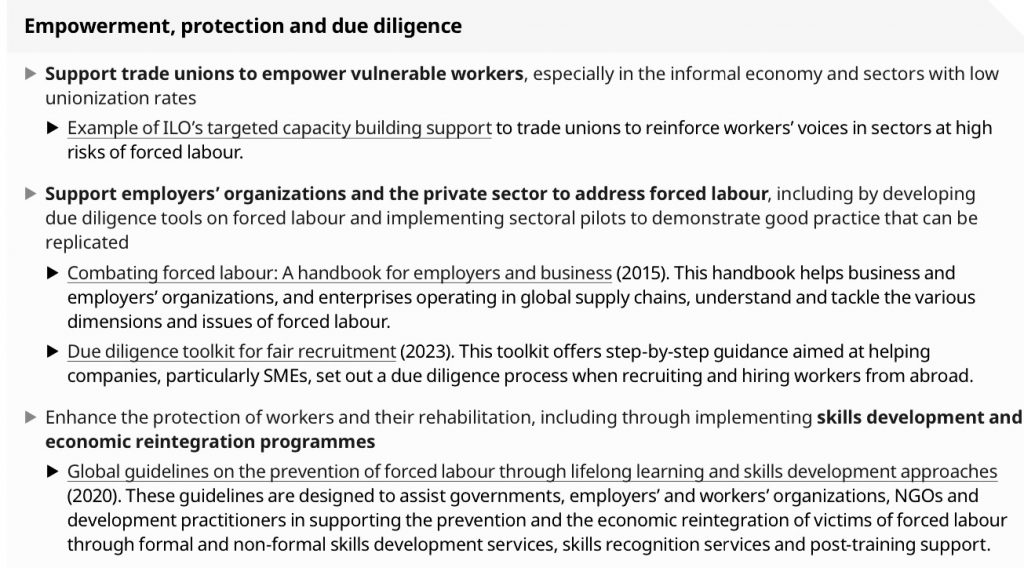
Thanks to the ILO we have recent data on forced labor across the globe. At the time when the EU struggles to tighten the rules on decent supply chains, it is important to draw attention to the already reversed trend that worldwide forced labor is on the rise again. According to latest report by the ILO 27.6 million women, men and children were in forced labor at any day of the year 2021. This is even about 10% more than 5 years before in 2016. The fact sheet from ILO highlights the region that are practicing it the most but mentions at the same time that no region in the world has completely wiped out this criminal activity. Despite the SDGs containing a goal to eradicate forced labor by 2025 for children there is little hope that this will be reached. Controlling supply chains of the rich countries could be an important factor in identifying the states or companies which built their production model on forced labor. The fight against this practice is an enduring challenge. We cannot allow to shun away from the thorny issue. The price for labor is only one argument in the reasons for the persistence of forced labor, migration is also a force at work. This asks for specific solutions to country-specific or sector-specific problems. It is a global responsibility but needs partnerships across continents to reach better outcomes in the interests of humanity. Some countries like Germany have a historical debt to invest more than others.