European Voters

Elections of the European Parliament are more about a learning and participation experience than about crucial political influence. This seems to be the lesson learned from the relatively low voter turnout in many countries in 2024-6. Belgium reached by far the highest percentage (90%) of participants, but it had federal and regional elections at the same time. Croatian voters could not be bothered with these elections with just 21% of turnout. Many countries hovered around the 50% participation mark like France, Spain, Italy, Ireland and Sweden. Germany reached almost 65% which is relatively high, but due to its population size, it sends the most MEPs to Brussels later on. The most surprising result is the extremely low turnout in the former Eastern, Southern Eastern and Baltic states of the European Union. Apparently, the voters in these countries care little about their political option to vote for MEPs. This should worry all other parts of Europe profoundly as we invest billions in infrastructure and social cohesion to keep the European Union an open house for all East and West, South and North. The challenges for the next 5 years are huge. The expectations are high, but the commitment to democratic procedures like voting and decisions through the ballot box are not to be taken for granted throughout Europe. (Image European Parliament 2024-6-11)

Co-authorship Kafka

In science Co-authorship is a tricky issue. Therefore, many higher reputation journals list precisely who has contributed what to the paper. In the teaching and supervision of bachelor, master or doctoral dissertations it is imperative to scrutinize the original contributions of authors to the subject. There are huge differences between universities to the amount of innovation or originality that is required to award degrees or the publication of the research and results. Rüdiger Safranski published with Hanser 2024 an essay on Kafka which has 224 pages, but a 16 page long list of the sources of the copy-paste citations used from the orignal Kafka writings. By scientific co-authorship practice Kafka should claim co-authorship of the book and the costs of the „Process“ should be paid by the publishing house. However, I enjoyed the many links between comments and the originals next to each other. It is like a data analysis that sticks plausibly to the original data. AI still has a hard time to rival with these skills, although AI is catching up faster than many of us might believe or want to believe. From a social science perspective we might say the original work of maybe only 180 pages is inflated to make for a longer text of 240 pages. This justifies, probably, the publisher’s price (€26) and the marketing costs. On the other hand it becomes evident that Kafka has an enormous impact on writers and seems to take possession of them in an encompassing fashion. You move with him, but rarely beyond him. Tough lessons indeed from the publishing world.

Library Search

Libraries have not only lots of books on shelves and in storage places, but scientific research makes use of lots of scientific journals as well. The direct access to these journals shortens the search for information. We tend to focus on certain sets of journals, which we follow regularly as well as some random choices. Libraries like the Staatsbibliothek in Berlin have the advantage of access to multiple scientific disciplines under the same roof. This facilitates cross-disciplinary research with access to the best available knowledge. This resembles university libraries where also a broad spectrum of disciplines is taught.

Moving from paper-based publishing to electronic publishing, it is obvious that libraries are part of this move. Printed journals disappear and the electronic versions are made available to the readers. 2 issues arise: (1) adapt your search strategy to e-search and reading on screens and (2) accept that your research leaves traces (and potential tracking of your activities) of what information is really used. User statistics are likely to have consequences in the medium term. All libraries want to know who are my readers and what kind of search strategies do they apply. Similar to some of the best scientific results that are an outcome of by chance findings the search in libraries is enriched through „random effects“ of search. On-shelf access to printed copies allows a rapid overview of a whole year of issues beyond the abstracts always available online anyway. It is so much faster than the online search that we shall miss the paper-based issues of journals for quite some time. At the time of artificial intelligence everywhere reading and writing might be overvalued as economists might say. Our search algorithms and use of libraries is evolving at the same time. The by-chance or random inspiration might move to other places.

library shelf with empty journals‘ stock

Attune Spheres

In Berlin it is easy to walk through the history of art to up-to-date contemporary art installations. Just walk from the Alte to the Neue and then to the Contemporary Nationalgalerie. With the installation and performance in the monumental Hamburger Bahnhof the artist Alexandra Pirici succeeds in an extraordinary way the combined impression of several art formats. I felt particularly attracted by the sound and resonance that the dancers achieved in the huge historical hall of the former train station. Embedded in a choreography that spans the whole hallway and the top of a sand dune, the ideas of „Attune“ bring in demonstrations of scientific experiments as well. We are reflecting on how structures, biological, physical or geologic processes coexist. It is another example of the intersection of biological, psychological and social phenomena. The links between science and art are more direct than what most people tend to believe. This encompassing experience catches all our senses and our mind. It is very likely that this intense experience in the museum space, which attunes our sensory perception of the artwork, sticks with us for longer than many other pieces of art. The 21st century will reveal an even more powerful language of art as it incorporates even more formats to grab our attention and imagination. The research of how patterns are formed is an important question for social scientists as well. All approaches to the subject are welcome and each one reveals our knowledge gaps despite remarkable progress. (Image: Hamburger Bahnhof, Berlin 2024-5-11, Alexandra Pirici)

Photos Exhibit

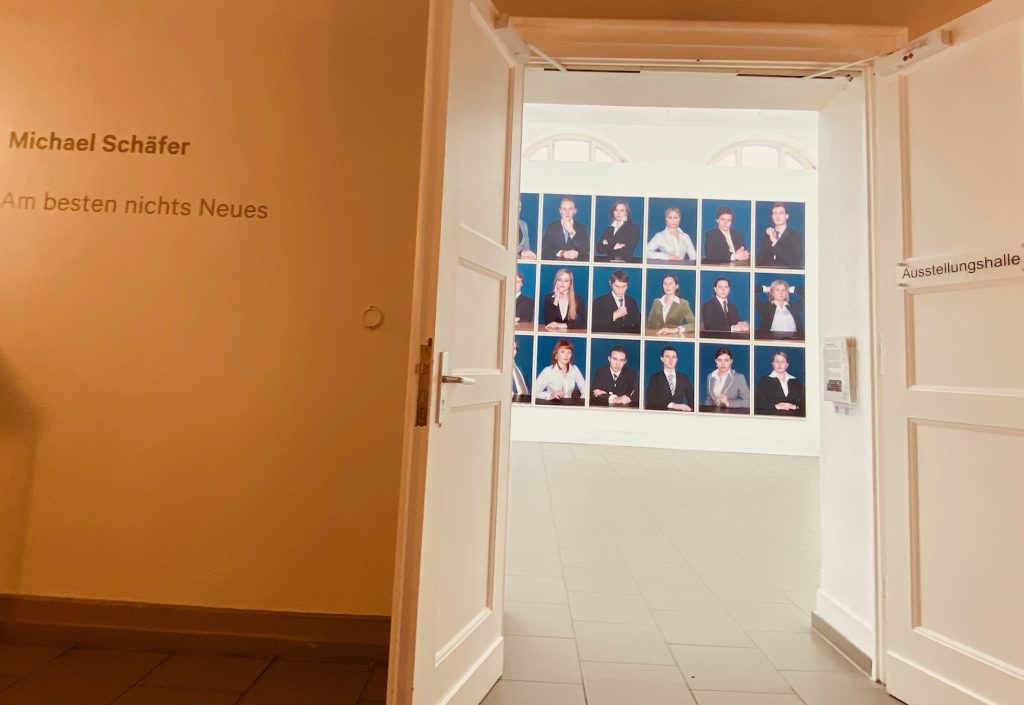
Our usual expectation of an exhibition of photography is to look at photos at a wall. Sometimes there is more it. The Exhibition Space at the “Haus am Kleistpark” features Michael Schäfer who attempts to go a bit beyond these traditional forms. In the works of photo cubes on water surfaces “2021_57”, or a dice floating on the waves of oceans, the video representation of his photographs takes the assembled images beyond their flat 2D surface. However, the 2D representation is at the origin, then transformed into a 3D dice, which then is animated as a 4D format. Moving beyond the flat screen image takes photography into the 21st century.
His work “Les acteurs 1-26” from 2007 is shown at the entry hall of the exhibition. It shows pupils of a class at an elite school who deem themselves in leadership roles in the near future. Is it acting? Is it projection into a future role they are likely to take on. They represent stereotypes, of course, but some are pretty convincing in these roles already. Some others still seem to reflect on what they are doing there. Even acting these roles, they are aware of the meaning of social rank and class in society. Without having read the sociologist Bourdieu, all are aware of the fine, little elements of distinction as they have evolved over time. We could teach an interesting sociology class in this exhibition.

Causal Benefit Model

In the field of medicine we move more and more towards precision medicine. Previously, the term of personalized medicine was used which suggested to a certain degree that a personalization might be feasible. The budget constraints have forced us to change the term to avoid unrealistic, untenable promises. In the field of cardiology scientific advances advocate to shift from a risk-based model of treatment to a causal benefit model. (Kohli-Lynch et al. 2024 Link). Long-term benefits of a treatment are more promising, if the treatment addresses the causal mechanisms at work. It is wide spread practice to deal with general risk profiles as guidelines as the precision medicine based on a causal benefit model is far more laborious since to search the causal mechanism at work requires additional testing of hypotheses. This becomes immediately clear if genetic causes enter into consideration. Nevertheless, medical research advances more and more in this direction. Genetic testing has been shown to be useful in analyzing and treating issues like sudden cardiac arrest (in survivors). We are somehow aware that genetics may play a role here, but we shall need a lot of additional studies to make the causal benefit model a feasible option for widespread applications. Targeting research in this field will offer new avenues for precision medicine in the 2020s.

Korallenriff

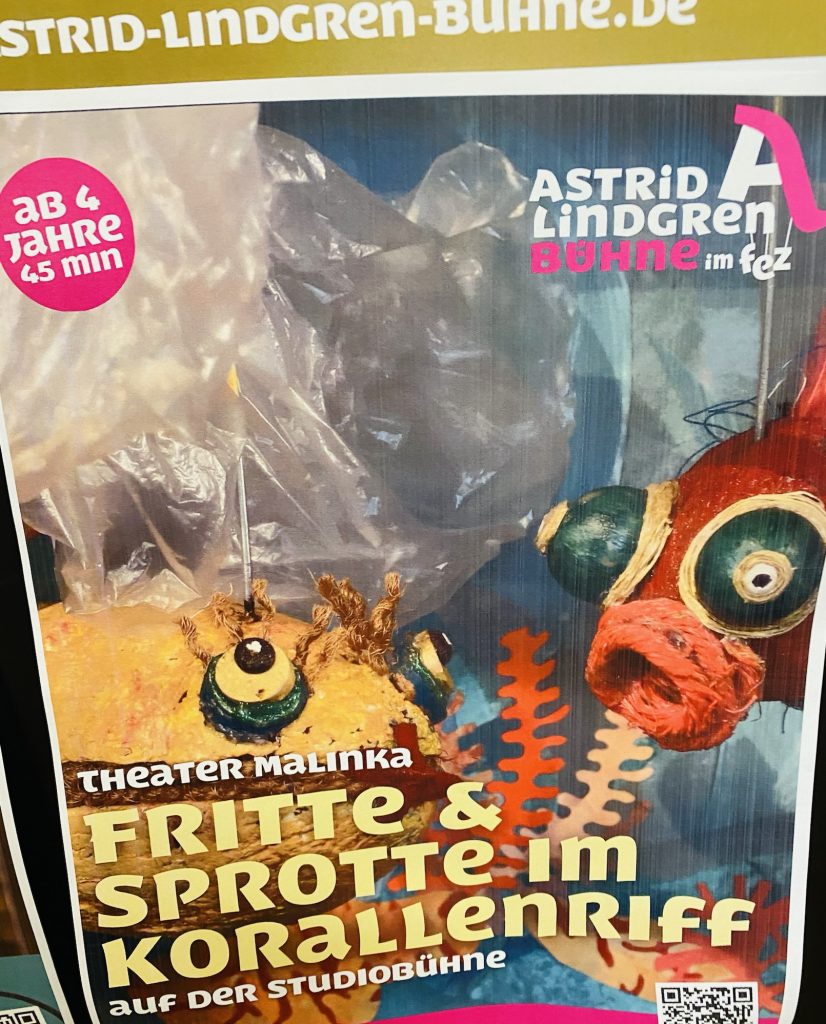
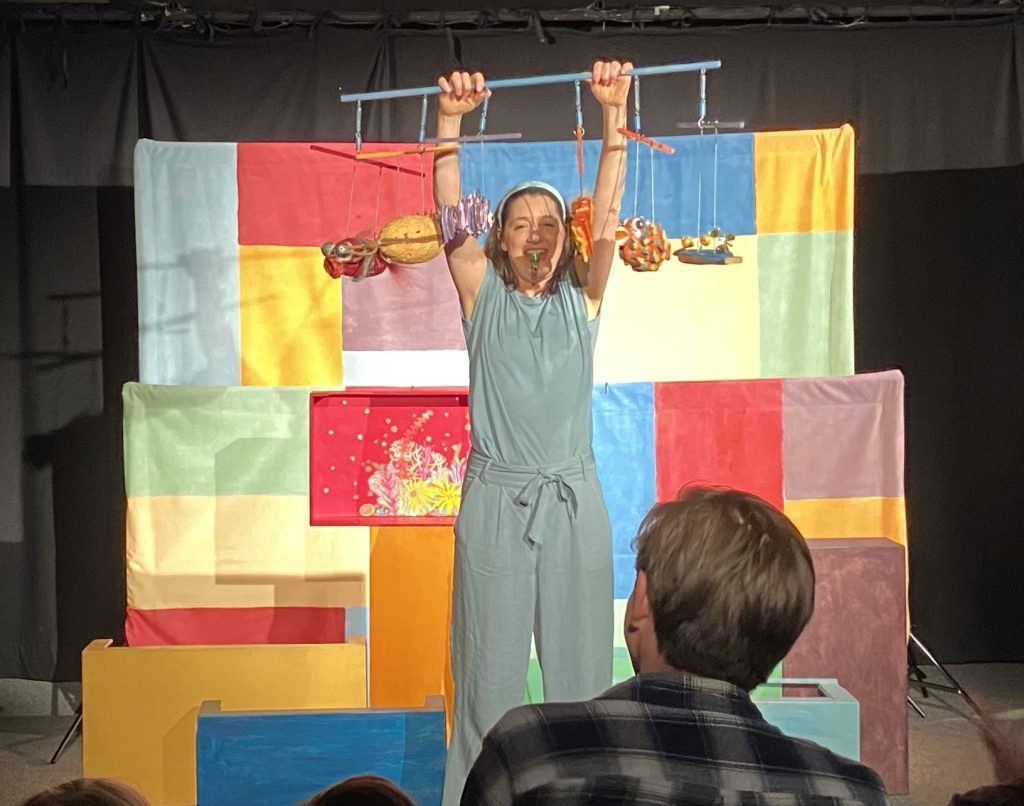
Kinder verstehen direkt, dass es sich lohnt, Korallenriffe zu erhalten. Plastikmüll in den Meeren gefährdet die Korallenriffe und die bunte Vielfalt an Fischen, die darin leben. Ein kleines Theaterstück dazu von Kathrin Brunner begeistert Kinder, weil es sie erleben lässt, wie einfach Lösungen aussehen können. Den großen Leuten zeigen, wie traurig die Welt aussieht ohne die farbenfrohe Pracht der bunten Fische, wird sie schon zu Veränderungen bringen. Das Theaterstück und Buch dazu wurde am 16.3.2024 im FEZ in Berlin aufgeführt. Das Figurenspiel mit überleitendem Refrain, das vom Publikum gleichsam der Promenade in den „Bildern einer Ausstellung“ (Mussorgsky) mitgesungen haben, bildete jeweils eine gelungene emotionale Überleitung und Aufmerksamkeitspause. Wir wünschen uns noch viele kleine und große Besuchende für diese Aufführungen. Die Kinder werden es uns schon lehren, den blauen Planeten noch zu retten.

Corruption Watch

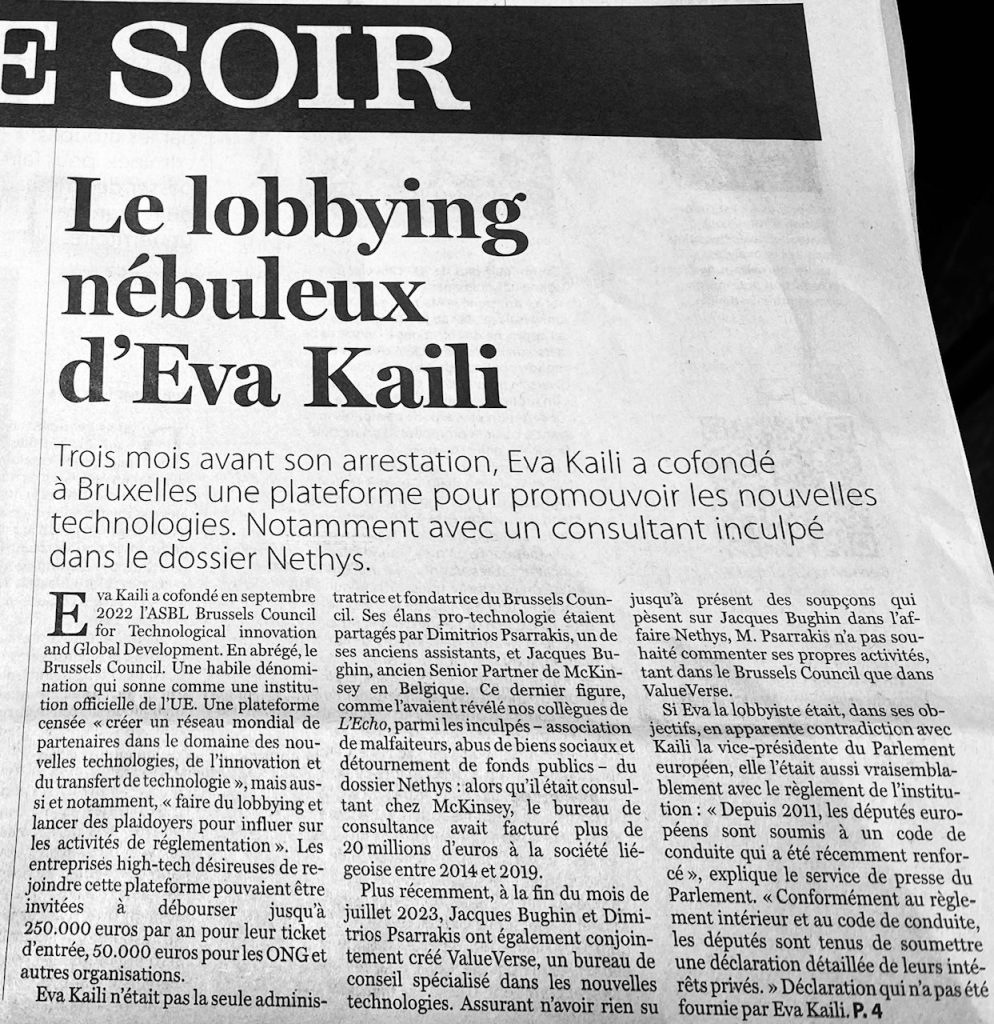
There is a persistent need to watch carefully whether corruption is involved in political as well as economic deals. Transparency Watch is doing a great job in reporting on corruption cases. In democracy we can talk openly about corruption but in authoritarian regimes it is life-threatening for yourself to talk and report on corruption. The case in Europe around the network of Eva Kaili continues to make headlines due to the ruthless abuse of rules the European Parliament. (Link to Le Soir, image below, 2024) The close monitoring of activities and lobbying of powerful industrial interests targeted on parliamentary candidates and officials will continue to be essential for the survival of democracy. The organization „Abgeordnetenwatch.de“ is doing just this. Investigative journalism needs to complement the work of NGOs in this field. Thanks to these efforts it has become much harder to cover up corruption. Only if the risk to be found out is a credible threat corruption can be contained. Let us watch out carefully and probably with the assistance of AI to uncover early any attempts of corruption.

Clip „Le Soir“ 2024-2-28 p.1

Opportunity Costs

Skiing in winter is a pleasure that has become more elitist. The downhill skiing has always been an expensive sport, but affordable school holidays gave the sport a more accessible touch. The cheaper version of long distance skiing or skating on larger trails involves much more endurance. The report of the French Cour des Comptes in 2024 questions the sense of the huge investment that is still devoted to save the pleasure of the few. I
nstead of investment to the benefit of relatively few persons, these funds could put the money into a more sustainable, socially and ecological productive purpose. Installations could be used all year round rather than in the few weeks at best months with snow. It is remarkable that the court has highlighted this kind of opportunity costs of such installations. Instead of investing in soon to be obsolete infrastructure at lower altitudes like water reservoirs and water canons, this money could already start the eventually necessary transition process. Each € spent is not only lost for the transition, but might create additional environmental liabilities and damage.
From economists it is to be expected that they mention competition in their arguments. Not all stations of skiing will survive. Put more dramatically, in the process of closing skiing at lower and middle level altitude, competition intensifies between stations and of who can survive. Public funds should not be misused in this endeavour. Lobbying is strong and political incumbents tend to favour the merit and legacy of digging for the white gold. Changes of mind sets, investment narratives and decisions are tough. From much downhill skiing we might soon remember only the downward slope before the healthy aspects of climbing a slope takes the upper hand.

Satellites

Every now and again satellites make headlines. In international politics the “Sputnik moment” of 1957 was such a key defining moment. Russia sending a satellite into space set off a massive investment programme in the United States to counter a potential threat from Russia coming from space. In 2024 we discuss again the next ratcheting up of in a race of armament threatening the earth from space. Russia is believed to enable satellites to carry a nuclear bomb that would orbit around the earth and could lead to mass destruction of satellites that nowadays enable navigation, communication and monitoring what is happening on earth.
As beyond the state-owned satellite networks there has been a private satellite network that assisted Ukraine to defend itself against the Russian aggression, we probably are about to witness the extension of warfare on earth into space. In addition to the so-called cyberwar, which threatens computer-based systems with viruses, ransomware or break-downs, we may face new kinds of threats. We shall have to consider this as part of modern warfare.
Since the late 1960s there exists an international agreement not to use space for nuclear arms. However, Russia does no longer seem to respect its commitment to this. A further escalation of the war of Russia in Ukraine with “conventional” weapons carries the risk to set off another arms race including the earths orbit. This is no science-fiction or whistle blowing, but based on a high-level report and press coverage by the New York Times on 2024-2-17 (Link).
The outrageous implication of such a massive explosion in space is that its implications of the globe on parts of the world and people not being a party in the war will suffer most likely as much as the opposed nations. The food shortages due to Russia’s aggression caused people in Africa to suffer or even die of hunger. Satellite outages of a massive scale will have severe consequences as well.
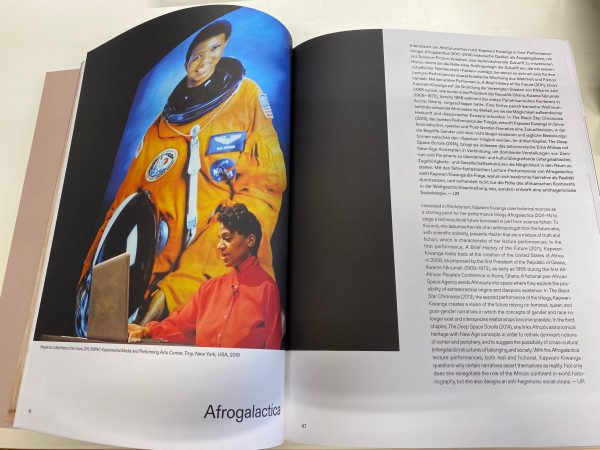
Information and communication systems have proven to be determining the outcome of a war. This has been one lesson of more than two hundred years of studying military strategies since Clausewitz. Space and satellites have apparently not contributed to improve the understanding of each other, but only the communication within the respective communication bubbles. Maybe artists can help us to overcome the danger of escalation. (Image: “Afrogalactica” by Kapwani Kiwanga 2011: calogue of exhibition “The length of the horizon” Wolfsburg and Copenhagen 2023).