Cardiac arrest detection

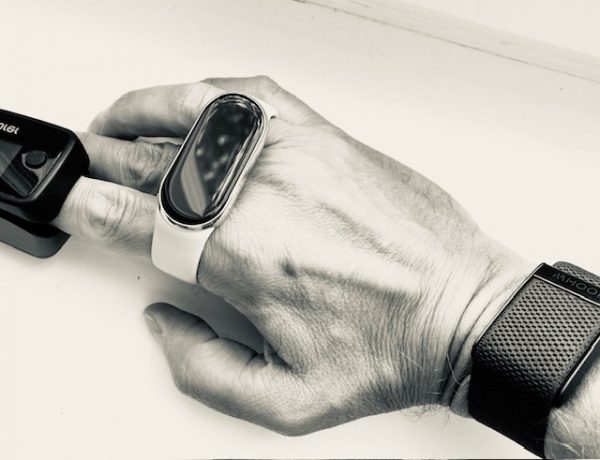
The number 1 cause of death is cardiac arrest in the modern world. Hence, the interest in the detection of cardiac arrest could save many lives. For assistance to arrive and intervene in time an alert needs to be issued as soon as possible. With early detection by nearby persons and skilled intervention the survival chances are about 50% of cases. The “silent” at home cardiac arrest is an important health and survival issue. The availability of wrist bands and watches which can issue alerts in combination with smartphones has risen considerably in recent years. Therefore, the improvement of reliable algorithms which interpret these data can realistically save lives as the delays can potentially be shortened for professional helpers to arrive. The study by Edgar et al. (2026) tested such a device and were able to show the very low number of false alarms issued by this device (about 1 out of 40). Extrapolated to millions of cases the challenge to a health care system is steep. However, we have to deal with such socio-economic issues of digital devices in medicine in the coming years more often.

Autonomous Agents

We all have seen more or less autonomous robots somewhere, maybe in a garden silently doing its job or doing more demanding tasks like in playing table tennis against a human. Even the evolution of polluting fireworks to swarms of little light-emitting drones designing figures on the sky have become quite popular. The AI-world is similarly advancing rapidly and proposes more and more “autonomous agents” to assist us. It seems crucial to distinguish the 2 Ds of autonomous agents: Degrees and Dimensions. As with job quality or job satisfaction, there are several sub-dimensions, which need to be considered when dealing, in a summarizing form, with such encompassing terms.
You might allow an agent to order missing food for a meal and pay for this autonomously. You might even be assisted in financial choices to a large degree, but you might not want an autonomous agent to make far reaching decisions concerning your health or partnership(s). Besides such dimensions, the degree of autonomous decision-making needs to be calibrated according to your (perhaps changing) preferences. Booking a table in a restaurant, with a single other person, might not just be a friendly, nice assistance, but it might get you into severe trouble. However, managing conference bookings, a family event or a birthday party might allow you to concentrate on other issues or specific details. Additionally, there are underlying and cross-cutting topics like trust, risks and security that enter the “2 Ds of autonomous agents”. A 2-dimensional matrix plotting levels across dimensions might work as a behavioral guideline in the development of autonomous agents. More dimensions may be added during the implementation.

Autonomy in swarm

Swarm behavior is a fascinating research area. Almost all scientific disciplines feature some interest and publication in this area. The biological origins have been associated a lot with the marvelous behavior and patterns formed by fish moving about in swarms. Some species of birds show similar patterns of collective and somehow coordinated swarm movement. It appears to be tricky to safeguard some form of autonomy in the overriding mass behavior and mass movement.
Recent advances in this field by Li, Li & Zhao (2023) model such behavior within a predator-prey framework to explain the evolution of overall swarm behavior. Whereas “prey” strategies consist in “flocking” and “swirling” to irritate predator(s), the predators make use of “dispersion”, “confusion” as well as “marginal predation tactics”. Additionally, several assumptions go into the modeling of swarm behavioral evolution: agent observation, agent dynamics, and the environment. The mixed cooperative-competitive multi-agent setting applies reinforcement learning, additionally. The framework of evolution has 5 driving forces: (1) homogeneity of a swarm (parameter sharing); (2) actor with decentralized critic network; (3) replay buffer to enhance learning; (4) rewards for predator and loss for prey; (5) learning algorithm.
The modeling approach reveals the impact of an agent-critic network (potential of autonomous behavior) for protection of a swarm in a predator-prey scenario. (Image: fish in fish bowl 2024)

AI and Social sycophancy

The study by Myra Chen et al. (2026) on the practical use of various AI tools demonstrates the risks of social sycophancy of these models. Maybe a large part of the initial success of AI models exactly due to sycophancy i. e. the people-pleasing, flattering and affirmative bias of these models. If users of AI just receive predominantly confirmations and reassurance of their intended behavior, they shall be less inclined to accept more outright criticism in normal interactions with real people. The more you receive flattering responses by some people, the more likely they have used AI in preparing themselves for a response. The rigorous psychological tests applied in the paper can in fact explain a large part of why we are likely to become addicted to the always flattering responses from the current versions of AI. Only the scientists will consciously seek for disapproval of their beliefs and keep challenging the AI-provided returns. Even using different AI models did not change the affirmation bias. Maybe programming a “grumpy old professor AI” as an alternative could do the trick. I shall have to think seriously about this as the alternative to current models. The critical AI is most likely not a viable business opportunity, but it might survive many other sycophantic AI unicorns. (Image: waist coat 18th century, Paris exhibit Musée de la mode 2026). 

Retrieval-augmented AI

As a scientist it is in our DNA to cite other scholar’s work with precision. As a university professor your job is to check the quality of citations, kinds of citations and accuracy as a regular part of your job, also as supervisor of junior scientists. In 2026, the use of up-to-date AI (Asai et al. 2026, OpenScholar AI) allows not only to summarise large bodies of scientific literature, but also to cite references and even quotes from the paper(s). Literature reviews used to take months to compile. AI can speed up the process enormously. The citations can be ordered following an own logic or an AI-suggested logic.
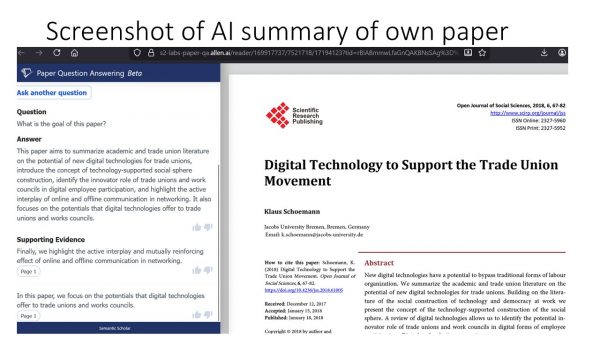
It has become much harder to evaluate the degree of innovation of a candidate for a scientific degree. Tools like retrieval-augmented Language Models enhance the scientific potential of generative AI since they extract more or less short citations directly from the original source just next to the original based on a simple query of author and approximate subject (see screenshot below of own previous publication).
The good news is: (1) referral to previous research and citations should become faster with improved tools for verification. (2) You will find papers written by yourself that you no longer have in your own archive.
The bad news is: (1)self-citations of researchers might become more feasible, although this problem is conditional on a researcher’s seniority. (2) so far, Language models prioritise specific languages (although not necessarily) and differentiate names with “foreign” characters e.g. “ö,ä,é” and do not double check “close neighbours” of them like “o, oe, a, ae, ue, e, ê, è” leading to a “character based normalisation bias“.
It is, of course, rather easy to point out deficiencies of the search, sorting and inclusion algorithm if you know already about the complete picture of a data set. 

Visitor retention

For media, platforms, stores, webpages as well as blogs one of the more interesting measures about popularity or spread consists in visitor retention. It is a bit like counting the pages of a book you have read, which you have at home, or have you read them all? The zapping across radio or television channels is also an indicator or unsuccessful retention of viewers. Webpages, online stores or the blog entries here are all more or less directly trying to increase the retention of visitors on the same page. Maybe this can be considered as one of the first steps into a (not-so) social media addiction. The IT-sector offers tools for this.
On this webpage “schoemann.org” we make use of “linkz.ai” a ready-made plug-in that provides overviews on the links entered on this webpage, mainly to avoid that visitors have many additional tabs opened in their browser, do not jump off to follow up the links, but rather stay on the same webpage and “scroll on”. At the same time this means referrals from other webpages, which use the same techniques, will be less frequent.
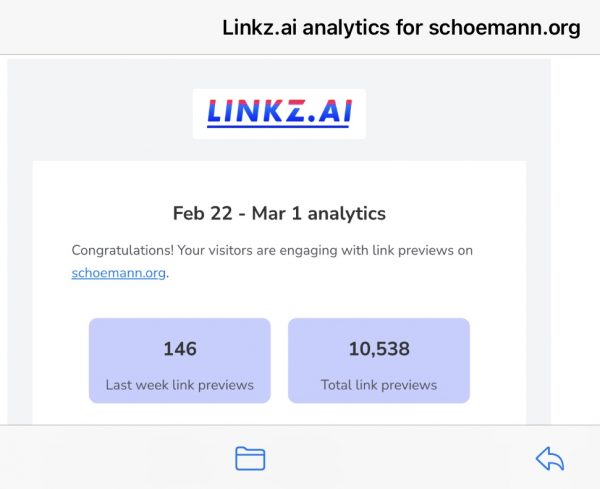
The visitor retention tool used on this webpage is besides the original content 😉 “linkz.ai”. This tool scans other blog entries and links, and proposes the image on the previewed link at the top of the blog preview, for example. Basic weekly frequencies on previews are provided, which might guide a strategy to increase visitor retention, if that is one of your objectives.
The current discussion of addictive potential of social media platforms could be measured through such tools as well and has probably been used already for years with even more sophistication and direct feedback loops into the algorithms.
(Image: basic own statistics Linkz.ai use 2026-2-28) 

Screenshot

Robotics Hype 2026

Towards the end of 2025, it is common practice to look back on the last 12 months to summarize a year and to contribute to the “collective memory” of the year. From a “society and technology” perspective we shall not be surprised if such summaries will be full of images and praise of AI and robotics. However, large parts of the innovations that shall be declared to have marked 2025 were already around 10 years ago. It is just the timing for the new momentum and the creation of a hype around these technologies that is really remarkable (compare WSJ 2025-11-24 p 1-2 by Konrad Putzier).
It is true, playing around with robotics was reserved to universities, research institutes and some big players in industry. The public and financial markets showed little interest in these “nerdy” fields of applications. Although we were hardly able to compete with our chess computers, Watson solving math problems for us including the steps for us to follow. Video, image and textual support was provided by specialized applications already at high levels and in multilingual versions. In 2025 these techniques have enhanced with machine learning and neural network programming reaching higher speed and being able to use ever larger data sets as input.
But there are areas where the hype is coming to an end. How about all the artificial reality (AR), virtual reality (VR) applications? Many have seized to exist. Have you visited or invested in “Second Life” platforms? Opened a shop in the VR-world? Bitcoins have lost 7% of their value between 1.1.2025 and 24.11.2025 and they suffer still from high volatility rather than an uninterrupted rise.
War has fuelled the rise of shares in 2025 and “dual-use” technology benefits as well. AI has been driven by, and drives both trends.
In sum, it is much less the technological innovations in 2025 that are astonishing, but the political economy of how to orchestrate a sensational hype around the technologies.
(Image Hannover Industry Fair 2016-3-14).

From AI to xAI

As humans, we like the feeling to be in control of things. This applies even to immaterial things like religious beliefs. Generative AI has created problems with its hidden structures and lack of transparency of their applications of algorithms (and combinations of algorithms) to basic data bases of knowledge and information. The use of xAI, which stands for explainable artificial intelligence, can address some of the concerns about the lack of transparency and explanation of responses from AI systems. Many users want to know in advance about the consequences of the use of specific words or notions in an instruction to AI. The interpretation of each single word by xAI can inform about the precision of interpretation (cheap versus cheapest, for example) or highlight the sensitivity to gender-neutral language or not in its guidelines. Additionally, ex post the xAI could indicate alternative notions in a prompt and, briefly, how this would affect results.
Yes, there is a trade-off between brevity of answer and room for explanations. As in psychology, there some value in a “thinking aloud” procedure for respondents in order to better understand (implicit) the reasoning behind a reply. xAI takes us a step further in this direction of asking AI to think aloud or more explicitly in a human compatible way of logic and broader reasoning.
Put AI on the psychotherapist’s bench and xAI will be to the advantage of many more humans again. Humans just don’t like black box systems that lack the necessary as well as sufficient transparency. (Image on the right: Patrick Jouin, chaise solide C2, MAD digital humanism).

testing testing

Before the installation of the new AI chatbots or other agentic AI, they need profound testing. Wise statistics are quoted with the conviction: it is all about testing, testing, testing. Any systems that build on statistical reasoning (LLMs or machine learning) will behave erratically on what is known as an area with stronger impacts of, for example, statistical outliers. On both ends of the “normal distribution” of events or reasoning the statistical models and algorithms used in AI will produce “spurious” errors or have larger error margins on such topics a bit off the 95% of usual cases.
This means, testing, testing and testing again for the programmers of such AI systems before the release to the public or enterprise specific solutions. The tendency to keep costs of testing phases low  compared to developing costs bears obvious risks to the “precautionary principle” applied in the European Union. Testing is most important to check the WEIRD bias of the most basic AI systems. In this sense AI development has become a sociological exercise as they have to deal with “selection bias” of many kinds that could have very expensive legal consequences.
(Image: Extract from Bassano, Jacopo: Abduction of Europa by Zeus, Odessa Museum treasures at exhibition in Berlin Gemäldegalerie 2025-5).

Humanoid services

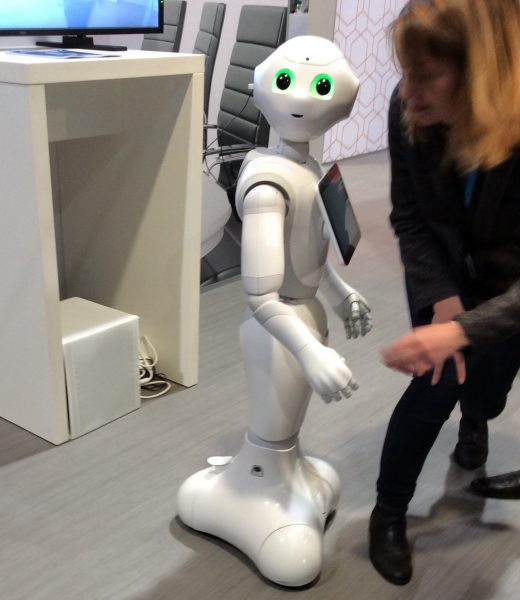
In the shadow of AI enhanced chatbots, agentic AI and generative Ai, the developers make considerable progress in robotics. The humanoid versions like from Persona AI will surround us in months, or maybe a few years from today. Investors believe it is rather sooner than later. There are many use cases for humanoids that may take over dangerous, hazardous or unhealthy tasks from humans. But even simple tasks like carrying home most of our shopping could be done for us by humanoids that follow you around the shopping mall and home. This would be a kind of personal assistant. I even thought of my humanoid robot to walk my dog on some occasions on the usual trail. 

Welcoming visitors at the doorstep could be another function to delegate in offices or even in private homes, although as a sociologist I would recommend to carefully check the sorting algorithm(s) applied to avoid unpleasant situations. The administration of medication might be another option, if only we could trust that the correct dosage would be applied.