Employment is back on top of the agenda. Not as we used to think, though. Previously unemployment had dominated societal concerns. Now it is the lack of persons seeking or available for employment. What has happened? The Covid-19 crisis has demonstrated the need of persons qualified to work in the health sector. From health care and urgency care, we are short of personnel in all these fields, everywhere. 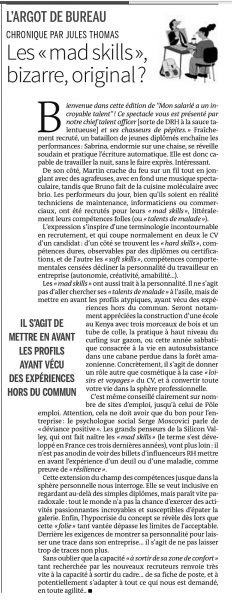 Then we discovered the role of essential services and the need to equip crucial infrastructures like ports, transport, shops, schools and ambulances with service persons resisting despite work overload. Larger cohorts leave employment to retire, some even early due to illness or burn-out. Additionally, war is back in Europe. Military personnel is in high demand again, drawing largely from younger cohorts. The need for conventional weapons. long thought to be oblivious, is forcefully back on the agenda.
Growth potentials are everywhere. However, these pre-modern facts encounter a population in the western democracies that insists on new approaches to employment. Beyond hard and soft skills, recruiters seek atypical skills, competences and trajectories. A parachute jump from an airplane, cooking and dining experiences, caring spells, periods in self-employment, all are directly or indirectly relevant for employment and teamwork. So, what is your specialty? Collecting stamps? Surely you are able to spot tiny differences in images with specific content. Fake news and fake image detection or video surveillance is in high demand, just try an application and discover the employment potential of your MAD skills. Sounds crazy? No joke. Skill needs are everywhere, just give it a start again and again. Read a serious newspaper regularly (here LeMonde 19.1.2023) for inspiration.
Deconstruction
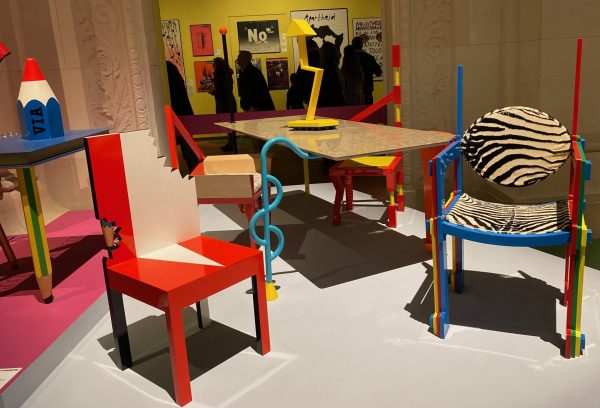
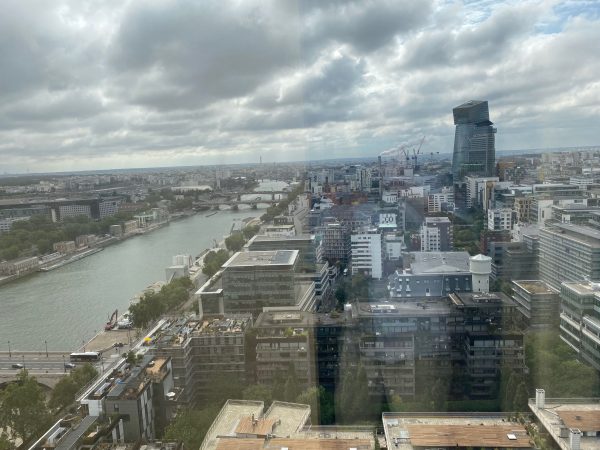
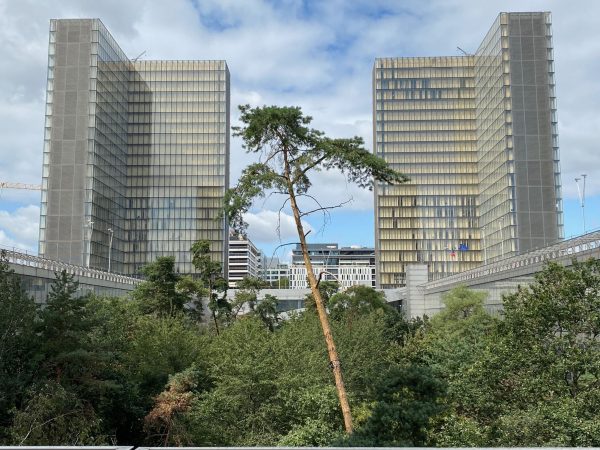
Deconstruction is a powerful tool or even method. Beyond imagineering, deconstruction in the literal sense means take to pieces. In most cases a physical object consists of several objects or parts. By deconstruction we attempt to understand the whole object as the sum of its parts. Before a new product or design is created, many scientists, engineers and artists start to deconstruct existing artefacts. Understanding how the object is assembled, for example, allows you to play around with pieces and maybe come up with an alternative way of constructing the object. The architecture of “deconstructivsm” has left us fantastic buildings. In furniture design there are also nice examples of deconstruction. Paris is a good place to study deconstruction (Explained), perhaps many still read Derrida there. It is a fruitful method beyond its engineering sense for example in law, literature or many other social science disciplines. If you are not mad yet, visit the MAD in Paris to see examples of deconstruction or construct your own deconstruction. Both have a dialectic relationship to each other anyway.

Sublime
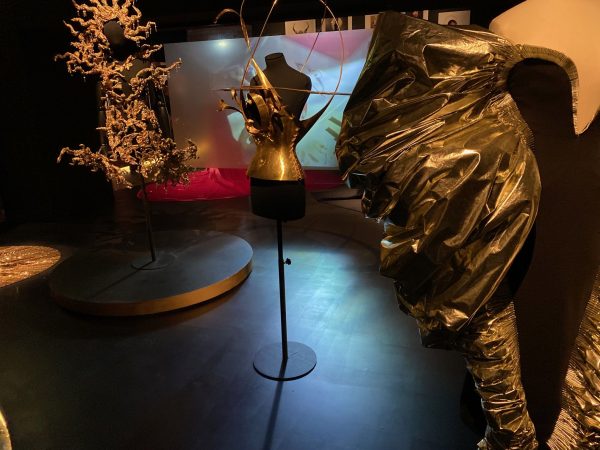
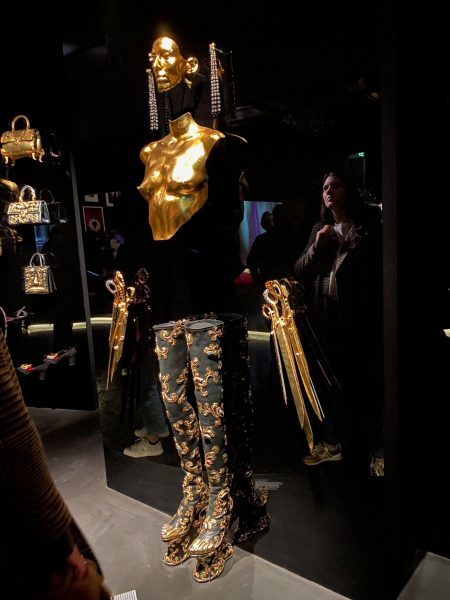
The exposition of art work in the MAD “Musée des Arts Décoratifs” in Paris is sublime. Growing out of fashion design into the work of art can be a process of sublimation: passing from one state of designing one product to producing artwork. The intermediate state of artefacts created for designing a product, like the drawings of fashion designers or scenery and costumes in theatre and operas, are often less visible or subject of exposition. Objects become subjects. A trend in recent expositions is to devote more space to the applied arts like stage design, costumes as well as products of everyday use. “Bauhaus” has a lasting effect.
Elsa Schiaparelli has achieved this sublimation. Starting with extravagant fashion design, her designed fashion objects were adopted by Picasso before she developed into the sublime state of artist with her artefacts herself (see below). Now in this process of subjectivation she is the prime subject of an exposition herself. The combination or arts and crafts (Kunsthandwerk) has been always present in art history. The challenge of concepts combined with arts is more recent or just more explicit since the late 19th and 20th century. Being able to live from your artwork is still a challenge, though due to “Mäzene” and state subsidies it is more feasible to follow artistic trajectories. 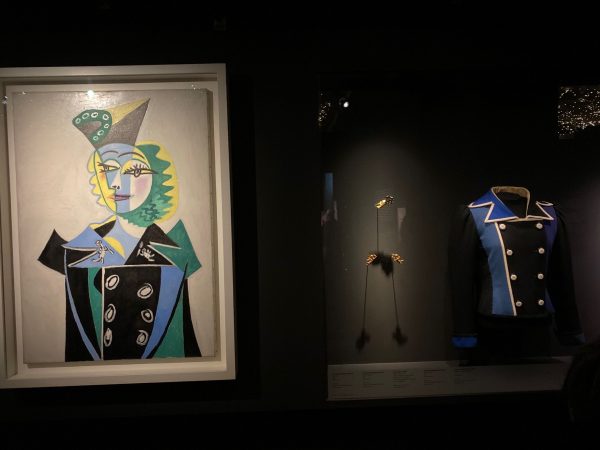
V for Value
Value in its singular form refers for most people to the value of things. Since Karl Marx we have been fighting about the surplus value of a worker’s work. Nowadays, we have to deal with speculation bubbles on the value of property or even basic elements of nutrition (Water, wheat, energy). Max Weber introduced us to the rigorous analysis of value judgements. In political science the plural “values” refers to basic human rights as fundamental values of humanity. Many other associations with the letter V pop up and arouse emotions: victory, video, view(s), vision, visit, voice, vote, vulnerability.
Creating lasting value seems to transform itself into part of our system of values later on. The longitudinal dimension of value is often neglected, particularly in the short-term focus of much of economic reasoning. Value over time, in addition to the distribution question, or as part of distribution over time, excites researchers of inequality and policy design for generations. Approaching the end of the alphabet increases the stakes of the “endgame”, it seems. Value for me, might not be of value for others. I hope you have found a person that values much of the same as you do yourself.
Interpersonal value, value exchange and intertemporal value are own fields of research. Since the Scottish enlightenment and Adam Smith’s work on “The theory of moral sentiments (TMS)”, reciprocity in value exchange has been an issue, well before the utilitarian turn in his own writings on “The wealth of nations”. Even Adam Smith refers to happiness and interest as a kind of value and “very laudable principles of actions” (part VII.ii.3.15 in TMS).
Children learn and experience value as natural part of growing up. Material things which you valued highly as toddler, you are ready to trash or exchange a couple of years later at much lower prices. Above which monetary value are you ready to trade in your humanitarian values? Never? History and bargaining theory is full of experiments and experiences that teach us otherwise. Corruption is the prominent example of exchanging or trading material value against immaterial values. Reading Kwame Anthony Appiah on “Experiments in ethics” is highly instructive. This bring me back to the economist joke I used to tell in lectures: You know that you’re an economist, if you ask your child, whether s/he prefers 20 Euros in cash, a trip to an adventure park later, a basket ball set or a pizza party for the next birthday. Economists do all this to find out about the value of each item, the preferences, the time frame of delayed reward or discounting of value also called the net-present value. Reading up to here is equal to the value of, maybe, an online bachelor in economics or social science. In your very own life review of learnings you then can estimate the value of your readings to you, your community or humanity. Alternatively, enjoy the joy of just living in peace with optimism. 
N for Nature
The first association with nature for me is the nature surrounding my childhood. Rivers, forests, vineyards, mountains. Maybe a little bit of German romanticism surrounds this. I still enjoy occasionally listening to some nature romantic songs (Lieder) from Schubert, Schumann, Flotow or Mahler. Beginning with adolescence natural sciences took over, but what does natural really mean in the natural sciences. In the “Encyclopedia Britannica” the term natural has already been dropped. What has been referred to as natural sciences is just found under the term sciences. The social sciences or psychology are not included under entry of sciences. One of the high reputation scientific journals is still named “nature”. Only a small fraction of the papers deal with what ordinary people would associate with nature. The nuclear fusion or nuclear energy research and applications in practice figures still prominently in there. Ever since Tschernobyl, Fukushima or Hiroshima, horrific dangers are associated with nuclear energy. The power plant of Saporischschja in Putin’s war, dominates public concerns in 2022. The natural sciences frequently are certainly not researching in the interest of nature. Hence, the social sciences need to deal with the social consequences of (natural) scientific advances. Science and technology have an intrinsic link to each other.
The loss of biodiversity is the most obvious demonstration of how cruel our own species is towards any other form of live. Not only is demography reminding us that with 8 billion of us we might further contribute to our own overpopulation, we might sooner or later destroy the whole planet either slowly with polution or through weapons of mass destruction. Poor nature, instead of pure nature is our destiny. Our western lifestyle is not sustainable and we have no right to impinge on the rights and resources of future generations of us or those who have not poluted the planet like us in other parts of the world. So, when did it all start to go wrong? Probably our creed for more of everything has been nurtured for far too long. Less is more has to replace it somehow. This is also part of our nature. 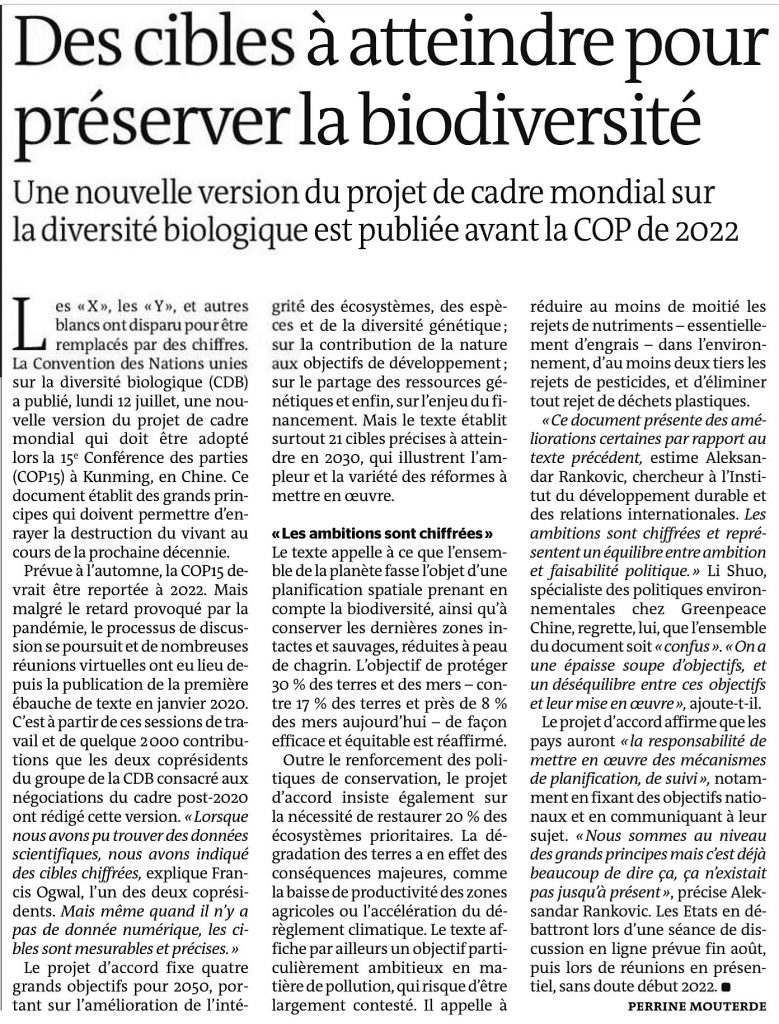
E for Enterprise
There is a new start-up scene in development in Germany. Interesting to witness the new entrepreneurial spirit. Many of the youngsters grow out of their peer community, wanting to try new ways of working and living together. The new bottom-up or grassroots form of growing a business out of a subculture seems to be an adequate response to the growing diversity of societies and easier ways of community building through online social media. Name it “reach” today, it is similar to what you previously called having a customer base. The new element refers to a blending of cultures. Learning through being online connected to the world, yes, the whole world, allows wide-spread influences from other sub-cultures, be they American, Asian or African. The young are open-minded to new stimuli like “Ikigai” from Japan and, of course, the life histories of founders and individual biographies from entrepreneurs like the legend of Steve Jobs, Apple’s legendary founder. Imagineering has become part of the movie-influenced influencers. Short clips out of a longer story build communities. The witty comment, like at school, gets more attention than the long boring story of the preacher, teacher or the mansplainer. The experience of “flow” is all around these communities and this creates the specific magic of the start-up scene. They take each other to new levels, mutually, reinforcing their preferences and life-styles. They are well aware of the risks they are taking. “Keinhorn” German short for “not an Einhorn”, the one billion value threshold for super successful enterprises taught them crucial lessons. The “ecology of organisations” which I referred to in my courses at the now renamed “Constructor University” previously “International University Bremen”, then “Jacobs University”, (let’s see what comes next?) is an important complementary research tradition to assess the “survival” of enterprises. I still recommend this University, which I quit to start new endeavors. It carries in its several  “names” the important message:
start, fail, change, (repeat). 
C for Corruption
After the association of C with crises of corona, climate, consumption and the church we have to come back to one of the original links: corruption. Beyond the work of describing and analysing corruption from the time of the Roman empire to the Americas of today (Link) by Thomas Strunck, the re-reading of Niccoló Machiavelli is recommended by a number of scholars (in latin here). Also, in Asia the work and writings of Niccoló have been rediscovered (Link). “non creando in veritá le cuose nove”. It needs “una ferma experienza”. As people don’t just believe in the truth of new reasons, a firm experience of them is needed. New princes cannot just pray, they have to install a new vision or belief with force (p.25) by literally forcing persons (forzare) or “fare … credere par forza” stated in Chapter 6 of THE PRINCE. If we just complement the term force by force of persuasion, or money as surrogate for both, the writing of Niccoló speaks directly to corruption in our times. History does not repeat itself. However, the history of ideas still teaches “some dogs old tricks” until they are found out by investigative journalism and an independent judiciary, which both did not exit at Niccoló’s time. (inspired by Chaudhuri, S. & Chakravarty, P. (2022) Machiavelli Then and Now: History, Politics, Literature. Cambridge University Press.) 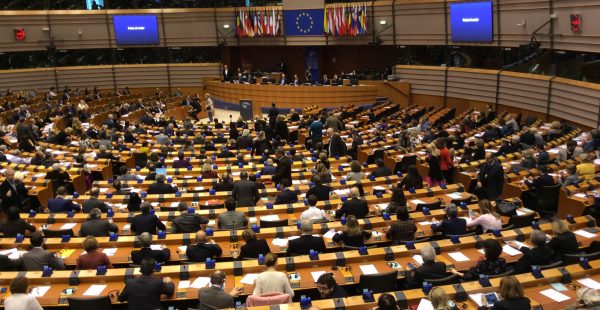
Corruption
There is an extensive literature on corruption in the social sciences. However, the evil practice continues to ruin personal lifes, institutions and countries. Psychologists put corrupt persons in the psychopath life trajectory (Link) or explain corruption as result of the triad of personality traits for persons scoring high on not only psychopathy, but also on narcissism as well as Machiavellianism (Link). Some important lessons derive from a fast reading of the scientific literature. (1) Corruption develops over a period of time. The creed for ever more power seems a strong driving force. (2) Some personality traits are more likely to deteriorate into corruptive behavior and (3) institutions need to monitor carefully leadership practices and guard against abuses of power already at small instances like threatening with violence or dismissal. (4) Countries can do a lot to limit corruption through adequate legal systems, most notably through a truely independent judiciary as well as the need of investigative journalism to accompany potentially illicit behavior. All this comes at a cost, but without it democracies are at high risk. The European Union has to strengthen its defences in this respect to remain a credible institution, just as much as a great number of Member States. Not only the World Bank or OECD need to be monitoring countries, but we all need to be better equiped to read the early signs of corruption. Whistle blowing and the protection of these persons is part of an effective anti-corruption system. Early signs of “nepotism” and “favoring of friends” in the workplace are easy to identify, but taking measures against it, needs firm committment on the part of advisory boards, colleagues at work or other interested parties like stakeholders or investors in case of private firms (wirecard) . (Link to NZZ). 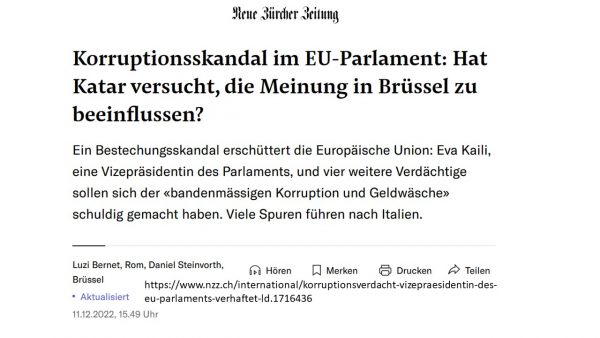
Kritik der Kritik
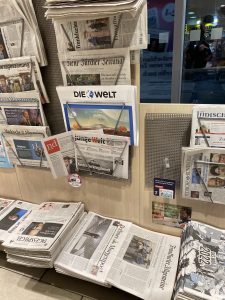
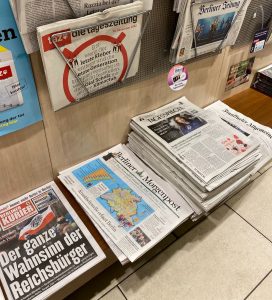
In Berlin türmen sich als ökologisches Desaster die nicht verkauften Zeitungen auf. Darunter gerade der in neuer Aufmachung erscheinende Tagesspiegel. Mal gespannt, ob dieses teure Experiment gelingen wird. Mit sorgfältig recherchierter Kritik des kulturellen Schaffens und der etablierten Häuser rühmt sich der Tagesspiegel nicht gerade. Vielleicht ist das ein Grund, warum die beständig weniger werdenden Zeitunglesenden ebenfalls auf andere Medien umsteigen. Eine Kritik, wie die von Ulrich Amling im Tagesspiegel vom Dienstag 6.12.22 Seite B24 braucht wohl keiner. Soll er doch besser gleich Bratwurst essen auf dem benachbarten Weihnachtsmarkt. In dem neuen Format des Tagesspiegel finden sich die Kritiken eh jetzt ziemlich weit am Ende, wo der eilige Lesende meist nicht hinkommt vor dem Einschlafen. Ich würde eher davon ausgehen, dass solche Kritiken etablierte Lesende abschrecken. Für Berliner Schnauze oder Wutbürgerniveau im Kulturteil muss ich kein Geld bezahlen. Die internationale Besetzung und Ausrichtung mit Regie Satoshi Miyagi erlaubt Berlin internationale Aufmerksamkeit zu erlangen jenseits des Berliner Inner Circles von Freund- und Feindschaften. Auf der Webseite der Staatsoper lesen wir: “Ein japanisches Inszenierungsteam um den Regisseur Satoshi Miyagi taucht Mozarts »Mitridate« in ein zauberhaftes Ambiente …”. Das lese ich dann umformuliert im Tagesspiegel auch genannt Spitzel: “Unter den Linden taucht derweil ein japanisches Team um Regisseur Satoshi Miyagi “Mitridate” in Ströme von Gold”. Platter gehts nicht. Zeitung ist halt meistens 2D und nur wenigen gelingt es kulturelle Events ebenso plastisch darzustellen, wie sie eben auf der Bühne wirken. Tolle Einführung vor der Oper im Foyer übrigens. Wer Internationalität und Interkulturalität schätzt kommt hier voll auf seine Kosten.
Die Stapel Tagesspiegel als Altpapier, die zurzeit täglich entsorgt werden müssen (Foto vom 6.12.2022 18.26h am Südkreux), sind ein weiteres tägliches Ärgernis. So werden bestenfalls fake-news über eine Tageszeitung selbst produziert. Branchenkenntnis über Zeitungsmärkte beklagt das schleichende Rückbau des Mediums. “Zwar setzte sich die Erosion der Absatzzahlen fort, aber sie verstärkte sich nicht. Bei den Regionalzeitungen nahm die Zahl der Abonnements im Westen um drei Prozent auf 7,55 Millionen ab.”(BDZV Relevant 2-2021 S.25). Oft sagen Bilder mehr als Worte und dabei ist goldfarbenes Lametta in der Weihnachtszeit in der Staatsoper vielleicht doch sehr passend.
Marx-Wagner
Begleitend zu den Ausstellungen zu Karl Marx und Richard Wagner fand eine vom DHM organisierte Vortragsreihe statt. Die Links (hier) zu den Hördokus sind eine anregende Erweiterung der Ausstellung und stützen die These der Verbindung zwischen Karl Marx und Richard Wagner auf einer abstrahierenden Meta-Ebene. Die Vorträge, Gespräche und Diskussionen informieren und vertreten wissenschaftlich fundierte Thesen. Die müssen gerade nicht von allen geteilt werden, aber eine Haltung zu dem Thema haben die meisten Menschen in der Welt, besonders wenn wir an die Millarden von Menschen jenseits von der westlichen Welt denken. Es ist also auch an uns, diese Diskussion über den Kapitalismus zu führen. Hören wir mal rein. Alle dauern 1h-1.30h!
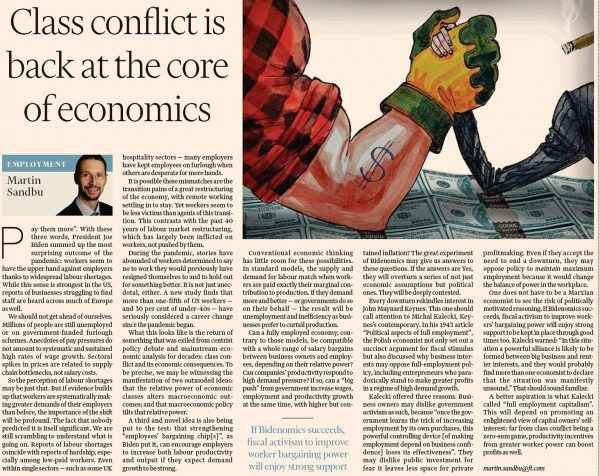
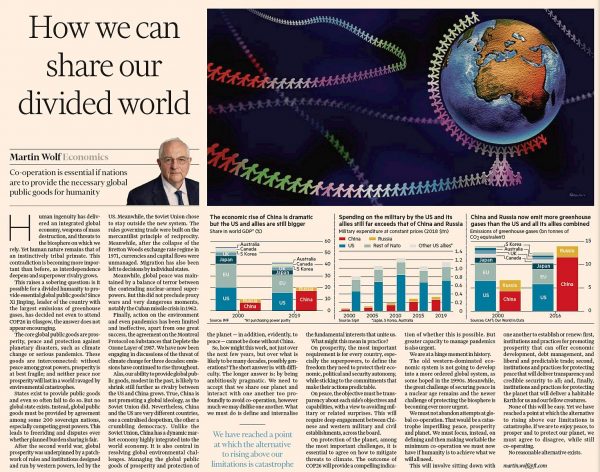
Einleitung, M&W Kosky + Bisky, M&W Nietzsche, M&W Mahatma Gandhi, M&W Viktoria Kaiserin Friedrich, Ein Artikel aus der Financial Times von Martin Sandbu vom 18.8.2021 und Martin Wolf vom 21.11.2021 ergänzen die Diskussion: Wenn der Kapitalismus weltweit gewonnen hat, was war dann noch mal der Wettbewerb? Bitte öffnen Sie jetzt ihren Computer, Sie haben 3 Stunden Zeit für die Beantwortung. $???$ Danach speichern Sie bitte das Dokument in der Cloud und nehmen es zur Evaluation nach 10,20,30,40 Jahren wieder hervor. Hat sich ihre Meinung über den Sachverhalt zwischenzeitlich verändert? THX for your feedback.