Construction

Construction as an industrial sector was growing strongly in the last decade. Corona crises, supply chain disruptions have slowed growth in the last two years, but the sector was still growing in terms of employment. The topic of skill and employee shortages hardened from year to year. In March 2023 the sector has more time to reflect on the somehow rapid, if not sometimes chaotic growth of the previous decade. The macro-economic scenario has changed now. Following on supply chain disruptions, we saw the high inflation rates of raw materials. The war of Russia against Ukraine caused energy prices to soar and eventually come down again. Latest worry is the increase in interest rates to finance construction projects of public, private and the business sector.
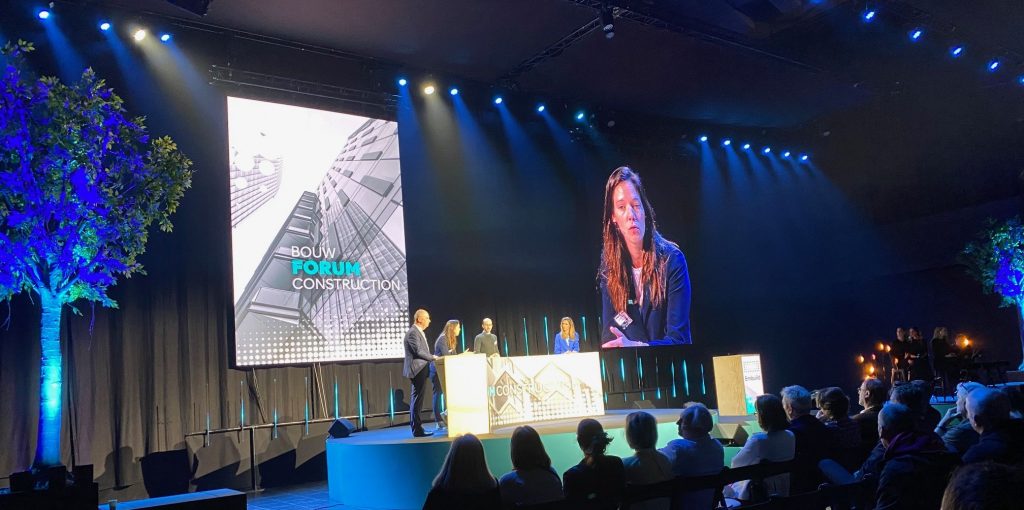
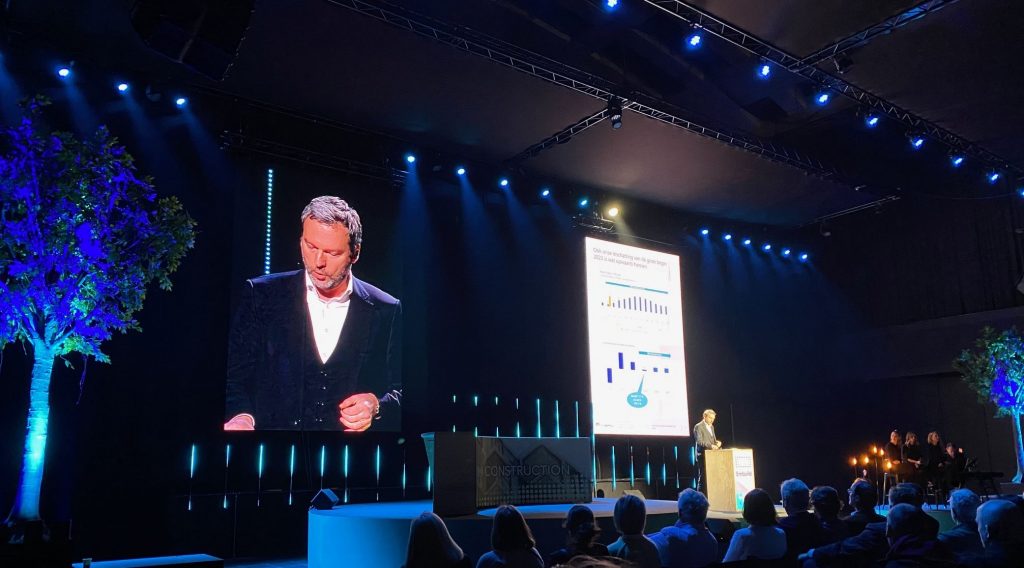
The whole sector is known for its economic role of forerunner of economic cycles, up or down. So, what are the prospects? Not so rosy, as the experts explain for example on the expert forum of the Belgian construction forum. The official from the Belgian National Bank announced a rather bleak outlook for the sector. New construction is stalling, but the renovation of buildings, especially for the purpose of reducing energy consumption is still strong and growing. Long-term reduction of emissions keeps the sector busy, thanks to the EU green deal in my opinion. The public, private and business investments in buildings all keep growth from turning negative. 2 big worries remain: (1) skill shortages and the lack of employees signalled in job openings in the sector is high and still rising; (2) the scarcity of women employed in the sector is still trailing most other sectors. Most companies have seen earnings grow over the last decade, sufficient time to build up reserves for the tougher quarters to come. Skill shortages and gender biases are harder to overcome. The Construction Forum in Brussels addressed both topics and tries to convince employers and the younger generation. Construction companies have to work on their male-dominated image was one of the take home messages Hélène de Troostemberg, the Director of Build Up pronounced.
It is not certainly not enough to have a woman as moderator of a panel and an all-female singers group accompanying the presentations. Women as architects, technicians and builders will make the sector even more attractive for the next generation of men as well. Aging of employees in the sector is another tough issue waiting for innovative solutions. Digitalisation of every step in the value chain is an additional necessary step. The leadership and trade unions in the sector are well aware of these facts. Maybe next year women engineers will pilot the robotics demonstration rather than being in charge of building a nice atmosphere with their songs. I must admit I liked the intro song to the Forum: “We build this city on rock ‘n role”, but I am less sure whether rock ‘n role will solve the gender and recruiting issue of the sector. However, naming and framing the problem(s) is already part of the solution.
 

20s

In retrospect from the 1930s and in prospect from the 1910s, the 1920s may well be described as “The tumultuous Twenties”. Several other summary notions are attributed to the 1920s. “Les années folles” in the French speaking world, “The Jazz years” within the U.S. or the “Wild 20s” in Germany coined the decade after the disillusion of the 1st world war. The economic and cultural revival after the period of atrocities has seen thriving city centres and comparatively little economic hardship until the Wall Street crashed on October 24th in 1929 the so-called “Black Thursday”. The party was suddenly over and a lengthy economic crisis spread globally. It was within this free spirit of the 1920s that the Fascist counter movements of the 30s started to take roots.
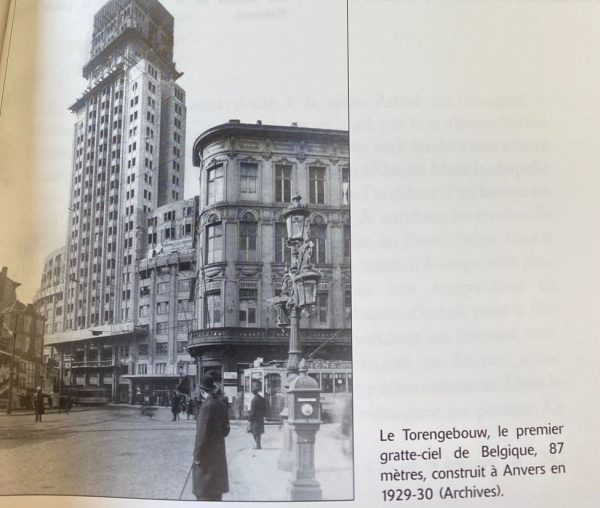
The 20s saw the skyscrapers soar and the credit-financed speculation was at its highest. Pierre Boudon (1991, pp. 137) characterises the architecture of the 1930s as “l’inversion des signes”. The Bauhaus of the 1920s was later forced into emigration. The film of F. Lang “Metropolis” (1927) prolonged the constructivist lines of the 1920s to a haunting vision of big cities with its daunting acceleration of economic and cultural experiences.
Walter Benjamin later referred to the method of technical reproduction as one of the major foundations for the mass movements and mass culture, which turned the relatively prosperous early and mid 20s into the disastrous 30s. Indeed, many scholars combine the 20s and 30s into one historical period as the rise and decline between the 2 world wars of the 20th century.
Certainly in terms of economic development many countries witnessed a steep rise in prosperity in the 20s followed by deep recession in the 30s. What went up in spectacular terms in the 20s, economic development, democratic participation, came down in the next decade due the rise of Fascist movements.
100 years later in the 2020s we still struggle with many of the same issues. Poverty and “Existenzminimum” were topics of the 2nd International congress of modern architecture in 1929 in Frankfurt. This reflects the lasting need to address “social issues” throughout decades, if not whole centuries of mankind.

Aphorismen L3

“Was für Aussichten würden wir bekommen, wenn wir unser Kapital von Wahrheiten einmal von demjenigen entblößen könnten, was ihnen nicht sowohl wesentlich ist, als vielmehr aus der öfteren Wiederholung zuwächst.“ (Lichtenberg S. 50). Die Wiederholung ist eine starke Lernmethode. Sie wird seit Jahrtausenden erfolgreich eingesetzt. Alle Religionen bedienen sich am liebsten täglich dieser Methode, um sich der Treue der Anbetenden zu vergewissern. Der Glaube im Glauben ist: Oft genug wiederholt ist gut verinnerlicht. Dabei bleibt ein Glaube ein Glaube, selbst bei ständiger Wiederholung. Lediglich so manchem Mensch erscheint durch regelmäßiges Wiederholen die Botschaft als verinnerlichte Selbstverständlichkeit. Wahrscheinlich ist es beruhigender, sich nicht täglich zu fragen, ob das 1x,2x,3x mal tägliche Einmassieren von Chemikalien auf Zähne und Zahnfleisch wirklich nachhaltig gesundheitsfördernd ist. Alleine dem Markt wollen wir das Thema nun auch nicht überantworten. Warten wir weiterhin auf die nächste entblößende, hoffentlich wirklich unabhängige, wissenschaftliche Studie dazu. Mit den Pestiziden in der Ernährung hat das bekanntlich nur sehr bedingt funktioniert. Wie schön, dass alle Jahre wieder Frühling kommt und die finsteren Tage hinter uns lässt. Wiederholungen lassen Routinen entstehen, die uns das ständige Hinterfragen ersparen. Rasch gehen wir über Fragen von Kindern hinweg: Muss ich heute in die Schule gehen? Dabei ist Hinterfragen von Wiederholungen ein wichtiges Lernen, dem Mitläufertum entgegen zu wirken.

Alkoholismus

Alkohol ist eine Droge, da Alkohol abhängig machen kann. Die Bewusstseinsveränderungen können beachtliche bis extreme Ausmaße erreichen. Das wissen wir alle und zwar seit Jahrhunderten. Mäßigung bei Rauschmitteln ist nötig, aber schwer erlernbar. Etwas Genuss ist gesellschaftlich nicht nur toleriert, sondern gewollt zur Förderung der Geselligkeit. Zu viel Genuss beeinträchtigt meistens andere und wird dann zu einer schwierigen Problematik. Ärztinnen, Psychologinnen und andere Heilberufe stehen oft hilflos, wie auch das nahe familiäre Umfeld, vor dieser Situation. Selbst neuere Studien weisen darauf hin, dass die Versorgung dieser Patienten (UK), bestenfalls in der Hälfte der Fälle als gut einzustufen ist. Die Studie zu Großbritannien beschreibt gleichfalls die Krankheitsgeschichte und -versorgung als „eskalierende Tragödie“. Für die meisten anderen Länder liegen keine wirklich guten Daten vor, die weder einen Handlungsbedarf noch auf einen gesellschaftlichen Gestaltungswillen hindeuten würden.
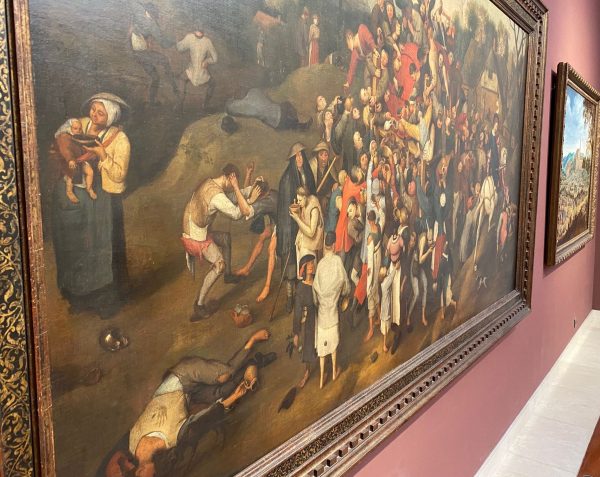
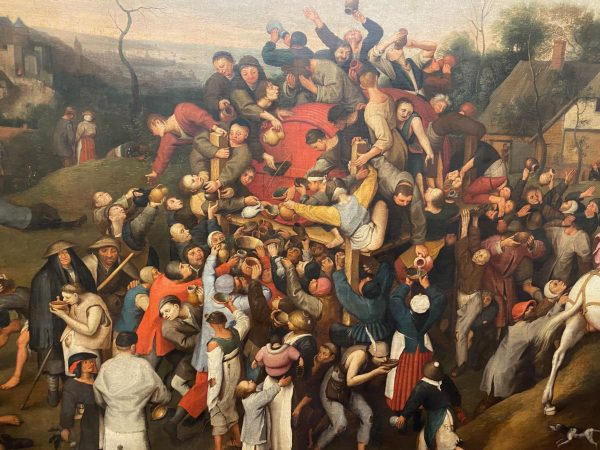
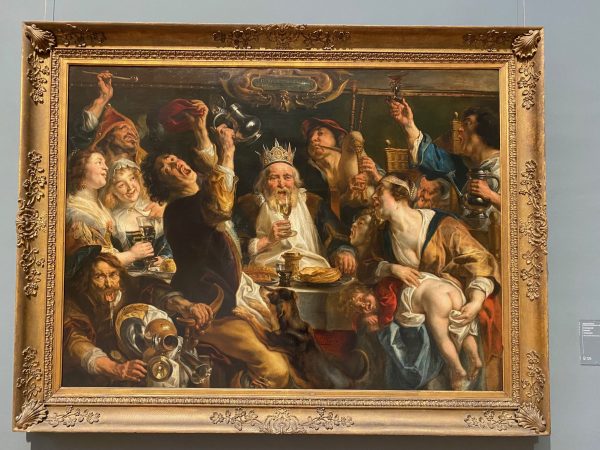
Die Radiosendung zum Thema „Umgang mit Alkoholkranken“ und die Initiative von Sänger Max Mutzke, „Kindern suchtkranker Eltern eine Stimme geben“ beschreibt eindrücklich die generationsübergreifende Bedeutung von Alkoholkrankheit. Alkohol ist eben nicht nur das Problem der betroffenen Person. Ein ganzes Umfeld ist betroffen. Das Problem wächst sich meistens aus zu einer Problematik für das weitere familiäre Umfeld, Freundeskreise und ArbeitskollegInnen. Es ist erstaunlich, dass wir seit Jahrhunderten keinen anderen Umgang mit alkoholbasierten Rauschmitteln gefunden haben, als alles erlaubt oder alles verboten, außer der Altersbegrenzung für Kinder und beim Autofahren. Der Maler Bruegel sah das wohl ähnlich. Den St. Martinswein kann sich heute jeder im Laden um die Ecke selbst kaufen. Mäßigung im Umgang mit Drogen ist nach wie vor ein schwieriger Lernprozess, für Einzelne (Jordaens – Der König drinkt!), wie für die Gesellschaft. ( fast betrunkenes Video Alko VLC Bruegel MRBA Bruxelles.jpg zur Bildexploration).

Narrative economics

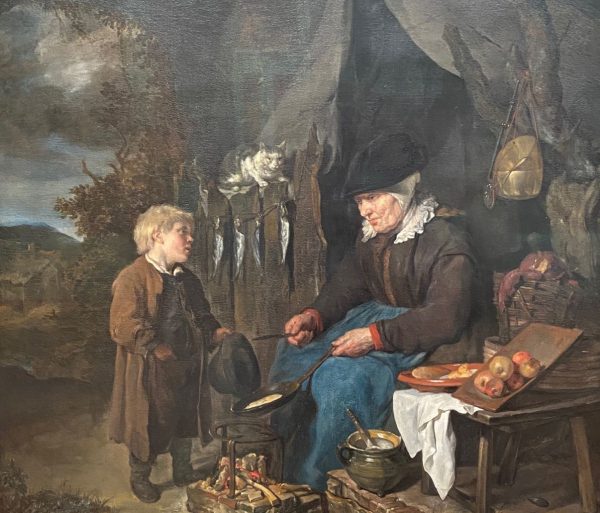
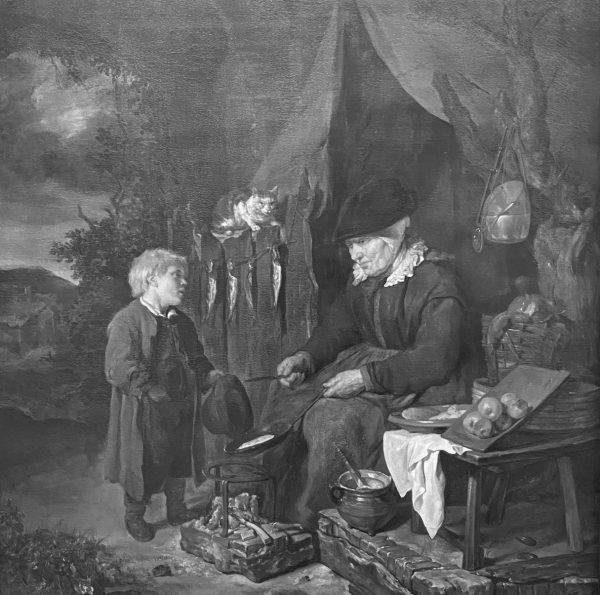
Narratives have been with us as long as mankind exists. They just take different forms and content nowadays. Whereby narratives have first spread orally, then much later through written words, images and movies, they are forceful ways of communicating. Robert Shiller wrote a good story about narratives related to the field of economics. Referring to the writing of the polymath David Hume (1742), main proponent with Adam Smith of the Scottish enlightenment, contagion like in pandemics is mentioned for the first time to explain that “the multitude will certainly be seized by the common affection and be governed by it in all their actions”. (Shiller 2019, p. 58). In order to understand narratives going viral Shiller mentions the importance for narratives to be embedded in “narrative constellations”. Holding truth against spreading false narratives might not be enough in itself. Strong, catching narratives seem to bypass or override even truthful information. Additionally, narratives never die, but rather offer opportunities for repetition. On content of economic narratives Shiller exemplifies stock market panic, consumerism, financial stability, automation and AI fears, speculation bubbles, evil business and labour unions. Topics like lazy unemployed persons, too early entry into retirement, too late entry into the labour market for youth, women or migrants, all have endured stigmatising narratives across time and/or across countries. With emotional and powerful economic narratives all around us, trust and authenticity become a very important meta-currency. The instantly printing camera now serves as proof. Beware of the scenery, actors and action chosen. Medieval painter Gabriel Metsu (1629-1667 Leiden-Amsterdam) had chosen the economic narrative of the “women baking pan cakes and the child as beggar”.  Ending up in a museum instead of the White House is probably the opposite of going viral. The same Photo in black and white might have more of a trustworthy documentary character than the suggestive colours.

Economic Narratives

Joseph Stiglitz (2003) provided a detailed description and interpretation of the economic history of the 1990s in his book on the roaring nineties. As a member of the Clinton Administration serving as a Chairman of the Council of economic advisers, he had first hand access to the information, debates about interpretations and conclusions drawn during the period. In the preface (2003, p.XII) he provides some of the lessons this work has provided him. “Today, the challenge is to get the balance right, between the state and the market, between collective action at the local, national, and global levels, and between government and non-governmental action. As economic circumstances change, the balance has to be redrawn. Government needs to take on new activities, and shed old ones. We have entered into an era of globalization in which the countries and peoples of the world are more closely integrated than ever before. But globalization itself means that we have to change that balance: we need more collective action at the international level, and we cannot escape issues of democracy and social justice in the global arena.”  The surprising approach by Stiglitz, as a winner of the Sveriges Riksbank Prize, to present no data in tables or figures demonstrates the need for telling convincing stories beyond throwing images and shuffled data at your audience. However, this is probably only feasible once you won a quasi-Nobel prize to not lose credibility among economists. Nevertheless, the issue is larger. Stiglitz manages to address the much larger audience of non-economists who construct or constructed their own “collective memory” of the legacy of the nineties as the “global 90s”.
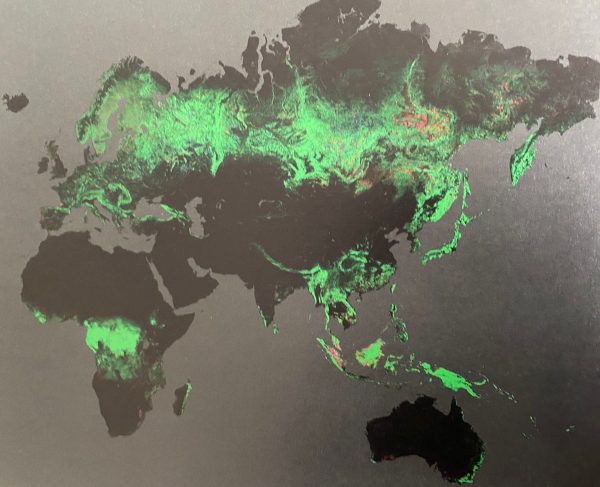
The narrative of the 1990s grossly neglected the value of the biosphere. Asymmetric information (his shared prize winning issue) was and is still used in the market of natural resources to keep polluting the planet and push ahead with careless deforestation. The Exxon case is just one piece in the puzzle of asymmetric information and misinformation. Misguiding economic narratives play a powerful role. Maybe we need to write more about the “roaring failures” of economics and public policies across several decades in the 20th century. (red dots = forests lost on our planet A early 2000s, and there is no planet B)

Bio-medical-sociology

In family histories we like to look on tree-like linking structures. Most frequently the choice is the descendant perspective (Top down). X, Y, Z have been the children of A and B and so on for a couple of generations. Bottom-up perspectives are equally feasible and modern patchwork families have more widespread representations of their families. Those representations were easy to do as families were lifelong bonds. Shorter family bonds, previously mainly caused by pre-mature deaths, are more common as people might have different partners and off-springs at different periods of their life course. Drawing family trees then looks more like a network structure of several families. History and literature is full of stories of how families aimed to keep their genealogy simple to the outside world. Modern days are no exception to this. Law had to adapt to these societal facts and changes thereof. Comparing decades over the last century there is, in my view, the remarkable trend to allow for more complexity in family histories, even after the 60s leading to many complete ruptures of family ties and links throughout the 70s and 80s.
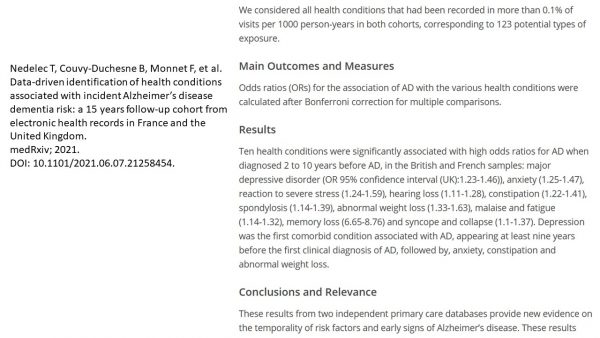
With reducing fertility rates in most, not only western regions of the world, medical demography is back on the agenda. Similar to family trees, new forms of identifying promising pharmaceutical products have moved to more data-driven disease insights. Historically the local medical doctor had an overview about the likelihood of diseases following family’s medical histories over generations. Data-driven analyses, supported by data analytics and/or AI support, can learn permanently about potential and actual risks. New links of diseases are discovered this way extending the family doctor’s view of risks to watch out for in patients. Additional remedy and marketing potentials of existing drugs are also detected this way, beyond anecdotal evidence. Research published in the “Journal of biomedical semantics” by Vlietstra et al. (2020) classifies disease trajectories to construct knowledge graphs of biomolecular interactions. What previously a medical doctor in region could infer from his medical records in a less systematic way, can now be analysed on big data sets of countries, continents or even the global scale. Data is knowledge, and some already know, that this data-driven knowledge is worth a lot of money. Linking previously and seemingly unrelated facts or events, just like becoming aware of more complex family trees through DNA-analyses is the medical part of history. How we deal with this as families or societies as a whole, is the trickier part. Structural changes of societies are marked by decades-like changes, but specific events like “Fukushima”, Tschernobyl or other man-made rather than natural disasters have created new forms of contamination and the spreading of it. In addition to family trees we need broader consideration for knowledge bases to demonstrate, for example, the spread of cancer in the networked society. Additionally this evidence should have a stronger recognition in courts as prove of contamination lines. Statistical reasoning is more likely to become court-relevant. Hence, train the legal profession beyond what “statistical discrimination” is like. Causal mechanisms are manifold. Some are more likely than others. Semantic knowledge graphs remind us of the presence of reverse causality many relationships. Scientists need an optimistic state of mind to abstract from many intervening processes on health, be they tiny micro- or bigger macro-level societal effects.

Flotow Europa

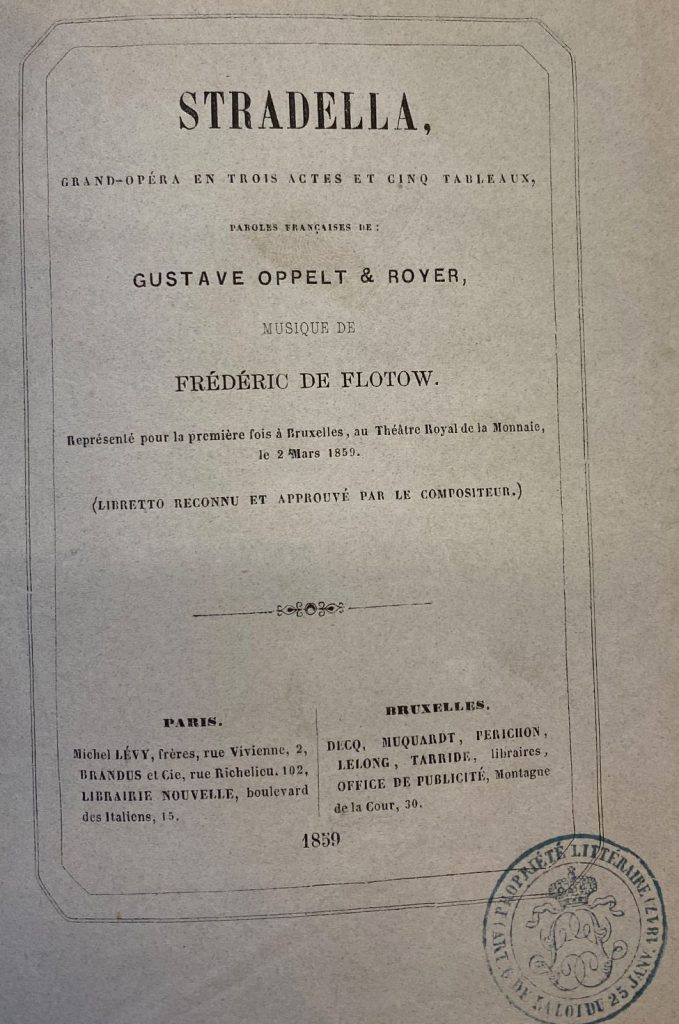
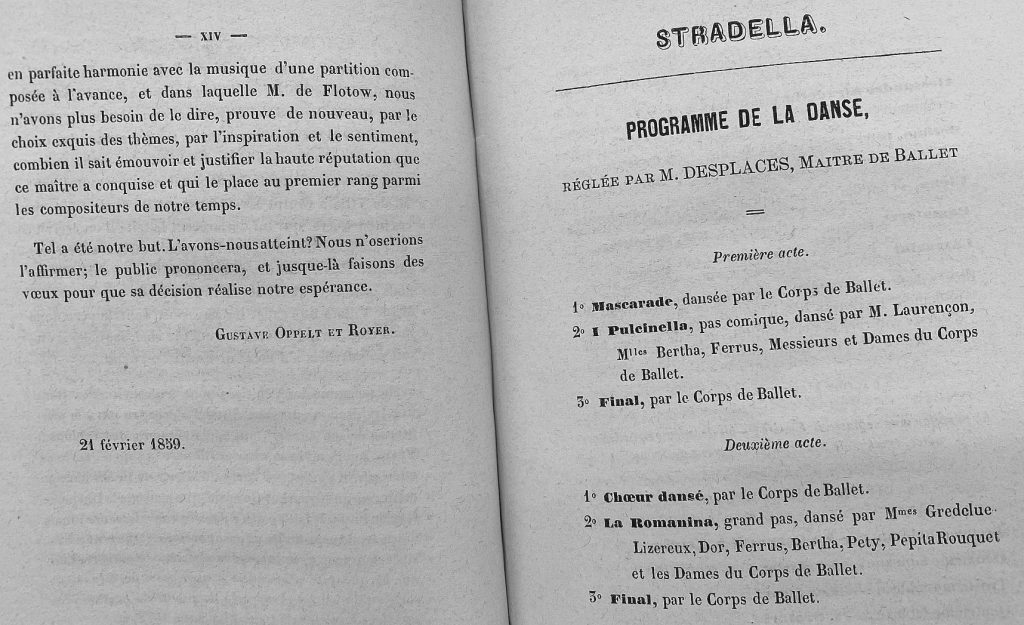
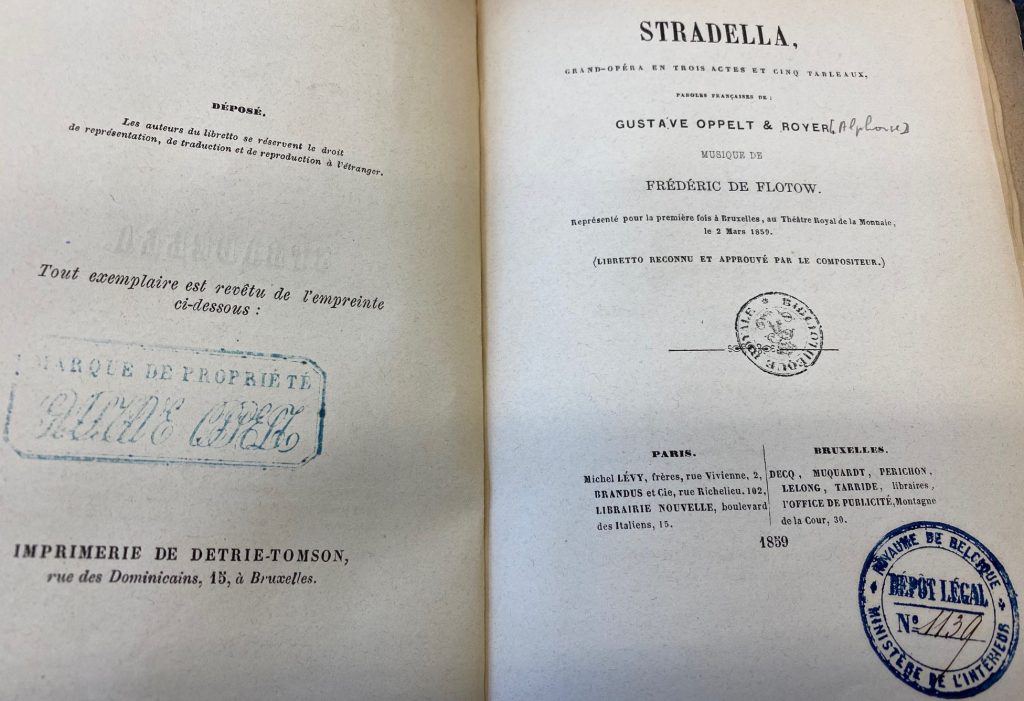
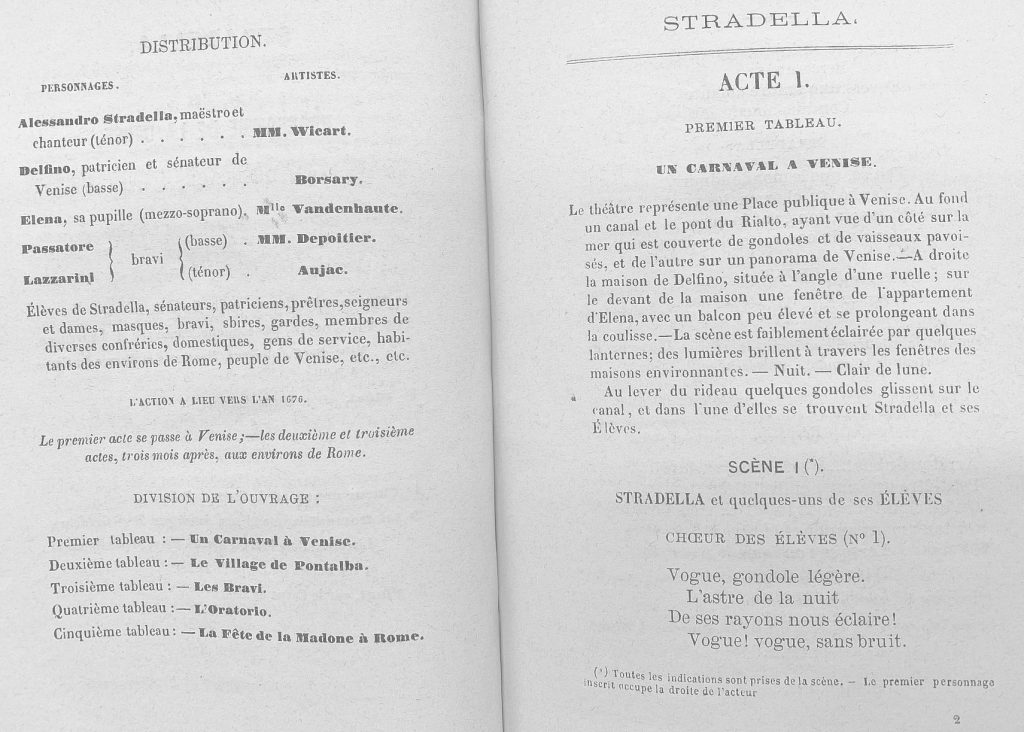
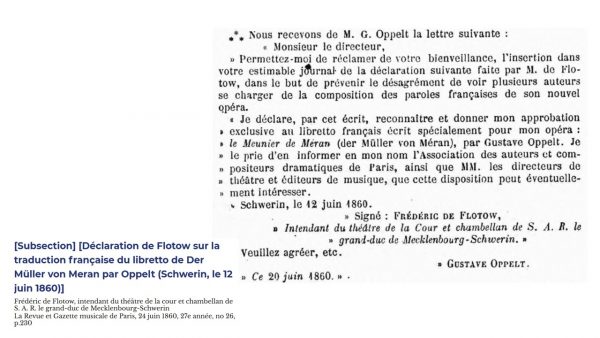
In der späteren Aufführungspraxis des Werks von „Fritz“ von Flotow, wie ihn seine Mutter in MeckPom nannte, sollte es für den in Frankreich ausgebildeten Jugendlichen einige Fallstricke zu überwinden geben. Bereits seine erste Oper „Alessandro Stradella“ hatte mit Produktpiraterie zu kämpfen. Der Übersetzer Gustave Oppelt (1844 Autor zu Stradella genannt BNF), mit Erwähnung auch von Alphonse Royer, hatten die Rechte des Librettos inne (Stempel des Dépôt Légal 1859 Nr 1139). Anlässlich der Erstaufführung in Brüssel am 2-3-1859 au Théâtre Royal de la Monnaie erschien das gedruckte Libretto versehen mit einem Echtheitsstempel. Bereits 1860 gab es dann Anlass, dass Gustave Oppelt mit der Unterstützung von „Frédéric de Flotow“ für seine Übersetzungsrechte kämpfen musste und dazu eine Notiz in der „La revue et gazette musicale de Paris“ veröffentlichen mussten. Autorenrechte waren und sind keine Selbstverständlichkeit. Die Lebensgrundlagen vieler Künstler, besonders der KünstlerInnen, auch heute, bleiben meistens prekär. Flotow war bereits beteiligt an Vereinen, die die Kompensation von AutorInnenrechten vertraten. Die „Dédicace“ an die königliche Hoheit  Madame la grande Duchesse Douairière Alexandrine de Mecklembourg-Schwerin, née princesse de Prusse (Link Stammbaum), versteht sich dabei wohl auch als Dank für die Berufung von Flotow als Intendant an das Theater von Schwerin, gleich neben dem schönen Schloss. Mäzene konnten wohl über Stellenbesetzungen KünstlerInnen ihr künstlerisches Arbeiten weiterhin ermöglichen. Flotow brauchte auch die Unterstützung, die ihn zu seinem Lebensende nach Darmstadt umziehen ließ.

50s

The fifties are remembered as the prosperous and booming years in the 20th century, worthy of nostalgy for some. Indeed, after the 2nd world war and its destruction the time of re-construction had come already some way, thanks to the Marshall plan of the late 1940s. Most countries had to turn huge military equipment industries into civil uses. After the Schumann Declaration, the European Coal and Steel Community was a first successful and lasting institution building in Central Europe. A mass production boom of cars, civil aircrafts, radio and the beginning of public television were landmark changes in the relationship of technology and society. The U.S. became a leading force in this evolution pushing for free trade between countries and consumerism. The deprived generations of the war period in the 40s welcomed the “fabulous fifties” (Arleen Kelin, 1978) as a dynamic and prosperous decade, despite dramatic speed to innovate new more deadly weapons. The atomic bombs were tested from superpowers and nuclear energy started to surface. Solar cells and optic fibres were also inventions of the mid-50s. Strange that we had to wait for another 70 years and multiple crises before these resource-efficient technologies achieved popular success. Integrated circuits, micro-chips, the laser, Tupperware, Coke, Lego, Mickey Mouse and global cinema came upon us during the 50s. The Sputnik effect re-opened an arms race as part of the cold war including outer space beyond airplane reach.
Families longed for and indulged in an as normal as possible family life. Unfortunately, this meant for many women, who had worked outside home during wartimes, to return to a role of housekeeping. Rock n Roll and increasing consumption of mass produced products could compensate for some of this deprivation. Higher divorce rates in the 60s and/or lack of own pensions were the dire consequences for many women. Showtime, and showing-off were the mantra of the 50s. Glamour (Magazine) rose to cult status and prepared popular culture and art. Following fashion and awareness of design spread across societies enabled by the easier access to “sewing machines” allowing more home production for the middle-class persons. The “people of plenty” (Andrew Dunar, 2006 p.167-8, referring to David Potter, 1954) were effectively sold a car culture with the automobile as an agent of change.
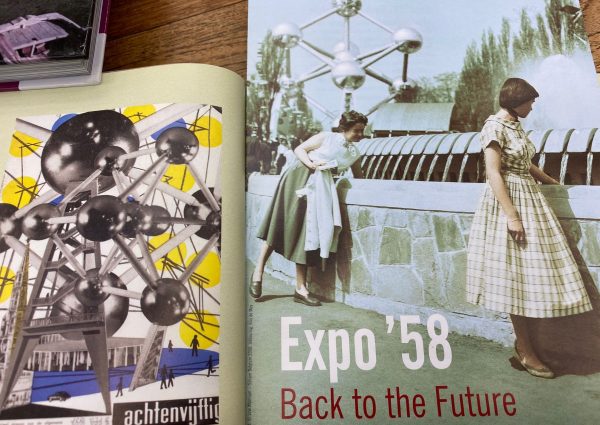
The atomic era was believed to continue prosperity for more decades (Expo 58 in Brussels) and a delicate, but relatively stable balance of power restricted open wars. “The End of Ideologies” during the fifties (Daniel Bell, 1960) lead to focus on Realpolitik and a race for prosperity, oblivious of the ecological consequences for many decades to come.

80s

The colourful 80s. That could be a summary of the years from 1980 to 1989. Certainly in fashion and design a multitude of colours dominated the 80s. Mariel Marohn (2010, Ed.) published 20 years later a visual summary of the 80s. Often thought as less spectacular than other decades, the 80s had seen some defeats to start with. John Lennon shot dead in New York December 1980. The NASA space shuttle Challenger explodes 2 minutes after the launch in 1986. Nuclear accidents (after three mile island 1979, Tschernobyl 1986,or the finding of the Titanic demonstrated not only the “limits to growth” (1972), but reminded us of deadly consequences of technological ambitions wanting to move too fast in time. Ghettoblaster, Walkman, first cell phones, facilitated a more mobile life style to more people. Overcoming the oil crises of the 70s, mobility roared ahead again. Cars, bikes, planes, CDs, windsurfing and aerobics become part of the lifestyle in these years.
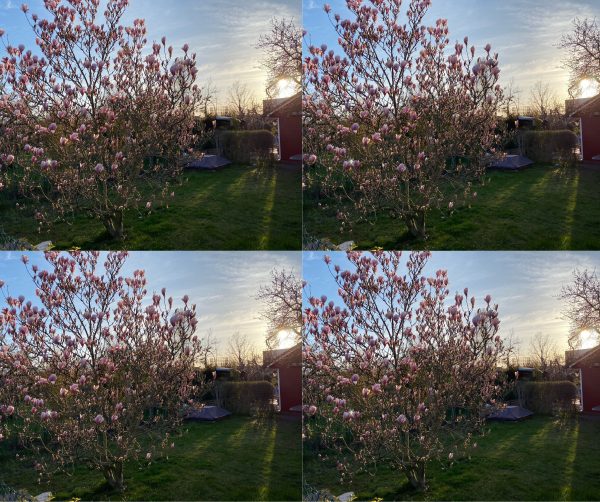
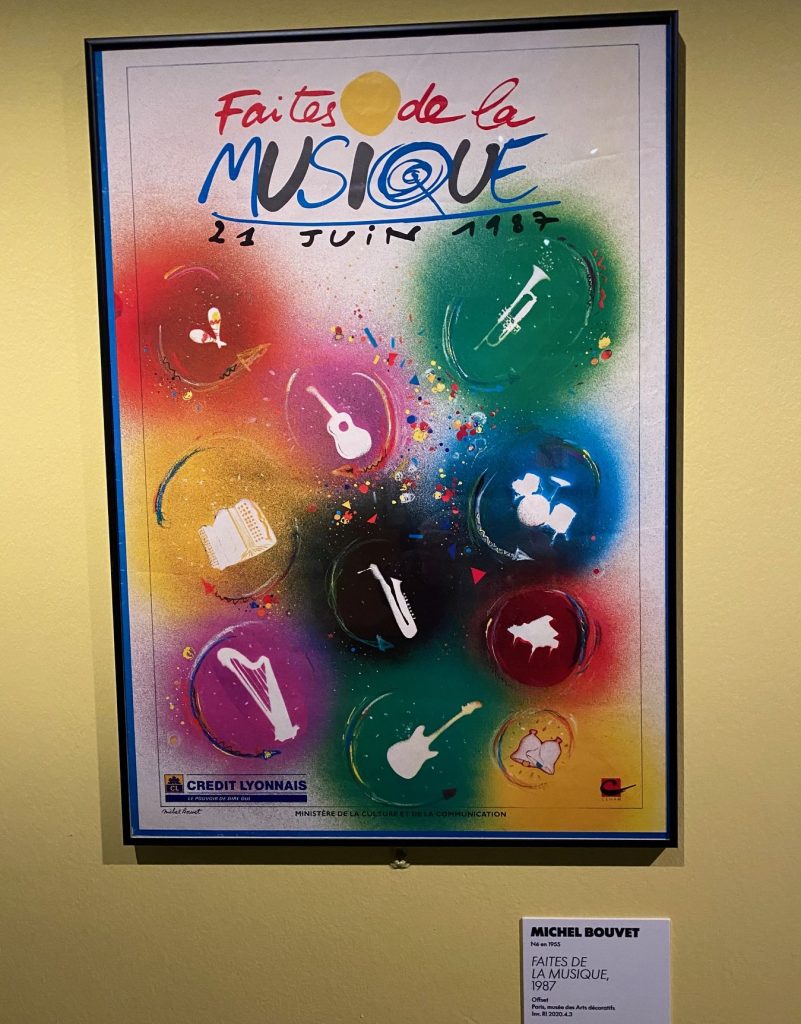
Mass culture in music reached all levels of society. Music was no longer perceived as a protest movement, but a normal part of the freedom of expression. Fusion of music and dance, but also music and street art like in hip-hop music and graffiti art become part of day-to-day experiences of commuters. In the anthology of poems of the 80s we find on page 141 “Commuters” by Edward Hirsch 1983 who singles out the commuting practice as the way of life, he does not want to identify with. “Malgré lui”, in spite of himself, he finds himself in cars, trains travelling distances every day. More, faster and with more colours, time moved on. The fall of the Berlin wall 1989 was thought of as a “Zeitenwende” already. Royalty in the press with the marriage of Diana & Charles, was replaced by Madonna as the Queen of Pop and Michael Jackson as the King of Pop. The digital age entered into a new era with the Apple Macintosh desktop computer with an accessible visual interface to computing. Reaganomics and Thatcherism pushed for a revival of liberal market economies ploughing the fields for digital multinationals (GAFAM) to thrive ever since. These lasting technological changes define this period as colourful, grabbing all our senses and attention. Want to breathe a bit of the air of the 80s – visit MAD Paris.