Innerhalb vom Kern Europas ist der physische Grenzübergang kaum merkbar. Sobald es um die Regeln der sozialen Sicherung, Beschäftigung, Selbständigkeit geht oder der Unternehmensbesteuerung werden die bilateralen Regeln bereits viel komplizierter. Falls 3 und mehr Länder ins Spiel kommen wird die Lage ziemlich unübersichtlich oder zum Expertentum. Staatsbürgerin im Land A und Staatsbürger im Land B, arbeitend im Land C dürfen sich über einen Dschungel an Regeln freuen, der Kafkaeske Verhältnisse hoch 3 produziert. Irgendwo klemmt dabei immer etwas. Dabei hatte die Regulierung CE Nr. 883/2004 über die Koordinierung der nationalen Systeme der sozialen Sicherung doch weitgehende Konkretisierungen hervorgebracht und Sicherung der Bestandsrechte hervorgebracht.
Wie so oft liegen die Schwierigkeiten im Detail und darin sind die jeweilig zuständigen Verwaltungsbeamten, wenn die denn erst einmal herausgefunden wurden, eine Hürde, die es zu meistern gilt. In der jeweiligen landesüblichen Verwaltungssprache, versteht sich von selbst, inklusive regionaler Besonderheiten.
Während juristisch der Grenzübergang von Beschäftigten, Selbständigen und Unternehmen jeweils geregelt ist, ergibt sich aus einer juristischen Figur des „salary split“, also eine beschäftigte Person bei 2 Arbeitgeberinnen eine Lücke in der Zuständigkeit. Diese besteht gleichfalls in den meisten Ländern der EU. 2 Teilzeitjobs zu 50% lassen sich sozialversicherungsrechtlich nicht fair darstellen. Die zweite Lohnsteuerkarte und Besteuerungssätze, na wir ahnen schon, was das für Betroffene heißt.
Unternehmen und der Staat machen es sich einfach. Eine Konfiguration „Mulitplication des employeurs“, mehrere Arbeitgeberinnen, ist nicht wirklich adäquat vorgesehen (Crabeels, 2008 S.272). Dadurch werden viele, besonders junge Beschäftigte systemisch in ihrer beruflichen Findungsphase benachteiligt und in die Selbständigkeit oder gar die Scheinselbständigkeit gezwungen. Dabei brauchen wir dringend diese dynamischen GrenzgängerInnen in Europa mit ihren grenzenlosen Ideen, Enthusiasmus und Gestaltungswillen.
Neben diesen „high potential Grenzgängerinnen“ gibt es viele Beschäftigte, die bereits in einem Mitgliedsland der EU mehrere Beschäftigungsverhältnisse ausüben müssen, da sie von einem Job ihren Lebensunterhalt nicht bestreiten können. (EU Statistik Jugend Eurostat,2022). 
Corruption EP
Corruption is a severe crime. Not only in administrations, organisations and enterprises, but primarily in democracies it is discrediting political systems. Autocracies rely on corruption as a major tool to be able to persist over time. They are used to such practices. Democracies rely on meritocratic systems, where ideas, effort and winning elections should be the major ingredient of achieving higher positions in organisations, enterprises, political parties and democracies. This is not easy to ensure. The European parliament has a tough time to get rid of an enemy of the democratic Europe. Rather than stepping aside for the time of the legal procedure, Eva Kaili, accused, but not yet convicted of corruption is willing to destroy the European project as much as she can. If money can buy political decisions, the European project will no longer find wide-spread support. Big interests will always have a strategic advantage, however, the ethical principles on which democracies are found have to guard against corrupt misbehaviour. The same applies to the business world. Even low corruption countries like Sweden still face a risk of adverse effects of corruption like the negative impact on entrepreneurship on the local level. It is another context, but the same conclusion.
Additionally, it is part of the strategy of corrupt persons to portray themselves as victims of other persons’ wrong-doing. The major function of this strategy is to remind other persons in the corrupt network that the network has still some clout on its members as well as outside the inner circle. Hey, we are still alive and in powerful positions, they proclaim.
Therefore, the fight against corruption is a long and persistent one. Reducing the guards against early onsets usually is very lengthy to fight later on. Always a painful lesson for believers in democracy and the European project. (image Jacques Jordaens before 1678 “The King Drinks! Musées royaux des beaux arts, Brussels). 
Repair 3
Repair is our new mantra. Think of repairing in all domains as of now. Nature is showing us the way how to repair in many ways. Culture is also embracing the shift towards repairing as caring. If we really care about our planet, and there is no planet B, we shall have to repair in many more domains. We are used to repair bicycles, cars, roofs, windows etc. Repairing is never boring. You can improve the performance of a device or building by repairing it, even with relatively small budgets. Isolation of buildings is a good example of investing in upgrades through repairing. Rather than throwing away a functioning heating system repairing it with an energy saving device is enhancing its performance and produces fewer emissions in the short run. Heat pumps are the way forward for new installations. Shifting a sector, heating with gaz, to ensure longer lasting repair and improve options would save a lot of raw materials and CO2 as well. The construction sector has repair work almosts in its DNA, the energy sector will have to make that shift as well. Dare to repair. 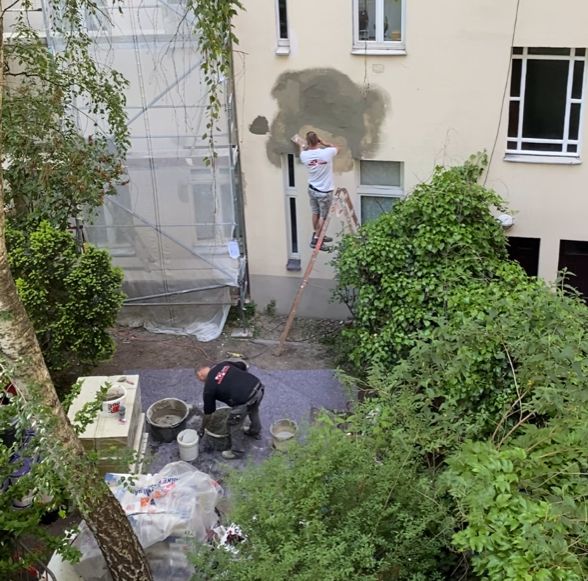
Design Start-up
Es war wieder Designmesse. Klein, aber fein, in Berlin in den KantGaragen. Die Location weckt schon Hoffnung auf Experimentelles, Garagenhaftes, Handwerkliches. Das bringt Abwechslung in die sonstige, glitzernde Shoppingwelt. Das renovierte und entgiftete Parkhaus erlaubt einen Rundgang über mehrere Etagen, vorbei an Galerien und Ständen von DesignerInnen. Es macht sich eine anregende Brise von erfrischenden Ideen breit. Von Design im Raum mit Leuchten und Möbeln über Design von Mode und Schmuck lässt sich viel Schickes finden. Blickfang, samt Blickfang Akademie haben es geschafft, die Mini-messe in den KantGaragen zu etablieren. Es kann sogar Eintritt verlangt werden. Eine weitere Begleitung der Neuen auf dem Markt wird oft nötig sein, denn selbst gute Innovationen sind meistens keine Selbstläufer. Konkurrenz belebt nicht nur das Geschäft, es bleibt meist auch ein Verdrängungsprozess.
Die großen, vielfach schließenden Kaufhäuser in den Innenstädten spüren besonders die Konkurrenz der individualisierenden DesignerInnen mit ihren einzigartig anmutenden Realisationen. Singuläre Kauferlebnisse auf solchen Messen, in stilvollem Ambiente, selbst in einem alten Parkhaus sind, allem Anschein nach, ein Erfolgsrezept. Start-up statt Close-down schafft viele erfüllende Arbeitsplätze. Gute Arbeit wird nicht aussterben, sondern durchstarten. 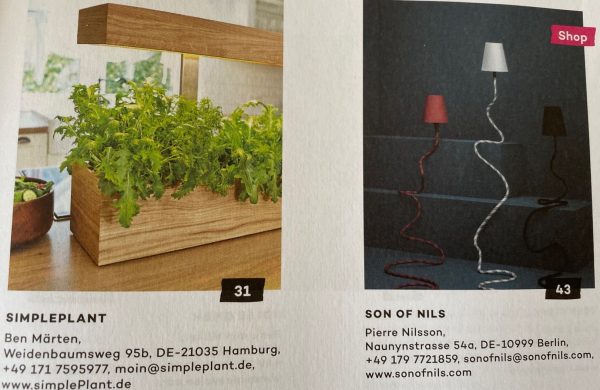
De-risking
Risks are all around us. Risk is the spice of life. True, but this might be an elitist concept of life or business. Survival of the fittest or the best equipped to take risks might be the consequence. After the 3 crises, financial, covid, energy, we have a new impetus to thrive for de-risking. Certainly, concerning our health, we are aware that prevention is key to fight a pandemic. In order to stem an energy crisis, most countries start to rethink their energy mix and achieving more energy autonomy is a major step to shield against risks of delayed delivery or commerce with belligerent states like Russia. De-risking is key in supply chains for industries (automotive production, microprocessors) as well as service providers (cloud services, care givers) just as well. Mariana Mazzucato (UC London) urges us to develop a new narrative to accompany the transformation of our production and service provision models. Mazzucato advocates to learn from lessons from the ground of how to proceed in the best way. Copenhagen is a good starting point to observe how a metropolitan city manages the greening and decarbonisation of a city. It is important to not only target single policies but the coherence of several policies and approaches. In my view de-risking means for Germany and the EU to shield energy systems from foreign, malignant interference. Only local production of energy and nearby consumption of it will ensure the de-risking of energy provision and consumption. Let us start with massive investments in rooftop solar or small wind turbines. Nobody complained about millions of ugly television antenna all around us. Solar cells on balconies contribute to a basic local electricity supply, difficult to target millions of solar cells instead of a single huge and horrifically dangerous nuclear power plant. At the same time ,we reduce dependency on monopoly or oligopoly structures that develop their own agenda (Too big to fail, remember those?). I prefer the reverse statement. Because they are so big, they are doomed to fail and, therefore, fail us sooner or later. The Forum New Economy offered an open and accessible platform for exchange of ideas. That’s a good starting point to address de-risking. Reducing Risk is in the subtitle of Rebecca Henderson’s Chapter 3 on “Reimagining Capitalism” (short Review), but I would like to add the business case for household production of energy for de-risking supply failure and exploitation of consumers through excessive profit margins as a prosumer business case. 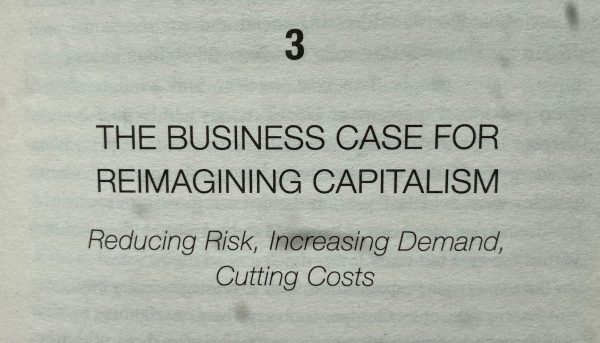
Polypharmacy
Each specialist treats a person or patient in her/his field of competence to the best of current knowledge. Well, marketing of pharmaceutical products is also a field of special competence. Medical doctors and pharmacists are largely competent intermediaries between the world of medical and pharmaceutical research, commercial interests and patients. As persons age, so-called multimorbidity is creeping into the daily life of many persons. After a certain age (75+), depending on country of residence to some extent, we all become patients. Although the basic problem has been known since the phenomenal rise of the pharmaceutical industry, little research is devoted to patients receiving multiple treatments with medical prescriptions from several specialists. In addition, we know there is a rather severe issue with compliance to prescriptions, for example, taking antibiotics for the whole prescribed period, to name just one. The interactions between several prescriptions and molecules administered to patients are very difficult to monitor and scientific tests of those are expensive and no pharmaceutical company really has an interest in such studies that might further add to the already long list of potential side effects. However, the study published by Daunt et al. (2023) reiterates the warnings that treatment of multimorbidity can have unwanted side-effects we do not really know about. General practitioners will have to take on the role for medical stewardship for their patients. Monitoring a patient’s digestion of a combination of medications becomes a prime role as of the age of 75, the paper specifies. Whereas a common believe tells us, taking more, will help more, the “daunting” truth might be, less can be more. (Source: Daunt, R., Curtin, D., & O’Mahony, D. (2023). Polypharmacy stewardship: A novel approach to tackle a major public health crisis. The Lancet Healthy Longevity. https://doi.org/10.1016/S2666-7568(23)00036-3. 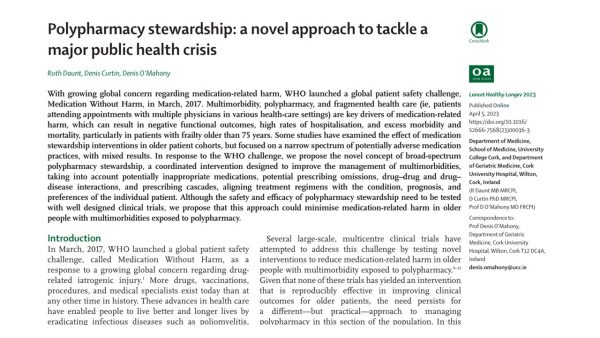
Feuer im Wald
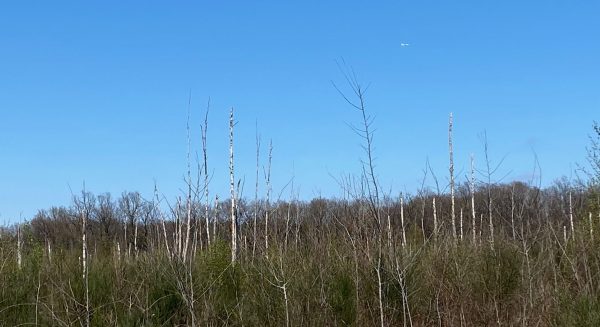
Das sogenannte grüne Lunge kann immer öfter ihre wichtige Funktion der Klimaregulation nicht mehr wahrnehmen. Waldbrände begleiten den Klimawandel. Bereits 2018 gab es ein großes Feuer im Wald bei Paris. Im “forêt de Sénart” in der Nähe der Städte Montgeron, Yerres und Brunoy (nahe Paris) hat sich der Wald seit dem Feuer im Hitzejahr 2018 noch nicht erholt. Geld für Reparatur der Schäden fehlt und so lässt die notwendige Aufforstung auf sich warten. Der Verlust der Biodiversität durch den Brand lässt sich schwer bemessen. Brandrodung, gängige Praxis im Amazonasgebiet, hinterlässt auch bei uns mehrere ungewollte Folgewirkungen. Die Bewirtschaftung des Waldes hat die Schäden abgeschrieben, aber Zukunftsinvestitionen lassen auf sich warten. So heizt sich die Region Ile de France eben weiter auf und Millionen Käufer von Klimaanlagen. Die befördern in naher Zukunft das Wirtschaftswachstum, aber beschleunigen den Klimawandel. Wir wissen, dass es so nicht weitergehen darf. Nur der Wille, wirklich etwas daran zu ändern, fehlt an vielen Orten. Weiterso, wenn es kein Weiterso geben darf, ist die Schizophrenie unseres und des letzten Jahrhunderts. Lernen im und vom Wald ist nötig. Das ist unsere Lebensgrundlage. 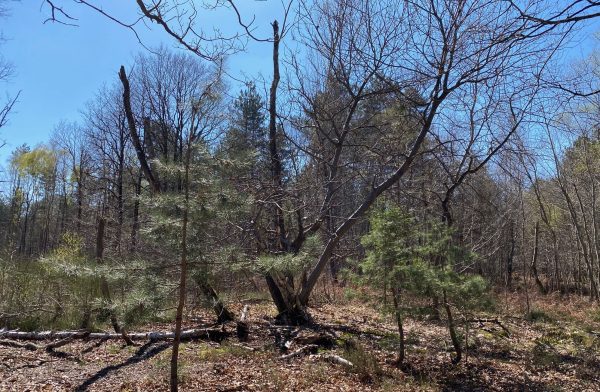
On Noise
The 3 authors Daniel Kahneman, Olivier Sibony, Cass R. Sunstein have published in 2021 the impressive attempt to sell statistics to non-statisticians. The grip on the topic: “Noise. A Flaw in Human Judgment” is a bit misleading. Even the German translation (“Was unsere Entscheidungen verzerrt”), in my opinion, is grossly misleading. The work deals with judgment, or arriving at a sensible judgment. Decision-making is only the next step with a lot of other intervening processes. The German philosophical term since the enlightenment period has been “Urteilskraft“. We are all more or less familiar with the notion “bias” in judgment. Me, originating from the Moselle, will always be biased in favor of a Riesling compared to other vines. In addition to this naive bias I may apply a more professional judgment on wine. Testing several wines even from the same small area from the Moselle valley and then repeating the tasting I might make a noisy judgment. “When wine experts at a major US wine competition tasted the same wines twice, they scored only 18% of the wines identically (usually, the very worst ones).” (p. 80). In addition to the previously defined form of “level noise, pattern noise and system noise” (p.77), we have occasion noise, when judgments vary from an overall statistical perspective.
Having received a second dose of a vaccination yesterday and having spent an unpleasant night my judgment for this review might be biased, because of impatience. So in order to reduce bias and variants of noise I shall repeat the review at a later stage. Let’s see what this returns. But for today, the Epilogue “A less noisy world” (p.377) appears rather odd to me. It is probably an illusion to believe that we can create a less noisy world, even with the best of wishes. The authors abstract from any strategic use of noise to influence judgments. The political form of choosing judges for Constitutional Courts in the U.S. needs to be dealt with. Noise in judgments is an important element, but strategic use of bias might be more influential to impact outcomes. Noise, when faced with a judge who has a reputation to be very tough in sentences might be overturned in an appeal court decision. There are plenty of procedural ways to overcome noise in judgments. I agree with the authors that you better know about the noise in judgments than ignore it. Awareness of random errors and noise involved in grading exams and recruitment decisions have determined many excellent “failures” to leave historic contributions to our world. In music, maths or literature some splendid talents probably have been impeeded at earlier stages of their life to make average or normal careers. Some of them left us with fantastic pieces thanks to the noise in judgment of others.
There seems to be an age bias in the tolerance of noise in the acoustic sense. Noise in the statistical sense has left a strong mark on me when I learned about white noise as error or stochastic process.
Image Kahneman, Sibony, Sunstein 2021. p3.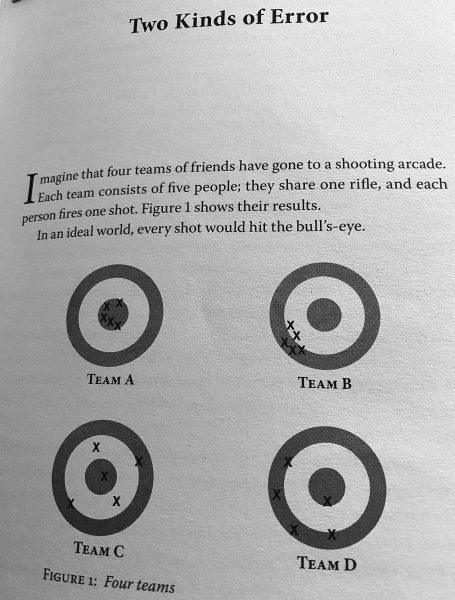
Technology
Over the 20th century technology has pushed forward in many fields. As there were huge investments needed the public campaigns to support new technology without much further reflection of potential consequences have pulled many western societies into risky technologies. Except the Club of Rome there were very few to question the naïve beliefs that technological change will make societies rich and potentially even more equal. The recent report “Climate Inequality Report 2023: Unequal Contributions to Climate Change” has debunked both of these claims. More flying across the planet, particularly short city hopping, has allowed few persons to reap the benefits of the jet-set world, but contributed to climate change in excessive quantities. This is a fact when we compare major world regions among each other as well as within each country. It has to be the wealthy countries that have to shoulder the biggest share of the costs. It has to be the wealthy that pay higher contributions for their pollution. Society has to reign in technology more than ever before. Moreover, we still have to get the income and pollution distribution organised in a better way. It is not only an implementation challenge, but the major question of the 21st century to repair the damage largely caused throughout the 20th century. 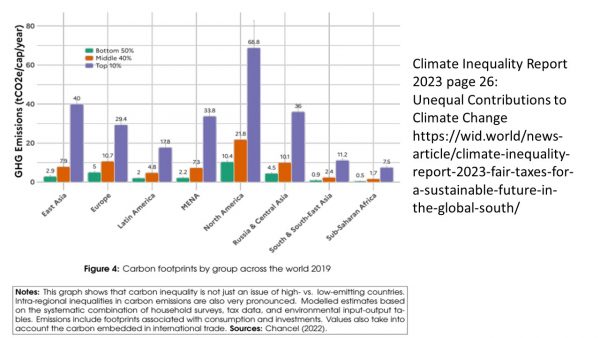
1900s
1900 marks the year of the 5th world exhibition in Paris. The Eiffel tower, built for the 4th exhibition in Paris remains the iconic attraction despite the new architecture that is added to Paris as the Petit and Grand Palais as well as the 1st Metro line. Art Nouveau style adds to already impressive architecture in and around Paris. With the planning horizons of several years in advance of events, urban planning with all its facets of urban infrastructure and architecture becomes much of a defining scientific discipline for decades and for most of the time of the century. Grand urban architecture and design constitute just another form of competition between nation states. Most of them want to show off their imperialist acquisitions and, what they define as “curiosities” at the time.
Habib (2005, pp.502) singles out Arthur Schopenhauer and Friedrich Nietzsche as “heterological thinkers” who coin major thoughts in the late 19th century that shall influence the beginning of the 20th century right from the year 1900 onwards. “The world should be formed in your image by your reason, your will, and your love! And truly, it will be to your happiness you enlightened men!” (Nietzsche. Thus spoke Zarathustra 1978, p.110). In retrospect from the 21st century we shall doubt this overly positive approach to human intentions and their will to form the world according to their abstracting ideas only. Tensions between technology and society became visible and it took many decades before society became conscious that it is up to society to choose technologies they preferred.
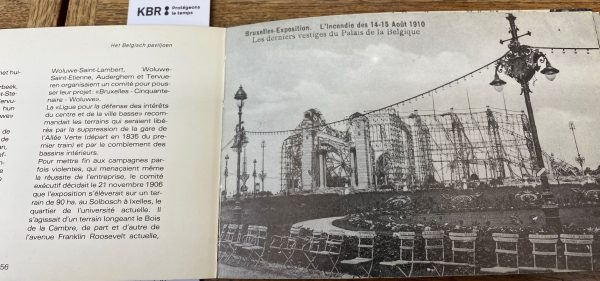
The planning for the Brussel Expo 1910 started right after the previous Expo 1905 in Liège. Protests in Brussels accompanied already the choice of terrain for the Expo, but the governors and shareholders of the enterprise decided 1906 for a site near the “forêt de Soignes”, where trees had to be cut for access to the construction site and for future visitors under local protest. Women workers were present to exhibit the low pay of women in industries. Child labour was documented with shocking images. Around the globe labour movements started to raise attention. In the U.S. the National Women’s Trade Union League (1903) was founded as well as the National Child Labor Committee (1904). “Bloody Sunday” in St. Petersburg (1905) saw the killing of peaceful protestors in front of the Zsar’s palace, which ignited the Russian Revolution of 1905 and the creation of the Russian Parliament. Some of these issues (child labor) keep returning to our social agenda well into the 21st century.
Einstein’s publication of the theory of special relativity (1905) as well as challenges from social philosophy reflects the huge discrepancy between advancement of the sciences and the living conditions of the masses. Social theories and science advances foreshadow the violent turbulence throughout the 20th century.
(Sources: (1) Max Welch Guerra et al. (2023). European Planning History in the 20th Century: A Continent of Urban Planning. Routledge. (2) St. James Encyclopedia of Labor History Worldwide: Major Events in Labor History and Their Impact, Neil Schlager (2004). (3) Images from I. Van Hasselt(1980) Bruxelles Expo 1910: l’incendie / de brand. J Stevens.