Illness duration

The focus in medical analyses is primarily put on the diagnosis of illness. This is the best strategy, if the onset of an illness has a precise beginning and ending. In all processes, where either the beginning and/or the ending is less well-defined as precise point in time, the progression, as phase in or phase out of illness, is also of substantive interest. A duration analysis can inform about the potential presence of a co-morbidity in case, for example, an infection continues beyond the normally expected duration.
Financial pressures in the medical systems makes it necessary to release patients in a timely fashion. Therefore, has become more important to monitor patients even after release from hospital. Digital devices can support such a monitoring.
The study by Josi Levi and co-authors (2026) shows that smartphones or just the monitoring of the number of steps of patient offers a rather reliable indicator on the health status towards the end. The information that a patient has recovered to the normal level of activities as before the onset of the illness works quite well as indicator of recovery. A more precise measure of the duration of an illness is important for patients, care persons, the health system overall. The duration is one of the cost-intensive factors of any illness and it is surprising how little we know about the issue of time and duration in many health processes.

Covid Literature

In 2025 it about time to evaluate the medium term impact of the Covid-19 crisis in Europe and world. The various lockdowns caused unexpected “spare time” or time in isolation. Some otherwise very busy persons embarked on literary projects during these months. Most of the outcomes have now been published. Most authors would not label their writings as “Covid literature”, since they do not deal with the Covid pandemic in any sense. However, only due to the additional time resources, and maybe writing as a creative coping mechanism, some persons became and dared to become authors eventually.
For some isolation from the usual work context was a lonesome experience, others realized literary projects. Camille Paulhan (edition Sombres Torrents) for example used freed up time to write “Couper à travers les ronces” published in 2021. Her short stories, like narrative clips, range from introspection to memorable encounters with art works and artists. As an expert on “perishable art” Camille Paulhan is particularly sensitive to the “fleeting moments” of encounters and maybe of life itself. The Covid-pandemic has certainly reminded us on the increased risks to our existence during a pandemic. The literature originating during these months and years might reveal specific virtues only ex post.
You might still be able to buy a copy at the publisher. The bookshop and gallery Yvon Lambert (online retrieved on 2025-1-20) says sold out, but shows several pages online. Although books may become a perishable product, some copies will survive due to the efforts of fans of perishable art and moments.

Olympic Virus

We tend to believe or want to believe that the horrible SARS Covid-19 crisis is completely behind us. However, science signals that we need to stay alert with respect to the mutations of the virus. International events like the Paris 2024 Olympics bring together athletes and spectators from all continents and some of them still seem to carry the virus with or without symptoms. A report in the LANCET Respiratory Health mentioned that dozens of athletes were tested positive for the virus and a largely unaccounted number of spectators had carried the virus FLiRT variants. As tracking is difficult with more or less absent testing strategies the tests rely on waste water analyses and reports from health care institutions. The Olympic Games are over but the virus still lives on and variants keep popping up. Games during the summer months should be much saver than winter games as the time spent outside is much longer. Traveling in crowded transport, however, remains a potential health hazard. Huge crowds at Olympics are inevitable. After all, birds of the same feather flock together.

Camparing Covid-19

In the middle of May 2024 we tend to believe the Covid-19 pandemic is over. However, towards the beginning of the year 2024 in the U.S. we observed at the peak about 2500 deaths per week. In Germany deaths/week amounted to 250. Compared to the overall population size killing is more pervasive in the U.S. than in Germany. The map of the specialized agency “Centers for Disease Control and Prevention” (CDC) in the U.S. shows the coastal regions to be more affected than the center. Population density seems to be still a driver of the spread of infections, illness and deaths. The timeline of deaths due to Covid-19 infections for Germany follows a broadly similar pattern, albeit on a lower level even if roughly accounting for population size (RKI-data). As we tend to forget what the pandemic caused as social and economic disaster in societies, we have to stay alert as the major prevention of Covid-19. Learn to live with the virus around us. This means to keep up our preventive levels of hygiene as well as monitoring of trends.
Many thanks to all those who do the sometimes boring number crunching for us. This includes the medical doctors who bother to do the timely reporting of new infectious diseases on a regular basis.

Collective Violence 2

Summers and Markusen (1999) subsume state terrorism under the broader heading of collective violence. Even beyond non-governmental groups, states might apply collective violence against innocent people. Among the strategies governments use as a form of collective violence fall (1) arbitrary arrests, (2) imprisonment without trial, (3) torture and (4)a summary execution of members of alleged enemy groups. Particular outcries are caused by, for example, police or other para-military groupings of persons who jump from (1) to an execution of an innocent person or of several even seemingly unrelated murdered persons (4b).
Amnesty International attempts for decades to fight against such occurrences on an almost global scale. The need to complement the national legal systems through supra-national instances as well as NGOs in this domain is obvious. Even the most advanced democracies need to permanently check their systems for several forms of state terrorism or abuses of power to eliminate or intimidate opposition.
Staub (1999, pp.195) undertook an attempt to list elements that allow to predict and maybe prevent collective violence. The theory starts with “conditions of life” more generally like economic, social and political conflicts as well as rapid social change. Activation of basic needs in people, like several forms of security, challenges to a person’s self-concept, traditional values, simply the customary way of life (COVID-19) or new comprehension of (climate) realities, they all challenge old world views of people (superiority) and their place in the world (AI).
Claims for support by other people (government), missing connection to others (individualism) lead people to focus more on their own needs and isolated action. Rebellion as collective violence is directed against differences in status, power and (social) rights. Self-interest is becoming an overriding societal principle. Racism (p.200) and police violence (p.201) are part of Staub’s theoretical considerations. He argues in favour of training of situations in which a police officer is likely to become unnecessarily violent or to stop it if it occurs. At least a medium-term solution.
Framing of such training as preparation of good teamwork rather than betrayal is crucial in action teams, be they in the police or the military. The reader on “violence subie, violence agie” by Seron and Denis (2000) allows us to take a step back and reflect on the spirals and repercussions involved in violence from the perspective of the person who carries out an act of violence and the victim. A social-therapeutic approach aiming at reconciliation is worth trying, albeit a lot of obstacles. Collective dance rather than collective violence is the immediate as well as long-term solution (More on dance here).

Immune system

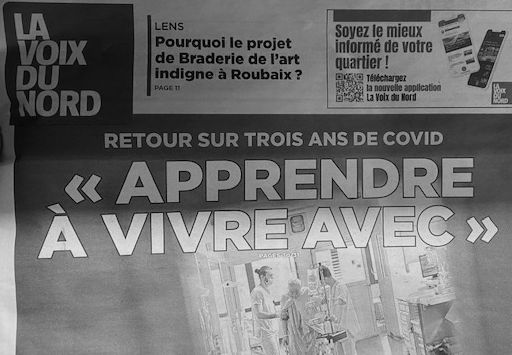
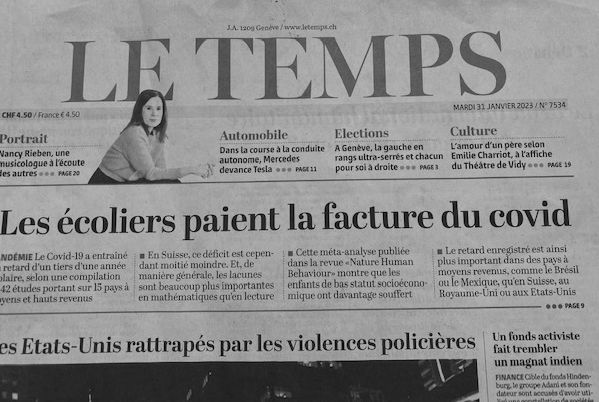
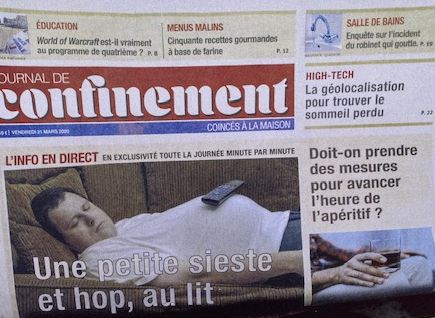
A brief review of the press on the coronavirus 3 years after its first appearance shows that we have learned to live with it. Everyone has found the personal way to balance exposure to risk and protection against infection. Long-term consequences are severe for pupils. Many lost friendships, were lonely at home and accumulated missing out on peer advice or effective teaching. 
Overall, strengthening of the immune system is another more complex issue. Some people swear by masks and others keep washing hands, or both. More rare is the vaccination approach against COVID-19. The evolving virus seems to adapt to a seasonal pattern as the influenza had done decades ago. The term seasonal greetings nowadays has an additional flavor to it. We have come out of the 3rd year of the pandemic reasonably well. Preparing for the next winter is left to the scientists to study the ever new variants arising, probably in parts of the world where winter is just beginning. Working on our immune system’s strength, however, is up to us. Happy Walking and cold Showering. 2 real newspapers, 3rd one “Pastiche” exposé à la BnF, Paris April 2023.

Architecture

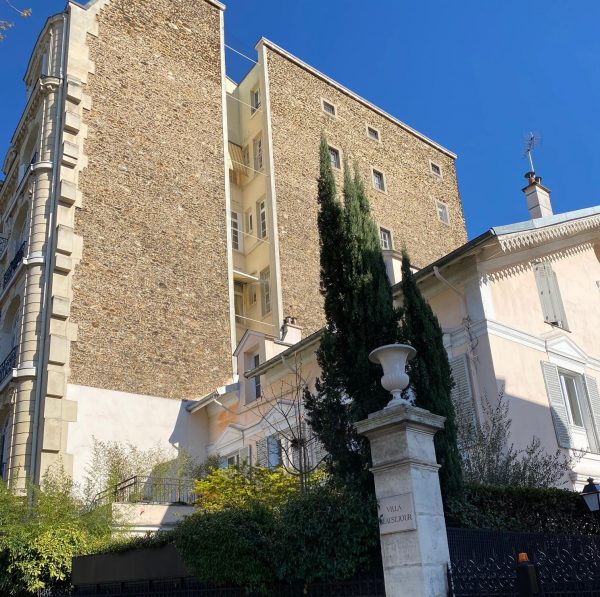
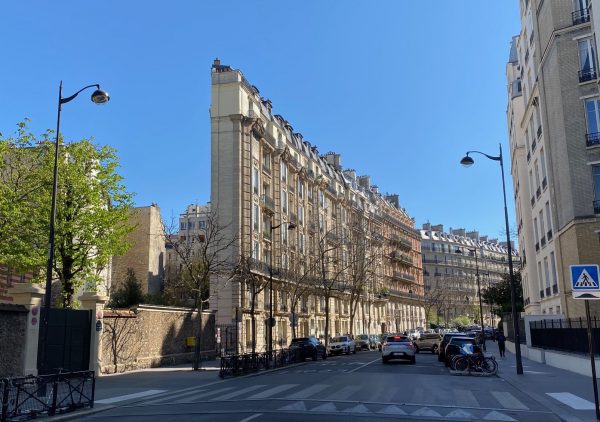
Architecture is all around us. However, we rarely consider the build environment as “conditioning” feature of our life. Architecture is contributing extensively to our perception of “social space” (Bourdieu). Inner cities, suburbs or spacious residential areas have diverse impacts on our perception of, for example, security, modernity, health or sanitary sensations. The corona-crisis has made it clear to most people that a healthy environment is a very essential part of our perception of comfort. Here the psycho-social perception of living and/or working space enters into the co-creation of housing people. Technology is a big driver of change in housing, urban spaces and rural imagination. In order to avoid corona infections a new culture of working from home for the masses become a health-driven imperative. Payment without contact, home delivery of meals, food, books, medicine have changed the living style of many people. Too little movement for our bodies has caused another silent pandemic of obesity. Enough reasons to rethink architecture from a sociological perspective on it. This probably starts with speaking of architecture as architectures. By this we mean to think of architecture from its social origins, functions, impacts and perceptions. Great historical examples of architects have implicitly or explicitly formulated a social theory of architecture or space as the basis of their “concrete” realisations. The sociology of professions of architects and the many construction-related professions needs empirical foundation beyond the cliché of socialisation as artist versus technician. Still recent forms of participatory democracy as part of urban and rural planning as well as realisations. Participatory individual or community housing are likely to stay with us. People want to get involved in co-creating their living and working space as their social environment. Architecture as social process and specific layer of the network society will be the new mantra. It has always been there, implicitly. Up to us to strengthen the social discourse on architecture.

O O Omicron

oh, oh, Omicron. Die noch neue Variante hat eine Verdopplungsrate von ca. 3 Tagen laut der ersten wissenschaftlichen Beobachtungen. Das heisst, ein exponentielles Wachstum ist bereits präsent und die Verdrängung von anderen Varianten des Viruses wird sehr rasch fortschreiten. Die Verdopplungsrate können wir nur mit Kontaktbeschränkungen von jeder einzelnen Person beeinflussen. Gehen wir davon aus, dass uns das in freiheitlichen Gesellschaften nicht rechtzeitig gelingen wird, können wir mit simplen Fortschreibungen der Trends abschätzen, wann wir alle infiziert sein werden. omicron1
Das geht bei exponentiellem Wachstum rasend schnell. Wichtig dabei ist der Zeitpunkt der ersten Entdeckung und die vermeintliche Dunkelziffer der nicht-entdeckten Fälle, besonders hoch zu Beginn der Verbreitung. In der Grafik ist die simple Zeitreihe bei 2 unterschiedlichen Ausgangswerten 300 und 3000 Fällen dargestellt. In der Anfangsphase scheint das Problem von kleinem Ausmaß zu sein, wächst aber unaufhörlich weiter an und nach 31 Tagen haben wir entweder 30.000 oder bereits 3 Millionen Fälle mit Omikron je nach Anfangsannahme in 2 Szenarien. So wird die Variante schnell dominant. Das kann verheerend sein, wenn das Virus lethaler ist, oder mehr schwere Fälle produziert (Szenario 3). Danach sieht es derzeit nicht aus. Durch die rasche Verbreitung bei leichteren Fällen (Szenario 4), würde das Virus sein eigenes dauerhafteres Überleben sicherstellen, aber weniger töten.
Das Grippevirus hat wohl seit der “spanischen Grippe” diesen Weg eingeschlagen und ist aus Europa nicht mehr wegzudenken. Mit der weniger tödlichen, aber ansteckenderen Variante werden wir leben lernen müssen. Die Existenz der Grippe haben wir ja schon fast aus unserem Risikobewusstsein verdrängt. Wer hat sich schon noch gegen Grippe impfen lassen? Impfen im Schneckentempo, wie in Deutschland ist eine Hochrisikostrategie für vulnerable Gruppen.
Das Virus spielt nicht, aber es entwickelt Verbreitungsstrategien als evolutionäres Programm. Wir können dem begegnen. Das war uns bereits im März 2020 klar. Kaizen beherrscht der Mensch auch als Strategie. Der Mensch beginnt, sich selbst überflüssig zu machen. Ist das Fortschritt oder bereits Rückschritt? Künstliche Intelligenz schafft künstliche Freunde. Beherrschen wir die Viren noch, oder hat die Maschine in der Pandemie bereits gelernt, wie sie den Menschen von dem Planeten verdrängen kann? Sicherlich, ab morgen mache ich wieder “fröhliche Wissenschaft” im Dienste der Menschheit. Schachspielende (wikipedia zur Weltmeisterschaft) sind es gewohnt Strategien der Opponenten zu kalkulieren. So sollten wir dem Virus Covid-19 auch begegnen. Es ist nie zu spät, mit Schachspielen zu beginnen. Naja, den besten Computer schlagen vielleicht noch die besten Schachspielenden. Da bleibt uns nur noch, die Regeln des Spiels zu ändern.  Stop, machen wir das nicht gerade mit eventueller Impfpflicht, Kontaktbeschränkungen und verbesserten Hygieneregeln? Wir sind lernfähig, auch wenn es unendlich schwerfällt.
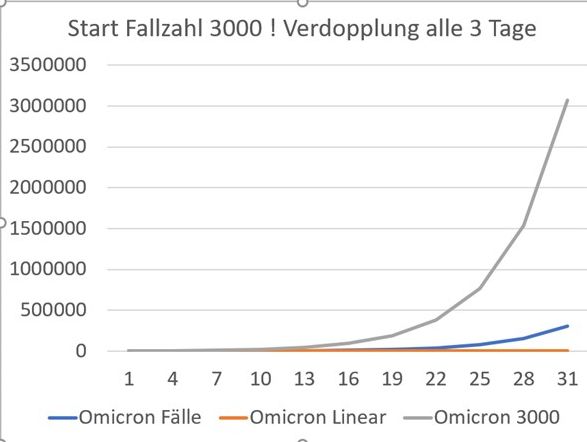
Annahme: Omicron Verdopplung alle 3 Tage (exponentiell) mit Start wert blau 300 und grau 3000, rot linear + 300 alle 3 Tage.


 

Problemlösende

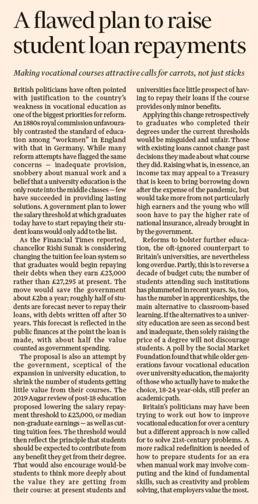
Nicht nur erst seit der Corona-Krise wissen wir, Personen, die sich als Problemlösende zeigen, sind die eigentliche Stärke eines Landes, einer Region oder einer Industrie. Die Basiskompetenzen von Problemlösen, Imagination und Kreativität sind die heimlichen Auszeichnungen eines schulischen und beruflichen Ausbildungssystems. Manches Mal hilft dabei die Mathematik, ein anderes Mal ein solides Wertesystem und öfters ist eine Kombination von beidem von Nöten. Das ist auf dem Arbeitsmarkt letztlich nicht anders. Problemlösende, die neue Wege beschreiten oder existierende Anlagen kreativ erweitern, stehen besonders hoch im Kurs. Dabei spielt es weniger eine Rolle, ob der Weg für Problemlösungskompetenz auf universitärem, hochschulischem oder beruflichem Weg erreicht wurde.
Die Spreu trennt sich vom Weizen in der Mühle!
Im Arbeitsprozess offenbaren sich Problemverursachende und Problemlösendene. Rahmenbedingungen spielen eine ebenso wichtige Rolle, zum Beispiel bei der Ermöglichung von kreativen Lösungen, die eingefahrene Wege verlassen. Für das Bildungssystem heisst das, selbst einfache Tätigkeiten werden sich über den Beitrag zu Problemlösungen definieren. Die FT schreibt bereits (s.u.), dass manuelle Tätigkeiten Anteile von Programmieren, Kreativität und Problemlösen beinhalten werden. Die wenigen Beschäftigten in automatisierten Lagerhallen werden den Roboter nicht einrichten, aber zu Problemlösungen vielfältiger Art beitragen müssen. Bastelnde, Bricoleures werden immer gebraucht werden. Alleinerziehende als problemlösende AlltagsheldInnen sind ebenfalls auf einer steilen Lernkurve unter Extrembelastung.
Teile der Wissenschaft befassen sich damit, erst einmal das Problem zu definieren, einzugrenzen und bearbeitbar zu machen. Das ist wichtig. Aber die nächsten Schritte der Lösungsansätze reichen von den großen Fragen der Menschheit bis hin zum alltäglichen Bewältigen von Problemen im Arbeitsleben, wie im privaten Bereich. Theologinnen, ein Beruf mit sehr wenig Arbeitslosigkeit, haben da ein gutes Skillset: nicht vor großen Fragen zurückschreckend, aber gleichzeitig kreativ dafür sorgen, dass irgendwie genug Messwein im Kühlschrank ist für alle. Prosit.
Clip aus FT vom 29.9.21 S.16

Impfen im Schneckentempo

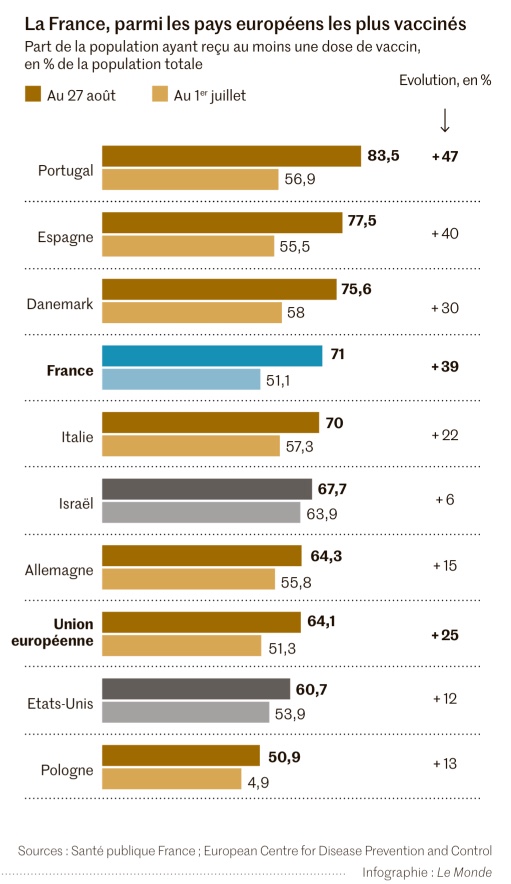
Während sich ganz Deutschland auf den Wahlkampf mit Wahlkampagnen einschießt, ist die Impfkampagne mit wenig Schwung unterwegs. Dabei ist das ein Thema bei dem die Parteien recht unterschiedliche Positionen vertreten und in den letzten Monaten vertreten haben. Während wir am 1.Juli 2021 noch mit vielen anderen europäischen Ländern auf gleicher Impfhöhe waren, haben wir in den zwei Sommermonaten viel Zeit verschenkt, um uns auf den Herbst und Winter vorzubereiten. Das Virus Covid-19 macht keinen Urlaub und verbreitet sich beständig weiter. Wieso kann das Impftempo so zurückgehen? Nur keine vielleicht Wählenden vergraulen, dass spielt dem Virus in die Karten. Kaizen als kontinuierlicher Verbesserungsprozess beherrscht das Virus wie wir. Frankreich und Spanien haben uns richtig abgehängt und Portugal zeigt es uns so richtig wie Impfen gehen kann. „Denk ich an Deutschland in der Nacht, dann bin ich um den Schlaf gebracht“. Danke LeMonde für das Wachrütteln in Europa. DatenQuelle: ECDC.