Each society has its sound. Each person lives in her/his sound cloud or bubble. Cities are generally noisy places, Lots of traffic, mobility and moves leave sound bytes all over the place. Each city though has its own sound and spectrum of frequencies. Libraries, museums, places of worship, all build their special atmosphere due to specific sound design. The Singing Project by Ayumi Paul (Gropiusbau Berlin) created its own sound environment. Reminding us to consciously design our exposure to and experience of sound is welcome. John Cage started to build his very own language of music, similar to Schoenberg, from scratch. His writings Empty Mind explain his view and techniques a bit. Starting with silence and the time between sounds we recreate our own sound experience. Notation of it comes second in place. only for the potential to repeat the experience notation is useful. But it is only one form of conservation for posterity. Noise canceling is the amazing tool from sound physics which allows you to neutralize noise by adding specific frequencies to noise which cancel out each other. Design your personal sound experience beyond noise if you like. Nature recordings or familiar person voices allow you immersive experiences when and where we want. your home sound can be everywhere nowadays. 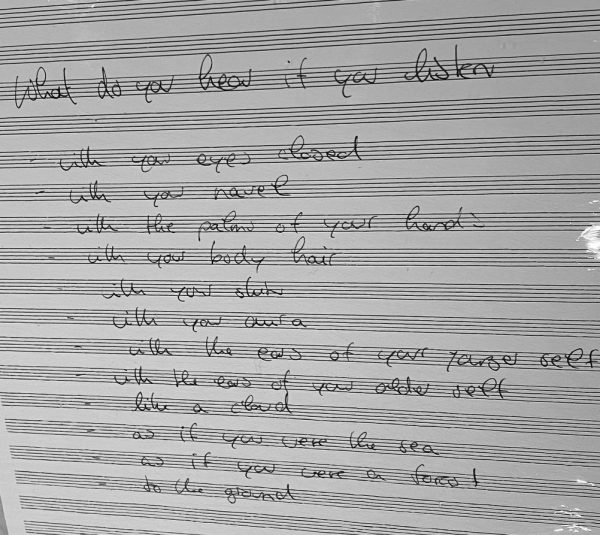
B for Balance
To reach a balance, to keep the balance or one’s balance, this highlights the process nature of balancing. Even the old tool of a balance (scale for weights) very much reflects the evening-out of the balancing process. It seems like a temporary balance most of the time. We might evolve from one level to another one. Especially imagining ourselves on a (body weight) balance in the morning and then throughout the year or years, this appears like a dynamic trajectory. The nature and/or nurture connection is evident. Beware to search for synonyms of “balance” on the internet. You get more than 3000 synonym (Link) meanings and 30 suggestions for definitions (Link) to contemplate on. I like the nice physical experience of balance and the simple (a bit nerdy) explanation of it. Economist get very excited about balance of payments and the ways to achieve equilibrium or equilibria. Balancing personal accounts can be a bit painful at times, but balancing in the arts gets our imagination going. Dancing is about balance most of the time. Playing with your own balance, the balance when 2 or more persons are in action, how not to be absorbed by such experiences. In music, the balance is a primary issue since Bach’s “wohltemperiertes Klavier” and balance and tension are the origin of much jazz. An image or photo might be balanced, certainly architecture is playing with or restricted by balancing acts. Herta Müller’s “Atemschaukel” has thrown us off balance for a while. History we study often with a concern for a balance of power. In peace and war times, the balance of power within and between countries or superpowers are a long-lasting research issue. At times when this balance is at risk or completely out-of-balance we are deeply concerned about the return of a balanced situation. Babies and children draw comfort from being balanced. Adults as well. Let’s try again (chanson). (balance22-venice -video). 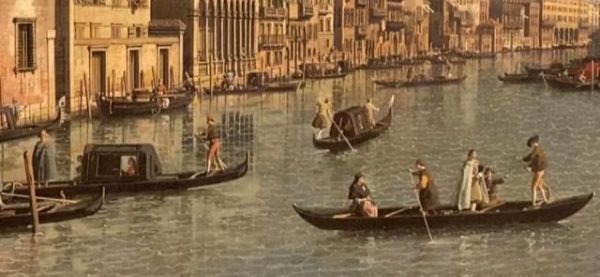
A for Action
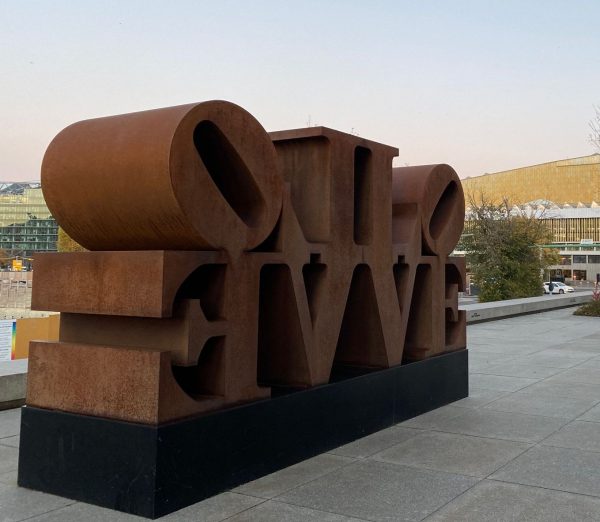
The A is everywhere. A is the beginning of the Alphabet, Google is our new Alphabet, we just have not realised it. A simple A-rating in investment is not good enough, AA or AAA is the goal. All this calls for ACTION. Do not be stopped in your action by reading on “Action theory” by Parsons, Rational action is the basis of most economic reasoning before the behavioural turn of economics. It is commonly acknowledged now, that rational action might not always be as rational as we want to believe it is. “Frame selection” as theory to explain our choice of action is fashionable in the social sciences. Transforming values and intentions into actions is a big challenge. Many jokes turn around this issue, like intentions to get up early in the morning. Find out whether you are an actionable leader. You should have at least a few “actionable items” on your to-do-list. Of course, Microsoft recommends actionable items to improve our productivity while spending hours on emails.
Well, early philosophers already distinguished between “vita contemplativa” and “vita activa“. A lot is about finding the right balance here and Hannah Arendt’s differentiation of active life in labor, work and action. She puts emphasis on action as a way to distinguish ourselves from others. The same thought might lead to very different actions. Hence, acting on one’s belief or values could lead to very different policies for just 2 persons. Action Artists perform even in inaction. We are back to basic questions of democratic procedures as a form to moderate between different opinions or possible actions. Lots of other A-words come up now: ambiguity, anxiety, alienation, affirmation, affect, affection. In Greek, A might be associated with Apollo, In German with the famous “Angst”, but French is overriding all this with “Amour”.
Z for Zero
Zero is more than just a number. Originally the Zero=0 was a simple placeholder for higher order numbers. The concept of 0 is useful in calculus. The digital revolution is based on 0 – 1 systems. Beyond this, there is a philosophical sense to it as well. Think of nothing, black holes, empty space, “ground zero“. Emptiness might not be empty at all, as for those filling your empty space (ets) with an empty—log. In Philosophy the nihilists or nihilism reached a lot of prominence. “God is dead” leaves us with a void that asks for alternative solutions. Beware of simplistic answers. Study the origins of democracy and the need for freedom of expression as a basis for new concepts based on fundamental values.
“Zero”, the group of artists in “Zero foundation” have made a significant contribution to the development of art in post-war Europe. The catalogue of the exhibition in Amsterdam and Berlin 2015 inspires imagination beyond today. Time passes on to achieve zero-emissions. Zut alors, the last Z-word to finish the countdown 3-2-1-0, I guess. (P.99 zero catalogue 2015)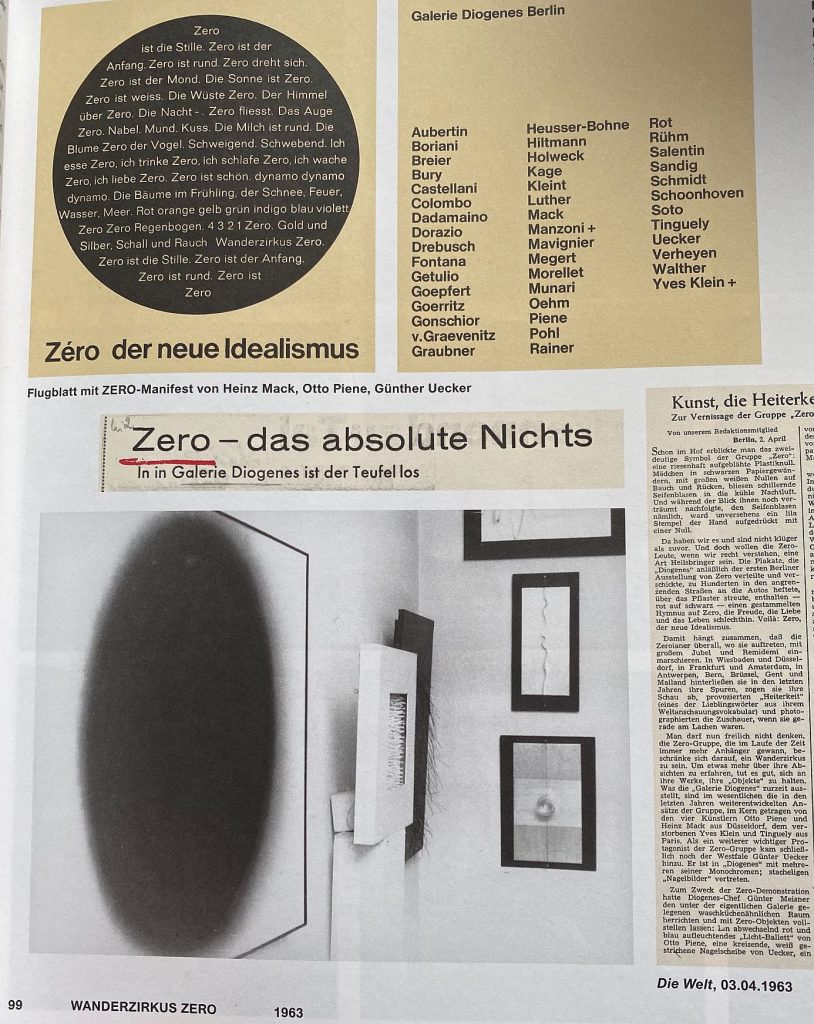
X for Xeno
Xeno is the root of the much more commonly used words of xenophobia or xenophilia. Xenos, in its Greek original, just means guest, strangeness or coming from another place. With the awareness of coming from another place or dreaming of another place we create the link Xeno-link to migration. Everybody knows about migration experiences, be they just from one village to the neighbouring one, rural- urban migration or beyond language or legal boundaries. Interesting new perspectives on the issue are rare. To view migration from an optimism or pessimism angle is a bit like a Picasso-like view on the century-old topic. Beyond out-migration and in-migration there is the population left behind in the villages, regions, countries or nations. Optimism seems to guide the outmigrants. Realizing to become viewed and stigmatised as an immigrant might reduce optimism considerably. Pessimism might spread among the persons who do not succeed locally or to migrate in those sending regions or countries. Migration is a selection process of multiple forms. The western view of in-migration has for most parts focused on labour market related preferences. Skill shortages urge us to accept the “being somehow different” more easily. Learning to cope with this is called “intercultural competence”. In Berlin this is accessible through learning-by-doing or going to cultural events. Even there, 2 further steps are needed:
First step ahead, have more diversity everywhere, including so-called high art or centers of excellence (video xeno video22). Second step, consider it strange, if diversity is not the standard or part of day-to-day or normal life.
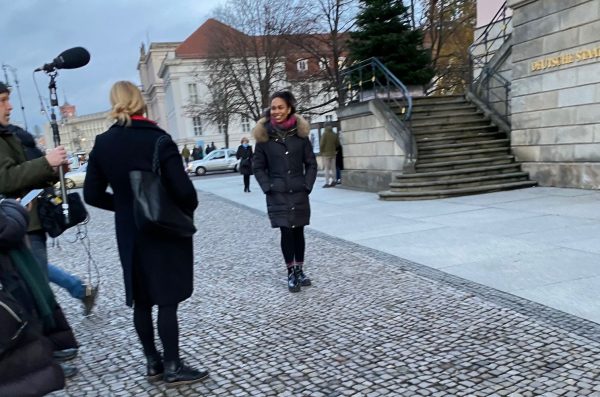
The performance of Mozart’s opera “Mitridate” at the Deutsche Staatsoper with performers and creators (booklet!) from all continents might be a good start to nourish xenophilia instead of xenophobia.
Q for Question
Quality and quantity or queer and query could have made valuable entries here as well. Common to all is the underlying process of questions. Questions put to oneself, to others, society or supra natural or supra national instances. Can quantity turn into quality? Is a queer perspective a new one? Is a query in a programming language the beginning of each algorithm? Questioning is a child’s “natural” approach to understanding the world. This does not stop soon after childhood, but it is occupying, if not haunting, us until the end of our life. When is this exactly happening – the end thing? Are we free to chose this? Just try to answer one of these questions and you’ll find out how one question leads to the next. We are all the same in this behaviour. However, we all find different stopping rules to the query algorithm. Religion is a fast shortcut to stop further questions. Sciences are the never, ever, ending type of questioning. Mathematics solved part of the problem. For a lot of series we are able to calculated the limit value towards which the series evolves circumventing the lack of a stopping rule. Fundamental human rights are such a far-reaching stopping rule. Just like after the French revolution, the question was, how to quickly spread the message of human rights. Didactic and paedagogics evolved in parallel. From “cogito ergo sum” to “rogatio ergo sum”. 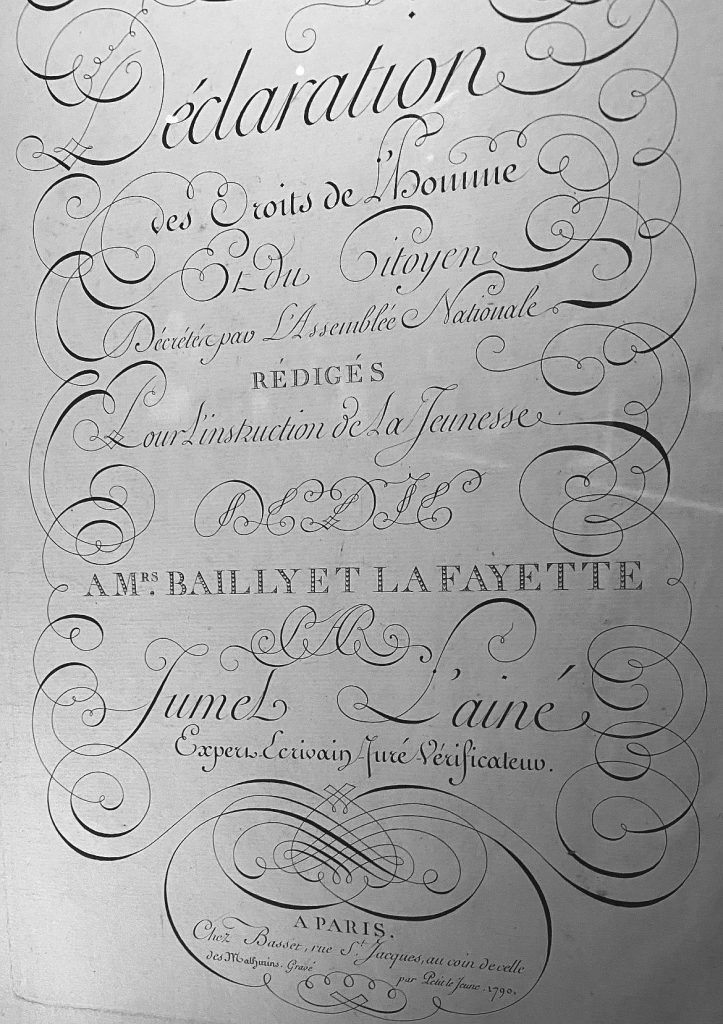
O for Optimism
Looking back at the end of every year to what happened in the last 12 months gives mixed feelings in annual repetition. Developments of nature and biodiversity are sometimes troublesome (variants of viruses like omicron). Despite wars and man-made disasters most people have a capacity to bolster with optimism. To view a glass as half-full rather than half-empty is a common description of two different perspectives on the same fact. Additionally from a longitudinal perspective it matters, whether you started from a full glass beforehand or from the empty glass. In experiments we would need to clarify the role of the starting point and evolution before the statement on the 50-50 state of affairs.
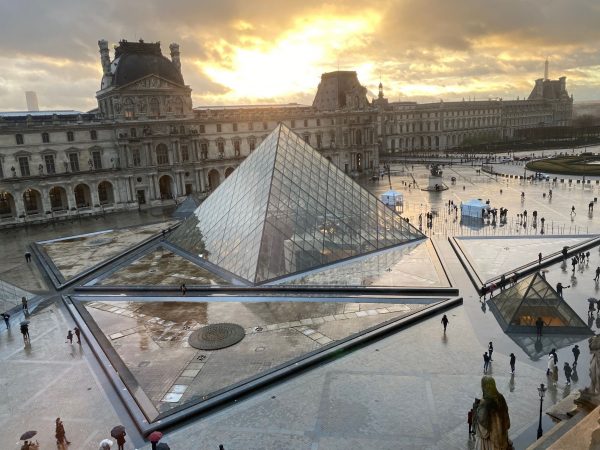
In the French enlightenment, represented by Voltaire‘s “Candide ou l’optimisme“, a critical view on the optimism of Leibniz is expressed. The optimistic claim of Leibniz, “we live in the best of possible worlds” is questioned by Candide who believes taking care of his own little garden is probably the best he can do to preserve nature and the world. These two apparently opposite perspectives and conclusions on the potential of human action we find reflected still nowadays in politics and world affairs. Do we stand up to defend human rights or do we believe the fight is futile? The optimism embedded in Ukranian culture, for example, demonstrates the power that might come out of optimism. It would even go as far as stating that optimism is a precondition for democracy, always striving for the improvement and spread of democratic procedures. Creating opportunities to more freedom to do something is the driving force besides ensuring to curb infringements on one’s freedom. Optimism is a close ally of imagination, imagination of all people living in peace. A nice sunset gives hope for a nice sunrise as well.

I for Imagination
We are all full of imagination. The human brain hardly can do without it. It could be understood as if thinking of oneself is a continuous process of imagining and reimagining oneself. We just developed or were forced to suppress imagination at various instances throughout our lives. Day dreams are rarely tolerated, starting at school, then on the job and probably for a long time also about the way we imagine our own ending or life after death. Just trying not to think, like in meditation, seems to be a very hard exercise and it demands long practice to arrive at longer durations. Abstraction is one of the ways of art to allow imagination to rule the process of creation. In view of the anniversary of Pablo Picasso in 2023, the Brussels Royal museum of fine arts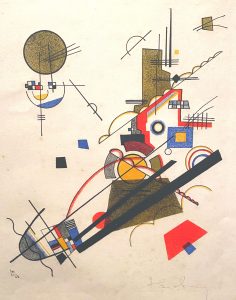 is presenting a paedagogic reflection and demonstration how Picasso emerged on his way towards abstraction as his preferred way of imagination and reimagination as part of the realisation process of his art work. As part of the Cubist revolution Picasso is quoted in this exhibition on how he paints: “Je ne peins pas ce que je vois, je peins ce que je pense.” and “Chez moi, un tableau est une somme de destructions.” Nice imagination, reimagination and de-construction I would say. Like the imagination depicted above from Paul Klee reflects the accomplishment of a new form of pictural language. Try imagination, it isn’t hard to do, “John Lennon” sang once. In Brussels you can try seeing the cubist way in the Picasso exhibition, a good way to prepare yourself for the next visits of fabulous exhibitions in honor of Picasso in 2023.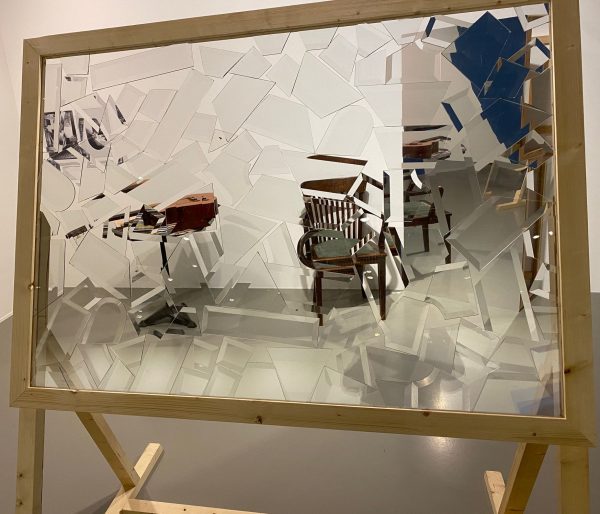
E for Enterprise
There is a new start-up scene in development in Germany. Interesting to witness the new entrepreneurial spirit. Many of the youngsters grow out of their peer community, wanting to try new ways of working and living together. The new bottom-up or grassroots form of growing a business out of a subculture seems to be an adequate response to the growing diversity of societies and easier ways of community building through online social media. Name it “reach” today, it is similar to what you previously called having a customer base. The new element refers to a blending of cultures. Learning through being online connected to the world, yes, the whole world, allows wide-spread influences from other sub-cultures, be they American, Asian or African. The young are open-minded to new stimuli like “Ikigai” from Japan and, of course, the life histories of founders and individual biographies from entrepreneurs like the legend of Steve Jobs, Apple’s legendary founder. Imagineering has become part of the movie-influenced influencers. Short clips out of a longer story build communities. The witty comment, like at school, gets more attention than the long boring story of the preacher, teacher or the mansplainer. The experience of “flow” is all around these communities and this creates the specific magic of the start-up scene. They take each other to new levels, mutually, reinforcing their preferences and life-styles. They are well aware of the risks they are taking. “Keinhorn” German short for “not an Einhorn”, the one billion value threshold for super successful enterprises taught them crucial lessons. The “ecology of organisations” which I referred to in my courses at the now renamed “Constructor University” previously “International University Bremen”, then “Jacobs University”, (let’s see what comes next?) is an important complementary research tradition to assess the “survival” of enterprises. I still recommend this University, which I quit to start new endeavors. It carries in its several 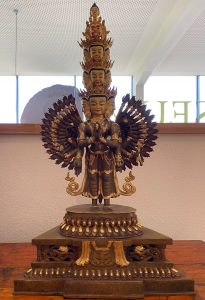 “names” the important message:
start, fail, change, (repeat). 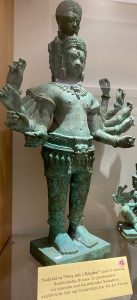
Kritik der Kritik
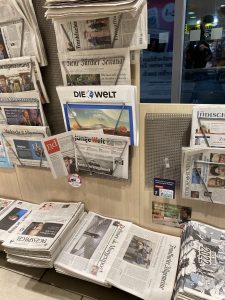
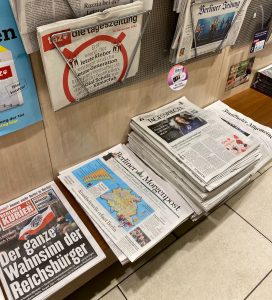
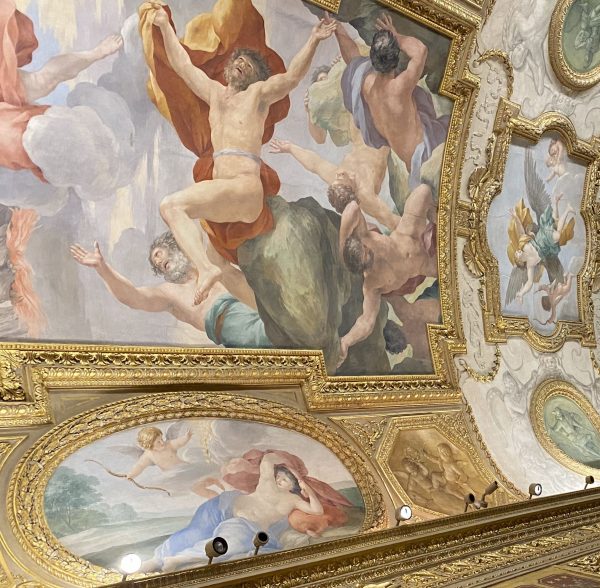
In Berlin türmen sich als ökologisches Desaster die nicht verkauften Zeitungen auf. Darunter gerade der in neuer Aufmachung erscheinende Tagesspiegel. Mal gespannt, ob dieses teure Experiment gelingen wird. Mit sorgfältig recherchierter Kritik des kulturellen Schaffens und der etablierten Häuser rühmt sich der Tagesspiegel nicht gerade. Vielleicht ist das ein Grund, warum die beständig weniger werdenden Zeitunglesenden ebenfalls auf andere Medien umsteigen. Eine Kritik, wie die von Ulrich Amling im Tagesspiegel vom Dienstag 6.12.22 Seite B24 braucht wohl keiner. Soll er doch besser gleich Bratwurst essen auf dem benachbarten Weihnachtsmarkt. In dem neuen Format des Tagesspiegel finden sich die Kritiken eh jetzt ziemlich weit am Ende, wo der eilige Lesende meist nicht hinkommt vor dem Einschlafen. Ich würde eher davon ausgehen, dass solche Kritiken etablierte Lesende abschrecken. Für Berliner Schnauze oder Wutbürgerniveau im Kulturteil muss ich kein Geld bezahlen. Die internationale Besetzung und Ausrichtung mit Regie Satoshi Miyagi erlaubt Berlin internationale Aufmerksamkeit zu erlangen jenseits des Berliner Inner Circles von Freund- und Feindschaften. Auf der Webseite der Staatsoper lesen wir: “Ein japanisches Inszenierungsteam um den Regisseur Satoshi Miyagi taucht Mozarts »Mitridate« in ein zauberhaftes Ambiente …”. Das lese ich dann umformuliert im Tagesspiegel auch genannt Spitzel: “Unter den Linden taucht derweil ein japanisches Team um Regisseur Satoshi Miyagi “Mitridate” in Ströme von Gold”. Platter gehts nicht. Zeitung ist halt meistens 2D und nur wenigen gelingt es kulturelle Events ebenso plastisch darzustellen, wie sie eben auf der Bühne wirken. Tolle Einführung vor der Oper im Foyer übrigens. Wer Internationalität und Interkulturalität schätzt kommt hier voll auf seine Kosten.
Die Stapel Tagesspiegel als Altpapier, die zurzeit täglich entsorgt werden müssen (Foto vom 6.12.2022 18.26h am Südkreux), sind ein weiteres tägliches Ärgernis. So werden bestenfalls fake-news über eine Tageszeitung selbst produziert. Branchenkenntnis über Zeitungsmärkte beklagt das schleichende Rückbau des Mediums. “Zwar setzte sich die Erosion der Absatzzahlen fort, aber sie verstärkte sich nicht. Bei den Regionalzeitungen nahm die Zahl der Abonnements im Westen um drei Prozent auf 7,55 Millionen ab.”(BDZV Relevant 2-2021 S.25). Oft sagen Bilder mehr als Worte und dabei ist goldfarbenes Lametta in der Weihnachtszeit in der Staatsoper vielleicht doch sehr passend.