The Brussels Art Fair (Brafa 2023) with its long tradition is certainly a major highlight in the world of art in Brussels. In view of the languages spoken at the fair, mainly French and Dutch, some English with here and there a word in Spanish or German, the international reach is probably still not at the level of before the corona crisis.
The availability of established, internationally recognized art over many centuries on the art market is remarkable. Whereas before the crisis speculators bought art to shield their fortunes from a high inflation and/or politically instable period, nowadays it seems to me, that some art is returning to the market due to the need for liquidity of speculators or risks of confiscation in case of dubious previous acquisitions or ownerships. Renowned galleries, of course, provide impeccable certificates or information on them, a tricky business in itself. Anyway, the tour on the fair is a “parcour” through the history of art, mainly through the Western or European arts across centuries rather than decades. Most persons will find splendid examples according to their preferences of art ranging from paintings, sculpture, prints or other artefacts. Beyond the impressive individual art work, the arrangements and “mise en scene” of art is another learning experience at the fair. Whereas most public museums are happy to make accessible as much as they can of their collections and archives, the private art market has another objective. Effective and convincing presentation of the artefact is likely to “enrich” the value of art work as well as the seller and the dealer. Technology allows great lighting and some otherwise “sombre” artwork becomes a shiny little piece catching eyes, hearts and wallets. For some visitors it works probably the other way round.
For persons overly stimulated by art, I recommend to close the actual or virtual visit with a look at the little bit cheeky artwork presenting Belgian chocolate next to royalty (Gallery Delaive, showing Peter Anton’s “Paradise Variety” next to Andy Warhal’s depiction of a Queen, see below or their Instagram presentation). A sublime moment to repeat the experience at home at moderate prices with your very own box of chocolates. At a price of 10€ each box you can enjoy roughly 2000 of them for the price of the art work. The question is: What is more healthy? Think about mental health as well. Alternative question: Art on a Fair is fair, unfair or fair traide? 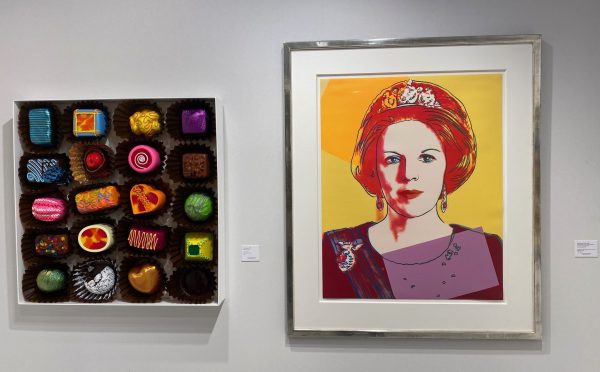
Romanatik2
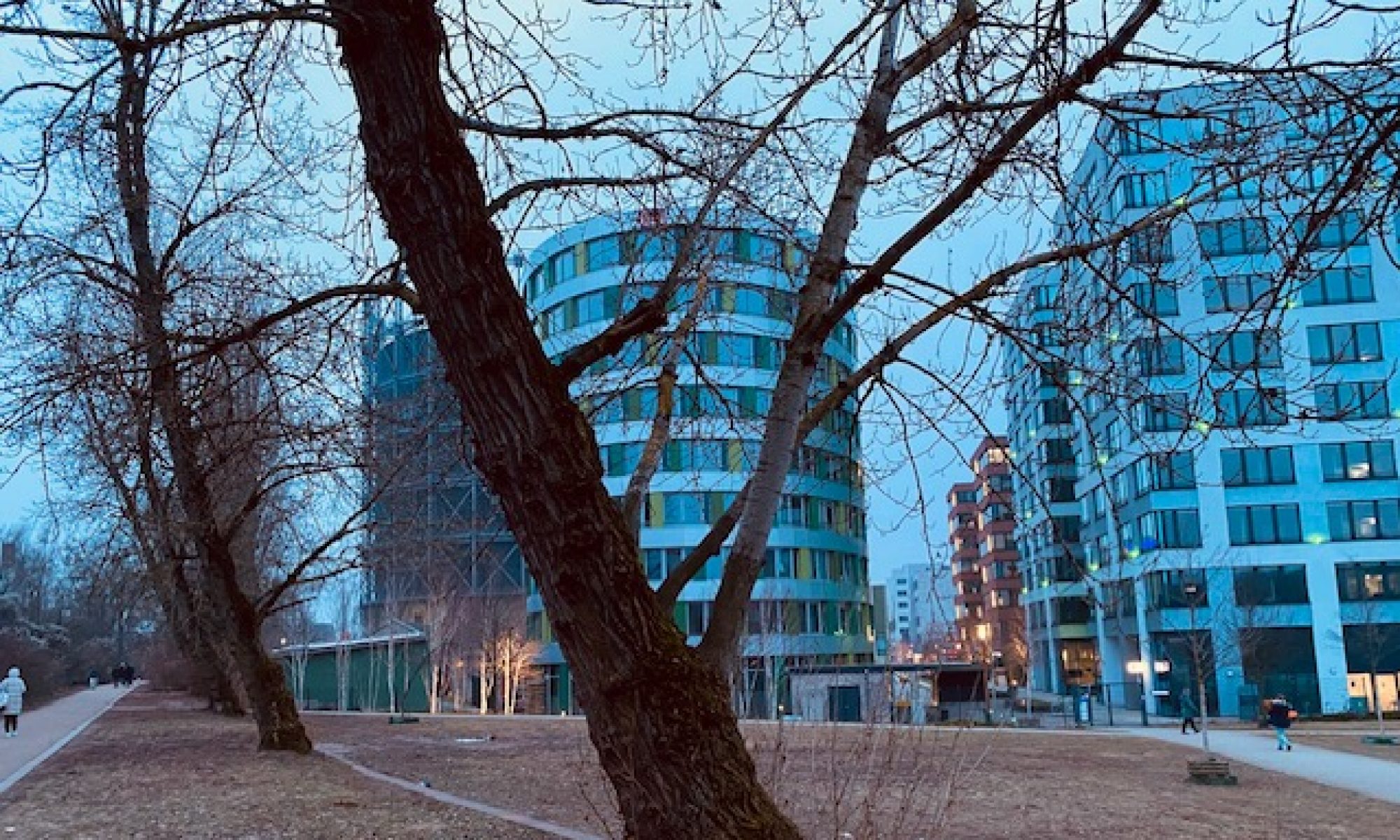
Zur romantischen Periode gehören die bekannten Lieder von Schumann und Schubert. Meine Auswahl dazu liebäugelt besonders mit den Liedern zum Lindenbaum. Die Linde mit ihrem süßlichen Duft an warmen Tagen hat Malende der Romantik sowie die Dichtenden und Komponierenden betört. “Am Brunnen vor dem Tore da steht ein Lindenbaum …” kannte vor 50 Jahren jedes Kind. Etwas weniger bekannt sind die fabelhaften Rückert-Lieder von Gustav Mahler: “Ich atmet’ einen linden Duft …”. Für mich steht dabei die Atmosphäre in der Nähe der Linde im Vordergrund. “Unter den Linden” assoziieren viele nur noch mit der Verkehr in der Hauptstadt auf dem Weg zum Brandenburger Tor. Zum Reinhören und Reinversetzen in die Romantik sind die Lieder ein idealer Weg. Der Frühlingsglaube (Schubert Op.20.2) besingt die linden Lüfte und das Aufblühen der Natur. Es keimt die Hoffnung auf, dass sich alles zum Besseren wendet. Doch etwas Skepsis ist schon angebracht. Im Lied “Die abgeblühte Linde“, ebenfalls von Schubert vertont, ist dann das Altern und die Treue thematisiert. Der Zyklus der Natur und Jahreszeiten nimmt scheinbar unaufhaltsam seinen Lauf. “Nur der Gärtner bleibt ihr treu, denn er liebt in ihr den Baum”. Das weise Herz will Gärtnern und erhalten, was so viele Emotionen und Optimismus hervorgebracht hat. Wir müssen die Bäume retten, aus Pflicht die Romantik inklusiv und erlebbar zu erhalten. Dazu können wir mit den Linden ja schon einmal anfangen. 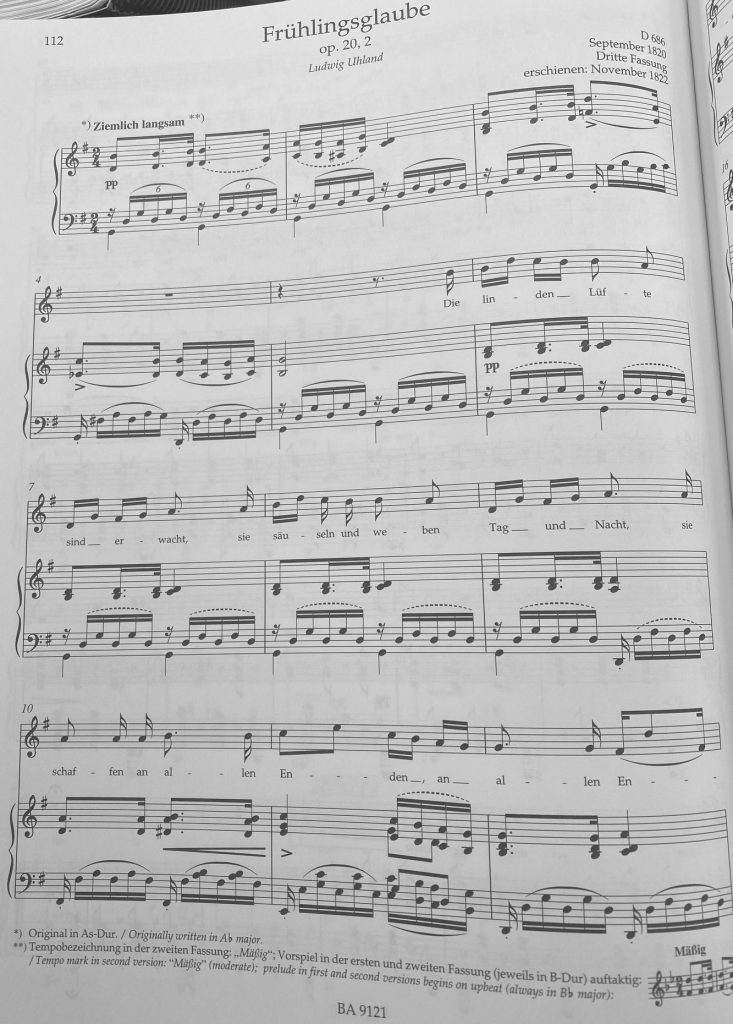
Photo
Photography has captured our imagination for years already.
It is now a daily activity of many people to “capture their experience”, if not even their existence in some photographed way. Susan Sontag (1977) coined the phrase that photography “feels like knowledge – and, therefore, like power”. You are in a relation to the world. Taking the photograph in my view is the Mephistopheles moment. You are in control of the object taken by the camera. Arranging the scenery, waiting for the perfect moment, expression, light or colours is like mastering a situation, an atmosphere, an emotion. Photographs have the power to work as a document. Editing has become easy and pervasive with digital tools. However, it was always present in the traditional technical parts of shooting and developing subsequently in the dark room.
“to be taken” on a photograph is more like the Faustian moment of realising that you are manipulated, or at risk of being made use of, for some purpose, unknown to you at that moment.
Beware, a photograph is always just an image of an image. The photographer is the intermediate person using a specific technology to transform his perception or vision of (her/his) reality into another image of it, creating some form of virtual reality.
In addition to this twofold transformation, the third transformation is historically the technical development of the negative into the print (see below). Nowadays, this is the compression and editing into a specific format. Despite these transformations, a photograph is admitted in court cases as providing evidence of guilt or to identify an illicit act (excess of speed limit). Infringements on privacy are the rule rather than the exception. Who is that person sitting next to you, and at what time of the day?
I, personally, apply photographs often like note-taking for research to capture spontaneous ideas or associations, which await further interpretation or may serve (served) as inspiration.
Compared to photography, painting has been a more elite artistic practice for many years. Taking photographs has democratised the image-taking art forms. Instead of originals, many of us have collections of photos from museums around the world. We take “photos of photos” to reveal the world around us and reflect on values. The social construction of the world is directly visible through the process of taking, collecting and curating photographs. Construct your own world or the world will construct or deconstruct you instead.
Politicians (e.g. Angela Merkel), John F. Kennedy or historical figures, all had their defining moment condensed into one or several photographs, what have been famous paintings in art history before. Susan Sontag wrote 50 years ago: “… a photograph can be treated as a narrowly selective transparency”. The third transformation of developing and/editing, shown in the images below, explains what we might learn from this citation in a technical sense. Just as courts have to evaluate, whether a proof is admittable and contributing to finding the truth; viewing photographs is a balancing act between art and truth.
“Even when photographers are most concerned with mirroring reality, they are still haunted by tacit imperatives of taste and conscience.” (Sontag, p.6). Photographs document sequences of consumption. We should frame this as CO2 footprints in the 21st century. Restricting print to a few “best of” was and is necessary to reduce the dirty footprint of photography, particularly since photos have become a mass media as much as the preferred media of masses.
With photographs we certify our own certificates, for example in case of job applications or passports. We encounter “cosmopolitans accumulating photograph-trophies” in all instagram-able locations.
Taking photos is like a “friendly imitation of work” (p.9), you do something useful in documenting the images of a world in danger of being lost. We can give importance to otherwise forgotten realities, attach importance even immortality to something or someone of our choice. We make history through it or try to make it at least. “When we are afraid, we shoot. But when we are nostalgic, we take pictures.” (p.9) Sontag defines photographs as part of the repertoire of surrealism (p.77 ff), “to finding beautiful what other people found ugly or without interest and relevance …”). We are at risk to mistake photographs as reality and experience the original as “letdown” (p.147). The return to polaroid instant photography brings us back to a proclaimed authenticity of the orginal, unique moments, with supposed unfiltered not-edited images. The true moment of having had fun or joint experience without use of photoshop to add the missing member.
“I take photos, therefore I am”, has become the mantra of modern societies. We tend to ignore that we are taken on photos a million more times than we take some ourselves (video surveillance). It is a question of power in the end. Edit yourself or you become edited.
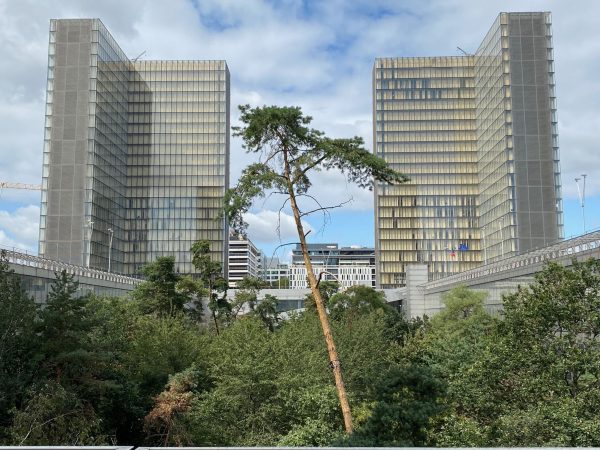
(Image: Prix du Tirage photographique BnF 2022 Laurent Lafolie, photo below). 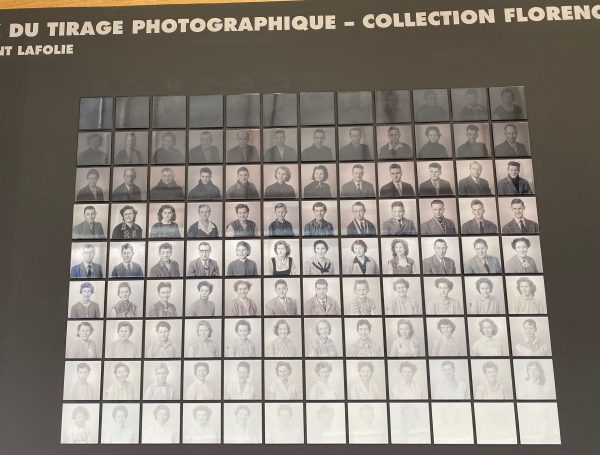
Flotow Analyse
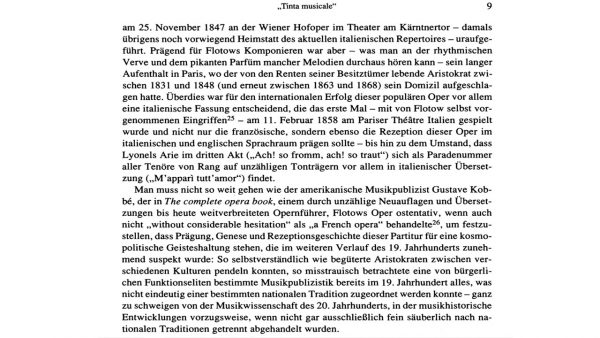
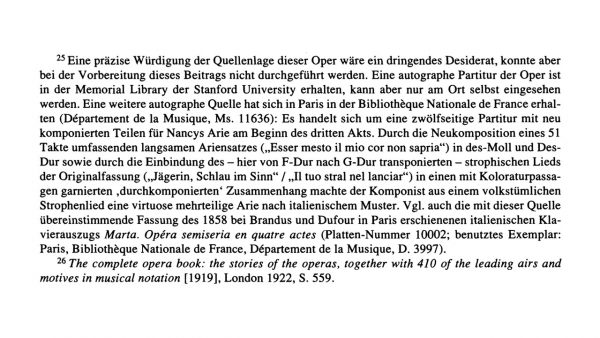
Interessant ist der Aufsatz über Flotows’ Martha, der vor einigen Jahren in einer musikwissenschaftlichen Zeitschrift erschienen ist. Anselm Gerhard ordnet die Oper unter Berücksichtigung des Werdegangs des Aristokraten Flotow dem französischen Stil der Oper zu. Das Schicksal des von Flotow war es wohl, mit seiner aristokratischen Herkunft aus Preußen, Deutschland, ein Uraufführung in Österreich, dann mit Bel Canto assoziert überwiegend auf italienisch aufgeführt zu werden (Metropolitan Opera 1914? mit Caruso), aber ein französisches Opernschema basierend auf einer irischen Volksmusik mit einer Story in England zu verbinden. Kosmopolitisch nennen wir das im 21.-ten Jahrhundert, nicht oder schwer nationalistisch verwertbar im 19. und 20.-ten Jahrhundert. Für die Handschriften ist es wohl am besten, gleich in die Bibliothèque nationale de France (BnF) zu fahren. Im Saal Richelieu ist das dazu passende kunstgeschichtliche Ambiente noch nachvollziehbar. Quelle:
Gerhard, A. (2004). „Tinta musicale“ Flotows „Martha“ und die Frage nach Möglichkeiten und Grenzen Musikalischer Analyse in Opern des 19. Jahrhunderts. Archiv für Musikwissenschaft, 61(1), 1–18. 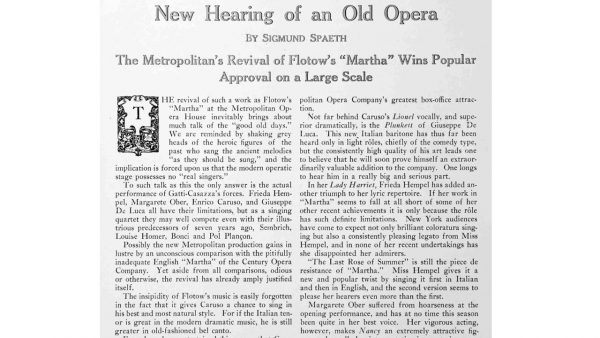
Zigarre
Die Zeiten, in denen Zigarrenrauchen Schlagzeilen machten, sind eigentlich lange vorüber. Heute wundern wir uns lediglich über die Sorglosigkeit der Personen bezüblich ihrer Gesundheit. Friedrich von Flotow hat die Szene im Salon de Marquis de Custine (Paris) in seinen Erinnerungen vorzüglich beschrieben. Die Schriftstellerin George Sand hat die Gemüter mit dieser Rauchszene nachhaltig inspiriert. Frédéric Chopin (1810-1849) hat an diesem Abend seiner (späteren) Mäzenin eine Ovation dargebracht. Flotow hatte sicherlich einen inspirierenden Abend verbracht. Seine unveröffentlicht gebliebenen Memoiren wurden von seiner 3. Frau publiziert. Ein Vorabdruck auf Schwedisch habe ich in der Svensk Musiktidning vom 15-8-1883 gefunden. Datiert ca 6 Monate nach seinem Tod, heute vor 140 Jahren, ist das eine Würdigung des Komponisten in Schweden und eine Anerkennung der Aufarbeitung und Verbreitung seines Werks durch seine Frau. Die Aristokraten und ihre Kreise waren Anregung für viele künstlerische Kreise. Das wohlhabende Bürgertum hat später diese Rolle übernommen. Heute brauchen wir zahlreiche öffentliche und private Stiftungen oder Crowd-Funding für diese Events und Inspirationen.
(Quelle: Flotow, Friedrich von. (1883). F. von Flotows minnen. II. En soaré hos marquis de Custine [Beskrivning av G. Sand (baronesse Dudevant) och Chopin]. Svensk musiktidning, 3(16), 121–122. ) 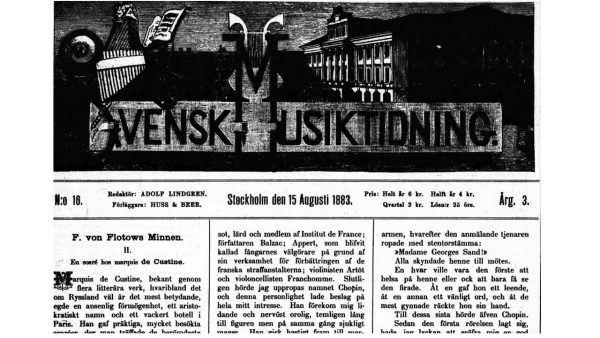
Writing
“Are you writing or what?”
New research on the fabrication of writing allows to debunk some of the received ideas about writers as living and drafting in a solitary space. However, the facts frequently show something different. In the journal of the BnF (images 2022), (Chroniques des la BnF Nr. 95 p.9 pdf-file) the BnF makes transparent the creative cosmos of Marcel Proust (Exhibition closed). From correspondence and other influential images, we learn about the “fabrique de l’oeuvre”. Far from writing his books from front to end in a linear fashion, Proust drafts “isolated sequences which he mounts, demounts and regroups sometimes even years later. These clippings of text are arranged by him like a patchwork, a collage rather than following a linear progression. Just peeping into the writer’s studio, drafting style and “paperoles” is fascinating. What a mess, some would say. What a huge imaginative space he has been living in, despite being reported to draft most of his work while actually being in his bed (Lire Magazine 12-2022). Beds are not always for sleeping, only. Today’s start-up enterprises frequently start from home, a century ago Proust demonstrated a lot can result from a very tiny physical space, but an enormous space in mind. 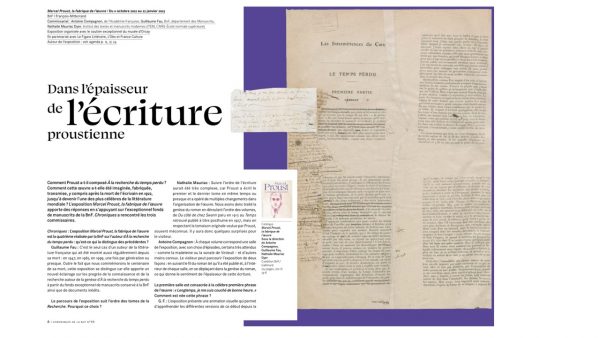
Inspiration
Artists and scientists, all have their sources of inspiration. The most beautiful way of putting this is contained in a poem by Jacques Prévert. “Moi aussi, comme les peintres, j’ai mes modèles…”. The source of inspiration varies from physically present models to imagined ones. Painters and sculptors, we imagine, have their models right in front of them and build on their specific kind of observation, view and vision, seeing more or differently from others, at least since modern times. Poets and authors are believed to draw inspiration from abstraction and imaginative description and narration. Musicians tend to rely on hearing fine-tuned or creative tensions, as much as the resolution in harmonies through sequences of sound. All seem to have a sensitivity beyond the normal and a skill to find a way to transmit to others. Photographers catch representative moments or visualize artifacts and combinations of them in new ways. Scientists are not so different as we might think. Imagination of new hypotheses in established fields is part of their skill set. The transversal skill in all these processes of inspiration is the openness to cross-discipline fertilization. So-called Polymaths reached excellence in more than one field of science, “Polyartists” touch several fields of different arts. Further new innovative combinations of disciplines like they are practices in “centres of advanced studies” are a first step to brings down walls in mindsets and disciplinary ivory tower practices. It will take only a tiny little step forward to come back to the practice of royal courts. The person called “fou du roi” had an important role to play, not only in the game of chess, but in questioning and entertaining leaders. I wish universities, science centres and ministries would allow themselves more of this kind of inspiration. Inspiration is considered here as a source of questioning your own approach from another perspective. Look at your phenomenon of interest with a different model or imagination in mind. New synapses will follow. Let us welcome them to make the world around us a better or more beautiful place. Wait, is more beautiful enough already? Is this a contradiction, better versus more beautiful, or is the latter a subset of the former, or is a tautology anyway? The catalogue of the exposition “Archives des rêves” du Musée d’Orsay gives plenty of insights into images as sources of inspiration for people of all walks of life. 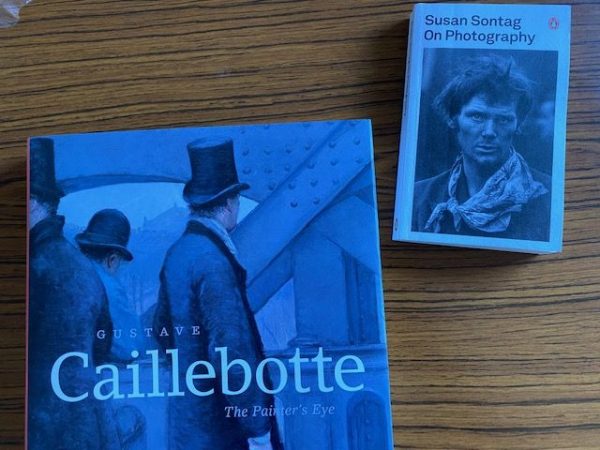
Giselle
Once upon a time, not at the Opera de la Bastille, but next it, in a small theatre called Théâtre de la Bastille, the fairy tale of “Giselle…” was performed. The world-famous ballet Giselle (Karlsruhe Programmheft) is still amongst the most frequently performed magic piece of classical ballet. What is it about? In short: sex and crime. Yes, and it sells well.
Francois Gremaud tells the classic story of excitement, love, deception, death, regret, haunting and memory in a concise and witty fashion. The exemplary dancer is at the same time the narrator of the story as well as the critic and art historian accompanied by a 4 musicians strong orchestra. The educational piece with a “womanxplainer” on stage is great entertainment, full of references, why it is still okay to like the piece in spite of its fantasy-loaded content. Modern dance (Cunningham, De Keersmaeker) has decoupled or emancipated movement from music. In classical ballet, at least, you still know what comes next and this is aesthetically appealing for most people. Besides Wilfried, no he is not part of the “Wilis” (could be an interesting variant), but in the ballet there figures “Hilarion”. He is not hilarious at all. Splendid entries are from Myrtha (close to Martha, but not quite the same) and, of course, Giselle, when she leaves her tomb and turned into a “Wili”. Then there is Albrecht in a pas de deux with Giselle, swirling between earth and space. Aldi dances like mad on impulse from Myrtha, but Giselle vanishes nevertheless. End of story, or is it? Giselle is a Wili and Aldi is the wally. Maybe the story could be retold like in the film “Billy Elliot – I will dance”, which is an emancipatory tale where dance is the liberation rather than part of the dooming fate.
Francois Gremaud with the astonishing performer and choreographer Samantha van Wissen have created a version of Giselle that is musical, aesthetic, funny and critic. For those who enjoy an epic theatre version of Giselle including its “alienation effects”, referring back to Berthold Brecht, will want to read the script as well, kindly distributed as a gift after the show. 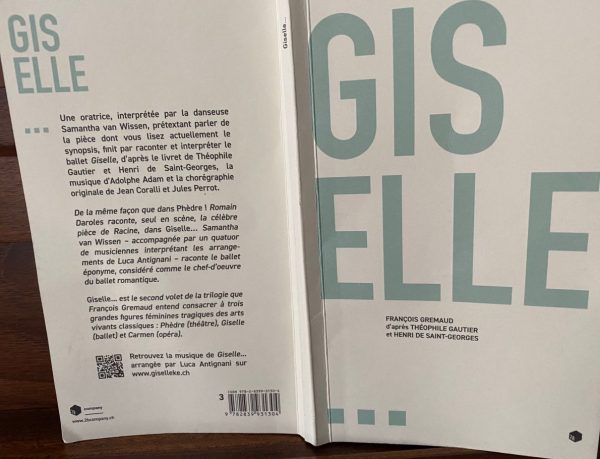
Deconstruction
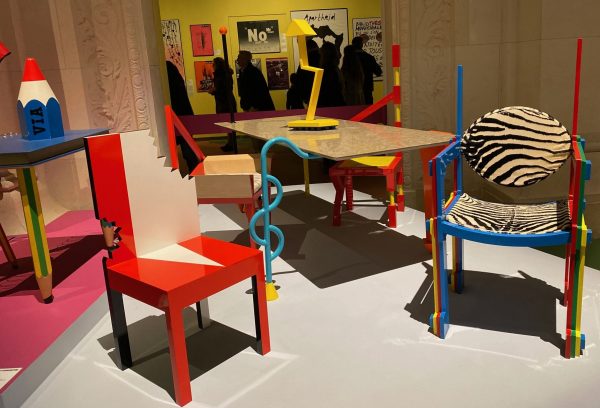
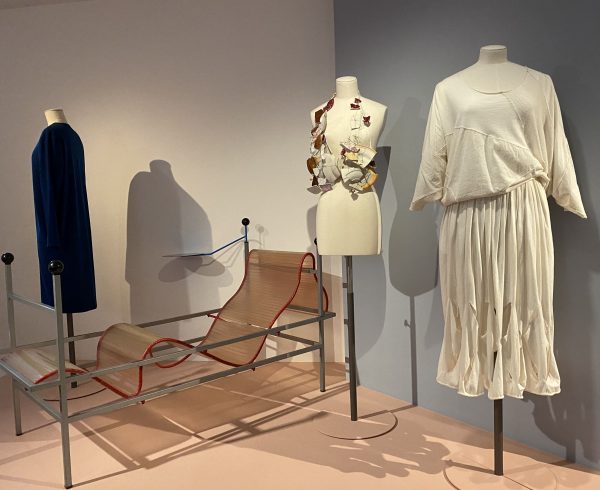
Deconstruction is a powerful tool or even method. Beyond imagineering, deconstruction in the literal sense means take to pieces. In most cases a physical object consists of several objects or parts. By deconstruction we attempt to understand the whole object as the sum of its parts. Before a new product or design is created, many scientists, engineers and artists start to deconstruct existing artefacts. Understanding how the object is assembled, for example, allows you to play around with pieces and maybe come up with an alternative way of constructing the object. The architecture of “deconstructivsm” has left us fantastic buildings. In furniture design there are also nice examples of deconstruction. Paris is a good place to study deconstruction (Explained), perhaps many still read Derrida there. It is a fruitful method beyond its engineering sense for example in law, literature or many other social science disciplines. If you are not mad yet, visit the MAD in Paris to see examples of deconstruction or construct your own deconstruction. Both have a dialectic relationship to each other anyway.
Sublime
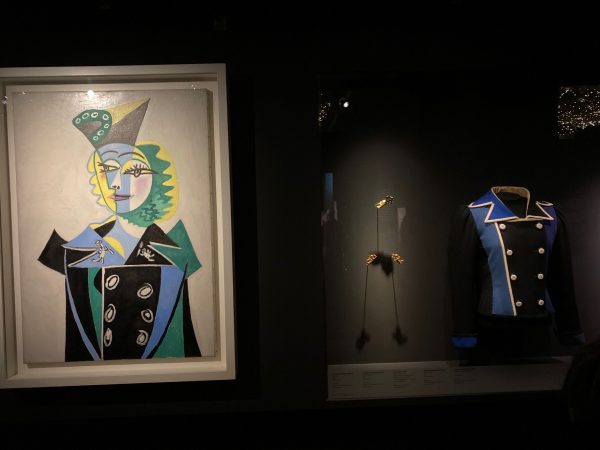
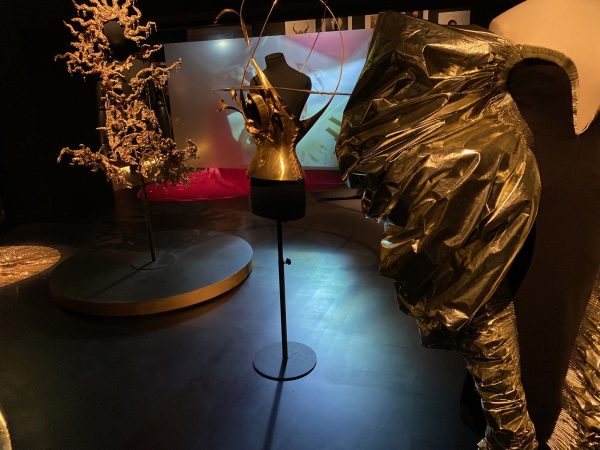
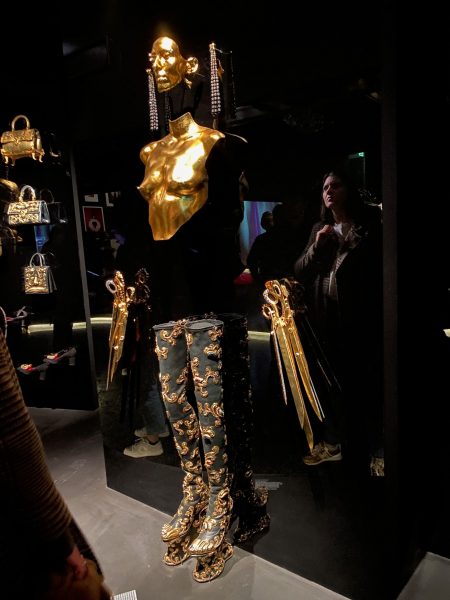
The exposition of art work in the MAD “Musée des Arts Décoratifs” in Paris is sublime. Growing out of fashion design into the work of art can be a process of sublimation: passing from one state of designing one product to producing artwork. The intermediate state of artefacts created for designing a product, like the drawings of fashion designers or scenery and costumes in theatre and operas, are often less visible or subject of exposition. Objects become subjects. A trend in recent expositions is to devote more space to the applied arts like stage design, costumes as well as products of everyday use. “Bauhaus” has a lasting effect.
Elsa Schiaparelli has achieved this sublimation. Starting with extravagant fashion design, her designed fashion objects were adopted by Picasso before she developed into the sublime state of artist with her artefacts herself (see below). Now in this process of subjectivation she is the prime subject of an exposition herself. The combination or arts and crafts (Kunsthandwerk) has been always present in art history. The challenge of concepts combined with arts is more recent or just more explicit since the late 19th and 20th century. Being able to live from your artwork is still a challenge, though due to “Mäzene” and state subsidies it is more feasible to follow artistic trajectories.