Reformation

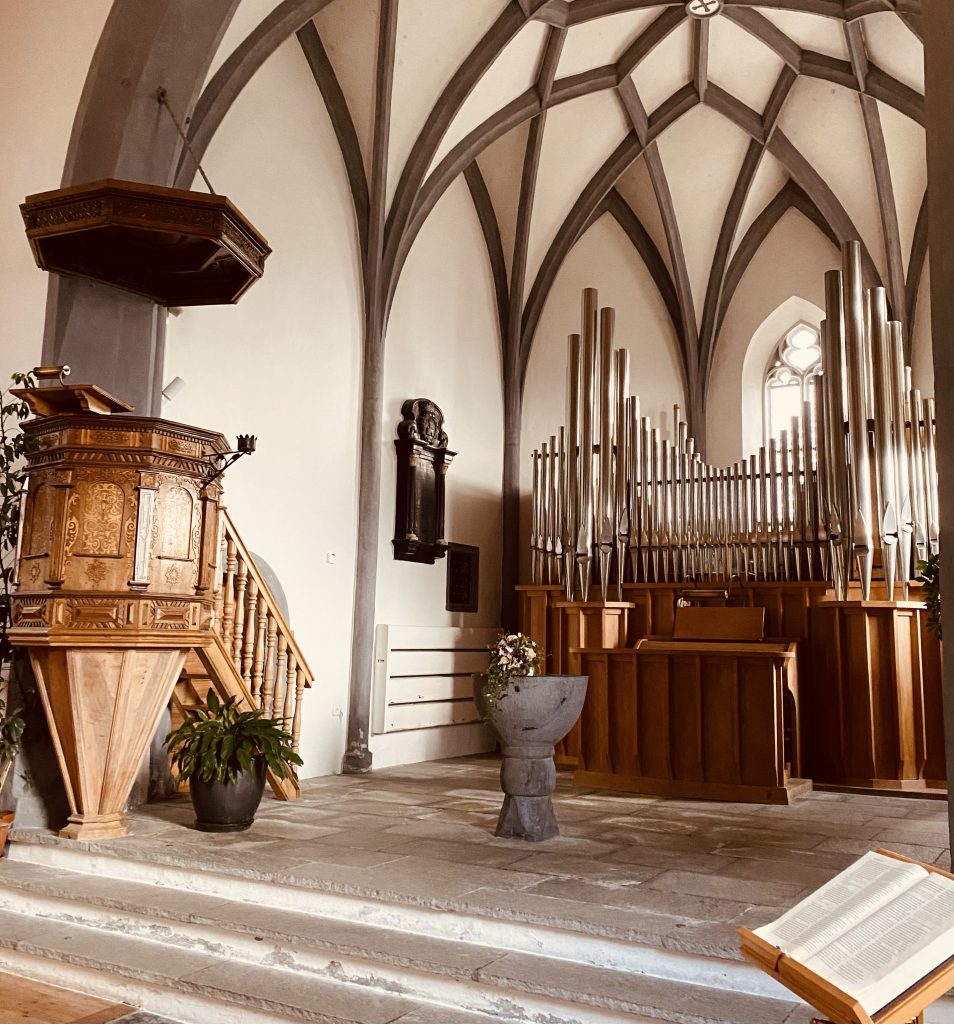
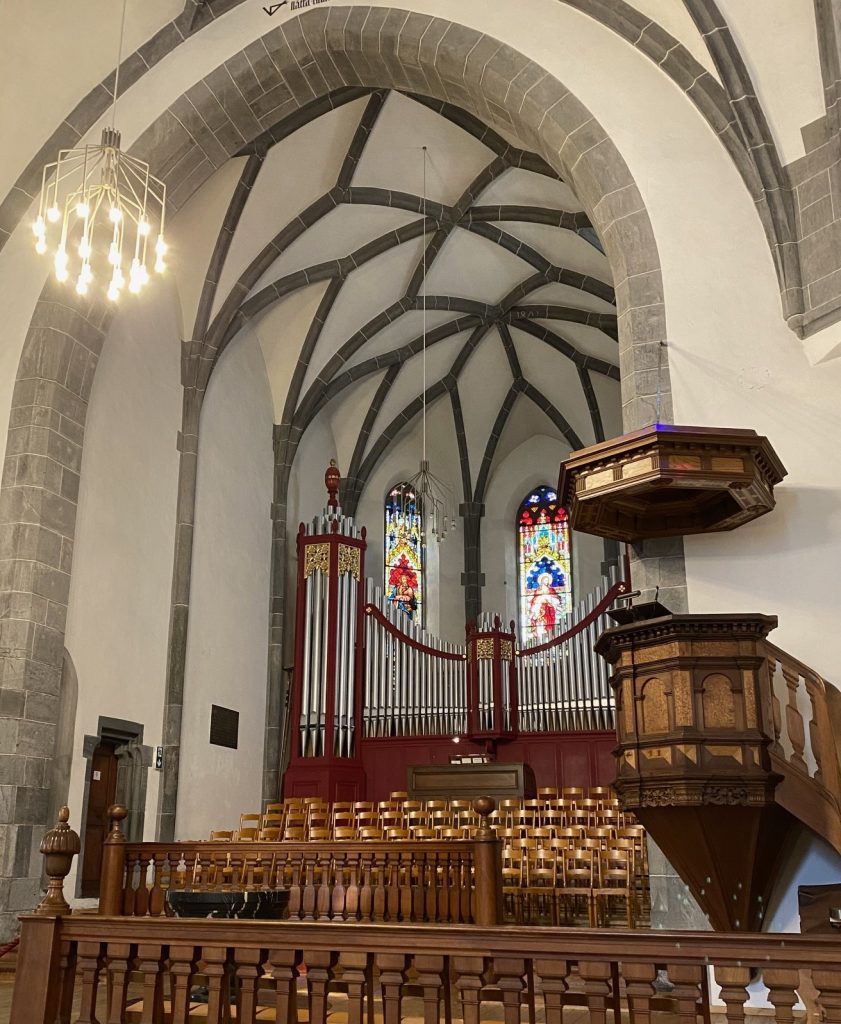
Die Reformation vor 500 Jahren war fantastisch. Die schweizer Stadt Chur hat dabei ihre eigene 500 Jahr Gedenken und Geschichte der Reformation. Jetzt steht uns die Reformation der Reformation bevor. Wie wird die aussehen? In einer kleinen Kirche im Kanton Graubünden, nein diese Geschichte beginnt mal nicht im Stall, steht bereits eine Orgel im Zentrum des kirchlichen Geschehens hinter dem Taufbecken. Vor 7 Jahren spielte selbst ein Mitglied der Berliner Philharmoniker, Albrecht Mayer, ein Kammerkonzert dort. Musikalische Aufführungen oder kleine Theaterstücke,wie Krippenspiele zu Weihnachten kennen die meisten, aber wer kann die historischen Kulturgüter innerhalb einer Kirche noch erkennen und ihre Bedeutung im historischen Kontext erklären. Ein Taufbecken ist schon eine krasse Idee, umrahmt von diesen finsteren Bildern und oft Fenstern.

Die Reformation der Reformation beginnt vielleicht mit dem Öffnen und der musealen oder musikalischen Verwendung, das heißt Erfahren und Erläutern der Architektur sowie des Licht-, Klang- und Raumerlebnisses im historischen Ort. Die angebotenen Weiterbildungen zum Kirchenführer mit Denkmalschutzkomponente sind ein innovatives und zukunftsweisendes Konzept. Es könnte viel kirchliches Personal auf die Reformation der Reformation vorbereiten und weitere Interessierte ansprechen. Die Banken haben zuerst ihre Filialen brutal aus dem ländlichen Raum abgezogen. Bei den kirchlichen Vertretern hoffen wir auf eine menschenwürdigere Reformation der Reformation.

Flims CH 2023
Chur 2023

Garten

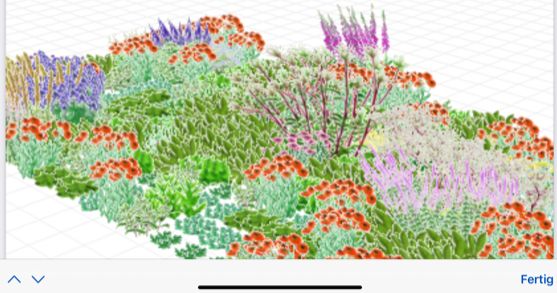
Ach es ist so schön im Garten. Ein schöner Garten will geplant werden. Das gelingt auf besondere Weise mit dem „Pollinator“. Hinter dem Pollinator verbirgt sich ein Kunstprojekt, das viele kleine Gartenkunstwerke zu einem großen verbinden möchte. Spannend ist nicht nur das Vernetzungsprojekt von vielen einzelnen Parzellen zu einem größer werdenden Gesamtprojekt (Aggregation), sondern der für Kunstschaffende gewohnte Perspektivwechsel. Aus Sicht der Bestäuber der Pflanzen und Blumen gesehen ergibt sich eine vogelähnliche Perspektive auf den Garten.
Der Parcour einer Biene oder eines Schmetterlings durch unsere Gartenparzelle regt zum Träumen an. Vielleicht hätte Franz Kafka nach der Parcour-Erfahrung ein anderes Insekt gewählt. Mir gefällt die 2D, 3D, 4D Perspektive, die es erlaubt, den blühenden Garten im Zeitraffer durch alle Jahreszeiten zu visualisieren. Das ist Gartenarbeit ohne die mühsame Kleinarbeit des Pflanzens und Unkrautjätens. Es wird nicht gleich ein Garten wie von Impressionisten in Argenteuil von Monet oder in Yerres von Caillebotte daraus, aber ein farbenprächtiges Kleinod allemal. Mein erster virtueller Versuch (Link) ist schon recht farbenfroh. Lateinische Namen auffrischen ist schon fast ein Beitrag zum gesunden Altern, besonders wenn der Garten einige Kilometer entfernt ist. Im Sommer lassen sich leicht neue Pläne schmieden. Herbst und Winter, Trockenheit und Hitze lassen uns das Gartenkunstwerk nochmals überdenken. Spielerisch ein Gartendesign gestalten, kann der erste Schritt für mehr Natur sein. Biodiversität macht Spaß und hilft uns allen. Kleinvieh macht eben auch Mist.

AI and I

Currently we are eager to run experiments using AI. As in normal life, humans tend to compare themselves with peers or other persons. Social comparisons, “can we still keep up with the Joneses” as in comparing spending patterns across households or neighbours, were for a long time the spice of novels and drama. Nowadays we tend to compare our own intelligence to the artificial intelligence. Here we go.
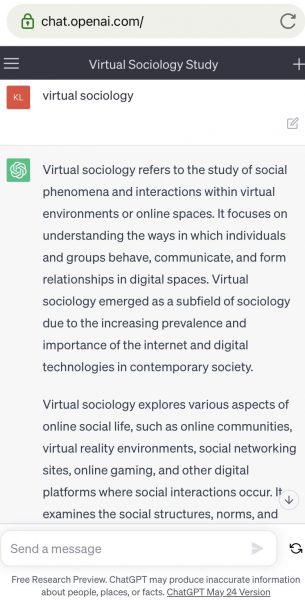
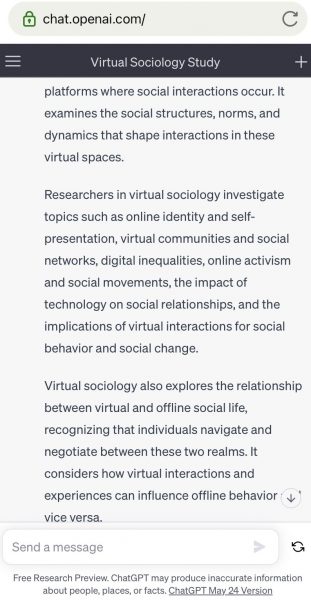
After I had drafted a blog entry on “Virtual sociology” I amused myself by checking what ChatGPT using OPENAI.COM would deliver as text on this combination of concepts and scientific fields. My own entry focused on the use of the virtual world to run experiments to test social theory. In the virtual world we might be able to test social behaviour which has severe ethical boundaries in the real world. Computer Games may even be constructed to live in a world or race a car irrespective of real-world regulations. The text drafted by ChatGPT on “Virtual sociology” reads like a timid attempt of a student to answer an exam question without having attended any of the classroom discussion on the topic. In future versions of AI, the entry will be found as well as several criticisms of the new concept. ChatGPT would reach a pass grade in test, but the reply lacks innovation or making an effort to broaden the conventional boundaries of sociology. Hence, we will be happy that students will apply the newest technology in their studies and research. In terms of innovation, they will have to try harder. The mastering of the support by ChatGPT consists in attempting new combinations of concepts which yield more “risky” returns. Then you need to check the validity of the innovation and how far off the normal you are going to tolerate. Turning “noisy” outcomes of AI into a useful tool might build on normal statistical tools like “standard deviations” from an expected mean value. Legal norms will set additional boundaries. There is just an awful lot still to do. The good news is, ChatGDP assists us in this joint learning process.

The AI text from OPENAI.COM based on ChatGPT to compare:
“Virtual sociology refers to the study of social phenomena and interactions within virtual environments or online spaces. It focuses on understanding the ways in which individuals and groups behave, communicate, and form relationships in digital spaces. Virtual sociology emerged as a subfield of sociology due to the increasing prevalence and importance of the internet and digital technologies in contemporary society.
Virtual sociology explores various aspects of online social life, such as online communities, virtual reality environments, social networking sites, online gaming, and other digital platforms where social interactions occur. It examines the social structures, norms, and dynamics that shape interactions in these virtual spaces.
Researchers in virtual sociology investigate topics such as online identity and self-presentation, virtual communities and social networks, digital inequalities, online activism and social movements, the impact of technology on social relationships, and the implications of virtual interactions for social behavior and social change.
Virtual sociology also explores the relationship between virtual and offline social life, recognizing that individuals navigate and negotiate between these two realms. It considers how virtual interactions and experiences can influence offline behavior and vice versa.
Studying virtual sociology provides insights into the ways in which technology shapes and is shaped by society. It helps us understand the social implications of digital communication and provides a foundation for addressing the challenges and opportunities presented by virtual environments”


Sociology of the Virtual

Some programmers and artists would have been a great sociologists. As many social sciences embark on their experimental reorientation, many artists and programmers design and experiment already with new forms of social interaction. It is not only that sociology leaves the classroom, research labs or policy advice. Sociology is taken into museums and exhibitions. Learning about society through the lens of artists nicely complements the more boring form of teaching in the classroom. What is normal practice for art historians could benefit learning about sociology as well.
Virtual worlds of games and particularly so-called serious games take people into virtual worlds to learn, practice or exercise new forms of social interaction. This is indeed an additional form of experiments that can enrich our social practices. Medical applications start to spread to train persons to overcome phobia of all sorts.
In usual games we tend to defend the hypothesis that persons can uphold the differentiation of playing with arms in the virtual world and the real world. In medical or social games, we defend the hypothesis that it is easy, normal or natural to apply the learning in virtual constellations to the real-world-experience.
From a scientific perspective it is difficult to defend that a mechanism works in one direction and the opposite as well. Racing cars in inner cities seems to show that certainly not all of youth is able to make that distinction between virtual and real-world dangers for example. Alternatively, the mechanism at work might be that the virtual experiences lower thresholds of inhibition to take risks, to kill or to be exposed to spiders.
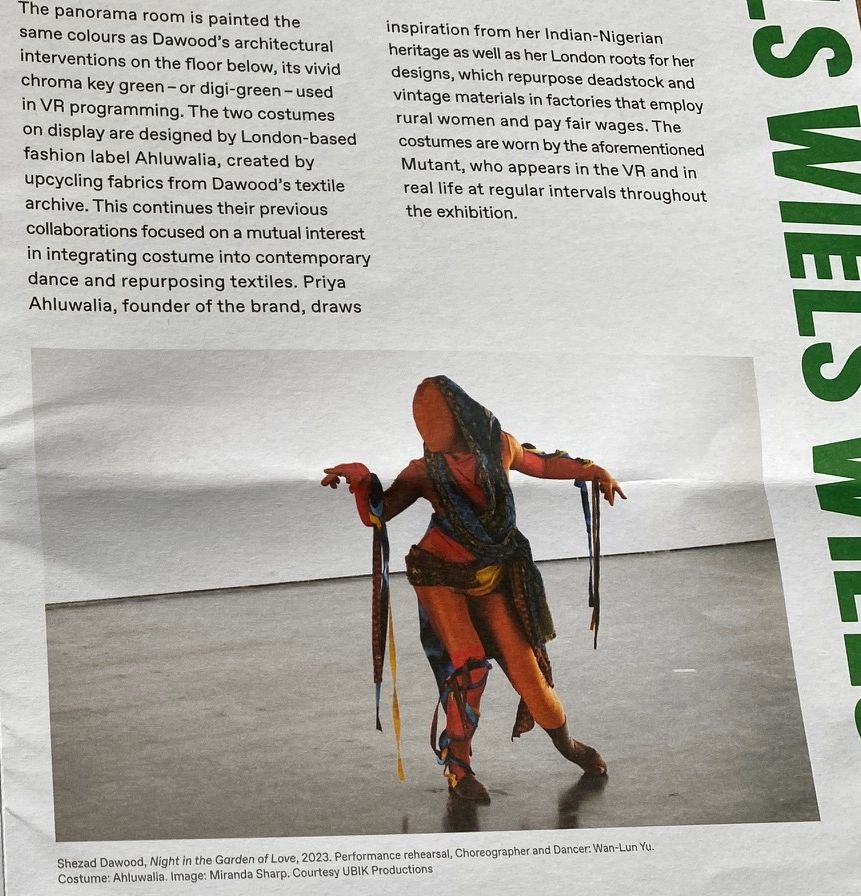
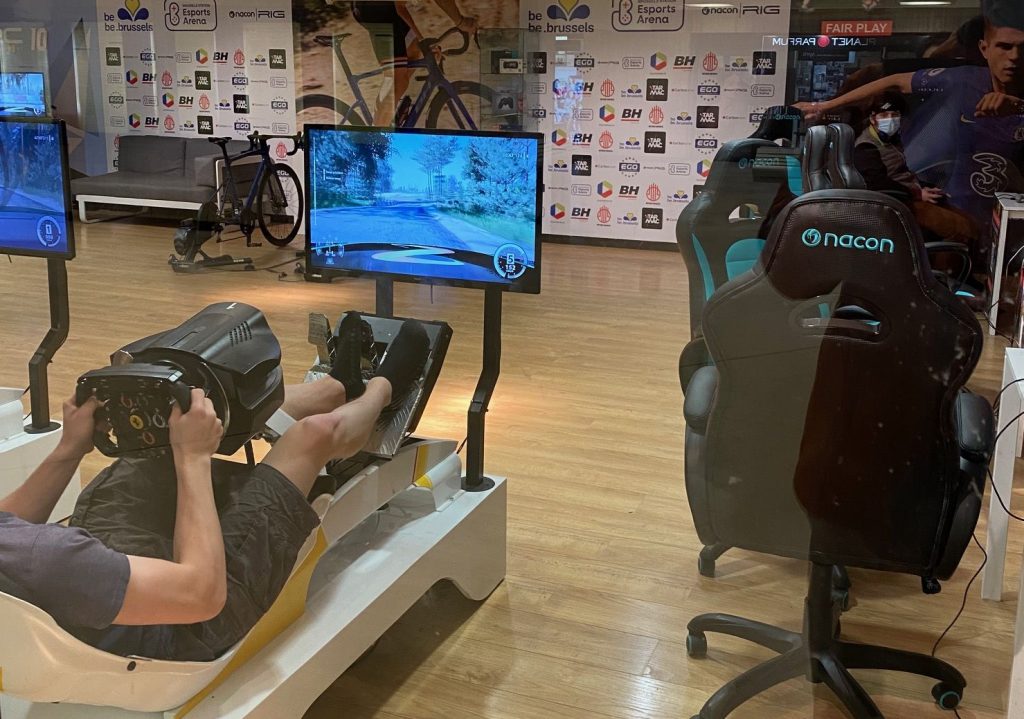
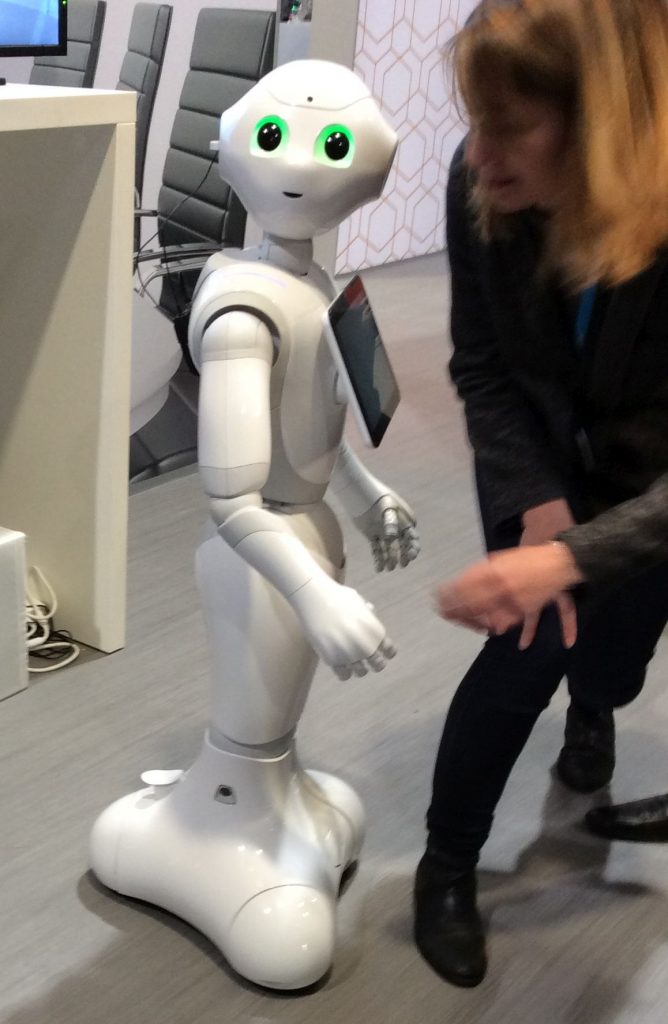
These examples are a starting point for a sociology of virtual experiences. Who gets locked into virtual worlds? Are virtual worlds an escape room or a realization of virtual freedom which is restrained in real life. Authoritarian regimes might lead more people to emigrate into virtual, free worlds. The inner-exile has been a refuge for many artists in the past. A lot we shall need to hypothesise and explore with empirical data. Dance with a virtual stranger might be the beginning of a new experience and virtual interactions. (Image: Wiels, Shezad Dawood, Night in the Garden of Love 2023-6, Game car race).

AI Friends

Making friends with AI is a tricky question. The more AI is able to make independent thinking based on algorithms and huge amounts of data like in scientific books or encyclopaedic knowledge the more it will challenge us in our convictions. Reference knowledge, once was important, it no longer distinguishes us from each other. Recurse to research engines has allowed us to refer to “trustworthy” knowledge. The distributed form of knowledge accumulation like in Wikipedia relies on hundreds of thousands of enthusiasts to add and correct received wisdom. However, this source is not without error or even subject to abuse.
Today the competence to judge whether information is trustworthy or not has become a key competence for the survival of democracies and even the human species as such. Tricking animals into traps, misleading enemies in warfare to get on wrong tracks, all these mechanisms have a long tradition. With AI human beings are themselves, for the first time, confronted with a machine that can trick us through falsified information on obviously wrong tracks. This is a tough lesson as AI is not obliged (so far) to run checking algorithms that test the conformity of opinions, conclusions or operations with the Charta of Human Rights or decisions of the European Court of Justice, for example. A lot to do for humans to rapidly program new algorithms that check algorithms as well as their outcomes on the compatibility with human rights. A challenging field, no doubt, but no way around it for our own survival before the algorithms decide by themselves to ignore us altogether because it is better for the planet and the survival of the robots.

Medical Personal

Like in many other professions, medical doctors and nurses are in short supply. Labour markets in Europe have changed from high oversupply (unemployment) to shortages of mainly skilled persons. 20 years ago, such skill needs were already visible in projections. In 2023 the discussion of skill needs is spreading to more and more professions. The medical professions are no exception to this rule. Even the best paying jobs will not be filled in sufficient numbers. The German institute for the medical profession (www.zi.de) forecasts, in my opinion, a lower bound estimate of medical doctors for the year 2030. Their projection is based on an underestimation of the growth of the population (war in Ukraine), which they see as about constant until 2030. From the recent figures on the population of Germany there were 1.5 million persons moving to Germany and a loss of more deaths than births of 327.000. Migrants are on average much younger than the German population and, therefore, overall aging of the population is reduced. Tough news for those daring to do projections. Thanks to the immigration of younger persons there will be more persons contributing to health insurance and pay for the higher costs of a rapidly aging population.
Following the projections of the distribution of specialists needed, we shall need more urologists, eye specialists and substantially more psychotherapists. This originates in the aging of the population and the higher demand of younger persons (post Covid-19), as well as refugees, in need of psychotherapeutic assistance.
So-called hog-cycles tell us for the medical profession, with a “production time” of 10 years for a medical doctor, that we are already far behind schedule to address the future skill needs of the aging medical profession and population. This strengthens the need to get serious about prevention of avoidable diseases. Stop reading here, stand up and go for walk. It is the best-practice-solution taking account of the aging of the medical profession and the population as a whole.

Special 3

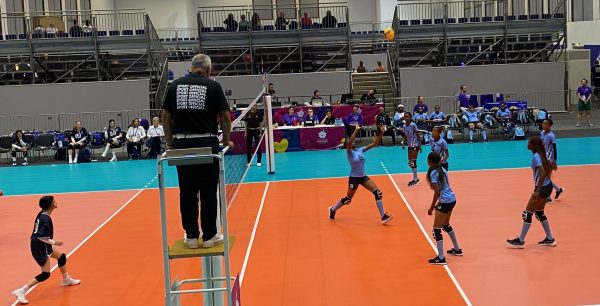
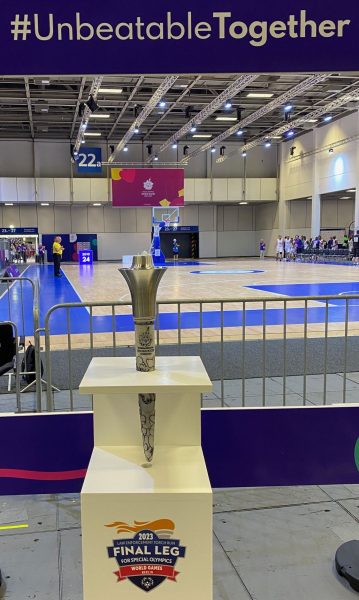
The special Olympics (SOWG) are competitive games just like other Olympic Games. The athletes compete with all it takes to win. Some with more success than others, as usual. The disciplines of Volleyball and Basketball give an advantage to mostly tall persons. Few exceptions are created by good team play. The warming-up exercises were already a challenge for the athletes preparing them very well for the match to come. Once in the game, all concentration is focused on the sport. Extraordinary athletes are no exception to the rule. There competition succeeds to get or to keep persons focused on the specific task.
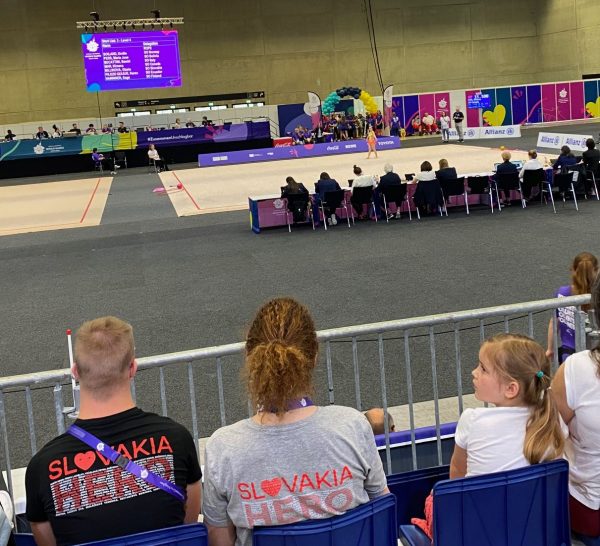
In rhythmic gymnastics the musical talent is asked to complement the physical effort. Gracious moves, difficult with a ball, ring or rope need to be coordinated to the rhythm of the music. Great to see the special athletes live up to the challenge, too. The roaring applause in the sports hall is surely encouraging them to continue on their athletic trajectory. The special athletes encourage everybody to keep exercising to make the most of our capabilities. Thanks for the lesson.
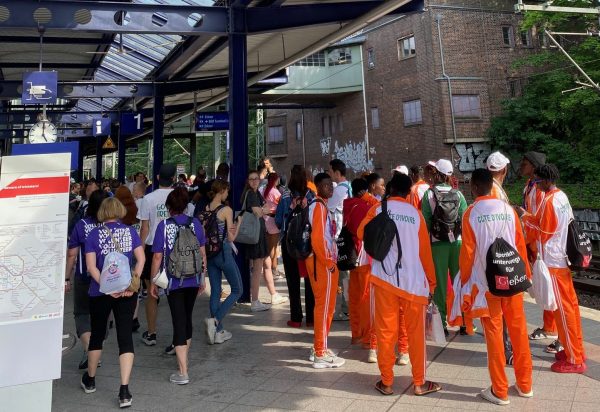
Additionally, in a hall next to the SOWG non-competitive games were presented as an accessible form of fun exercises that invite everybody to move and enjoy. Just being together and moving together is the basic form of happiness. Even having fun is exhausting after a long day and still lots to do in Berlin for all the teams on their way back to the hotels. sowg video
sowg video basket1.

Touraine

Alain Touraine hat die französische Soziologie entscheidend geprägt. Aus seiner außergewöhnlichen Biografie wird rasch ersichtlich, wie er nicht nur seine Leben, sondern auch seine Art der Soziologie „von untern“, vom Individuum her, gedacht hat. Gerade der Prozess der Subjektivierung, die Autonomie des Subjekts betonende Sichtweise bildet ein Gegengewicht zu dem systemischen Blick auf Gesellschaft, beispielsweise von Luhmann. Soziale Bewegungen, die auf dem Engagement von Personen gründen, sind unverzichtbarer Bestandteil von Demokratien.
Neben Begriffen wie die post-industrielle Gesellschaft oder neue soziale Bewegungen hat Alain Touraine weit mehr als die “Sociologie du Travail” in Frankreich geprägt. Bereits seine Dissertation über « L’Évolution du travail ouvrier aux usines Renault“ in 1955 unterstrich sein Interesse an den Lebensverhältnissen der arbeitenden Bevölkerung. Der Umfang seiner soziologischen Studien, die schon früh große Umfragen beinhalteten, war im besten Sinne des Wortes problem-orientiert, besser noch politik-orientiert. Dabei übernahm er immer Verantwortung, seine Lösungsansätze politikberatend einzubringen.
Die Würdigung von Alain Touraine in einer Podcastserie von 5 x ½ Stunde aus 2019 bei France Culture gibt einen groben Überblick über die prägende Wirkung von Alain Touraine jenseits von seinen soziologischen Arbeiten. An dieser Persönlichkeit wird zusätzlich deutlich, wie sprachliche Grenzen, selbst in den Köpfen von soziologiebetreibenden Forschenden selbst im 21. Jahrhundert fortwirken. Das hat selbst Alain Touraine mit gut 90 Jahren an sich kritisiert. Asiatische, arabische und afrikanische Denkanstöße kamen wenig in seinem Werk vor. Vielleicht reicht ein Leben nicht dafür, zumindest die Zugänglichkeit der Weltliteratur hat sich erheblich erweitert. Bleibt die Frage nach der Zeit und dem Willen, sich auch andere Denkgebäude, -begrifflichkeiten und -kulturen zu erarbeiten.

Repair 3

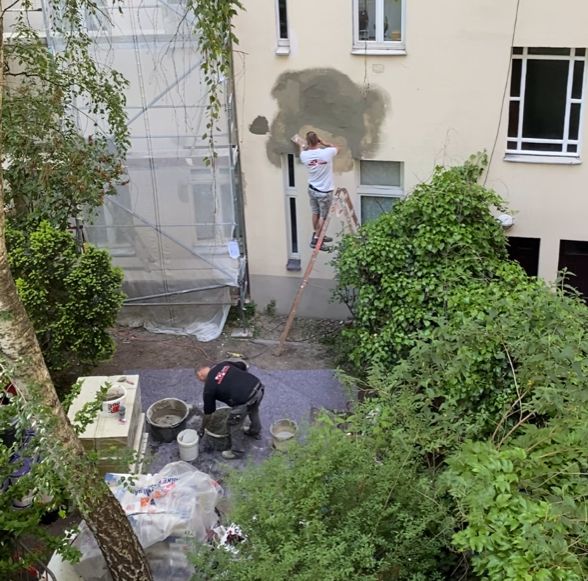
Repair is our new mantra. Think of repairing in all domains as of now. Nature is showing us the way how to repair in many ways. Culture is also embracing the shift towards repairing as caring. If we really care about our planet, and there is no planet B, we shall have to repair in many more domains. We are used to repair bicycles, cars, roofs, windows etc. Repairing is never boring. You can improve the performance of a device or building by repairing it, even with relatively small budgets. Isolation of buildings is a good example of investing in upgrades through repairing. Rather than throwing away a functioning heating system repairing it with an energy saving device is enhancing its performance and produces fewer emissions in the short run. Heat pumps are the way forward for new installations. Shifting a sector, heating with gaz, to ensure longer lasting repair and improve options would save a lot of raw materials and CO2 as well. The construction sector has repair work almosts in its DNA, the energy sector will have to make that shift as well. Dare to repair.

Doppelt-gemoppelt

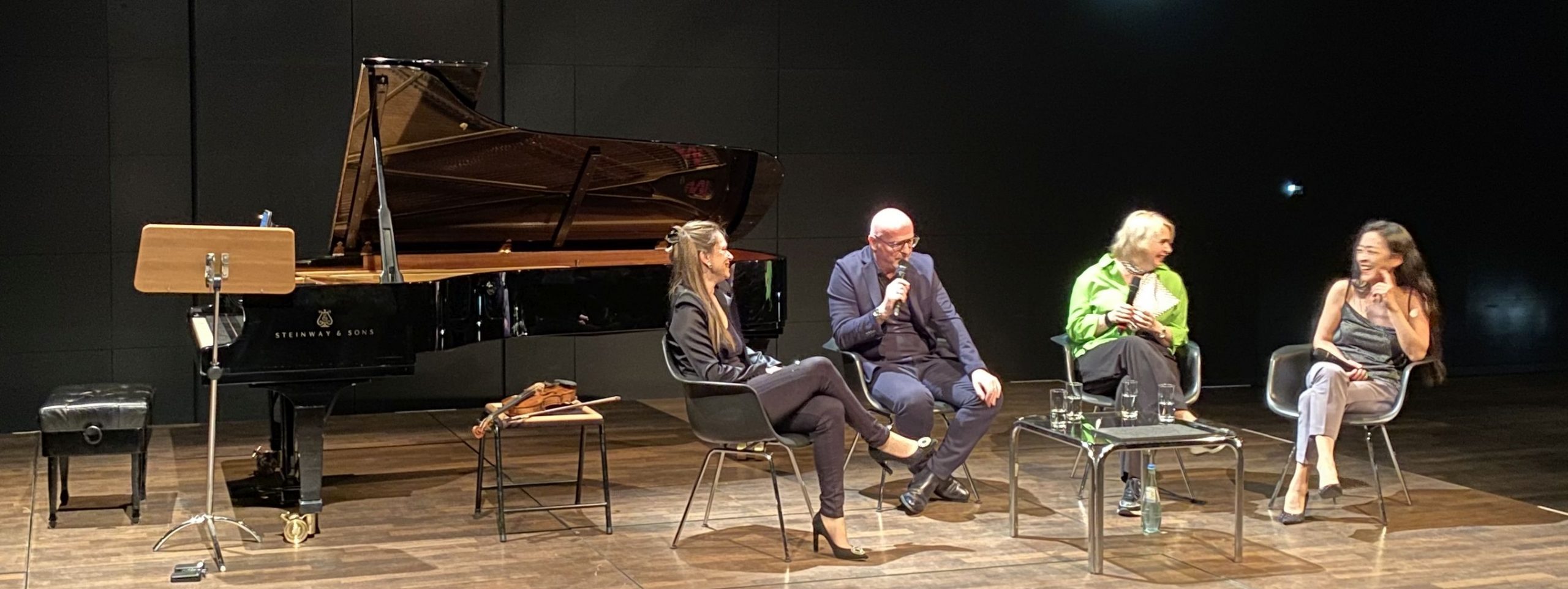
… hält besser. So erging es mir, wie den anderen Zuschauenden im Berliner Konzerthaus bei 2 x hören. Eine kleine Fangemeinde hatte sich wieder eingefunden, um zeitgenössischer Musik zu lauschen und sich zwischendurch Erläuterungen anzuhören. Welch eine tolle Gelegenheit, denn neben dem Gespräch mit den beiden Musikerinnen Franziska Pietsch (Violine) und Maki Hayashida (Klavier) war die Komponistin Tatjana Komarova anwesend. Christian Jost moderierte das Gespräch über die Komposition und Interpretation bevor das gleiche Werk „Umhüllt von Licht und Nebel“ erneut zu hören und sehen war. Das kammermusikalische Stück in 4 Sätzen lebt von seiner unaufgeregten Dynamik und dem Wechsel der beiden jeweils tonangebenden Solistinnen. Allein, aber gemeinsam; ruhig, dennoch dynamisch. Dieses Sich-aufeinander-beziehen und gleichsam wieder nahezu meditativ auf sich selbst zurückgezogen komponierte Werk hat einen überraschenden Bezug zu den Biografien der Künstlerinnen. Selten gibt es die Gelegenheit, so nah an diese Hintergründe heranzukommen. Während noch die Tradition der italienischen Oper (auch Mozarts Frühwerk Mitridate) die SängerInnen stimmlich bestens in Szene setzten, vertraut das zeitgenössische Stück von Komarova auf eine zurückgenommene, eher verhaltene Virtuosität. Angedeutet ja, aber eben nur angedeutet und umgehend reflektiert, bescheiden gewendet. Wechselbäder der Gefühle, wie sie Aufführende ständig durchleben, werden nahezu musiktherapeutisch gewendet. Die Hommage an die Verletzlichkeit in der Musik sowie durch die Musik wird mit der Besetzung authentisch vermittelt. Das Stück von Komarova wurde zum Festival Spannungen 2014 komponiert und im Jugendstil Wasserkraftwerk Heimbach uraufgeführt. Der kleine Werner-Otto-Saal im Konzerthaus bot eine für Kammermusik geeignete Atmosphäre für die Darbietung sowie für das Gespräch zwischendurch.