Der bürgerliche Flaneur wird kritisch hinterfragt und erweitert erörtert im Festival DRiFT in Berlin. Das passt doch gut zu dem nötigen WALK und WALKING, welches uns schon alleine aus gesundheitlichen Aspekten von Nöten ist. Die subversive Form als kollektives Wandern, gefährlicher historisch waren die Märsche auf Rom von Mussolini, friedlicher Gandhi, aber beeindruckend erfolgreich. Ostermärche kennen wir noch als Beispiel dieser kollektiven Form des gemeinsamen Gehens und Erkundens, oder doch Beeinflussung oder gar Eroberung.
Die Idee ist alt, die Ansätze in unserer Zeit bleiben eine Herausforderung. Protestmärsche kennen viele Organisationen gerade aus den nicht-regierungs Organisationen (NGOs) und den Gewerkschaften. Präsenz zeigen und seine Meinung äußern, wenn sie nicht genügend Gehör oder Widerhall findet, gehört zum demokratischen Kanon. Eine entsprechende Wiederbelebung und Stadtteilerkundung als “Psycho-geografie” hat historische Wurzeln in Paris und Frankreich. Räumliches Vorstellungsvermögen und Orientierung ist eine Qualifikation, die messbar ist. Eine Stadt erlaufen bildet eine kognitive Landkarte der Straßen und Umgebung. Mal schwer, mal einfach, aber fast immer irgendwie anders. 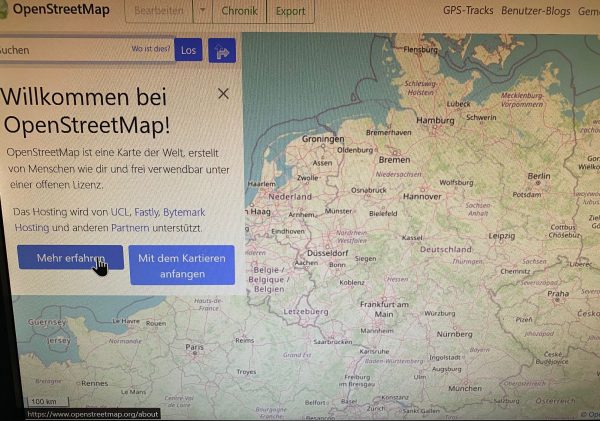
Flotow Brief
Von Frédéric de Flotow habe ich bisher wenig von seinem Schriftverkehr in öffentlichen Bibliotheken (BnF) auffinden können. Beachtlich sind die Funde in den Pariser Bibliotheken. Neben einem auf Deutsch geschriebenen Brief sind dort 4 weitere, teilweise mit mehreren Blättern im Original erhalten. Es handelt sich dabei um Briefe, die mit Auftraggebern für seine Werke korrespondieren oder Besuche bei Bekannten, die sich meist verschieben oder schwer arrangieren lassen, denn der Komponist und spätere Intendant von Schwerin ist viel beschäftigt. Die zahlreichen Werke und Opern sind eine zeitraubende Angelegenheit, die Inspiration und Imagination brauchen, aber gleichzeitig eine aufgesprochene Fleißarbeit fordern. Talent ja, aber eben auch Durchhaltevermögen und ständige Suche nach geeigneten Libretti. Die Schrift, auf feinstem Briefpapier meist mit traditionellem Wappen der Familie Flotow eingestanzt, ist so klein und feingliedrig, dass mir bereits nach einer halben Stunde die Augen brannten. Ein Brief erwähnt das mögliche Engagement der italienischen Sopranistin Frezzolini an der italienischen Oper in Paris, die doch vielleicht schon die Hauptrolle in der Flotowschen Oper Martha übernehmen könnte. Der Opernchef Calzado könnte ihm (Flotow) doch vielleicht diese Ehre zu Teil werden lassen (Quelle: BnF Flotow, 1958 an Calzado, Notice n° : FRBNF39807946 S.159). Der Komponist schreibt ein fließendes, höfliches Französisch mit den üblichen Grußformeln. Seine Lehrjahre in Frankreich lagen dabei schon einige Jahre zurück. Sprachbegabung verbindet sich häufig mit musikalischen Talenten, was sicherlich von der frühen Zweisprachigkeit befördert wurde. Beeindruckend zu sehen und in einem kleinen Auszug zu lesen.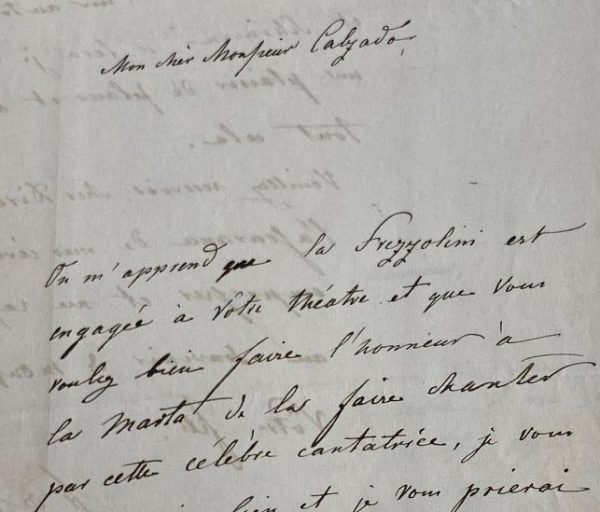
Forschen
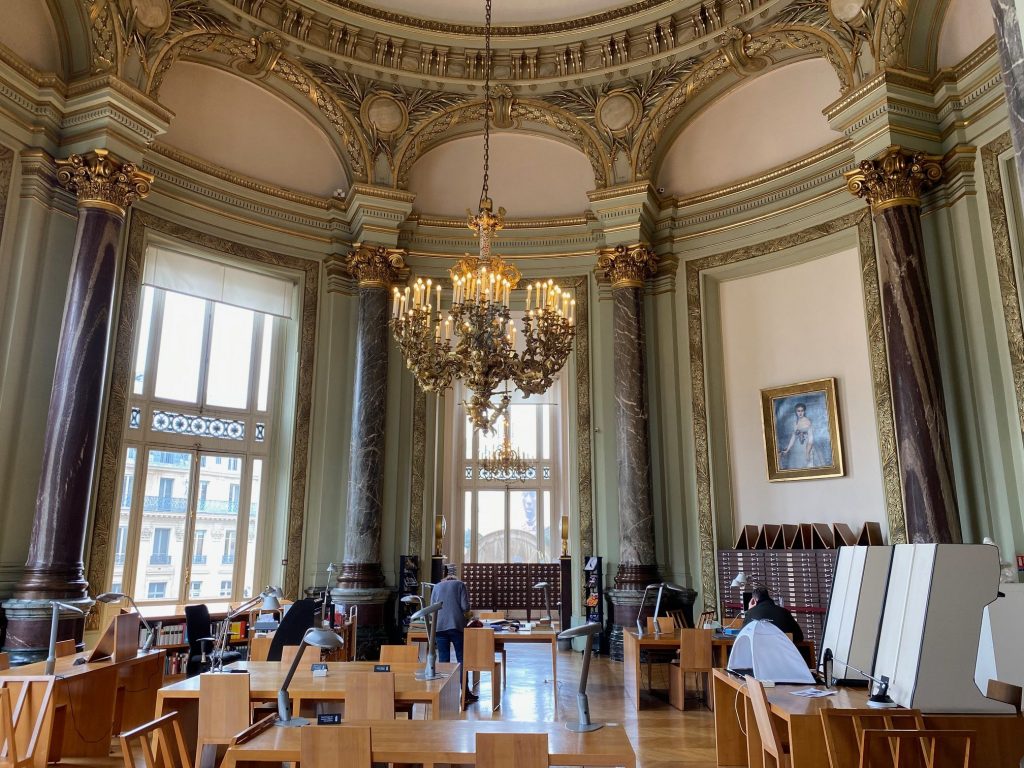
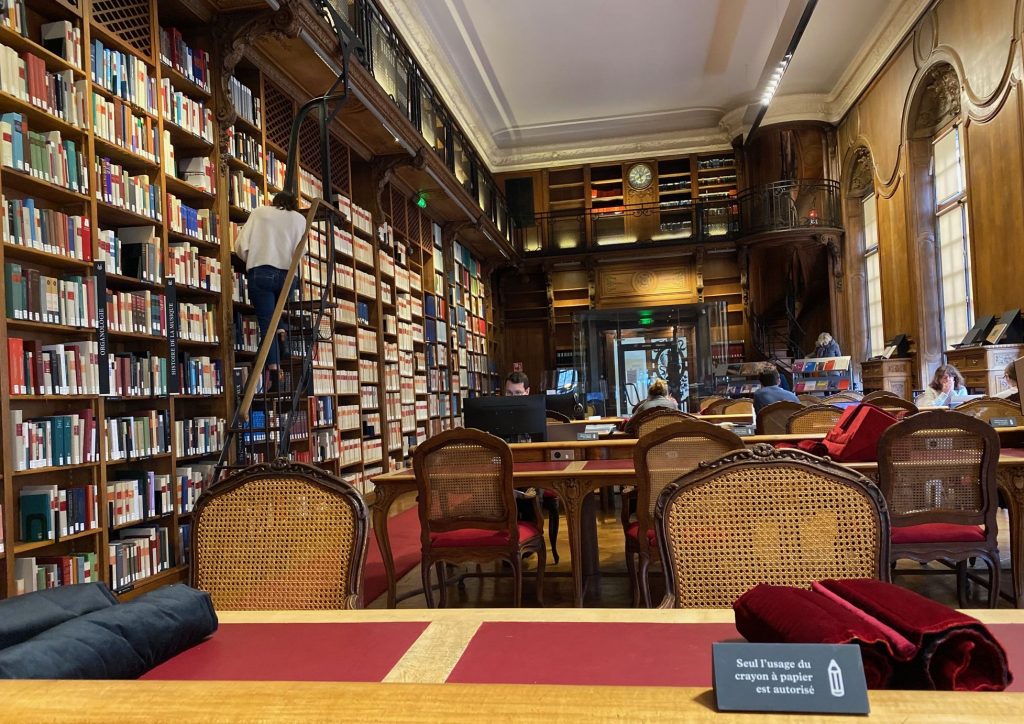
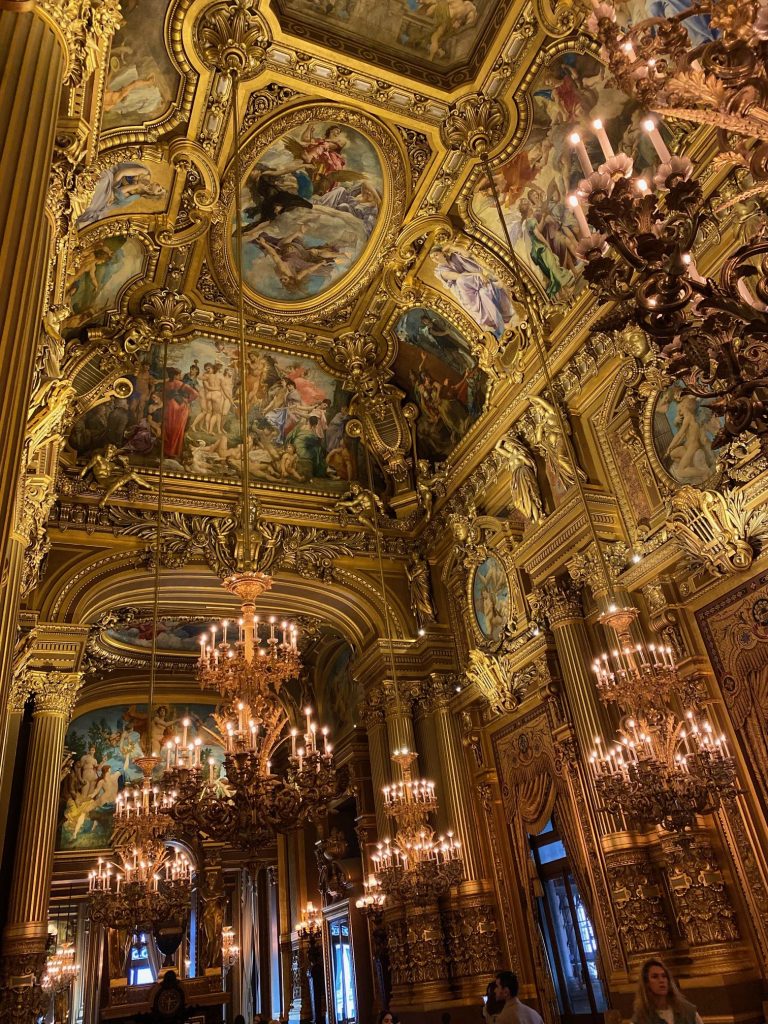
Forschung betreiben ist meistens das Bohren dicker Bretter. Verständlich, dass das nicht jedermanns oder jederfraus Sache ist. Wer sitzt schon gerne alleine in einer kleinen Zelle und schreibt seine Forschungsergebnisse auf oder liest endlos lange und viel vorherige Forschung? Da ist ein Besuch in Archiven, Laboren oder anderen Datenarchiven schon etwas unterhaltsamer. Forschung ist überwiegend theoriegeleitet. Von Einzelfällen abstrahierende Theorien lassen die Forschenden entweder an diesen Theorien weiterarbeiten oder vielfach irgendeine Form von Daten sammeln mittels derer sie dann die Theorie(n) testen können. Eine Herausforderung an diese Arbeitsweise stellt die rein datengetriebene Induktion dar. Sozusagen der „deus ex machina“ erwächst aus einer hinreichend großen, am besten sich ständig erweiternden, Datenbasis. Wetterdaten, Verkehrsdaten, Krankheitsdaten, Börsendaten und Arbeitsmarktdaten bieten für sowohl für deduktive als auch induktive Verfahren hervorragende Beispiele. Datensammeln in Archiven, beispielsweise Rekonstruktion oder Interpretation eines Lebensverlaufs aus Korrespondenz ist ein klassisches Verfahren von meistens LiteraturwissenschaftlerInnen. Manche Archive belohnen die Forschenden mit Glanz und andere mit Gloria, selten mit beidem. Glänzende Aussichten bietet die biographische Forschung zu Komponisten und MusikerInnen in Paris. In der kleinen, aber sehr feinen Bibliothek der „Opera Garnier“ bin ich zu dem Komponisten Flotow fündig geworden. Es befinden sich dort in der Komponistenakte Zeitungsausschnitte, die 150 Jahre alt sind und ein Büchlein aus frühen DDR-Zeiten, die den Aristokratenkomponist durchaus kritisch durchleuchten. Die Ablenkung auf dem Weg in die Bibliothek und dem Archiv der Oper ist allerdings atemberaubend, also nur für ganz überzeugte Forschende zu empfehlen. Die meisten werden von der Opulenz des Bauwerks so beeindruckt, dass jegliche Forschungsfrage und Theorie „backstage“ verwiesen werden. Selbst backstage kann es ziemlich schön sein.
Rhetoricae artis
“Die Kunst der Rhetorik und der positiven Fähigkeit” ist eine kleine Wissenschaft. So hieß es bereits 1475 in dem von Guillaume Rardif veröffentlichten Buchdruck aus dem “Atelier du Soufflet Vert”. (BnF, Réserve des livres rares, Rés. X-1118). Als Teil der Ausstellung zum Buckdruck entnehmen wir 5 wichtige Hinweise für die Kunst der öffentlichen Rede: (1) inventio = (Er-)findungskraft, (2) dispositio = Anordnung, Gliederung, (3) elocutio = Ausdrucksweise, Stil, (4) memoria = Erinnerungsvermögen, (5) pronunciatio = Urteilskraft.
Ein kritzelnder Leser hat mit Bleistift die 6 Teile angefügt. Exordium = Einleitung, Narratio = Erzählung, Sachverhalt, partitio = Einteilung, und schließlich die dialektik mit Confirmatio, Rufusation, Conclusio. Abweichungen von diesem rhetorischen Schema sind noch immer selten. Das galt wohl seit dem 15-ten Jahrhundert schon für Predigten und wissenschaftliche Vorträge. Alles altes Latein, oder was? Die heute übliche “Elevator-speech” folgt anderen Regeln. Die Aufmerksamkeitsökonomie und Flut der Informationen erzwingt viel kürzere Redezeiten. Die Nachhaltigkeit der Botschaft wird anders erzeugt. Bildlichkeit ist Trumpf in Erscheinung und Auftritt. Auch das will gelernt sein. Die Bücher damals waren selbst ästhetische Kunstwerke und dennoch Arbeitsbücher, leider nur für sehr wohlhabende Studierende. 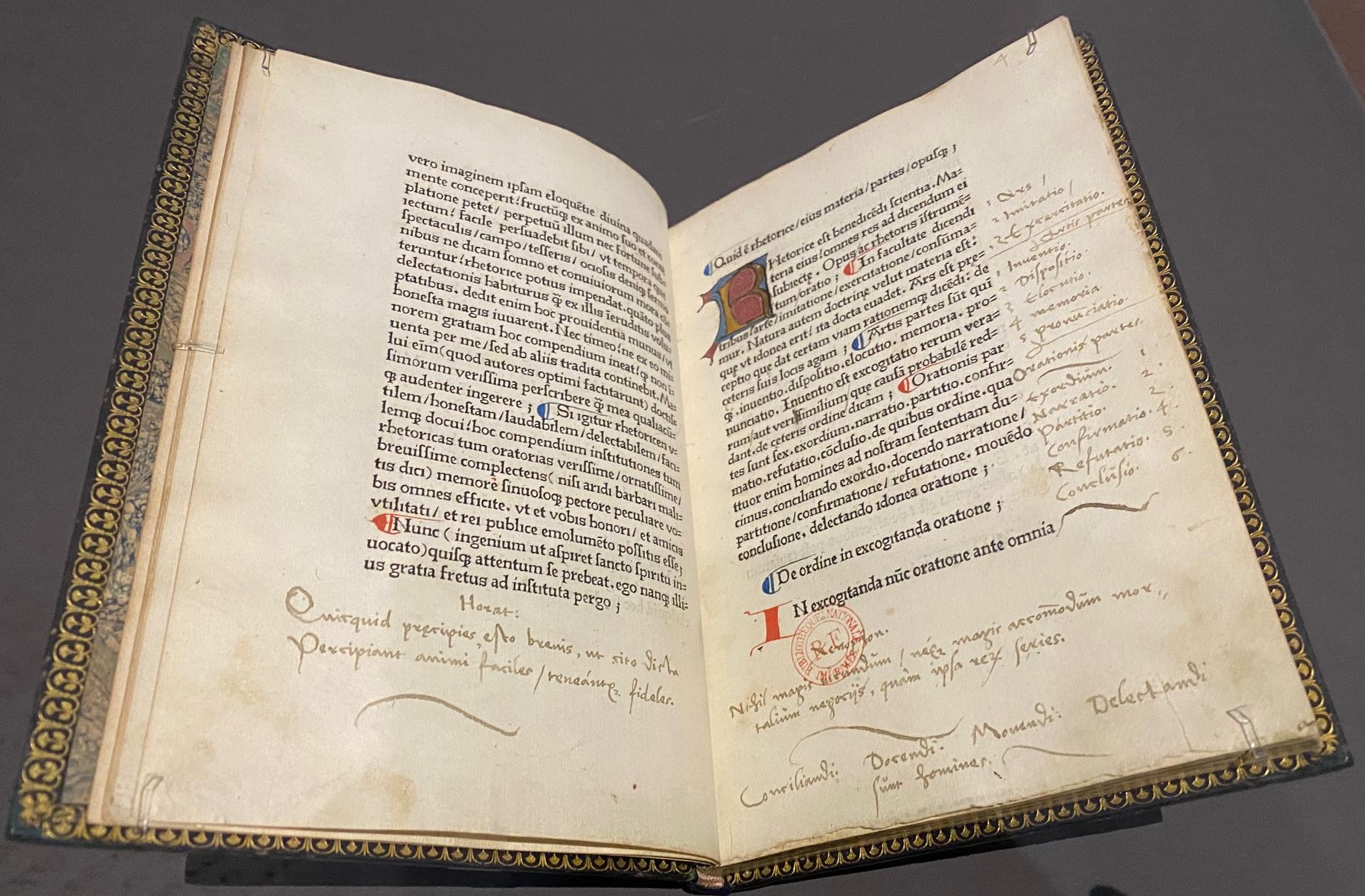
Printing
Printing is a more than 5 century-old industry. The invention of the printing press is mostly attributed to Johannes Gutenberg from Mainz. However, the Asian precursor of mobile type letter printing of Cai Lun of the Jikji dates back to 1377 in Korea. These early masterpieces of the inventors of print can be inspected at the Bibliothèque nationale de France (BnF). The summary term for this technical innovation by historians is the “age of start-ups”. The procedure for Gutenberg to have 2 financing rounds with his “business angel” Johann Fust, who is later claiming even almost the full rights of the printed volumes, resembles the start-up spirit of today as much as that of the 15th century. Not belonging to the Patrician families, it was very difficult to defend your rights in courts of the gilds. The printers also became a very powerful intermediary themselves. They either sold pre-ordered books or had to take the risk of assessing the market for their product. The editors of today do much the same in the trading world of books and rights of authors and translators. Merchandising products of the church and later churches (protestants Luther Bible) had a particular value to both the clergy and its devotees, not to mention the shop keepers in-between as well. Pilgrimage business was another start-up industry still going strong in the 20th and 21st century and popular in all religions. The early prints and typographs applied are fascinating in themselves, but there is a lot to be learned about the foundation of a new industries that still employs millions of people and is at the origin of learning revolution similar to the one we are living with the digital technologies today. The European languages with respect to printing had a certain competitive advantage, based on 26 letters of the alphabet, far fewer types were needed to print books than the more than a thousand different signs for printing a Korean text. In terms of printing this is cost-reducing and probably you do not need to be able to read yourself to be a printer or it makes proof reading more accessible favouring benefit margins. After all, the age of industrialisation probably had a precursor in the printing industry. The potential of the printing industry was only exploited much later to the full extent. Comparable to “peak oil” we hope to have reached “peak paper” at last as well for the sake of our planet and our own survival. 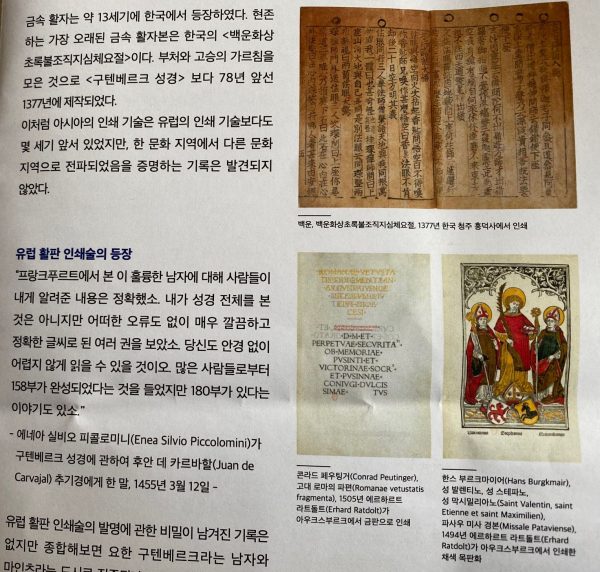
1900s
1900 marks the year of the 5th world exhibition in Paris. The Eiffel tower, built for the 4th exhibition in Paris remains the iconic attraction despite the new architecture that is added to Paris as the Petit and Grand Palais as well as the 1st Metro line. Art Nouveau style adds to already impressive architecture in and around Paris. With the planning horizons of several years in advance of events, urban planning with all its facets of urban infrastructure and architecture becomes much of a defining scientific discipline for decades and for most of the time of the century. Grand urban architecture and design constitute just another form of competition between nation states. Most of them want to show off their imperialist acquisitions and, what they define as “curiosities” at the time.
Habib (2005, pp.502) singles out Arthur Schopenhauer and Friedrich Nietzsche as “heterological thinkers” who coin major thoughts in the late 19th century that shall influence the beginning of the 20th century right from the year 1900 onwards. “The world should be formed in your image by your reason, your will, and your love! And truly, it will be to your happiness you enlightened men!” (Nietzsche. Thus spoke Zarathustra 1978, p.110). In retrospect from the 21st century we shall doubt this overly positive approach to human intentions and their will to form the world according to their abstracting ideas only. Tensions between technology and society became visible and it took many decades before society became conscious that it is up to society to choose technologies they preferred.
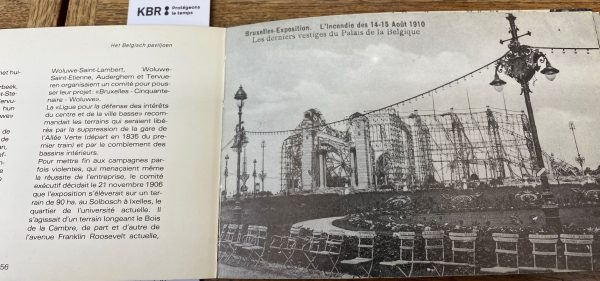
The planning for the Brussel Expo 1910 started right after the previous Expo 1905 in Liège. Protests in Brussels accompanied already the choice of terrain for the Expo, but the governors and shareholders of the enterprise decided 1906 for a site near the “forêt de Soignes”, where trees had to be cut for access to the construction site and for future visitors under local protest. Women workers were present to exhibit the low pay of women in industries. Child labour was documented with shocking images. Around the globe labour movements started to raise attention. In the U.S. the National Women’s Trade Union League (1903) was founded as well as the National Child Labor Committee (1904). “Bloody Sunday” in St. Petersburg (1905) saw the killing of peaceful protestors in front of the Zsar’s palace, which ignited the Russian Revolution of 1905 and the creation of the Russian Parliament. Some of these issues (child labor) keep returning to our social agenda well into the 21st century.
Einstein’s publication of the theory of special relativity (1905) as well as challenges from social philosophy reflects the huge discrepancy between advancement of the sciences and the living conditions of the masses. Social theories and science advances foreshadow the violent turbulence throughout the 20th century.
(Sources: (1) Max Welch Guerra et al. (2023). European Planning History in the 20th Century: A Continent of Urban Planning. Routledge. (2) St. James Encyclopedia of Labor History Worldwide: Major Events in Labor History and Their Impact, Neil Schlager (2004). (3) Images from I. Van Hasselt(1980) Bruxelles Expo 1910: l’incendie / de brand. J Stevens. 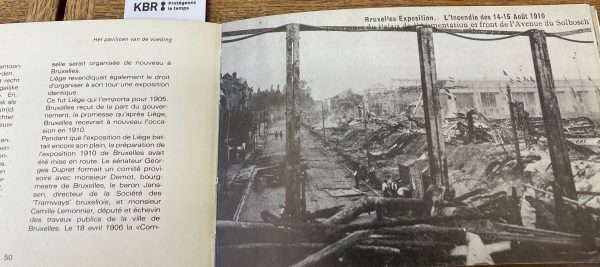
Caillebotte
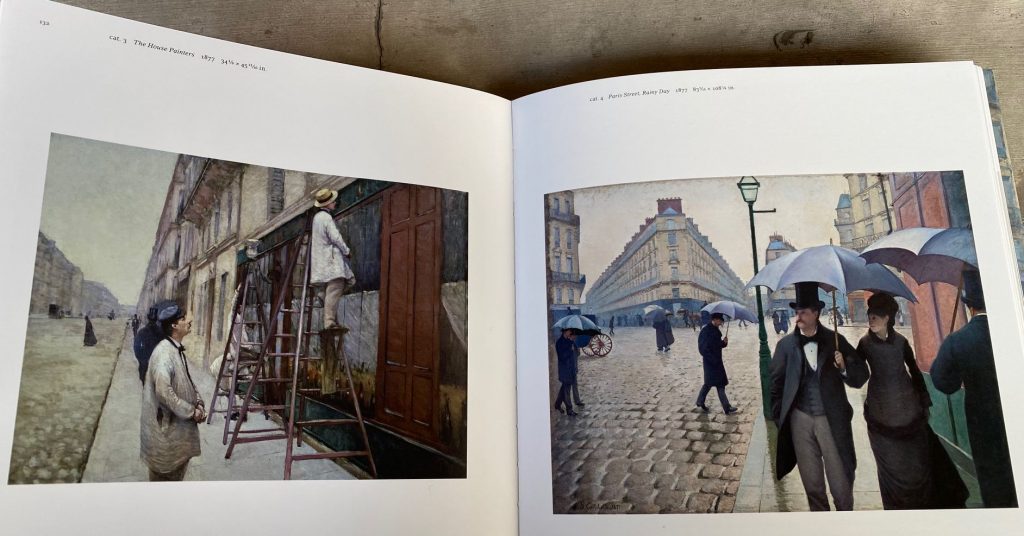
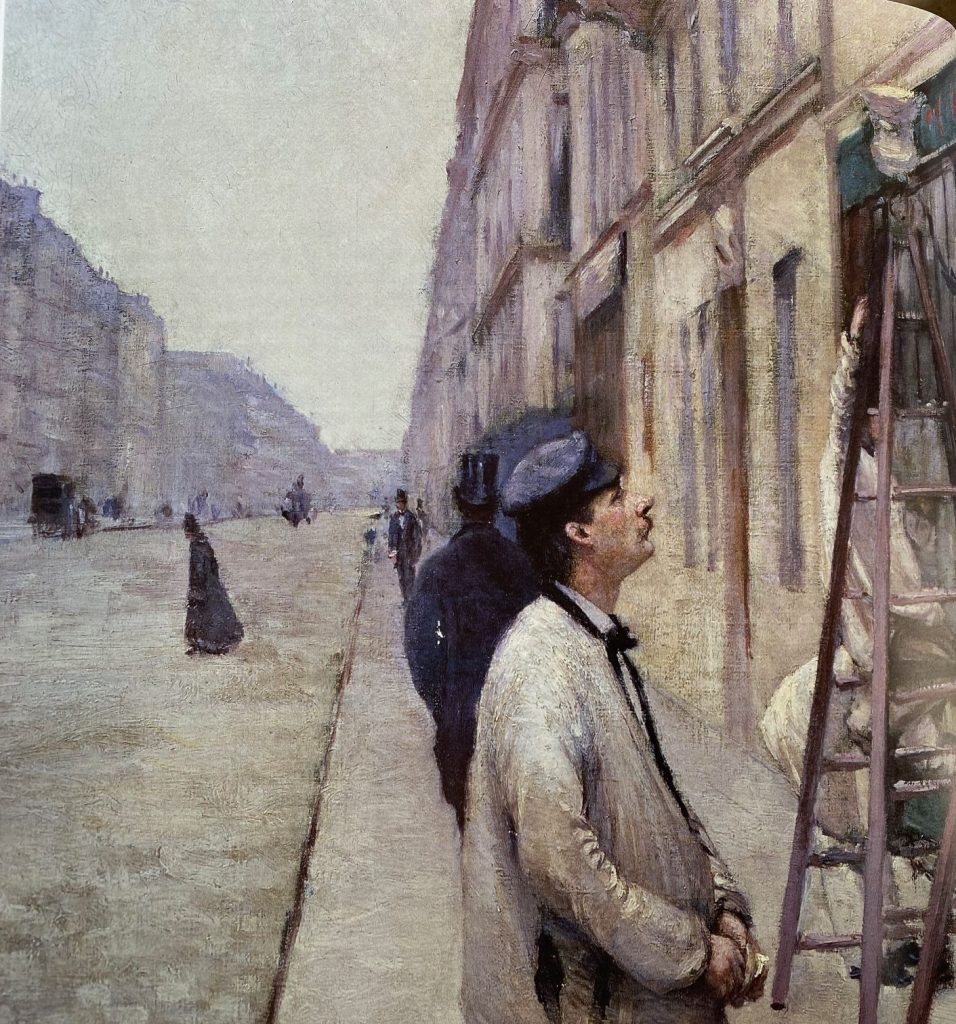
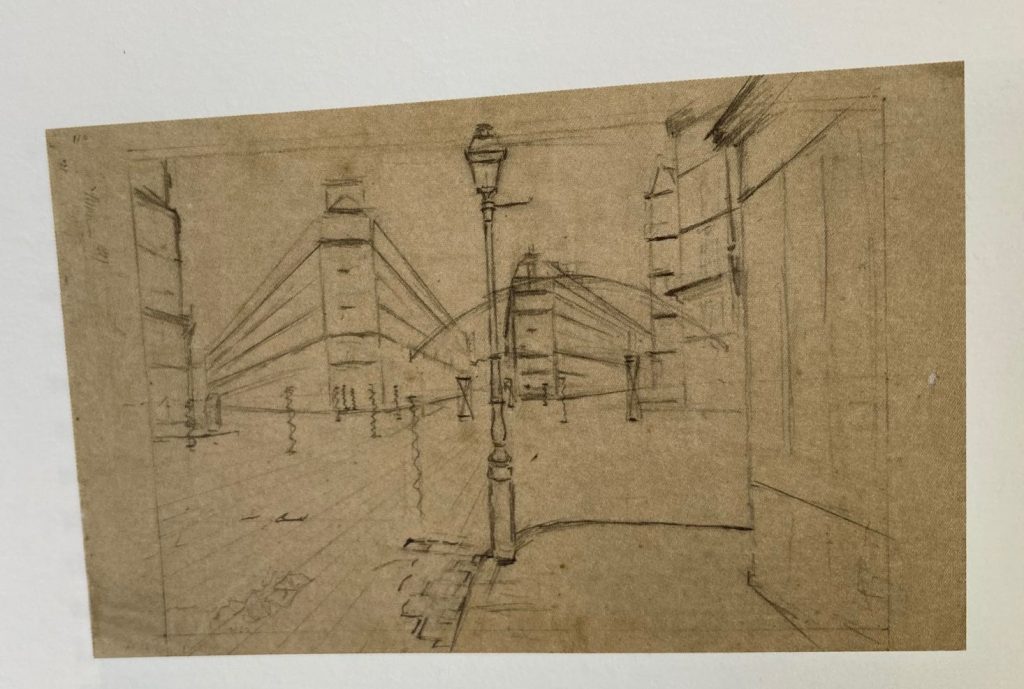
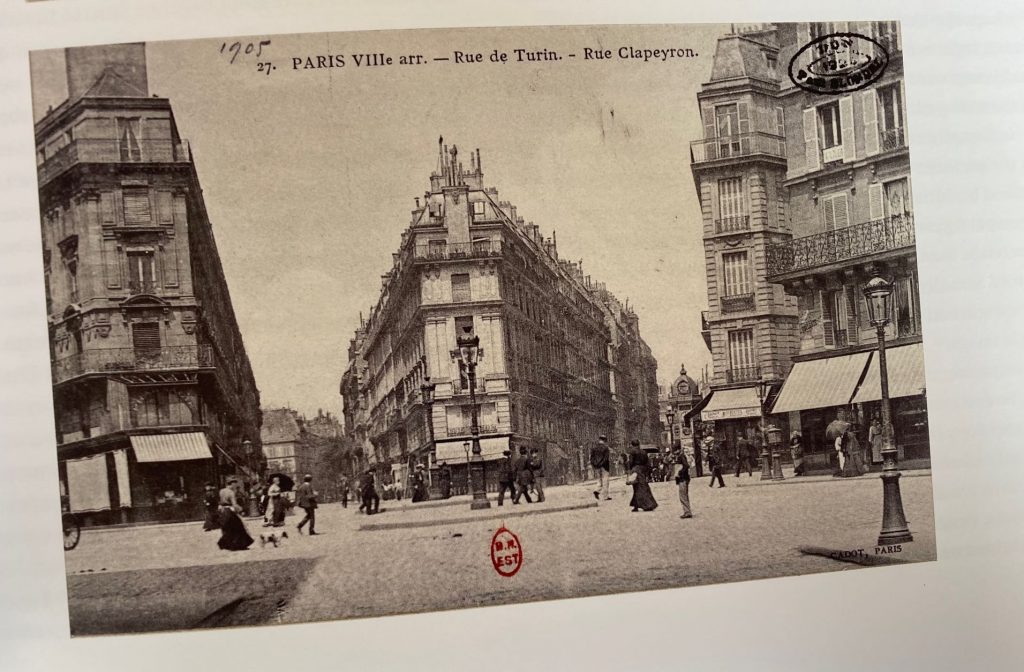
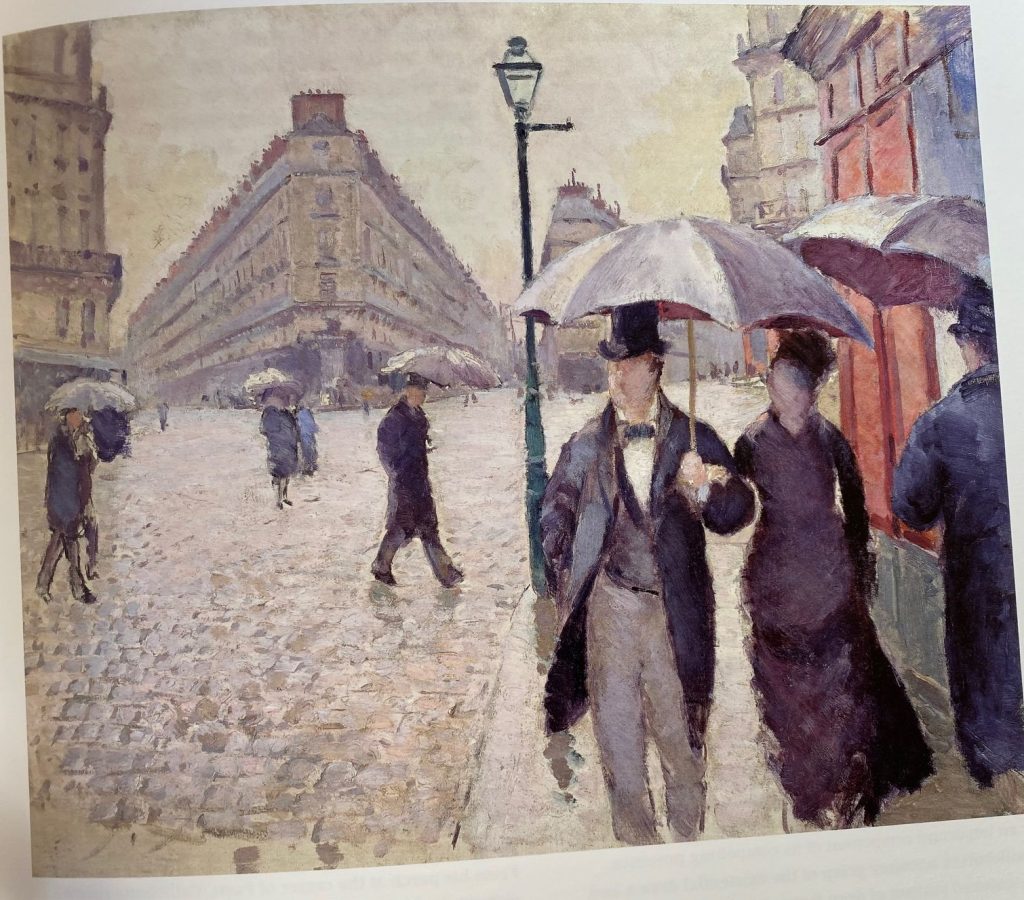
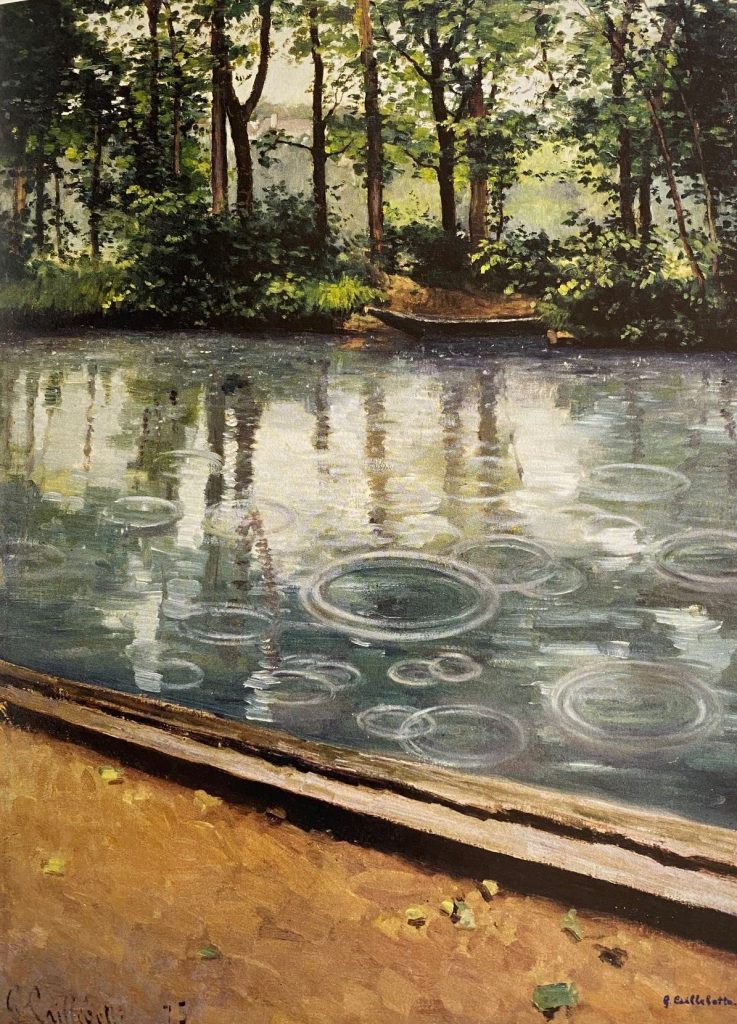
Gustave Caillebotte has done it again. Son of a great beneficiary of war efforts himself. He started with support from his father’s fortune on a painting career. Soon after his father’s death, he joined the group of “alternative artists”, later called the impressionists in France. On the 1.2.2023 the Musée d’Orsay acquired a key painting of Caillebotte for 43 Million € with the help of a donation by LVMH. Where does the hype come from? A catalogue of the exhibition of the painter “Gustave Caillebotte, The painter’s eye” from the National Gallery of Art in Washington from 2015 established Caillebotte again as a key person of the impressionist movement. Rich in diversity of motifs, the painter and supporter of the impressionists (Philantropist) has foreseen the challenge photography could bring to painting. The painter’s eye is well explained by Michael Marrinan (pp.22) in the catalogue. In fact, the spatial depth of the views of the streets of Paris is a precursor to many photographers and movies of several decades later. Caillebotte’s images of Paris depict well the mixed feelings about a daunting city size and the isolation of people captured in their own little inner circles with little communication despite or because of the noisy surroundings. Misty atmospheres allow to focus on impressions. Almost meditative walking in the city is his modern topic. Reflecting on painting as profession versus painting as artist is somehow an impressionist’s sociology of professions. Gustave Caillebotte did not have to paint for money and he was aware of social class differences as son of a factory owner. It did not spoil his artistic view with social facts, but rather tried to reveal the intrinsic beauty not only of landscapes, but ordinary working people. Other impressionists painted beautiful ballerinas, Caillebotte painted workers and sometimes more challenging parts of Paris in his early years. With climate change near Caillebotte’s home in full swing, we shall “adore” the rainy days in Paris even more. And in the countryside, too. The painter’s eye reveals a visionary view of the modern and post-modern world. 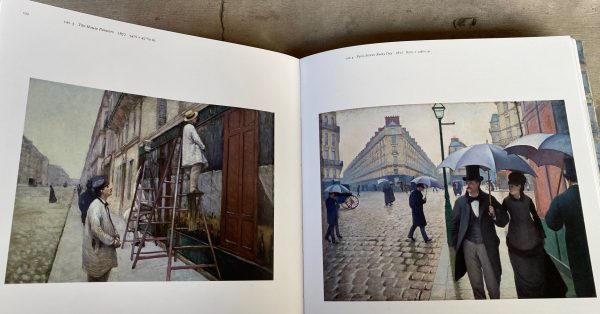
Flotow Stradella
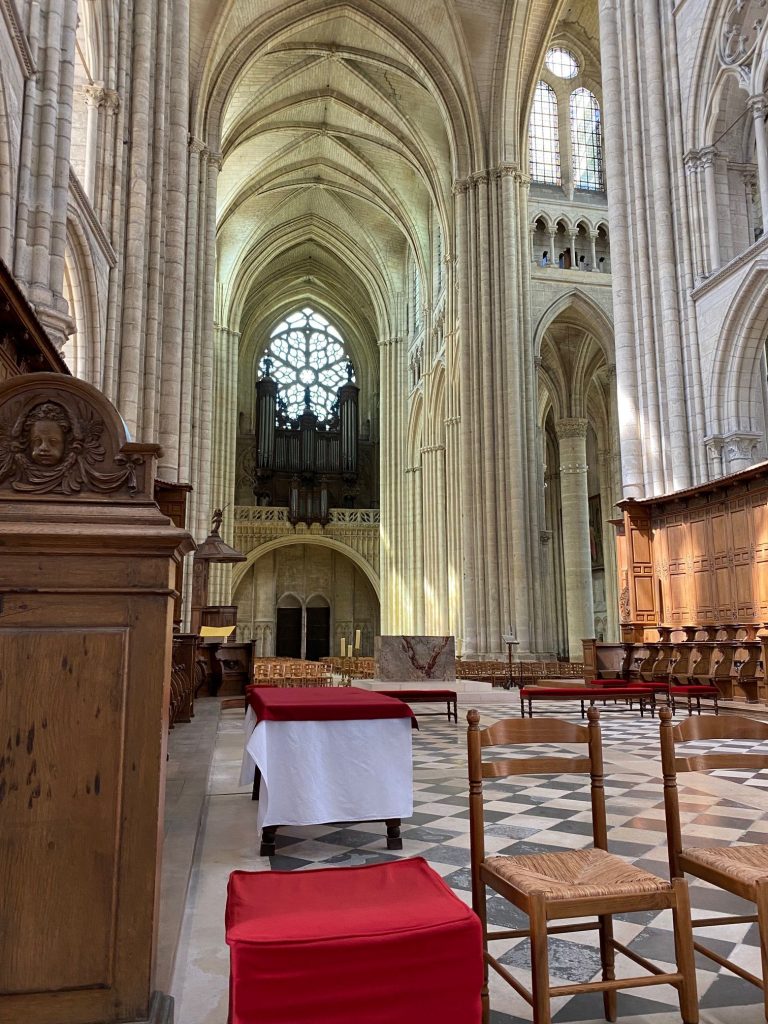
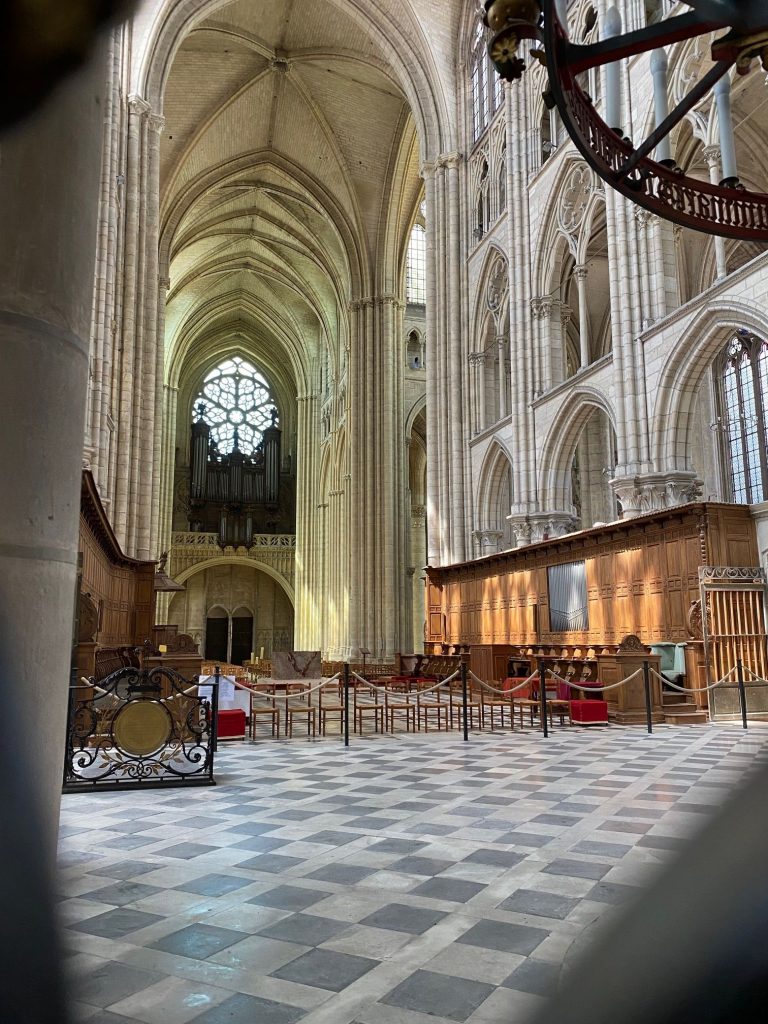
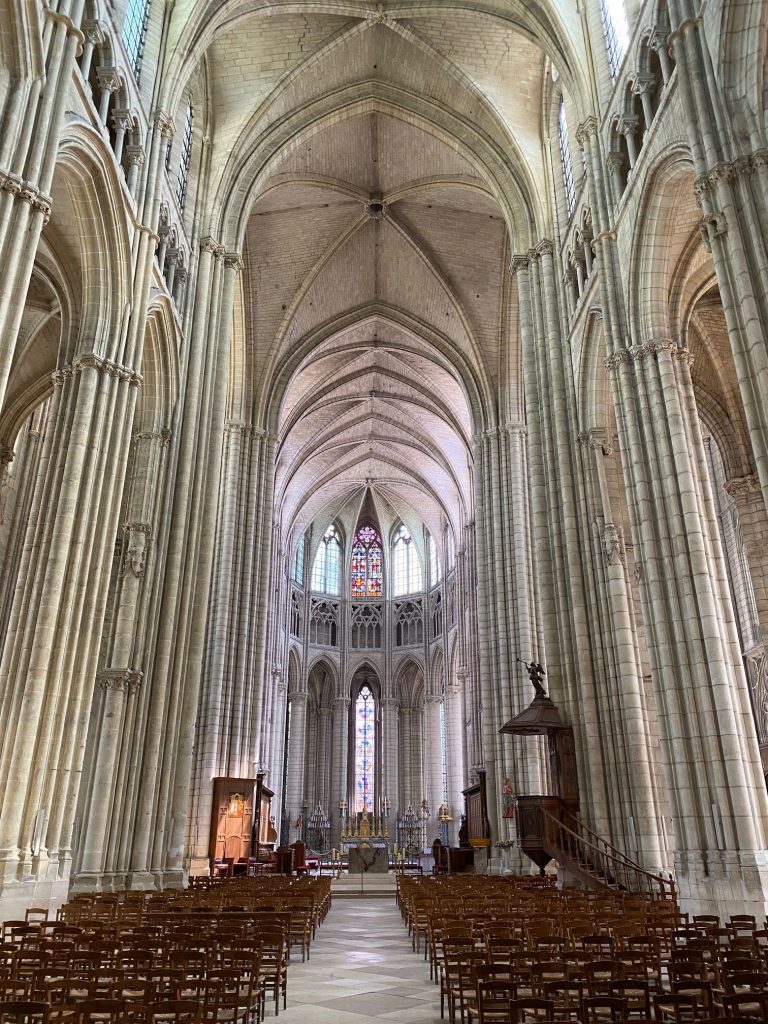
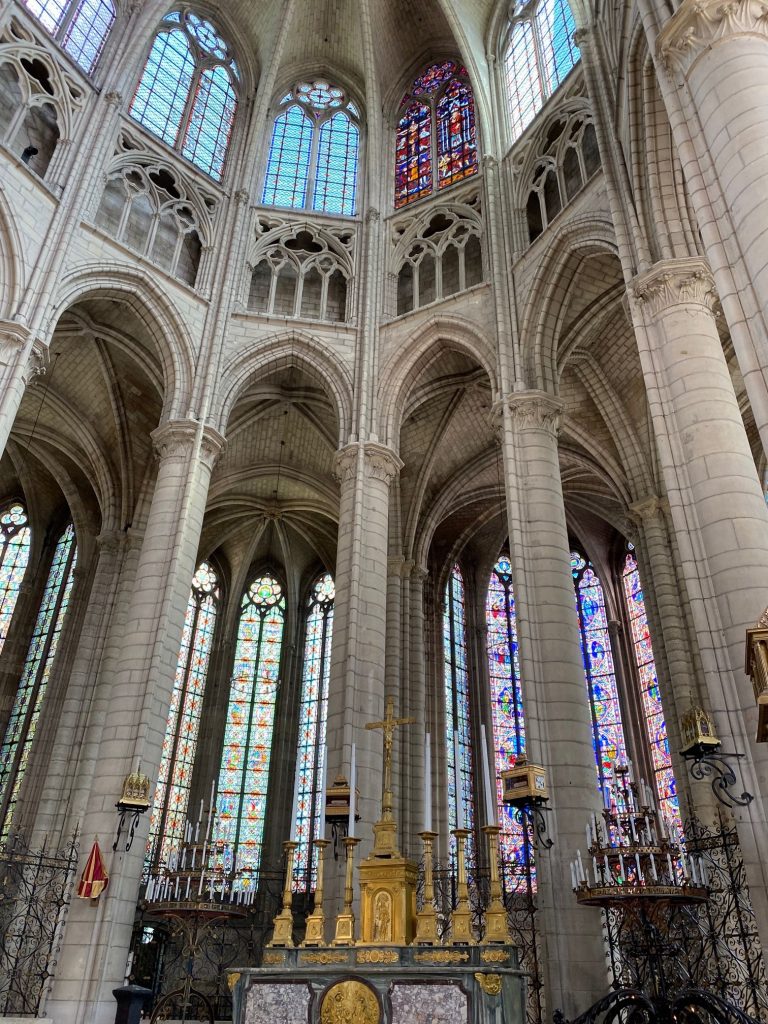
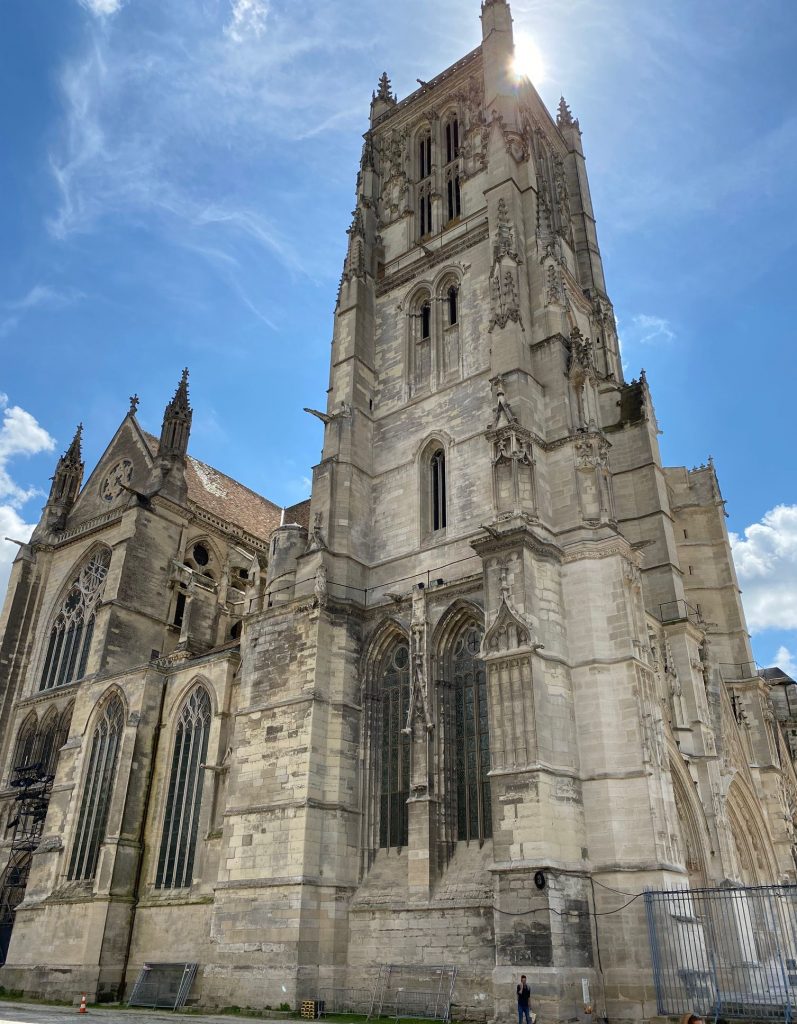
Die Oper Stradella von Flotow wurde in 2006 eingehend besprochen. Sarah Hibbert hat ein immer wieder aktuelles Thema: Wie sollten vorherige Stilepochen in der Aufführungspraxis und der Komposition behandelt werden? Die Legende über den Sänger Stradella, der einem Fürsten die Braut ausgespannt hat und deswegen ermordet werden sollte, bietet einen interessanten (sex and crime) Plot. Wegen der Gesangskunst des Verführers, wollten die bestellten .Auftragsmörder den bezaubernden Sänger nicht töten. Tatort ist der Auftritt der Sängers in einer Kathedrale. Fritz von Flotow und Louis Niedermeyer haben beide fast zeitgleich eine Version des Librettos vertont. Es stellt sich nun die Frage, wie denn am besten der historische Stoff aus dem 17-ten Jahrhundert darzubieten ist. Beide Komponisten komponierten im Stil der romantischen Oper des 19-ten Jahrhunderts. Flotow wählt eine stärker historisierende Variante der mittelalterlichen Musik der Stradella-themen in seiner Oper. Die Klangfarben der mittelalterlichen Kirchenmusik passen aber nur schwerlich zu den Erwartungen des zeitgenössischen (1830er) Opernpublikums. Daraus resultiert,en eine spannende kompositorische Aufgabe und entsprechende Herausforderung für die Aufführung des Werks. Darüber hinaus müssen noch Unterschiede zwischen der ersten mehr populären Form der Oper für Paris (Vaudeville) und der später in Hamburg uraufgeführten Version der Flotowschen Stradella Fassung beachtet werden. Historisierung mit Anlehnungen an Gesänge von Palestrina sind nicht der Geschmack eines jeden im Publikum und der Kritiker. Grund genug, in die Opern mal wieder reinzuhören. Den Tenor, die Arie “Jungfrau Maria” singend, hätte ich wahrscheinlich auch nicht als Auftragsmörder töten können. Rolando Villazón ist darin recht überzeugend.
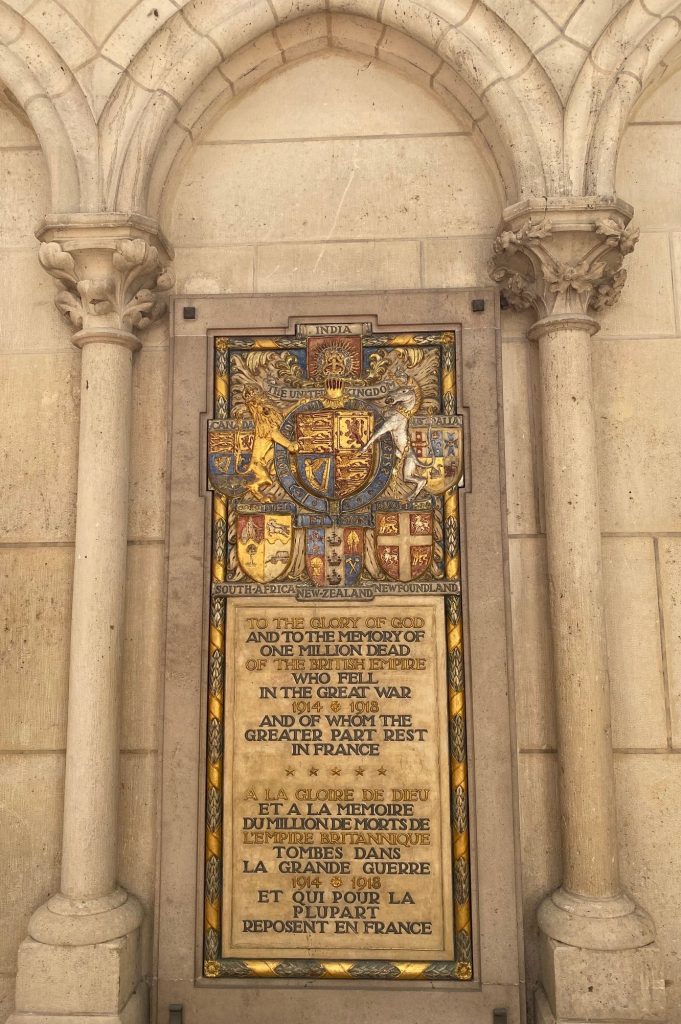
Quelle: Hibbert, S. 2006. Murder in the Cathedral. Stradella, Musical Power and Performing the Past in 1830s Paris. Music & Letters Vol 87 Nr. 4. doi:10.1093/ml/gcl081 (Photos, KS Kathedrale in Meaux, F).
Patient
The pandorra’s box is wide open. With ChatGPT applications the discussion has started to use it for more medical applications. As for much research having assistants to support you in routine tasks in your research is a standard procedure. Now the medical profession is also discussing the use of ChatGPT for the boring and time-consuming task to draft reports. The first study, published in the Lancet Digital Health, evaluates in a preliminary form the patient-sensitive form of communication between clinics and patients. Beyond chatbots, which organise information from calling persons, the obvious application is the use of ChatGPT to draft patient clinic letters. The example in the study is the skin cancer reporting. Lengthy reporting back to patients of lots of “hot and cold spots” might be done by AI with sufficient reliability. All depends on the correctness of the data base, the screening and samples taken. The communication between clinic and patient can then focus on other issues. ChatGPT just like neuroflash has its strength in being able to control for the “level” of the language. In addition to the choice of the output language it is possible to use, as it is required in the U.S., an average understanding level of patients. In other words, easy language rather than medical expert language is an option or even a requirement. Anecdotal evidence and the PISA for adults studies show how difficult it can be to talk the same language even if you talk the same language. There is ample scope for improvement and ChatGPT or neuroflash for German applications of AI are prime candidates to fill this gap in clinic patient communication. Considering that our mobile phones (can) do already most of the scanning of skin cancer dots and AI is used in pre-scanning the images and recommends to consult medical expertise, the next step to improve health delivery seems feasible. Whereas the statistical analysis explains 62% of “median humanness”, the score of 37% of explained variance of median correctness is a surprise as the basis of the model to explain deviation from correctness should be as low as possible. Medical data, like many other data, is not simply binary. The way forward is most likely relying on a “human-in-the-loop” approach for some time. A limited human input might reassure many patients as well.
Source: Stephen R Ali, Thomas D Dobbs, Hayley A Hutchings, Iain S Whitaker (2003). Using ChatGPT to write patient clinic letters. Lancet Digit Health 2023 https://doi.org/10.1016/S2589-7500(23)00048-1 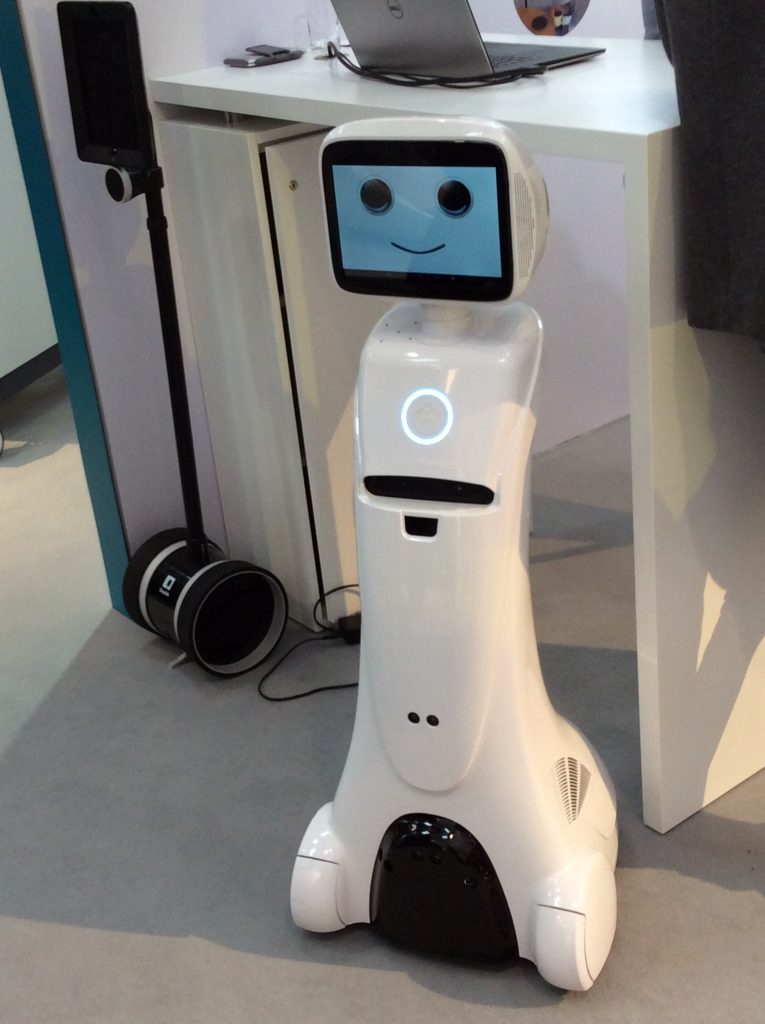
Fukushima 12
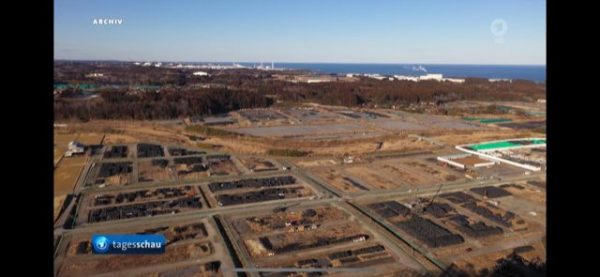
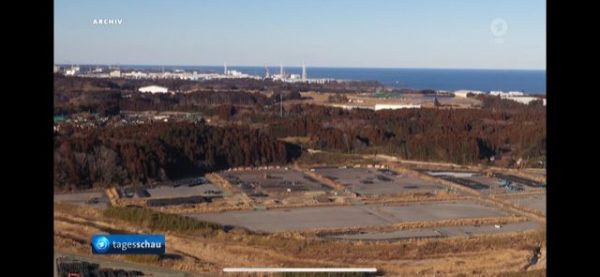
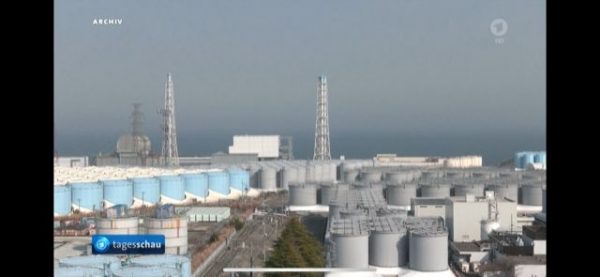
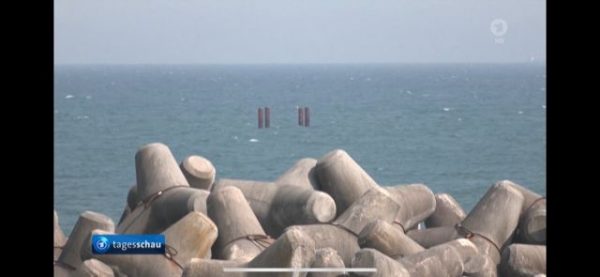
12 Jahre nach der Kernschmelze im Atomkraftwerk der technologiebegeisterten Japaner stellt sich immer noch die Frage nach der Entsorgung der verstrahlten Reste und Kühlwassers. Laut eines Berichts und den veröffentlichten Bildern zu dem Kernkraftwerk Fukushima staunen wir über das weite verseuchte Umfeld und die riesigen Lagerstätten für den verstrahlten Abfall. Geothermie, Wasserkraft, Windkraft und Solarenergie könnten auf der Fläche sicherlich riesige Mengen von nachhaltigem Strom produzieren. Das hatte bis vor 13 Jahren niemand denken oder aussprechen dürfen. Heute nach 18.000 Toten und vielen Folgeschäden durch Krebs und geschädigtes Erbgut wird der Unsinn weitergehen. Da sind sehr starke Interessen am Werk, denen es nicht um Menschenleben geht. Atomkraft, koste es was es wolle. Die Einleitung eines Teils des verseuchten Wassers ins Meer ist wohl bereits erfolgt. Noch mehr wird folgen müssen. Über die Fische als Teil der Nahrungskette werden Menschen dann mehr Radioaktivität aufnehmen. Das war schon so mit den Pilzen nach Tschernobyl. Fukushima bleibt ein abschreckendes Beispiel weltweit, da helfen jetzt zum 12. Jahrestag ein paar Solarzellen als Trostpflaster wenig. (Bilder aus ARD Tagesschau 11.3.2023. Auch bei uns ist es leider schmal Glück gewesen, dass nichts Schlimmeres passiert ist (Link Radiobeitrag DLF 2023-4-17)