Swimming Paris

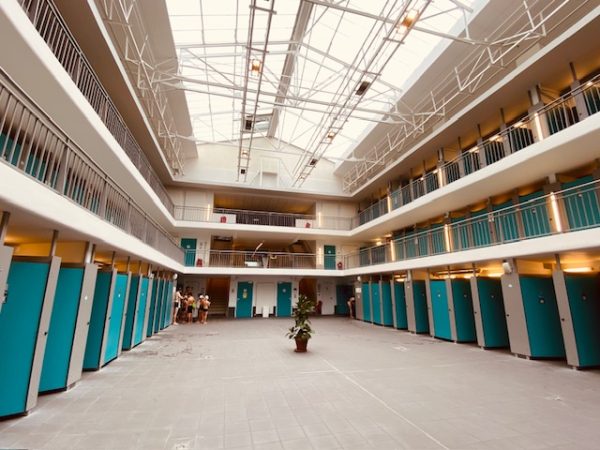
Swimmingpools are rarely on the to-do-list of tourists in Paris. This is good news for all those who go to a Swimmingpool for real exercise. In Paris you can enjoy the almost a century old public pool for swimming exercises with 50m lengths. In the entry hall you have literally a hundred doors where you change and, previously, you kept your clothes while swimming. Light by design welcomes you to do something good for you, physically and mentally. The “Piscine Blomet” (Paris 15th arrondisement) preserves a bit of the charm of the early 1930s Art-deco style in Paris. Sports deserved to be performed and exercised in fine architecture not just functional concrete. It is quite a challenge to preserve such architectural treasures including their original function. It is not all just business and tourism in Paris.
Blomet piscine Paris 2026-8

Sedentary society

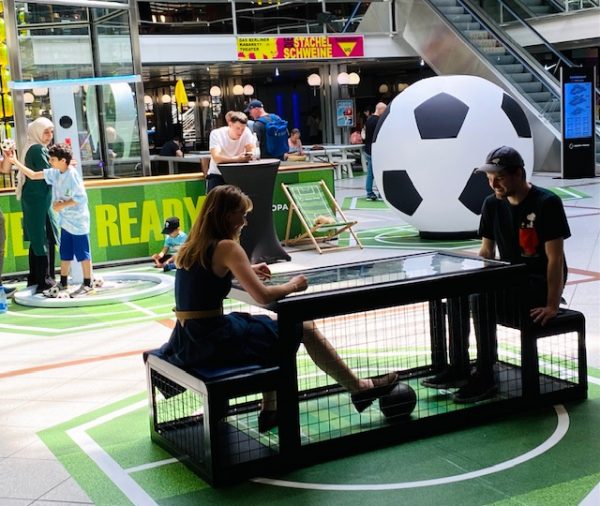
The football or soccer world cup, like other sports, used to be an event which mobilized people to become active as well. Many people, particularly the young, joined football teams and clubs or practiced in backyards. The sedentary society has managed to transform this in the 2020s into a seated activity (football soccer seated 2026). In order to capture attention and time spent in a shopping center, itself a good predictor of money spent, the FIFA world cup serves as a means to promote football at any costs. Sit and kick, that is the new lifestyle. You even have your hands free to do something else. Eat and drink, probably. Great, that the football-mania is over in 2026 for a while. Time to get real exercise.

Soccer business

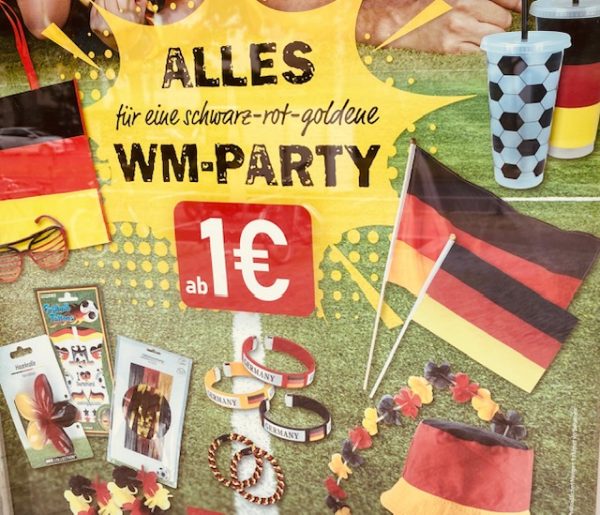
The FIFA has turned soccer into a juicy business activity. Of course, it has been like this for some decades now. After all professional athletes, coaches, managers and medical teams all around the games have their own high fees. With huge funds involved and millions of supporters the does not lack public support. The national leagues have been topped up with several international competitions which with less clear remuneration structures, but abundant national pride involved. The betting industry is worth billions in soccer alone. This invites all sorts of influences and corruption. As the football judiciary is not independent as a other judicial institutions, interference is apparently more easy with some return-favors between FIFA and host countries. More spectators and more TV-time supercharge profits. In countries that exit early, like Germany, the merchandising products will be forced to sell with substantial discounts. 

Set and Match

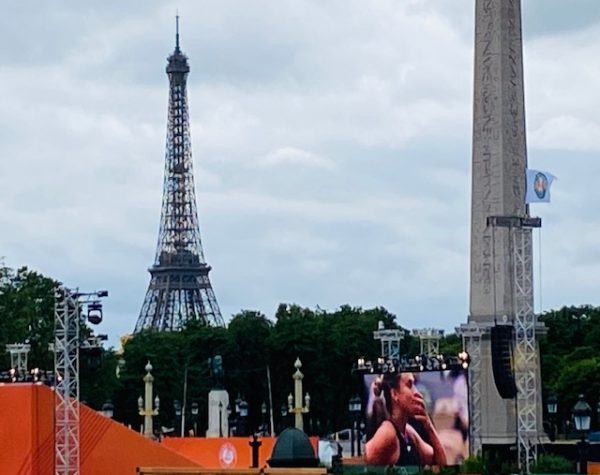
The organizers of big tennis tournaments like at Roland Garros in Paris have to reach ever bigger audiences to be able to cash out the prize money for the top players and their expenses. Besides the number of spectators on site, the prime income comes from television rights and sponsorships through advertising. Gambling on set and match is also a rising annex market, just like tourism linked to the event. For such purposes Paris offers screenings, similar to the Olympic Games 2024, in the centre of Paris. The park “Les Tuileries” offered to follow the tennis matches on big screens against the background of the Eiffel Tower (image below). Of course, the “rue de Rivoli” nearby offers additional pleasures or take home goodies for spectators, which add to the overall budget spent by an average tourist in Paris. For people interested in a walk in “Les Tuileries” and the plants ( Acanthus), trees (Linden) and flowers (roses) have to choose the other parts of the park. Big cities have the chance to offer a bit to everyone within relatively short walks. 

Gone paddling

Similar to windsurfing, paddling has not only a physiological, but also an ecological impact. Rather than using external power the equipment requires a good sense of balance on the board and propulsion originates in your own muscles. The benefits are great for mind and body and sharing a board is the standard way of getting your regular exercise.
There are more and more stations near the sea or on lakes available in 2026-5, so that it has become a much more accessible form of exercise. Paddling is also an age-inclusive practice, since the “probability to fail“, with the pleasure of spontaneous diving, is spread relatively equal across ages. Learning curves, however, may differ substantially across generations depending on prior balancing experiences. The ecological bottleneck consists in the access to sufficiently clean water resources so that the healthy and fun exercise shall have positive long-term health effects. 

Autonomous Robot

We have been used to computers beating the average chess player and even the best players. In 2026-4 the journal “Nature” published the documentation of an autonomous robot (Ace) winning the occasional game against top-level Japanese table tennis players. Peter Dürr et al. (2026) described the robotics challenge as constructing a robot that can match the human capability and reaction time of “fast, precise and adversarial interactions near obstacles”. The high speed perception of movement is coupled with event-based vision and builds on AI-algorithms like reinforcement learning. The step ahead is remarkable.
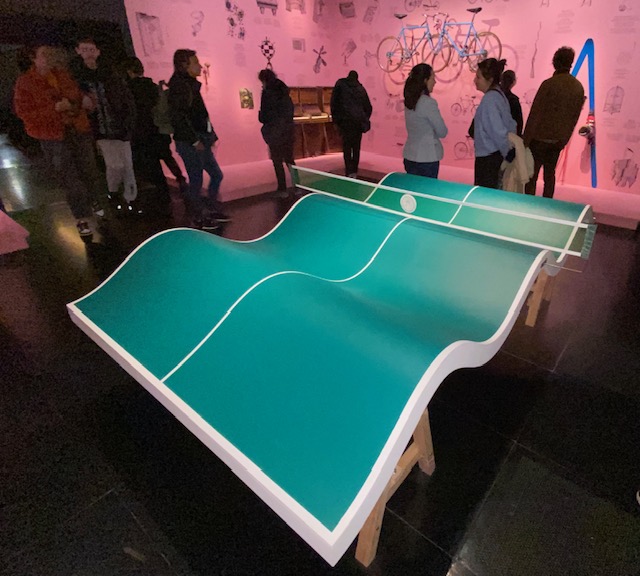
About 50 years ago, as coach in table tennis we used a machine or robot throwing balls towards us which moved from left to right in timed routine, for example. These simple robots we used to train humans. Now the robot is reactive and even interactive, learning from strategies and tactical moves. Technology can outperform us in most singular tasks in 2026. The combination of several of these skills is still quite unique to humans, but the clock is ticking for human singularity in technical matters. What was considered a “false good idea” in the Paris exhibition “Flops” at the Musée Arts et Metiers (see image below), might be an interesting response to challenge the new generation of autonomous robots.

Exercise and neurons

The neurons in the brain have an active part even in training effects of physical exercise. Morgan Kindel et al. (2026) have accomplished a rigorous test that demonstrates the involvement of brain neurons when mice were exercising repeatedly. Training effects were larger if the neurons of brain cells were involved as well. The cell’s learning ability encodes the experience of exercise and is prepared for a repetition of the exercise. This is roughly what happened in their experiments in my own words. Runners might know the effect that running on track or treadmill uses up less calories than running cross-country where the brain is more challenged to avoid missteps or loss of orientation. However, the latter are different tasks whereas the former experiments demonstrate that the brain is involved in physical exercise even if we do not notice it. Exercise might spur brain plasticity just by doing it. Hence, just do it.  

Words versus Balls

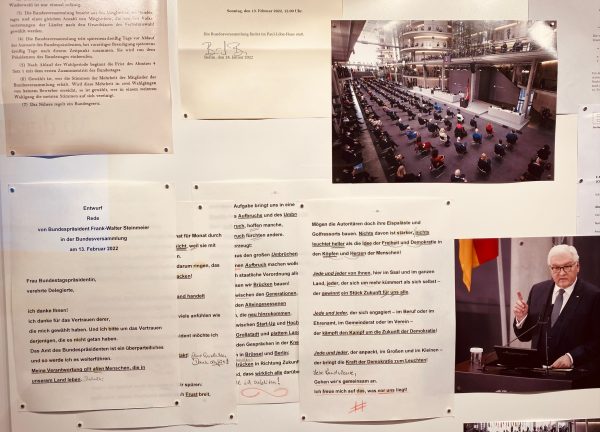
At the occasion of a visit to the “Deutsche Dom” in Berlin, which hosts the historical exhibition of the “Deutsche Bundestag”, I came across the memorable transcript of the speech by Bundespräsident Steinmeier (Image below), which he gave on 2022-2-13. The German President’s words come across as a forceful defense of freedom and democracy as a matter of mind and heart, and against the authoritarian leaders who keep constructing palaces of ice and golf resorts. (“Mögen die Autoritären doch ihre Eispaläste und Golfressorts bauen. Nichts davon ist stärker, nichts leuchtet heller als die Idee der Freiheit und Demokratie in den Köpfen und Herzen der Menschen!”, p.18). There is indeed an ongoing battle on which kind of diplomacy is more effective, words or playing golf together. Apparently the Finnish prime minister seems to be quite keen to play balls with President Trump on the golf course to ensure continued support of the 1000 km Russian Finnish border. Maybe, playing Ping Pong with the Chinese leadership might be more effective in balancing the trade books between Europe and China, just as much as golfing might do the trick with the current Trump administration. What’s your handicap in the golf and ping pong tournament of  international politics.

Paris Olympics history

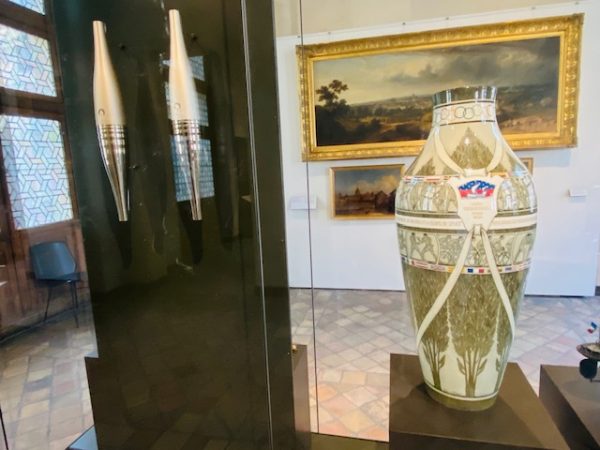
The 2024 Paris Olympic Games will go down in history as the event that has achieved to put Olympic Games and Paralympic Games on an equal footing. At least this is the message the  museum of the history of Paris tries to transmit. In the “Musée Histoire de Paris Carnavalet” we find a vase from the Games from 1924 in Paris next to the 2 Olympic torches, one for the Paralympics and one for the Olympics 2024. Both torches are the same only a different logo on them, same message, same spirit. The impact of these games is likely to set an example for many years to come and other hosts of the Games will be measured against this benchmark. Making history is one thing, taking care of the posterior image another one. Paris has taken of this as well.

Law and Legality

Some persons consider themselves to stand above the law or push all interpretations of regulations beyond usual understanding of it. Even after a person has been dealing with pharmaceuticals or drugs used also for doping purposes, the conviction of such a person may take several years if not decades. In France, Mr Bernard Sainz seems to be a good example of such a relentless case of practicing para-medical consultations to assist mainly cyclists in endeavors to win championships or professional status. Le Monde  and Cash investigation have raised awareness of the public for such dubious practices. The “French Federation du cyclisme” and medical doctors association fight a continued legal battle against this persons exercising illegally such doping assistance. 

With apparently 56 legal procedures in connection with this person, the legal system has to bear the majority of costs of such illegal practices.

The reach of such dubious practices might be extended if the systems beyond doping, but for assisted euthanasia cannot be controlled effectively. Hence, the precursor cases of positive stimuli like doping pose similar challenges to the legal system as “negative stimuli” weakening persons as assistance to die. The end of a life course is not only a medical issue. Society-wide debates need to take place in order to organize a large consensus on the implications more liberal practices shall entail. 

(Image: Palais de Justice, Paris 2025)