Democracy in art

The depiction and imagery about democracy in the history of art is according to my own anecdotal evidence and visits across Europe much less frequent than depictions of royalty, mystery like religion or autocratic rulers. Therefore, visits of museums on art history, let us say prior to the impressionists, have to be approached with an obvious skepticism. The impressionist art movement rebelled against the official art academy and started their own salon and are still much acclaimed for this as well as the fight for their own vision of art. The worst authoritarian backlash came from the Nazi-terror, which annihilated large parts of democratic ideas in and about art. A second major issue is about who visits the museums in contemporary societies. Democratizing the crowd who visits art museums is a steep task. Ease of access also beyond  costs of entry, they still pose barriers of access to reach a representative sample of a population to participate in art. (Image Kunstforum new barn in construction).


Sustainability in computing

As the huge size of data centres become visible for everybody we begin to question the sustainability of computing infrastructures as well. The need for energy and water resources (for cooling) grow in line with the growth of data centers, the whole issue of input of resources and global trade has to be re-assessed. Based on European trade data, we know that computer software is heavily imported from the US, whereas we import the hardware to run the software in even higher shares from China. In view of the AI boom, this risks to worsen the European trade balance in the coming years. European digital sovereignty suffers as well, if we do not act upon it (compare Figure 8 in Eurostat report).
An easy fix is the shift to more computing-efficient software, which does not need or rely on more processor and memory imports from China for the hardware and imports of services like operating systems or office software from the US.
Just changing to Linux and OpenOffice lets you keep your hardware for several more years. Sustainability in computing isn’t hard to do. It is just a matter of determination. We can do it, if we really want to do it. The more rare earths become rare and more expensive, the larger the amount of people and businesses, who shall think twice about this.
European Digital sovereignty can work as a driver of sustainability in computing as well.

rainbow in front of clouds Brussels Central 2025

Socio-technological obsolescence

The standard literature or AI-sytems will give you a definition of on technological obsolescence, which specifies that obsolescence does not mean that a device is broken, but that it is outdated. In computers this might be due to hardware no longer supporting newer, more resource demanding software, or newer software insisting on the use of other hardware. The seemingly rapid innovation cycles in smartphones, cars or robots might justify such technological obsolescence, but the real advances like shifts from 3G to 4G to the newer 5G mobile frequency standards have taken place rather slowly due to provider coverage of sufficiently large, particularly rural areas.
Therefore, the technological obsolescence has to be enlarged as a concept to socio-technological obsolescence as the societal, legal and economic boundaries of technological innovations have to be taken into account as well. Provisions for health concerns or CO2 saving circularity, i.e. reuse of resources have to be taken into account as part of a precautionary principle.
Computer screens have asked us to move from square designs to wide screens (watch videos) to smartphones’ standards of long formats. My 20 years old square screen has been doing a reasonable job throughout these periods, though not for serious games.
The socio-technological obsolescence relies on a “socio-technical prestige score” of products, like for luxury brands in other industries, where fashions drive obsolescence more than technology.
(Image: Robotic arm made by Kuka writes on paper sheet at Frankfurt book fair 2017)


Deep Fake Threat

Our Western democracies are aware that “deep fake videos”, radio, online-newspapers and most of all social media platforms are all around us already. However, more scientific voices alert us that this threat to our easy or comfortable way of life to consume information eventually threatens the survival of our democracies. Previously, interference in elections used to focus on rigged election procedures, but in the 21st century powerful other alternatives can do the dirty job to bias elections against the original intentions of the electorate. The widespread use of AI will exacerbate the already practiced ways to produce deep fakes. In a preparatory self-test of an AI-assisted chatbot I was surprised myself of the quality of the output. A person not very familiar with my original voice in a second language would assume that it is me who is being interviewed in person. Based on a fake news text, any form will be automatically translated into voice only and/or video based on basic visuals.
Statisticians used to joke some decades ago: “Don’t believe in any statistics, unless you faked it yourself.” This is meant to encourage people to be aware of dangers of the use of statistics to influence opinions or official decision-making, like in policy making of central banks, which might be based on biased accounting for shrinkflation, cheatflation or greedflation to name just a few,
Hence, the need to strengthen awareness, analytical skills and critical thinking should be high on the agenda to defend our democracies. There are not only external military threats, but additional ones masked as internal threats.
(Image:: mice as humans in living room 2 couch potatos 1 on rocking chair, tea time)

Robotics Hype 2026

Towards the end of 2025, it is common practice to look back on the last 12 months to summarize a year and to contribute to the “collective memory” of the year. From a “society and technology” perspective we shall not be surprised if such summaries will be full of images and praise of AI and robotics. However, large parts of the innovations that shall be declared to have marked 2025 were already around 10 years ago. It is just the timing for the new momentum and the creation of a hype around these technologies that is really remarkable (compare WSJ 2025-11-24 p 1-2 by Konrad Putzier).
It is true, playing around with robotics was reserved to universities, research institutes and some big players in industry. The public and financial markets showed little interest in these “nerdy” fields of applications. Although we were hardly able to compete with our chess computers, Watson solving math problems for us including the steps for us to follow. Video, image and textual support was provided by specialized applications already at high levels and in multilingual versions. In 2025 these techniques have enhanced with machine learning and neural network programming reaching higher speed and being able to use ever larger data sets as input.
But there are areas where the hype is coming to an end. How about all the artificial reality (AR), virtual reality (VR) applications? Many have seized to exist. Have you visited or invested in “Second Life” platforms? Opened a shop in the VR-world? Bitcoins have lost 7% of their value between 1.1.2025 and 24.11.2025 and they suffer still from high volatility rather than an uninterrupted rise.
War has fuelled the rise of shares in 2025 and “dual-use” technology benefits as well. AI has been driven by, and drives both trends.
In sum, it is much less the technological innovations in 2025 that are astonishing, but the political economy of how to orchestrate a sensational hype around the technologies.
(Image Hannover Industry Fair 2016-3-14).

Sovereign data spaces

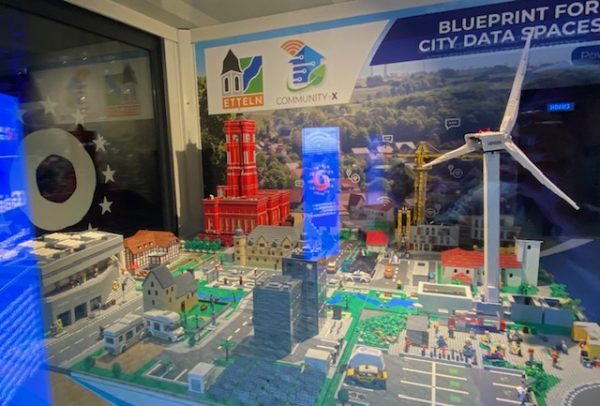
Data is the new gold, petrol or diamonds. In order to bring this message home to all people in the EU, the European summit on digital sovereignty had a small exhibition of projects that address these issues. City data spaces is such an initiative which has been running for quite some time now. In fact, from a city planner and data scientist perspective cities collect already huge amounts of data and can offer them to service providers, businesses and each and every one of us to organize our energy consumption, improve mobility patterns or any form of data or video streaming services. The amount of data captured and to be stored is growing rapidly. Just think of the Internet of things (IoT), maybe that’s only your wifi-connected coffee machine, oven or heating. Now add AI to this which allows the system to learn about your daily patterns to start the device in time for you to focus on other tasks. As we would like these data to stay confidential, the need for European digital sovereignty becomes sufficiently clear. It will take a huge effort to provide an adequate digital infrastructure for this “brave new world” and many people to work towards this objective. Train the trainers already, cause otherwise this is going to take ages before we can harvest the benefits in safe and sovereign manner.  

Reverse causality

Reverse causality is a beast, which empirically minded scientist fear almost like death. However, many processes we study are running not only in one direction. In most cases, causality is tested with, or assuming, a unidirectional model of causality in mind. But some processes have not only a set of multiple causes to take into consideration, but some processes might be reversible or run in a rather complex manner, which are difficult to quantify. Mind captioning is a technique in neuroscience, where easy language is used to describe an image perceived in a person’s mind. Such thinking aloud data is based on thousands of brain scans, where people watched videos or images (study link).
In my own journey into the working of my mind I play around with different directions of causality. Sometimes the text is the origin and the image follows in a selection of a telling illustrations, but occasionally the reverse causality is at work. The image is the starting point and gets the mental process going. It is a rather complex process which is not easy to approximate with the help of algorithmic thinking. Reverse causality has many surprises to offer. As scientists we have a hard time to come to grips with it. (Inspiration Link) 

EU Digital Sovereignty

If we try to search for digital solutions, we shall encounter a whole lot of American and Chinese products, but very few European companies that are able or willing to compete. Hardware mainly comes from China, software from the US, at least until AI was not working in the background. If we add Russian interference to destabilize our digital infrastructure to the scenario, we are not really fit for the challenges of the 21st century. The very definition of a country or political union is the affirmation and competence to assure its sovereignty, particularly in cases of territorial conflicts with neighboring countries. My health or mobility data are a rather private affair, however, our state governments in EU-Europe have done little to ensure our data integrity. Business is also at a loss, if they do not spend heavily on data security themselves, usually relying on external cooperation. 

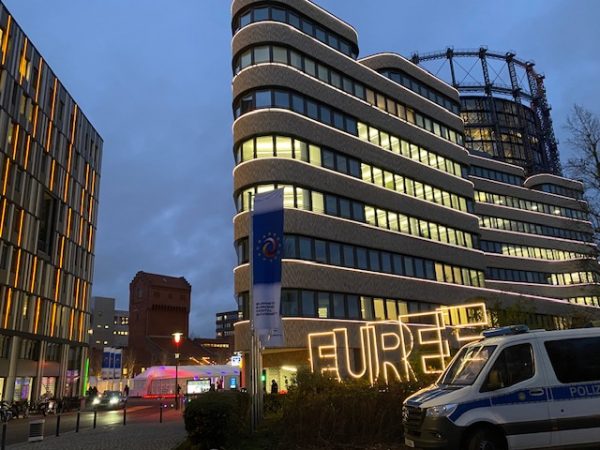
The EU digital sovereignty summit took place in Berlin on the EUREF campus in 2025. It can only constitute a beginning for intensified cooperation in  this long overlooked policy area. It will be tough to catch up where production has been abandoned for decades.  

Typewriter history

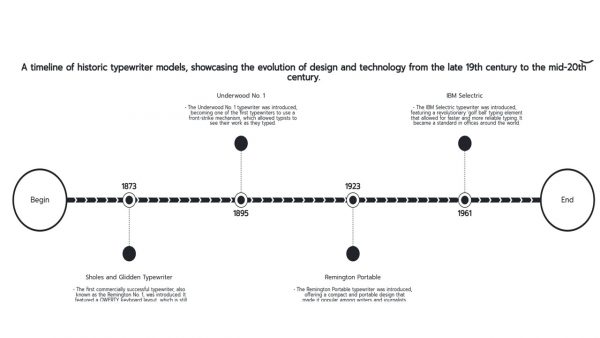
The history of the typewriter and typewriter is comparatively short compared to the history of literature or other technologies as partners in the creative process. With the advent of AI (here as part of infografix, see image below) the skills of using and mastering a typewriter have become almost obsolete. The original design by Remington (timeline below) has dominated for almost 100 years the technology of typewriters. Then came the electronic IBM technique with an automated correction type, which was not only faster, but also more forgiving of “typos”, short for typing errors.
The craft of handwriting had suffered a tough blow, despite its almost intimate touch to it. Knowing the typewriter outline by heart allowed typing with closed eyes or a focus on another text or image as well as a parallel thought process. Scientists and writers (Claude Levi-Strauss) reported on their creative process as intrinsically being linked to their typewriter.
QWERTY outlines for English language typewriters still dominate the keyboard typing today. With the AI interaction on the rise, we might move away from typing as a “Kulturtechnik” a technology of our cultural era and focus more on human-machine interactions via our voice and microphones. The underlying question, however, remains the same: What is the best technology to enhance our thought process? This, in fact, tends to be a very personal human choice, where technology plays only a subsidiary role.

From AI to xAI

As humans, we like the feeling to be in control of things. This applies even to immaterial things like religious beliefs. Generative AI has created problems with its hidden structures and lack of transparency of their applications of algorithms (and combinations of algorithms) to basic data bases of knowledge and information. The use of xAI, which stands for explainable artificial intelligence, can address some of the concerns about the lack of transparency and explanation of responses from AI systems. Many users want to know in advance about the consequences of the use of specific words or notions in an instruction to AI. The interpretation of each single word by xAI can inform about the precision of interpretation (cheap versus cheapest, for example) or highlight the sensitivity to gender-neutral language or not in its guidelines. Additionally, ex post the xAI could indicate alternative notions in a prompt and, briefly, how this would affect results.
Yes, there is a trade-off between brevity of answer and room for explanations. As in psychology, there some value in a “thinking aloud” procedure for respondents in order to better understand (implicit) the reasoning behind a reply. xAI takes us a step further in this direction of asking AI to think aloud or more explicitly in a human compatible way of logic and broader reasoning.
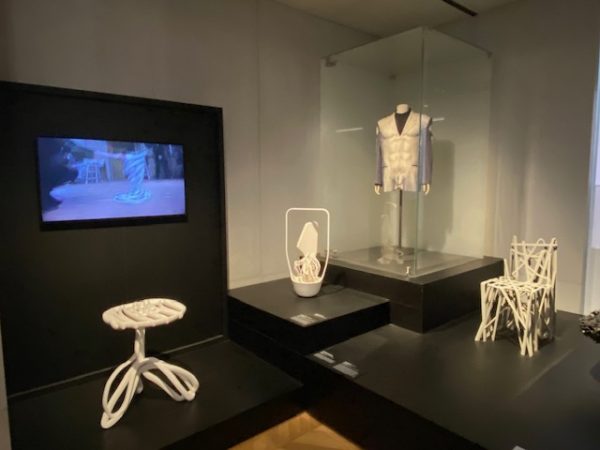
Put AI on the psychotherapist’s bench and xAI will be to the advantage of many more humans again. Humans just don’t like black box systems that lack the necessary as well as sufficient transparency. (Image on the right: Patrick Jouin, chaise solide C2, MAD digital humanism).