O for Optimism

Looking back at the end of every year to what happened in the last 12 months gives mixed feelings in annual repetition. Developments of nature and biodiversity are sometimes troublesome (variants of viruses like omicron). Despite wars and man-made disasters most people have a capacity to bolster with optimism. To view a glass as half-full rather than half-empty is a common description of two different perspectives on the same fact. Additionally from a longitudinal perspective it matters, whether you started from a full glass beforehand or from the empty glass. In experiments we would need to clarify the role of the starting point and evolution before the statement on the 50-50 state of affairs.
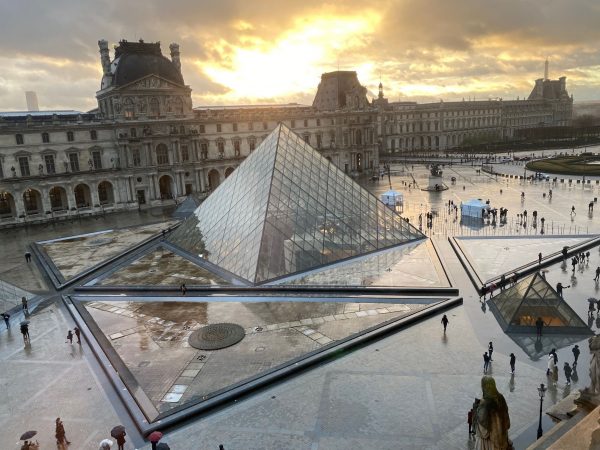
In the French enlightenment, represented by Voltaire‘s “Candide ou l’optimisme“, a critical view on the optimism of Leibniz is expressed. The optimistic claim of Leibniz, “we live in the best of possible worlds” is questioned by Candide who believes taking care of his own little garden is probably the best he can do to preserve nature and the world. These two apparently opposite perspectives and conclusions on the potential of human action we find reflected still nowadays in politics and world affairs. Do we stand up to defend human rights or do we believe the fight is futile? The optimism embedded in Ukranian culture, for example, demonstrates the power that might come out of optimism. It would even go as far as stating that optimism is a precondition for democracy, always striving for the improvement and spread of democratic procedures. Creating opportunities to more freedom to do something is the driving force besides ensuring to curb infringements on one’s freedom. Optimism is a close ally of imagination, imagination of all people living in peace. A nice sunset gives hope for a nice sunrise as well.
N for Nature

The first association with nature for me is the nature surrounding my childhood. Rivers, forests, vineyards, mountains. Maybe a little bit of German romanticism surrounds this. I still enjoy occasionally listening to some nature romantic songs (Lieder) from Schubert, Schumann, Flotow or Mahler. Beginning with adolescence natural sciences took over, but what does natural really mean in the natural sciences. In the “Encyclopedia Britannica” the term natural has already been dropped. What has been referred to as natural sciences is just found under the term sciences. The social sciences or psychology are not included under entry of sciences. One of the high reputation scientific journals is still named “nature”. Only a small fraction of the papers deal with what ordinary people would associate with nature. The nuclear fusion or nuclear energy research and applications in practice figures still prominently in there. Ever since Tschernobyl, Fukushima or Hiroshima, horrific  dangers are associated with nuclear energy. The power plant of Saporischschja in Putin’s war, dominates public concerns in 2022. The natural sciences frequently are certainly not researching in the interest of nature. Hence, the social sciences need to deal with the social consequences of (natural) scientific advances. Science and technology have an intrinsic link to each other.
The loss of biodiversity is the most obvious demonstration of how cruel our own species is towards any other form of live. Not only is demography reminding us that with 8 billion of us we might further contribute to our own overpopulation, we might sooner or later destroy the whole planet either slowly with polution or through weapons of mass destruction. Poor nature, instead of pure nature is our destiny. Our western lifestyle is not sustainable and  we have no right to impinge on the rights and resources of future generations of us or those who have not poluted the planet like us in other parts of the world. So, when did it all start to go wrong? Probably our creed for more of everything has been nurtured for far too long. Less is more has to replace it somehow. This is also part of our nature. 

M for Memory

Besides the English term memory, which refers to a huge scientific literature starting with cognitive psychology, I like the French version of “mémoire”, because it is more comprehensive with additional meanings, nicely represented by Wikipedia.org. On the German Wikipedia-page you find first the reference to the children’s game memory, turning around images and memorising where the counterpart is/was (play pairs). This diversity hints towards a cultural element in memory. There is a person’s memory or mental capacity to recall and ways to remember. The latter term refers a lot more to collective memories and becomes a more debated issue. Danny Trom uses the term “split memory” in a chapter on France and the “myths of nations” (p.129-151). In David Brook’s reader on “the social animal” he states that grandmasters in chess (p.88) were long believed to have superior memory. This is actually not true as memory experiments showed, but they rather saw formations and “internal connections forming networked chunks of information”.
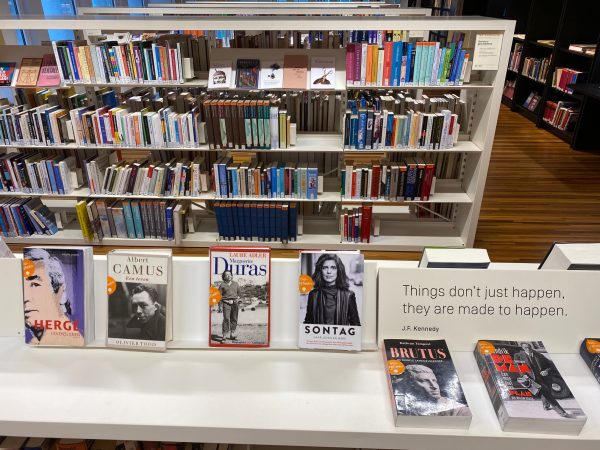
“Mémoire”, on the contrary, refers also to the writing of a person’s own biography. Nowadays, book shops contain whole sections of autobiographies, the most sold appears to be the one by Michele Obama recently, if I recall correctly. Among the most scandalous is the publication of the “Journal pour Anne (Pingeot) 1964-1970” by Francois Mitterand. All the autobiographical documents make explicit major parts of what might form collective memory later on.
Memory has found its way into engineering and computing. The memory effect in batteries or being “out of memory” frightens users in computing or programming. In short, I wish you the best of memories reading this page and stimulation by visiting memorials (image: Jewish Museum in Berlin 2022, Ullmann exhibition).

K for Knowledge

Readers of the sociology and/or the philosophy of science or knowledge have a hard time. Each discipline is evolving at such a high speed that is terribly hard for humans to follow more than 1 or 2 fields. Perhaps the choice of Karma instead of knowledge would have made it easier here. Alternatively, in German it is easy to find many nouns starting with a capital K. Kapital, Krieg, Kritik or Käsekuchen would have been popular, I guess. Soon I shall open the comments for suggestions for additional nouns, as part of the empirical “swarm knowledge strategy” rather than the theory-driven deductive method applied in knowledge generation on my side so far.
But wait, we are already in the middle of the unsatiable quest for knowledge. On a meta-level we would deal with the multiple ways to acquire knowledge and create new knowledge. Artifical intelligence is certainly one of the hypes at the moment. New data and new combinations of data drive us forward in the expanding universe and knowledge space. We have witnessed the disappearance of the thick printed encyclopedia in most households, replaced by specilised digital dictionaries or the network society’s shared knowledge base of “wikipedia“. Knowledge is linked to the history of ideas and Peter Burke is a prominent figure to rely on as a reference in this field. 20 years after “A social history of knowledge: From Gutenberg to Diderot” he published the much acclaimed: “The Polymath. A cultural history from Leonardo da Vinci to Susan Sontag” in 2020. To synthesise across the many “monsters of knowledge” over centuries is a daunting task. I like quotes like the one from Leibniz (p.77) “the horrible heap of books that is constantly increasing” and then his own continuation: “Printing, once viewed as a solution to the problem, had become a problem itself”. The whole section is devoted to information overload. Fragmentation of knowledge into disciplines and, much worse, the manufacturing of false knowledge create new challenges to knowledge. Maybe transforming the term to “knowledges” rather than knowledge is likely to capture better the differences between artificial knowledge, created by artificial intelligence and specialised algorithms, and human based knowledge. In knowledge storage we have lost the race with computers, but in deciding what are promising combinations between different fields of knowledge, we are still a wee bit ahead of the machines. Klara tell me, where is the exit, or your synthesis of the whole lot. Meanwhile I continue to read – what? books and the like.

J for Joy

Talking about joy is fun. Its feels better than just cracking a few jokes, and this is not bad at all. The starting point of much joy can be a simple joke, because of the simplicity of emotions and the bonding between persons. However, laughing about jokes is often abused in the form of laughing at the expense of someone or a specific group of persons (serious publication “L’empire du rire” CNRS, 998 pages). This explains to me the difference between a joke and joy. Joy is the emotion resulting of a joke, but also of many other experiences. The simple joy to meet another person, an animal, the sun, rain, wind, music, art or just less pain is more probably more intrinsic. To receive or to give a present is often associated with a joyful moment, sometimes lasting quite a bit. For some psychologists, emotions can be problematic, if a person can no longer regulate them effectively. Many persons tend towards excessive use of alcohol or other drugs to experience positive emotions like joy. Negative emotions of another person, strangely enough, may also contribute to the joy of another person (“Schadenfreude”), e.g., if a dictator is finally overthrown.
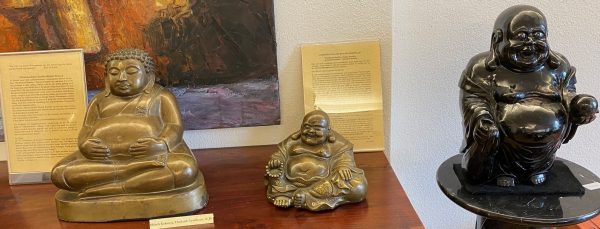
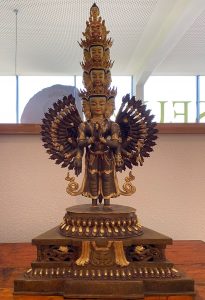
Much more inspiring is joy in connection with religion. As a critic of religious ideas, the attempts of religion to define joy for individuals and society probably explains the success of religions. Representations of Buddha, show the happy or joyful monk, Christians define joy with the advent and the birth of an unconceived child, fighting fiercely any modern forms of contraception and science advances for birth assistance. Restricting jokes and joy to the “carnival” period reflects the Christian doctrine to control and monopolise the definition of joy. Therefore, it is no surprise to witness that many persons feel more inspired by Asian traditions like “Ikigai” or “yoga” in their daily routines to experience joyful moments. I always found it very odd that Christian fundamentalists would not say Merry Christmas before the 25th of December after they have been to church at midnight. The priest or pope as the master of joy is a very strange idea. Affect inhibition or deferral is a powerful psychological tool. As in this blog entry I deferred my joy and laughter until the last line. So now, please join me in a wholehearted JOYFUL LAUGHTER, so the people around you may believe you’ve gone completely mad. It might be the beginning of more lasting joy, just keep practicing. Joy is within us not depending on outside stimuli,  joyful1  although they might help.

I for Imagination

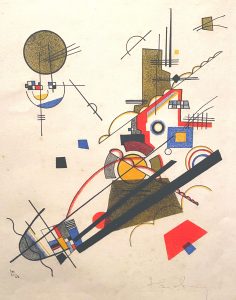
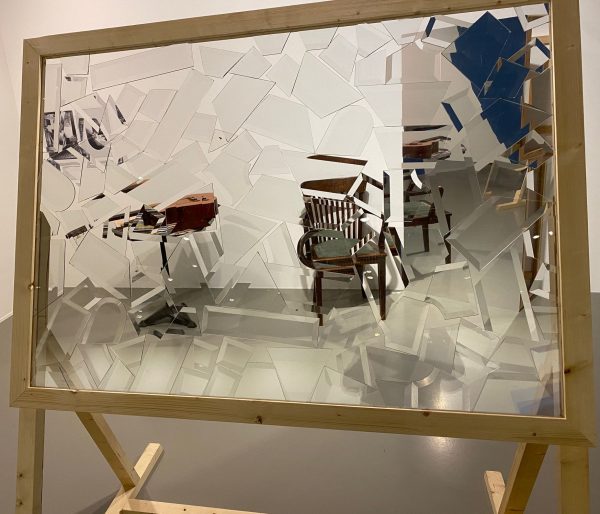
We are all full of imagination. The human brain hardly can do without it. It could be understood as if thinking of oneself is a continuous process of imagining and reimagining oneself. We just developed or were forced to suppress imagination at various instances throughout our lives. Day dreams are rarely tolerated, starting at school, then on the job and probably for a long time also about the way we imagine our own ending or life after death. Just trying not to think, like in meditation, seems to be a very hard exercise and it demands long practice to arrive at longer durations. Abstraction is one of the ways of art to allow imagination to rule the process of creation. In view of the anniversary of Pablo Picasso in 2023, the Brussels Royal museum of fine arts is presenting a paedagogic reflection and demonstration how Picasso emerged on his way towards abstraction as his preferred way of imagination and reimagination as part of the realisation process of his art work. As part of the Cubist revolution Picasso is quoted in this exhibition on how he paints: “Je ne peins pas ce que je vois, je peins ce que je pense.” and “Chez moi, un tableau est une somme de destructions.” Nice imagination, reimagination and de-construction I would say. Like the imagination depicted above from Paul Klee reflects the accomplishment of a new form of pictural language. Try imagination, it isn’t hard to do, “John Lennon” sang once. In Brussels you can try seeing the cubist way in the Picasso exhibition, a good way to prepare yourself for the next visits of fabulous exhibitions in honor of Picasso in 2023.
F for Freedom

This choice is no surprise, or is it? Who is longing the most for freedom? People in the so-called Western world are reported to score highest in the rankings of achieved levels of freedom. However, the longing for freedom often seems the strongest in countries, or regions within a country, where elements of freedom are restricted. Then fighting for freedom becomes an intense struggle, sometimes leading to outright war or fighting back like in Ukraine. Beyond the negative freedom (free from capital punishment) there is the positive freedom to express yourself freely. Both perspectives on freedom are crucial. Being free from prosecution is often only a first step towards the goal of being free to live your way of life as you feel it. It has always been a political struggle and will remain one today as well as in future. Less consensus reigns on the topic to what extent economic freedom is a constituent part of the term freedom. Far-reaching economic inequality within societies frequently limit persons at the bottom of the distribution to fully participate in society and excercise many components of freedom like decent food, housing, health and health care. All this remains the biggest challenge for humanity for years to come. We shall need a lot more heros in the name of freedom like the famous Nobel prize winners. Fighting for freedom in a peaceful way is probably the biggest challenge for humanity also in the 21 century.

E for Enterprise

There is a new start-up scene in development in Germany. Interesting to witness the new entrepreneurial spirit. Many of the youngsters grow out of their peer community, wanting to try new ways of working and living together. The new bottom-up or grassroots form of growing a business out of a subculture seems to be an adequate response to the growing diversity of societies and easier ways of community building through online social media. Name it “reach” today, it is similar to what you previously called having a customer base. The new element refers to a blending of cultures. Learning through being online connected to the world, yes, the whole world, allows wide-spread influences from other sub-cultures, be they American, Asian or African. The young are open-minded to new stimuli like “Ikigai” from Japan and, of course, the life histories of founders and individual biographies from entrepreneurs like the legend of Steve Jobs, Apple’s legendary founder. Imagineering has become part of the movie-influenced influencers. Short clips out of a longer story build communities. The witty comment, like at school, gets more attention than the long boring story of the preacher, teacher or the mansplainer. The experience of “flow” is all around these communities and this creates the specific magic of the start-up scene. They take each other to new levels, mutually, reinforcing their preferences and life-styles. They are well aware of the risks they are taking. “Keinhorn” German short for “not an Einhorn”, the one billion value threshold for super successful enterprises taught them crucial lessons. The “ecology of organisations” which I referred to in my courses at the now renamed “Constructor University” previously “International University Bremen”, then “Jacobs University”, (let’s see what comes next?) is an important complementary research tradition to assess the “survival” of enterprises. I still recommend this University, which I quit to start new endeavors. It carries in its several “names” the important message:
start, fail, change, (repeat).

Kritik der Kritik

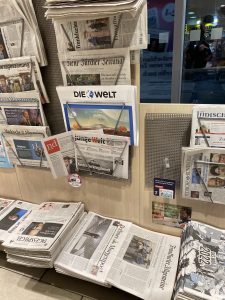
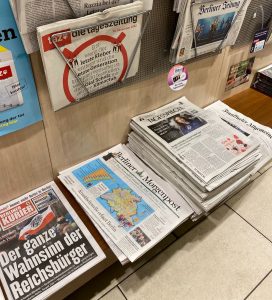
In Berlin türmen sich als ökologisches Desaster die nicht verkauften Zeitungen auf. Darunter gerade der in neuer Aufmachung erscheinende Tagesspiegel. Mal gespannt, ob dieses teure Experiment gelingen wird. Mit sorgfältig recherchierter Kritik des kulturellen Schaffens und der etablierten Häuser rühmt sich der Tagesspiegel nicht gerade. Vielleicht ist das ein Grund, warum die beständig weniger werdenden Zeitunglesenden ebenfalls auf andere Medien umsteigen. Eine Kritik, wie die von Ulrich Amling im Tagesspiegel vom Dienstag 6.12.22 Seite B24 braucht wohl keiner. Soll er doch besser gleich Bratwurst essen auf dem benachbarten Weihnachtsmarkt. In dem neuen Format des Tagesspiegel finden sich die Kritiken eh jetzt ziemlich weit am Ende, wo der eilige Lesende meist nicht hinkommt vor dem Einschlafen. Ich würde eher davon ausgehen, dass solche Kritiken etablierte Lesende abschrecken. Für Berliner Schnauze oder Wutbürgerniveau im Kulturteil muss ich kein Geld bezahlen. Die internationale Besetzung und Ausrichtung mit Regie Satoshi Miyagi erlaubt Berlin internationale Aufmerksamkeit zu erlangen jenseits des Berliner Inner Circles von Freund- und Feindschaften. Auf der Webseite der Staatsoper lesen wir: “Ein japanisches Inszenierungsteam um den Regisseur Satoshi Miyagi taucht Mozarts »Mitridate« in ein zauberhaftes Ambiente …”. Das lese ich dann umformuliert im Tagesspiegel auch genannt Spitzel: “Unter den Linden taucht derweil ein japanisches Team um Regisseur Satoshi Miyagi “Mitridate” in Ströme von Gold”. Platter gehts nicht. Zeitung ist halt meistens 2D und nur wenigen gelingt es kulturelle Events ebenso plastisch darzustellen, wie sie eben auf der Bühne wirken. Tolle Einführung vor der Oper im Foyer übrigens. Wer Internationalität und Interkulturalität schätzt kommt hier voll auf seine Kosten.
Die Stapel Tagesspiegel als Altpapier, die zurzeit täglich entsorgt werden müssen (Foto vom 6.12.2022 18.26h am Südkreux), sind ein weiteres tägliches Ärgernis. So werden bestenfalls fake-news über eine Tageszeitung selbst produziert. Branchenkenntnis über Zeitungsmärkte beklagt das schleichende Rückbau des Mediums. “Zwar setzte sich die Erosion der Absatzzahlen fort, aber sie verstärkte sich nicht. Bei den Regionalzeitungen nahm die Zahl der Abonnements im Westen um drei Prozent auf 7,55 Millionen ab.”(BDZV Relevant 2-2021 S.25). Oft sagen Bilder mehr als Worte und dabei ist goldfarbenes Lametta in der Weihnachtszeit in der Staatsoper vielleicht doch sehr passend.

Mitridate

Ah! que vois-je … Welch schöner Ausruf, als Auftakt der letzten Szene im Theaterstück Mitridate von Jean Racine. Das könnte meine neue Begrüßungsformel im täglichen europäischen Umgang werden.  Im Theater als moralischer Schule der Herrschenden und Diplomaten hatten Racine und durch seine Fabeln bekannt Jean de la Fontaine eine enorme Bedeutung. Die Geburtsorte beider in La Férte-Milon und Chateau Thierry liegen recht nahe beieinander für Museums- und Literaturliebhabende, unweit von Paris-Est mit RER erreichbar. Viele mit der jüngsten Geschichte Deutschlands vertraute Personen zucken bei dem Titel der Opera seria von Mozart “Mitridate, re del Ponto” zusammen. Mit dem Namen Ponto ist im kollektiven Gedächtnis Jürgen Ponto verknüpft. Die gleichnamige Stiftung heilt heute noch die Wunden der Vergangenheit. Der König von Ponto ist jedoch Herrscher über ein Königreich, das in der heutigen Türkei lag und die Halbinsel der Krim beinhaltete vor mehr als 2000 Jahren. Nur so viel zu den falschen, historischen und kulturellen Besitzansprüchen Putins heute.
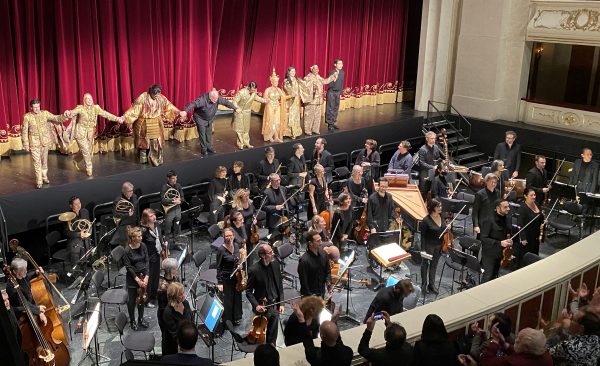
Mozart schuf bereits mit unglaublichen 14 Jahren die Oper Mitridate. Darin sind erstaunlich viele Anklänge und kleine Melodien enthalten, die er in späteren bekannteren Werken wieder variiert aufgreift. Seine erste Auslandsreise zum Studium der Kompositions- und Instrumentationstechnik nach Mailand hatte eine nachhaltige Wirkung. Zusammenarbeit mit den besten Singenden dieser Zeit stellt heute noch Professionelle der Gattung wie Pene Pati vor große Herausforderungen. Eine gewisse Analogie von Pati zu und Potenzial wie Pavarotti ist vielleicht schon erlaubt. Die Barocktage in der Staatsoper Berlin mit den “Musiciens du Louvre” sowie deren Gründundsdirigent Marc Minkowski, selbst ein Mozartexperte, sind wahrhaft glänzend und barock. Die in Goldfarben geschneiderten Kostüme und Bühnenbilder versetzen uns in borocke Bilder und Szenen. Der im Libretto vorgegebe Abschluss: Für die Freiheit, samt Abschlußakkorden, halt im Freiheitskampf der Ukraine gegen russische Besatzung heute noch nach. Bravi!!! Das hat der junge Mozart bereits 20 Jahre vor der französichen Revolution, vielleicht augenzwinkert vertont und inszeniert. Das Freiheitsstreben der Völker hat sich dann auf das Freiheitsstreben im Volk übertragen. Klar, ist nur eine spekulative These, aber schön zu glauben. Im Bild unten ist ein Cembalo zu sehen. Mozart spielte es selbst in den ersten 3 Aufführungen und hat wohl auch dirigiert, vielleicht wie es aus dem Film “Amadeus” 1984 in Erinnerung geblieben ist. Toll eine Oper, nicht nur für den Opa.